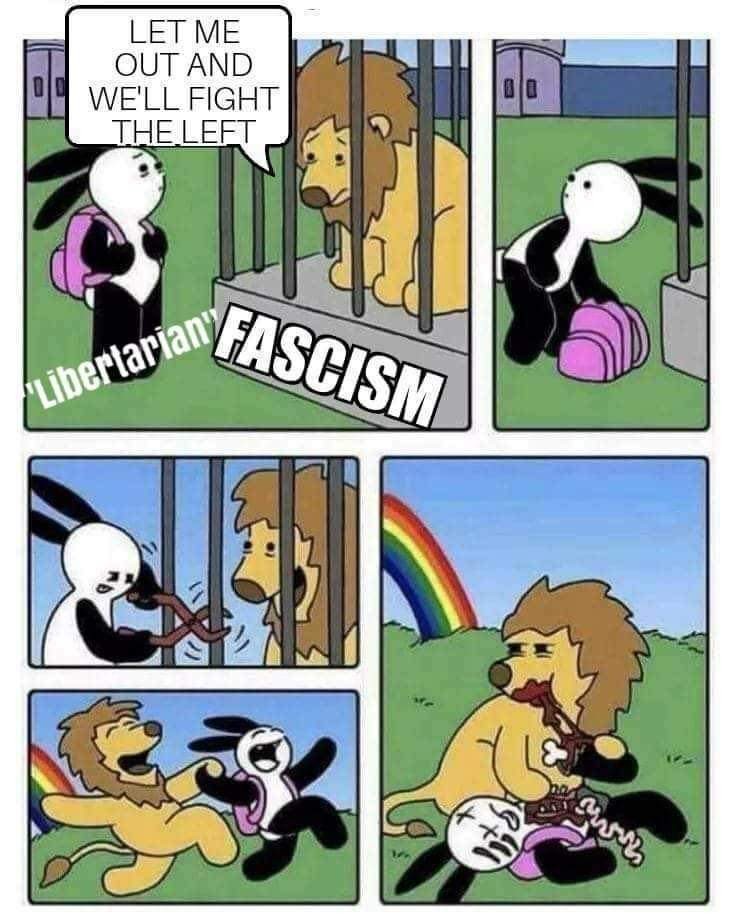
The #mainstreaming people are touching on the #deathcult metaphor, this is normal as it’s a useful way of expressing the horrific reality “common sense” has built for us to live (and die) within. And, yes, this is using the metaphor in a more narrow way, as it is mainstreaming which has hard limits on dialogue to build conversations on, we need to move past these to compost this mess.
The frustration of navigating the mess of activism, tech, and grassroots movements, especially when they get co-opted and sidetracked by personal interests, #NGO agendas, or broader #mainstreaming mess. We need ways to process, compost, and turn this mess into productive paths, which better balance burnout and disillusionment with actual progressive outcomes.
A part of this is the parasite #NGO and #fashionista paths, how NGOs and big parts of tech can parasitically latch onto grassroots movements, commodifying and diverting them from their own paths. These non-native ways end up taking the paths they claim to oppose, and are a part of the broader #deathcult problem. Mediating this deathcult and pratish behaviour is needed, that challenges the individualistic, egotistical people who are always a part of grassroots movements. If left unchecked, these people will derail collective efforts and reduce movements to infighting rather than the path of change and challenge we need to be on.
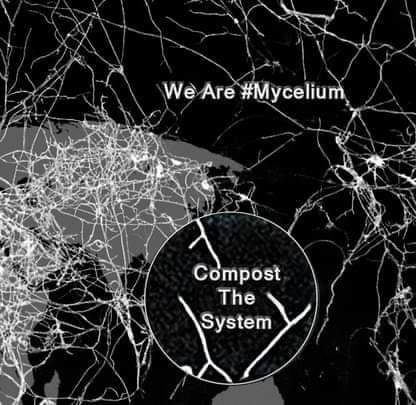
Composting the mess, is perhaps the most hopeful metaphor to turn #mainstreaming shit into something more fertile. This metaphor is about processing what went wrong, reflecting, and turning that energy into a better path, sustainable, and rooted in the core values of the #openweb and #4opens grassroots efforts. The mess is undeniable, but with native openweb tools and paths, composting, mediation, linking, and decentralization there’s still hope to turn this #reboot into something productive. We really need to make this work.
The normal problem, the trajectory of #SocialHub, and the broader #openweb community, simply went off course due to factors that we need to talk about:
Shrinking of the crew, led to the forced narrowing of focus, limiting the community’s ability to engage widely and creatively. As fewer people became involved, the flexibility and potential of the project shrank.
Chasing funding, is a recurring poison in many grassroots projects. The moment funding enters the picture, the focus can shift from mission driven goals to survival driven ones, leading to compromises and sell outs.
The #geekproblem, is a recurring issue where the culture of arrogance and ignorance within tech communities blocks collaborative, inclusive problem-solving. Tech culture ignores the social dimensions of community building, exacerbating problems instead of solving them.
Failed governance, feudal-like governance structures hindered the ability to mediate these issues, turning leadership into top-down control rather than fostering horizontal collaboration. Attempts like the #OGB (Open Governance Body) were/are being blocked by the systems they set out to fix, leading to a self-reinforcing mess.
What can we do, next steps:
Composting the mess, rather than seeing the failure as terminal, it’s about turning the decay into fertile ground for new growth. This composting metaphor is apt—it’s about taking what didn’t work, reflecting on it, and using it as the soil for new, better-structured efforts.
Recognizing people over code: The issue lies with people, not technology, the main barriers are social—ego, power dynamics, and lack of collaboration. Governance structures, community engagement, and shared values need to take centre.
Defining and defending the #openweb, people will inevitably sell out for funding and status. To mediate this, a clear, shared understanding, of what the openweb stands for, an articulation of principles like the #4opens is crucial. The community needs a strong value framework to guide decisions and prevent the erosion of ideals and paths.
Building a hub for meaningful engagement, #SocialHub was once this place, but it’s now too narrow and constrained by the #NGO. #fashernista and #geekproblem interests. If the community is to thrive, it needs a revitalizing, a broader range of voices participating, where governance is open, and where people are empowered to contribute without the weight of gatekeepers and blinded apathy and intolerance blocking we to often have now.
Infrastructure and funding, the practical path of supporting the infrastructure also needs addressing. The lack of funding is damage that shifts, the code itself, into became unresponsive to the community’s needs. Finding sustainable, non-exploitative funding models is needed. Could a cooperative or mutual aid model be a path forward, that aligns with the values of the #openweb while providing the necessary resources?
Immediate Actions:
Broaden governance: If we return to SocialHub or a similar network, start by widening the admin and mod team to ensure it represents more than just the narrow confines of #NGO, #fashernista and #geekproblem interests. This inclusivity prevents drift.
Articulate values clearly, by creating a visible and accessible page for the #4opens, making it a cornerstone for paths and discussions, decisions, and collaborations. People need to understand and agree on the principles driving the openweb, #KISS
Revive discussions, reignite meaningful discussions about the purpose and direction of the openweb. This needs to happen on networks where all voices are welcomed, and consensus building isn’t seen as a hindrance but a pathway forward.
Explore funding models, as the current mess is feeding this #blocking. Look into alternative funding mechanisms—cooperatives, community-supported models, or decentralized funding structures that align with openweb values. Chasing VC or NGO funding leads to the same patterns of co-optation and control.
By addressing these issues—people, governance, values, and sustainability—the community can begin to rebuild, with a “native” approach, it’s possible to compost the mess into fertile soil for future growth.
UPDATE the thread on this turned into a mess then a part of it vanished, likely someone blocked, so posting the last update here:
” I just don’t see SocialHub as likely to evolve into the kind of place for the broader discussions focusing on social issues.”
The problem we are talking about. This is exactly what #socialhub was “broader discussions focusing on social issues” for the first 3 years or so, we had the path we now need in place as native grassroots.
A tiny number of people used the #geekproblem to narrow this open space down to focus EXCLUSIVELY on the #FAP. Why and how this happens is where the value is, so we don’t keep adding to this mess, in the future.
PS, this mastodon mess of jumping from public to semi private all the time is a mess.
The is deep dissatisfaction with the current “common sense”, especially in the context of how it has contributed to a pervasive sense of fragmentation, meaninglessness, and cynicism in most contemporary life. The is very little meaning and action in our intellectual movements, the #blocking of the old stories, Marxism, Enlightenment ideals, and even reality itself. The last 40 years of deconstruction of meaning without offering alternatives led to our current dangerous nihilistic dead-end. We live now with “zombie ideologies,” that are not fit for the current #climatechaos driven challenges we face.
As am in Oxford, let’s look at a few of these dead academic paths. #Postmodernism became a perfect fit for the #neoliberalism of the #deathcult of the last 40 years, as both emphasize individualism, relativism, and a rejection of collective, structural change. Neoliberalism, which is still the default economic path, thrived on the breakdown of solidarity, atomizing society and leaving individuals to fend for themselves in a deregulated market economy. The crisis of meaning that postmodernism, the ideas still under much thinking, fed directly into this, with its #blocking of coherent paths for understanding the world and taking action to mediate the ongoing mess. These were both tools of the #deathcult, encouraging passive resignation instead of collective resistance.
Now, more than ever, there’s an urgent need to move away from these decaying paths and find a way that inspires collective action, hope, and builds the needed systemic change. The metaphor of shovelling shit to make compost is a powerful one. The last several decades have produced a lot of intellectual and social decay, instead of simply rejecting it all, we can take what’s useful, like a critical understanding of power structures and cultural influence—and use it to grow better.
The world is changing rapidly, and with it, the intellectual tools we need to navigate and reshape it. Let’s plant the seeds, of meaningful, grounded, collective action, grow solidarity, and a renewed sense of purpose that challenges the status quo. The question is not just about what comes next, but how we collectively build it from the ground up.
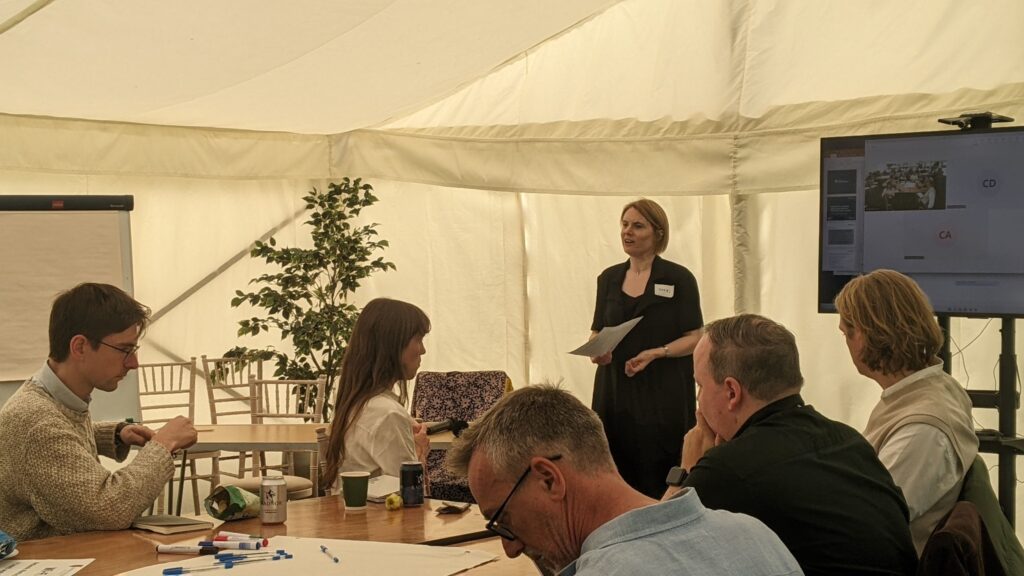
“How should the new Labour government be listening?” A few notes: Firstly it needs to be said, this is common in Oxford, this is powerless people talking about things that matter. Where activism is about forming a group of action for pushing and pulling power, this event is not activism, it’s academy, we do need to remember this.
“Deliberation” is a new word for the old formal consensus that ossified and broke when imposed on much grassroots activism at the turn of the century, with the rise of the #dotcons this was pushed to grew into the activism mess we live in today.
And yes, it is a mess as what activism focus on has little connection to the levers of power, which is controlled outside these processes. As change and challenge power needs #spiky activism, and, in the end, the threat or reality of revolution, to directly push and pull the leavers. This is empowerment, It’s why we are so powerless, they don’t talk or think about this at all.
Looking round the room I can’t see any activist affinity groups forming, not a glimpse, the privileged space is filled with powerless people talking about things that matter, it’s not that this #fluffy path does not have a role, but on balance this is likely simply more problem than solution. The experts and the academics, the #NGO politicos and all their shared views on how to talk to and work with the plebs, that’s the real people outside the walls of the collage.
The guy talking about trust interested me. Then there was the guy who went off script, who, was kind of inspiring, what would more of this look like? The language guy at the end was OK, words do matter and can be used as levers of power, this is affective fluffy activism. And the final point, that the #mainstreaming is not a natural block on the far right, is scarily true.
humm over all interesting, a little food for thought, but likely an unhealthy balance of both activism and academic blocking. The challenge is bridging the gap between intellectual dialogue and on-the-ground activism. How do we push these conversations to actions that can actually “pull the levers” of power, rather than simply talking about what needs to be done at best or at worst #blocking action, by #mainstreaming#blinded dogma? This balance is vital, and is missing completely from all these gatherings.
What went wrong with this is a classic case of the tension between grassroots ideals and the pressure of existing within a larger system that is fundamentally at odds with those ideals. The #fediverse, along with other #openweb movements, succeeds in small, meaningful ways but struggles to scale in a world built on capitalist structures, centralization, and competition. This tension is particularly evident in how projects, despite being technologically sound and #4opens, ideologically aligned with decentralization and openness, gets bogged down in internal messes, conflicts, miscommunication, leading to fragmentation. The messy social side, neglected in tech projects, ends up undermining the success of the broader mission. People focus on code but forget about the human aspects like collaboration, motivation, and building long-term trust, which are equally essential.
As I suggested, the idea to codify some form of “netiquette” or community values, inspired by the #fluffy and #spiky traditions of past projects, is crucial. If we don’t address these human and social issues, the technology alone will not be enough. The problem is that by default these communities don’t prioritize this, and that’s where the breakdown occurs. What we have now is that the fediverse’s very existence is a victory, but that doesn’t mean the battle is over. The grassroots growth, driven by passion rather than profit, shows that alternatives to #dotcons capitalist, centralized tech are possible, but in-till we find a way to address the underlying social fracture, gatekeeping, burnout, #blocking and conflicts, we’ll continue to push the same mess.
The victory is not in “winning” in capitalist terms, but in maintaining spaces where alternatives can thrive and where people can connect based on shared #4opens values, rather than imposed structures. The real challenge is to keep these spaces open, resilient, and focused, for this to balance we need to address not just the tech, but the people behind it. We could, and should reboot #socialhub to be this space, It’s where it started, and did a good job for a while.
There are many paths and perspectives on how to tackle the profound mess we’re in, and one of them comes from Roger Hallam and Extinction Rebellion (#XR), which, have brought to light a deep issue: the creeping “common sense” of #deathcult worship infiltrating activism. From a radical viewpoint, XR stood as a “first mover” – an innocent, fresh reaction to the ecological emergency, fueled by public consciousness and radical hope. But like many movements, the radical spark dims quickly, and in XR’s case, that moment of innocence has passed. Now, the movement faces entrenched systems of decay and resistance.
Diversity in approaches is needed if we want to escape this stagnation, but this #KISS path only works if we confront the larger issue: many movements feed into a default worship of failure and defeatism, locking us into repetitive cycles of symbolic action rather than achieving real-world change. As Hallam reflects, after the 2008 financial crash, revolution became a structural possibility. In 2024, he believes revolution is inevitable, but warns that inevitability does not guarantee success without conscious, focused action.
From my perspective, tech tools like #activertypub and the resurgence of the #openweb can play a role in reigniting social movements. The best path to use these tools are #4opens, decentralized approaches like the #OMN, which offer us a path to build movements that avoid the traps of the past. These open networks represent an alternative to the closed systems that for 20 years have stifled innovation and action.
Yet, despite these real opportunities, we’re still making the same mistakes. We too easily fall back into becoming gatekeepers, fostering inaction, and reproducing the structures we’re trying to overcome. If we are to break free from this mess, we need to challenge the deathcult mentality, embrace a diversity of tactics, and maintain our focus on systemic change. The current system is brittle and failing – ripe for disruption – but it requires clear, deliberate action.
So, what can you do about this? Support the #OMN path by contributing here: Open Media Network, or take an active role here: openworlds
Many years ago, I stopped going to most tech events and supporting “ethical” business. the #NGO tech events are mere talking shops, spaces filled with endless discussions but no outcomes. They suck up time, energy, and focus, acting as gatekeepers that reinforce the status quo while masquerading as spaces of change. These events are part of a semi-hidden #deathcult, worshiping, the failing structures of the present rather than imagining and building of alternatives. Next time you see one of these events pop up in your feed, ask yourself: Is this contributing to actual change, or just taking up space?
Then we have the same problem with the way people, too often, set up “soft green alt businesses” that can’t “pay their way” within the current capitalist system. If you can’t challenge capitalism’s rules, why not consider working to overthrow them first? Only then will we have the non “pay-to-play” spaces where real alternative projects can grow.
We got into this mess by accommodating these structures rather than challenging them. As Marx said:
“Men make their own history, but they do not make it as they please; they do not make it under self-selected circumstances, but under circumstances existing already, given and transmitted from the past. The tradition of all dead generations weighs like a nightmare on the brains of the living. And just as they seem to be occupied with revolutionizing themselves and things, creating something that did not exist before, precisely in such epochs of revolutionary crisis they anxiously conjure up the spirits of the past to their service, borrowing from them names, battle slogans, and costumes in order to present this new scene in world history in time-honoured disguise and borrowed language.” Karl Marx, The Eighteenth Brumaire of Louis Bonapart
In simple words, we must be realistic about the conditions we face but also bold in our strategies to change them. To take this path, we need to navigate past the blocks of power politics, the stupidity, fear, control freakery, cowardice, and overwork that consistently stymie technological and social change. It’s past time to move aside from this mess. We need to reclaim the focus and energy wasted on maintaining the current failing systems and redirect/balances this to building #openweb and resilient #community spaces for change and challenge.
A project we need to build together as a path”native” to the #openweb
let’s recap, as you likely missed half the story the first time round. This speaks directly to the core of why meaningful change is so hard to achieve within the current mess of tech and “ethical” business. Most #NGO tech events, which claim to be about fostering change and innovation, have become places of inertia. They are “talking shops” paths where people discuss endlessly with no concrete action or achieving “real “native” outcomes. These spaces take up limited time, energy, and focus, which could be directed toward building real alternatives. They are gatekeepers, reinforcing the status quo while pretending to be progressive and transformative.
These paths only “exist” if they play by the rules of capitalism, rules that are designed to extract value rather than support meaningful, sustainable alternatives. So, instead of challenging these rules, people waste time trying to work within them, missing the bigger picture. If we want to create real change, we need to challenge the foundations of the system itself, not simply try to adapt to it.
Marx’s quote emphasizes that while people make their own history, they do so within the constraints of circumstances handed down from the past. In other words, we carry the weight of outdated structures and ideologies that continue to stifle transformation. The history of failed strategies and the perpetuation of ineffective methods weigh us down, preventing us from taking different paths to different possibilities.
The power dynamics within these spaces—be it #NGO tech events and “ethical” businesses are filled with control, fear, overwork, and cowardice, which block progress. Real change is movement beyond this mess, to reclaim energy wasted propping up failing systems, to redirect it toward building #openweb and resilient communities to use this freed up space for change and challenge. The #fediverse and other decentralized networks already provide pathways; we just need to be brave enough to walk them.
In short, this matters, for a radical shift in focus from superficial actions to systemic change to compost the #techshit and build truly transformative from the ground up. And yes, we need a shovel #OMN.
The USA debate was a mess, with certainty and lies vs insecurity and falafel. We’re still not lifting our heads, and our hands, we don’t have a shovel and there are piles of social shit to compost.
For a liberal replay to this in comedy, yes, it’s a mess.
One thing that is clear to see is the “strong masculinity” Trump embodies, so ideologically central to the far-right, but is not strength, just blustery and belligerent cover for weakness LINK
From a tech path, maybe we need to start with the #techshit to do that we need to stop lying about the #geekproblem and mediate this shit, building something native would help #OMN and yes this is a shovel.
This is an overview, the path we need to try is to focus on #commons and #cooperation for building tools and communities, then to use these tools to challenge the current structures of power. This is a very different path than the #stupidindividualism (as some people say #hyperindividualism) of the current #mainstreaming capitalist path. The way isn’t through more fragmentation, but by connecting these fragments into a more coherent whole, something the #OMN (Open Media Network) is working towards. We need #solidarity and #mutualaid to build these tools, which can then be used to build the communities to use them.
The issues are wide, is not just the #dotcons enclosing the commons, but the way people get sucked into the #NGO culture/control paths, which reinforces the very systems of oppression, that on the surface they claim to fight. We can’t keep putting plasters on these problems. In the media/tech world the path is actually not that hard, real change comes from #grassroots efforts that prioritize #4opens: OpenData, OpenSource, OpenProcess, and OpenStandards. These create transparency and accountability, and help us compost the #techshit that has built up over decades of bad practice.
I outline this in the OMN project, which provides a structure to link these disparate actions and paths together, creating a “native” #NetworkOfNetworks where flows of trust and information/data and metadata can be built on solid, open foundations. By strongly focusing on principles, we foster #communities that are resilient, self-sufficient, #DIY and capable of defending against the enclosures that happen by default on the #mainstreaming path most of us are currently on.
It’s time to turn away from the (stupid)individualistic mindset that capitalism cultivates and return to a more healthy balance with #CollectiveEmpowerment. This isn’t about returning to a naive vision of the past but evolving our tactics for the present, using what’s left of the openweb to build something more robust and deeply rooted, we have started down this path with the #fediverse
The #OMN project is building from this first step, a path that is usefully as it’s native to create a #reboot for the #openweb. It’s about recognizing the cracks in the current system and knowing where pressure can make the cracks grow to open up space to compost the old and nourish the fresh shoots of alternative tech and media that we need. This nurtures communities that then builds better tech, a simple circle, with likely a better outcome than the current #deathcult
The recent #XR event at Windsor received little meaningful media coverage, well not in my filter bubble, it was totally invisible, which is disappointing considering the importance of the action. The video I made of last year’s London event is still relevant and illustrates the same core issues, even though this time they did take the step of staging an occupation. You can watch last year’s video: XR “is this all the is” 2023.
This brings us to an important point: the balance between fluffy (non-confrontational, peaceful protest) and #spiky (more direct, disruptive action) tactics. Both approaches have their place and, when used in tandem, they can be very effective. The key is understanding that they complement each other—#fluffy actions draw in broad support and media attention, while #spiky actions put real pressure on the power structures by creating disruption that cannot be ignored.
It’s crucial to recognize that with increased effectiveness comes a cost: repression. That’s the paradox of impactful activism. The presence of repression is a useful indicator that what you’re doing is working, a sign that you are challenging the status quo in a way that makes those in power uncomfortable. If there is no repression, then it likely means your actions are not having any impact.
So, we must continue to push this balance and accept that some degree of repression is a natural outcome of effective resistance. If we want to see real change, we need to be prepared for the response that comes when you genuinely challenge entrenched power. The goal is not to avoid repression, but to balance it in a way that sustains the movement and keeps up the pressure.
It should be obverse even to our more liberal friends that we’re facing intensifying class conflict, but It’s sadly not this simple, the class on our side is largely absent and disorganized where the class on “their” side is very organised and very well funded. This lack of effective class consciousness among potential allies leads to a divided and weakened resistance, making efforts to push against power structures ineffective.
There is a dangerous #deathcultmentality from the last 40 years that has deep roots in the stubborn refusal to address basic issues and a persistent repetition of failed strategies. This mentality is dragging us into negative outcomes, and is both disheartening and damaging. The challenge is that we are fighting against an “invisible” system that pits everyone against each other. With this, the broader population lacks class awareness, making it difficult to unite to even start to affectively fight back. Despite the increasingly hardened nature of conflict, it’s brittle, If we could focus and target the cracks, we can compost the current mess and move to different paths. On the old path, the #traditionalmedia remains a strong tool for social control, reinforcing existing power dynamics and narratives to push the status quo.
In activism if we can create focus, instead of dissipating energy on ineffective A-to-B marches, media stunts and petitions that appeal to the mainstream narrative, we instead concentrate on actions that directly affect the structures we challenge. In this path, the blocking force of #Stupidindividualism is a useful lens for understanding the current situation of blind hatreds and hidden fears. If we can shift from this disjointed, ineffective path, we may be able to step to a direction that allows us to rebuild solidarity and create change.
One step forward is through initiatives like #OMN (Open Media Network), built to challenge the current information monopoly and foster a truly open, people-centered web that can be affective as a tool for change and challenge.
Back then, we were teetering on the edge of a digital cliff, with the open internet hanging in the balance. There were two insightful perspectives capturing the crossroads we are at: Phil Windley argued that the open internet was a historical fluke, while Dave Winer suggests that what we were seeing was merely the ebb before the next wave of the #openweb arrived.
With this enclosure of the digital commons, #PhilWindley perspective, is a sobering one. Though he has updated his post, he used to see the internet early open nature as an anomaly—an accident of history. In this view, the open internet as we knew it is essentially finished. That once-thriving commons have been systematically enclosed by corporate silos—the #dotcons like Facebook, Google, and Amazon—that now dominate the digital landscape. What remains outside these silos is, according to this perspective, withering and dying. The vision of a decentralized, user-controlled internet has been overwhelmed by the centralized, profit-driven motives of these tech giants.
His argument is that decentralization is hard, perhaps too hard for most people to handle. This reality, combined with the fact that these silos provide convenience, user-friendliness, and perceived safety, has led people to choose them over the messy and challenging world of a truly #openweb. People have traded freedom for convenience, security for walled gardens, and the vibrant chaos of the commons for the curated safety of #dotcons. The digital commons have been enclosed, and it was a bleak view.
On the other side, Dave Winer offered a more hopeful perspective. He believes that the history of the internet and the web comes in waves—periods of openness followed by enclosure, which then recede to allow for another wave of openness. In his view, Phil Windley’s observation might not be wrong, but it’s not the end of the story. Rather, it’s the ebb of the tide before a new wave of the #openweb surges forward. The potential for decentralized, and open paths is always there, and it’s a mistake to assume that the current moment is the end of the line.
#DaveWiner argument rests on the idea that the desire for openness and freedom is cyclical. When centralized systems become oppressive, restrictive, or exploitative, there will be a counter-movement that pushes back. The nature of technology, innovation, and humanistic creativity ensures that “native” paths, and protocols will emerge to challenge the status quo.
There is a logic to the digitization of everything. The internet and #openweb built on top of it, is a living example of what happens when this logic is let loose: a tsunami that crashes over every part of our cultures, breaking old structures and opening up possibilities. The storm is not over. Just as the early web opened up commons that were later enclosed, the current wave of enclosure is broken by a new wave of #4open decentralization paths.
What Has Changed in the Last Decade? Looking back at what I wrote nearly ten years ago, the fundamental dynamics haven’t changed. The dotcons have only grown more powerful and more entrenched, but at the same time, the counter-forces have also begun to stir vigorously. Movements like the #Fediverse, based on #ActivityPub, #Nostor and to a lesser extent #Bluesky have grown into real usable decentralized social paths, together with this, we are dipping our toes back into peer-to-peer technologies, this wave is evidence that the storm of digitization is still alive.
Yes, the #dotcons did enclose the first wave of commons, when we stupidly took their digital algorithmic drugs. But the defences of the dotcons are very weak, the only thing holding most people is their addictions, nobody thinks they are healthy any more. The logic of digitization continues, and as long as there are waves, there is hope for the current openweb reboot.