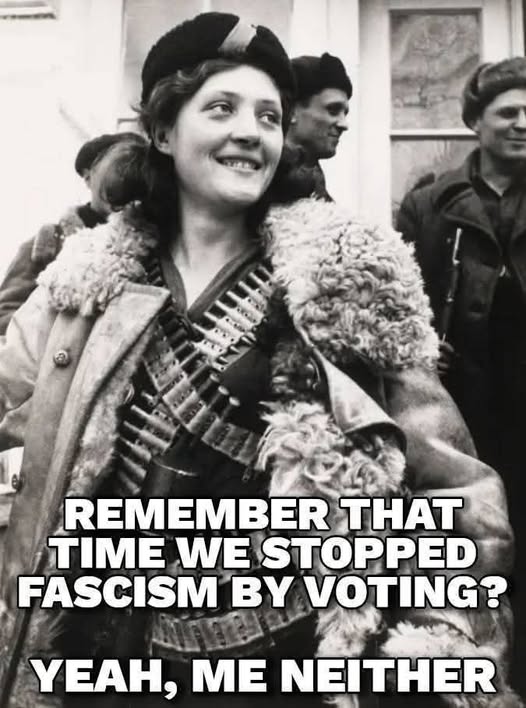
We are living through a dangerous moment

The nasty side

Let’s look at a #fluffy positive view of the path we need to be on. We are living through a dangerous moment, the systems around us are failing, but the dominant response is still denial at worst or to try to repair the existing structures that created the crisis at best. But, the problem is not one bad policy, one bad company, or one bad government. The problem is a whole way of organising society around extraction, scale, speed and distance.

A system that measures success through endless economic growth has turned the living world into a resource pool, nature becomes something to consume, our communities become markets. People become workers and consumers to turn relationships into transactions. This is the logic of the #deathcult – the belief that there is no alternative to the endless expansion of production, consumption and competition.

But there are very different stories, for most of human history, people lived through relationships with place, community and the natural world. When knowledge was rooted in local experience, skills grew through connection, culture evolved through diversity. The problem is not that humans are incapable of living differently. The problem is that we built systems that separate us from the consequences of our actions. A global supply chain moves food thousands of miles while hiding the real costs. A corporation extracting value from a place without being accountable to the people who live there. A financial system creates wealth for a few while pushing the damage onto everyone else.

The result is not just ecological damage, it is cultural damage to the shared humanist knowledge, ecology, stories and local power. The process that creates monoculture in culture and thinking, when everything becomes standardised, the same products, platforms, economic assumptions, the same idea that progress means becoming more disconnected. This is where the old path of humanism and resulting localisation becomes important. Localisation is not about retreating from the world, it is not about small communities ignoring global problems. It is about rebuilding the connections that make society healthy, creating economies where people can see the impact of their choices.

This is where the #OMN story connects, the Open Media Network is not just about publishing tools, it is about rebuilding the missing social layer. The #openweb originally grew from the idea that people could connect, collaborate and create outside centralised control. It was messy, diverse and alive, in till the #closedweb enclosed this with #dotcons platforms designed around attention extraction, surveillance and profit.

The work of composting this mess is not simply building another platform, it is more about rebuilding culture. We need “native” networks that support local voices to connect #4opens globally to bridge a diversity of communities, ideas and ways of living. Not one giant system trying to manage everyone, we need a garden, not a factory. The challenge is that technical decentralisation on its own is not enough, a network can be decentralised and still reproduce the same problems. We need decentralised power, not just decentralised technology.

The exciting thing is that this is already happening, across the world people are rebuilding commons, the #Fediverse, creating alternative economies, restoring ecosystems and forming communities of resistance and care both online and offline. These stories rarely appear in the mainstream because the #mainstreaming is built around crisis, competition and spectacle. But underneath the noise, seeds are growing. This is why we need to stop only fighting the broken system to also grow alternatives.

The #OMN value is simple:

  • Create the compost where new ideas can grow.
  • Support the people already doing the work.
  • Build tools that strengthen communities instead of replacing them.
  • Move from consumers back into participants.
  • From isolated individuals back into connected communities.

A movement is not created by everyone agreeing on one answer, a movement grows through many different experiments, connected by shared values. The future is not something we wait for, it is something we build. A flourishing society will not come from making the current system more efficient. It will come from growing something different.

But we also need to be honest about the scale of the challenge. The #deathcult does not simply disappear because we build nicer alternatives. It has power, institutions, money, media, infrastructure and the ability to absorb, dilute and sell back every challenge. This is where many #fluffy movements fail, they mistake visibility for power, mistake inclusion in existing systems for change. They mistake being allowed a seat at the table, for changing who owns the table.

The current system is very good at taking the language of resistance and turning it into another product. It can sell sustainability while accelerating extraction, sell community while building more isolation, sell “open” while creating new forms of enclosure.

This is why the #spiky #OMN is not about creating another nice corner inside the existing mess, the path is not to make the #dotcons slightly less harmful. This path is to grow a tech native humanistic network, an alternative that can change and challenge, culturally, socially and practically. Because the battle is not only over technology or economics, it is over imagination. For decades, we have been trained to believe there is no alternative. That large-scale capitalistic paths are inevitable, humans are just consumers, that communities are outdated, that efficiency matters more than resilience.

The deepest enclosure is of our minds, to break this we need both the fluffy and the spiky path. The fluffy grows gardens, relationships and commons. The spiky challenges the structures that keep the garden fenced in. Without the fluffy, to easily resistance becomes empty anger. Without the spiky, alternatives become harmless hobbies that the system can ignore. We need both, people building the new while also questioning the old.

Because the future will not be gifted to us by governments, corporations or platforms, it will be built by people organising together. The question is not whether change is possible, it is whether we organise enough, quickly enough, to make the possible real. Now we need the compost, the networks and the collective effort to help change and challenge grow.

The Transition Mess

This is a conversation that more people need to have to make change and challenge real. Every time there is a shift in technology and culture, there is a messy transition period. We are in one now, as there is real movement away from the #dotcons and back towards the #openweb. People are questioning platforms that extract value, manipulate attention, and turn communities into products. The cracks are visible everywhere. The growing frustration with places like X shows that people are starting to have some understanding of the limits of corporate-controlled spaces.

This is a good thing, but every wave of migration brings the culture of the old system with it. The #openweb is not magically protected from the habits created by the #dotcons. People bring their expectations, behaviours, and assumptions with them when they jump ship. They bring:

  • platform habits
  • attention-seeking culture
  • status games
  • individualism
  • fear of conflict
  • the idea that disagreement is harm
  • the expectation that someone else will manage the space

This is the transition mess, the mistake is thinking the problem is simply “bad people arriving”. The deeper issue is that people are arriving from a culture built around different values. The #dotcons are designed around competition, personal branding, and algorithmic amplification. They reward outrage, performance, and visibility. They turn social relationships into measurable interactions.

The #openweb works differently, it depends on trust, contribution, shared ownership, and collective responsibility. The clash between these cultures creates friction, the question is not how do we stop the friction, it is more how do we mediate it well?

Because this is where activism matters, activism has never just been about being nice. It is about recognising problems, explaining why they matter, and pushing for change. That does not mean only being hostile. It means having both paths:

  • The #fluffy path of building relationships, creating welcoming spaces, explaining, supporting, bringing people in.
  • The #spiky path of challenging harmful behaviour, confronting power, refusing to let broken patterns reproduce themselves.

As I keep saying both are needed, a movement without the fluffy path burns people out, a movement without the spiky path gets absorbed and neutralised. The problem is when this timid #mainstreaming – “being nice” becomes a way to avoid necessary conflict. When “can’t we all just get along” becomes a method of protecting existing problems. When politeness becomes more important than changing the conditions causing harm. That is where mediation breaks down.

The #4opens gives us a useful test – Are we building open data, open source, open process, and open standards? Are we creating systems where people can participate, understand, challenge, and contribute? Or are we recreating the same hidden hierarchies and closed power structures from the #dotcons?

The danger is that the #openweb becomes a new home for old behaviours, the technology changes, the culture does not. This is why the transition period matters, the #openweb was never just a collection of tools. It was a different way of organising, a place where people build alternatives instead of only complaining about existing systems. A place where communities create their own infrastructure. A place where power is distributed instead of concentrated.

But that requires active cultural work, we need more people pushing the #4opens, not fewer. We need people willing to challenge, mediate, explain, organise, and build. The question is not “How do we avoid conflict?” The question is “How do we handle conflict in a way that grows stronger communities?”

Because every transition has noise, confusion, people defending old habits while claiming to build something new. The work is learning to tell the difference between signal and noise, between people struggling to adapt and people protecting the old systems. Between criticism that helps growth and blocking that protects power.

The #openweb is growing again, the challenge is making sure it grows into something different, rather than becoming another version of the same thing. That is the #OMN challenge.

#Nicenasty the hidden power of soft obstruction

People think in groups, that’s normal. The mistake isn’t group thinking itself, it’s pretending we’re all isolated individuals while still acting through tribes, identities, and social blocs. A lot of today’s “common sense” comes from the #stupidindividualism group mindset. We are encouraged to see every problem through individual choices rather than collective realities. The real question isn’t “how do we stop group thinking?” It’s “what do we do with it?”

This mess is something we need to compost – in movements, communities, and alternative projects, we need language to describe the different forces shaping what happens, without shared vocabulary, patterns remain invisible. People experience the same problems repeatedly, but each incident looks like an individual conflict rather than part of a wider social mess making. Within #OMN hashtag story, we already have some useful terms.

  • #nastyfew – power from above. The #nastyfew are the obvious actors who concentrated power of tech, business, political, and institutional elitists. The people who shape systems through money, ownership, influence, and formal authority. They are easier to identify because their power is visible. The #nastyfew don’t usually pretend not to have power, their influence comes from controlling resources, platforms, laws, infrastructure, and narratives. This is the traditional problem of hierarchy.
  • #fluffy – conflict avoidance, the comfortable side of activism and community organising. The people who want harmony, inclusion, and safety – often good things – but always at the cost of avoiding difficult conversations, uncomfortable truths, or necessary conflicts. The fluffy crew are not the enemy, we need this side as movements without care become brittle, aggressive, and unsustainable. The problem is when #fluffy becomes a substitute for action, and keeping things pleasant becomes more important than addressing what is actually happening.

#fluffy – comfortable, non-threatening, conflict-avoiding activism. Well understood in context. #spiky – confrontational, direct, willing to cause friction. Debate – is the thing that is to often missing, and holds the power.

But there is another pattern we need to compost, that does not fit either category. Something more subtle, the missing category is the weaponised nice person. There is a difference between being kind and using kindness as a tool of control. There is a difference between creating a welcoming space and using the language of welcome to #block challenge. This is the person who performs niceness while quietly enforcing conformity.

These people are in every movement, every activist camp, they use, politeness rules, social reputation, community trust, emotional pressure and claims of protecting the group …as mechanisms to block criticism, avoid accountability, and preserve existing power. They are not the #nastyfew as they are not openly dominating from above, and often appear as the opposite, they look caring, sound reasonable.

They say “We need to be constructive.” “We don’t want conflict.” “That isn’t the right way to say it.” “We need to protect the community.” Sometimes those statements are valid, but often they are used as a shield against anything disruptive, challenging, or genuinely new. This is where we need a #hashtag for.

The gap is specific: the person who performs niceness or fluffiness as a weapon – who uses social respectability, politeness norms, or community goodwill as a way to enforce conformity, block challenge, and protect their own position. Not the #nastyfew (they’re openly powerful) and not simply #fluffy (that’s just timid). This is the vile fluffy – nice on the surface, actively harmful underneath.

Maybe #nicenasty describes the contradiction. Nice on the surface, nasty in effect. The problem is not kindness, the problem is when kindness becomes a performance used to maintain control. A #nicenasty dynamic appears in spaces that claim to be open: activist groups, community organisations, open source projects, alternative media spaces and wider social movements. The language is horizontal, but the behaviour becomes quietly hierarchical. Instead of “you cannot do this because I have power”, it becomes “you cannot do this because you are harming the community.” The result can be the same – blocking change. #nicenasty -. Has rhythm, easy to remember, does the job. The inversion is the point.

#velvetblock – the mechanism, describes the process itself, a velvet surface hiding a hard barrier. The door is not slammed, people are not openly excluded. Instead, they are slowly redirected, delayed, discouraged, or socially isolated until the challenge disappears. The damage remains polite, the outcome remains the same. #velvetblock – soft surface, hard obstruction. More descriptive of the mechanism.

#fluffygate- implies gatekeeping behind a fluffy front. A bit clunky.

#pratocracy – the rule of prats. Funny but loses the specific nice/nasty dynamic.

#softpower – already taken in international relations, would cause confusion.

#vilefluff – pairs well with #nicenasty tag, keep it in the vocabulary for the spiky people.

#nicenasty is maybe the strongest – it’s immediately, has no baggage, and does what a hashtag should do: compress a complex dynamic into something people recognise and use to organise the movement. The question is whether one tag or two. #nastyfew for power from above, #nicenasty for obstruction from within the community itself, #fluffy for the timid. A clean three-part vocabulary?

Why this matters for #OMN – The #openweb and grassroots organising depend on the ability to challenge, fork, experiment, and build alternatives. The challenge is not just resisting the #nastyfew, it is also recognising the internal patterns that stop movements growing.

#nastyfew – Power concentrated at the top.

#fluffy – Care, connection, and social glue, but with the risk of avoiding necessary conflict.

#nicenasty – Soft power used internally to block challenge while appearing caring.

This gives us a #KISS story path. Because not every barrier looks like oppression, sometimes the strongest walls are built out of good intentions. The answer is not to reject kindness, more its is separating genuine care from control disguised as care. Any native path needs both:

#fluffy to keep people connected.

#spiky to challenge what needs challenging.

And the awareness to recognise when #nicenasty is #blocking

A bit of theory on how this mess comes about – puppets dancing on strings – how consent is manufactured, ideology isn’t only ideas floating free, it’s rooted in real social and economic structures. Let’s look at some views of this:

Lukács – reification and false consciousness, how capitalism makes its own social relations appear natural and inevitable, like facts of nature rather than human constructions.

Gramsci – hegemony, how ruling class ideas become “common sense,” absorbed so deeply into everyday life that they no longer need to be enforced, because people enforce them on themselves.

Althusser – ideology and ideological state apparatuses, how institutions (schools, media, religion) reproduce the conditions that make capitalism feel like the only possible reality.

So where does the current dead #postmodernism confusion comes from – this rotten path also talks about constructed realities, fictions experienced as truth, and the critique of “grand narratives.” So there’s surface overlap. But the difference is Marxism says ideology can be exposed and overcome through collective understanding and political struggle – there’s a real underneath the false consciousness. Postmodernism says there’s no stable real to appeal to – all truths are partial, constructed, and contested all the way down so would be far more sceptical about whether “exposing” ideology gets you anywhere.

What do people think about this, especially in the light of Hannah Arendt’s work?

“Choosing to live in undiscerning neutrality is the mark of cowardice in times of rising fascism. Neutrality is a privilege reserved for those who can afford to sit on the fence until they die. Most of us cannot afford that path.”

At what point does neutrality become complicity? Arendt‘s writing is useful because she was suspicious of both ideological certainty and political passivity. Her writing on totalitarianism and the “banality of evil” wasn’t about monsters. It was about ordinary people stepping back from judgement and responsibility, retreating into obedience, routine, or disengagement while harmful systems expanded around them.

From this, the danger is not simply taking the wrong side. The danger is refusing to judge at all. At the same time, Arendt valued the public sphere as a space, where different people could meet, speak, disagree, and act together. Politics, at its best, was not about enforcing a single truth but about creating a shared world despite differences.

This creates a tension for projects like the #OMN as we often talk about mediation, bridge-building, and creating spaces where people can communicate across divides. But what happens when the issue is no longer a disagreement between equals, but questions of exclusion, inequality, violence, and authoritarian power?

Compost or rot – you choose, we need a spade #OMN

Who controls the story of harm? Antisemitism, Islamophobia, and institutional anti-racism

A reaction to this post – From an #OMN perspective, the current conflict around #antisemitism, anti-racism, and protest politics is not a simple moral disagreement. It is a systems failure in how truth, trust, and harm are processed across society. We are not dealing with one issue, we are dealing with a layered collapse where institutions, media, and platforms struggle to maintain a shared reality that different communities can recognise as valid. The result is not just disagreement, it is fragmentation

At the most basic level, antisemitism is real, rising, and harmful. Anti-Muslim racism is also real, rising, and harmful. These are not abstract categories – they shape everyday safety, belonging, and dignity. Most people in both Jewish and Muslim communities are not engaged in ideological hatred. They are living ordinary lives while pushed pulled into wider conflicts shaped by our shift to the hard right, state policy and geopolitical struggle, media framing and selective amplification, algorithmic social media dynamics and institutional attempts to push public perception

In practice, Muslim–Jewish relations are often functional, cooperative, and nuanced than public discourse suggests. That reality is the “fluffy layer” – the lived social fabric that rarely appears in institutional paths. The problem begins when this complexity is flattened, when harm does not simply get reported – it gets framed, sorted, and weaponised. In recent years, “anti-antisemitism” has functioned as a dominant moral framing inside Western institutions, often positioned as the leading edge of anti-racism.

However, in practice this is a distortion – Critiques of state policy can be recorded as racial hostility so genuine antisemitism becomes entangled with political disagreement. Other forms of racism, particularly anti-Muslim racism, are normalised as institutional responses become selective and politically aligned.

This is not necessarily the result of a conspiracy. It is more a #mainstreaming process: institutions simplifying complex realities into manageable narratives that preserve stability and authority. The effect is predictable – The more a discourse becomes institutionally central, the more it becomes a tool for managing dissent rather than understanding harm. This is where the history of the fluffy–spiky model becomes useful.

Fluffy narrative (surface layer) is about the protection of minorities, inclusion and shared values, moral clarity and unity “we are defending communities”. Spiky reality (function layer) is the policing of protest and speech, selective moral outrage, geopolitical alignment and strategic framing to narrow critique. The contradiction matters, as what is presented as protection simultaneously produces new forms of exclusion and narrative control. This is how “anti-antisemitism” can be mobilised to delegitimise protest movements, while other forms of racism are treated as background noise. The point is not that protection is false, but that protection is entangled with institutional legitimacy management.

A different view

The deeper crisis is not disagreement – it is the collapse of shared ground. When every event is filtered through competing identity and institutional stories, we see facts selected to confirm group identity, automatic distrust of opposing accounts, collapse of shared standards of credibility and escalation of “moral performance” over any understanding. There is a persistent tendency to treat policing and security agencies as neutral protectors, attribute violence primarily to “extremist individuals” and underplay structural or systemic failures in prevention and response. This is amplified by #stupidindividualism and platform agendas, where meaning becomes personalised rather than collectively negotiated.

In this mess truth becomes fragmented, harm becomes narratively competitive and solidarity becomes harder to sustain across difference. The #OMN path avoids simple binaries, instead, we highlight that institutional systems often fail under complexity and pressure, prevention is primarily social, not purely technical and over-reliance on enforcement displaces investment in community resilience This matters because it shapes whether societies invest in prevention through social trust, or reaction through control systems.

The casualty of this entire mess is transnational anti-racism as a lived path for solidarity across difference. Instead, we get moral branding of anti-racism by institutions, fragmented identity-based interpretations of harm and competing narratives that cannot easily coexist. Meanwhile, Muslim communities experience intensified structural racism and surveillance and Jewish communities experience real antisemitism and insecurity. Both are drawn into geopolitical and institutional stories that do not serve any working grassroots solidarity.

The system does not remove racism, it redistributes and reclassifies it into politically useful forms. The problem is not “who is right”, the problem is how do we maintain conditions where truth, trust, and accountability can still be produced?

The response to this mess needs not to become moral purity, nor institutional deference, nor endless narrative warfare. It needs to be infrastructure – social and communicative by cross-community organising across identity boundaries, local mediation and conflict handling, reduction of algorithmic outrage amplification, resistance to institutional story capture and rebuilding trust networks outside state-managed “news”. This is both fluffy and spiky – #fluffy: keep people connected across difference and #spiky: resist capture, simplification, and instrumentalisation.

The danger is not antisemitism or Islamophobia in isolation, the danger is systemic: the breakdown of shared truth under pressure from institutions, #dotcons platforms, and political actors competing to control narrative meaning. If everything becomes a weaponised story, then nothing remains stable enough to build any solidarity on.

The #OMN path is not only to win the story war, but to rebuild the social conditions where narratives are no longer the primary battlefield. Without that, anti-racism becomes branding, protection becomes control, and truth becomes collateral damage. With it, we have a chance to restore something much more basic – the ability to understand each other without institutional translation layers distorting everything.

It’s the mess we need to compost.

The Fediverse’s growing signal-to-noise problem – and who’s causing it

People nowadays are soaked in #stupidindividualism, and the important word on this is hopeless. Not hopeless because people are bad, but because we’ve spent decades dismantling the social structures that gave us the ability to act together. We know how to consume, react, and perform as individuals, but increasingly struggle to cooperate, organise, and build collective power. A society of isolated individuals is easy to manage and hard to change.

There have been a lot of institutional prat moves on the #Fediverse over the last few years, we’re facing a growing signal-to-noise problem. As more NGOs, foundations, governments, media organisations, and corporate-adjacent actors arrive, they bring resources, visibility, and legitimacy. That’s the fluffy side of the story. More users, more funding, more attention, more recognition.

But #NGOs didn’t build the #Fediverse – and they’re not saving it either their bringing institutional habits that are often hostile to the native culture of the #Fediverse. Risk management replaces experimentation, branding replaces community, public relations replaces dialogue. Governance becomes something done for people rather than with them. The result is a lot of noise: endless press releases, carefully managed messaging, and performative consultation that produces little actual change.

This is where the spiky side comes in. The #Fediverse did not grow because institutions planned it into existence. It grew because messy communities built things, argued about them, broke them, fixed them, and kept going. The culture emerged from people doing the work in public. Much of the value came from precisely the things institutions find uncomfortable: openness, disagreement, rough consensus, and grassroots initiative.

The problem is not that institutions are involved, the problem is when institutional logic starts drowning out community logic to create a growing signal-to-noise problem. The signal is people building infrastructure, running servers, writing code, creating culture, organising communities, and solving problems together. The noise is the endless churn of reports, branding exercises, stakeholder management, conference panels, and “engagement” processes that consume energy without producing any substance.

The useful framing here might be:

  • Fluffy: welcoming people in, building bridges, creating shared spaces, encouraging participation.
  • Spiky: defending native values, challenging bad practice, calling out capture, and maintaining boundaries.

The #Fediverse needs both, too much fluffy and everything gets absorbed into #mainstreaming culture until the original values disappear. Too much spiky and you end up isolated, talking only to people who already agree with you. The challenge is maintaining a productive tension between the two.

The real debate isn’t institutions versus communities. It’s whether institutions can learn to work within #openweb culture rather than replacing it with the same management culture that has already failed across much of the #closedweb. The signal is still there, the question is whether we can keep hearing it through the noise.

Mix this with the bigger picture of hard-right and #climatechaos feeding each other in a vicious cycle. Climate breakdown drives displacement, insecurity, and social stress. The right exploits that suffering to spread fear, hatred, and division. As they gain power, climate action is weakened to protect existing wealth and fossil-fuel interests, leading to worse climate impacts and displacement.

The result? More refugees, more scapegoating, more environmental collapse, and more authoritarian politics. Stopping #climatechaos and stopping the rise of fascism are not separate struggles. They are the same struggle viewed from different angles. The answer isn’t more noise. It’s rebuilding solidarity, strengthening grassroots alternatives, and creating collective solutions that challenge both environmental destruction and the politics of fear.

With this in mind – have the people fixated on #mainstreaming noticed how little change and challenge they actually achieve? A lot of energy goes into fitting in, managing perceptions, and staying respectable, while the problems keep getting worse.

We might finally get somewhere when more people notice this and start doing something different. So if you meet a dedicated #mainstreaming person, do thank them for helping demonstrate what doesn’t work. The real debate isn’t institutions vs communities – it’s whether institutions can learn to stop drowning us out

#stupidindividualism #Fediverse #OMN #openweb #4opens #mainstreaming #NGO #Fluffy #Spiky #KISS

#OMN Grounding (the roots as a story)

#techchurn is the endless cycle of adopting new platforms, tools, and technologies – not because they solve any real problems, but because novelty is mistaken for progress. It burns community trust, institutional memory, and activist energy, while leaving the underlying #nastyfew power structures untouched.
https://hamishcampbell.com/?s=techchurn


The #OMN uses #stupidindividualism to describe the culturally manufactured habit of prioritising personal gain and self-interest over collective well-being – a behaviour normalised by forty years of #neoliberalism, where people work against their own community and ecological survival while believing they are exercising “freedom”.
https://hamishcampbell.com/?s=stupidindividualism


In the #OMN hashtag story, #spiky is the confrontational, direct, and uncompromising tendency within radical movements – the willingness to push back against power, name uncomfortable truths, and refuse to sand down political edges for mainstream comfort.
https://hamishcampbell.com/?s=spiky


#RSS is the unglamorous but democratic backbone of the #openweb – a simple, open standard that allows content to flow without the gatekeeping, algorithmic manipulation, and the data hoarding of the #dotcons.


#reboot is the necessary reset of the #openweb – stepping away from the dead ends of #techshit and #dotcons to rebuild human-centred, trust infrastructure using tools like #activitypub and the #fediverse, guided by the #4opens.
https://hamishcampbell.com/?s=reboot


#postmodernism is the cultural current that dissolved shared truth into competing narratives, undermines the foundations needed for collective action – leaving people fragmented, cynical, and unable to build solidarity.
https://hamishcampbell.com/?s=postmodern


In the #OMN hashtag story, #Oxford is a grounded example of real-world contradiction – where elitist power (#mainstreaming, #NGO, #deathcult) coexists with genuine grassroots community, making it a test bed for grassroots #openweb organising and the #4opens path.
https://hamishcampbell.com/?s=Oxford


In the #OMN hashtag story, #PGA (Peoples’ Global Action) represents horizontal, grassroots, anti-capitalist organising – a prefiguration of the #openweb, built on direct action and solidarity rather than #NGO bureaucracy or #mainstreaming compromise.
https://hamishcampbell.com/?s=PGA


In the #OMN path, #p2p means people-to-people before peer-to-peer – real human relationships and trust as the foundation that decentralised tech should serve, not replace.
https://hamishcampbell.com/?s=p2p


In the #OMN view, #opensource is not just a licence – it’s a political commitment to transparency, shared ownership, and community control over code, data, and process.
https://hamishcampbell.com/?s=opensource


The #openweb is internet infrastructure built on open standards, open-source code, and community control – where users share power – as opposed to the #dotcons, with the #closedweb which enclose and monetise the commons.
https://hamishcampbell.com/?s=openweb


#openprocess means decisions and governance happen visibly and participatorily – not behind closed doors, so people can see, challenge, and shape outcomes.
https://hamishcampbell.com/?s=openprocess


#opendata means data that is freely accessible and shareable – controlled by communities rather than locked inside corporate silos.
https://hamishcampbell.com/?s=opendata


In the #OMN path, #open means building on the #4opens – open code, data, standards, and process as a foundation for technology that serves people, not profit.
https://hamishcampbell.com/?s=open


#OMN (Open Media Network) is a grassroots project to build human-centred, trust-based digital infrastructure on the #openweb, grounded in the #4opens and focused on community control over technology.
https://hamishcampbell.com/?s=OMN


The #OGB (Open Governance Body) is a framework for transparent, inclusive decision-making – replacing hidden power structures with accountable, federated, messy collective governance.
https://hamishcampbell.com/?s=OGB


In the #OMN story, #nothingnew reminds us that cycles of co-option and failure have all happened before – and ignoring this history is how we repeat mistakes.
https://hamishcampbell.com/?s=nothingnew


In the #OMN story, #NGO refers to professionalised activism that defuses radical politics – replacing grassroots power with managed, funder-friendly “dissent”.
https://hamishcampbell.com/?s=NGO


In the #OMN path, #neoliberalism is the dominant ideology of markets over people – normalising greed and eroding solidarity into the logic of the #deathcult.
https://hamishcampbell.com/?s=neoliberalism


#makinghistory is the practice of communities reclaiming storytelling – building open, living archives rather than leaving history to those in power.
https://hamishcampbell.com/?s=makeinghistory


In #OMN usage, #mainstreaming is how radical ideas get absorbed and neutralised – keeping the language while stripping out real challenge.
https://hamishcampbell.com/?s=mainstreaming


In the #OMN path, #KISS (“Keep It Simple, Stupid”) is a political stance against the #geekproblem – rejecting unnecessary complexity as a form of control.
https://hamishcampbell.com/?s=KISS


#indymediaback is a call to rebuild grassroots, community-controlled media as an alternative to both #dotcons and hollow #NGO media structures.
https://hamishcampbell.com/?s=indymediaback


In the #OMN path, a hashtag is not just a label – it’s a node in a shared political vocabulary, building a map of meaning and direction.
https://hamishcampbell.com/?s=hashtag


#grassroots means bottom-up organising rooted in real communities – accountable to collective need, not institutions.
https://hamishcampbell.com/?s=grassroots


The #geekproblem is the tendency to replace human trust with technical control – embedding narrow values into systems that shape everyone’s lives.
https://hamishcampbell.com/?s=geekproblem


In #OMN, #FOSS is a political commitment to collective ownership of technology – not just a licensing model.
https://hamishcampbell.com/?s=FOSS


In #OMN language, #fluffy describes feel-good politics that avoid conflict – prioritising comfort over any real change.
https://hamishcampbell.com/?s=fluffy


#feudalism describes the emerging digital structure where platform owners extract value like lords from dependent users.
https://hamishcampbell.com/?s=feudalism


#fascism is what happens when the #deathcult drops its mask – authoritarian control to defend failing systems.
https://hamishcampbell.com/?s=fascism


On the #OMN path, the #fediverse is practical #openweb infrastructure – decentralised, federated, and not owned by corporations.
https://hamishcampbell.com/?s=fediverse


#encryptionist describes the tendency to prioritise technical security over social trust – a core expression of the #geekproblem.
https://hamishcampbell.com/?s=Encryptionist


#dotcons are corporate platforms built on data extraction and control, presenting themselves as neutral while enclosing the commons.
https://hamishcampbell.com/?s=dotcon


In the #OMN story, #DIY means reclaiming the ability to build and organise outside institutional control – grounding politics in practice.
https://hamishcampbell.com/?s=DIY


The #deathcult is the self-destructive logic of #neoliberalism – sacrificing social and ecological survival for short-term fear drivern greed.
https://hamishcampbell.com/?s=deathcult


In the #OMN story, #compost means breaking down failure and mess into fuel for new growth.
https://hamishcampbell.com/?s=compost


In #OMN, #closedweb is controlled, extractive digital infrastructure where users have no power.
https://hamishcampbell.com/?s=closed


#climatechaos describes the accelerating breakdown driven by the #deathcult, beyond manageable “climate change.”
https://hamishcampbell.com/?s=climate


#classwar is the ongoing conflict between the #nastyfew and the communities they exploit – often hidden by #mainstreaming narratives.
https://hamishcampbell.com/?s=classwar


#capitalism is the dominant system turning everything – relationships, nature, culture – into “profit”.
https://hamishcampbell.com/?s=capitalism


In #OMN, #block is the reflex to shut down challenge – preventing the messy work needed for real change.
https://hamishcampbell.com/?s=block


#blinded is being unable or unwilling to see beyond #mainstreaming and #dotcons logic.
https://hamishcampbell.com/?s=blinded


#fashernista describes performative activism that prioritises appearance over substance.
https://hamishcampbell.com/?s=fashionistas


#dotcons are the corporate platforms – Facebook, Twitter/X, Instagram, YouTube and their kin – whose business model is built on harvesting user data, manufacturing engagement, and converting human attention and community into profit, while presenting themselves as neutral public spaces.

https://hamishcampbell.com/?s=dotcon


In the #OMN hashtag story, #DIY means reclaiming the practical capacity to build, organise, and maintain tools and communities outside of corporate and state control – not as a lifestyle choice, but as a political act of grounding radical change in real skills, real trust, and real human relationships rather than outsourcing power to institutions that don’t serve you.

https://hamishcampbell.com/?s=DIY


The #deathcult is the #OMN metaphor for the self-destructive logic of forty years of #neoliberalism – an ideology so committed to short-term profit, individualism, and economic growth that it knowingly sacrifices the ecological and social foundations that human life depends on.

https://hamishcampbell.com/?s=deathcult


In the #OMN hashtag story, #compost means taking the failures, mistakes, and accumulated mess of past movements and tech projects – rather than discarding or ignoring them – and breaking them down into something that can feed new growth, treating dysfunction and #blocking dead ends as raw material for building better rather than as waste to be hidden.

https://hamishcampbell.com/?s=compost


In #OMN language, #closedweb refers to the controlled digital infrastructure – platforms like Facebook, Google, and Twitter – built on proprietary code, extractive business models, and centralised power, where people have no meaningful control over their data, their communities, or the rules that govern them.

https://hamishcampbell.com/?s=closed


The #deathcult of #neoliberalism has driven us past the point where “climate change” – with its implication of manageable, orderly shifts – remains any honest description of what we face now. What we actually have is #climatechaos: cascading, systemic breakdown of the ecosystems, weather patterns, and social structures that human civilisation depends on, accelerating faster than institutions built on forty years of market logic are capable of, or willing to, address.

https://hamishcampbell.com/?s=climate


#classwar is the ongoing and unacknowledged conflict between those who benefit from and actively reproduce the #deathcult of #neoliberalism – the #nastyfew, managing, and credentialed classes – and the communities, workers, and ecosystems they exploit. A conflict that #mainstreaming culture works to render invisible, reframing systemic dispossession as individual failure.

https://hamishcampbell.com/?s=classwar


#capitalism is the current common sense – the water we swim in – the economic system that systematically converts collective goods, human relationships, and the natural world into private profit, enforcing this logic through every institution and platform we touch, while presenting itself as the only possible reality.

https://hamishcampbell.com/?s=capitalism


In the #OMN hashtag story, #block refers to the reflexive, unconscious tendency of individuals and communities to shut down unfamiliar and challenging ideas, people, and processes – a defensive gesture rooted in #stupidindividualism and #postmodernism that prevents the trust-building and messy collective work needed for real #openweb organising.

https://hamishcampbell.com/?s=block


#blinded refers to being so captured by #mainstreaming tech orthodoxy and ideological “common sense” – particularly #neoliberalism and #dotcons culture – that you no longer see, or refuse to see, the harms those systems cause or any alternative paths that exist outside them.

https://hamishcampbell.com/?s=blinded


#fashernista describes a person in progressive or radical spaces who prioritises the appearance and aesthetic of activism – the right look, language, and social positioning – over the unglamorous, difficult work of actually building lasting structural change.

https://hamishcampbell.com/?s=fashionistas


If you want, the next step is to cluster these into a clean “chapter flow” (roots → mess → behaviours → solutions) so this stops being just a glossary and becomes a narrative tool.

These are the foundation tags – the ones everything else grows out of – the overall project: grassroots, trust-based, human-centred media infrastructure

#openweb – the political/technical terrain we’re trying to reclam

#4opens – the non-negotiable baseline (open code, data, standards, process)\openprocess – visible, participatory decision-making as default

#grassroots – bottom-up power, not institutional mediation

This cluster is about legitimacy, if it’s not grounded in these, it drifts into #NGO capture or #dotcons logic quickly. This is the “native soil” everything else either grows from or gets rejected by.

The Problem Space (what we’re composting), these tags describe the mess we’re in – the stuff we don’t ignore, but break down.

#deathcult (neoliberalism as destructive common sense)

#neoliberalism – 40 years of market logic shaping behaviour

#dotcons – corporate capture of digital space

#closedweb – controlled, extractive infrastructure

#mainstreaming – dilution and co-option of radical ideas

#NGO – managed dissent and professionalised politics

#classwar – underlying structural conflict

This is the compost heap, you don’t fix this directly, you don’t “win” against it head-on. You break it down, reuse what’s useful, and grow alternatives around and through it.

The #geekproblem Layer (tech distortions) is where things go wrong in implementation.

#geekproblem – replacing social trust with technical control

#techchurn – endless pointless rebuilding

#encryptionists – over-prioritising technical purity over social reality

#KISS – counterbalance: keep things simple and usable.

This cluster is why good ideas fail, not because the ideas are wrong, but because the tools and culture get shaped by people who don’t understand social process. This is where most #openweb projects die.

Cultural/Behavioural Patterns (how people act). The human layer – messy, unavoidable, and central.

#stupidindividualism – learned self-interest over collective good

#postmodernism – fragmentation of shared meaning

#fluffy – avoidance of conflict, feel-good paralysis

#spiky – necessary confrontation and edge

#block – reflex rejection of challenge

#blinded – inability to see outside dominant narratives

#fashernista – prioritising appearance over substance

This is the real battlefield, not tech, not policy – behaviour. If you don’t mediate this layer, everything collapses back into dysfunction, no matter how good your structure is.

The Alternative Infrastructure (what we build), are the actual tools and practices that make change possible.

#fediverse – decentralised network as a base layer

#activitypub – the protocol glue

#RSS – simple, open distribution backbone

#p2p – people-to-people first, tech second

#FOSS / #opensource – shared ownership of tools

#opendata – accessible, non-extractive information

These only work if rooted in the first cluster, otherwise they get captured and turned into another layer of the #closedweb.

Governance & Process (how we hold it together). Where most projects fail – or succeed.

#OGB – structured, open governance

#openprocess – again, because it’s that important

#DIY – practical ownership and responsibility

Without this, informal power takes over. You end up with hidden hierarchies, gatekeeping, and eventual burnout. With it, you get messy but functional collective control.

Practice & Direction (how we move).

#reboot – reset and rebuild from working patterns

#indymediaback – learning from past grassroots media

#makinghistory – documenting and owning our narratives

#nothingnew – grounding in historical cycles

This cluster stops you repeating mistakes, without it, every new wave thinks it’s inventing something new and walks straight into the same traps.

Grounding Example Layer

#Oxford – real-world test bed of contradictions

#PGA – historical example of horizontal organising

Without grounding, this all drifts into theory, these are example tags anchoring it in lived practice, where things break, and where they can actually work.

The Meta Layer (how to use this)

#compost – break down failure into growth

This is the key to the whole thing – Don’t try to “fix” the mess. Don’t try to “win” cleanly, you compost:

bad behaviour → learning

failed projects → patterns

conflict → structure

Final point (this matters) is the mistake people make is trying to tidy this into a neat theory, reduce it to messaging, turn it into a fixed ideology. That kills it, this clustering is not about control – it’s about navigation.

The mess stays messy, but now people can walk through it without getting lost.If you don’t cluster this stuff, it turns into a wall of noise. The mess is useful.
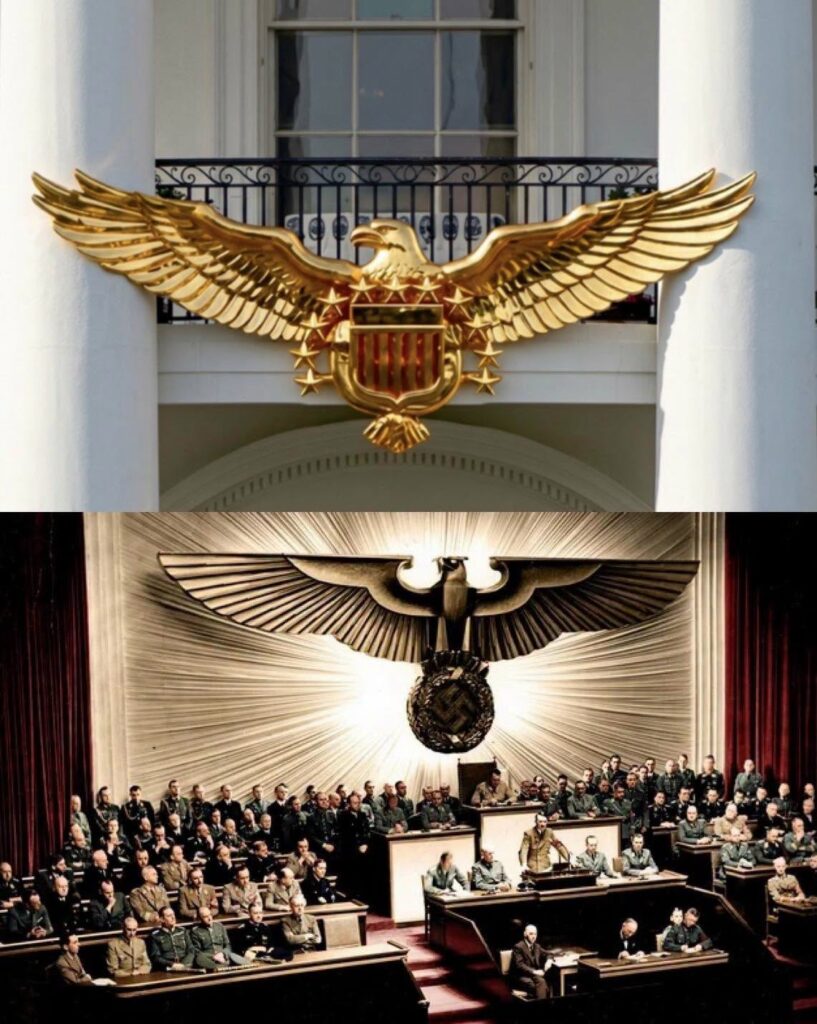

Public Money, Private Hype: From Blockchain to AI – and the #FOSS Path Less Taken

In tech funding, over the last decade, the #EU poured hundreds of millions of euros into the #blockchain mess. The promise has proven to be illusion, we built no working transformation: trustless systems, frictionless governance or new economic layers for Europe. The reality? By any honest social metric, 99.9% of that public funding was poured straight down the drain.

Now we are lining up to do the same with AI. Another wave of hundreds of millions, based on another cycle of hype, feeding frenzy for consultants, startups, and policy conferences. And if we are realistic, 99% of this funding will follow the same path: absorbed into closed, corporate-driven ecosystems with minimal public return, poured down the drain.

In between these two hype cycles, we invested comparatively little in the #openweb and #FOSS. And yet that is where we actually saw meaningful results. Even if we are conservative and say 70% of public funding for #openweb and Free and Open Source Software was wasted, that still leaves 30% that worked. Thirty percent that built tools people use. Thirty percent that created infrastructure that continues to function. Thirty percent that delivered measurable social good.

Compared to less than 0.001% meaningful return from blockchain projects (and that’s being generous), and perhaps 1% from AI funding (also generous), this is an extraordinary success rate. So why aren’t we talking more about this?

The Pattern: Funding the Closed, Ignoring the Commons

The problem is not technology, it’s political economy. Public money is repeatedly funnelled into closed ecosystems. #Blockchain projects were built around proprietary platforms, based on financialisation. They all failed to deliver public infrastructure, most were simply vehicles for extraction.

#AI is following the same pattern. Instead of building public infrastructure rooted in openness, transparency, and shared governance, we are too often simply subsidising closed models and corporate consolidation. The result will be the same: dependency, vendor lock-in, and very little democratic control.

Meanwhile, the #4opens and #FOSS quietly power the world.

  • Servers run on open-source operating systems.
  • The web runs on open protocols.
  • Community platforms run on federated code.
  • Critical infrastructure depends on open libraries.

And yet funding for these projects remains very marginal, precarious, and treated, if at all, as an afterthought.

Why This Matters

This is not only about waste, it is about direction. We are living in an era of climate breakdown, democratic fragility, and accelerating inequality. Public investment needs to strengthen commons-based infrastructure, not deepen dependency on mess of speculative and corporate-controlled #dotcons. When we fund the #fashionista hype cycles we increase centralisation, reduce public oversight and lock ourselves into closed ecosystems, which hollow out our needed local capacity.

When we fund #openweb and #FOSS we build shared infrastructure, increase resilience, enable local innovation to create tools that can be forked, adapted, and reused. Even a poor 30% success rate in commons-based funding creates compounding social value. Code written once can be reused globally. Infrastructure built openly becomes a foundation others can extend. Knowledge stays in the public sphere.

Closed projects don’t compound in the same way. They expire, pivot, get acquired, and then disappear behind paywalls.

The Incentive Problem

So why does this mess keep happening? Because hype is easier to support than maintenance. The current #mainstreaming is to blind, Blockchain and AI come with glossy narratives of disruption and geopolitical competition. They promise growth, dominance, strategic autonomy. They flatter policymakers with the illusion of being at the frontier.

The #openweb and #FOSS, by contrast, are mundane. They are about maintenance, collaboration, and long-term stewardship. They don’t produce any unicorn valuations, the smoke and mirrors that feed splashy policy headlines. But they work, and in public policy, “working” should be the gold standard.

What We Need to Talk About

We need to keep asking direct #spiky questions about what percentage of publicly funded tech projects remain usable five years later? How many are open, forkable, and independently maintainable? Who owns the infrastructure we are building with public money? And does this investment strengthen the commons or subsidise enclosure? If we measured blockchain funding by long-term public utility, it would be exposed as a massive misallocation at best and fraud at worst. If we measure AI funding the same way in five years, we may reach the same conclusion. We #KISS need structural change:

  1. Default to #4opens – Public funding #KISS should require open licenses, open standards, and transparent governance.
  2. Fund Maintenance – Not just #fashionista projects, but long-term stewardship of critical open infrastructure.
  3. Measure Social Value – Not hype, not valuation, not patents, but actual public use and resilience.
  4. Grassroots tech as seedlings – to be open to real change and challenge in tech.
  5. Support Commons Governance – Fund communities, not more startups.

Why We Need to Act

If we do not challenge the current messy #techshit cycle, we keep pushing ourselves into a future defined by the #dotcons, closed platforms with extractive models. To say this is not anti-technology, it is pro-public infrastructure. The choice is simple, do we keep pouring public money into, closed ecosystems with near-zero public return or invest systematically in the messy, imperfect, but functioning #openweb commons.

The data – even by generous estimates – is clear. Thirty percent real return beats 0.001% every time. We need to stop funding hype, we need to fund what works, and we need to say this loudly, before the next billion euros disappears down the same drain.

#FOSS needs to take a social lead

This matters for #FOSS because as if it remains culturally trapped inside the #geekproblem, it becomes socially irrelevant at the exact historical moment it is most needed. Right now, most #FOSS energy still assumes that if you build complex tools, argue narrowly, and keep everything technically “open,” people will come. But only a tiny minority actually want to live the full-stack geek life: self-hosting, compiling, debating licenses, maintaining infra. That path selects for a personality type. It is not neutral.

The problem isn’t that this path exists, it’s that it quietly tries to define culture. The tension is that the #geekproblem tends to reduce political and social questions to technical architecture. It too often treats freedom as a property of code, rather than a property of relationships. But in an era of #climatechaos, people don’t need abstract freedom in protocol design. They need mutual aid to build trust networks and local resilience. They need collective agency in open spaces to coordinate without corporate capture. These are #KISS social demands.

If #openweb remains framed as a technical alternative to Big Tech, it will only attract geeks and edge cases. If it is framed as a public infrastructure for collective survival, it suddenly matters to everyone. This shift in focus is urgent as climate disruption accelerates: Centralized platforms will prioritize profit and state alignment, infrastructure failures will become normal, feeding political polarization. Authoritarian coordination models will look “efficient.” If #FOSS cannot step outside the geek subculture, it leaves the field open to #dotcons and state/corporate hybrids to define digital coordination. That’s not a tech failure. It’s a social failure.

So, what changes this frameing? To make #openweb meaningful to the majority, we need to shift from tools to practices. Don’t only ask people to install software, ask what they are trying to do with digital tools together. Then lower cultural barriers, not just technical ones, by building code for groups, not only individuals. The mainstream internet optimizes for #stupidindividualism, the alternative needs to be balancing this mess, by optimizing for collectives.

Accept messiness, social systems are not elegant, they compost, they fork culturally before they fork technically. Centre use in crisis, not only ideology, when floods hit, when heatwaves hit, when services fail – what does the #openweb enable that corporate #dotcons platforms cannot? If the answer is “we have a nicer licence,” it won’t matter. If the answer is “your community can coordinate and survive without asking permission,” it becomes essential.

The hard truth is only a minority want to be geeks, but almost everyone wants dignity, voice, belonging and some stability in chaos. If #FOSS and #openweb can’t translate into those terms, they remain culturally marginal. This is why the issue is urgent, not because the code is broken – but because the social imagination around it is too small for the scale of the social and ecological crisis. And in the age of #climatechaos, infrastructure that doesn’t scale socially (#fluffy) will be replaced by infrastructure that scales politically (#spiky) – whether we like it or not.

The question isn’t whether #openweb works, it’s whether it can grow beyond the #geekproblem long enough to matter.

Progressive Mainstreaming

Most progressive #mainstreaming isn’t about ending the #deathcult – it’s about making its worship feel more fair, more inclusive, more polite. There is some real everyday value in this. Fewer people get crushed immediately, some suffering is reduced, that matters.

But let’s be honest about what it does not do, it does not get people off their knees to challenge the altar to stop the sacrifice. It rearranges the seating in the temple, feeding the deeper problem, obedience. Progressive mainstreaming accepts the frame, accepts the metrics, accepts the economy of extraction and then argues about distribution. It negotiates better terms with a machine that is killing us. That is not transformation, it’s managed decline.

The project of real change and challenge – the work the #OMN exists for – starts somewhere else entirely. It starts with people standing up and walking away. Walking out of the temple of the #deathcult we all live in, not in purity, utopia or comfort. But into mess, cooperation, unfinished tools, shared risk, and actual agency. This isn’t about better policies inside the system. It’s about building outside it, under it, alongside it – until the system hollowed itself out and no longer matters.

It’s about people picking up shovels, composting the wreckage, and growing something that can actually sustain life. This is simplicity #KISS #OMN

We have already seen the failures: lived through #Indymedia, the #NGO turn, the #dotcons capture, the #Fediverse repeating old mistakes. When we talk about #OMN, we’re trying to stop people from re-learning the same lessons by losing again. Silence would be complicity.

The #OMN is where critique becomes agency. It’s not about “promoting a project”, if we don’t talk about this without something like #OMN, critique collapses into doom, aesthetics, or personal exits. #OMN is a way to, act collectively, without lying about power, money, or governance.

Forgetting is how capture happens, the moment people stop naming alternatives, the space fills with managerial language, funding logic, and fear-based control. We talk about #OMN to keep the space open enough for something human to grow.

The #OMN is a path that resists #stupidindividualism, where most contemporary “solutions” reinforce isolation, personal brands, and individual safety strategies. #OMN starts from the assumption that survival and meaning are collective. We need to keep talking about this because almost nobody else does.

It’s unfinished – and that matters. It’s not about defending a polished system, instead, it’s about holding open a process. Talking about #OMN is how we invite others into the compost rather than presenting them with a finished product to consume.

We talk about #OMN because it’s a native way of saying: “We don’t have to repeat this. We can build differently, together, if we remember what already worked.”*

It’s not evangelism, it’s stewardship.

A few of us have been working on real, positive, horizontal social and technological solutions for over twenty years. Not hypotheticals, not vibes, things that actually work.

We know they work locally, we know they work socially. And after more than a decade building on the #fediverse, we know they can work in tech, at scale without going vertical, corporate, or authoritarian.

This isn’t speculative any more. Our creative task now – the #nothingnew work – is simply to combine what already works: Horizontal social practice, federated #openweb tech, trust-based governance. We already have a slate of projects waiting to be built: #OMN, #OGB, #indymediaback and #makinghistory. What’s missing is not ideas, it is people willing to show up and implement.

And here’s the hard truth: every time we try to talk about radical or progressive language, power, or structure, people retreat into #blocking and ignoring. The same unresolved tensions get replayed endlessly, nothing is mediated, nothing is grounded. Bad will accumulates, the social commons rots.

This rot isn’t accidental – it’s structural – To work our way out of this mess, we need both #fluff and #spiky. We need broad categories to think clearly, the #mainstreaming #fashernista rejection of this isn’t sophistication – it’s submission. It’s a soft, polite form of #deathcult worship.

You don’t dismantle a #deathcult by being nicer to it, you dismantle it by stopping your participation and building something better.

So this is the question, not rhetorical, not theoretical: Are you going to help make this happen? Are you going to pick up a shovel? Or are you going to stay on your knees, arguing about tone while the ground burns?

What is not real is pretending that violence is secondary to discomfort over language

In my life, what is real is people being beaten and shot, blood on the walls, evidence fabricated, mass arrests, torture in prisons, borders closing, and fear becoming an everyday condition. Fear isn’t imagined. Fear is rational.

What is real is watching a police officer chat casually one moment, then flip instantly into an instrument of state violence the next. A human being turns into a mechanism: boots stamping, braking toes, batons smashing heads, cameras destroyed, people dragged away. Hundreds detained illegally. This isn’t abstract. This is lived experience.

This is what power looks like when legitimacy erodes. And this is not new. History is full of these moments – when states retreat from consent and rely instead on force, surveillance, and spectacle. When violence becomes administrative, repression is normalized and denial becomes #mainstreaming policy.

What is not real is pretending that this violence is secondary to discomfort over language. What is not real is prioritising hurt feelings, tone-policing, or abstract arguments about phrasing. What is not real is treating “uncomfortable language” as a greater harm than broken bones, smashed lives, and stolen futures. There is a profound mismatch here.

People are upset about words because words feel manageable. Words can be moderated, reported, debated. State violence cannot. It is harder to face. It demands courage, solidarity, and risk. So attention is redirected, from material harm to symbolic offence. This is how reality gets inverted, this is too much of the mess of the last ten years.

Talking outside someone’s direct experience is not violence. Naming systems of power is not oppression. Describing brutality is not the problem, the problem is the brutality itself. When repression becomes normal, discomfort becomes a distraction. It’s a luxury concern in a world where people are being beaten, imprisoned, and erased. Policing language while ignoring violence is not moral clarity, it’s moral collapse.

If we cannot distinguish between discomfort and domination, between harsh words and broken bodies, then we have already lost our grounding in reality. What is real is violence backed by the state. Everything else is noise, no matter how it makes you “feel.”

Yep, it’s a mess, that needs mediating for any outcome other than more mess to compost.

#Fashionista #postmodern #blocking #spiky #fluffy

The #OMN Path: Openness as Revolution

Let’s think outside the normal paths. This is about revolution as regeneration, not only destruction. In an era built on tech dependency, revolution isn’t only about smashing the machines, it’s about liberating them. Turning tools back into commons, not commodities. It’s composting the toxic monoculture of the #dotcons into fertile ground for the #openweb to grow again. Revolution means reclaiming agency, not blindly rejecting technology, but re-rooting it into light, human-scale, transparent, and accountable relationships.

We need to think about the #openweb as infrastructure for freedom, isn’t just a technical architecture – it’s a social contract. And a #KISS path is to “revolution” means re-establishing that contract through the #4opens. When we build networks this way, we decentralize power, not just servers. The act of publishing, federating, and remixing information freely is itself revolutionary in a world where everything is locked behind paywalls and algorithms.

Tech as commons, not commodity, We’ve learned that “innovation” under capitalism means enclosure and surveillance. Revolution in this context looks like refusal of extraction: creating cooperative infrastructures that are not driven by profit but by maintenance, care, and shared use. Think of community built #p2p mesh networks, open hardware, peer-to-peer storage, and federated #ActivityPub publishing as revolutionary paths – not add-ons, but foundations.

Cultural and cognitive shifts are about shifting the cultural narrative from “user” to participant. From “consumer” to custodian. The real struggle is against the #deathcult of endless growth and the #geekproblem of technocratic detachment. It’s about re-learning how to think together, rebuilding trust, and balancing the #fluffy (care, empathy, collaboration) and the #spiky (truth, resistance, boundaries).

Direct action in the digital today looks like:

  • Practicing digital mutual aid – sharing skills, hosting, dev, and care.
  • Bridging online and offline organising, connecting digital tools to local struggles for housing, food, land, and rights etc.

Above all, any real revolutionary network – like the #OMN – has to strip away the old skins of power. No hierarchies. No hidden structures. No property games. No fetishizing of tools, status, or “official” etiquette. If we’re building something new, we can’t carry the unconshuse ghosts of the old world with us. That means not just saying we’re open, but being #4opens. Open in decisions, and open in how decisions are made. Transparent in process, not just in outcome. Coherent theory is practice, and practice is theory.

Everyday life has to reflect the world we want to grow. That means composting the commodity mindset, no trading social trust for personal gain. It means building through shared assemblies, through community, through small and self-directing circles that stay alive to change and challenge.

The structure of the #OMN should always be simple, transparent, and direct, so that anyone can walk in, understand it, and shape it. No special knowledge required, no gatekeeping. Thousands of “unprepared” people able to join, act, and make it their own. That’s what #4opens means, a living culture of clarity and participation.

Only when a movement reflects the decentralized, self-organizing community it wants to bring into being can it avoid becoming another elitist shell, another bureaucracy pretending to be radical. When the #OMN does its work right, it doesn’t stand above the revolution, it dissolves into it, like a thread into a healing wound, leaving behind not an organization, but a living network.

That’s the path: community, openness, trust, and the messy joy of self-organization.