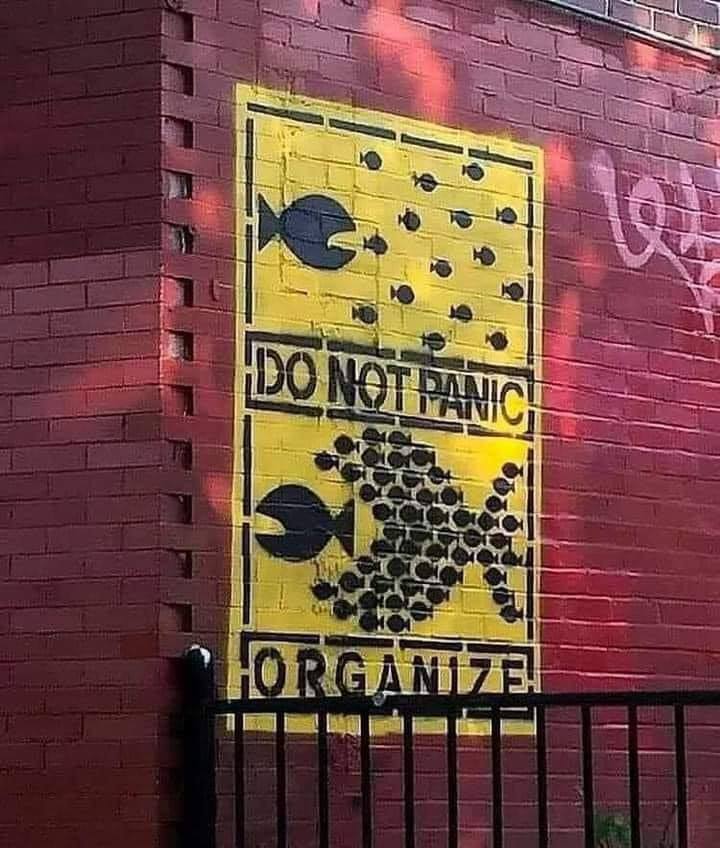
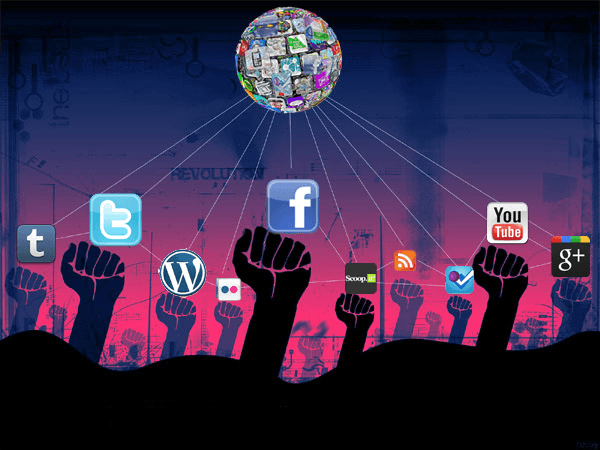
Pick up the shovels to start growing the commons, that’s the #OMN path

There is a temptation to see today’s hard right move as something new. Looking at this mess, the #deathcult is the name I use for the destructive logic of #neoliberal capitalism: a world where profit, growth and competition are the dominant measures of value, while human needs, shared resources and collective responsibility are pushed aside.

If we want to understand the political crisis, we need to dig beneath its surface of how social crisis becomes authoritarian politics. The hard right doesn’t emerge in a vacuum, it draws power from the insecurity, anger and social fragmentation that this system helps produce. History offers some uncomfortable lessons.

Mussolini came from the socialist movement before breaking with the left over the First World War and moving towards nationalism, political violence and authoritarianism. Early fascism combined different political currents before developing into a more defined authoritarian project. In Germany, the Nazis used the myth that internal enemies had betrayed the nation to explain defeat and social crisis. Antisemitic conspiracy theories became central to their account of national decline.

The pattern matters more than any simple comparison between past and present. A society experiences economic insecurity, political failure and declining trust. People feel betrayed, existing institutions appear unable to respond. There are often genuine grievances underneath this anger, the dangerous move comes when structural problems are turned into stories about enemies.

Economic insecurity becomes the fault of immigrants. Political failure becomes the fault of an imagined conspiracy. Cultural change becomes evidence of national decline. Complex social problems are reduced to a few people or groups who can be blamed. The system disappears from view, and the scapegoat takes its place. This is politically powerful because it gives people a clear target without requiring anyone to challenge the structures producing the crisis.

The promise to make the nation great again, authoritarian nationalism often offers a story of lost greatness and promised renewal. Mussolini drew on an idealised image of the Roman past. Nazi ideology constructed a racialised national community around ideas of ethnic purity and exclusion.

National identity itself is not the problem. People need belonging, shared history and meaningful relationships with the places where they live. The danger comes when belonging becomes exclusion. “We live here together” becomes “this is ours, and those people do not belong.” A collective need for security is turned into a demand to identify outsiders. The promise of renewal becomes permission to deny others their place in society.

This is one way the #deathcult and the hard right can reinforce each other. A society organised around competition and insecurity leaves people looking for explanations. Authoritarian nationalism offers belonging and certainty without requiring a fundamental change to the economic structures producing the insecurity. The blame moves around, the underlying system remains.

The important point is the process of #mainstreaming. In social democracy, a fringe idea becomes a campaign demand, it enters a manifesto, other parties adopt parts of it. Newspapers discuss it as common sense, eventually, the boundaries of acceptable political debate have moved. The mess is not only the most extreme position, it is the gradual normalisation of the assumptions underneath it: that particular groups are the cause of national decline, that exclusion will restore social stability, or that some people’s rights can be treated as expendable.

This is how political culture changes before a decisive break with democratic institutions ever occurs. There is an important difference between the political environment of the twentieth century and our own, as the #dotcons algorithmic control industrialize the problem. The old hard right relied on newspapers, meetings, party organisations and physical networks. Today, political messages also travel through algorithmic platforms capable of distributing them at enormous speed.

The #dotcons turn grievance into a feedback loop: anger → attention → engagement → more anger. A complicated social problem becomes a short video with a villain. A conspiracys travel faster than a careful explanation. Outrage becomes a product, and the systems distributing it have incentives to keep feeding people these digital drugs to keep people engaged.

The #dotcons commercial incentives of attention-driven systems amplify conflict, reward emotional reaction and make it harder to sustain a shared understanding of reality. That is part of the #techshit problem, were, technical systems built around commercial incentives reproduce and intensify social problems while presenting themselves as neutral tools.

The #deathcult encourages #stupidindividualism the idea that everyone is responsible for their own survival, that social problems are individual failures, and that collective solutions are either impossible or unnecessary.

History shows how political fragmentation pushes authoritarian movements. In the final years of the Weimar Republic, conflict between the left’s major parties, violence and the selling out/weakening of parliamentary government contributed to the conditions in which the Nazis gained power.

Polarization makes collective action harder when it turns differences into an existential conflicts, when movements spend all their energy fighting internally, they stop building. When every disagreement becomes betrayal, cooperation becomes impossible.

When people lose the ability to work together across differences, someone can arrive promising to settle everything through force and authority. This leaves people isolated precisely when they need one another. When the emergency becomes permanent, we cannot build an alternative society if we destroy every space in which we might cooperate.

Another historical warning concerns the politics of exception. Authoritarian movements argue that ordinary democratic processes are too weak to handle a crisis, extraordinary circumstances supposedly require extraordinary authority. An emergency like on rushing #climatechaos does not automatically produce authoritarianism, societies sometimes genuinely need exceptional measures to respond to immediate dangers.

The #deathcult thrives on the claim that there is no alternative. The hard right turns that same sense of inevitability into a demand for control. If people are persuaded that the only choices are fear or authoritarian order, the space for alternatives becomes smaller. This leads to the next stage of the #deathcult – when human beings become economically useless.

Beneath these political mechanisms sits a deeper problem, the idea that human worth depends on blinded economic usefulness. As people are encouraged to see themselves as individual economic units, competing for a place in a system that treats profit, growth and capital accumulation as its highest values. Work harder. Consume more. Compete better. Become more productive. Apologise for needing anything.

What happens when you become ill, disabled, unemployed, old, poor or simply unwilling to spend your life enriching someone else? If your value depends on your productivity, it becomes easy to treat your needs as a burden and your existence as something that must be justified. This is one of the cruellest tricks of #stupidindividualism: a structural problem becomes a personal shame.

People begin asking whether they deserve a decent life, rather than asking why the conditions for a decent life are being made conditional in the first place. At the same time, the concentration of wealth creates opportunities for a small number of #nastyfew actors to influence politics, media, infrastructure and public debate. The danger of systems that weaken accountability and treat the suffering of some people as an acceptable cost of doing business.

Homelessness, preventable illness, poverty, displacement and environmental destruction do not all arise in the same way. They do, however, show how human needs can be subordinated to other priorities. A system can destroy lives without ever officially deciding to kill anyone. The question is not only whether a class of people might directly target those they consider economically useless. It is why we tolerate arrangements that make some lives more expendable than others.

And why do we internalize that judgement, apologizing for our existence instead of challenging the system making us feel ashamed? The problem is social, not individual, as there is no individual solution to a fundamentally collective problem.

We cannot buy our way out of a crisis produced by the concentration of wealth and power. We cannot solve social isolation through endless individual self-improvement. We cannot rebuild shared reality by retreating further into personalised feeds and private bubbles. Nor can we expect a change of politicians, a new app or another set of slogans to solve the deeper problem on its own.

We need to rebuild the social capacity to act together, that means practical communities, independent media, shared resources, public accountability and spaces where people can disagree without destroying their ability to cooperate. It means creating alternatives before a crisis forces us to act, rather than waiting for existing institutions to fail completely.

This is where the #openweb becomes important, the #OMN: news, archiving and governance. The path is news → archiving → governance. Before we can govern together, we need ways to remember together. Before we can remember together, we need trustworthy public media. And before that works, we need communities capable of disagreeing without destroying themselves.

The #OMN works towards federated media flows in which people and communities can publish, subscribe, moderate, archive and share information without handing ownership of the entire media environment to a central platform. The – open data, open source, open standards and open process – provide practical principles for examining whether this infrastructure is genuinely open and accountable.

The aim is not to pretend that technology alone will save us, it is to build tools that support collective participation rather than passive consumption, and shared resources rather than platform ownership. The same principle lies behind #OGB, the Openweb Governance Body: exploring how autonomous communities coordinate, negotiate and govern their relationships without surrendering everything to a central authority.

These projects are small parts of a much larger social challenge. But they offer a practical direction beyond simply complaining about the existing system. This is social composting: learning from the mess

We need to compost history, that does not mean romanticizing the past or pretending that every earlier movement got things right. It means treating history as material we can work with. Keep what helps us understand, expose what failed, learn from the damage. Do not repeat the structures that produced it.

The hard right thrives when people believe that the only choices are fear or control. The #deathcult thrives when people believe that there is no alternative to competition, extraction and permanent insecurity. Our task is to make other possibilities practical.

Trust instead of fear, commons instead of concentrated ownership, participation instead of spectatorship, cooperation instead of permanent culture war. Not another shiny political platform, and not another round of #techchurn. We need social infrastructure through which people can build together, maintain shared memory, challenge concentrated power and create alternatives rooted in everyday life.

The future is not predetermined, the worst outcomes are not inevitable. But ignoring the mechanisms that produce them will not make them disappear. The hard right becomes dangerous while its assumptions are becoming normal. The #deathcult becomes harder to challenge when we mistake its values for common sense.

We need to dig at the roots, not just cut back the visible growth. Pick up the shovels to start growing the commons. That’s the #OMN path.
Can the #openweb reboot scale without copying the #dotcons?

The old system is already compost, the question is what we grow from this mess

We need to stop talking about “climate change” as though we are discussing a slightly inconvenient change in the weather. Climate change is too soft, too neutral. Climate change makes it sound as though something simply happened to us. It didn’t, we pushed this mess, we built an economic system that treats the living world as raw material, turns everything into property, pushes everything through markets and then calls the resulting destruction “growth”. The next twenty years will be the “bill” we pay for this short-sighted greed. And the really dangerous part is that we are still trying to solve the problem using the same thinking that created it.

Welcome to #climatechaos, not one dramatic event that starts on a particular day, it is chronic, it accumulates, compounds. It moves through food systems, water systems, ecosystems, economies and communities. This makes it politically difficult because there is no single moment when everyone can point at the disaster and say, there it is. Instead, the extremes get worse, harvest fails, rivers floods, insurance disappears. The food price rises, drought lasts longer and finally the ecosystem quietly collapses. But one thing that is becoming common sense is we cannot carry on pretending this is normal.

A small step is that the language matters “Global warming” sounds almost pleasant, “Climate change” sounds neutral. Climate breakdown tells us something more important, there is a direction of travel, continuing accelerating the conditions that make human and ecological life less stable. That is what the next twenty years are, yes science based global averages are useful, but the things communities actually experience are extremes – heat, flooding, drought, food insecurity and other disruptions.

Living through the consequences, will show that today’s common sense, the #neoliberal answer to #climatechaos is wonderfully convenient for the #nastyfew – you are the problem, you have the wrong car, eat the wrong food, you use too much energy and bough the wrong thing. You didn’t recycle enough, and feel guilty.

This is the #deathcult at work, the individual is made responsible for a systemic crisis while the systems generating the crisis remain untouched. The absurdity is the dumping of climate responsibility onto individuals while corporations continue selling products that cause global warming. This mess isn’t accidental – #stupidindividualism is politically useful as isolated individuals have very little power. Where communities, workers, cooperatives, movements and collective action do have power.

By now it should become a little obvious that we don’t need greener consumption, what we do need a different relationship with the living world, the current uncomfortable path. Let’s make this plan – #Climatechaos isn’t an energy problem, it isn’t just a transport problem, it isn’t just a technology problem, it is a problem with how we understand ourselves. We have built a culture around the idea that everything exists to be owned, land, water, animals, forests, minerals, knowledge, attention. Even our relationships, on the #dotcons, become a commodity.

Everything becomes something that can be extracted, then we are surprised when the living systems collapse. To start to compost this mess the next twenty years need to be more about moving from ownership to participation, from extraction to stewardship. About better balancing competition and cooperation to move from isolated individuals to resilient communities. In an economic sense from commodities to commons. And yes, it is a much bigger political project than buying an electric car.

Food is going to expose the current blinded stupidity, food is where the abstraction ends. You can argue about climate models forever, but when food becomes unreliable and expensive, everyone understands. The climate discussion points to the vulnerability of agricultural systems, including dependence on a few major crops due to growing pressure on farming from heat, drought and extreme weather.

The response cannot simply be another technological monoculture. We need real diversity, more resilient crops, local knowledge, healthy soils to grow this biodiversity. We need shorter and more resilient supply chains, community food systems. And probably a much more serious conversation about what we choose to eat and how much land and sea we devote to producing it because agriculture isn’t happening outside nature.

The next twenty years will remind us that nature is not decoration, currently we treat biodiversity as something nice to have after the economy has been sorted out. But ecosystems are part of the economy, wetlands manage water, salt marshes protect coasts, healthy soils support food, forests regulate water and store carbon. Biodiversity provides resilience, this is not romantic environmentalism, it is infrastructure.

And then comes the techno-fix – whenever capitalism encounters a problem caused by technology, extraction and industrial growth, it offers us more technology. So next we get geoengineering, perhaps we can reflect sunlight, perhaps we can manipulate the atmosphere, perhaps we can capture carbon, perhaps artificial intelligence will optimise everything. Or perhaps some billionaire will save the planet. This is the reheated #mainstreaming #geekproblem version of climate politics, the problem is that the blinded underlying assumption, the system is fine, we just need a better machine.

But, unspoken is more mess we then need to compost – Who gets to control the thermostat? Who decides? Who is accountable? Who gets protected? Who gets sacrificed? These are not engineering questions, they are political questions, the next twenty years will be a democratic test of where the climate crisis becomes bigger than climate policy. We are going to have to make real choices about where should people live, what happens to communities that cannot be protected? Who pays? Who decides? What technologies are acceptable? And from a deep green prospective what land is for humans? What land is for the rest of life?

There are no purely technical answers, science can tell us what is happening, it tells us what happens if emissions continue. But science cannot decide what kind of society we want, that is politics, at best it is democracy. And at worst it is where the #mainstreaming agenda becomes dangerous as #climatechaos doesn’t care about our current political comfort zones. To find a path through this mess, we have created, we need resilience, not reassurance

Doom on its own is useless, but pretending everything will be fine is worse, people need real information about what is happening? What are the risks? What can we do? What can our community do to prepare, to organise? This is why #KISS communication needs to become local and participatory.

The example of community-based #OMN like projects matter – people come together, learn what is happening and then discuss what they can do locally. The process itself builds resilience, this should be obvious. A community is more resilient when it knows how to communicate, when it can share information. More resilient when it trusts people, when it has local knowledge and more resilient when it has shared infrastructure to remember what happened last time.

That is why media matters – the rebooted #openweb becomes climate infrastructure – where the #climatecrisis connects directly to the #OMN. We need an information infrastructure that belongs to communities rather than corporations, so communities can continue to document what happens to them. Because when the next flood comes, the official report six months later isn’t enough. The native #openweb can be part of the infrastructure of climate resilience that is if we stop treating it as another marketplace for attention.

The #OMN is native to this kind of future, it’s not a climate project in the narrow sense. But the underlying problem is the same – how do we build systems that support collective intelligence rather than extracting it? How do we allow people to publish, share, moderate, correct and preserve information without handing control to a handful of #closedweb platforms?

How do we create the trust we need without building more centralised authority? How do we make community knowledge persistent? How do we build infrastructure that can survive the failures of individualist #dotcons platforms? These questions become much more important as #climatechaos increases. Because resilience requires distributed systems, but not just technically distributed systems, we also need socially distributed systems.

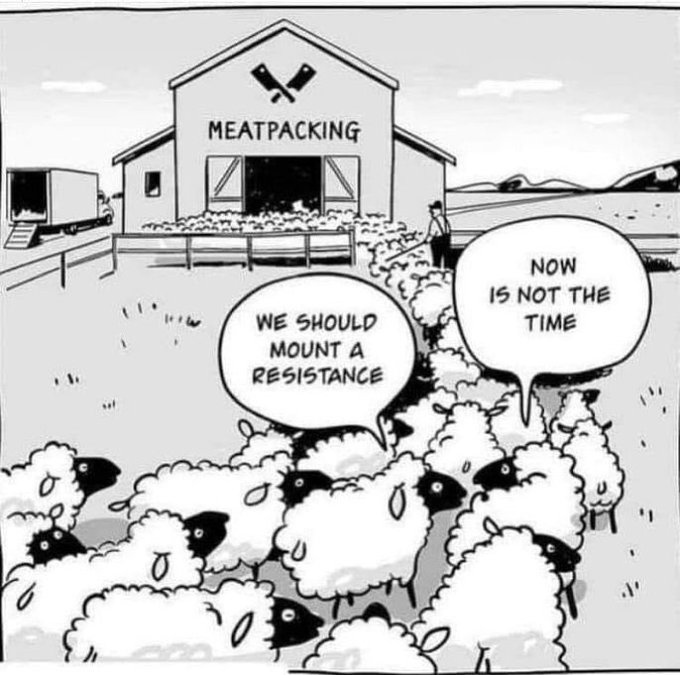
The mainstream will always tell us – now is not the time, too radical, too expensive, too difficult, too political for people to accept, or the market isn’t ready, the technology isn’t ready. We have had 20 years of stalling change and challenge: we need more evidence, consultation or another #fashionista report. The #KISS answer is simple, NO, we have had decades, the next twenty years we either build resilience or discover how truly fragile we really are.

On a thin but needed positive note, the #climatecrisis is already producing the conditions for change, the question is whether that change is democratic or authoritarian. And in a narrow sense of our #openweb culture, whether it breaks the monopoly of the #geekproblem or gives it more power. It’s a simple choice of do we compost the old system or let it push us aside.

To not simply be pushed aside we need political movements capable of defending life in its widest sense, yes, the next twenty years will not be comfortable. There will be disruption, loss, conflict and there will be failures. But the future is not simply something that happens to us, it is something we organise. So please stop asking “How do I, personally, save the planet?” and ask “What can we build together that makes a different future possible?” in short get off your knees from worshipping the #deathcult, and stop waiting for the #mainstreaming agenda to save us.

  • In internet culture, stop handing every problem to the #geekproblem.
  • Light green environmentalism stop turning climate action into consumer guilt.
  • In economics stop treating nature as an externality.
  • In fashion, stop treating people as consumers.

To compost current mainstreaming mess, we need to start treating people as participants to rebuild the commons and infrastructure of trust. In short, we need people to #makinghistory, by getting the bloody shovels out. The old system is already compost, the question is what we grow from it.

#climatechaos #climatebreakdown #deathcult #mainstreaming #geekproblem #commons #openweb #OMN #MakingHistory #resilience

Update: I just read this you should too https://hamishcampbell.com/wp-content/uploads/2026/08/National_security_assessment_-_global_biodiversity_loss__ecosystem_collapse_and_national_security.pdf

Update02: How do we describe the problem and how we organize ourselves to deal with it? For the #fashionistas, the point is that language isn’t just decoration. A #hashtag is a way of framing attention. If you call someone “evil”, “dangerous” or “nasty”, you may simply reinforce their preferred identity, yes, we’re tough, we’re feared, we’re fighting the enemy. You’ve accepted their frame.

“Weird” works differently because it pokes at their claim to represent normality. It reverses the us versus them story: hang on, perhaps the strange behaviour is coming from you. But this is where the #OMN/#KISS point comes in. Calling the #nastyfew “nasty” isn’t really about persuading the #nastyfew. It’s about helping us recognize the pattern.

We need language that lets ordinary people point at a structural problem without having to become political theorists, join a faction or spend three hours arguing about ideology. That’s what an affective hashtag can do – #nastyfew = focus. Not “these people are monsters and we must destroy them” more “there is a small concentration of people pushing harmful behaviour and power – let’s recognize the pattern, stop pretending it is normal, and organize our way around the problems they are creating.”

The important bit is US, the understanding that the #nastyfew become more powerful when we give them our attention, fear, division and energy. If we can name the pattern as an abstract, keep our heads, and build better path, their power becomes much less interesting.

This is why #OMN is interested in media flows rather than personality cults, so we don’t spend all day fighting the person. We look at the flow:

  • Who is amplifying what?
  • Who benefits?
  • What behaviour is being normalized?
  • Where is trust being built or destroyed?
  • What can we change locally?

The #geekproblem to often wants to solve this with another closed path, the #fashernistas want another clever narrative, but the #nastyfew want us fighting each other, its in the name. Maybe the simpler answer is to name the pattern, focus our attention, build the alternative, and stop feeding the circus.

#KISS

Public conversation about public problems

Our current working models of “governance” in #opensource are mostly:

Monarchy – the dictator for life.
Aristocracy – the devs.
Oligarchy – NGOs/funders.
And way out on the edge: Democracy – the users.

We need better governance native to the #openweb. Let’s look at this at a more personal level before the normal wider social view. Yes, in #FOSS development the devs doing the work deserve respect, and #OMN isn’t arguing that users should simply demand things from volunteers.

The point about “aristocracy” is about more where decision-making power sits, less whether devs are privileged people or whether their work has value. If the people who write and maintain the code also decide what the project is, what gets built, what gets rejected and how the project develops, then you have a governance structure where technical expertise becomes political authority.

Hope am clear, that isn’t a criticism of individual developers, it’s a structural observation. The #OMN approach is to separate doing the work from owning the direction. Developers are essential participants, but so are users, moderators, communities and other contributors. Different kinds of knowledge need different kinds of power.

The challenge is building governance where devs don’t get bossed around by users, users don’t get bossed around by devs, funders don’t get to buy the direction, and nobody gets to become the permanent ruler.

That’s what the #OGB work is trying to explore: governance native to the #openweb, based on trust, transparency, participation and voluntary cooperation. This alternative isn’t “users rule”, it’s shared power with different roles.

With this in mind lets talk about the wider issue, a reminder: when I talk about the internet and society, I am not necessarily talking about you, I am talking about groups, cultures, classes, institutions and patterns of behaviour that you might be part of. You can recognise yourself in a critique without the critique being a personal attack – Simple – Take the useful bit and move on.

What is interesting – and a pretty good example of #stupidindividualism – is how difficult this has become. We increasingly seem to believe that we are not allowed to talk about groups any more. Everything has to be reduced to the individual “Are you saying I’m stupid?” “Are you attacking me?”
“Who exactly are you talking about?” This makes it difficult to discuss social patterns, and that matters because many of the problems we face are not individual problems. They are produced by relationships between people, institutions, technologies and economic systems.

If we cannot talk about groups, we cannot talk properly about the #geekproblem, #mainstreaming, the #dotcons, #NGOs and funders, tech communities, activist cultures, class interests, institutional power, #neoliberalism or the wider #deathcult culture. We end up privatising a public conversation.

This is one of the things that makes #dotcons-style social media so destructive, as everything becomes personalised, emotional and reactive when structural criticism gets turned into interpersonal conflict. But a feeling is not a fact, a feeling attacked does not necessarily mean someone is attacking you. Sometimes it means that something has made you uncomfortable, or challenged a worldview you have become accustomed to.

That discomfort can actually be useful as the point isn’t to find individuals to blame, the point is to understand the systems and cultures we are collectively caught inside. We need to get beyond the #neoliberal #TINA – There Is No Alternative – thinking that reduces everything to individual choice and responsibility. We need to be able to say – This is a group pattern, a cultural pattern, a class interest, an institutional problem. It’s about how power reproduces itself, then we can actually talk about what to do about it. That is the conversation we need to reclaim: public, collective and capable of naming the structures that shape our lives.

Remember none of this is about personal attacks, not tribal prat fights, not individualised outrage. It’s a public conversation about public problems.

#stupidindividualism #mainstreaming #openweb #OMN #deathcult

Living through twenty years of #dotcons addiction

For those of us who’ve spent the last twenty years working around alternative technology, grassroots media and activism, the hardest thing to watch has been how deeply the #dotcons have become embedded in the culture. We know the problems, we’ve been talking about surveillance, extraction, algorithmic manipulation, platform lock-in and the destruction of community for years. And yet we keep going back, not because people are stupid, but because addiction is powerful – especially when the thing you’re addicted to is also where everyone else is.

This is where #mainstreaming becomes such a problem. People have been, and still are, vile in their interactions with the alternatives. Instead of helping build something different, too much energy gets spent defending the existing system, attacking people trying alternatives, or having endless prat fights about which alternative is ideologically pure enough. The result? We waste years fighting each other while the #dotcons keep growing.

Our #mainstreaming crew/friends are always pushing pointless fights over alternatives, while defending the obvious worship of the #deathcult – forty years of #neoliberal “common sense” normalised extraction, competition, growth and individual consumption as if these were laws of nature, they aren’t, they are political choices. And “common sense” built around those choices is going to take time – and a lot of messy work – to change.

That’s what we mean by composting, not throwing people away, not creating another subculture purity club. Taking the accumulated #techshit, failed projects, bad assumptions, ego battles, corporate habits and activist baggage and turning it into something useful. Because dumping Big Tech isn’t just a matter of personal politics, it isn’t even primarily about “tech sovereignty” – that is another con when sovereignty means building our own little versions of the same extractive systems. It’s about survival – Big Tech is the latest flag-bearer for our recurring worship of #deathcults.

After living through this mess, we don’t need another shiny platform, we need to recover the ability to build things together. Small-scale, federated, open, human, trust-based, with memory and governance. With communities that can survive the failure of the latest #dotcons or #fashionista platform. That’s the point of the #openweb, #FOSS, #Indymedia and projects like #OMN. Not another tech fashion, more a way out of the addiction. So, grab a shoal and compost this mess, please.

Why #FOSS matters socially

The internet didn’t become broken overnight, it drifted from being a network of communities into a marketplace dominated by platforms whose purpose is extracting value. This is the logic of #dotcons most of us invested our lives and community into. How did we get into this mess? The problem isn’t only bad companies, it’s that our digital lives depend entirely on proprietary #dotcons paths and software, commercial interests end up controlling our reality.

This is why #FOSS (Free and Open Source Software) matters. The “free” in #FOSS is about freedom, the freedom to use, study, modify and share the tools that shape our lives. Those freedoms create something much more important than software, they create social power. Open code means community accountability.

Instead of trusting #closedweb corporations, we can build “native” trust through transparency. That changes how communities work as closed platforms create consumers, open projects create participants. The community doesn’t just use the infrastructure, it becomes in part responsible for maintaining it. We can exit to a more #DIY path, were anyone can inspect, improve, challenge and adapt to disparate community needs.

This isn’t always the fastest path as open collaboration is often messy. Consensus takes time, criticism can be uncomfortable. But these are social strengths, not weaknesses. Diverse communities find problems earlier, reduce hidden bias and create paths and systems that are more resilient because they are shared.

An example of how #FOSS works

The #OMN approach builds on this real world path and body of ideas. That technology can strengthen communities rather than replacing them, code can support human trust rather than algorithms deciding everything. Infrastructure should belong to the commons rather than becoming another private enclosure.

Today’s #closedweb social media platforms are digital landlords. Yes you may build a following, create value and invest years of work, but you’re still a tenant. The rules can change overnight, your reach can disappear, your community can be fragmented at the click of a button.

The #openweb offers another path were we have control of identity and content to connect through open protocols instead of closed silos. We need this more than ever to building communities that can survive the failure – or hostility – of any single platform.

We can’t keep repeating the same mess, this composting matters even more in the age of #AI. If the software, models and infrastructure are closed, then a handful of companies determine how knowledge is created, filtered and shared. If they are open, communities can inspect them, improve them and govern them together.

The future isn’t simply open source software, it’s open source society. That means investing back into the commons we depend on. Maintaining infrastructure, supporting contributors, building institutions that outlast individuals. Planting trees whose shade we may never sit under.

That’s what #OMN is about. Not simply writing better code, but helping build a better social fabric for the #openweb. Because freedom isn’t something technology gives us, it’s something communities build together.

A #mainstreaming video looking at this.

The current common sense of #neoliberal worldview replaces trust with greed as the social motivator. The problem is that every successful society is built on trust. When you undermine trust, you build a #deathcult. Climate breakdown, inequality, social isolation and failing public institutions are not accidents – they’re the predictable outcomes.

When people recognise the problem, ask them what the solution is. Most will instinctively reach for the same neoliberal “common sense” that created the crisis. That’s the moment to gently point out that those ideas are part of the #deathcult, not a way out.

The alternative starts with rebuilding trust, commons and community, #FOSS needs to become a core to this.

Why Stories Matter on the #OMN

Facts matter, technology matters, governance matters. But people rarely change because they read theory, a specification or a list of features. People change because of stories, this is why storytelling is central to the #OMN path. A story gives people somewhere to stand, it connects ideas to lived experience.

Instead of explaining the as an abstract framework, tell the story of a community escaping a #dotcons platform by building trust on the #openweb. Instead of arguing about governance, tell the story of how a group solved a conflict through #OpenProcess. Instead of listing technical features, tell the story of someone who regained control of their community tech after years of platform lock-in.

Stories carry values, the last forty years of #mainstreaming have been held together by stories about competition, consumption and individual success. These stories have normalised the #deathcult, making extraction and enclosure feel like “common sense.” We now need better stories about cooperation instead of competition, commons balancing ownership, about trust instead of surveillance. Stories about building rather than consuming.

The #Fediverse itself is a story, an accidental reboot of the #openweb that proves another internet is possible. It isn’t perfect, but it demonstrates that people can build social infrastructure without billionaires directing the conversation.

The challenge is that the academics or the #geekproblem tell stories only to other, academics or geeks, technical and academic paths are important, but they don’t inspire people to act, so we need stories that people can understand:

  • A neighbourhood rebuilding local media.
  • Boaters organising to defend the waterways as a commons.
  • Communities escaping the #dotcons.
  • Volunteers composting #techchurn into useful tools.
  • Ordinary people discovering that they can build infrastructure together.

These stories become shared memory, shared memory becomes culture, culture shapes “common sense.” and changing common sense is how lasting social change happens. So don’t just build software or academic theory, tell stories that help people imagine themselves as part of a healthier #openweb.

#OMN #FOSS #openweb #ActivityPub #Fediverse #commons #DIY #makinghistory

Why we use the #deathcult hashtag

People sometimes ask why I use the hashtag #deathcult. It isn’t just a provocative label, it is to name the dominant political and economic logic that has shaped the last forty years. By #deathcult, I mean the era of #neoliberalism: a system that treats endless economic growth, privatisation and competition as unquestionable “common sense,” even when the consequences are ecological collapse, growing inequality and social breakdown.

I call it a cult because, like any successful ideology, it becomes difficult to see from the inside. Its assumptions become so normal that alternatives appear impossible. Margaret Thatcher’s famous phrase, “There Is No Alternative,” sums this up perfectly. The “death” part has become harder to ignore, due to movements like #XR (Extinction Rebellion), the reality of #climatechaos has entered mainstream discussion. We can now see that continuing on our current path means ecological collapse, mass displacement and the deaths of millions – and displacement of billions – of people over the coming century.

Of course, neoliberalism is not something entirely new. It is an extreme form of capitalism, and history has seen similar periods before. One example is Britain’s response to the Irish Potato Famine, where market ideology took precedence over human need, contributing to mass starvation, displacement and suffering.

After the Second World War, many countries moved towards forms of social democracy. Capitalism was softened by stronger public services, labour rights and welfare systems. These reforms were far from perfect, but they recognised that completely unrestrained markets created instability and injustice. In part this “liberal golden” era was held in place by there being an alternative of soviet communism.

From the late 1970s onwards, much of that understanding was forgotten. Deregulation, privatisation and financialisation became the dominant ideology once again. Politicians like Jeremy Corbyn and Bernie Sanders represent attempts to move back towards that earlier social democratic settlement. Though this compromise path of social democracy is not a final answer, as it still operates within capitalism, but it is certainly preferable to the #neoliberal model that currently dominates. As radicals, though, we should aim higher. We need to build systems based on commons, cooperation, ecological responsibility and democratic participation, not simply manage capitalism more fairly.

This is where #OMN (Open Media Network) comes in. The problems we face are not only economic, they are also about communication. Today’s digital infrastructure is dominated by #dotcons: corporate platforms that monetise attention, shape public debate and concentrate power. Facebook, Google, Apple, X and similar platforms have become essential infrastructure while remaining accountable only to capital rather than communities.

The answer isn’t simply better regulation, it’s rebuilding the #openweb. Like the #Fediverse, the #OMN is one small contribution towards this path: creating media and communication infrastructure based on the – Open Data, Open Source, Open Standards and Open Process – so communities can shape their own communication instead of renting it from billion-dollar corporations.

People also ask why I use so many hashtags, the answer is simple, the web is made from links. Hashtags are one of the few linking technologies that work across platforms. They allow conversations to escape individual silos and become discoverable across the wider web. They are not meant to replace ideas; they are signposts pointing towards larger conversations that matter. Yes, they can look cryptic, but every shared language starts somewhere. If we never create language for new problems, we remain only trapped inside the vocabulary of the systems we’re trying to change and challenge.

Changing language doesn’t change the world by itself, but it can change how we think about the world, and changing the conversation is often the first step towards changing society itself. That’s why I still use #deathcult, not as an insult, but as a way of naming a system whose destructive logic has become so familiar that people struggle to imagine anything different. The challenge now is not simply to criticise that system, it is to build practical alternatives.

One thing has shifted over the last few years: it’s becoming #mainstreaming to recognise that #neoliberalism is a #deathcult. Composting this mess is the path of #OMN, the #openweb, and the .

For those who like to believe in social democracy, this isn’t an argument against the gains it has won. Strong public services, workers’ rights, progressive taxation and democratic institutions have all made life better for millions. They matter, and they are worth defending.

But we should also recognise their limits. As long as investment and production remain under the control of capital, democracy stops at the workplace door. We get to vote for governments, but rarely over what our economies produce, how resources are used, or whose needs come first.

The next step is not simply kinder capitalism, but extending democratic principles into the economy itself. Building commons, cooperatives, public ownership where appropriate, community governance, and digital infrastructure that people collectively control. That’s the direction #OMN points towards: not replacing one elitist crew with another, but growing the practical foundations of economic democracy from the grassroots up.

#KISS

Oxford boaters every day commons

There will be increasing experience of commons as lived infrastructure, not theory, not an idea waiting to be implemented. As the #mainstreaming keeps failing people will need practical, community-led way of meeting shared needs that work and exists wherever people cooperate outside of markets and hierarchy. Commons are not abstract systems, they are what people do when they stop waiting for permission.

We have a recent example – #Oxfordboaters it is messy commons in real time, not a perfect system, more a lived commons under pressure. A community trying to juggle shared infrastructure (boats, moorings, water systems), shared risk (flooding, breakdowns, legal pressure), shared survival (housing precarity, cost of living, access to services) and shared conflict (governance, trust, personality tensions). This example is what commons actually look like in practice, not clean, not tidy, not ideologically pure, but functioning through necessity.

When the state and market do not meet needs, people fall back on each other, that is sometimes the commons’ path… The lesson we learn, it is easy to see, commons are not harmony, they are coordination under pressure. What we can also see is the mistake #fluffy people make in thinking commons are about agreement, they are not, commons are about negotiating conflict, sharing risk, maintaining infrastructure by building trust over time so we can recover from failure repeatedly. The last 4 months of #Oxfordboaters show all of this, the hard truth – Commons fail when they cannot evolve governance faster than crisis accumulates – this is not a moral failure, it is an organisational challenge.

So why do commons break – and why do they keep coming back. Like most grassroots paths, #Oxfordboaters reveals three recurring pressures:

  1. External pressure – State regulation, land pressure, legal ambiguity, the enclosure dynamic never stops.
  2. Internal fragility – Informal systems rely on trust. Trust gets strained under stress, inequality, and burnout.
  3. Governance lag

Decision-making structures rarely evolve as fast as the problems they face, this is a pattern across almost all commons. Commons do not fail because people stop caring, they fail because complexity outgrows structure. But there is a happy part of composting this mess – failure is a part of commons evolution, commons are not stable objects, they are adaptive processes. Oxfordboaters shows that even broken commons still generate mutual aid, shared knowledge, infrastructure repair and survival capacity. Yes, in common sense market logic, this would be “inefficient”, in commons logic, it is resilience under constraint.

The #OMN project framing is why this matters beyond boats. The Open Media Network (#OMN) view is simple – we are not just trying to describe commons. We are trying to improve their ability to survive contact with reality. This example is not a niche story, rather a micro-version of housing systems, digital networks (#fediverse, #openweb), activist spaces, climate adaptation communities and post-institution survival systems. These same patterns repeat everywhere, when systems fail, people build commons whether they call them that or not.

The dangerous mess is we have unlearning commons, the cultural – 40 years of #neoliberal thinking has trained people to believe that trust is weakness, cooperation is fragile, governance must be top-down and commons are “messy exceptions” rather than default behaviour. So even when people build commons, they then try to formalise them into hierarchy by turning them into organisations or burn out trying to manage them individually. This reaction is the mess we need to compost, our example, Oxford boaters currently sits right inside this tension.

We learn what actually works, the pragmatic commons path, a few patterns consistently work: small, local decision loops, visible shared infrastructure, flexible governance that evolves to grow redundancy (no single point of failure), permissionless participation and clear boundaries for conflict resolution. This is not simply, but it is a working #KISS maintenance path.

Markets and states are both reaching limits of adaptive capacity, commons are no longer optional, they are what remains when institutions fail to scale care. The #OMN conclusion is simple, commons are how we survive collapse, that in the wider context is unavoidable, with overlapping systemic crises, ecological, economic, political, informational.

The current mess, and delight at Oxford boaters is a signal, a messy, imperfect signal that says: people will rebuild cooperation when systems break down – but also that we need better ways to support this. Commons are not about perfection, they are about persistence, they are survival systems that people can actually live inside. Our example shows both the fragility and the necessity of this work. The question is not whether commons will exist, it is whether we will learn fast enough to stop repeating the same failures in every new form.

Our #mainstreaming problem. If you are wondering why I keep documenting the issues around activism, this is why. Next time, maybe we can learn, maybe we can mediate our “libertarian cats” a bit better and get a less messy path, because we cannot keep making the same mistakes over and over.

I have been through this mess hundreds of times over 40 years of working on change and challenge, outreach and community building. This is not theory, it is experience. Activism and commons spaces are messy by nature, that is part of their strength. But if we don’t learn from our failures, the same patterns keep returning, so at the very least:

Can we please fuck up differently this time?

Document the lessons.

Build the memory.

Keep the commons alive.

#OMN #commons #openweb #fediverse #climatechaos #mutualaid #socialsystems #realitycheck

Technology is never just a tool

Let’s be clear on the background mess, before the personal attacks start, this is not about individuals. It is about patterns, systems and ideas. The danger is that criticism becomes an #adHominem argument – “you just dislike this because…” – instead of looking at the actual structures being discussed.

The point I am making is that parts of dead #postmodern thinking have ended up embedded inside #neoliberal culture: fragmentation, individual identity, endless discourse and difficulty building any shared collective action. That does not mean every idea, person or piece of work in those spaces is the same, it means we need to look at how ideas interact with power.

The question is – What helps us build collective capacity in a time of #climatechaos, inequality and the #dotcons mess? What creates commons? What creates shared action? This is the conversation.

So with that in mind lets look at the major problem with the #dotcons attention economy the advertising model. The platform logic and the attention economy are now becoming harder to simply ignore. For most of mass media history, the commercial transformation of media was hidden behind a layer of journalism, culture and public value. The advertising model was presented as simply a way to pay for content. Platforms were presented as neutral spaces for communication. Algorithms were presented as tools to help people discover what mattered.

But the #dotcons direction has now stripped this bare – the direction has become clearer, the media landscape looks less like a place for shared knowledge and more like a shopping catalogue with occasional content attached. The focus is no longer even the fig leaf of informing people, connecting communities or building public understanding. The naked goal is simple – more clicks, more engagement, more time captured, more data collected and more consumption encouraged. This is the logic of the #dotcons.

The problem with this #deathcult worshipping mess is not only that companies make money. The deeper problem is that the structures built around making money reshape our culture itself. When attention becomes the product, everything starts being measured through extraction. A story is only valuable because it generates traffic – A person is only valuable because they generate data – A community is valuable because it creates engagement – A conversation is valuable because it keeps people inside the platforms. Any, social value gets pushed aside.

The original #openweb grew from a different idea. People built websites, forums, mailing lists, software projects and communities because they wanted to share, collaborate and create. The value was not only in the information produced, the value was in the surrounding relationships. People corrected each other, developed trust, knowledge was maintained collectively.

The internet worked because there was social infrastructure around the technical infrastructure. The mess we made, was thinking that communication could simply be handed over to commercial platforms without catastrophic changing the nature of communication itself. A platform is not just a tool, it comes with incentives, has owners, rules, a business model. When every space becomes a marketplace, the culture changes.

The mess we have made is that extraction replaces participation, the #dotcons path works by turning human activity into resources. People create, platforms capture. Communities produce culture, companies monetise attention. That extraction eventually damages the thing being extracted from, creators become exhausted, communities fragmented, trust declines as people become audiences instead of participants.

The internet becomes full of “content”, but much poorer in meaning, more information does not automatically create more knowledge, more communication does not automatically create better communities, without care, context and collective responsibility, abundance becomes noise. To compost this mess we have made in the media tech path – the question is not “How do we get more people producing?” The question is “How do we build systems where what people produce strengthens the commons instead of feeding extraction?”

The fashionable people of #AI are pushing at changing the scale of content creation, lowering barriers to producing books, apps, music, legal documents and academic papers. Thus, “output” is exploding. But the #OMN second question is what happens when production grows faster than the ability to filter, discuss, trust and maintain? More books, but more noise, More apps, but more clutter. More papers, more pressure on review systems, more music, but harder to value human creativity.

The #dotcons logic says: more content = more value. The #openweb lesson is different – value comes from communities, trust, context and care. We don’t just need more production, we need better commons, better mediation and better ways to separate signal from noise.

The current wave of generative AI (#GenAI) is presented as inevitable, the message is everywhere: adapt, adopt, integrate, or be left behind. But technology is not neutral, as every tool carries assumptions – who benefits, who controls, what values are embedded, and what damage is accepted as “the price of progress”.

From a #OMN perspective, the question is not simply “can this technology do impressive things?” Of course, it can. The question is what kind of society does this technology build? Does it strengthen human creativity, collective intelligence and open participation? Or does it deepen the existing #dotcons path of centralisation, extraction, dependency and enclosure? The promise and the reality of large language models (#LLM) represent a technical development, they can summarise information, translate languages, generate text, assist coding, and help people interact with large amounts of information. These are real, if floored capabilities.

But the current #techshit hype jumps from useful assistance to much bigger claims: that these systems will replace expertise, solve social problems, revolutionise education, transform science, and create a better future. This is currently not true, and, on the LLM path will never be true as the current GenAI systems do not understand the world. They generate likely patterns based on huge amounts of training data. They do not know truth from falsehood, meaning from appearance, or ethics from probability, a convincing answer is not the same as a system that understands. This matters because the native #openweb was built on a different idea, that knowledge comes from people, communities, discussion, correction and shared responsibility.

The #geekproblem is confusing capability with wisdom is a recurring problem in technology culture – it is the assumption that if something can be built, it should be built. The technical question becomes “Can we?” while the social question “Should we?” gets pushed aside. This is part of what #OMN calls the #geekproblem – the tendency to reduce complex social questions into technical problems. A better search algorithm does not automatically create a healthier information system, a faster way to generate content does not automatically create better knowledge. More automation does not automatically create more freedom. The missing piece is the social context around the technology.

Then we come to the ecological cost of scaling, the current GenAI boom depends on enormous infrastructure. In the era of out of control #climatechaos data centres require huge amounts of electricity, water for cooling, specialised hardware, constant replacement cycles leading to massive extraction of resources. At a time of #climatechaos, we should be asking whether increasing consumption is the only path available.

The lesson is not that technology is bad, the lesson is that technology without social responsibility becomes a tool for whoever already has power. The question is not “how do we make AI bigger?” more it is how do we make technology serve human communities rather than making communities serve technology control systems, it is about who controls. The current dominant systems are owned by a few powerful companies controlled by the #nastyfew actively working to destroy our ecology and societies.

The future is not decided by whether we use AI, it is decided by whether we allow the same old #dotcons logic to shape every new technology. The work remains the same to build alternatives, keep processes open, grow the commons. The answer is not simply rejecting technology, the #openweb has never been anti-technology. The question is what kind of technology grows from what kind of culture. We need tools that strengthen human networks, not replace them. Tools that support commons, not enclosure, that increase agency, not dependency.

If we change this can there be an ethical AI? A socially useful technology? Possibly, but it would require a very different path, it would need many of the things the #openweb has argued for from the beginning.

#OMN #OGB #openweb #FOSS #indymediaback

Rethinking Grassroots Tech Funding

Building beyond the #deathcult – Our current model of #tech funding and developer agendas is not neutral. The way we fund technology shapes the kind of technology we build. For the last 20 years, the dominant tech culture has followed the same path:

  • venture capital growth
  • platform monopolies
  • extraction of attention and data
  • endless scaling
  • short-term metrics
  • private ownership of public infrastructure

This has produced #techshit – technology built because it can make money, not because it improves society. And now we are facing an era of #climatechaos, ecological breakdown, and social instability. The question we have to ask is uncomfortable – Has our current model of technology funding become part of the problem?

The answer cannot simply be “more innovation”, we have had decades of innovation. The problem is that innovation has been pointed in the wrong direction. The #openweb and #FOSS communities contain many of the seeds of a different path, but we still fall into the same trap of building tools to optimise code, solve technical problems, but we struggle with the social question of how do we build and sustain commons?

This is the #geekproblem, not that technical people are bad, not that code does not matter. But that we treat social systems as if they are just technical systems waiting to be fixed. They are not: A community is not a server, a movement is not a repository, a network is not just infrastructure. The missing piece is grassroots funding models that support the social work around technology.

What could grassroots tech funding look like? Instead of asking “How can we create the next unicorn?” Ask “How do we support useful things that communities actually need?” This means funding – Maintenance, not just invention as a huge amount of valuable #FOSS work is boring. Keeping things running, helping users, writing documentation and supporting communities to do governance. This is invisible labour, but it is what keeps the commons alive.

We need networks, not just products, the #dotcons model asks “What is the product?” The #openweb question should be “What relationships are we strengthening?” On this native path, funding needs to support ecosystems, not just individual projects. Long-term contribution, not short-term growth.

A grassroots project does not need to become a company, it might need small sustainable funding, shared infrastructure, community support, public accountability with open processes. Growth is not always success, sometimes resilience is success. Funding the gaps between technology and society – The hardest work is often translation by helping activists use tools, developers understand communities, so communities can shape technology.

This is where #OMN sits, not just making software, but more importantly building the social infrastructure around software. The hardest problem is cultural, the block is not only money. The block is “common sense”, living inside a #neoliberal idea where something is only useful if it produces financial return. Anything outside that looks interesting but “unrealistic”.

The #deathcult assumption is if it cannot become a profitable business, it has no value. But the internet itself was not built this way, the #openweb grew from public investment, shared knowledge, volunteer contribution, and communities building things because they mattered. We need to recover that thinking, but to breaking out of the cycle is difficult because it requires changing what we measure.

Not, how much money did this make? But how much capacity did this create? How many people can now participate? How much commons did we grow and how much power moved away from concentrated systems?

The challenge for #OMN, #OGB, and #indymediaback is not only technical. It is creating a different economic imagination, a way of funding technology that helps communities grow instead of helping platforms extract.

The future will not be built only by companies, it will be built by people creating alternatives together.

To make this path work we need a hand reaching back across the gap – Stepping away from the #dotcons is not a simple a moral judgment to jump from one world to another. A native path is one foot in, one foot out. To stay connected enough to understand where people are, what they need, and how they think – while building alternatives that move beyond the worship of the #deathcult.

The hand reaches back across the gap, not to pull people into the past, but to help people cross into something different, change does not happen by shouting from the other side. It happens by building bridges while growing the new.

So the question is: why are so many people not acting? In the era of #climatechaos, people #blocking social change in society and technology are not just slowing things down, they are helping maintain systems that are driving social and ecological breakdown.

The question is not only what is wrong, more what are we building instead? Different paths already exist with the , #penweb, #OGB, #indymediaback and wider #OMN projects. These are paths to move away from the failures of #mainstreaming and towards more open, collective ways of organising.

There is no profit in this for us, we are not building this to cash out. So maybe the more useful question is not “What’s the agenda?” Maybe ask – Who benefits when alternatives never get built People often look for who gains from creating something. But power also exists in maintaining the status quo.

The #openweb has always been about creating spaces outside the usual incentives – spaces based on sharing, participation, and collective ownership. That threatens systems built on keeping things closed, controlled, and dependent.

The challenge is mediation, how do we separate signal from noise? How do we build alternatives while people are still trapped inside the old systems? How do we create spaces where change can actually happen?

One foot in – One foot out – A hand across the gap.

Don’t become part of the blockage, help build the bridge.

OMN history note: Failbook, activism, and the enclosure of organising

This is a mess we are finally starting to move away from. For over a decade, #failbook was one of the main organising spaces for progressive activism. On the surface it looked useful: easy groups, fast sharing, broad reach. But structurally it was never neutral. It was built as a #dotcons attention machine, optimised for engagement, conflict, and dependency. That design matters.

Platforms like this don’t just host activism – they reshape it. They push people toward reaction over reflection, outrage over organisation, and constant presence over sustained collective work. As we now recognise, they breed argument loops, emotional exhaustion, and political burnout. Not because activists are doing it “wrong”, but because the environment is engineered to reward exactly that behaviour.

From an #OMN perspective, this sits inside a wider enclosure cycle: grassroots online energy gets poured into #dotcons corporate infrastructure, that infrastructure extracts value (attention, data, control), and movements quickly become dependent on systems structurally hostile to long-term collective growth.

This is where the critique of the #deathcult becomes useful – not as a slogan, but as a description of how #neoliberal “common sense” gets embedded into everyday tools. If everything is individualised, reactive, and algorithmically amplified, then solidarity becomes very hard to sustain.

So yes: a huge amount of activist energy over the last 20 years has been absorbed into producing “empty” reach and visibility inside the #dotcons, rather than building durable autonomous spaces outside them. That has consequences, it weakens movements over time, even when it feels productive in the moment to the blinded #fashionistas. Simply it was a dead end.

Finally, we are now seeing something important – fatigue and recognition. Many groups are realising that #dotcons are no longer reliable organising spaces – but not only because of corporate control, but because of rising right-wing trolling, algorithmic hostility, and the general degradation of signal into noise. This has helped trigger a shift toward #openweb projects like the #Fediverse over the last few years.

Some parts of the activist ecosystem are beginning to look back toward federated tools and slower, more resilient forms of coordination. This is where the #OMN argument becomes practical rather than theoretical: if we want movements that last, we need spaces designed for cooperation, not capture.

The lesson is simple, even if uncomfortable – if you organise inside systems designed to fragment you, you should expect fragmentation.

The next phase is not louder posting, it’s building elsewhere. Every time someone shares an article about how terrible the world is, my first question is simple – What are you doing about it?

Outrage without action is another form of consumption, doomscrolling isn’t organising, sharing isn’t building, knowing isn’t enough.

The world won’t change because we comment on the mess. It changes when we create alternatives, challenge power, and work together to build something better.

#KISS

Thatcher, Reagan were the wrecking crew: How we keep pushing mess

This story is about the ideology that won. In the late 1970s and early 1980s, two politicians on either side of the Atlantic didn’t only win elections, they reshaped what people came to accept as “common sense.” Margaret Thatcher in Britain and Ronald Reagan in the United States did not invent capitalism’s worst tendencies, but they gave them state power, institutional infrastructure, and ideological legitimacy.

What they built was not simply a set of policies, it was a social programme we are still trapped inside more than forty years later. The push was simple and devastating citizens became “taxpayers,” public services became “handouts,” collective investment became “inefficiency,” and the commons became a problem to be solved through privatisation.

Decades of postwar social infrastructure – built on the understanding that some things are too important to be left to markets – were dismantled, defunded, and handed over to private interests -the very same interests funding the political projects carrying out the dismantling.

This is what #OMN means when we talk about enclosure. Not just land enclosure, but the enclosure of everyday life itself: Water, housing, transport, education, healthcare, communication and culture. Everything turned into a commodity.

Neither Thatcher nor Reagan created this mess, the project was carefully engineered. Reagan established a President’s Commission on Privatisation which drew up extensive plans to strip public assets and services. Thatcher pushed through mass privatisation of utilities, council housing, and national industries while selling the process as “popular capitalism.”

Behind them stood an entire ideological machine of the Heritage Foundation, the Adam Smith Institute, the Institute of Economic Affairs, the Reason Foundation, and countless university economics departments and corporate-funded policy groups.

Their role was to make radical upward redistribution sound like neutral common sense, and they succeeded. Even the language changed “tax burden,” “efficiency,” “choice,” “reform,” “flexibility.” Every word quietly carrying the ideology.

The method itself was brutally simple – cut taxes for the wealthy and corporations. Create public deficits. Use those deficits to declare public services “unaffordable.” Privatise the resulting wreckage. Transfer wealth upward. Starve public institutions until they fail, then point at the failure as proof they never worked.

The cruelty was not accidental, it was structural. Thatcher’s Chancellor openly described mass unemployment as “a price worth paying.” Reagan’s administration treated social devastation as collateral damage in the restoration of elitist power.

The results were not abstract, from 1948 to roughly 1979 in the United States, productivity and worker wages rose together. After Reagan, productivity continued climbing sharply while wages largely stagnated. Workers produced more wealth than ever before, but a growing share of that wealth flowed upward into capital accumulation rather than wages or public goods.

The mess this created was Labour’s share of national income steadily declined while housing costs rose, debt exploded, unions collapsed, and public infrastructure deteriorated. Debt became the mechanism keeping society functioning: mortgages, credit cards, car loans, student loans, payday lending. Daily survival increasingly depended on borrowing. Higher education shifted from a public good into a privatised commodity. Healthcare became financial extraction. Housing became speculation rather than shelter.

The language was “freedom.” But the freedom being expanded was the freedom of capital. None of this was racially neutral. Reagan’s “welfare queen” narrative deliberately racialised poverty to fracture working-class solidarity. The actual fraud case behind the story was tiny compared to the propaganda built around it, but the myth worked politically because it redirected anger downward rather than upward.

The so-called “War on Drugs” targeted Black communities while harsher sentencing laws entrenched mass incarceration. Meanwhile, the AIDS epidemic was ignored for years because many of the people dying were treated as disposable by political elites. Thatcher’s government supported sanctions-busting trade with apartheid South Africa while denouncing the ANC and treating Nelson Mandela as a terrorist.

These were not side issues, the neoliberalism story required enemies: welfare scroungers, criminals, radicals, immigrants, trade unionists, the “undeserving poor.” Every enclosure needs someone to blame for the damage enclosure causes.

In the rich west the programme attacked wages, unions, and public services. Abroad it was openly violent. Reagan’s administration funded and armed the Contras in Nicaragua despite international condemnation. US-backed regimes across Latin America carried out massacres, disappearances, and systematic repression while being framed as defenders of “freedom.” Thatcher supported Augusto Pinochet long after the scale of torture and repression was well known.

The noise was consistent and on going as liberation movements became “terrorists,” dictators aligned with Western capital became “allies,” and democracy mattered only when it protected existing power. The same logic still dominates global politics today.

What was lost was not only economic, the postwar social settlement – however flawed – rested on the idea that some things belonged to everyone and should be collectively protected:

  • healthcare,
  • housing,
  • education,
  • water,
  • transport,
  • welfare,
  • culture,
  • democratic infrastructure.

These systems were not gifts from benevolent elitists, they were won through the struggle by labour movements, cooperatives, mutual aid traditions, socialist organising, and community solidarity. Thatcher famously claimed:

“There is no such thing as society.”

This was not only rhetoric, it was a political programme. Destroy people’s belief in collective action and you destroy their ability to resist enclosure. This is where the #OMN critique of the “tragedy of the commons” matters. People are capable of managing commons collectively, history is full of successful examples, what neoliberalism destroys are the social conditions that make commons possible:

  • trust,
  • reciprocity,
  • accountability,
  • long-term stewardship,
  • community responsibility.

When competition replaces care, extraction replaces stewardship, hyper-individualism – what we call #stupidindividualism – erodes social fabric itself. The tragedy becomes real because the conditions needed to avoid it are systematically dismantled.

Understanding this matters not for nostalgia, but for navigation. The crises surrounding us now: housing collapse, ecological breakdown, inequality, democratic decay, loneliness, food insecurity, social fragmentation, mental health crises, are not random failures. They are predictable outcomes of forty years of #neoliberal wrecking. The mess this created is functioning largely as designed, prioritises elitist capital accumulation above any social wellbeing.

The liberal centre cannot solve this because it operates inside the same logic, technocratic management of decline is not transformation. Real alternatives require rebuilding #KISS commons-based infrastructure, not only as abstract ideals, but as practical trust infrastructure. This is the work of composting the current mess and growing alternatives from within the ruins.

Thatcher claimed there was no alternative, she was wrong. But building alternatives means being honest about what was destroyed, who destroyed it, how they destroyed it, and why the same logic still dominates today. This honesty is where rebuilding begins.

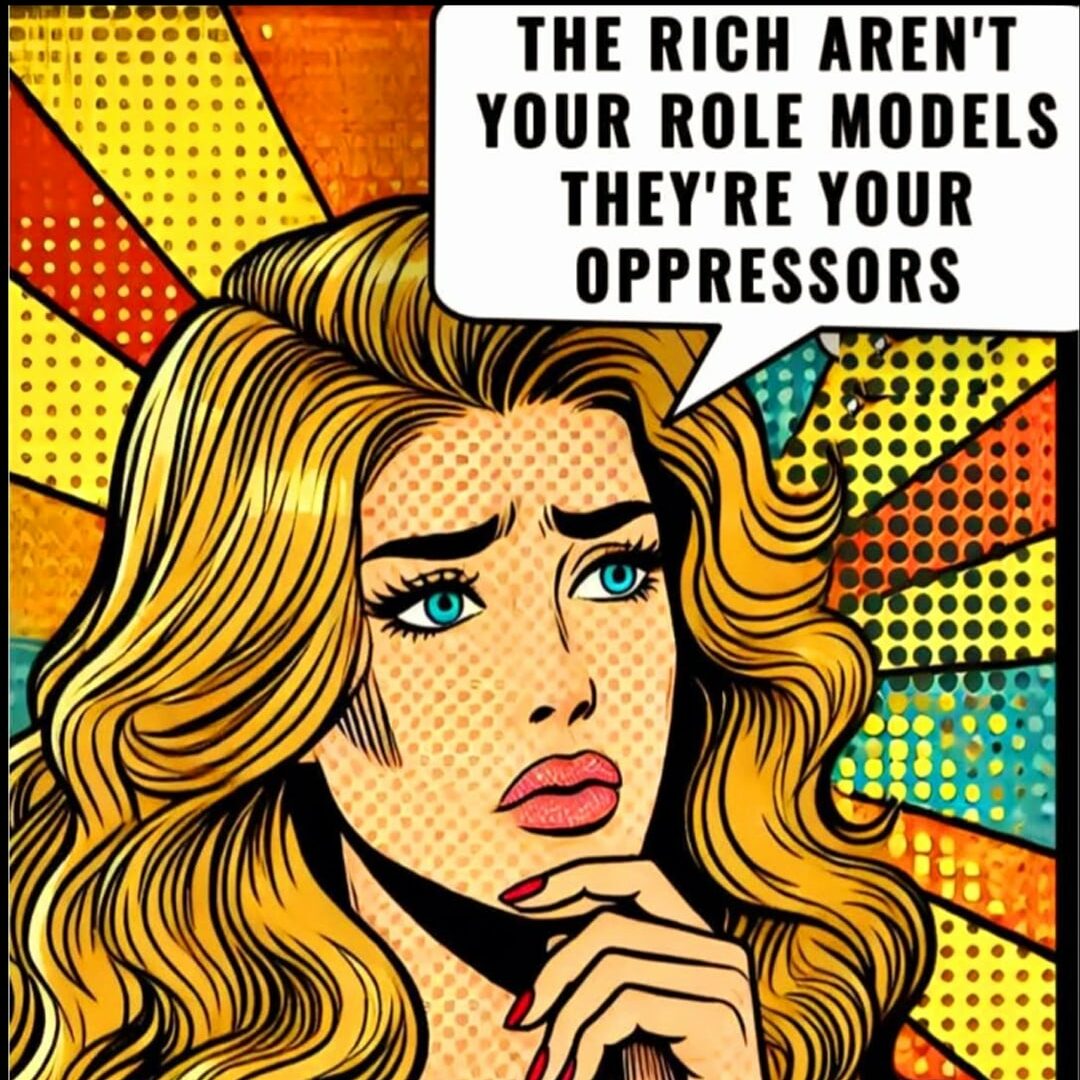
Women taking about oppressors

With this in mind, let’s recap on what Thatcher and Reagan built, its not just bad policy, not just inequality, its a full #deathcult – the self-destructive logic of #neoliberalism so committed to short-term greed and #stupidindividualism that it knowingly sacrifices the ecological and social foundations human life depends on. Forty years of hard indoctrination that doesn’t just fade away its – normal is walking around in a toxic story and calling it common sense.

The #nastyfew – platform owners, landlords, corporate lobbies, think tank networks – didn’t win through merit. They won the #classwar temporarily, by capturing institutions, rewriting rules, and flooding the #mainstreaming with their logic until it felt like gravity.

The #dotcons – Facebook, Google, X/Twitter and the rest – are the digital continuation of the same enclosure. Corporate platforms built on data extraction, presenting themselves as neutral public spaces while converting human attention and community into profit. The #closedweb is just privatisation with a friendlier interface.

And the #climatechaos bearing down on us is not a separate crisis. It is the #deathcult arriving at its logical destination.

Real alternatives are built from the bottom, not handed down from the top. The #openweb – internet infrastructure built on open standards, community control, and the #4opens (open code, open data, open standards, open process) – already exists as working infrastructure, built by thousands of ordinary people, not governments or corporations. Then we have the #fediverse, #activitypub, #FOSS, #indymedia – these are not utopian visions, already built, from the ground up, by people practising #DIY politics for real.

The #geekproblem is when this gets captured – when technical control replaces social trust, when complexity becomes a barrier rather than a tool, when #techchurn burns through community energy without building anything lasting. The antidote is #KISS – keeping it simple, human, and rooted in real relationships.

The #NGO path – professionalised, funder-friendly, managed dissent – is #mainstreaming with a radical badge on, it defuses rather than builds. The #fashernista tendency prioritising the look and language of activism over the unglamorous work of building lasting structure is #fluffy blocking in performance clothing.

What actually works is #grassroots organising grounded in trust, horizontal process, and the willingness to #compost failure breaking down what didn’t work into fuel for what comes next rather than hiding the mess or repeating it. As the #OMN path puts it: broken institutions need rebuilding as commons, not as managed services or branded campaigns.

The #deathcult is real, the mess is real, the #nothingnew reminder is useful – these cycles have happened before, and ignoring that history is how we walk straight into the same traps again. But so is the ground we already stand on, sart there.

#OMN #Neoliberalism #Thatcher #Reagan #OpenWeb #Commons #MutualAid #FoodSovereignty #ClimateChaos #Mainstreaming #Deathcult #Dotcons #BuildingAlternatives

Compost “digital sovereignty”, build working commons

The #KISS secret about the noise in “digital sovereignty” is very simple – Ignore most of this branding and build commons tech instead. That’s the path, not another layer of management, another funding bureaucracy for a glossy strategy document. Not another NGO conference circuit explaining why nothing can happen without another round of funding. Just build working commons.

This matters because much of the #EU “digital sovereignty” conversation is simply more churn inside the same #neoliberal #mainstreaming logic that created the problem in the first place. Europe spent decades outsourcing infrastructure, privatising public space, undermining local autonomy, and feeding the #dotcons.

Now the consequences are becoming impossible to ignore, dependence on US platform monopolies, fragile infrastructure, imperialist surveillance capitalism, cloud centralisation, shrinking democratic accountability, and growing geopolitical vulnerability.

So suddenly everybody is talking about “sovereignty”, but what do our chattering class of institutional actors mean by sovereignty? Too often they mean procurement contracts, compliance frameworks, consultancy ecosystems, defence posturing, startup hype and fashionable funding narratives. The same old structures wearing a new outfit.

This is where the #fashionistas rush in to cash out of the latest cycle of #techshit, every crisis produces a new branding wave #Web3, #AI, #blockchain, smart cities, trusted identity and now digital sovereignty. The words change, the consultants were the same clothes, to push funding applications with different buzz words. But underneath, the social relations to often stay exactly the same. This is why so much “innovation” produces so little durable social value, the energy and focus gets consumed by branding, positioning, institutional competition, and funding capture.

The #OMN approach is to compost this mess rather than feed it. Composting means recognising that some parts of the existing system still contain nutrients technical knowledge, infrastructure, institutions, legal frameworks, public funding, developer skills. But these need breaking down and re-rooting into commons processes instead of simply reproducing the same dead structures.

The #KISS approach is important because complexity is often used as a control system, the more complicated the governance path becomes the harder it is for normal people to participate, the easier it is for insiders to dominate, and the more power flows to the parasite class managing the process. People then confuse institutional complexity with competence, but most healthy social systems are not built this way, healthy systems tend to be transparent, iterative, federated, participatory, and grounded in practical trust.

That’s why the native #openweb worked when it worked, people built things together directly like mailing lists, forums, blogs (bit more messy), federated publishing, open protocols, community hosting, shared standards. Messy? Yes. Human? Yes, but functional. The current “digital sovereignty” debate ignores this history because acknowledging it would undermine the need for the giant managerial layer now feeding on the crisis.

A lot of the current policy noise is about preserving institutional power during systemic decline, that’s why signal-to-noise matters, most of the noise performs concern, manages perception, protects careers, and absorbs dissent into harmless process. Signal is rarer, it’s about building actual commons’ infrastructure, creating durable trust networks, supporting federation, sharing governance openly, and keeping paths simple enough that communities can understand and maintain them.

This is one reason the remain central, without these, “digital sovereignty” simply becomes another enclosure strategy under a different flag. European-owned silos are still silos, state-managed platform capitalism is still platform capitalism. Replacing Silicon Valley landlords with Brussels landlords is not liberation.

The real challenge is rebuilding public digital commons, that means the hard part is cultural, not only technical. People are deeply trained by #mainstreaming to look upward for solutions to governments, corporations, experts, influencers, NGO etc. But commons culture grows sideways instead, through participation, trust and through practical collaboration, yes this is slower at first, but far more resilient over time.

That’s the real #KISS secret, ignore much of the spectacle and quietly build the alternative underneath it. Less noise, more compost – Less branding, more commons – Less #techshit.
More grounded infrastructure. That’s how you compost the #mainstreaming mess instead of endlessly feeding it.