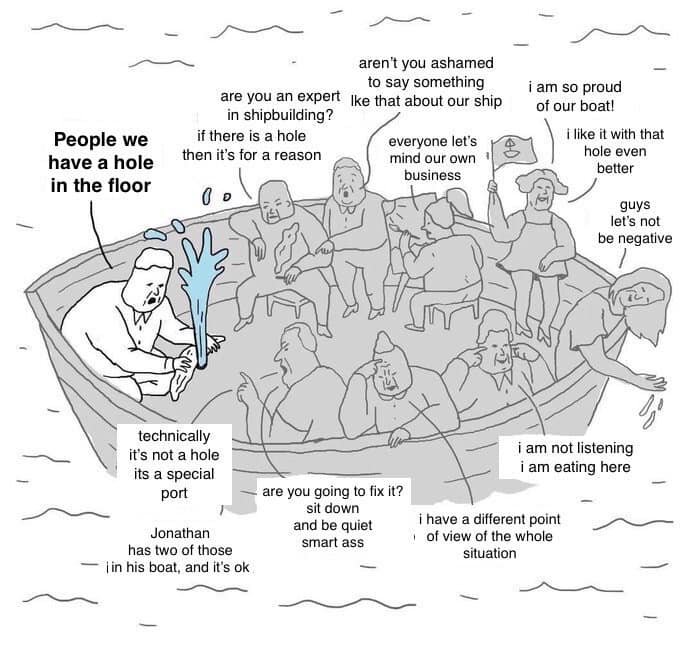
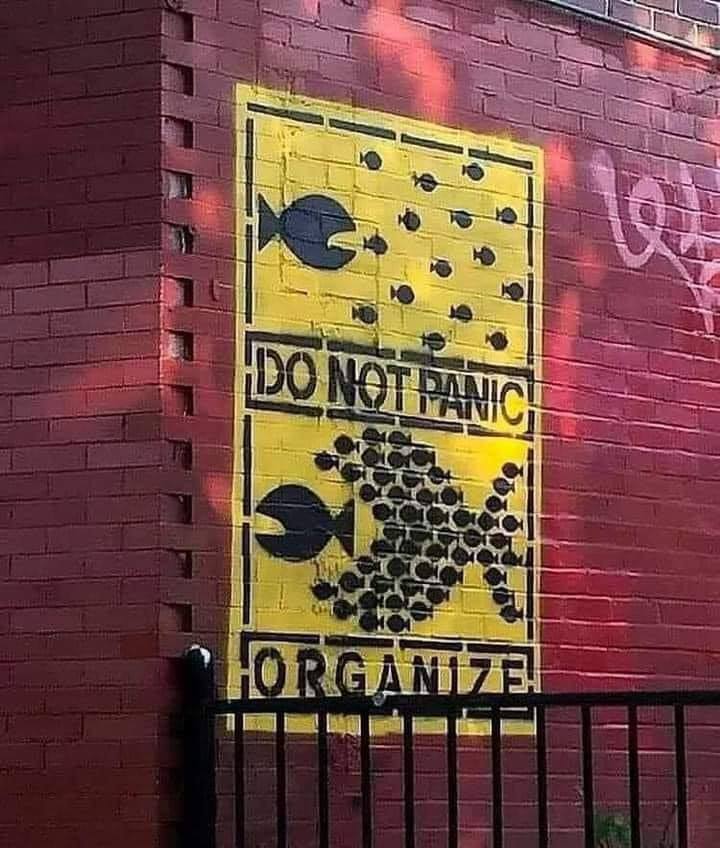
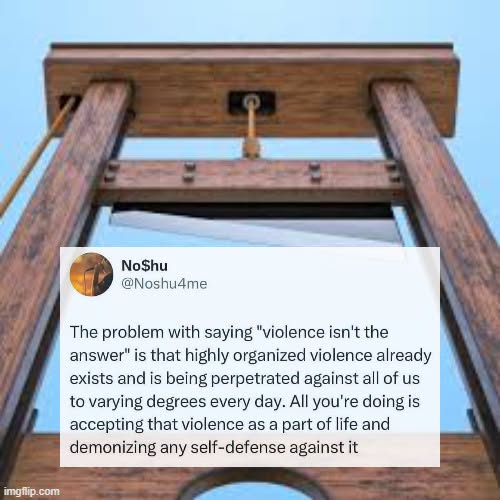
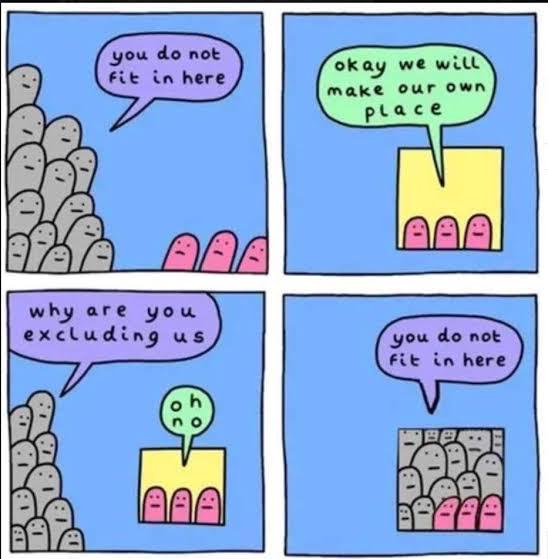
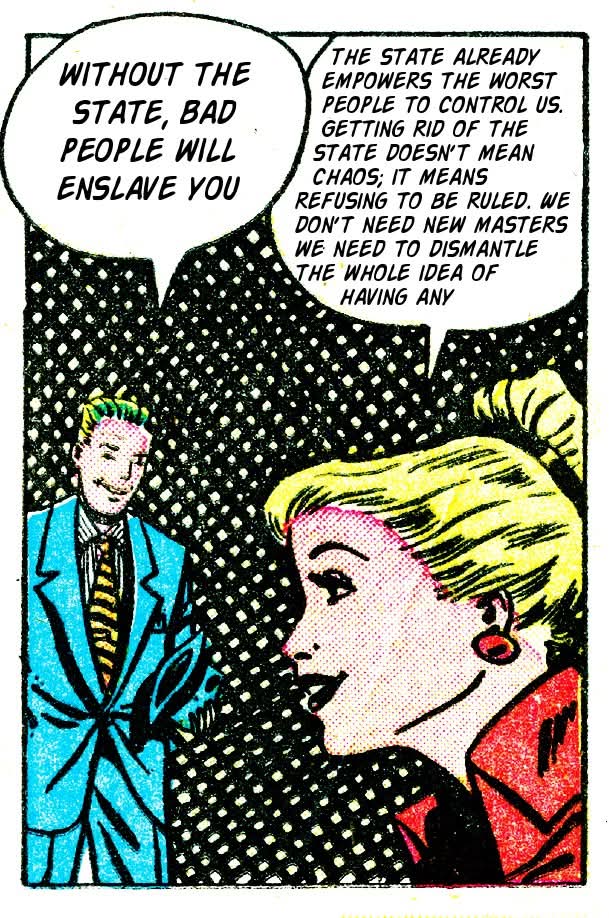
People who push vertical common sense over horizontal process are absolute prats and sadly all to normal. But they’re not just individual “prats”, there our prats – they’re the default outcome of how most people have been trained to think and act. Vertical thinking feels natural because it’s everywhere. Schools, workplaces, government, media, all teach the same pattern – someone decides, others follow, outcomes are judged quickly and conflict is suppressed or escalated.
So when people enter horizontal spaces – like a Fediverse project, a grassroots group, or something like #Oxfordboaters – they don’t suddenly become different people, they bring that invisible conditioning with them. That’s why you get the messy behaviour we need to compost – pushing for quick decisions instead of slow consensus, defaulting to authority (“someone should just decide this”), treating disagreement as a problem to shut down, not work through leading to valuing efficiency overtrust.
From a #OMN perspective, this isn’t an edge case, it’s the mainstreaming pressure coming into horizontal paths. And here’s the uncomfortable bit – if you don’t design for this, vertical logic will always win, not because it’s better, but because it’s simpler, faster, and culturally reinforced.
So what’s actually going on (under the hood) is that horizontal process is hard because it depends on things most common sense paths ignore – trust (which takes time), shared context (which is uneven), emotional labour (which is invisible) and conflict mediation (which is messy). Vertical “common sense” cuts through all that by skipping the hard parts, that’s why people tend to fall back to it, especially under stress.
The mistake we can make in grassroots paths – that calling people out as “the problem” doesn’t fix this, it just creates another loop of conflict. Because they are the system we’re trying to move beyond, if you push too hard against them, you often just reinforce the behaviour they double down on control, others retreat, trust collapses. It’s a normal problem pattern.
The useful shift (#OMN path) is instead of “these people are wrecking things” we try “this behaviour needs mediating structurally”. That leads to different responses, so ideas for ways to handle this mess making:
Slow the decision layer down as vertical actors thrive on speed, so you build in friction – no instant decisions on complex issues, require visible discussion before action, document context before outcomes. Not to block – but to force process.
Separate spaces (this is key). You need different environments for different modes: fast chat → messy, reactive, low trust – working groups → focused, semi-trusted – face-to-face (“whisper fire”) → high trust. Then don’t let chat dictate outcomes, because chat almost always amplifies vertical behaviour.
Make process visible and normal, as people push vertical solutions when they can’t see the process working. So write down how decisions happen, show where input goes, reflect outcomes back to the group. This reduces the urge to “just take control”.
Route conflict, don’t suppress it, vertical systems suppress or explode conflict – Horizontal systems need to hold it. That means acknowledging disagreement early, moving heated issues out of public chat to use smaller trust groups to work through tension.
Build trust anchors, without trust, horizontal systems collapse into power struggles. So you need consistent people doing consistent work, small wins that build confidence, repeated interaction over time. Trust isn’t declared – it accumulates.
The blunt truth is we won’t get rid of vertical behaviour, ever. What you can do is – stop it from dominating the system, that’s the real job. The #KISS path is people pushing vertical “common sense” aren’t unusual, they’re normal. If you don’t design process to handle that, horizontal projects will slowly turn vertical, so the goal isn’t to fight those people. It’s to build structures where their instincts don’t take over, and where trust, not control, becomes the thing that actually works.
We’re not dealing with abstract “community dynamics.” we’re dealing with live-aboard boaters under pressure, rowers, landowners, council, Environment Agency and scarcity of space (moorings). This in the end is about visibility vs invisibility on the river, so friction isn’t theoretical – it’s structural. Let’s look at the conflict patterns we’re seeing:
Back-channel poisoning (#whispers#splitting) “X group are the problem”, “They’ve already decided this”, “Don’t trust them”. This happens in WhatsApp groups, towpath chats and private cliques. The effect is fragmenting the boating community before anything even reaches #4opens process.
Representation fights (#whospeaks) “Who speaks for boaters?”, “Who gave them authority?” or “That meeting wasn’t legitimate” The effect: is paralysis + resentment + delegitimisation of any action at all.
Tone wars masking real issues (#signal vs #noise). Personal digs, passive-aggressive comments with people reacting to how things are said, not what is said. The effect is real issues (mooring policy, enforcement, access) gets buried under #stupidindividualism social mess.
Burnout + drop-off (#crewdrain). Some people doing everything while others sniping from the sidelines. The effect is core organisers get exhausted → vacuum → more mess.
So how do we compost this?
Pull whispers into the open (#openprocess#visibility). Instead of trying to stop gossip (you won’t) create simple habits like “If it matters, bring it to the shared space”, regular open threads / meetings where anything can be raised, even messy, even uncomfortable. Outcome is less shadow conflict, more visible disagreement.
Create a “good enough” shared space (#KISS#lowbarrier) Not a perfect system, just something consistent like a public website (open collective) and hashtag use like #oxfordboaters. Where updates happen, disagreements are visible and decisions are logged (lightly). Path is #KISS, if it didn’t happen here, it’s not part of collective decision-making.
Keep grounding in actual doing (#praxis#riverlife). Don’t let it become a talking shop, anchor everything in face to face fire towpath meetings, shared work days (clean-ups, maintenance) and direct engagement with river issues. The outcome is people relate through doing, not just arguing.
Add lightweight “composting moments” (#retrospective#learning). After anything messy (meeting, conflict, decision). Do a quick loop, what worked, what didn’t, what do we try next. Keep it short, no essays. Outcome is tension gets processed before it hardens into factions.
Set soft boundaries (protect the commons), (#boundaries#collectivecare). If someone consistently derails, attacks and refuses shared process. You don’t need a big drama, simply reduce engagement, keep process moving without them dominating. As the group will survive without needing perfect agreement. What this feels like when it’s working is not ONLY harmony, not in any way formal consensus.
It feels like people disagree openly, as some conversations are just messy, but things still move forward, decisions happen (even if imperfectly), no single person controls the narrative. And crucially conflict becomes part of the process, not a blocker to it, what failure looks like (so you can spot it early)- decisions drifting back into private channels, the same 2–3 people becoming permanent spokespeople or “we already talked about this” with no visible record, people disengaging instead of arguing.
The uncomfortable truth is It’s not about removing difficult personalities, conflicting interests or structural pressure from authorities. What we can do is stop those things from tearing the group apart.
In every activist space, grassroots project, every loose collective, you get people who bring mess in the wrong way – sniping, backbiting, constant undermining. Call it ego, trauma, status games, burnout… it doesn’t matter. What matters is: this friction is normal. It’s part of the #mess we can’t avoid.
The mistake is thinking we can eliminate it. You can’t, but you can design for it. That’s where the #OMN path is useful: don’t try to “fix the people,” build processes that compost the behaviour instead of letting it rot the group.
Anything that starts as a real idea – community, freedom, or independence – gets picked up, processed, and turned into something hollow. Not just by “the other side,” but by the entire modern media and tech machine. Good ideas go in, slogans come out, you’ve seen it: “freedom” becomes branding, “community” becomes marketing and resently “sovereignty” becomes a funding pitch.
This is the trap, when ideas get flattened into talking points, they stop doing anything real. They become easy to repeat, to weaponise and impossible to build with. And once that happens, it doesn’t matter who started the idea, it’s no longer yours. So the question isn’t only left vs right. It’s how do you keep ideas grounded so they can’t be hijacked and sold back to us?
One answer is structure, the #4opens approach is simple, a way to stop things being quietly twisted behind closed doors. If you can see how something works, it’s harder to fake. If you can take part, it’s harder to capture.
The other answer is mess (the good kind), the #OMN hashtag approach doesn’t try to clean everything up into a single message. It keeps things local, contextual, a bit rough around the edges. That “mess” is protection, because systems that are too neat, too polished, too uniform… are exactly the ones that get captured, repackaged, and pushed back at you.
In plain terms if an idea can be turned into a neat slogan, it can be taken over. If it stays tied to real people, real places, and real processes, it’s much harder to fake. This is the difference between something you can live with and something that gets sold to you. Call it compost if you like – You break things down, keep what’s real, and grow from that.
One example: Tactical Tech is a Berlin-based nonprofit that’s been around since the early 2000s, working on tech, activism, media, and education. Their core thing is:
building digital literacy + critical thinking tools
producing toolkits, exhibitions, and guides (like The Glass Room, Data Detox Kit)
working with civil society orgs, journalists, activists, educators
focusing on how tech shapes power, politics, and society
They’re not grassroots infrastructure builders, they’re capacity builders and narrative shapers, working through partnership networks, funding, and “field building” – classic NGO patterns.
In #OMN view they sit squarely in what we call the #NGO / #mainstreaming layer of the #openweb story. In that they don’t build the soil (infrastructure, protocols, messy grassroots tools). They build the interpretation layer (how people think about tech). They push this into narratives + toolkits that travel across institutions. That’s why they’ve lasted 20+ years – they’re adaptable mediators, not in anyway rooted projects.
So why dose it feels like “they create mess”? The friction comes from this pattern the balance of abstraction over grounding in that they translate messy realities into frameworks, exhibitions and “kits”. This flatten lived complexity into safer portable concepts, in to language production. They are part of the ecosystem that generates terms like digital literacy, resilience and sovereignty (adjacent space). These become floating signifiers – useful for funding and policy, messy in practice.
They collaborate with foundations, governments and large NGOs. So their outputs are shaped to be fundable, presentable and non-threatening enough to circulate. That’s where the “compost” instinct kicks in – because this layer detaches language from practice.
But it’s not just negative, if were honest (and it’s worth being), groups like this do some real things. They’ve help millions engage “critically” with tech issues to make complex problems accessible (privacy, AI, influence systems). They might create bridges between activists, educators, and institutions. So they’re not empty, they’re just not where the roots are.
The real tension, the problem isn’t that they exist, it’s where they sit in the ecology. They are compost producers, but they mistake themselves for gardeners. Or more sharply
They circulate meaning rather than anchor it
They mediate change rather than enact it
They stabilize narratives that should sometimes stay unstable
So yes – they create “mess” …but it’s a different kind of mess than grassroots paths. Grassroots mess = fertile, emergent – #NGO mess = abstracted, packaged, drifting.
Projects like Tactical Tech can be a part of the same ecosystem we need – but they sit one layer up from where change actually happens. Their outputs duse need composting because they generalize lived practice into frameworks, turn struggle into language and then feed that language back into systems which tends to blunt its edges.
The task isn’t only to reject them, it’s to ground what they produce back into lived, messy, trust-based practice – the bit they can’t really do. Once you see this pattern, a lot of the confusion in the #openweb space makes sense.
Most confusion comes from people mixing these layers up, Here are a few examples of these groups and organisation.
Tactical Tech – Layer: Narrative / NGO Role: Translator of tech → society What they do (in practice) • Turn complex tech issues into stories, exhibitions, toolkits • Shape how civil society talks about tech • Build “awareness” rather than infrastructure
In #OMN terms they produce processable compost input, but often pre-packaged into neat bags. This problem pattern flattens messy reality into clean narratives to encourages passive understanding over active building. So what is there value? Good at onboarding people, opens doors into the conversation. But risk is people stop at understanding instead of doing.
Mozilla Foundation – Layer: Narrative + Funding + Soft Infrastructure Role: Bridge between grassroots + institutions What they do is fund projects to run advocacy campaigns (AI, privacy, etc.) that maintains a symbolic connection to the #openweb. In #OMN terms they gate keep legitimacy to define what is “acceptable open”. This is a problem pattern because of NGO gravity → safe, fundable ideas win, radical edges softened into “trustworthy AI” and “ethical tech”. So what is the value? Real money → keeps projects alive and visibility → amplifies issues. The risk is common sense #mainstreaming capture that shapes agenda toward what institutions tolerate. Makeing only more mess to compost.
Open Society Foundation – Layer: Power / Funding Role: Macro-level agenda shaping What they do is fund civil society globally to influence policy, rights frameworks, governance. In #OMN terms its a part of the liberal wing of the #deathcult. Problem being funding creates dependency, agenda alignment when movements adapt to grant logic. Value is it enables work that wouldn’t exist otherwise to support rights-based infrastructure. The risk is it turns movements into professionalised NGOs and risk-averse actors.
Sovereign Tech Agency – Layer: State / Infrastructure funding Role: Stabiliser of critical open tech What they do is fund maintenance of open-source infrastructure with a focus on “digital sovereignty” In #OMN terms they are trying to support the infrastructure layer by using state-language framing. Its a problem pattern as language like “sovereignty” pulls toward state/control logic and away from commons/trust logic. What is the value? It pays for the essential work to keeps #FOSS tools alive. But it risks reframes the #openweb as national infrastructure instead of shared commons.
NLnet Foundation – Layer: Infrastructure funding (closer to soil) Role: Rare “good compost feeder” What they do is fund small, weird, early-stage open projects with minimal interference. In #OMN terms one of the few funding bodies that, could in theory not over-shape outputs to respect messy innovation. But the are problem pattern of limited scaling and still within funding constraints, Value is they enables actual building and possibly supports non-mainstream ideas. The risk is the normal that they still are pulled into NGO gravity over time.
Electronic Frontier Foundation – Layer: Advocacy / Legal Role: Defensive shield What they do – Legal battles, policy advocacy and civil liberties protection. In #OMN terms they protects space for the #openweb to exist. But the are problem patterns, the focus on defence, not creation that only works inside existing legal frameworks. Value they are absolutely necessary to stops things getting worse. The risk is they doesn’t build alternatives = slowing decline, not transformation.
The pattern, is all these orgs sit above the soil. They translate, fund, shape, defend. But they rarely grow rooted communities of sustaining messy trust networks or live with the consequences. So why dose this create “mess” it is because language drifts away from practice. Ideas come and go: “digital sovereignty”, “trustworthy AI” or “resilience”. These sound solid, but float free of lived reality, then incentives bend behaviour. Funding → reporting → metrics → simplification is when mess gets cleaned up too early or packaged instead of composted
The #geekproblem + NGO problem merge, you get geeks wanting to tidy systems and #NGOs wanting to tidy narratives. The result is over-simplified systems + over-simplified stories. The #OMN position is clear and grounded, we don’t reject these orgs, we place them correctly: Useful → yes, Central → no and ground truth → never.
The simple way to say this (#KISS) These organisations sometimes help explain, fund, and defend the world, but they do not remake it. If we mistake them for the source of change, we end up with only better words and worse reality. The next stage is a practical progression from “mapping the mess” → “building something that can survive it”.
To make anything work we need to stop confusing layers (cognitive clarity) – Before anything technical the path needs to never treat NGO / funding / advocacy layer as if it is THE system. This is the correction, in #OMN terms:
NGOs ≠ infrastructure
funding ≠ governance
narratives ≠ reality
protocols ≠ politics
The outcome is people stop trying to “fix the web” by only better policy decks, better ethical frameworks, better terminology (like “digital sovereignty”). And start asking “What is actually being built, and by whom?”
How to do this? we need to build the soil layer first (not apps, not orgs) as this is where most projects fail. The soil layer is trust groups, working collectives, repeated interaction spaces and small-scale publishing + coordination. In #OMN framing #indymediaback style groups, #OGB governance spaces and local + affinity networks. If it doesn’t survive social breakdown, it isn’t infrastructure.
Define “failure as feature” systems, is one of the strongest #OMN ideas. Instead of perfect systems that must not break – We grow systems that fail into human repair. What that means in practice is moderation doesn’t escalate → it returns to people, governance doesn’t lock → it re-opens, conflicts don’t freeze → they surface into trust spaces. The principle is breakage must increase human contact, not reduce it, this directly counters the platform logic (#dotcons), #NGO sanitisation logic and geek “perfect system” logic.
Build mediation layers (not control layers). This is where #OGB thinking fits. Mediation layer ≠ governance authority, is translation between groups, conflict visibility, trust routing and decision recording (not decision ownership). We don’t centralise power – we route attention. This is the difference between bureaucracy (control) and federation (flow).
Define “trust as infrastructure” this is the “missing” technical core. Most systems assume identity, verification and thus control. #OMN flips this to assume partial trust, local trust, evolving trust and broken trust. So native systems must record trust signals (lightweight) to allow contradiction, allow decay and allow repair. Trust is not a certificate, it is a living flow.
Explicitly resist “narrative capture”. This is where orgs like Tactical Tech / Mozilla / OSF become relevant. The patterns to avoid – messy reality emerges, #NGO translates it, funding aligns around translation and original practice disappears. #OMN counter-path is if it can be fully explained in a funding report, it is likely already dying. So we maintain ambiguity, partial documentation and lived process > polished narrative.
Build dual-stack reality (critical stage). This is essential, you always run:
Native stack (real community power)
trust networks
local groups
Fediverse-native tooling
#4opens processes
Interface stack ( individual survival layer)
NGO language when needed
funding language when needed
policy translation when needed
The path is never confuse the interface with the infrastructure.
So what are composting failures? Instead of discarding failed projects, rewriting history and blaming actors. We need to explicitly turn failure into reusable material. Compost includes:
broken governance attempts
failed funding models
collapsed communities
conflict histories
Output:
patterns
lessons
reused structures
new trust layers
This is where the “mess is valuable” idea becomes operational.
Anti-capture safeguards – Every healthy #OMN system needs resistance to #NGO capture, funding capture, geek capture and ideological capture. Mechanisms:
lose roles
refuse most permanent authority
keep systems reversible
enforce transparency (#4opens)
limit scale before complexity dominates
The long game is federated commons, at scale, the goal is not a platforms, it is many overlapping, messy, partially connected commons. Not one Fediverse or one governance model, not one truth layer. But overlapping trust regions, with shared protocols and local autonomy to weak global coupling.
The summary (#KISS version). If you compress all of this:
Stop confusing explanation with infrastructure
Build trust-first “soil systems”
Design failure that returns to people
Keep governance as mediation, not control
Treat trust as a living system
Resist narrative capture
Run dual-stack (native + interface)
Compost failure, don’t hide it
Prevent capture structurally, not morally
Scale as messy federated commons, not platforms
The shift is from “understanding the system” → to “acting in a small part of it without being captured” This means choosing a river, a locality, a topic, or a community and committing to working inside its mess without trying to abstract it into a universal model too early. #OMN path is if it doesn’t exist in a place, it doesn’t exist at all. This is where a lot of NGO / narrative layer work fails – it stays placeless.
Build “thin infrastructure”, the #OMN correction to both NGO thinking and geek thinking is that wrong instinct is to build full systems, design complete governance models, define everything upfront. #OMN instinct is to build the minimum structure that lets humans keep adjusting it together. Thin infrastructure = simple publishing tools, basic coordination spaces, visible decision trails and lightweight identity/trust signals. Nothing heavy, nothing “final”, because heavy systems attract control, thin systems attract use.
Make conflict visible, not resolved. This is where #NGO culture diverges hardest from native systems. NGO pattern is to resolve conflict, smooth disagreement and force consensus narrative. #OMN pattern is surface conflict so it can be worked with socially. Why, because in real networks conflict is information, disagreement is structure and tension is direction. The compost is if conflict disappears, it hasn’t been solved – it has been buried. Buried conflict always returns, festers, later as system failure.
Build “trust scaffolding”, not trust systems. This is subtle but crucial, you cannot design trust, you can only create conditions where trust can form and where it can fail safely. Trust scaffolding includes repeated interaction spaces, low-stakes collaboration, visible contribution histories and reversible decisions with clear exit paths. The path to trust is an emergent behaviour of stable mess, not a product of design. This directly opposes #mainstreaming ideas of identity systems, certification systems and techbro reputation scoring systems.
Explicitly reject “clean governance” as this is where most of well-meaning systems collapse. The trap is people try to build clean voting systems, formal representation and universal rule sets. But in messy reality governance is not clean – it is negotiated, situated, and constantly patched. #OMN path is instead of clean governance, we grow layered responsibility, overlapping legitimacy with temporary authority and visible disagreement. Think of governance as weather, not architecture.
Anti-scale principles (very important). Most systems fail because they assume more scale = more success The #OMN flips this with a path of scale should be resisted until coordination proves it is needed. Because scale introduces abstraction, funding dependency, narrative capture, bureaucratic drift. So instead we grow horizontally first, federate slowly and allow divergence to tolerate inconsistency.
Build “failure memory” as infrastructure, its one of the most underused ideas in the whole space. Most ecosystems forget failures, hide conflict history and rewrite past attempts. #OMN path is about failure is the most valuable dataset. So you build public failure logs, conflict histories and abandoned project archives with “why this didn’t work” notes. Not as shame, but as compost. Because systems that cannot remember failure are forced to repeat it.
Soil layer (real life)
trust groups lived coordination actual practice
Infrastructure layer
tools protocols servers
Mediation layer
conflict handling coordination routing
Narrative layer
NGOs funding language public explanation
Power layer
states capital platforms
On this working group path no layer is allowed to pretend it is another layer, the core anti-confusion mechanism.
So what is the actual #OMN outcomes, when this all works, you don’t get a platform, a movement or a unified system. You get a living field of partially connected commons that can adapt without central control, yes it looks messy from outside – and that’s correct. Because coherence is not the goal, survivability and humain flourishing is. lets reduce the whole thing to operational clarity: Build small, stay local. Keep systems thin, let conflict stay visible, treat trust as emergent. Avoid clean narratives, resist scale, remember failure. Separate layers to never centralise experimentation into control.
That’s where theory finally has to become dirt-under-the-fingernails practice, where the abstraction has to survive contact with reality. Lets look at some example work flows, different angles of the same living loop.
What a real example #OMN#oxfordboaters river project looks like day-to-day. The river communerty is not an organisation. It’s a persistent coordination affinity around a real place/problem/ecology (a river in this case). Daily reality looks like this:
Morning layer (signal gathering) when people notice things:
water quality change
planning notices
blocked access points
local council updates
photos from walks
stories from anglers / walkers / residents
This is not formal reporting, It’s messy input that lands in:
Fediverse posts
local group chats
simple shared logs
Mid layer (sensemaking) is when a few people (DIY, not fixed) do:
cluster reports (“this looks like sewage spike again”)
link patterns (“this happened upstream last month”)
No authority – just attention shaping (or focalising).
Action layer (light coordination) is made up of small, reversible actions:
someone emails council
someone visits site
someone talks to landowner
someone checks data source
someone posts explainer thread
Crucially no one needs permission to act, only visibility into what others are doing
Weekly rhythm (social compression) is a loose gathering (online or physical):
“what changed?”
“what patterns are forming?”
“what are we missing?”
“what broke this week?”
No authority, rather shared memory and process. The river project is not a formal group. It is a shared affinity flow. That’s why it works (when it works) – it stays situated, porous, and continuously re-formed.
Lets look at a second example, how #OGB decision flows actually operate, it is not voting or governance in the institutional sense. It is a routing system for trust, conflict, and attention.
Step 1 – Issue appears, something surfaces
conflict
proposal
blockage
uncertainty
It is posted publicly (default open).
Step 2 – Context attaches, people attach:
experience (“this happened before”)
local knowledge
technical input
historical memory
disagreement
Important – contradiction is allowed and expected
Step 3 – Clustering happens (not authority). Instead of leaders deciding clusters of alignment form naturally, disagreement clusters remain visible and minority views persist. Think weather systems, not committees
Step 4 – Decision emerges as a path, not a vote – a “decision” is a visible “common” path of action with acknowledged alternatives still open. So nothing is deleted, nothing is finalised, nothing is owned
Step 5 – Follow-through is voluntary, but visible. People act based on trust in community, reasoning based on proximity and capacity. And they report back into the same system. The native path is the #OGB doesn’t only decide things – it makes decision pressure visible.
What a Fediverse-native governance loop feels like is where it becomes felt reality rather than structure. It feels like slow public thinking, less meetings, less agendas. More like threads that evolve over days, posts that accumulate context and replies that become infrastructure
Persistent memory in the stream, nothing disappears old decisions are still linkable, conflict history is visible and prior attempts remain accessible. So governance is navigation through lived memory. Weak coordination, strong transparency as no one is forced to agree. But disagreement is visible, reasoning is public and action is observable. This produces accountability without authority to grow temporary gravity centres.
Certain threads or instances become coordination hubs, discussion anchors and action nodes. But they fade naturally – nothing, but memmery is permanent. It feels like thinking in public with other people who sometimes act on what emerges. Not bureaucracy, not formal consensus culture. More like shared situational awareness that occasionally crystallises into action.
OMN / #OGB model is: surface → act → observe → remember → re-surface. It is governance more as continuous ecological process, less a fixed control structure.
Think that is anufe for today, please ask in comments to help finsh this.
What we are doing at #Oxfordboaters is simple, that’s the uncomfortable truth for people who see this as to complex. The core idea – people coming together around shared concerns, communicating openly, and acting collectively – is about as old as human society. There’s nothing technically complex about it, nothing conceptually obscure. Yet in practice, it feels almost impossible.
So where does this friction come from? It’s not the goal, it’s not even the surface the process, most of the time, it’s the people – and, more importantly, the tools and cultures we bring with us. The path we need is simplicity underneath – #Oxfordboaters is doing three things:
Sharing information about what’s happening
Building a shared understanding of that information
Acting together based on that understanding
That’s it, strip away the noise, and that’s the whole system. It’s classic #actavisam: publish, discuss, act. You don’t need layers of management theory or complex governance frameworks to make that work. You need #KISS trust, visibility, and participation.
But we rarely get to operate at this level of clarity, the difficulty creeps in as people bring baggage – Everyone arrives with habits shaped by the #mainstreaming worshipping of the #deathcult that leads to the imposing of unthinking expectation of hierarchy (“who’s in charge?”) and fear of speaking openly (“will this be used against me?”) leading to the desire for control (“we need to manage the message”) this “common sense” mess leads to focus on avoidance of conflict (“let’s keep it positive and not rock the boat”).
These aren’t individual personal failings, they’re social learned behaviours, that distort simple processes into complicated ones. This mess is amplified by a second “common sense” problem, that the tools we use shape behaviour, the #dotcons platforms we “use” default push us in particular mess making directions:
Chat tools fragment conversations into noise
Social media rewards reaction over reflection
Instead of supporting collective clarity, these default tools amplify confusion, they make it harder to see what’s actually going on, and thus easier for misunderstandings to spiral. One tool we have is process but is it a tool or weapon? Process can either help people work together, or it can be used to block this work. Some processes are designed to:
Encourage participation
Make decisions visible
Build shared ownership
Others – often unintentionally – end up:
Slowing everything down
Creating gatekeepers
Hiding power behind “procedure”
You can see this easily when something urgent comes up – healthy process helps people respond quickly and collectively, were a broken one turns into endless discussion, deferral, and inaction. Same situation, same people – different outcome depending on the process.
At #Oxfordboaters, the work itself is straightforward: There’s an issue affecting the river community – People gather information about it – That information is shared – A response is organised. But what makes it hard? People are different – Disagreements about tone (fluffy vs spiky), uncertainty about who should act and fragmented communication across platforms leading to #blocking of action.
None of these are about the actual goal, they’re all about how people relate to each other and the structures they’re working within. The illusion of complexity is one of the biggest traps – mistaking this friction for complexity. When something feels hard, we assume the solution is to add more structure, more meetings, more rules, more #dotcons tools. But this “common sense” push to often adds another layer of blockage, it treats the symptoms, not the cause.
The reality is harsher the system is simple, but we as a community are messy. So how can we work better in this mess? The answer isn’t to eliminate the mess – that’s impossible. It’s to design processes that work with it instead of work against it. That means accepting disagreement as normal, making conflict visible rather than suppressing it. Keeping structures lightweight and adaptable, in the end it’s about prioritising clarity over control. In #OMN terms, this is where the #4opens come in:
Open data → everyone can see what’s happening
Open process → decisions aren’t hidden
Open source → tools can be adapted
Open standards → systems interconnect
These don’t remove human complexity, but they can mediate it from becoming opaque and blocking. So what do we mean by blocking vs enabling. You can tell the health of a project by a simple test – Does the process help people act, or stop them from acting? If people feel empowered to contribute → the process is working. Hesitant, confused, or sidelined → the process is blocking.
At #Oxfordboaters, like many grassroots efforts, both dynamics exist at the same time. That’s normal. The work is to shift the balance toward enabling. So the hard truth is this the challenge isn’t building the perfect system, it’s growing the relationships that allow the #4opens path to function. That’s slower, messier, and far less comfortable than designing a neat process diagram, but it’s the only thing that actually works.
Keep it simple (#KISS) – when things get messy, the instinct is to add complexity. The better move is usually the opposite by striping things back to focus on what actually needs to happen. Make it easier for people to take part, because underneath all the noise, the work is still simple. People, talking to each other, deciding to act. Everything else is either helping that – or getting in the way.
From the towpath at dawn to moonlit moorings at dusk, Oxford’s boating community is not a curiosity, it’s part of the city’s living fabric. Generations of people have chosen to make their homes on the water, creating a culture rooted in community, care, and independence. This is a quieter Oxford, rarely captured in guidebooks but felt by anyone who walks the river or canal: a human-scale world of shared tea, passing conversations, and everyday presence. In a city shaped by wealth and exclusion, the river remains one of the few places where real social diversity still exists, where people live side by side not because of status, but because they’ve chosen a different way of life.
This matters because the boating community doesn’t just live on the river, it sustains it. Their daily presence keeps the towpath safer, more welcoming, and alive. They act as informal stewards, noticing changes in the water, caring for the banks, and maintaining a relationship with the environment that no institution can replicate. Remove this community, and you don’t just lose homes, you lose Oxford’s character, its openness, its lived connection to the river. The waterway becomes quieter, more managed, less human. What looks, from a distance, like a marginal issue is in central, a question of whether #Oxford remains a living city, or becomes more controlled, polished and diminished.
Exchange CRT for EA its the same story.
How can we protect that space?
We want to protect a shared space, keep the river livable, and organize ourselves to have a voice. None of that is technically complicated, the difficulty isn’t the goal, it’s the people, and the tools we use to try and work together. No matter what process we choose, it always comes back to the people who make it work, or the people make it stall. Some processes recognise this and work with human reality – trust, conflict, misunderstanding, ego, care. Other processes ignore it, and end up being used (consciously or not) as blocking. Let’s look at a few grounded examples of this.
We’ve already seen this clearly, in a face-to-face meeting (the “whispering fire”), trust rises fast. People read each other, soften, find common ground. You can go from 50% to 70–90% trust in a couple of hours. Move the same conversation to online chat, and trust collapses. Tone gets lost, small disagreements escalate, and people start pulling things apart. You drop to 20–30% trust, sometimes lower. Completely different outcomes, it’s not a failure of individuals, it’s a mismatch between tools and human communication.
The website vs the chat is another clear split. The website (or any structured space) holds higher trust, but lower participation. The chat holds high participation, but low trust – knowledge isn’t captured properly, decisions aren’t visible and new people can’t easily get up to speed. Result: constant rehashing, frustration, and burnout leading to momentum loss.
There’s a temptation to design the perfect structure with formal agendas, strict procedures and detailed governance. On paper, this looks like progress, in practice, it becomes a brake. As people use “hard” process to delay decisions (“we need another meeting”), avoid responsibility (“that’s not my role”) and assert control (“this isn’t the proper channel”). Instead of enabling action, the process becomes a gatekeeper, leading to the same basic issues resurface again and again. Not because people are stupid, because the basic social fabric isn’t being maintained.
Processes that work can see this cycle and design around it so as not to keep restarting from zero. So what actually works? The path isn’t finding a “perfect” process, it’s choosing #4opens processes that fit people as they are. That usually means prioritising face-to-face (or close equivalents) for trust building. Keeping structures simple (#KISS) so they don’t become tools of control. Capturing shared knowledge clearly (FAQ, summaries, decisions). Accepting mess as normal, but making sure it composts rather than festers. Balancing fluffy and spiky – you need both to move forward
And most importantly recognizing that process is never neutral, every structure we put in place will either help people collaborate or give them ways to block each other. Often both at the same time. So yes, what #Oxfordboaters is trying to do is on the surface easy, but what makes it hard is human complexity, mismatched tools and blinded pushing processes that don’t align with either. When we get those bits even slightly more right, everything else becomes possible.
If we don’t, even the simplest goals turn into a grind, that’s the real work.
People fight against or/and ignore the #KISS (Keep It Simple Stupid) approach to social movements because simplicity can expose power. Complexity gives cover, making control look like competence. When paths are simple and transparent, everyone can see who’s blocking, who’s hoarding, who’s acting in bad faith. Many “experts” and institutions are emotionally and professionally invested in keeping things complicated as simplicity threatens their authority and their identity.
As second step in change and challenge we need to face some uncomfortable roots: fear of death, fear of the “other.” Fear, as the man said, is the mind killer. Too few people trying to change the world bother to look at the psychological ground they’re standing on. Our social mess isn’t random, it grows from somewhere. If we don’t deal with the roots, we just keep trimming the leaves and wondering why the weeds grow back.
At the centre of this is trust, it is what makes social change possible. It’s the messy, ongoing tussle between horizontal and vertical forces, between collective process and imposed control. Take Oxford boaters as a lived example, this is observational, based on 40 years of doing this kind of work.
Face-to-face meetings? They start at maybe 50% trust and can rise to 70% without too much trouble. That’s because the people who show up are self-selecting – a mix of fluffy and spiky, but open enough to engage. You get debate, but also movement.
Then we go back online were trust drops fast – down to 20–30%, sometimes even into negative territory. That becomes the dominant tone as things splinter. Work that was built collaboratively offline gets pulled apart, the focus doesn’t hold.
On the open collective website, trust is actually high – but usage is low, again, self-selecting. So rollout stalls, no shared space, no shared understanding, no momentum.
So we call another face-to-face, the “whisper fire.” Trust shoots up – 90%, easy. People align, decisions get made, it feels like progress. But then everyone goes home, the next day? Momentum evaporates, as few people feel responsible for carrying things forward. And very quickly, we slide back into the low-trust dynamics of online chat.
Meanwhile, the group has grown, more people from offline outreach and leafleting. But the website is still stalled, so there’s nowhere to hold shared knowledge. We keep re-arguing basics, we don’t even have a solid FAQ. Trust drops again.
Next meeting: bigger pool, smaller turnout. Trust starts at near zero, the first half is rough – people filtering out, clashing, posturing. Slowly, some shared ground emerges and trust crawls up to maybe 50% but still, nothing concrete gets resolved. A few working groups are seeded. Environment sort of functions. Media splinters from the start, but manages a press release, but without any clear #4opens process. Beyond that, the next steps remain unanswered.
Back online? Trust gets ripped apart again. The whisper fire is supposed to be every week, but we have lost focus, but we try agen – half-heartedly at first. Poor turnout, then people drift in after a couple of hours. Trust rebuilds to around 70%. Real decisions get made, consensus emerges, it starts to feel like an actual working affinity group.
But the chat? Still toxic, low trust, constant tearing-down, fixation on side issues, and a push toward rushed bureaucratic structures that crumble under their own weight. The only thing that actually works is the consensus built in the whisper fire – because that’s what people really agree on, underneath the passive-aggressive noise. But after each cycle, trust in the online chat drops again, down below 30% on the surface. Maybe 40% underneath, if you’re generous.
And now we hit the next stage: formal process, bureaucracy, decisions that actually matter, where it gets real. And because online trust is still so low, everything becomes harder than it needs to be, friction everywhere, misunderstanding as default.
But – and this is the hopeful bit – offline trust is slowly growing. So maybe, just maybe, we can carry that through, if we don’t let the chat tear it apart first.
Who would have though this would sum up our needed path for the #Oxfordboaters and the #fedivers?
You would have to be an #asshole to unthinkingly disagree with what we are doing and pretty wise to thinkingly disagree with the path. Which one are you? So why are we in such a mess? Because people are acting from fear. Not always consciously, not always honestly – but fear is the driver.
Fear of losing control.
Fear of losing status.
Fear of uncertainty.
Fear of each other.
And when fear leads, people grasp for control. They close things down, centralise, gatekeep, and default to the safe, known paths of the #closedweb and institutional power. That’s how we get the current mess – top-down structures trying to manage what was meant to be lived, messy, and shared.
In #OMN terms, this isn’t a technical failure, it’s a cultural one. A failure to hold open processes in the face of discomfort. So how do we mediate this fear?
Not by pretending it isn’t there. And not by fighting it head-on – that just feeds it. We mediate fear by building trust through practice:
Keep things open (#4opens): transparency reduces fear of hidden agendas. When people can see what’s happening, they relax.
Lower the stakes: small, reversible steps instead of big, risky commitments. Let people edge in rather than jump.
Normalise mess: show that not everything has to be controlled to work. Messy, lived processes are not failure, they’re how real communities function.
Create shared doing: fear shrinks when people work together on tangible tasks. Composting, media, infrastructure – doing builds trust faster than talking.
Hold both fluffy and spiky: the fluffy path makes space for people to come in; the spiky path protects that space from being captured or hollowed out. You need both, visibly and honestly.
Refuse false clarity: the #dotcons sell certainty and simplicity. The #openweb is different, it’s about holding complexity without collapsing into control.
And maybe most importantly, stay present. Fear thrives in abstraction, it weakens in lived, grounded relationships. In the end, mediating fear isn’t about convincing people with arguments. It’s about creating environments where fear has less reason to exist.
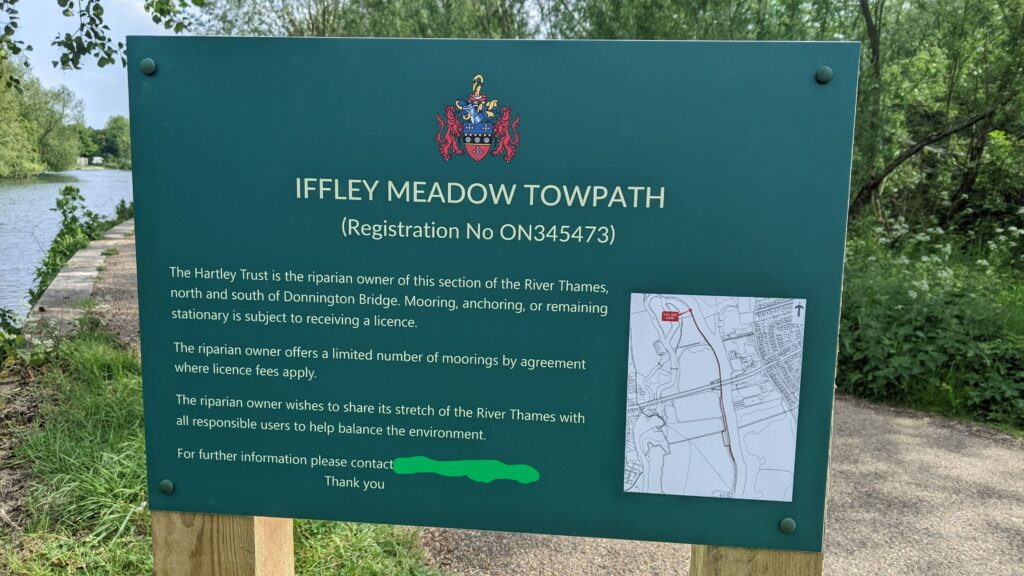
This is the same dynamic you can see with Oxford boaters. The river culture is native, messy, negotiated, based on lived practice and mutual understanding. People want the freedom to move, to live lightly, and not be bound by rigid landlord rules. But when outside structures push in – formal control, ownership models, enforcement – they reshape that culture into something else. The tension isn’t really about rules or functions; it’s about which culture gets to define the space.
That’s the real work of #OMN: not only building tools, but growing the social soil where people feel able to act without retreating into control.
This story was sparked by worrying about water quality in the UK, on the map above, it’s sewage everywhere https://www.sewagemap.co.uk/ The turds are active now, the red is active recently. The story is about this nasty mess set a few years before the longer Oxford story of refuges.
The characters are idealised/generalised versions of existing people, #Oxfordboaters, student journalist and collage bureaucrats I have met at meany events. the rowers come from watching this film. The setting and situation is completely real.
Chapter One – Waterline
The rain had stopped pretending to be weather. It no longer arrived as storms or fronts that moved across maps. It stayed. A fine, patient pressure against roofs and leaves, seeping into brickwork, soaking pathways until the ground forgot its original shape. By late January the river had stopped falling between tides of rain. Each morning it held the height it had reached the night before, as if testing the city’s tolerance. Nobody spoke of flooding yet. Oxford preferred euphemism. Seasonal levels. Saturated ground. Temporary closure of low paths.
The meadows filled first. At dawn they looked like fog lying flat against the grass, until the light shifted and revealed water stretched thin across the land, smooth as skin. Fence posts stood half-submerged like markers from an abandoned survey. Ducks moved where cyclists used to ride.
Scot adjusted the rope without thinking about it. Two turns around the bollard, a glance at the knot, a tug to feel how the current pressed against the hull. He had lived on the river long enough to trust tension more than official numbers. The boat rose another inch as he watched. Behind him, kettles boiled across the moorings, music murmured inside cabins, someone coughed hard enough to echo off the steel sides of the boats. A smell drifted through the damp air – sweet and wrong – something between, mold, cut grass and sewage. He breathed through his mouth.
“Gone up again?” called a voice from the next boat. “Couple of fingers,” he said, holding up two knuckles. The neighbour nodded without surprise. No one here expected stability. The river moved; they moved with it. A dead fish bumped gently against the hull, turning once before drifting away downstream.
Up at the boathouses the crews arrived before sunrise, carrying their shells like frail objects. Mist hung low across the water, flattening sound. Commands from coaches emerged as disembodied instructions – legs, together, hold – then faded again. Maya slid into her seat, pushing the thought away that the water felt heavier lately. She told herself it was just the cold. They launched cleanly. The river widened beyond its usual edges, swallowing landmarks she used to count strokes by. Trees stood ankle-deep in water. The current tugged harder than expected. “Ignore it,” the coach shouted from the bank. “You adapt.” They drove forward.
Halfway through the session her stomach tightened. Not pain exactly, more a hollow instability, like standing up too quickly. She swallowed it down. Everyone was tired this term. Everyone was pushing harder. The boat surged forward. Oars cut clean arcs through water that smelled faintly metallic. She did not mention it.
In a EA office in town, a spreadsheet refreshed itself every hour. River levels displayed as neat columns. Amber warnings held steady. Red remained unused. A junior analyst highlighted a row and hesitated before adding a note: Monitoring station offline – awaiting maintenance confirmation. He hovered over the send button, reread the sentence, and deleted the second half. Too definitive. Outside the window, water pooled along the curb where drains had stopped pretending to function.
By mid-morning, students gathered along bridges to photograph the reflections. The flood looked beautiful from above. Buildings doubled themselves in the still surfaces. The sky appeared deeper. Someone posted a video captioned Oxford Venice lol. Comments split immediately between jokes, arguments, and links to articles nobody opened.
Scot walked the towpath until it vanished beneath opaque water. He stopped where a sign warned of unstable ground, though the warning itself leaned at an angle suggesting long familiarity with instability. He watched the current carry fragments past – twigs, plastic bottles, a child’s football, clumps of foam that held together longer than they should. Another boater joined him, hands deep in coat pockets. “Smell that?” she asked. He nodded. They stood without speaking, listening to the quiet rush that had grown louder over the past week, as if the river had found a new voice and was testing its volume. Further downstream, sirens sounded briefly and then cut off. The waterline reached the bottom of the signpost and kept moving. Neither of them said the word flood. Not yet.
Chapter Two – Acceptable Risk
Dr. Elaine Mercer read the email twice before opening the attachment. The subject line carried no urgency: Weekly Environmental Health Summary – Thames Catchment, She appreciated that. Urgency implied responsibility. The office heating clicked on and off with mechanical indifference. Outside, rain traced slow vertical lines down the window, each drop merging with the last until individual motion disappeared. She scrolled.
River levels: elevated but stable.
Sewage overflow events: within seasonal expectations.
The language was precise enough to reassure without committing to certainty. She paused at a footnote. Monitoring station temporarily offline – data extrapolated from upstream metrics. Elaine leaned back in her chair. The ceiling tiles carried faint stains from older leaks that had long ago been classified as resolved. Extrapolated data always made her uneasy. It meant the map no longer matched the terrain, only its memory. She opened a second window and checked hospital admissions. Gastrointestinal complaints had ticked upward over the past two weeks. Nothing dramatic. A slope rather than a spike. Easily explained by seasonal viruses, student travel, poor food hygiene. She highlighted the row anyway.
Her phone vibrated. “Morning,” said Tomas from water quality, his voice thin through the speaker. “You’ve seen the report?” she asked. “Which version?” She smiled without humour. “The one that says everything is normal.” A pause. “We’re within thresholds,” he said carefully. “Technically.” “And unofficially?” He exhaled, the sound distorted by the connection. “We’re getting more overflow triggers than expected. Pumps struggling. Ground saturation is… unusual.” “Unusual doesn’t go into public statements.” “I know.” Another pause, heavier. “They’re worried about panic,” he added. “They’re always worried about panic.” Elaine closed the report. “What are you worried about?” she asked. He hesitated long enough to answer without answering. “Complex interactions,” he said finally. “Floodwater mixes things that are meant to stay separate.”
At midday she attended a risk communication briefing. The meeting took place over video call, faces arranged in a grid like postage stamps. “Key objective,” said a communications officer, “is maintaining proportional response.” Slides appeared: graphs with reassuring gradients, bullet points shaped to soften edges. “Current evidence does not indicate significant risk to the general public.” Elaine watched the phrase settle into the room like condensation. She imagined it repeated in interviews, printed in newspapers, shared across feeds. Does not indicate, significant risk, general public. Words designed to distribute responsibility so thinly that no single person could feel its weight. “Any dissenting views?” asked the chair. Silence. She considered speaking. Instead she made a note in the margin of her notebook: absence of evidence ≠ evidence of absence. The camera reflected her own face back at her, pale under office lighting, eyes already tired. She muted her microphone.
On the way home she walked along the river. She told herself it was coincidence. Water covered the lower path entirely. Temporary barriers redirected pedestrians onto higher ground, but people stepped over them anyway, drawn by proximity to the swollen current. A rowing shell cut through the surface, oars rising and falling in mechanical rhythm. The rowers’ breath hung visible in the air. She noticed a smell she could not immediately categorize – organic decay layered with something sharper, chemical. A dead fish lay caught against the bank, its silver skin dulled to grey.
Two boaters stood nearby talking quietly. One glanced at her, assessing whether she belonged to their conversation. She did not. She walked on. Her phone buzzed again – a message from a hospital contact. Three more cases similar symptoms. Mostly rowers. Probably coincidence but flagging anyway. She stopped under a tree, reread the message, then looked back at the river. The water moved steadily, carrying fragments past: branches, foam, something plastic twisting slowly like a ribbon. Above her, a student laughed loudly, taking photos of reflections. The river looked calm enough to trust. She typed a reply. Keep me updated. Then she added, after a moment’s hesitation: Especially if pattern emerges. She slipped the phone into her pocket and continued walking, aware of a faint tightening in her chest that had nothing to do with cold air. Behind her, unseen, the water climbed another centimetre.
Chapter Three – Signal and Noise
That evening she drafted a note for internal circulation. Careful language. Measured tone. She avoided words that triggered escalation protocols. She added a line near the end: Recommend increased sampling frequency if resources allow. Before sending, she reread it and changed the phrasing. Consider review of sampling schedule subject to operational capacity. The revised sentence felt safer. She pressed send. Outside, rain began again – not heavier, not lighter – just present, as if it had never stopped.
Isaac watched the river through her phone before she looked at it directly. The live stream buffered, caught up, froze, then jumped forward three seconds. Someone had tied their camera to a bridge railing; the view tilted slightly off level, water sliding sideways across the frame like a mistake in gravity. The chat scrolled too quickly to read.
OXFORD VENICE 😂
mate this happens every year calm down
no seriously sewage alerts are up again
fake news lol
She lowered the phone. The real river moved slower than the version online, heavier, less dramatic. Floodwater had spread into the parkland, flattening colour into a reflective tone. A row of temporary barriers leaned at odd angles where people had stepped around them. A group of students stood nearby filming themselves. “Climate change aesthetic,” one of them said, laughing. Isaac opened her notes app and typed: Observation: people perform disaster before recognising it. She deleted the sentence. It sounded pretentious.
Her editor at the Cherwell student paper wanted something for social media “local but wider.” “You know,” he’d said, leaning back in his chair, “something that feels bigger than just weather.” He had already written the headline in his head. She had nodded as if she understood. Now she stood by the river scrolling through fragments. A meme showed a gondola photoshopped under Magdalen Bridge. Another overlayed rising water levels with a joke about student debt. Someone else posted screenshots of a sewage spill report, red circles drawn around numbers with no explanation. In the comments, arguments multiplied.
water company lies every year
stop fear mongering
rowers always get sick it’s normal
my mate works at hospital says loads of cases
She opened three tabs at once. An official EA statement: No evidence of significant risk. A local activist thread claiming the river was “toxic soup.” A rowing forum discussing stomach bugs as training stress. Each narrative linked to different sources, different screenshots, different interpretations of the same data. She felt like she was looking at three overlapping maps that refused to align.
A notification pinged from a group chat. Boathouse Rumours. She had joined it weeks ago for a class project. anyone else sick? it’s just norovirus going round halls, nah coach said water quality fine, someone posted testing results yesterday?? A blurry photo appeared – handwritten numbers on damp paper. No context. The chat exploded with reactions. where is this from??fake, looks legit actually, why would anyone fake water tests..The image disappeared a minute later, deleted by the sender. She stared at the empty space where it had been.
Isaac walked further along the path until the ground dipped under water. A man on a barge adjusted ropes with slow, practised movements. Another person handed him something through a window – a mug, maybe – and they spoke briefly before retreating into separate spaces. They didn’t look alarmed. They looked attentive. She raised her camera but hesitated. Filming felt intrusive here, like interrupting a conversation she didn’t understand. Instead she recorded audio. Water moving. Metal tapping against metal. Distant oars cutting rhythmically. She listened back through headphones. The river sounded alive, busy, layered with small sounds that vanished in video.
Her phone vibrated again. A text message from an unknown number: You’re asking about water quality? Talk to people on boats. They know more than council. No name attached. She typed a reply, deleted it, typed again. Who is this? No response.
Back on social media, a thread had gone viral accusing the university of ignoring safety concerns to protect reputation. Replies divided instantly. Some shared personal illness stories. Others accused the posters of exaggeration. A verified account from the water company posted a calm infographic explaining how monitoring ensured safety. The comments underneath filled with sarcasm.
Isaac felt the familiar vertigo of trying to assemble truth from fragments designed to resist coherence. She opened a new document and began outlining: Official narrative: controlled, reassuring. Athletic culture: denial framed as resilience. Informal networks: anecdotal but detailed. Online discourse: escalating polarisation. She paused. It felt wrong to describe them as separate categories. They overlapped constantly, people moving between them depending on context, belief, mood. Reality behaved like the floodwater – spreading into unexpected spaces, dissolving boundaries.
A rowing shell passed close to shore. One of the rowers coughed hard, missing a stroke. The boat wobbled briefly before recovering its rhythm. The coach shouted encouragement that sounded like command. Isaac recorded video on her phone automatically. Later she replayed it frame by frame, trying to decide whether she had witnessed something meaningful or just normal strain.
As evening approached, posts about the river multiplied. Drone footage showed wide reflective surfaces that looked almost peaceful. Someone uploaded a chart claiming bacteria levels were rising rapidly. Another account debunked it within minutes. The same images circulated with opposing captions. She felt less informed with each new piece of information. Her phone buzzed again. The unknown number had sent a location pin – a stretch of moorings downstream. No message attached.
She looked up from the screen at the river itself, flowing steadily past without commentary. For a moment she considered turning the phone off entirely. Instead she saved the location. Behind her, two students argued loudly about whether the flood was exaggerated by the media. Neither of them looked at the water.
Chapter Four – Currents of Knowledge
Scot leaned over the gunwale, cupping his hands to taste the river. Not drinking – testing. The water was colder than usual, metallic on his tongue, slick with an unplaceable tang. A murk had settled beneath the surface that made him uneasy. He had learned to trust these sensations more than any EA report. Across the mooring, Fiona clinked glass bottles together, shaking samples from the day’s collection. She labelled each quickly with waterproof pen: “A1,” “B2,” “downstream,” “midstream.” Her handwriting wobbled, fingers numb from damp.
“Anything yet?” Scot asked. “Foam thicker than last week. Sediment’s darker. Smells worse.” He nodded. Nothing definitive, but the signs were consistent. The boater network had grown quietly over winter. Messages passed through open affinity group chat apps, handwritten notes. No one formally coordinated; it was peer-to-peer, messy, fragile – but it worked. Knowledge didn’t accumulate in one place. It moved like the river itself, branching, looping, returning.
Someone had posted a warning in a private channel the night before: Rowers experiencing stomach problems. Reports from Radcliff hospital. Be careful. The posts sparked questions, not solutions. People who knew each other personally replied. Locations were confirmed. Water samples cross-checked. Patterns began to appear. Scot glanced toward the bridge. A rowing shell cut the water in the distance. The oars dipped in rhythm, steady, precise. The coach’s voice carried faintly over the fog: Push! Keep the pace!
He knew that one of those shells had sick rowers aboard. He also knew that warning them officially would be useless – the culture of gap would interpret caution as weakness. he started a group voice call including Simon, who lived upriver. He had a boat but also a background in microbiology. “Levels rising faster than expected. Sediment test on last run shows E. coli count above what we’ve seen in previous winters.” Fiona’s hand tightened around her bottle. “No official channels will touch this. If anyone reports, it will vanish in bureaucracy.” Scot tapped his fingers on the hull. He had already seen it happen. Official data suppressed. Emails phrased to reassure, never to inform. But across moorings, across boats, across small docks hidden on the back waters, people were starting to see the same thing. “Maybe it’s time to test farther downstream,” he said. “Agreed,” Fiona said. “Some of the locals swim there, enough to worry about.”
The idea of crossing divides lingered unspoken. They weren’t rowing teams, university staff, or students. They were outsiders, drifting on water. And yet, if the information reached beyond their own moorings, someone might act differently. Someone might adapt. Scot imagined a chain of hands, people passing knowledge quietly: boaters upstream, rowers who paid attention, local swimmers, perhaps even students who could interpret the posts. Not coordination, not instructions – just fragments, repeated, checked, trusted where trust existed.
A duck slipped past, bobbing between the current and the bank, untroubled. “Should we try mapping it?” Fiona asked, voice low. “Better than just watching,” he said. They pulled a waterproof notebook from under the deck. Sketches of currents, markers of unusual foam, dead fish, points where the river smelled wrong, A diagram here, a note there. It was slow, tedious, almost invisible. But every entry felt like building a bridge – not across the river, but across understanding.
A message notification sound carried faintly through the mist. Not a coach’s call this time. Someone on another mooring had spotted a pattern, taken a sample. Shared it upstream. The current carried both water and knowledge. And for the first time that week, Scot thought maybe the fragments – the boaters, the rowers, the students, the locals – might meet somewhere in the middle, if only the river allowed it. The water rose another inch.
Chapter Five – Fatigue and Fever
Maya woke with a heaviness that made her arms feel like lead. The bed beneath her sagged slightly, as if the mattress itself had absorbed some of the river’s weight. She coughed quietly, taste metallic on her tongue. The text from her teammate blinked on her phone: “Stomach still off. Just me?” She typed back: “Feels weird. Maybe last night’s pasta?” A lie, easily accepted. A way to maintain rhythm. By the time she reached the boathouse, the mist had settled over the river like a curtain, hiding both depth and current. Coaches shouted instructions that sounded tinny and distant. The air was cold, damp, faintly sweet in the wrong way.
She tried to push the fatigue away. Training waited for no one. The first rower stumbled. Not dramatically. Just a slight wobble as he carried the shell to water, hand pressed against his stomach. Teammates glanced but said nothing. By the second set on the river, Maya’s own nausea was undeniable. Oars cut the water mechanically, rhythm repeating even as her body rebelled. Her head felt light, chest hollow. The river had a smell she couldn’t place – algae, decay, something metallic – drifting beneath the mist.
A cough ran through the boat behind her. Another crew. They turned in rhythm to look at each other. Faces pale, eyes tight. A few whispered excuses, blaming last night’s dinner, lack of sleep, stress. She knew better. The coach barked over the fog, oblivious: “Keep the stroke! Push through!” Maya clenched her teeth, muscles aching beyond exertion, heart racing faster than rowing could explain. One by one, the rowers around her began to falter: hands gripping the oars tighter than necessary, footsteps uneven when stepping back onto the bank, lips pale, eyes darting. No one spoke the word sick. Denial was easier. Discipline required it. Performance demanded it.
Back at the boathouse, a pile of discarded jackets and water bottles marked the temporary battlefield. Someone leaned over the sink, dry-heaving into a basin, laughter shaking through coughs. They cleaned up quickly. No one lingered. They would train again tomorrow. They had to. Maya tried to speak to a teammate quietly. “Maybe we should-” He waved a hand dismissively. “You’re fine. Just tired. Everyone’s tired.”
The hospital logs later that week would show a subtle rise in gastrointestinal complaints. For now, it was invisible in any aggregate. Administrators would see normal variation, seasonal fluctuation.
Out on the river, the water shimmered silver in the half-light. The reflection of oars cutting through mist looked like normal motion. Order persisted. Rhythm persisted. Illness persisted beneath it, silent, creeping. By evening, Maya’s fever spiked. She lay in bed, shivering, phone messages pinging with vague reports from other rowers. “Feels weird. Still going?” Her own reflection in the dark window looked wrong – pale, hollow-eyed, feverish. Outside, the river moved steadily, carrying foam, branches, debris, fragments of reality along with it. Somewhere upstream, a boater took water samples. Somewhere online, memes argued over whether the river was safe. Somewhere in a EA office, spreadsheets displayed flat lines. And the rowers kept rowing.
Chapter Six – Invisible Protocols
Elaine Mercer sat at her desk, surrounded by the soft hum of computers and the occasional scrape of a chair across linoleum. The office smelled faintly of printer ink and damp air seeping through old windows. Outside, the river pressed against its banks, invisible from the sixth floor, but palpable in the vibration of water pumping through the city. Her inbox had grown overnight. Three new reports flagged mild gastrointestinal clusters. Rowers, students, a handful of local residents. Nothing that qualified as an outbreak. Nothing that justified action.
She opened the first one: “Case cluster – mild symptoms – no confirmed pathogen – monitoring advised.” She scrolled down. Spreadsheet columns suggested the trend, but trends were provisional. Thresholds were arbitrary. Numbers did not yet speak clearly enough to demand alarm. Her phone buzzed. A junior analyst pinged a direct message: “Should we escalate?” Elaine typed slowly: “Hold. Waiting for confirmation. Keep notes. Do not inform public.” She paused before hitting send. The phrase “do not inform public” always felt heavy. Its weight pressed against her chest like the damp air outside. But responsibility was diffused, deliberately. Someone else would escalate if it became necessary.
The internal briefing began over video call. Faces squared in neat rectangles. Everyone had memorised the protocol language: measured, neutral, repetitive. “Current evidence does not indicate significant risk,” repeated the chair. Elaine watched the statement settle. Nobody disputed it aloud. The words carried reassurance, and yet behind each participant’s eyes she could sense a flicker of unease. Everyone had read the same emails. Everyone had noticed the same symptoms creeping through local hospitals. But the line between evidence and obligation was rigid: no one acted unless forced. One analyst spoke quietly: “We’re missing data from the upstream station. Maintenance delayed again.” The chair nodded: “Resource constraints. Noted. Continue monitoring.” Elaine’s fingers itched over the keyboard. She had spent hours drafting caveats, phrasing warnings with a precision designed to avoid alarm. Consider review of sampling schedule subject to operational capacity. Safe, polite, non-committal. Words that ensured compliance without responsibility.
Later, she walked along the office corridor, stopping at the window to watch reflections of light across rain-slicked streets. The river was wider than usual, almost smooth in its slow, persistent rise. Foam clung to the edges like a subtle warning. She imagined the students filming selfies on the bridges, the rowers pushing through exhaustion, the boaters testing water themselves. They moved with knowledge she could not issue. They acted where she could not. Internal communications hummed: charts, reports, spreadsheets, flagged emails. All precise, all incomplete. No protocol allowed for uncertainty that might matter. A message pinged from another department: “Gastro clusters slightly above expected seasonal variation. Could be coincidence.” Elaine sighed. Coincidence. The word was an invisible shield, a buffer against panic and responsibility.
By evening, the office lights reflected off polished floors, ghosts of fluorescent tubes bouncing across walls. Outside, the river reached further into the floodplain. Sandbags leaned at impossible angles. Trees stood in water that had never reached them before. No one outside would know from official announcements. Press releases continued to frame conditions as “temporary,” “seasonal,” “controlled.” Inside, emails circulated quietly: “Resource constraints limit testing frequency.” “Staffing shortages prevent further field inspections.” “Continue public messaging: minimal risk.” The words repeated like a mantra, each iteration stripping away presence. Presence of authority. Presence of care. Presence of action. Elaine closed her eyes for a moment. Her reflection in the dark window looked pale, tired, aware of currents she could neither measure nor direct.
The river carried everything past her sight: boats, shells, debris, illness, rumours. She wondered who was really paying attention. And when she opened her eyes, she realised the institutional protocols were already withdrawing. Slowly. Quietly. Just like the flood would, eventually. The water rose another centimetre.
Chapter Seven – Fragments Connecting
Isaac sat on the riverbank, knees tucked under her chin, phone and notebook open, earbuds tangled in her hair. Notifications blinked like tiny, impatient lights. Somewhere upstream, the river carried foam and debris past silently, unbothered by the chatter of humans. She had spent days tracing posts, messages, screenshots, rumours. Nothing coherent. Nothing official. And yet patterns emerged. A student forum had flagged a cluster of stomach complaints among rowers. A boater she’d met through a private chat channel reported elevated sediment levels. Council statements insisted “no significant risk.” The contrast made her stomach tighten more than any actual virus. She typed quickly into her notes: Official channels absent. Observations exist elsewhere. Overlap appears around river usage – rowers, swimmers, moorings, public access. Her phone buzzed. A message from Simon, a boater upstream: “Sampling indicates rising bacterial counts. Sharing info with anyone we can trust. Who are you?” She hesitated. But trust was the only way to make sense of the fragments. “Student journalist. Trying to map patterns. Can share what I’ve collected.”His reply came almost immediately: “Send. But be careful. Not everyone wants this public.” She opened her notes, consolidated URLs, chat screenshots, photos of foam, handwritten water samples. She sent them as encrypted files. Almost immediately, a response from another boater: “Seen. Agree with trends. Rowers affected. Swimmers may be next.” Isaac scrolled through her feeds again, eyes flicking between narratives. Student jokes about Oxford Venice, EA assurances, hospital data, rowing forums. Each fragment had been isolated. Now, layered together, a pattern glimmered through the noise. She sketched it in a diagram: circles representing social clusters, arrows showing information flow, dotted lines where trust existed, red marks where observations indicated actual danger. For the first time, the isolated threads began to form a network.
The river itself seemed to acknowledge it – light rippling over foam, carrying both debris and signals, bridging distance without ceremony. A small dinghy approached the bank. Fiona and Scot leaned over the rail, hands wet, notebooks tucked under jackets. “Isaac?” Scot asked. “We’ve seen your posts. You’re putting pieces together.” She nodded. “Trying. It’s messy. But… look.” She pointed to the diagram on her screen. “Patterns across all groups,” she said. “Rowers, boaters, locals, social media chatter… even what hospitals report quietly. Nothing official, but we can see it.” Fiona glanced at Scot. “Exactly. That’s why we share water samples with each other. Not authority. Peer-to-peer. Trust-based.” Scot added, “We can’t stop the river. We can only see it.” Isaac typed a note: River carries both information and contamination. She deleted it. It sounded dramatic. Still, the words lingered.
They sat in silence, watching the river rise slowly, inch by inch. Somewhere upstream, foam thickened, a duck paddled past, debris spun in the current. The conversation was quiet, almost ritual. But it worked. A network had formed. Fragmented truths converging into something approximating understanding. And for the first time, Isaac imagined that if these fragments reached the rowers, the students, the locals – even partially – someone might act differently. The system of trust, informal but real, could operate where the formal system had already withdrawn. She looked at her phone. The official EA feeds were calm, reassuring, unchanged. Nothing had moved. Yet downstream, someone had posted photos of water samples taken the night before. Verified only by the boater network. And for now, that was enough. The river rose another centimetre.
Chapter Eight – The Tipping Point
By midweek, it was impossible to ignore. The river had risen steadily, swallowing the paths and creeping past the first floor of riverside buildings. Foam gathered like pale residue along boat moorings. The smell of damp decay hung in the air, a mix of rotting vegetation, chemical tang, and something indefinable.
At the boathouse, Maya clutched her stomach while struggling to step into a shell. Her teammates followed, pale, hesitant, some leaning against the dock to steady themselves. Each cough, each stagger, no longer dismissed as fatigue. The symptoms were obvious, undeniable.
Scot and Fiona had collected new samples that morning. E. coli counts were far higher than previous weeks. Sediment analysis showed elevated bacterial colonies. The data was clean, reproducible. And yet, the official channels remained silent. Spreadsheets reflected only “seasonal variation.” Public messaging continued to insist there was no significant risk.
Isaac arrived at the boathouse, notebook open, phone buzzing with messages from upstream boaters. She moved between groups like a bridge, showing fragments of information, connecting the dots. “Look,” she said, tapping at a photo of foam-stained water. “These reports match the water samples Scot and Fiona collected. And the rowing illness clusters correspond.” The rowers leaned closer, faces pale, uncertainty breaking through their habitual denial. “What do you mean?” asked one. “Meaning,” Isaac said, “we can see the pattern if we combine what the boaters, locals, and hospitals know. It’s not just one group noticing – it’s all of us.”
Slowly, glances exchanged across tribal lines: students, athletes, boaters. The divides thinned, curiosity replacing instinctive suspicion. Fiona handed a sample bottle to a young rower. “See for yourself. Compare with the official reports. They’re not testing enough, not here.” The rower hesitated, then dipped a finger into the water, swirling it cautiously. Color, texture, smell – all pointed to what the numbers already confirmed.
Outside, the locals who swam and walked along the riverbank stopped as well. Some had heard rumours from boater contacts, some from Isaac’s social media thread. Now, seeing water and illness mirrored in multiple sources, their scepticism gave way to concern. “I’ve never seen it like this,” an older local muttered. His eyes scanned foam-dotted water, half-submerged fences, and the rising riverbank. “Feels… different.”
Small gestures began to ripple outward. Students stopped walking across flooded towpaths. Rowers paused training. Boaters marked mooring hazards and shared coordinates where current and contamination converged.
Isaac typed furiously on her phone, broadcasting a composite map of affected areas, lab results, and anecdotal reports. The network of fragments was now forming an emergent structure. No one called it coordination. Nobody issued orders. It was trust, connecting observations across social divides. And the river moved through all of them, carrying both danger and knowledge.
By evening, the hospital admitted its first significant cluster of patients: rowers, students, locals, all overlapping. The spike was visible now, undeniable. Internal memos that had previously phrased concern in vague terms were updated with precise counts. Yet outside, official statements still insisted the risk was minimal.
Down at the moorings, someone tied a rope differently, adjusted a hull, marked a waterline.
Isaac shared a final note with the network: Trust each other. Observe. Share what you see. No one else will. For the first time, multiple social worlds – boaters, rowers, students, locals – were observing the same reality, not through media filters or institutional reassurances, but through their own eyes and through trusted networks. The flood had revealed what had been invisible: the river carried more than water. It carried knowledge, exposure, and connection. And for a moment, across social divides, the fragments aligned. The river rose another inch.
Chapter Nine – Reflections in Rising Water
The river had claimed more than paths. It had redrawn invisible boundaries. Towpaths disappeared beneath a muted grey surface, moorings shifted, and gardens along the banks had become small islands. Boats floated higher, leaning against each other in silent negotiation.
Isaac stood on a small rise, notebook in hand, phone buzzing occasionally with updates from the boater network. She watched the water reflect the last pale light of day, patterns of foam and driftwood twisting in slow spirals.
People moved differently now. Rowers paused mid-practice, hands hovering over oars, bodies reluctant to obey habit. Students walked carefully along diverted paths, sharing observations instead of jokes. Boaters exchanged notes across tea and bottles of something stronger. Locals came down to check their fences, their gardens, their memories of floods past, and this time felt… different.
At the centre of it, the informal networks hummed quietly. Knowledge passed sideways, diagonally, across previously unbridgeable social divides. The river had forced connection, but it had also exposed fragility: fragmented reporting, stretched hospitals, official reassurances now empty.
Scot leaned over the gunwale, bottle in hand. Fiona marked the latest sample. Isaac approached, showing a map she’d stitched together – clusters, anomalies, anecdotal reports – nothing authoritative, everything provisional, but coherent when viewed collectively. “You’ve made sense of it,” Fiona said quietly. “Part of it,” Isaac corrected. “We’re still just seeing fragments. But the fragments… they line up now.” Across the water, a rowing shell moved cautiously, crew slower, attentive, hesitant. One rower coughed, another adjusted her stroke, careful not to break rhythm completely. Observation had replaced denial. Downstream, a group of locals wadded to retrieve a sunken fencepost, sharing gossip with a boater who then passed the observation upstream. The data – who was sick, where the water was thickest, which moorings had shifted – spread organically, without authority, without broadcast, without ceremony.
Elaine Mercer sat at her office, watching the river from six floors above. She had drafted the latest internal memo but left it unsent. The words felt hollow now: no significant risk, within seasonal norms. The flood had shown that absence of data was not absence of consequence.
At sunset, Isaac, Scot, and Fiona stood together, watching water lap against steel hulls. The river was high, slow, inexorable. Foam spun in eddies around submerged posts. Reflections shimmered across surfaces that had never existed before. They spoke little. The work had become observation, verification, communication – small acts of adaptation. No one expected salvation from institutions. They had learned to trust one another, across moorings, hulls, and social divides.
Somewhere upstream, a student posted photos of rising water to a seedling open network, #indymediaback annotated with boater data, hospital snippets, and local observations. Comments appeared cautiously, linking threads, connecting reality across silos. For a moment, the fragmented social world aligned, if only partially.
The river, indifferent, carried both debris and knowledge past them.
Isaac closed her notebook. The flood isn’t dramatic. It isn’t spectacular. It just rises, inch by inch, carrying what the world refuses to see.
Scot adjusted a rope on a mooring, Fiona checked a water supply, and the rowers paused mid-stroke to watch the foam spiral in the current.
The river had exposed what was already broken – the fragile infrastructures, the siloed realities, the uneven trust. But it had also revealed resilience: networks built on observation, trust, and care, however informal.
Night fell, grey and quiet. The water licked at edges of moorings, bridges, and gardens. Somewhere, laughter and coughs echoed across distances. The river rose another centimetre.
And for those who watched, measured, and shared, the world – fractured, fragile, uncertain – had become slightly more visible.
Epilogue – Afterwater
The river receded slowly, dragging foam and debris into quiet eddies, leaving behind mud-streaked banks and hollowed paths. Towpaths re-emerged, but warped, uneven, lined with silt and broken fences. Bridges sagged slightly, docks leaned at odd angles, a cityscape subtly altered by the water’s patient insistence.
Isaac walked along the edge of the floodplain, notebook tucked under her arm. She paused at each mooring, noting subtle shifts in waterlines, minor changes in vegetation, footprints where boats had scraped the banks. Networks had persisted, passed quietly on chat apps, and handwritten notes. Rowers, students, locals, boaters – each had learned to see fragments of the same reality, to trust what could be measured, observed, shared.
But it was imperfect. Some moorings remained isolated. Some rowers resumed training before fully recovered. Some hospital logs still masked minor outbreaks. Official channels had not changed, and the river’s slow memory would outlast bureaucracy.
Scot adjusted a mooring rope, Fiona tested water for the last time in a series of makeshift ways, and Isaac typed a final note to the network: Patterns hold. Trust persists. Continue observing.
No one claimed victory. There was no heroism. Only adaptation, quiet and uneven, a human reflection of the river’s relentlessness.
Across the floodplain, water still shimmered in shallow puddles, carrying leaves, twigs, fragments of boats and fences, hints of past motion. Noise, debris, life – all mingled in the slow current.
The social divides had softened slightly, edges blurred by necessity and observation, but old habits persisted. People returned to routines, yet moved differently, carrying new awareness of fragility and connection.
Isaac looked at the river, silver under a low sun. It was unchanged, and yet everything around it had shifted.
The flood had passed. The water receded.
And somewhere, quietly, the fragments of knowledge, care, and trust flowed on – drifting into spaces not yet visible, shaping futures in ways no spreadsheet, report, or official statement could contain.