Why “common sense” is a cage – we don’t have to worship this mess

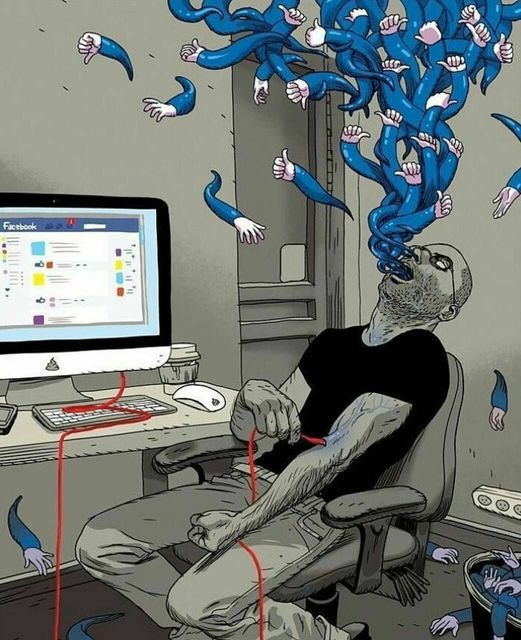
The problem of #dotcons is attention capture, its why #digitaldetox is a part of the #OMN toolbox. So lets look at why we need to act on the digital drug problem. The everyday digital drug fix starts with a notification, you pick up your phone because you get a notification. You unlock it, check the notification. Then maybe you look at one thing, then another, then another and suddenly an hour have disappeared.

You didn’t decide to spend the next hour staring at short videos selected by a #dotcons in the service of the #nastyfew. You didn’t sit down and make a conscious choice to enter the endless scroll, you just responded to a notification. Swipe – maybe this one is rubbish – swipe – that’s funny – swipe – boring – swipe – interesting – swipe – somebody attractive, and on it goes. This is the basic addiction of the #dotcons: turning our attention into a reaction rather than a choice. The important thing isn’t that one particular video is good or bad, the problem is loss of focus.

Every notification creates another injection, every swipe gives the algorithm a signal about what keeps you looking. The drug learns what holds you there, while you gradually lose track of why you picked up the phone in the first place. This isn’t communication in any real way, it’s an attention stealing machine and the more time we spend looking at it, the more normal the behaviour becomes. This is why #DigitalDetox project isn’t about telling people to “use their phones less”, its an AA meeting, we need to understand the drug is difficult to stop.

The phone isn’t the problem – digitaldetox is about #KISS technology to help people have more focus to participate in their communities. This mess we need to composting is social, the technology is a part, and yes the is piles of #techshit but under this surface is blinded ideology – the business model and the social architecture we think of as common sense.
The question is what infrastructure we build around those addictive behaviours, it is the problem with #mainstreaming, that it rarely looks like control from the inside the trap, it looks like common sense. People are presented with acceptable ideas, organizations, technologies and ways of working. Then, because everybody around them makings the same choices, those choices are “natural” – “This is just how things are done.”

But that “common sense” has a history. – for forty years, a mixture of #neoliberalism, #postmodernism, professionalisation and institutional culture has created a particular political and technological environment, that tells us that change should happen through recognized organizations, recognized experts, recognized funding structures and recognized channels.

Alternative paths are not forbidden, they are simply made difficult to see, and when people have spent decades inside this environment, asking them to look outside it can produce strong negative reaction. Then the problem is not simply bad people, it is tempting to describe this as a problem of individual personalities. Someone is arrogant, someone is ideological, someone is a gatekeeper, someone is “woke”, someone is a bureaucrat. But that misses the deeper problem, that people are shaped by the systems they live inside.

If your professional environment rewards certain ideas and punishes others, eventually you learn what can safely be said, learn which projects look fundable, learn which language gets accepted. You learn which organizations are considered legitimate. You also learn which people are worth listening to, its a #KISS social filter. The result is not only a conspiracy, it is something mundane and, more difficult to challenge, a culture reproducing itself. The people keep selecting things that make sense in the current #mainstreaming paths, and become evidence that the current #techshit mess is right all along.

This is one of the traps of #mainstreaming – its the grassroots problem we need to compost – grassroots projects come from somewhere completely different, they are messy, experimental and don’t always have professional language. They are built by people who see a #DIY problem and start doing something about it. That is where interesting alternatives begin, when these projects enter the mainstream funding and organizational environment, something bad happens. The project is asked to translate itself, then translate itself again to fit into a recognized category, demonstrate impact, scalability, governance, sustainability etc.

Then comes the compleat #block, it has to demonstrate that it already looks like something the funder understands, by the end, the thing being funded is very different from the thing that originally mattered. This fuck-up is not always malicious, it’s a structural problem of mainstreaming trying to make the unfamiliar familiar, and in doing so, it removes the qualities that made the grassroots project interesting in the first place. When we try and compost this #mainstreaming mess, people become defensive. When you challenge somebody’s “common sense”, you are not challenging an opinion, you may end up challenging their social position, their professional identity and their understanding of how the world works. That feels threatening, so its normal that the response is defensive.

Instead of asking “Could this alternative actually work?” the conversation becomes “Why aren’t you doing this properly?” Then comes the familiar #blocking “Use the proper channels.”“Talk to the right people.” “Get the stakeholders together.” “Build consensus.” “Follow the process.” “That’s not how things work.” And sometimes these are perfectly reasonable suggestions, but sometimes “proper process” is simply #blocking, ensuring that nothing outside the existing system can ever become legitimate.

The #OMN is built from a different starting point, it does not share any assumption that the existing institutions can solve the problems. It starts with people, communities, media and flows to build useful things the people can use, avoiding technical complexity to make participation is possible. We need these native technology’s as tech has its own version of the problem, the #geekproblem that assumes, if something is technically possible, the technical architecture should determine how people behave. This is the way power accumulates around administrators, developers, institutions and large communities, it is social. Thus, simply making something “open source” does not automatically make it socially open.

It is why matters, open data, open source, open standards and open processes are not the whole answer, but they can create space for communities to make their answers. Mediation rather than control, the answer to messy human behaviour is not more control. The #OMN is closer to a river than a filing cabinet, objects flow, people contribute to the flow, communities filter and shape the flow. Different places can create different views of the same underlying information. Some things become trusted – some things remain uncertain. Some things disappear from a particular view without pretending that they have magically ceased to exist everywhere.

This is a very different idea of network governance, its organic, its about composting the mess. The #openweb has accumulated decades of corporate platforms, closed APIs, surveillance economics, status games, technological churn, institutional habits and ideological baggage. There is a huge pile of shit, the answer is not to pretend otherwise, we compost it, take what is useful, break down what is harmful. Reuse existing tools, keep the lessons, discard the assumptions to help grow something new from what remains.

That is a more practical form of radicalism than simply traditional #fashionista left declaring that everything has to be destroyed and rebuilt from zero. It is also why #KISS matters, keep it simple, make the useful thing work. The real challenge to compost is cultural, the barrier to alternative technology is often not technology it self, it is the problem of common sense imagination. People need to imagine that things could work differently, then after this grassroots paths need space to experiment, to grow, before they are forced into the current #mainstreaming.

Funders like #NLnet need to recognize that something can be valuable before it has already become institutionally respectable. And #mainstreaming organizations need to understand that they are not the source of innovation, as to often they are the last people to notice this, that does not mean abandoning them, but it means not making them the only path.

So the question becomes, how can we convince them to build real alternatives, we can just to spend another twenty years trying to convince a closed system that it should become open. The path out of this mess is simple build something open, don’t waist to much time and focus explaining to institutions why grassroots communities deserve infrastructure. And don’t wait for “the right people” to give permission, start with the people who are already doing the work.

The important shift is from permission to participation, from ownership to commons, from control to mediation, from platforms to flows. From mainstreaming the grassroots into existing institutions to letting grassroots practice grow outward into the wider culture. The existing “common sense” can be composted, it is not inevitable, it is simply what has grown around us, to become a mess. We don’t have to worship the mess, we can pick up a shovel, turn the pile, let it breathe and grow something better from it.

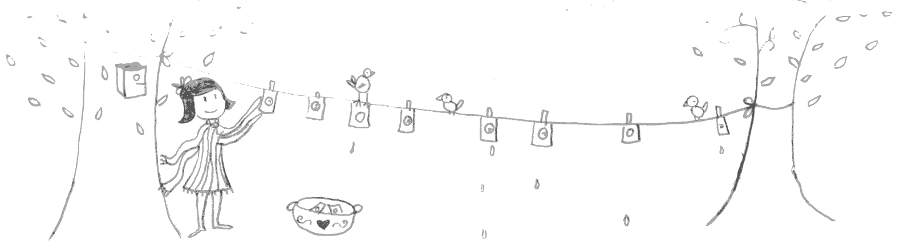
Don’t be a duck

#NLnet we are still waiting for an opportunity

#NLnet is the BEST of the terrible #openweb tech funding in Europe, likely the world. Over the last 10 years we’ve put around a dozen funding applications in to #openweb funders with real-world social and technological value projects. All were dismissed at the first round.

So this time we brought in a professional fundraiser to help write the application. They did an impressive job, and finally, our #OMN #makinghistory proposal – Trust-Based Media Flows for the #Fediverse – made it through to the second round.

Today, people have started publishing updates on getting grants, nothing back for us yet. The second-round process appears to involve “a polite interrogation: what are the ideas, how will the project be developed, what will the money pay for, what are the main tasks, and what is the project’s policy on AI-assisted coding? All perfectly reasonable questions”, that we are still waiting to have an opportunity to address.

There is a bigger problem, progressive tech funding still has a narrow idea of what counts as valuable #openweb work. Projects have to translate themselves into the language of funders, technical reviewers and the #geekproblem before they can even get considered. Grassroots projects are expected to prove their legitimacy through carefully packaged technical language.

Meanwhile, the things we are actually trying to build – trust, federation, community infrastructure, open process, human moderation, archives and alternative media flows – are the things that don’t fit neatly into the usual technology funding boxes.

So yes, we’re patiently waiting to see what happens with #NLnet, and are grateful that the project reached the second round. But getting through one funding round shouldn’t feel like winning a lottery. If the #openweb is supposed to be commons, funding it needs to be about more than finding projects that already know how to speak the language of institutions and narrow #geekproblem subcultures.

The #OMN path is about building infrastructure with and for the people doing the work, that probably means we will always be slightly awkward applicants. Good, the #openweb needs more awkward projects and fewer polished funding bubbles.

#OMN #openweb #FOSS #Fediverse #techchurn

Who’s Building the #Openweb – and Who’s Just Feeding Off It

A note to #FOSS funders

I’ve been working at the heart of this space for more than 30 years, funded and unfunded. In that time I’ve seen hundreds of alternative tech projects start with energy and good intentions. Most of them wither on the vine, a very small number flower.

After watching this cycle repeat for decades, one thing has become clear: the projects that survive and grow almost always follow a simple pattern. I call this the . Other people describe similar ideas as open source development, open governance, or commons-based development. The label doesn’t matter – the practice does.

If you want to know which projects will flower and which will wither, look at the ground, not the words. The ask four very simple questions:

  • Open data – can people access and reuse the information?
  • Open source – can people read, modify, and share the code?
  • Open process – can people see and participate in how decisions are made?
  • Open standards – can different systems interoperate and grow a wider ecosystem?

Projects that are open in all four of these ways tend to build living ecosystems. Projects that are only partially open tend to stall or collapse. The two repeating problems, over the years two patterns constantly undermine good projects.

#geekproblem – A teenage mix of arrogance and ignorance that is surprisingly universal in tech culture. Developers assume technical elegance (and complexity) will automatically solve social problems. They underestimate governance, community, and messy human reality.

#dotcons – The opposite pressure: corporate platforms pushing business models that prioritise extraction and growth over human need. They happily wrap themselves in the language of “open” while building fundamentally closed systems.

Both pressures distort funding decisions. Both lead to projects that sound open but aren’t. Money is a dangerous subject, yes, funding matters, but money inside infrastructure projects to often distorts them quickly. For #openweb work, a useful rule of thumb is: Keep the core simple. Focus funding on maintaining the infrastructure. Let many different organisations, businesses, and NGOs build external services and applications on top.

This keeps the core commons stable while allowing diversity and experimentation around it. It’s the #KISS principle applied to digital commons. When funding pushes too many external agendas into the core, projects become heavy, political, and fragile.

Some uncomfortable truths, over the last decade we’ve been told several stories about security and scale that simply don’t hold up. There is no security in CLOSED systems, security emerges from open scrutiny and shared responsibility:

  • There is no security in radical individualism, security emerges from community.
  • There is no security in “trustless” systems, real resilience grows from social trust.

These ideas have been obscured by hype cycles and by the influence of #dotcons and their shadow allies, the #encryptionists who push purely technical “trustless” thinking. Both camps wrap themselves in the language of openness, but their systems remain structurally closed. Words are wind, look at the ground: .

The unspoken scaling problem, there is also an unspoken #geekproblem around how we think about scaling. When many developers talk about #p2p, they imagine data-to-data scaling, systems optimised to move information as efficiently as possible. From that perspective, human friction looks like a problem.

But if you see #p2p as human-to-human, the picture changes. Human scaling limits – smaller communities, slower processes, local trust networks – are not bugs, they are virtues, creating resilience and accountability. The data-first model is the one favoured by the #dotcons.
The human-first model is the one the #openweb actually needs. Funders should be aware of which philosophy a project is building around.

A simple test If you want a quick filter when looking at proposals, ask:

  • Does this project genuinely follow the ?
  • Does it build community and governance, not just code?
  • Is it resilient without permanent central funding?
  • Does it strengthen the commons, rather than a future platform?

Projects that pass these tests are the ones most likely to flower, everything else tends to wither. Food for thought.

#EU #NLnet #NGI #funding

A Minimal, Governable Infrastructure for Trust-Based Media Flows

Human Tech: The Open Media Network (#OMN) is a proposal for human-scale, federated media infrastructure built on standard #FOSS practices and the : open data, open source, open process, open standards.

It does not attempt to invent a new platform. It defines a minimal, interoperable framework for how content flows through networks, in ways that remain understandable, auditable, and governable by the communities that use them.

The core premise is simple, if people cannot mentally model how a system works, they cannot meaningfully govern it. When infrastructure becomes opaque, power centralises.

OMN reduces networked publishing to five irreducible functions. Everything else – feeds, timelines, notifications, dashboards – is interface.

The OMN Framework: The Five Functions (#5F)

Rather than starting from features or products, OMN starts from flows. Think of a network as pipes and holding tanks. Objects move through them, communities decide how. The entire stack reduces to :

1. Link / Subscribe to a Flow

Connection is explicit and user-controlled. A node can link to or subscribe to any flow – local or remote. Flows can be personal, collective, moderated, experimental, or archival. This replaces platform enclosure (“you are inside us”) with composable federation (“this connects to that”).

No built-in opaque ranking algorithms, no engagement manipulation, just declared connections between flows.

2. Trust / Moderate a Flow

Moderation is treated as routing and filtering – not binary censorship. Flows can:

  • Pass through untouched
  • Be diverted into holding tanks
  • Be filtered through community-defined sieves
  • Be contextualised rather than removed

Trust is local and explicit, different communities can apply different filters to the same upstream source. This preserves plurality while avoiding centralised control.

3. Rollback

Rollback enables recovery without destructive central authority. Communities can:

  • Rewind aggregation decisions
  • Remove objects from local flow
  • Correct moderation mistakes
  • Recover from abuse or spam

Without rollback, errors escalate into governance crises. With rollback, accountability becomes procedural rather than punitive.

4. Edit Metadata

Objects are not rewritten, they are contextualised, metadata can be appended to content:

  • Tags
  • Trust signals
  • Warnings
  • Summaries
  • Translations
  • Relevance markers

Meaning emerges through socially applied metadata, not engagement-optimised algorithms. This is the backbone of decentralised news curation.

5. Publish Content

Publishing is simply adding an object into a flow. Publication does not imply amplification. Authority is emergent through trust relationships. At the base of all five functions is a simple storage layer, a database holding objects in motion. No proprietary feed logic, its people and community. No built-in opaque AI ranking layer or dependency on surveillance economics.

Why This Matters for Public Digital Infrastructure

Most contemporary social media systems are vertically integrated, identity, distribution, ranking, moderation, monetisation and storage are all coupled inside corporate governance structures. This produces structural centralisation, even when protocols are nominally federated.

#OMN is about functional decoupling by isolating the core five functions, infrastructure becomes auditable, replaceable, forkable, composable and grassroots governable. Complexity is where capture happens, minimalism is a #KISS governance strategy.

Nothing New – By Design

OMN intentionally builds on patterns that already work: Packet-switched networks, electrical grids, plumbing systems, version control systems and federated FOSS collaboration models. This is the #nothingnew principle: sustainable infrastructure mirrors systems humans already understand. When technology reflects intuitive physical systems, governance becomes possible at human scale.

Built on and Standard FOSS Process

The OMN stack adheres to:

  • Open data
  • Open source
  • Open process
  • Open standards

It is not a product, it is a reference architecture and implementation framework. Others are encouraged to build clients, moderation layers, UX experiments, archival tools, research layers, and community governance models in the flow. The value lies not in novelty, but in interoperability and trust-layer experimentation.


Design Principles Relevant to #NLnet Priorities

OMN aligns with public-interest infrastructure goals:

1. Decentralisation Without Fragmentation

Federated flows with local moderation and shared protocols.

2. Trust Mediation as a First-Class Function

Trust is explicit, inspectable, and socially determined, not hidden inside ranking systems.

3. Lossy by Design

Perfect synchronisation is not required. Redundancy increases resilience.

4. Forkability

Each node can evolve independently without breaking interoperability.

5. Infrastructure Over Platform

OMN is a toolkit for building ecosystems, not a single destination site.

From Indymedia to a Federated Commons

The first seed projects are makinghistory and rebooting early grassroots media networks like Indymedia demonstrated the power of open publishing anyone could contribute, communities moderated collectively and infrastructure was mission-aligned. But back in the day, those systems lacked tech scalable trust layering and sustainable federation paths.

OMN is an attempt to reboot that tradition using contemporary FOSS practice and federated architecture. Not as nostalgia, but as public digital infrastructure.

What Funding Enables

Support from funders such as NLnet would allow:

  • Formal specification of the architecture
  • Reference FOSS implementation
  • Interoperability tooling with existing federated systems
  • Trust-metadata experimentation frameworks
  • Governance model documentation
  • Security auditing and resilience testing
  • Documentation aimed at non-technical community operators

The aim is to lower the barrier to running community-governed media nodes while preserving composability with the broader federated web.

In Summary

The Open Media Network is federated, trust-based, open by design with minimal core architecture built for governance, not engagement capture. It is infrastructure for communities to create their own flows, their own networks, their own moderation models. It is not about optimising users, it is about enabling public agency. Not control, trust.

OMN is not a platform, it is plumbing for democratic digital commons #KISS

Scale changes everything

Human behaviour does not stay the same as groups grow. The instincts that helped small tribes survive – loyalty, signalling belonging, defending boundaries, competing for status, consolidating influence – functioned well within natural limits. In small groups, feedback was immediate. Consequences were visible. Power was constrained by proximity and material reality.

But when those same instincts operate at contemporary social scale – inside complex technological societies, or even something like the current #NGO-fediverse – they stop stabilising systems and begin to destabilise them.

What once supported survival can amplify fragmentation.
What once built cohesion can produce polarisation.
What once protected the group can spiral into extraction and enclosure.

This isn’t a moral failure of the human species. It’s a predictable outcome of scale.

We now live inside systems where old social instincts interact with global networks, algorithmic amplification, financial abstraction, and industrial metabolism. The more-than-human crisis – #climatechaos, biodiversity collapse, geopolitical fracture – isn’t a collection of isolated problems. These are symptoms.

Beneath them are recurring systemic patterns.
Beneath those patterns are society-scale incentives.
And beneath those incentives are deep assumptions about growth, control, competition, and scarcity.

We are not outside these layers. We are embedded within them. So the questions become:

  • What does responsibility look like in a world where structural incentives shape collective outcomes?
  • Where do social thresholds appear when scale removes the natural limits that once kept us in balance?
  • How do we avoid treating symptoms while reinforcing the deeper forces producing them?

And if our instincts helped seed the early #Fediverse – when we for a time glimpsed a system that worked with human nature while balancing against #dotcons reality – how do we stay true to that path?

Because the tensions we see in the #fediverse today are not just about #blocking or governance disagreements. They are a microcosm of the larger scale problem of how human coordination patterns behave when they move from small, trust-based communities into larger networked infrastructures. The fediverse is not separate from this dynamic. It is one of the places where we should be actively trying to work it out.

To begin that work, we need to understand how the last #openweb reboot was enclosed. We can start by naming the #dotcons.

The #dotcons aren’t just “big tech companies.” They are a structural class of platforms that follow a repeatable pattern:

  1. Present themselves as open, liberating, participatory spaces.
  2. Attract huge numbers of people through network effects and free access.
  3. Gradually enclose that activity.
  4. Monetise attention by shaping reach, visibility, and behaviour.

The “con” isn’t that they charge money, it is the bait-and-switch:

  • First: open participation, organic reach, community.
  • Later: algorithmic throttling, pay-to-play visibility, advertising optimisation.

The “dot” is the monetisation layer – advertising markets, behavioural profiling, engagement engineering.

Even the so-called ethical platforms often operate on the same structural logic:

  • growth first
  • enclosure second
  • monetisation through mediated reach
  • shaping discourse toward advertiser-compatible norms.

You can swap leadership, branding, or tone, but if the core model is:

capture network → centralise control → monetise attention

… then it sits in the same class.

Naming them #dotcons isn’t moral outrage, it’s structural clarity. If we don’t name enclosure as a pattern, we end up debating personalities and features instead of structure. And this matters for the fediverse as if we don’t consciously build flows, commons, and practices into infrastructure and culture, the same enclosure dynamics will re-emerge, just more politely. The difference isn’t tone, it’s structure.

The real tension in the Fediverse is more about the idea and direction are broadly right:

  • decentralised social web
  • commons infrastructure
  • alternatives to #dotcons.

But the institutional reality is hollow, not enough resources go into the “native,” messy, grassroots work that actually keeps things alive. People like Evan and others stepping into organisational roles are, from their perspective, trying to:

  • stabilise infrastructure
  • secure institutional funding
  • reduce fragmentation
  • make the ecosystem legible to funders and regulators.

From that side, the fear is clear that without coordination and institutional structure, the fediverse remains marginal or collapses under maintenance debt.

From the native grassroots perspective, however, that institutionalisation risks repeating Web 2.0 capture in softer form – NGO-isation, depoliticisation, mainstream drift, and soft #blocking control. Can be framed as:

  • stability vs autonomy
  • funding vs independence
  • coordination vs organic growth

But it’s more accurate to call it what it is, a resource bottleneck. “ZERO resources for what we actually need” is widely felt as funding currently flows to:

  • protocol development
  • interoperability standards
  • software maintenance grants
  • governance experiments legible only to funders.

Funding rarely if ever flows to:

  • non-#NGO community organising
  • onboarding and social infrastructure
  • local/regional native networks
  • alternative governance rooted in users/admins
  • public-first infrastructure like #OMN.

In short, technical sustainability gets funded, where social sustainability struggles, this is why the friction persists. Funding bodies – including ones like #NLnet – operate within a narrow philosophy:

  • fund bounded technical projects
  • avoid political positioning
  • prioritise measurable outputs (code, specs, deployments).

But grassroots media and social organising don’t fit clean grant deliverables. Long-term community building is messy and hard to quantify. Native or openly political framing scares institutional funders. So money exists, but flows on balance toward the wrong layers for movement-building. #Blocking systems like this rarely change because people ask, they change when parallel practice makes the gap obvious. History shows this:

  • Indymedia didn’t wait for permission.
  • Early blogs didn’t wait for foundation approval.
  • Mastodon grew outside institutional planning.

The fediverse reboot itself began as parallel infrastructure.

How do we shift direction to balance resources to:

  • finding seed funding and affinity groups
  • building alternatives that demonstrate missing layers
  • creating public-first media networks (#OMN)
  • experimenting with governance rooted in users/admins (#OGB)
  • reframing the fediverse as one implementation of a broader #openweb ecology.

Institutions may shift, they may not. They likely believe they are solving the resource problem – just at a different layer (protocol legitimacy, policy access). So the conflict isn’t simply “they are wrong.” It’s that they are solving a different problem than native actors see as urgent.

The real power map is that formal governance in the fediverse is weak. Influence networks are strong. Power =

  • maintainers (code gravity)
  • large instance admins (network gravity)
  • narrative shapers (discourse gravity)
  • funding flows (resource gravity)
  • UX defaults (silent governance)
  • momentum and path dependency.

Most people assume power = foundations. It doesn’t, and this mismatch creates frustration. Grassroots actors see norms solidifying without transparent process. Institutional actors see chaos and feel pressure to stabilise. Both misidentify where power actually sits. The deepest divide is not ideological. It’s psychological. People are defending different survival strategies inherited from earlier internet generations. Until that’s recognised, discussions loop.

This is a much shorter version of the last post worth reading that as well. What do you think – when you step back and look at it this way?

We need to look at counter common sense. Peter Kropotkin “In existing States a fresh law is looked upon as a remedy for evil.” Cuts straight into the #Fediverse tension, because the pattern is scale reflex: Problem appears → create rule → assume order emerges. It’s not stupidity, it’s institutional instinct, in spaces, when instability appears, the reflex is legislate, regulate, formalise and centralise. Law becomes the default instrument of repair.

Kropotkin’s critique is that law treats symptoms while leaving underlying social relations intact. It stabilises the surface while preserving the structure that produced the harm. Mapped onto #NGO governance frameworks, we see as this as the cure for cultural conflict, moderation rules as cure for social breakdown, foundation structures as cure for coordination failure, compliance processes as cure for scale instability. The risk isn’t only law itself, it is in mistaking rule-production for structural transformation.

When scale increases, institutions reach for formalisation, as trust erodes, systems reach for control. That instinct once helped small groups survive, but at scale, it reinforces the dynamics causing instability. #openweb networked infrastructure like the Fediverse, this equivalent of “fresh law” is played out as new governance bodies, new codes of conduct, compliance layers, blocking norms and new funding gatekeeping mechanisms. While each framed as remedy instead they are increasing enclosure.

Kropotkin isn’t arguing for mess, he’s pointing toward something harder – If problems emerge from structural incentives and social relations, then layering rules on top of those incentives won’t solve them, it will entrench them.

That’s the deeper tension, do we solve #Fediverse instability by adding structure? Or by changing flows, commons, and material relations underneath? That question is the uncomfortable one for people who still common sense worship the #deathcult.

The tension that’s pushed back into the fediverse the last few years

DRAFT

Scale changes everything as human behaviour does not stay the same as groups scale. The instincts that helped small tribes survive – loyalty, signalling belonging, defending boundaries, competing for status, consolidating influence – functioned well within natural limits. In small groups, feedback was immediate. Consequences were visible. Power was constrained by proximity and material reality.

But when those same instincts operate at contempery social scale, inside complex technological societies, like the current #NGO fediverse, they stop stabilising systems and begin to destabilise them. What once supported survival can amplify fragmentation. What once built cohesion can produce polarisation. What once protected the group can spiral into extraction and enclosure we start to see now. This is not a moral failure of the human species, it is a predictable outcome of scale.

We now live inside systems where ancient social instincts interact with global networks, algorithmic amplification, financial abstraction, and industrial metabolism. The more-than-human crisis – climatechaos , biodiversity collapse, geopolitical fracture – is not collection of surface problems, these are symptoms.

Beneath them are recurring systemic patterns, society-scale incentives. And beneath those incentives are deep assumptions about growth, control, competition, and scarcity. We are not outside these layers, we are embedded within them. So the question becomes what does responsibility look like in a world where powerful structural incentives shape collective outcomes? Where do social thresholds appear when scale removes the natural limits that once kept us in balance? How do we avoid only treating symptoms while reinforcing the deeper forces producing them?

And if our instincts once helped seed the current fediverse, we did see for a moment what a system look like that works with human nature while balancing it against #dotcons reality. This is the path we need to get back to, to understand how the current tensions I outline, in the fediverse makes sense. Because what we are seeing there is not just a #blocking governance disagreement. It is a microcosm of the larger scale problem: how human coordination patterns behave when they move from small, trust-based communities into bigger networked infrastructures.

The fediverse is not separate from this, it is one of the places where we are actively trying to work it out. To start down this path we need to look at how the last #openweb reboot was taken from us.

The #dotcons aren’t just “big tech companies.” They’re a structural class of platforms they follow the same pattern:

  1. Present themselves as open, liberating, participatory spaces.
  2. Attract huge numbers of people with network effects and free access.
  3. Gradually enclose that activity.
  4. Monetise attention by shaping reach, visibility, and behaviour.

The “con” isn’t that they charge money, the con is the bait-and-switch:

  • First: open participation, organic reach, community.
  • Later: algorithmic throttling, pay-to-play visibility, advertising optimisation.

The “dot” is the monetisation layer – advertising markets, behavioural profiling, engagement engineering. Even the so-called ethical platforms operate on the same structural logic:

  • growth first
  • enclosure second
  • monetisation through mediated reach
  • shaping discourse toward advertiser-compatible norms.

You can swap out leadership, branding, or tone, but if the core model is:

capture network → centralise control → monetise attention

… then it sits in the same class.

Naming them 20 years ago as #dotcons isn’t about moral outrage, it’s about clarity, because if we don’t name the enclosure pattern, we end up debating personalities and features instead of structure.

Where this matters for the fediverse is simple – If we don’t consciously build flows, commons, and practices into the infrastructure and culture, the same enclosure dynamics will re-emerge – just more politely.

The difference isn’t tone, it’s structure. And being clear about what the #dotcons are helps us see what we are trying not to reproduce.

The idea and direction are broadly right (decentralised social web, commons infrastructure, alternatives to #dotcons). but the institutional reality is hollow, not enough resources going into the “native” messy grassroots work that actually keeps things alive.

People like Evan and others stepping into fediverse organisational roles are, from their perspective, trying to stabilise infrastructure, secure insitunal funding streams, reduce fragmentation and make the ecosystem legible to funders, regulators, and mainstream paths. From this side, the fear tends to be that without some coordination and institutional structure, the fediverse stays marginal or collapses under maintenance debt.

Were from the native the grassroots/activist side institutionalisation risks repeating Web 2.0 capture light – NGO-isation, depoliticisation, and slow drift toward mainstreaming and soft #blocking control.

You could see this as basically stability vs autonomy, funding vs independence, coordination vs organic growth. But better to see it for what it is a resource problem (the real bottleneck)
“ZERO resources for what we actually need” is key, and honestly widely felt. Where funding currently goes to protocol development, interoperability standards, software maintenance grants and pointless governance experiments that look credible to funders.

Where resources don’t go on balence to “native” non #NGO community organising, onboarding and social infrastructure that is not mainstreaming. Seeding and growing local/regional native networks. Alternative governance experiments outside formal org structures and most importantly public-first infrastructure (like the #OMN direction) In short technical sustainability gets funded; social sustainability struggles to grow.

#NLnet and geekproblem, #NGO dynamics tend to operate with a narrow philosophy of fund discrete, bounded technical projects that avoid any political positioning to prioritise measurable outputs (code, specs, deployments). This creates structural friction because as infrastructure projects for grassroots media and social organising doesn’t fit neat grant deliverables. Long-term community building is messy and hard to quantify. Native radical or openly political framing scares institutional funders.

So we reinforce a path where money exists, but it flows toward the wrong layers for movement-building. So when dose this balance change? This is the hard truth: systems like this rarely change because people ask, they change when people push parallel practices that make the gap obvious.

What history teaches us in the #openweb is Indymedia didn’t wait for permission, early blogs didn’t wait for foundation approval and Mastodon itself grew outside institutional planning.
Change tends to happen through parallel infrastructure, witch is how the fedivers reboot happened in the first place before our current shift to #NGO structures and people takeing over our shared direction.

So how do we get out of this mess? By finding seed funding and affinity groups to build/use alternatives that demonstrate missing pieces like public-first media networks (#OMN), social layer experiments and governance models rooted in users/admins, not foundations (#OGB). We need this narrative pressure, not just critique, re-framing “Fediverse” as one implementation of broader #openweb rather than the destination and shifting language from platform to ecology.

Resource routing from the current institutions if they are at all capable of this, or giving them a good, if polite, kicking if they are not. Not to knock them out, more to knock them aside, they are still native on balance. The uncomfortable reality we need to compost is the current institutional layer probably thinks they are solving the resource problem – just at a different level (protocol legitimacy, policy access, etc). So the conflict isn’t only “they are wrong” but they are solving a different problem than the one native actors see as urgent.

Where leverage might actually exist if our goal is shifting direction rather than just venting (which is understandable 🙂), leverage tends to come from building cross-admin alliances (server operators are a missing power bloc, framing needs in operational terms (“X infrastructure gap causes Y burnout/failure” and linking fediverse survival explicitly to native grassroots media use-cases.

To work on this it helps to see the factions currently shaping Fediverse governance., a long sometimes over lapping list

  1. The Greybeards of every genda (early web + protocol veterans) worldview The fediverse is the continuation of the original web ethos. Protocols matter more than platforms. Stability and interoperability come first. Cultural roots are early blogging, RSS, XMPP, open standards culture and the early activist web. They are guardians of continuity.
  2. Protocol Purists / Engineering Minimalists (Sometimes overlap with greybeards but culturally distinct.) Tend to dismiss governance and social design as “out of scope.” and tus risk reproducing libertarian-style “neutral infrastructure” assumptions. They protect the protocol but sometimes ignore the ecosystem.
  3. NGO Pragmatists / Institutionalizers (This is likely most of current leadership structures. Think the Fediverse needs to be legible to regulators, funders, and #mainstreaming users. There cultural roots are foundation models, EU funding ecosystems and digital rights etc. Motivationed by legitimacy, policy and funding stability (for them selves, and thus the system, with them running it). There power is they can unlock resources, build bridges outside tech circles and reduce chaos perception. But suffer from very bad bind spots that affectively block by depoliticising radical roots, (un)intentionally reproduce top-down structures and prioritise optics over native needs. They are trying to make fediverse “safe enough” for mainstream adoption.
  4. Grassroots Builders / Commons Activists (Closest to #OMN framing.) Build and support the Fediverse as a social movement, not just infrastructure with native paths. Community governance and mutual aid are core so technology must serve social transformation. Roots sprin from early Indymedia, anarchist/left activist tech, free culture and early autonomous networks. Tere mission is native to te fedives of reclaiming media infrastructure, resist #dotcons capture to rebuild collective spaces. They bring real world experience of community building, lived experimentation and resilience outside funding cycles. But have there own blind spots with resource scarcity, fragmentation and continuing mess internal ideological conflict. They carry the original radical energy but struggle with institutional power.
  5. Instance Admins (The Hidden Power Layer) are often overlooked but crucial. Thy are te fedivers, keep servers running, manage moderation chaos, with ractical solutions over ideology spiky or fluffy. Being motivated by sustainability, reducing burnout and keeping communities healthy. Tey ave the only real operational experience and work with native distributed authority. But tend to be to blind to organising as a collective political voice as there influence is diffuse. If they coordinated, they could reshape governance overnight.
  6. Commercial Entrants / Platform Builders with the #NGO paths becoming more powerful. They tend to a narrow non native view of the fediverse as infrastructure for scalable products and interoperability as competitive advantage. Examples would be venture-backed or startup-aligned platforms motivated by growth, monetisation models compatible with federation and early positioning before governance can settle. They have power and voice due to resources, UX focus and marketing reach. But being non native they lack “users”. Tey are blind to the risk of slow platform capture and are anatanistic to the tension with grassroots values. They introduce gravity toward mainstream web patterns.
  7. The Silent Majority (Users) are often ignored in governance discussions. In this #NGO push they are seen as needing usable, safe social spaces and not deeply ideological. This leads to adoption patterns shaping the ecosystem more than debates do witch deeper cultural fault lines.
  8. Large Instance Admins (network gravity), they are admins of large or historically central servers, culturally influential communities have some power with federation choices shape network topology. Blocking decisions define social boundaries. They can indirectly decide which communities thrive, what norms spread and what software gains adoption. No vote, but impact.
  9. Narrative Shapers (discourse power) mostly the more fluffy, #NO frendly bloggers, long-term fediverse personalities, visible commentators and conference speakers define what problems are “real”, what language becomes default and try and define what counts as native and reasonable. Some example might be shifting conversation from “openweb” to “socialweb”, framing decentralisation as safety vs freedom. These narratives shape funding, developer interest, and user expectations.
  10. Funders (hard coded steering) for most people this is slight and not seen as direct control, for others more strong directional influence. Examples include: grant bodies, research funding ecosystems, EU-aligned digital infrastructure programs. On balance the vast majority of this funding goes to corrupt insiders and is thus simply poured directly down the drain. But the stuff that works, like #NLnet has real power, funding doesn’t dictate outcomes, but it decides which problems get resourced to indirectly defines priorities. But if this is not balenced by social governance funding it quietly becomes invisible.
  11. Bridge Figures (social connectors) are hugely underestimated. They are people with experience across multiple factions of dev + activist hybrids, long-term organisers and translators between tech and social communities. There power is in balanceing conflict, helping which conversations cross boundaries and legitimize ideas by engagement. Without them, silos harden.
  12. Default Software UX (silent governance) The interface itself shapes behaviour were Mastodon UX norms influence culture more than policy debates, defaults create expectations. Examples: content warnings, quote-post absence/presence, moderation tools. UX becomes governance.
  13. Momentum and path dependency is possibly the biggest hidden power. Once a protocol interpretation, a moderation norm or a deployment pattern gains early momentum… it becomes hard to change, regardless of governance discussions.

These factions aren’t just political, they divide along deeper axes.

  • Infrastructure vs Movement. Protocol purists + many greybeards → infrastructure-first. Grassroots → movement-first.
  • Stability vs Experimentation. NGOs + institutional actors → stability. grassroots + indie devs → experimentation.
  • Legibility vs Autonomy. NGOs seek legibility for funding/policy. grassroots value messiness and effective autonomy.
  • Governance vs Emergence. institutionalists want hard (oftern invisable) governance frameworks. Others believe governance should emerge (visably) organically

The insight meany people miss is that the biggest conflict is NOT what they might think left vs right or tech vs social, it is people trying to make the fediverse safe for scale vs People trying to keep it open enough for transformation. Both believe they are saving it. This is where things actually make sense, because formal governance in the fediverse is weak compared to influence networks. Most frustration comes from people arguing about structures that “don’t actually hold power”, while missing the forces that shape direction.

We need a more realistic map of the unspoken power dynamics shaping the fediverse, these are not generaly official roles – they’re influence patterns. Maintainers as gatekeepers (code gravity), who are core maintainers of major projects (Mastodon, Akkoma/Pleroma forks, Pixelfed, Lemmy, PeerTube, etc.). Protocol implementers of what ships shapes reality. What doesn’t get merged doesn’t exist. without formal authority they define the roadmap simply by deciding what is worth implementing. This has a strong hidden effect that governance debates often become irrelevant if maintainers don’t prioritise them. Some example dynamics are social governance features get ignored because they’re “not technical”. UX decisions shaping culture without explicit discussion etc.

The core dynamic that is hidden is most people assume power = foundations or organisations. Where the reality is power = maintainers + large instances + narratives + funding gravity. Formal structures, and the little native governance we have mostly follow these forces, not in any way balance them in.

So were dose the stress come from and why this creates frustration. Grassroots actors often see decisions emerging without any transparent process, norms solidifying without any affective debate and institutions appearing to “take over”.

Where institutional actors see chaos without coordination and feel deep phsicological, and self serving need for pressure to stabilise. Both misidentify where decisions actually originate. The deepest unspoken divide is people are defending different emotional survival strategies, until this is recognised, discussions loop endlessly.

What do you think, if you think about this at all?

Why mainstream EU tech funding needs counter-currents, why tech activism matters

Across Europe, large-scale “mainstreaming” tech projects are increasingly shaping the future of the digital commons. From infrastructure initiatives to sovereign cloud strategies and federated social technologies, the EU tech stack is becoming more organised, more funded, and more institutionalised.

On the surface, this looks like progress. But history suggests that without active counter-currents, #mainstreaming inevitably drifts toward bureaucracy, risk-aversion, and quiet capture by institutional and corporate interests. The problem is almost all current European tech funding is poured down the drain of soft painless corruption.

This is why a small but intentional flow of funding toward grassroots, activist, and counter-cultural projects within #FOSS is not a luxury, it is essential infrastructure.

  1. Innovation rarely if ever starts in the mainstream

Most genuinely transformative ideas in #FOSS and free software and #openweb did not originate from institutional programmes. They came from messy edges of volunteer collectives, activist media projects feed by autonomous spaces building #FOSS social infrastructure.

These environments allow experimentation without needing immediate legitimacy or scalability. They tolerate failure and contradiction, conditions that mainstream programmes often cannot. Without supporting these edge spaces, mainstream funding feeds an echo chamber that only produces incremental improvements, if any, to existing paradigms. Counter-currents are not only opposition; they are the ecosystem that generates future pathways.

  1. Activism keeps governance honest

Institutional projects naturally optimise for stability, compliance, and reputation. This creates blind spots where needed difficult political questions get softened and avoided, governance becomes less participatory over time leading to decisions shift toward funders and professional stakeholders. Activist communities provide necessary friction by asking uncomfortable questions about power concentration and co-option by #NGO and corporate actors.

This friction is often misinterpreted as negativity or disruption. In reality, it acts as a corrective force that keeps projects aligned with the original European values, and the values of the #openweb and #FOSS. Without activist pressure, mainstreaming tends toward the same #closedweb patterns it now claims to be resisting.

  1. Diversity of approach is a resilience strategy

A healthy ecosystem requires multiple approaches operating simultaneously, with institutional scaling projects in balance with community-led infrastructure. When funding flows only toward “safe” and easily measurable projects, the ecosystem loses adaptive capacity. Counter-currents provide alternative models and paths that become critical when dominant approaches fail. This is something repeatedly demonstrated in the history of internet development. Funding these spaces is therefore not charity; it is long-term risk management.

  1. The current gap: refusal to fund counter-currents

Some current alternative funding bodies – including initiatives like #NLnet – have done valuable work supporting open technology. However, when funding structures avoid explicitly supporting activist or counter-cultural paths, a structural imbalance emerges. By prioritising technical outputs without investing in the social and political ecosystems that sustain them, funding breaks down, reinforcing the same dynamics that previously enabled enclosure and platform capture. Technical neutrality is not neutral. It implicitly favours existing power structures.

A truly balanced funding flow would intentionally support more grassroots organising capacity to build activist infrastructure projects with working governance experimentation like the #OGB to open spaces to shape community memory and historical continuity. Without this, mainstream funding cannot claim to represent the full health of the #FOSS ecosystem.

  1. Why this matters now

The European tech stack is at a turning point. As public funding grows, so does the risk of institutionalising the very problems open technology originally emerged to resist. Activism is not only an external threat to mainstream projects, it is also a feedback system.

Supporting counter-currents prevents stagnation and helps to surface blind spots early by keeping alignment with public values. It’s needed to keep the tech ecosystem genuinely open rather than merely #NGO branded as such. The simple principle is if mainstream funding only supports what already looks safe and legitimate, it stops being an engine of innovation and becomes a mechanism of consolidation.

To keep the #openweb alive, we need funding flows that intentionally include the messy edges – the activists, the grassroots builders, and the experiments that don’t yet fit neat categories.

Not because they are comfortable, because they are necessary.

And to tell the truth we need a better balance of useful verses funding poured down the drain #NLnet #EU #NGI #NGIzero and likely more, please post in the comments.

Talking About the #geekproblem in Funding

Funding the #openweb is a political act, yet most funding decisions today are framed in technical terms only – dominated by what we call the #geekproblem – a worldview where infrastructure is king, user needs are secondary, and social context is largely ignored.

Let’s unpack this with real-world examples and look at how we keep falling into this trap, and what we could do to climb out. The call-out for funding is phrased in social language, to build privacy-preserving tools, improve the commons, empower communities, decentralize infrastructure. But the funded projects rarely reach or empower actual communities. This is the disconnect, a cultural blind spot that stems from the #geekproblem.

We need to fund the social layer, as a strong backend is necessary, nobody is saying otherwise. But it’s not sufficient, the #openweb is not failing because of lack of backends. It’s failing because almost nobody knows they exist, cares, or knows how to use them. Take ActivityPub, the protocol behind Mastodon and the #fediverse. It had existed in various forms for years, but it only took off because:

Mastodon made it social.

It had good UX for regular people.

There was media buzz and community-building.

It offered emotional utility — a real alternative to Twitter at the moment people needed it.

Without this social glue, ActivityPub would have been another elegant-but-abandoned standard. A backend sitting on a shelf, this is the lesson:

To have an #openweb because we need to fund the people and projects who do social UX, onboarding, design, documentation, evangelism, and community organizing.

We currently keep building plumbing and call it a house, we then blame people for not living in it, feeding the #dotcons. Here’s a bitter irony:

Funding backend tools with no regard for adoption pathways just helps #dotcons.

The corporate world happily scoops up open source backend work (including ActivityPub) and wraps it in slick UX, marketing, and control. That’s how:

Meta is building Threads with ActivityPub.

Google funds protocol work to feed proprietary services.

Microsoft contributes to open source, then wraps it in Azure services.

They have the social layer, #PR, onboarding, monetization, network effects, and we hand them the backend work for free. We build the roads, they put up the toll booths.

The Fediverse is not a collection of protocols, it’s not a stack of servers, it’s a culture – or it was. And that culture is in crisis:

Burnout among developers.

Fractured community governance.

Rising influence of #NGOs and foundations pushing vertical, institutional models.

Selling out to mainstreaming partnerships (ex: EU outreach, Threads integration).

Social stagnation as microblogging dominates over creativity, curation, and real collaboration.

There is still potential, a web of relationships, tools, and practices built on trust rather than control, but we are not funding that potential. We are, instead, funding more tools, more protocols, more #techchurn.

What’s the pat out of this mess? We need to rebalance, right now funding overwhelmingly goes toward:

Code (especially backend)

Security and cryptography

Infrastructure-level "innovation"

We need to start funding:

Onboarding, documentation, UX

Social features, not just tech protocols

Network-building between grassroots media and communities

Outreach that isn’t just evangelism, but relationship-building

Public education, not just developer conferences

Human infrastructure — the people doing the messy, unglamorous work of care and connection

Think about projects like: The Open Media Network (OMN) – which builds out real linking between alt-media producers using existing standards like RSS and ActivityPub. It’s boring tech, but socially radical. This project aren’t shiny, but it matters.

We cannot build future paths by pretending the problem is just technical. The #geekproblem is a cultural blindness, the belief that the social will magically emerge once the tech is “good enough.” It won’t.

If you want a flourishing #openweb, you need to fund the people with shovels — the ones doing the care work, building bridges, and holding space for non-geek communities.

Until we do that, the #openweb will remain a ghost town of beautiful ruins – and a free R&D lab for the next generation of #dotcons.

#NGI #NLnet #NGIzero

Why most #geekproblem software fails: Trust vs. control

Almost all of our #geekproblem software fails because it’s built with a mindset of control.

Control over users.
Control over systems.
Control over outcomes.

But all good societies, and all durable communities, are based on trust. When we ignore this, we don’t just write bad code, we produce #techshit that nobody uses, that burns out developers, and that confuses users. Then we start over… and call it “innovation.” That’s #techchurn.

Control-driven projects: Examples of failure

Diaspora
Touted as a Facebook alternative, it focused too much on cryptographic control and data silos — and forgot the social UX that makes people actually want to use social media. It never recovered from this early design flaw.

GNOME Online Accounts
Supposed to be a bridge between the desktop and online services. Instead, it became a privacy puzzle with unclear consent and broken trust. Control was enforced without social understanding.

Secure Scuttlebutt (SSB)
A radical peer-to-peer network, very promising. But became increasingly unusable due to overcomplicated trust mechanics and lack of simple social pathways for onboarding new users. The community stalled.

Matrix / Element
Still pushing forward, but has constant friction because it replicates many centralised “control” models in the name of “choice.” Powerful, yes. But still struggles with real decentralised trust outside geek bubbles.

🌱 Trust-Based Systems: What Works?

Fediverse / Mastodon
It works because it’s socially familiar and based on human trust over algorithmic control. You choose who to follow, what server you trust. And it grew because of this — not in spite of it.

Signal (Early Days)
Before turning more into a consumer app, Signal succeeded by focusing on trusted networks — your phonebook — and making end-to-end encryption invisible. It was about trust, not just security.

The real problem is in part to do it money and the funding of the wrong side of tech, in that most funding goes to things that feel safe:

Protocol development

Core backend infrastructure

“Governance” initiatives run by “neutral” NGOs

These are important up to a point, but this “safe” money ONLY reproduces the #geekproblem:

Building tech without communities

Tools without culture

Features without stories

When we do try to fund the social side, the interfaces, user onboarding, documentation, actual relationships, it too often gets handed to parasite #NGOs with no grassroots accountability. Just look at the endless pilot projects by digital rights NGOs that are abandoned 18 months later. Or the “governance frameworks” that never go anywhere. It’s a cycle of buzzwords over boots-on-the-ground.

The people with shovels, in a messy world, the only thing that might work is messy people with shovels, people who compost the shit, clean the broken tools, and patch the networks to keep things going.

These people are rarely funded.
They’re not “scalable.”
They don’t write grant-friendly proposals.
But without them, none of the tools work.

Who funds them?

A call to action: If we want an #openweb that survives the coming waves of #climatechaos and #mainstreaming sellouts… We need to fund trust, not control, to support social infrastructure, not just servers and specs, to back messy doers, not polished whitepapers. We need to talk about this, fund this, and build on this, or we’re just making more compost for the next #dotcons to grow from.

#NLnet #NGI #NGIzero #EU #funding

A conversation about money and the #openweb

Let’s talk about the tension in the shifting of the #openweb reboot, and why so many grassroots builders and radical technologists find themselves on the outside looking in. Scene: A typical “open internet” conference in Europe. Excited NGO-funded attendee toots:

“Just booked my place for ePIC in Lille! My first Eurostar trip! It’s where I started 10 years ago with Mozilla. Time flies. #OpenBadges #VerifiableCredentials

Me (a social tech outsider):

“These things are hopelessly expensive. To attend you have to worship the #deathcult. Hard to know what to do with these two-track approaches. Kinda can’t be #openweb if they’re locked behind temple walls.”

PS. It’s a metaphor. But not an empty one.

Two economies, two Internets, the #mainstreaming of the #openweb means that most so-called “open” events are inaccessible unless you:

Work for a #NGO, startup, or university with a travel budget

Have a career track aligned with #neoliberal frameworks

Can spend hundreds of pounds on accommodation, tickets, and travel

That’s not grassroots, not radical, not open – it’s branded openness for the networking class. The Reply:

“I think that’s a complicated way of saying you can’t afford to go?”

No, it’s not, it’s a social critique, and a common one from those of us who have spent decades building the very grassroots tech infrastructures and media, unpaid or underpaid, mostly ignored. So now its #mainstreaming it’s about asking: Who do you think the #openweb is for, really?

So, why does this matter, when we raise issues like this, we’re not “being reply guys.” We’re making a point about the structural divides that are silencing and marginalising the very voices we need most in these spaces, the people actually building and defending the #openweb on the ground. You can’t build democratic tech by replicating elitist spaces and calling them “inclusive” just because the code is on GitHub. The pushback:

“You can’t live outside the mainstream, throw rocks at it, and complain when it doesn’t accommodate you.”

“I’ve never had a positive interaction with you. You wear that like a badge of honour. I’m muting you.”

Pause here, is this the attitude we want? If you’re part of the #NGO world, if you have stable income and access to conference budgets, then you are in a position of power. When someone critiques that system, not you personally, but the structures you inhabit, and your reaction is to mute, dismiss, or mock them… something has gone wrong. Because this is exactly how we lose the #openweb. Not to tech giants, but to social silos within our own communities.

A different approach? Imagine this instead:

“You're right, many of these events are structurally exclusionary. I’ll raise this at the conference. How do you think we can bridge this divide without compromising either side?”

That’s the kind of solidarity we need, that’s how we stop #mainstreaming the death spiral, how we build together. If we want an #openweb that isn’t just another branded ladder for careerists, we have to defend the messy, painful, and vital presence of the grassroots, even when they come knocking without a conference pass.

Muting critique is easy, building bridges? That’s harder, but it’s the only thing worth doing right now.

#NLnet #NGI #NGIzero #EU #funding

Why most #geekproblem software fails: Trust vs. control

Talking about the #geekproblem in #openweb funding

Let’s be honest: we have a real and ongoing #geekproblem in how funding is allocated in the alt-tech and #openweb space, and it’s holding us back. The current push for infrastructure is important, but it’s not enough.

Yes, backend infrastructure is vital. You can’t build sustainable alternatives to #dotcons without solid plumbing. Funding projects like mesh networks, free firmware, and decentralised protocols, as #NLnet and others often do, is necessary work. BUT… If no one uses the infrastructure, or if it simply gets absorbed back into corporate platforms, then we’re just building tools for the next round of tech enclosures. That’s the pattern we’ve been trapped in for 20+ years.

Take the example of #ActivityPub. It would have remained a marginal protocol if #Mastodon hadn’t wrapped it in good UX, approachable design, and a culture people actually wanted to be part of. It was this social work, not just the code, that made the #Fediverse grow. That success was accidental, not structural, and we’re now coasting off that one cultural leap forward while backend devs get all the attention and funding. Culture first, code second is the hard truth:

The Fediverse is a culture first, and a standard second.

Where is the real funding for building sustainable social tools, interfaces, and communities? Where is the funding for actual alternatives to #dotcons that real people can use? This is one of the things we mean by the #geekproblem, the over-prioritisation of backend infrastructure in a vacuum, without acknowledging the social, political, and cultural layers needed for real systemic change. What’s the Risk? It’s that we end up with:

Endless dev churn.

Great tech no one uses.

A cultural vacuum that’s quickly filled by bad actors or subsumed by corporate rebranding.

Sound familiar? So what do we do?

  1. Balance the Funding. Yes to infrastructure, but also fund user-facing projects, UI/UX work, community engagement, moderation tooling, multilingual outreach, and federated editorial practices. In other words, fund culture-building.
  2. Support “Soft” Projects That Matter. There’s very little funding for projects like #OMN, #indymediaback, or #openwebgovernancebody because they don’t look like “innovation.” But these are the organic, lived tools that connect radical tech to real social movements.
  3. Fund social protocols, not just transport protocols.

, the #PGA hallmarks, and trust-based governance are protocols too, just not the kind that compile into binaries. They help mediate conflict, keep projects focused, and build human networks that last.

Funding only “safe” back-end tech guarantees it will either be: Irrelevant, co-opted, or turned into the next closed platform. We have to fund risky, visible, social alternatives if we want a different outcome. None of this is new, I like meany people been banging this drum since the #indymedia days and writing about it for decades. On this path, the #geekproblem isn’t about individuals, it’s a systemic blind spot. Let’s please take the time to balance funding tech AND the culture to finally move toward more humanistic paths.

Composting the EU Tech Mess: From #NLnet to #Eurostack

There’s an old rot in the heart of European tech policy – and it’s not just from the corporate lobbies. It’s also sprouting from the well-funded, #NGO-flavoured corners of what should have been grassroots. A contradiction that tells us everything we need to know about how broken the current #EU #mainstreaming crew and paths are.

Take #Eurostack for example, on paper, it looks decent: a collaborative push toward European digital sovereignty, resilience, and open-source infrastructure. The slogan is right, some of the tech might be right. But the people who will be driving it? And the people that will flood onboard to push it thought, that’s where it falls apart.

The same revolving-door #NGO actors, the same consultant-heavy think-tankers. The same polite funding circles that treat power as something to be managed, not challenged. These are not builders, these are managers of decline, politely sanding the edges off radical tech to make it presentable to policymakers, while completely ignoring the communities that could actually make it work.

And then we have #NLnet, which still has some grassroots soul left, but let’s be honest, the #geekproblem rears its head. Some of the funded projects are brilliant in technical terms but exist in complete social isolation. Beautiful protocol paths that no one will use. Decentralized stacks with zero real social onboarding. Tools solving problems that are themselves geek-invented, not in any sense real-world urgent.

So what do we get? Corporate-captured “open” projects that simply entrench the status quo, with a shine of progressive #PR (hello #Mozilla). Funded grassroots tech that is overengineered, fragile, and oblivious to social or political context it’s built for. Endless talk of “digital commons” by people who’ve never participated in one.

The result? More #techno-solutionist dead ends, more paper victories, more funding poured down the drain, to feed the empty abstracted versions of real solutions. And worse, a complete blind spot for why the #openweb is in crisis: it’s not a lack of good tech, it’s a lack of courageous, messy, trust-based social organising.

Too many of the actors at the table are blinded by the #deathcult of neoliberal governance. They don’t want alternatives – they want reforms that keep their seats at the table warm. This isn’t conspiracy talk. It’s about structural failure: the very people tasked with change have made comfort and compliance their operating system. That’s why the best thing we can do with this EU mess is compost it.

Let’s be clear: We’re not burning bridges with #NLnet or even #Eurostack. We’re building parallel paths with stronger roots, clearer intentions, and radical memory. We’re rebooting native projects like #indymediaback and the #OpenMediaNetwork not because the EU can’t help, but because it won’t, unless it’s dragged there by working alternatives. Until then, the #mainstreaming “solutions” paths will remain #PR for a status quo that’s rotting and failing with decay. Pastime for you to help to compost the lot, and grow better from the mulch.

https://unite.openworlds.info

The problem with the #EU Eurocracy on social and tech issues isn’t usually only malice, it’s institutional incompetence. They struggle to understand grassroots digital culture, the #openweb, commons-based governance, and the social realities of how technology actually works.

That leaves us with a choice. We can try to engage, push, educate, and help them become a little less incompetent. Or we can focus entirely on tearing down existing institutions.

The danger with the second path is obvious. Vacuums rarely stay empty. If progressive and grassroots voices walk away, the people most ready to fill the space are the nationalist, authoritarian, and right-wing forces already waiting in the wings.

This isn’t just an #EU issue. It applies to most #mainstreaming institutions. They are often failing, slow-moving, and trapped in outdated assumptions. But abandoning them entirely doesn’t automatically lead somewhere better.

The challenge is to build alternatives like #OMN and the #openweb while also applying enough pressure, education, and challenge to stop existing institutions from becoming even worse.

Not a comfortable path, but likely the least dangerous one.

#OMN #OpenWeb #EU #mainstreaming #digitalcommons