How we built the neoliberal #Deathcult

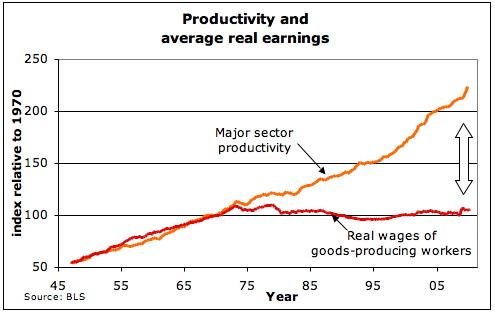
For most people, the crisis feels recent. Housing costs. Energy bills. Food prices. Debt. Insecure work. Growing inequality. Endless wars. Ecological breakdown. The #mainstreaming story is that these are separate problems with separate causes. COVID. Ukraine. China. Immigration. Technology. Bad politicians. The reality is simpler, these crises grow from the same roots – the moment things changed, one graph tells the story.

From the end of World War II until roughly the early 1970s, productivity and wages rose together. When workers produced more value, they received a larger share of that value. This was not charity. It was the social settlement that emerged from the disasters of the Great Depression and World War II. Governments understood that if ordinary people could not afford the goods they produced, capitalism would repeatedly collapse into crisis. The answer was public investment, strong unions, social housing, public infrastructure, public healthcare, education, and rising wages.

This was what some people now call the “golden age” of capitalism. Workers bought homes. Families survived on a single income. Public infrastructure expanded. Living standards generally improved. Then the trend broke, as productivity continued rising, but wages stopped. For the last fifty years, workers have produced more and more while receiving proportionally less and less. The wealth didn’t disappear, it moved upward.

Saving capitalism from itself – The original US New Deal wasn’t created because elitists became generous, it emerged because the system faced a legitimacy crisis. Mass unemployment. Mass poverty. Growing labour movements. Strong socialist alternatives. Faced with these pressures, governments invested in public works, strengthened labour rights, regulated finance, and redistributed wealth. The lesson was simple, if people have money, they buy goods, if people buy goods, businesses survive, if businesses survive, the economy functions. This wasn’t radical, it was practical as the state acted to stabilise society.

The neoliberal turn – by the 1970s, a different ideology was waiting in the wings. The solution offered by thinkers such as Milton Friedman and institutions such as the Chicago School was to reverse the post-war settlement. Privatise public assets, break unions, cut taxes on wealth, deregulate finance and reduce social spending to treat everything as a market. This project became government policy under Reagan, Thatcher, and much of the Western political class. The promise was freedom, the result was enclosure. Public wealth became private wealth, collective institutions were weakened, corporate power expanded, the bargaining power of workers collapsed.

The result was clear, the graph above tells the story, productivity kept climbing, compensation stagnated. The gains increasingly flowed upward. For the workers debt replaced wages, the old social contract was based on rising incomes, the new one was based on borrowing. If wages no longer rise fast enough, people still need homes, education, healthcare, transport. The gap was filled with debt: Credit cards, Student loans, Mortgages, Personal loans. Instead of sharing productivity gains directly, people borrowed against their futures. This worked for a while, until it didn’t.

A resent example of this mess is 2008 – The financial crash – exposed the reality, when ordinary people face crisis, they are told to tighten their belts. When financial institutions face crisis, public money appears instantly. Millions lost homes, lost jobs. Meanwhile, banks received vast bailouts. The lesson was clear. The system still knew how to mobilise resources, it simply chose who to save.

This is why we use the harsh hashtag #Deathcult. Composting this mess is where the #OMN idea of the #deathcult becomes useful as neoliberalism is not simply a set of economic policies, it is a cultural common sense. It teaches a “common sense” path that markets solve everything and that public solutions are inefficient. That society does not exist, that individuals succeed or fail alone. That endless growth on a finite planet is normal. That every commons must become a commodity.

This invisible ideology is now so deeply embedded that many people cannot imagine alternatives. The system creates crises and then presents more market solutions as the answer. Climate collapse becomes carbon trading. Housing crisis becomes investment opportunity. Community becomes #dotcons platforms. Citizens become consumers. The cure is always more of the disease.

In this mess we need to remember what we have lost, the biggest loss wasn’t economic, it was social. The institutions that once balanced private power were weakened: Trade unions, Cooperatives, Mutual aid, Community media, Public ownership, Local democracy, Shared stewardship, The commons. These weren’t perfect, but they gave ordinary people collective power. Without them, people are pushed into isolated competition. What #OMN calls #stupidindividualism. Everyone struggling alone against systems too large to influence individually.

Building beyond the mess, is not about post-modern nostalgia, the post-war settlement was deeply flawed. But what is built can be rebuilt, this means on a progressive path creating commons rather than commodities, governance rather than management, participation rather than consumption and community media rather than corporate platforms to grow cooperation rather than extraction.

As social infrastructure, the #4opens provide one practical foundation for this work: open process, open data, open standards and open licences. Because the real challenge is not technological. It is rebuilding the social relationships that make alternatives possible.

To sum up the graph of productivity and wages is not simply an economic chart, it is a map showing where the wealth went. And once we know where it went, we can start asking a more useful question: #KISS how do we build something different?

#OMN #OpenWeb #4opens #Deathcult #Neoliberalism #Commons #MutualAid #FoodSovereignty #CommunityMedia #OpenGovernance #NothingNew #DIY #KISS

Thatcher, Reagan were the wrecking crew: How we keep pushing mess

This story is about the ideology that won. In the late 1970s and early 1980s, two politicians on either side of the Atlantic didn’t only win elections, they reshaped what people came to accept as “common sense.” Margaret Thatcher in Britain and Ronald Reagan in the United States did not invent capitalism’s worst tendencies, but they gave them state power, institutional infrastructure, and ideological legitimacy.

What they built was not simply a set of policies, it was a social programme we are still trapped inside more than forty years later. The push was simple and devastating citizens became “taxpayers,” public services became “handouts,” collective investment became “inefficiency,” and the commons became a problem to be solved through privatisation.

Decades of postwar social infrastructure – built on the understanding that some things are too important to be left to markets – were dismantled, defunded, and handed over to private interests -the very same interests funding the political projects carrying out the dismantling.

This is what #OMN means when we talk about enclosure. Not just land enclosure, but the enclosure of everyday life itself: Water, housing, transport, education, healthcare, communication and culture. Everything turned into a commodity.

Neither Thatcher nor Reagan created this mess, the project was carefully engineered. Reagan established a President’s Commission on Privatisation which drew up extensive plans to strip public assets and services. Thatcher pushed through mass privatisation of utilities, council housing, and national industries while selling the process as “popular capitalism.”

Behind them stood an entire ideological machine of the Heritage Foundation, the Adam Smith Institute, the Institute of Economic Affairs, the Reason Foundation, and countless university economics departments and corporate-funded policy groups.

Their role was to make radical upward redistribution sound like neutral common sense, and they succeeded. Even the language changed “tax burden,” “efficiency,” “choice,” “reform,” “flexibility.” Every word quietly carrying the ideology.

The method itself was brutally simple – cut taxes for the wealthy and corporations. Create public deficits. Use those deficits to declare public services “unaffordable.” Privatise the resulting wreckage. Transfer wealth upward. Starve public institutions until they fail, then point at the failure as proof they never worked.

The cruelty was not accidental, it was structural. Thatcher’s Chancellor openly described mass unemployment as “a price worth paying.” Reagan’s administration treated social devastation as collateral damage in the restoration of elitist power.

The results were not abstract, from 1948 to roughly 1979 in the United States, productivity and worker wages rose together. After Reagan, productivity continued climbing sharply while wages largely stagnated. Workers produced more wealth than ever before, but a growing share of that wealth flowed upward into capital accumulation rather than wages or public goods.

The mess this created was Labour’s share of national income steadily declined while housing costs rose, debt exploded, unions collapsed, and public infrastructure deteriorated. Debt became the mechanism keeping society functioning: mortgages, credit cards, car loans, student loans, payday lending. Daily survival increasingly depended on borrowing. Higher education shifted from a public good into a privatised commodity. Healthcare became financial extraction. Housing became speculation rather than shelter.

The language was “freedom.” But the freedom being expanded was the freedom of capital. None of this was racially neutral. Reagan’s “welfare queen” narrative deliberately racialised poverty to fracture working-class solidarity. The actual fraud case behind the story was tiny compared to the propaganda built around it, but the myth worked politically because it redirected anger downward rather than upward.

The so-called “War on Drugs” targeted Black communities while harsher sentencing laws entrenched mass incarceration. Meanwhile, the AIDS epidemic was ignored for years because many of the people dying were treated as disposable by political elites. Thatcher’s government supported sanctions-busting trade with apartheid South Africa while denouncing the ANC and treating Nelson Mandela as a terrorist.

These were not side issues, the neoliberalism story required enemies: welfare scroungers, criminals, radicals, immigrants, trade unionists, the “undeserving poor.” Every enclosure needs someone to blame for the damage enclosure causes.

In the rich west the programme attacked wages, unions, and public services. Abroad it was openly violent. Reagan’s administration funded and armed the Contras in Nicaragua despite international condemnation. US-backed regimes across Latin America carried out massacres, disappearances, and systematic repression while being framed as defenders of “freedom.” Thatcher supported Augusto Pinochet long after the scale of torture and repression was well known.

The noise was consistent and on going as liberation movements became “terrorists,” dictators aligned with Western capital became “allies,” and democracy mattered only when it protected existing power. The same logic still dominates global politics today.

What was lost was not only economic, the postwar social settlement – however flawed – rested on the idea that some things belonged to everyone and should be collectively protected:

  • healthcare,
  • housing,
  • education,
  • water,
  • transport,
  • welfare,
  • culture,
  • democratic infrastructure.

These systems were not gifts from benevolent elitists, they were won through the struggle by labour movements, cooperatives, mutual aid traditions, socialist organising, and community solidarity. Thatcher famously claimed:

“There is no such thing as society.”

This was not only rhetoric, it was a political programme. Destroy people’s belief in collective action and you destroy their ability to resist enclosure. This is where the #OMN critique of the “tragedy of the commons” matters. People are capable of managing commons collectively, history is full of successful examples, what neoliberalism destroys are the social conditions that make commons possible:

  • trust,
  • reciprocity,
  • accountability,
  • long-term stewardship,
  • community responsibility.

When competition replaces care, extraction replaces stewardship, hyper-individualism – what we call #stupidindividualism – erodes social fabric itself. The tragedy becomes real because the conditions needed to avoid it are systematically dismantled.

Understanding this matters not for nostalgia, but for navigation. The crises surrounding us now: housing collapse, ecological breakdown, inequality, democratic decay, loneliness, food insecurity, social fragmentation, mental health crises, are not random failures. They are predictable outcomes of forty years of #neoliberal wrecking. The mess this created is functioning largely as designed, prioritises elitist capital accumulation above any social wellbeing.

The liberal centre cannot solve this because it operates inside the same logic, technocratic management of decline is not transformation. Real alternatives require rebuilding #KISS commons-based infrastructure, not only as abstract ideals, but as practical trust infrastructure. This is the work of composting the current mess and growing alternatives from within the ruins.

Thatcher claimed there was no alternative, she was wrong. But building alternatives means being honest about what was destroyed, who destroyed it, how they destroyed it, and why the same logic still dominates today. This honesty is where rebuilding begins.

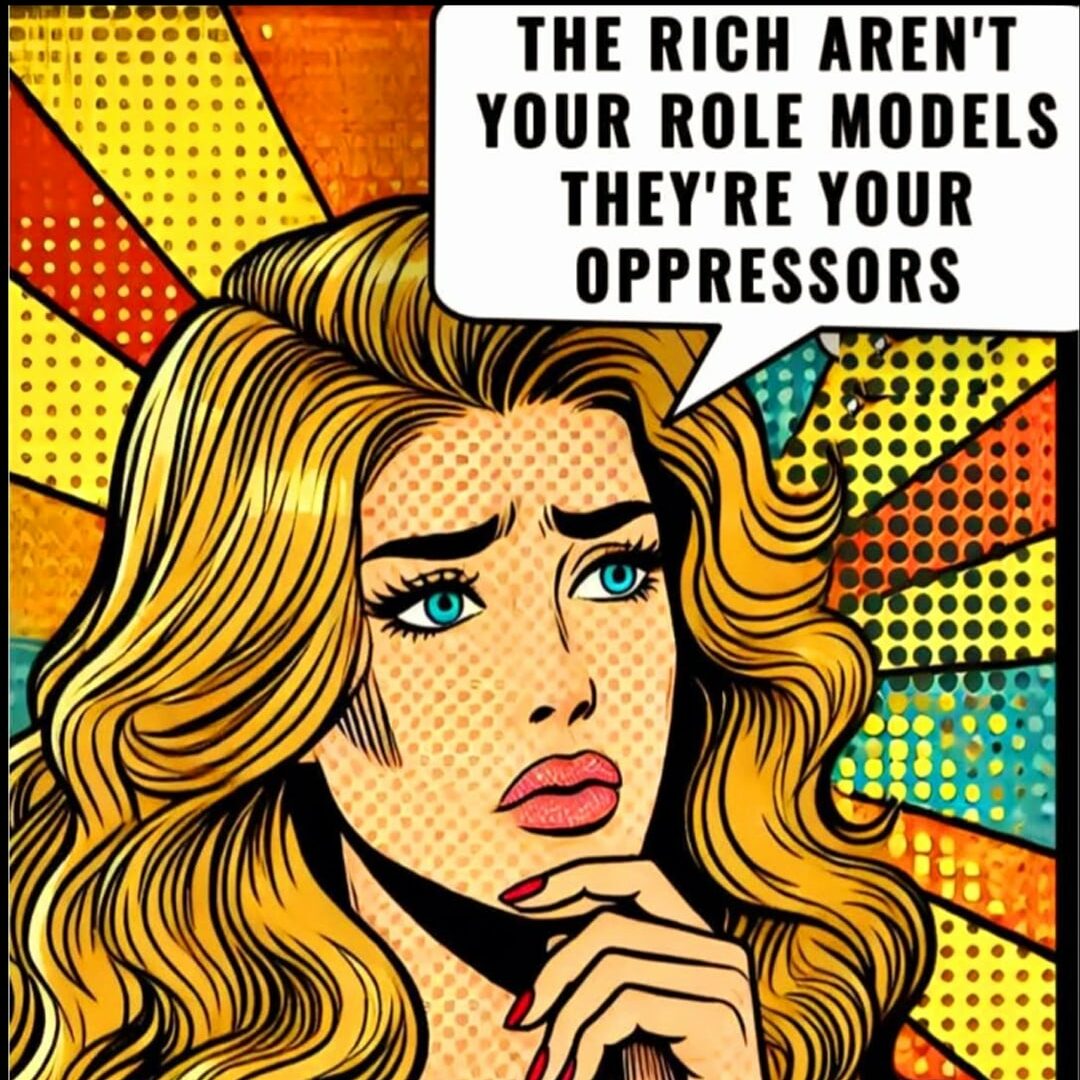
Women taking about oppressors

With this in mind, let’s recap on what Thatcher and Reagan built, its not just bad policy, not just inequality, its a full #deathcult – the self-destructive logic of #neoliberalism so committed to short-term greed and #stupidindividualism that it knowingly sacrifices the ecological and social foundations human life depends on. Forty years of hard indoctrination that doesn’t just fade away its – normal is walking around in a toxic story and calling it common sense.

The #nastyfew – platform owners, landlords, corporate lobbies, think tank networks – didn’t win through merit. They won the #classwar temporarily, by capturing institutions, rewriting rules, and flooding the #mainstreaming with their logic until it felt like gravity.

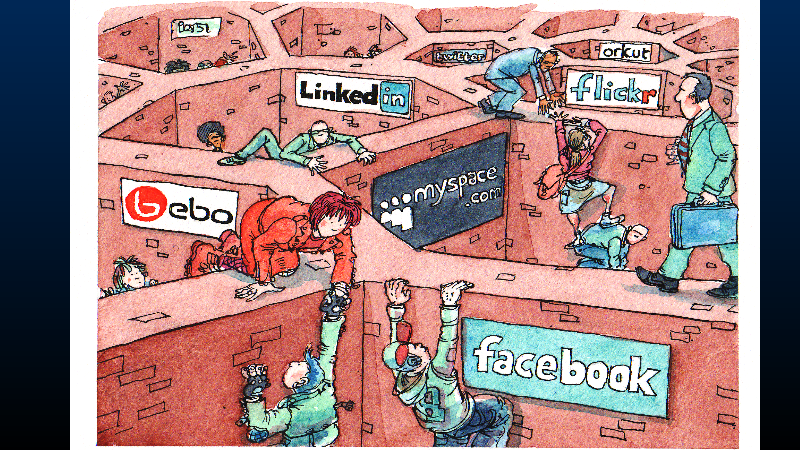
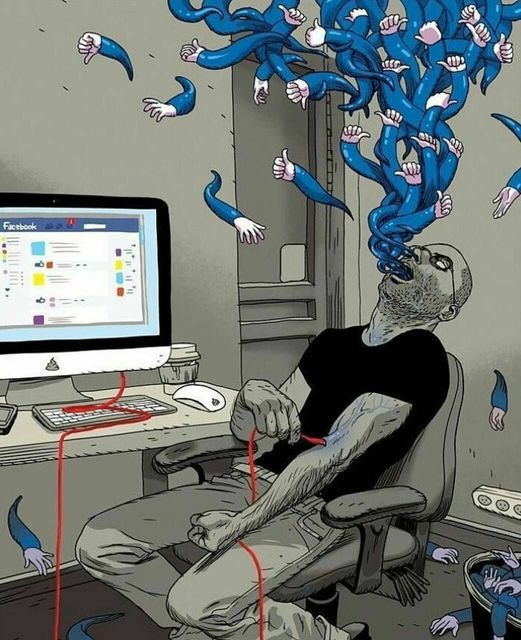
The #dotcons – Facebook, Google, X/Twitter and the rest – are the digital continuation of the same enclosure. Corporate platforms built on data extraction, presenting themselves as neutral public spaces while converting human attention and community into profit. The #closedweb is just privatisation with a friendlier interface.

And the #climatechaos bearing down on us is not a separate crisis. It is the #deathcult arriving at its logical destination.

Real alternatives are built from the bottom, not handed down from the top. The #openweb – internet infrastructure built on open standards, community control, and the #4opens (open code, open data, open standards, open process) – already exists as working infrastructure, built by thousands of ordinary people, not governments or corporations. Then we have the #fediverse, #activitypub, #FOSS, #indymedia – these are not utopian visions, already built, from the ground up, by people practising #DIY politics for real.

The #geekproblem is when this gets captured – when technical control replaces social trust, when complexity becomes a barrier rather than a tool, when #techchurn burns through community energy without building anything lasting. The antidote is #KISS – keeping it simple, human, and rooted in real relationships.

The #NGO path – professionalised, funder-friendly, managed dissent – is #mainstreaming with a radical badge on, it defuses rather than builds. The #fashernista tendency prioritising the look and language of activism over the unglamorous work of building lasting structure is #fluffy blocking in performance clothing.

What actually works is #grassroots organising grounded in trust, horizontal process, and the willingness to #compost failure breaking down what didn’t work into fuel for what comes next rather than hiding the mess or repeating it. As the #OMN path puts it: broken institutions need rebuilding as commons, not as managed services or branded campaigns.

The #deathcult is real, the mess is real, the #nothingnew reminder is useful – these cycles have happened before, and ignoring that history is how we walk straight into the same traps again. But so is the ground we already stand on, sart there.

#OMN #Neoliberalism #Thatcher #Reagan #OpenWeb #4opens #Commons #MutualAid #FoodSovereignty #ClimateChaos #Mainstreaming #Deathcult #Dotcons #BuildingAlternatives

Turning stress, conflict, and exhaustion into commons culture instead of mutual destruction

“To put some “commons” structure into this kindness… A path before we knee-jerk criticise members of the community we should make real offers to help repeatedly (x3) in a positive community way. Only then let the “negative” monster of judgment lose to clean up the mess. Focus on clean up first, the “common senses” desire to attack second. What do you think about growing our positive norms (common sense).”

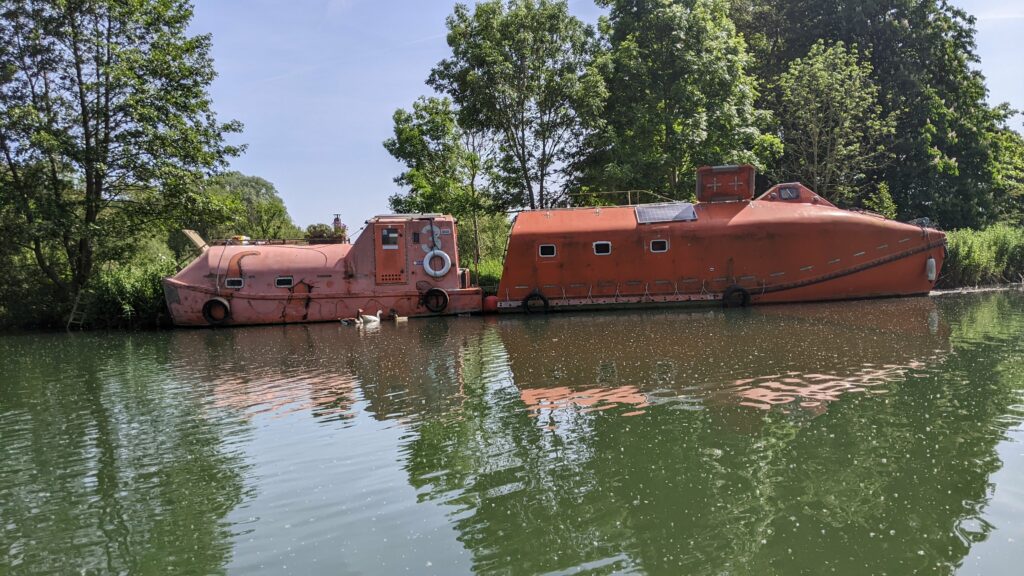
This is the hard bit of any grassroots movement of turning stress, conflict, and exhaustion into actual commons culture instead of mutual destruction. The #openweb and the #oxfordboaters struggle are not separate things, they are the same social problem playing out in different spaces.

What kills communities is rarely only outside pressure. Most often, communities collapse because fear, exhaustion, and insecurity get turned inward. People stop seeing each other as comrades surviving a mess together and start judging each other as obstacles, annoyances, or moral failures.

That path always ends the same way, more, silence, resentment, burnout, fragmentation, and finally removal by outside power. If we don’t make the effort to really/affectively care the mainstream system does not need to crush fragmented communities, it just waits for them to exhaust themselves.

So it should be obverse to us that we need to consciously grow a different “common sense”, a simple common’s principles. An example that lead to this post – Before criticism, make real offers of help. Repeatedly. Publicly. Patiently. Say “Can we help?”, “Can we clean this together?”, “Can we support this person?”, “Can we solve the practical issue first?” Do this once, then again, then again. Only after repeated good-faith attempts fail do we move to much harder, but needed, conversations about responsibility and boundaries.

That flips the current social norm on its head as right now, many people instinctively jump first to blame, moral judgment, public criticism, personal conflict, and social positioning. Which only goes to make more mess with defensive reactions, gossip, claques, leading to more bad feelings and more mess to compost. The original problem becomes secondary to the social fallout, it is the same destructive pattern we see constantly on the #closedweb of people performing morality instead of building trust.

The irony is that many people involved genuinely care. The problem is the social structure they are acting inside. Without commons culture, care easily mutates into aggression under stress. And the stress is real, boat communities are under pressure:

  • housing pressure,
  • enforcement pressure,
  • media pressure,
  • financial pressure,
  • environmental pressure,
  • and constant uncertainty.

Under those conditions, fear spreads quickly, fear then sharpens into suspicion, suspicion turns personal. Then people who are already vulnerable get isolated and targeted. This is why community structure matters. And yes, people HATE talking about structure. Because structure sounds formal, controlling, bureaucratic, or “political”. But avoiding structure does not create freedom, it creates invisible power, unspoken hierarchies, emotional manipulation, and endless circular conflict.

#KISS applies here, keep it simple, by helping first, focus on solutions before judgment, clean up mess before assigning blame, defend community before performing outrage. That does not mean “anything goes”. Commons culture still needs boundaries. But boundaries work far better when they emerge from visible care and collective trust rather than instant punishment culture.

The really uncomfortable truth is in struggling movements, powerless people can sometimes become dangerous to the very people trying to help them. Not because they are evil, but because abandonment, stress, and insecurity distort behaviour. People lash out sideways when they have no power upwards. This is common across activist scenes, precarious housing struggles, and grassroots communities.

Meanwhile, institutions simply wait, then, when the land becomes valuable enough or politically convenient enough, they sweep everyone away. This is exactly why commons defence matters. If we are serious about defending moorings, boat culture, and free community space, then we need social solidarity strong enough to survive internal conflict without collapsing into backstabbing and fragmentation.

That means both “fluffy” and “spiky” people matter, the fluffy crew mediate, support, de-escalate, organise care and hold social trust together. The spiky crew hold boundaries, confront institutions, resist manipulation, refuse displacement to defend space when pressure grows. Without fluffy people, movements become cruel, without spiky people, movements get crushed. We need both, and despite all the mess, there are positive signs.

The growing “shiny summer” feeling among boaters matters. Community meals, litter picks, conversations, mutual support, visible presence on the river – these things are not trivial. They build legitimacy, morale, and collective identity.

That social light is important because a media dark shadow is coming, as pressure increases, traditional media narratives will frame boaters as irresponsible, antisocial, dirty, chaotic, or obstacles to “proper management”. We need to pre-counter that now through visible commons culture: care for the river, care for each other, visible participation, practical action, and stories rooted in lived history. Because this struggle is not new.

The canal system survived before because communities fought for it. The history matters. Books like Narrow Boat and struggles like Battle of Stourbridge remind us that preservation only happened because ordinary people organised collectively and refused to let living waterways be erased. This is the path again now, messy, human, imperfect, but still possible. If we can grow a new “common sense” rooted in mutual aid, patience, practical care, trust and collective defence, then free boating communities might still exist here in ten years.

Hard fight ahead, but people before us already showed that these waterways and our #openweb culture are worth defending.


#Horizontalism is a buzz word, but let’s look at it anyway as it’s the start and the end of this story, a form of social organization based on the #DIY non-hierarchical, democratic path where power is distributed among participants rather than concentrated in leaders. With a working focuses on “prefigurative politics,” to live and act in the present according to the values of the future society you want to create (e.g., equality, mutual aid, and self-management). Think of a honeycomb or network rather than a pyramid:

  • Assemblies & consensus, were decision-making happens through assemblies to create affinity groups that reach working practical consensus (rather than majority voting), aiming to ensure all voices are heard.
  • Affective politics is about building relationships based on dignity, trust, and mutual respect rather than mere efficiency.
  • Direct action & autonomy has a long history, movements, create their own spaces and services (like food and medical care). The “Fluffy” (Constructive) aspects.
  • Empowerment breaks down the “leader/follower” divide, encouraging everyone to be an active agent of change.
  • Adaptability, because it is decentralized, it can be resilient and difficult for authority to “headhunt” leaders to stop it. The “Spiky” (Messy/Challenging)

    Let’s look at the problems and inefficiencies:
  • Decision-making by only consensus is very slow and time-consuming, thus the rapid shift to #4open affinity groups to balance this.
  • Hidden power dynamics is its real problem that sometimes the lack of structure leads to informal hierarchies, where those with more time or charisma dominate, despite the lack of official titles. We have to solve this by sharing responsibility.
  • Scalability – while great for small, local groups, scaling this path to large, nationwide, or international movements create coordination issues that we need working federated tech projects like the #OMN for.
  • Sustainability, maintaining the energy required for horizontal assembly, especially when faced with external opposition, can be difficult. But without this path of #Horizontalism as a necessary “corrective” to traditional vertical politics, we don’t and up in any participatory spaces at all.

So on a positive sense it’s an easy – but strongly anti-common sense path – to start the real composting we need. On a negative sense its mess and more mess to wade through, alongside the mainstreaming mess flooding in… it’s all mess might as well get used to this 😉

#OMN Grounding (the roots as a story)

#techchurn is the endless cycle of adopting new platforms, tools, and technologies – not because they solve any real problems, but because novelty is mistaken for progress. It burns community trust, institutional memory, and activist energy, while leaving the underlying #nastyfew power structures untouched.
https://hamishcampbell.com/?s=techchurn


The #OMN uses #stupidindividualism to describe the culturally manufactured habit of prioritising personal gain and self-interest over collective well-being – a behaviour normalised by forty years of #neoliberalism, where people work against their own community and ecological survival while believing they are exercising “freedom”.
https://hamishcampbell.com/?s=stupidindividualism


In the #OMN hashtag story, #spiky is the confrontational, direct, and uncompromising tendency within radical movements – the willingness to push back against power, name uncomfortable truths, and refuse to sand down political edges for mainstream comfort.
https://hamishcampbell.com/?s=spiky


#RSS is the unglamorous but democratic backbone of the #openweb – a simple, open standard that allows content to flow without the gatekeeping, algorithmic manipulation, and the data hoarding of the #dotcons.


#reboot is the necessary reset of the #openweb – stepping away from the dead ends of #techshit and #dotcons to rebuild human-centred, trust infrastructure using tools like #activitypub and the #fediverse, guided by the #4opens.
https://hamishcampbell.com/?s=reboot


#postmodernism is the cultural current that dissolved shared truth into competing narratives, undermines the foundations needed for collective action – leaving people fragmented, cynical, and unable to build solidarity.
https://hamishcampbell.com/?s=postmodern


In the #OMN hashtag story, #Oxford is a grounded example of real-world contradiction – where elitist power (#mainstreaming, #NGO, #deathcult) coexists with genuine grassroots community, making it a test bed for grassroots #openweb organising and the #4opens path.
https://hamishcampbell.com/?s=Oxford


In the #OMN hashtag story, #PGA (Peoples’ Global Action) represents horizontal, grassroots, anti-capitalist organising – a prefiguration of the #openweb, built on direct action and solidarity rather than #NGO bureaucracy or #mainstreaming compromise.
https://hamishcampbell.com/?s=PGA


In the #OMN path, #p2p means people-to-people before peer-to-peer – real human relationships and trust as the foundation that decentralised tech should serve, not replace.
https://hamishcampbell.com/?s=p2p


In the #OMN view, #opensource is not just a licence – it’s a political commitment to transparency, shared ownership, and community control over code, data, and process.
https://hamishcampbell.com/?s=opensource


The #openweb is internet infrastructure built on open standards, open-source code, and community control – where users share power – as opposed to the #dotcons, with the #closedweb which enclose and monetise the commons.
https://hamishcampbell.com/?s=openweb


#openprocess means decisions and governance happen visibly and participatorily – not behind closed doors, so people can see, challenge, and shape outcomes.
https://hamishcampbell.com/?s=openprocess


#opendata means data that is freely accessible and shareable – controlled by communities rather than locked inside corporate silos.
https://hamishcampbell.com/?s=opendata


In the #OMN path, #open means building on the #4opens – open code, data, standards, and process as a foundation for technology that serves people, not profit.
https://hamishcampbell.com/?s=open


#OMN (Open Media Network) is a grassroots project to build human-centred, trust-based digital infrastructure on the #openweb, grounded in the #4opens and focused on community control over technology.
https://hamishcampbell.com/?s=OMN


The #OGB (Open Governance Body) is a framework for transparent, inclusive decision-making – replacing hidden power structures with accountable, federated, messy collective governance.
https://hamishcampbell.com/?s=OGB


In the #OMN story, #nothingnew reminds us that cycles of co-option and failure have all happened before – and ignoring this history is how we repeat mistakes.
https://hamishcampbell.com/?s=nothingnew


In the #OMN story, #NGO refers to professionalised activism that defuses radical politics – replacing grassroots power with managed, funder-friendly “dissent”.
https://hamishcampbell.com/?s=NGO


In the #OMN path, #neoliberalism is the dominant ideology of markets over people – normalising greed and eroding solidarity into the logic of the #deathcult.
https://hamishcampbell.com/?s=neoliberalism


#makinghistory is the practice of communities reclaiming storytelling – building open, living archives rather than leaving history to those in power.
https://hamishcampbell.com/?s=makeinghistory


In #OMN usage, #mainstreaming is how radical ideas get absorbed and neutralised – keeping the language while stripping out real challenge.
https://hamishcampbell.com/?s=mainstreaming


In the #OMN path, #KISS (“Keep It Simple, Stupid”) is a political stance against the #geekproblem – rejecting unnecessary complexity as a form of control.
https://hamishcampbell.com/?s=KISS


#indymediaback is a call to rebuild grassroots, community-controlled media as an alternative to both #dotcons and hollow #NGO media structures.
https://hamishcampbell.com/?s=indymediaback


In the #OMN path, a hashtag is not just a label – it’s a node in a shared political vocabulary, building a map of meaning and direction.
https://hamishcampbell.com/?s=hashtag


#grassroots means bottom-up organising rooted in real communities – accountable to collective need, not institutions.
https://hamishcampbell.com/?s=grassroots


The #geekproblem is the tendency to replace human trust with technical control – embedding narrow values into systems that shape everyone’s lives.
https://hamishcampbell.com/?s=geekproblem


In #OMN, #FOSS is a political commitment to collective ownership of technology – not just a licensing model.
https://hamishcampbell.com/?s=FOSS


In #OMN language, #fluffy describes feel-good politics that avoid conflict – prioritising comfort over any real change.
https://hamishcampbell.com/?s=fluffy


#feudalism describes the emerging digital structure where platform owners extract value like lords from dependent users.
https://hamishcampbell.com/?s=feudalism


#fascism is what happens when the #deathcult drops its mask – authoritarian control to defend failing systems.
https://hamishcampbell.com/?s=fascism


On the #OMN path, the #fediverse is practical #openweb infrastructure – decentralised, federated, and not owned by corporations.
https://hamishcampbell.com/?s=fediverse


#encryptionist describes the tendency to prioritise technical security over social trust – a core expression of the #geekproblem.
https://hamishcampbell.com/?s=Encryptionist


#dotcons are corporate platforms built on data extraction and control, presenting themselves as neutral while enclosing the commons.
https://hamishcampbell.com/?s=dotcon


In the #OMN story, #DIY means reclaiming the ability to build and organise outside institutional control – grounding politics in practice.
https://hamishcampbell.com/?s=DIY


The #deathcult is the self-destructive logic of #neoliberalism – sacrificing social and ecological survival for short-term fear drivern greed.
https://hamishcampbell.com/?s=deathcult


In the #OMN story, #compost means breaking down failure and mess into fuel for new growth.
https://hamishcampbell.com/?s=compost


In #OMN, #closedweb is controlled, extractive digital infrastructure where users have no power.
https://hamishcampbell.com/?s=closed


#climatechaos describes the accelerating breakdown driven by the #deathcult, beyond manageable “climate change.”
https://hamishcampbell.com/?s=climate


#classwar is the ongoing conflict between the #nastyfew and the communities they exploit – often hidden by #mainstreaming narratives.
https://hamishcampbell.com/?s=classwar


#capitalism is the dominant system turning everything – relationships, nature, culture – into “profit”.
https://hamishcampbell.com/?s=capitalism


In #OMN, #block is the reflex to shut down challenge – preventing the messy work needed for real change.
https://hamishcampbell.com/?s=block


#blinded is being unable or unwilling to see beyond #mainstreaming and #dotcons logic.
https://hamishcampbell.com/?s=blinded


#fashernista describes performative activism that prioritises appearance over substance.
https://hamishcampbell.com/?s=fashionistas


#dotcons are the corporate platforms – Facebook, Twitter/X, Instagram, YouTube and their kin – whose business model is built on harvesting user data, manufacturing engagement, and converting human attention and community into profit, while presenting themselves as neutral public spaces.

https://hamishcampbell.com/?s=dotcon


In the #OMN hashtag story, #DIY means reclaiming the practical capacity to build, organise, and maintain tools and communities outside of corporate and state control – not as a lifestyle choice, but as a political act of grounding radical change in real skills, real trust, and real human relationships rather than outsourcing power to institutions that don’t serve you.

https://hamishcampbell.com/?s=DIY


The #deathcult is the #OMN metaphor for the self-destructive logic of forty years of #neoliberalism – an ideology so committed to short-term profit, individualism, and economic growth that it knowingly sacrifices the ecological and social foundations that human life depends on.

https://hamishcampbell.com/?s=deathcult


In the #OMN hashtag story, #compost means taking the failures, mistakes, and accumulated mess of past movements and tech projects – rather than discarding or ignoring them – and breaking them down into something that can feed new growth, treating dysfunction and #blocking dead ends as raw material for building better rather than as waste to be hidden.

https://hamishcampbell.com/?s=compost


In #OMN language, #closedweb refers to the controlled digital infrastructure – platforms like Facebook, Google, and Twitter – built on proprietary code, extractive business models, and centralised power, where people have no meaningful control over their data, their communities, or the rules that govern them.

https://hamishcampbell.com/?s=closed


The #deathcult of #neoliberalism has driven us past the point where “climate change” – with its implication of manageable, orderly shifts – remains any honest description of what we face now. What we actually have is #climatechaos: cascading, systemic breakdown of the ecosystems, weather patterns, and social structures that human civilisation depends on, accelerating faster than institutions built on forty years of market logic are capable of, or willing to, address.

https://hamishcampbell.com/?s=climate


#classwar is the ongoing and unacknowledged conflict between those who benefit from and actively reproduce the #deathcult of #neoliberalism – the #nastyfew, managing, and credentialed classes – and the communities, workers, and ecosystems they exploit. A conflict that #mainstreaming culture works to render invisible, reframing systemic dispossession as individual failure.

https://hamishcampbell.com/?s=classwar


#capitalism is the current common sense – the water we swim in – the economic system that systematically converts collective goods, human relationships, and the natural world into private profit, enforcing this logic through every institution and platform we touch, while presenting itself as the only possible reality.

https://hamishcampbell.com/?s=capitalism


In the #OMN hashtag story, #block refers to the reflexive, unconscious tendency of individuals and communities to shut down unfamiliar and challenging ideas, people, and processes – a defensive gesture rooted in #stupidindividualism and #postmodernism that prevents the trust-building and messy collective work needed for real #openweb organising.

https://hamishcampbell.com/?s=block


#blinded refers to being so captured by #mainstreaming tech orthodoxy and ideological “common sense” – particularly #neoliberalism and #dotcons culture – that you no longer see, or refuse to see, the harms those systems cause or any alternative paths that exist outside them.

https://hamishcampbell.com/?s=blinded


#fashernista describes a person in progressive or radical spaces who prioritises the appearance and aesthetic of activism – the right look, language, and social positioning – over the unglamorous, difficult work of actually building lasting structural change.

https://hamishcampbell.com/?s=fashionistas


If you want, the next step is to cluster these into a clean “chapter flow” (roots → mess → behaviours → solutions) so this stops being just a glossary and becomes a narrative tool.

These are the foundation tags – the ones everything else grows out of – the overall project: grassroots, trust-based, human-centred media infrastructure

#openweb – the political/technical terrain we’re trying to reclam

#4opens – the non-negotiable baseline (open code, data, standards, process)\openprocess – visible, participatory decision-making as default

#grassroots – bottom-up power, not institutional mediation

This cluster is about legitimacy, if it’s not grounded in these, it drifts into #NGO capture or #dotcons logic quickly. This is the “native soil” everything else either grows from or gets rejected by.

The Problem Space (what we’re composting), these tags describe the mess we’re in – the stuff we don’t ignore, but break down.

#deathcult (neoliberalism as destructive common sense)

#neoliberalism – 40 years of market logic shaping behaviour

#dotcons – corporate capture of digital space

#closedweb – controlled, extractive infrastructure

#mainstreaming – dilution and co-option of radical ideas

#NGO – managed dissent and professionalised politics

#classwar – underlying structural conflict

This is the compost heap, you don’t fix this directly, you don’t “win” against it head-on. You break it down, reuse what’s useful, and grow alternatives around and through it.

The #geekproblem Layer (tech distortions) is where things go wrong in implementation.

#geekproblem – replacing social trust with technical control

#techchurn – endless pointless rebuilding

#encryptionists – over-prioritising technical purity over social reality

#KISS – counterbalance: keep things simple and usable.

This cluster is why good ideas fail, not because the ideas are wrong, but because the tools and culture get shaped by people who don’t understand social process. This is where most #openweb projects die.

Cultural/Behavioural Patterns (how people act). The human layer – messy, unavoidable, and central.

#stupidindividualism – learned self-interest over collective good

#postmodernism – fragmentation of shared meaning

#fluffy – avoidance of conflict, feel-good paralysis

#spiky – necessary confrontation and edge

#block – reflex rejection of challenge

#blinded – inability to see outside dominant narratives

#fashernista – prioritising appearance over substance

This is the real battlefield, not tech, not policy – behaviour. If you don’t mediate this layer, everything collapses back into dysfunction, no matter how good your structure is.

The Alternative Infrastructure (what we build), are the actual tools and practices that make change possible.

#fediverse – decentralised network as a base layer

#activitypub – the protocol glue

#RSS – simple, open distribution backbone

#p2p – people-to-people first, tech second

#FOSS / #opensource – shared ownership of tools

#opendata – accessible, non-extractive information

These only work if rooted in the first cluster, otherwise they get captured and turned into another layer of the #closedweb.

Governance & Process (how we hold it together). Where most projects fail – or succeed.

#OGB – structured, open governance

#openprocess – again, because it’s that important

#DIY – practical ownership and responsibility

Without this, informal power takes over. You end up with hidden hierarchies, gatekeeping, and eventual burnout. With it, you get messy but functional collective control.

Practice & Direction (how we move).

#reboot – reset and rebuild from working patterns

#indymediaback – learning from past grassroots media

#makinghistory – documenting and owning our narratives

#nothingnew – grounding in historical cycles

This cluster stops you repeating mistakes, without it, every new wave thinks it’s inventing something new and walks straight into the same traps.

Grounding Example Layer

#Oxford – real-world test bed of contradictions

#PGA – historical example of horizontal organising

Without grounding, this all drifts into theory, these are example tags anchoring it in lived practice, where things break, and where they can actually work.

The Meta Layer (how to use this)

#compost – break down failure into growth

This is the key to the whole thing – Don’t try to “fix” the mess. Don’t try to “win” cleanly, you compost:

bad behaviour → learning

failed projects → patterns

conflict → structure

Final point (this matters) is the mistake people make is trying to tidy this into a neat theory, reduce it to messaging, turn it into a fixed ideology. That kills it, this clustering is not about control – it’s about navigation.

The mess stays messy, but now people can walk through it without getting lost.If you don’t cluster this stuff, it turns into a wall of noise. The mess is useful.

Do you remember when technology felt like a way forward?

Do you remember when tech felt like a way forward? That moment’s gone on the mainstream #closedweb path. What we’ve got now is something else entirely. Tools like Palantir and Project Maven aren’t about truth or insight. They’re excuse generators. Power does what it wants, then points to “the data” as cover. That’s the product.

And the people building this? Still cosplaying as the good guys, well-paid servants of the #nastyfew, wrapped in the fading myth of being “freedom fighters”, that’s modern tech dev. On the other side: the wreckage of #web02. Decades of promises, buried under #dotcons centralising everything that matters. Open source didn’t save us either – too abstract, too inward-looking, too lost in the #geekproblem to function in real life.

Yes, #ActivityPub cracked something open, a glimpse of a different path. But let’s not kid ourselves funding is still torched on hype cycles. Blockchain yesterday, AI today, the same ash. Meanwhile, the only things that actually work come from #DIY culture: unfunded, unglamorous, ignored.

And academia? If it worked as claimed, the world would already look different. Instead, we get theory imposed on practice, over and over, making a mess and calling it insight.

The system is built to fail, its risk-averse, paperwork-heavy and detached from reality. Perfect for proposal writers, perfect for box-ticking, useless for building. So where does that leave us? Here – build anyway – #OMN and #MakingHistory aren’t about shiny ideas, they’re about the grind, making tools people can actually use in real communities. Most open projects don’t fail because they’re wrong, they fail because they never leave the bubble, they don’t connect, don’t flow. They don’t live.

So yeah – press the #reboot button. Keep it messy, but make it real. Messy is fine, empty isn’t. Stop trying to fix funding with more control, that’s how you feed the grafters. Do this instead:
– Fund real work
– Distribute trust
– Make everything visible

Fund the compost, not the shiny plastic by backing people already growing things, let trust flow sideways, not upwards. That’s how you starve the grafters without strangling the builders.

Growing the #openweb – Notes for Composting the #dotcons (and growing an #OMN)

Today there are a lot of dishonest people – it’s become the default. Finding someone who is actually truthful is rare. So with this in mind, let’s stop being polite about this, what we’re living inside online right now isn’t “social media.” It’s a managed enclosure – a system designed to extract value, shape behaviour, and concentrate power. It’s what I have been saying for the last 20 years. Call it what it is – digital #feudalism – The Lords, the Serfs, and the Server.

When everyone is pushed onto one big virtual server, you don’t get community, you get hierarchy. Platform owners become landlords. Users become tenants. Visibility becomes rent. This is not accidental, it’s the business model and once you see it, you can’t unsee it.

The lie of “Ease of Use”. People say these #closedweb systems are “easy.” They’re not, they hide the cost, what looks simple is just complexity moved out of sight. Advertising Is the rot, a business model moral hazard, when profit depends on attention truth becomes optional and outrage becomes profitable leading to manipulation as the new normal. You don’t get healthy communities from this, you get addiction loops and behavioural engineering. And yes, the inevitable result is screen clutter, noise, and a slow degradation of any meaningful communication, communities are managed, not grown.

So who is going to do the #DIY work? Real moderation works when it’s embedded in the community itself. Algorithmic control is anti-social, the algorithmic timeline is one of the worst ideas we’ve normalised. It drives distraction, by showing you more of what you’ve already seen, it tries to control your desires by interfering with human communication. Over time, this destroys trust, when people stop knowing if they’re being heard, they stop knowing what is real, stop trusting the space. That’s not a bug, it’s the outcome.

The celebrity illusion is how centralised platforms manufacture “importance” for brands and influencers. These only function inside controlled visibility systems, outside of that? They’re often just paper tigers. In a real network – a messy, distributed, human one – influence has to be earned, not bought or algorithmically inflated.

The commodification of human life leads to inevitable decay. Left alone, centralised platforms drift towards monopoly, manipulation and towards the amplification of the worst actors as these actors game the system best. Without constant control from above, the system degrades, with repression, it becomes what we see today, authoritarian. That’s the trap, a community you can buy your way into is not a community, it’s a marketplace.

So what’s the alternative? We don’t fix this by tweaking features. We fix it by changing the ground or tech grows from. This new growth has been seeded by the #Fediverse, It’s where the #OMN comes in, not as another platform, but as a shift back to distributed networks instead of central servers, commons-based paths instead of enclosure, social moderation instead of outsourced control, open protocols instead of locked interfaces. And yes, that means less “slick”, less uniform, more messy. But also more real, accountable and human.

A final point (That should be obvious). The problem is not that the current #dotcons systems are broken, the problem is that they are working exactly as designed. If we want something better, we don’t patch the system, we compost it to grow the #openweb back – this time with the native cultural roots intact.

Thinking of workshops to run at “Nodes On A Web” #NOAW unconference

Hamish Campbell is a long-time #openweb activist and technologist working on grassroots media and digital commons. He was involved in the early development of #Indymedia and continues this work through projects like the Open Media Network (#OMN), which works on how federated tools and community publishing supports public-interest media infrastructure. His focus is balancing building native platforms and on growing the social culture that makes the #openweb work: transparency, decentralisation, and horizontal collaboration. Through writing, workshops, and practical projects, he argues that the future of the Fediverse depends as much on culture, governance, and shared infrastructure as it does on code.

Workshop 01

The #Mainstreaming Problem in the Fediverse

Purpose is to open conversation that many people feel but rarely articulate: the tension between grassroots culture and institutional capture. Start with your simple distinction:

  • Bad #mainstreaming → corporate/NGO structures reshaping the Fediverse

Then ask: “Which direction are we currently moving?”

Discussion topics – funding and governance, foundations and institutional capture, developer vs user power, infrastructure vs platforms. How to avoid repeating Web 2.0

Activity is to ask participants to map layers: Grassroots – NGO / institutional – Corporate. To discuss where power currently sits and what healthy balance might look like.

Outcome is people leave with language to understand the tensions they are experiencing in the Fediverse.

Workshop 02

Maybe a second one on why #makeinghistory is needed? Translating #OMN from “activist infrastructure” into “missing public digital infrastructure.” That language is what this event is trying to figure out. The Open Media Network (#OMN) proposes a model where grassroots publishing, community moderation, and institutional participation are balanced. Participants can discuss how institutions support shared infrastructure rather than just deploying isolated platforms.

Many institutions are experimenting with the Fediverse as an alternative to #dotcons corporate social media. However, simply running institutional servers risks reproducing the same platform dynamics in a federated form. We need workshops that explore the broader ecosystem of public-interest media infrastructure.

“What happens after institutions join the Fediverse?” The #KISS answer is they need to support the commons infrastructure that makes it socially viable. Running Mastodon is not enough, institutions need to support the wider open media ecosystem.


Talking about #openweb culture in a constructive way is tricky because most #FOSS and Fediverse conversations default to technical framing: code quality, scalability, moderation tooling, and #UX. These things matter, but they are not the foundation that determines whether a network lives or dies.

Maybe a useful way to open the conversation is to shift the starting point. Instead of saying “culture is important too”, say something stronger but practical: The success or failure of open systems is primarily a cultural question, not a technical one. The code only expresses the culture behind it.

Start with a simple historical observation. Many technically strong systems failed because the social layer was weak, while some technically rough systems succeeded because the community culture worked.

Examples from the open web – early open source projects that thrived because communities shared norms of collaboration. Grassroots networks like Indymedia worked socially even when the software was messy. Corporate platforms that succeeded not because they were technically better, but because they built powerful social gravity.

The pattern is clear, that technology enables networks, but culture sustains them. This is the missing step in most Fediverse conversations. Right now to meany discussions focus on: scaling servers, moderation tools, interface design and onboarding. These are all necessary but insufficient.

What way to often goes missing is the deeper questions – What culture are we actually trying to grow? Without answering that, the system tends to drift toward the dominant internet culture, which today is shaped by the #dotcon platform model of engagement optimisation, algorithmic attention markets, influencer dynamics and centralised power. When that culture seeps into the Fediverse, the result is a federated copy of the same problems.

So why is culture harder than code? Code can be written by a few developers, culture requires shared understanding across thousands of people. To grow this we need native governance norms, trust networks, moderation values and expectations about ownership and participation to hold to native paths for how conflict is handled. These things cannot simply be implemented in software, they must be grown socially, fail to address this is why many technically strong projects fail, they assume the social layer will somehow emerge automatically. It rarely does.

To make this constructive, it helps to clearly describe what we mean by #openweb culture. Some core values historically included public-first communication rather than platform ownership, decentralised responsibility instead of central moderation authority, commons thinking rather than product thinking to nurture horizontal participation rather than audience/influencer hierarchies, this need clear #4opens processes rather than opaque decision-making.

These values were never perfect, but they created a different social environment from today’s corporate social media. If we do not actively cultivate these values, the surrounding internet culture will slowly overwrite them. If the Fediverse continues to grow without addressing culture as it currently is, the most likely outcome is large institutional instances dominate, smaller community spaces struggle leading to more moderation being centralised. This all shifts user expectations toward platform-style experiences.

At that point, the system may still be technically federated, but the culture will have drifted back toward Web 2.0. The code will be open, but the social dynamics will not be.

So the “extra step” is simply, we must talk about culture as deliberately as we talk about software architecture. That means asking questions like: What social norms should Fediverse communities encourage? What governance models support open participation? How do we keep the ecosystem diverse rather than dominated by large actors? What responsibilities come with running infrastructure in a commons network?

These conversations are sometimes uncomfortable, because they move beyond engineering into politics, sociology, and ethics. But avoiding them does not make them disappear, it simply means the culture will be shaped by default forces instead of conscious choices.

A simple way to frame this – A phrase that often works well in discussion is – “Code builds the network, but culture decides what the network becomes.” If we want the #openweb to remain something different from the #closedweb platform internet, we need to invest as much thought into the culture as we do into the code and #UX. Otherwise, the technology may succeed technically, but the social project behind it will quietly fail.

Workshop 03

https://hamishcampbell.com/the-wall-of-funding-silence/ I am going to “Nodes On A Web” #NOAW to try and have this conversation in a polite way.

Public Money, Public Communication, Public Infrastructure

Public institutions are funded by taxpayers. Their role is to serve the public. So it should be obvious that their communication systems are open, accessible, and accountable to everyone -without requiring people to sign up to proprietary, for-profit platforms.

Yet this is not the world we live in. Today, much of public communication is effectively outsourced to the #dotcons. If you want to follow government updates, participate in consultations, or even access timely public information, you are often expected to create an account on a closed platform – designed for profit, data extraction, and behavioural manipulation. That alone should raise serious questions.

This contradiction is especially stark in Europe as they regularly speak about digital sovereignty, data protection and public accountability. And yet, at the same time, they rely on U.S.-based corporate platforms to communicate with their own citizens. It’s a strange situation:

  • Public institutions, funded by European taxpayers, using foreign, proprietary infrastructure to mediate public communication.
  • Not only does this create dependency, it also places public discourse inside systems that are not governed by public interest.
  • It’s not just ironic. It’s structurally broken, we should think about prosicuting the people who have made this happen.

The access problem, useing closed platforms to access public communication creates real barriers: Not everyone wants to create or maintain dotcons social media accounts. Some people are excluded for ethical, political, or practical reasons. Algorithms decide what is seen and what is not. Public information becomes entangled with advertising and engagement metrics. This undermines a basic democratic principle that public communication should be universally accessible, without conditions.

We already have an alternative to this curupt mess, the #DIY #OpenWeb comes from europe, it offers a different path. Instead of #closedweb platform dependency, it builds on open standards, interoperable systems with multiple access points, no user lock-in. This is not a new path, it is how the web was originally created to work in the EU.

An example project that contines this native mission and supports this is the #OMN whitch creates spaces where public institutions and public communities can meet on equal terms, without one dominating the other, and without relying on closed corporate systems. If institutions instead invest in and support the wider #OMN ecosystem, they help build something fundamentally different, a public communication infrastructure that is open by default, accessible to all, resilient and distributed and aligned with democratic values.

A simple principle, if it is funded by the public, it should be accessible to the public – without restriction. No accounts required, no platform dependency and no hidden gatekeepers.

We need to organise a call to act. Public institutions need to move beyond simply using the #Fediverse. They need to help build and sustain the commons that makes open communication possible. That means, supporting open infrastructure projects, funding shared ecosystems like the #OMN and building real, not facke PR commitment to public-first communication practices.

This is not just a technical shift, it is a political and cultural choice.


A simple #KISS way forward is to shift public social communication onto the #Fediverse. This is already a significant improvement on current platform dependency. However, I want to raise a point that may sound controversial at first, but is actually quite practical: public institutions should not rely exclusively on the existing codebases.

Most current Fediverse platforms have done vital groundwork – particularly in establishing shared protocols, interoperability, and a working culture of federation. That contribution is important and should be recognised. However, many of these tools evolved shaped by the same assumptions as #dotcons and constrained by #NGO project models. As a result, they can be complex, difficult to maintain, and not always well aligned with the long-term needs of public institutions or commons-based infrastructure.

A constructive path forward would be to fund the development of a small number of new, purpose-built codebases focused on commons publishing. Not one, but three parallel implementations.

Why three? Because diversity reduces risk. In practice, not every project will succeed – this is normal and expected. Funding multiple approaches ensures resilience, encourages innovation, and avoids over-reliance on a single solution. The cost of doing this would be minimal relative to existing public digital budgets, yet the potential long-term value is significant.

Importantly, this is not about replacing the existing ecosystem. Because the Fediverse is built on shared protocols, any new tools would remain fully interoperable with current platforms. This means users of existing services can still interact seamlessly, while the overall ecosystem becomes stronger, more diverse, and better aligned with public service values.

In short: build on what exists, but don’t be constrained by it. By investing modestly in new, commons-oriented infrastructure alongside the current tools, public institutions can shape a more robust, sustainable, and genuinely public digital communication space.

#KISS

Outreach to @newsmast interesting to see the #NGO view of the real alt path we need to take https://hamishcampbell.com/thinking-of-workshops-to-run-at-nodes-on-a-web-noaw-unconference/ you guys might be interested in working on the 3ed workshop outline. The 3 codebase need to be 1) mainstreaming, 2) radical #NGO and 3) native messy grassroots. You guys could be the second codebase. We do need diversity, best not to keep blindly messing up this path in the current globe mess.

Why It’s Difficult to Build the #OMN – and What We Can Do About It
Growing the #openweb – Notes for Composting the #dotcons (and growing an #OMN)

Stopped going to in-person general tech conferences around 15 years ago – they’d become beyond pointless. Since then, I’ve stuck to more focused online events.

Now heading back to an in-person one. Curious what I’ll actually find.

I have a feeling it’ll be about 75% pointless, 20% narrow geek, academic and #NGO-focused (slightly useful), and maybe 5% – probably less – actually useful.

Let’s see how that shifts after the event.

UPDATE: The event was posative, people were looking for change.

A bit of #OMN history and where the current paths come from

For a long time the focus has been on solving two linked problems – both of which are actually #nothingnew. The first is grassroots publishing and organising. The second is network coordination between communities. Neither of these problems started with the internet, and they certainly didn’t start with Silicon Valley.

Projects like #Indymedia and community organising networks solved these problems culturally long before modern platforms existed. They worked through shared practice, trust networks, affinity groups, and rough consensus. Importantly, they worked in non-federated ways – loose collaboration across independent nodes. This model likely stretches back a century or more in activist and cooperative cultures.

What the last five years of #ActivityPub rollout has given us is something new to add to that history: technical federation. So we now have two complementary paths that both grow naturally from the #openweb:

  • Grassroots #DIY culture – social federation built on trust, practice and community.
  • Technical federation – protocols like ActivityPub enabling networks of independent servers to interoperate.

Both are native to the open web. From the #OMN perspective this leads to practical projects:

#indymediaback – rebuilding grassroots publishing and organising infrastructure based on the lessons of the original Indymedia movement, but updated with openweb tools.

#OGB – a parallel path emerging through EU outreach and institutional engagement.

The key point is that these paths do not depend on the dominant platform ecosystem, the #dotcons. In fact, if we step back historically, we can see a fork in the road that happened twenty years ago. Instead of building open infrastructure, most movements ended up relying on corporate platforms. It was easier, faster, and seemed practical at the time. But that path turned out to be a trap.

The current tech landscape – platforms, algorithms, venture capital ecosystems, and the ideology surrounding them – is largely #techshit. Not because technology itself is bad, but because the dominant model is built to extract value and control attention rather than support communities. The solution isn’t simply to reject technology, it’s to compost it. Take what works, discard what doesn’t, and grow something healthier from the remains. That’s the thinking behind #OMN projects.

The projects start from a social understanding: technology alone doesn’t create networks. Culture, trust, and shared practice do. The tools should support those relationships, not capture or replace them. So the historical loop closes. Grassroots culture + open protocols – #DIY practice + federation. If we had taken that path twenty years ago, the web might look very different today.

The task now is simple, go back to that fork and take the other path.

#OMN #OpenWeb #ActivityPub #DIY #Fediverse #Indymedia

We can use a lot of the mess of the last 20 years to learn from, the composting metaphor.

Disciplined curiosity beats IQ, Oxford

There is a persistent myth pushed in our culture that intelligence – high IQ, academic credentials, elitist education – leads naturally to clear thinking. My organic experience suggests the opposite, what matters is disciplined, skeptical, freethinking curiosity. Without that, intelligence simply becomes a tool for defending whatever assumptions people already hold.

This is one of the reasons many academic environments produce people who are, bluntly, credulous. Not because they lack intelligence, but because the institutional structures around them reward conformity and reputation management far more than genuine curiosity.

Over the last two years I’ve been spending time in and around the university culture in Oxford, participating in discussions, events, and academic life. The experience has been instructive, if in the end frustrating. You would expect a place associated with University of Oxford to be a centre of open intellectual challenge. In practice, it feels like something else: a system that filters, polishes, and reproduces existing assumptions.

This is not universal, some of the hard scientific disciplines still cultivate a form of disciplined skepticism, experiments fail, evidence contradicts theory, so you are expected to question results. The process encourages a narrow but very real culture of doubt, but outside those narrow areas, skepticism to often fades.

Instead, you find intellectual fashion cycles building reputational alliances that push institutional caution based on #blinded ideological signalling. The result can be a strange mix of high intelligence and low #blocking curiosity. People who are good at working inside established frameworks, but much less comfortable questioning the foundations of privilege those frameworks rest on.

This matters for the #openweb and projects like #OMN. I got nowhere here as many of the institutions that might have supported open digital infrastructure – universities, NGOs, research centres – have shifted toward the same #deathcult #mainstreaming #blocking that dominates the wider tech world. Funding cycles shape research priorities, institutional partnerships shape acceptable ideas and career incentives shape what can safely be questioned.

So even where intelligence and resources exist, the culture of disciplined curiosity that drives the needed real innovation is thin if it exists at all. The irony is that the early internet grew out of exactly the same institutions, but with opposite culture. The original World Wide Web ecosystem, the hacker and #FOSS communities, and early grassroots media projects like #indymedia were built by people who combined technical curiosity with deep skepticism about centralised control.

They didn’t wait for institutional approval, they experimented, built #DIY tools that broke things and rebuilt them. That spirit is what projects like #OMN are trying to revive. The goal is not to outcompete corporate #dotcons platforms or impress #NGO academic institutions. The goal is simpler: to build open media infrastructure that communities can use based on small nodes, trust networks and open metadata flows. Simple tools that allow people to publish, share, and connect.

This is a working #KISS approach to rebuilding grassroots media. If the last twenty years of the web have taught us anything, it’s that intelligence alone doesn’t produce healthy systems. You can have brilliant engineers building platforms that clearly undermine democratic communication, it’s the mess that shapes the current #dotcons world.

What makes the difference is curiosity combined with skepticism, the willingness to question the structures that shape our digital lives. Without that, even the smartest institutions drift into the same patterns of credulity and conformity, which is why rebuilding the #openweb is not just a technical project, it’s a cultural one.

For some reflections from the last couple of years around Oxford life and technology culture, see: https://hamishcampbell.com/tag/oxford/

#Oxford #academic #elitist

Why does it feel like so many people have become intolerant prats? A blunt observation: it increasingly feels like many people today are intolerant prats. And worse, this behaviour has started to feel normal. You see it everywhere. Online discussions collapse quickly into hostility. Small disagreements become unthinking moral #blocking were people retreat into camps where any challenge is treated as an attack.

This isn’t just a social media problem, though the #dotcons have certainly amplified it, it’s a deeper cultural shift. For decades the dominant systems shaping our culture have encouraged competition, individualism, and personal branding. The result is what I often call #stupidindividualism – a worldview where the individual ego becomes the centre of everything. In that environment, disagreement stops being part of learning and becomes a threat to identity, so people react defensively, aggressively or dismissively. What used to be debate becomes performance.

The platform problem is when the #dotcons platforms are designed to amplify this behaviour where algorithms reward outrage, tribal loyalty and moral signalling to push conflict to drive engagement. They do not reward patience, nuance, or curiosity, in other words, they are structurally optimised to turn ordinary people into worse versions of themselves. Over time this becomes cultural habit, people start to assume that hostility is normal conversation.

Another factor is the slow collapse of collective spaces. When communities interact face-to-face, or in smaller trust networks, people have to deal with each other as human beings. Relationships create friction but also accountability. In large anonymous digital environments, those social checks weaken. People become avatars and opinions rather than neighbours, this makes it much easier, “natural” to treat each other badly.

Why this matters for the #openweb. If we are trying to rebuild grassroots media and communication infrastructure, we need to recognise that these cultural habits have already spread into many communities, including the tech and activist spaces that should be alternatives. This is one reason projects fragment so easily as small disagreements spiral, people assume bad faith and thus trust collapses.

You end up with endless internal conflict instead of collective building. This isn’t just a personality problem, it’s the legacy of systems that reward attention and conflict rather than cooperation.

A different path can be grown in projects like #OMN which is partly about rebuilding infrastructure, but they are also about rebuilding culture. The idea is simple: smaller networks, trust-based publishing, open metadata flows and simple tools people can run themselves. A #KISS approach to communication infrastructure.

But technology alone doesn’t solve the deeper issue, what actually makes communities work is something much older and simpler: tolerance and curiosity. The ability to disagree without instantly turning disagreement into war. The ability to assume that the other person might have something worth hearing. Without those habits, no infrastructure – open or closed – will function well for long.

Composting the mess – the current online culture is a mess. A lot of the behaviour we see today is the product of twenty years of #dotcons platform design. But mess is also compost, it shows us clearly what doesn’t work. The next generation of the #openweb has an opportunity to build systems that encourage something better: slower conversation, local trust networks, collective responsibility, shared media infrastructure. Less shouting, more listening.

It won’t magically make people perfect. Some people will still be intolerant prats. But at least we won’t be running the entire communication system of society on platforms designed to encourage it.

#KISS

This Oxford mess is a shadow of a larger mess. We were told the story of Prometheus: fire stolen from the gods and given to humans – our first real piece of technology. The myth asks a simple question: what do we do with power once we have it?

In democratic society why do we put up gig work and side hustles, endless surveillance platforms pushing algorithmic attention traps, housing crises and climate collapse all pushed by a handful of billionaires controlling huge parts of the economy. Why do we put up with What with the mess of technocratic oligarchy – a system where technological infrastructure concentrates power instead of distributing it?

The #mainstreaming mythology of the tech founder helped this happen. The “visionary genius” narrative around people like Bill Gates, Steve Jobs, Mark Zuckerberg, Jeff Bezos, Peter Thiel and Elon Musk turned corporate executives into cultural heroes. This mess is simply #KISS oligarchy with better marketing.

Even ancient thinkers warned about this. Plato and Aristotle described how societies cycle through forms of power, and how rule by the wealthy tends to serve the wealthy above everyone else. The irony is that many of today’s tech elitists think of themselves as the new aristocracy – the “smartest people in the room” guiding humanity forward.

Yet the future they’ve built is #techshit platform #feudalism with people monitored constantly, economic life mediated by a few #dotcons platforms. Infrastructure owned by private empires and democratic institutions bought out then sidelined.

The tragedy isn’t that technology failed, it is more that we let our technological imagination be captured by oligarchs. Prometheus gave humanity fire so we could build civilization together, not so a tiny #nastyfew tech CEOs can privatise the flame and sell back the light.

The real question isn’t whether technology will shape the future, it’s who controls it.

#OMN #OpenWeb #TechPower #Oligarchy #Future #Compost

OMN: Broken Institutions, and the Need to Rebuild the Commons

For progressive and radical people, one of the central political questions of our time is simple to ask but hard to answer – Why is it so difficult to rebuild the institutions that were destroyed in our #deathcult worship of the 1980s and 1990s? And more importantly why does the impossibility of rebuilding them make it so hard to change the needed balance of power in society? These question matters for working on the future of the society and most importantly the grassroots part of this: #openweb, grassroots media, and projects like #OMN.

The hollowing out of institutions, in the 20th century, politics used to be deeply institutional. People didn’t just express opinions, they joined organisations. If you marched in a protest, we usually marched as a member of something: a trade union, a political party, a civil rights organisation or community association. These organisations formed the infrastructure of democracy, connecting everyday anger and hope to real power.

But beginning in the 1980s and 1990s, much of this infrastructure was deliberately dismantled. Union power was broken, mass political parties were hollowed out, and community organisations lost resources and influence. The result is the political landscape we inherit, a society with political anger but without any working political structures.

Today we live in what #fashionistas and academics call #hyperpolitics or what I call #stupidindividualism in the hashtag story. Yes, some people are more politically engaged than they were in the 1990s or early 2000s: More fluffy protests, #dotcons online political discussion. But this engagement is almost all unstructured in the old sense.

Millions may join a protest or share a political message in the #dotcons, yet very little, if any lasting organisation emerges from this. This surface engagement creates a strange paradox of huge drifting mobilisations leading to very little structural change. We can have the largest protests in history – yet the underlying power structures remain completely untouched.

Closed #dotcons social media lowered the cost of expression, but algorithmically shaped it into smoke and mirrors. Let’s take a moment to lift the lid on this #tecsit mess. The role of media in this is complex, on the positive side, #closedweb platforms drastically reduced the cost of political expression.

Forty years ago, if you wanted to express a political opinion publicly you needed a newspaper, radio station, a public meeting or to stand in a square shouting. Now you can reach thousands of people instantly. But there is a downside that #dotcons smoke and mirror online engagement replaces the slow work of institution-building. Posting, sharing, and reacting can feel like participation, but it has very little role in building the durable structures needed for any long-term change.

So why do the current hard right succeed without institutions? There is an uncomfortable asymmetry between left and right. The right can carry out its agenda without building mass organisations, because it relys on: existing elitist power structures, wealthy donors, state institutions and traditional corporate media.

The left cannot rely on these, historically the left needed mass organisations because its power came from collective action – workers, communities, movements. Without those structures, left politics becomes, mess, fragmented and reactive. This is why protest waves can be enormous but still fail to shift any real policy.

The #undeadleft problem is where vertical left respond to this crisis with nostalgia, there imagination stops at rebuilding the mass political parties and institutions of the 20th century. But this is to often like trying to animate a corpse, even if you could recreate it, the environment has changed so much that it wouldn’t survive.

At the same time, the opposite response – abandoning institutions entirely to relying purely on digital networks – also fails. Purely online movements often dissolve as quickly as they form. We need a #DIY hybrid path based on federated #4opens institutions like the tools we are building and rebooting with the #OMN projects.

Not rigid old institutions, not purely online networks, But something that seeds the in between. The goal is not to create another platform, it is to expand #federated #p2p infrastructure for collective media and collective politics. The original #openweb worked because it supported networks of communities, independent publishers and grassroots movements. The corporate #dotcons replaced this with extractive platforms designed for profit and control.

KISS rebuilding the commons means rebuilding the social infrastructure of media, not just tools, but institutions and practices that persist to allow collective voices to organise and persist.

The simple truth, if we want real political change, we cannot rely on viral posts, temporary movements or algorithmic attention. We need structures that last, connect people, that can turn energy into horizontal power. That work is slow, messy, and unfashionable, but like digging compost for a garden, it’s the only way anything grows.

A path to start to compost this #techshit is growing horizontal tools from the Fediverse for real change (#OMN).

If the problem of our time is political energy without institutions, then the opportunity is clear:
build new institutions native to the #openweb. Not simply recreate the rigid organisations of the 20th century, and not fall into the hollow performative politics of the #dotcons. Instead, we grow native horizontal digital tools to help people organise, coordinate, and act collectively. This is where the Fediverse and projects like #OMN matter.

The #Fediverse already proves that distributed infrastructure works. But right now it is mostly used for conversation. If we want meaningful change and challenge, we need to extend it into practical coordination and collective action. by build tools for organising, not just talking

Current social media tools are built for attention and engagement, not organisation. What we need to add to the mix is simple #4opens tools that help people form groups, coordinate action, share resources, document activity and most importantly maintain continuity over time (#makinghistory). The Fediverse already has #fashionista and #geekproblem pieces of this:

Mastodon / Pleroma → conversation

Mobilizon → events and gatherings

PeerTube → video publishing

PixelFed → visual storytelling

Lemmy / Kbin → community forums

These existing pieces can become seeds to be woven together into workflows for collective action. On this path we need to remember the goal is not more platforms, it’s practical ecosystems. For this to work a first step is rebuilding commons-based media. A core idea behind #OMN is returning to something like the #Indymedia publishing model, but rebuilt using modern federated tools. Instead of a single website, imagine distributed publishing nodes where local groups post reports, media is shared across networks, discussions happen across servers and archives remain accessible and most importantly meaningful.

This builds collective memory, something the algorithmic feeds of the #dotcons constantly destroy. Movements need memory to learn.

#makinghistory is the same code-base as this grassroots media project

One reason mass organisations collapsed is that participation became too heavy, people don’t want to “join a church” politically any more. So tools should allow different levels of engagement: casual participation, occasional contribution, active organising with core stewardship. The Fediverse naturally supports this because it allows loose affiliation rather than rigid membership. You don’t need permission from a central authority to participate.

Focus on infrastructure, not branding. A common #NGO trap in activist tech is building new branded platforms that compete with existing networks. That approach usually fails. The better path is infrastructure building based on protocols instead of platforms for #4opens interoperability instead of silos, tools that connect existing communities. This was the original power of the #openweb, protocols scale. Platforms capture.

Keep the tech simple (#KISS), as the biggest barrier to grassroots technology is complexity. Many promising projects fail because they become too technical for real communities to use. So the rule should always be KISS – Keep It Simple, Stupid. Tools should be installable easily, understandable by non-geeks and maintainable by small communities to grow resilience without large funding. If only developers can run the system, it will never become a movement infrastructure.

Compost the failures (#techshit). Another key idea is recognising that the tech world constantly churns useful waste. Old tools, failed platforms, abandoned code, all of this is #techshit that can be composted instead of chasing fashionable new tech, we reuse working ideas, simplify existing tools to combine proven approaches. The #openweb already solved many of these problems decades ago. Sometimes progress means going back to what worked.

Build trust networks, as the most important layer isn’t technical – it’s social. Horizontal networks only function when there is trust and shared culture. The Fediverse works because communities can federate with trusted peers, block hostile actors, build local norms. This allows networks to remain open but resilient. The challenge is nurturing communities of practice around the tools.

Grow slowly and organically, movements that scale too quickly often collapse. The better model is ecological growth with small nodes → connected networks → resilient ecosystems. Just like compost turning into soil. The goal is not explosive growth, its sustainable infrastructure for collective action.

The real challenge is the biggest obstacle isn’t technology, it’s the #geekproblem – the gap between technical culture and social reality. Too many tech projects assume that better tools automatically produce social change, but tools only matter when they are embedded in real communities and struggles. The work of projects like #OMN is bridging that gap.

Shovels, not silver bullets, we don’t need magic platforms, we need shovels, tools that help people dig, build, connect, and organise together on the native #openweb. If we can do that, the Fediverse becomes more than an alternative social network, it becomes infrastructure for democratic power.

What projects like #OMN can learn from history

Why good faith is a technical requirement for #FOSS

If you’ve spent years in #FOSS, you’ve likely developed a strong allergy to vague political language. You care about licenses, reproducibility, governance models, and whether something actually runs. Good. That discipline is why free software exists at all.

But here’s the uncomfortable question, what if the biggest blocker to the #openweb right now isn’t technical debt – but social debt? And what if “good faith” is not a moral nicety, but a core infrastructure requirement?

The problem is when activism meets the #geekproblem. Anyone who pushes for change – especially against #mainstreaming pressures – develops a recurring relationship with bad faith. You see this when:

  • Corporate actors adopt the language of openness while enclosing the commons.
  • Institutions celebrate “community” while centralizing control.
  • Projects technically comply with openness while culturally gatekeeping participation.

This isn’t new, but the scale is new, in the age of #dotcons, #NGO enclosure is polished, funded, and normalized. Resistance generally fragmented, exhausted, and defensive as years of platform manipulation and extractive models have left people burnt out and cynical. In that climate, good faith is fragile, yet without it, nothing decentralized works. Good faith is infrastructure, decentralized systems cannot rely on coercion at scale. They rely on:

  • Trust
  • Transparency
  • Shared norms

The assumption is that participants are not actively trying to sabotage the commons, as when bad faith dominates, decentralized governance collapses into:

  • Endless meta arguments
  • Capture by the loudest actors
  • Drift toward hierarchy “for efficiency”

Sound familiar? This is why good faith isn’t sentimental, it’s structural. If you’ve ever tried to maintain a FOSS project while navigating trolls, corporate opportunists, and purity politics, you already know this.

To help the #4opens is a practical test, not a vibe. The #4opens framework exists precisely to operationalize good faith. It asks four simple questions of any grassroots tech project:

  • Is the data open?
  • Is the source open?
  • Are the processes open?
  • Are the standards open?

This extends beyond traditional open data initiatives (often institutional, often cosmetic). It covers the entire ecosystem of a project, not just its outputs. The value is not ideological purity, it’s resilience. When data, code, process, and standards are open:

  • Capture becomes harder.
  • Forking remains possible.
  • Governance can be contested transparently.
  • Communities can leave without losing everything.

That’s not abstract politics, it’s survival architecture. Composting the current rot is why #OMN exists as a project. We are living in a digital environment thick with enclosure and manipulation. Years of bad faith, disempowerment, and algorithmic extraction have created social decay. The instinct of many geeks is to build a cleaner stack and hope people migrate. But the problem isn’t just software, it’s trust collapse.

If the #openweb is to mean anything beyond developer autonomy, it has to support collective storytelling and coordination, not just individual expression. #OMN is a shovel, not a cathedral. It’s a way to compost the mess rather than pretend it isn’t there.

The #OMN (Open Media Network) is not a shiny new protocol. It’s deliberately simple: Publish, Subscribe, Moderate, Rollback, Edit. That’s it, no engagement hacks, no growth funnels and no surveillance capitalism. It’s a #DIY, trust-based, human-moderated space. Messy, organic, built for communities, not only users.

This matters in the era of #climatechaos and social break down. As climate instability accelerates, centralized platforms will align with state and corporate power to prioritize “order” over dissent and optimize for profitability in shrinking margins.

To balance these communities will need coordination without permission, information flows that aren’t algorithmically distorted and infrastructure they can adapt locally, that’s a social demand. If #FOSS remains culturally optimized for the small minority who enjoy living inside the #geekproblem, it will not meet that demand at all.

We need to understand that the vast majority do not want to self-host, they do not want to debate licences, they do not want to live inside issue trackers. They want functioning, trustworthy spaces, if we can’t provide that, someone else will – and it won’t be #4opens.

The hard part is working with the empowered disempowered of our #fashionista class. We have a generation trained in #closed systems that reward performative critique over collective construction. On #dotcons platforms and strands of #NGO thinking, people are empowered to disempower others with common sense #blocking of call-out culture, optics over substance and branding over shared process. You get a strange anti-politics, egotistical, individualistic, allergic to long-term responsibility. A culture that critiques power while replicating it. Escaping this dynamic may be uncomfortable, it may get nasty before it stabilizes.

But here are some kinder strategies we can use:

  • Make contributions obvious and low-drama, clear process reduces ego battles.
  • Reward maintenance, not only innovation, culture follows incentives.
  • Default to transparency over suspicion, sunlight reduces paranoia looping.
  • Design for groups, not influencers, collective accounts, shared moderation, distributed ownership.
  • Keep it simple (#KISS), as complexity amplifies gatekeeping.

None of this eliminates conflict, but it shifts the terrain from personality warfare to shared work.

An invitation to the sceptics, you don’t need to buy the rhetoric, maybe ask instead does this increase forkability? Reduce capture risk? Does it lower dependence on extractive infrastructure to strengthen collective agency? If the answers are yes, they belong in the #FOSS conversation. The future of the #openweb will not be secured by better branding or cleverer stacks. It will be secured by projects that treat good faith as a design constraint and collective resilience as the goal.

This is not about purity, it’s about durability. We can keep polishing tools for the tiny minority who enjoy living inside the #geekproblem, but, we need to build infrastructure that ordinary communities can also use to navigate the storms ahead. The invitation stands, pick up a shovel, help compost the mess by build something that gives back more than it extracts.

#4opens #indymediaback #openweb #compostingthemess #KISS #makeinghistory #OMN

State Funding of #FOSS and Open Source: Is it a Good Idea or a Bad Idea?

People need permission to stop controlling

We need to describe a real structural problem that shows up again and again in grassroots projects. Well-meaning people arrive claiming to help “community”, but operate through control patterns learned from institutions, #dotcons platforms and professional #NGO culture. They work very hard, believe they are doing good, and unintentionally damage horizontal processes they want to become a part of.

This isn’t primarily a personal problem – it’s a culture clash problem. And yes, mediation, especially embedded mediation, is what we’re building into #OMN to correct direction. Let’s break this down in to practical approaches that actually work in messy grassroots ecosystems. First we need to name the real tension clearly, the conflict is NOT good people vs bad people, activists vs NGOs and grassroots vs professionals. The real tension is: Control logic vs Trust logic

  • Control logic (learned from #dotcons / NGO structures) is about optimising for risk reduction by centralise decision-making to push standardisation. They measure success through outputs and metrics, and assume governance must prevent failure.
  • Trust logic (#DIY / grassroots / early #openweb) is about optimise for participation and learning by distributed responsibility and messy iteration. Success is measured by living community, where governance supports emergence rather than preventing mistakes.

Most people don’t consciously choose control, they import it because it’s what they know. So #OMN mediation starts by framing this as different operating paths, not moral failure. We build “translation layers” instead of confrontation, the worst outcome is ideological escalation, leading to #blocking

Instead, we try to create structures that translate between cultures. Examples: Write governance docs describing WHY things are messy, explicitly explain “social messiness is intentional design”. We to do this to frame openness as resilience, not lack of structure.

People from institutional backgrounds need permission to stop controlling. We can try and use process friction as onboarding. Maybe sending people through archaeology (reading posts, repos, etc). Might be actually GOOD – but only if framed constructively. Instead of “read this before asking questions” we could try “The project is built through shared learning – exploring this material helps you understand why we work this way.” Make friction educational, intentional, welcoming but firm. Not defensive.

One contradictory thing is that we need to recognise is the hardest workers are risk points, the worst ones work the hardest. Yes, because control-oriented people express care through effort, effort becomes legitimacy, legitimacy becomes informal authority. What’s the solution maybe to balance effort and decision power, decisions require some consensus and transparent process, not only labour contribution. We can also help by make invisible labour visible (care work, mediation, maintenance).

On this path, we need to introduce “soft boundaries” instead of hard blocking, as hard blocking only escalates conflict. Instead, we can focus on redirecting energy into specific roles or tasks, channel control impulses into infrastructure or documentation. Example: “That’s an interesting governance idea, can you prototype it in a parallel working group?”. This, preserves autonomy, avoids direct rejection and tests ideas in practice.

What works if you have the resources and patience is to teach #DIY culture implicitly, not by argument. Many problems come from lack of exposure to horizontal culture. Best not to lecture about #DIY, instead make participation experiential, let people see how trust works through doing. Design processes where newcomers experience collective decision-making, and failure is visible but safe.

Structural mediation patterns for #OMN are strengthened by regularly asking:

  • Are we slipping into control patterns?
  • Are we excluding through complexity?
  • Are we drifting too far into informal hierarchy?

Make this normal so that multiple pathways allow for experimental edges, stable core infrastructure and messy periphery. People can self-select into environments matching their comfort level.

We should always be making visible social values, not just technical #4opens. This needs to be explicit: openness to disagreement, expectation of plural narratives, composting failure, a powerful governance guidance – Compost works because decomposition is allowed, friction produces transformation, nothing is wasted, but everything changes form. Translating into policy – that conflict is expected, critique is welcomed but must produce something, few things are sacred – but everything is documented.

The deep strategic insight (important) is the goal is NOT to eliminate control-oriented people. We need them as healthy ecosystems require institutional thinkers (stability), grassroots experimenters (innovation), activists (accountability) and bridge-builders (translation). The problem occurs when one mode dominates. So mediation is about maintaining ecological balance.

#KISS #DRAFT