Over the last five years, the #Fediverse has been pushed down the path of copying corporate #dotcons: chasing raw user growth, building paywalled conference cultures, reproducing professional #NGO gatekeeping, and concentrating power around branded projects and scale. To balance this mess the Open Media Network (#OMN) path offers both the conceptual shovel and the practical social infrastructure to help dig the Fediverse out of this #mainstreaming trap.
The answer is not to discard the last five years or retreat into nostalgia, it is to compost our failures, break down what has gone wrong, recover the useful nutrients, and use them to grow more durable grassroots commons infrastructure. That means shifting focus away from scaling platforms and towards connecting much wider divers networks.
From platform scale to network scale – what we need to work on composting is that #mainstreaming assumes success means a recognizable brand, a convenient platform and millions of users. But grassroots power does not have to follow this corporate path – the #OMN path is to strengthen the horizontal connections between the thousands of autonomous, community-run servers that already exist across the #Fediverse.
By developing and sharing new #AP codebases, we help these communities work together more effectively, sharing news, preserving our own histories and building collective resources without surrendering local control or self-reliance. If you need a slogan, start here – Moving from Social Media to Social Infrastructure. This describes a practical progression for grassroots power:
Open media flows → shared archives → trusted flows → community organization → federated governance. We begin by working with people to publish and share their own media, to build the archives that preserve collective memory, the trusted flows that connect communities, and the organizational capacity to turn shared knowledge into active lived collective action.
The push for #mainstreaming encouraged authority to concentrate into small professional layers, institutional foundations and technical gatekeepers. Where we need more native grassroots forms of governance, that operates between autonomous communities rather than above them. The Open Web Governance Body (#OGB) is a path for this. Through mechanisms such as permissionless participation, sortition, recallable delegates and distributed decision-making, we begin building governance that connects communities without turning into another centralized institution.
The challenge is to make cooperation possible without making communities dependent, and to make collective decisions without handing control to a new professional class. In technical terms re-centring people-to-people – on this path at the heart of the #OMN is a direct challenge to the #geekproblem: the habit of trying to solve human and political problems with another technical protocol, encryption layer or app.
Technology matters, but it cannot replace human trust, shared responsibility or mutual aid. The #4opens – Open Data, Open Source, Open Standards and Open Process – provide a practical framework for keeping these social foundations visible and accountable. This means building technology around people and their relationships, rather than expecting people to adapt themselves to technical systems. It means recognizing that decentralization is not just about where servers sit, but about how people share power, make decisions and maintain their common resources.
The #Fediverse does not need to race to become the next corporate platform, what it needs is to recover its grassroots purpose and focus to balance growth to building on what already exists, to restart this by compost the failures of #mainstreaming, strengthen the connections between autonomous communities, build shared media and archival infrastructure, and develop federated governance that keeps power distributed.
Less branded platform growth, more network building, less blinded technical noise and more human trust. Less centralized control, more native grassroots power, that is the #OMN path towards a more durable #openweb Commons.
The tension between alternative cultures and the #mainstream is now rooted in 40 years of #neoliberalism – market logic replacing solidarity, grassroots movements being absorbed into #NGO process, and radical alternatives being forced to conform before they’re taken seriously.
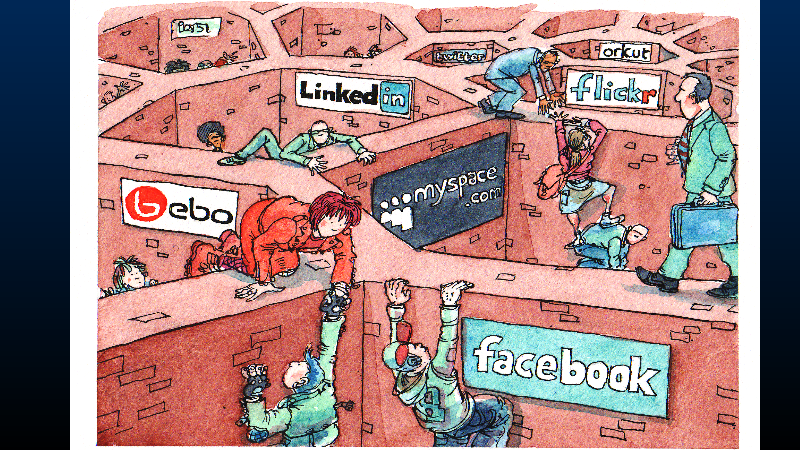
This is how the system reproduces itself – block the bridges, co-opt what survives, and call the result “common sense”. Where we need bridges that connect without forcing conformity, collaboration without co-option, and grassroots alternatives that keep their radical purpose while sharing what works – less absorption, gatekeeping and more bridges.
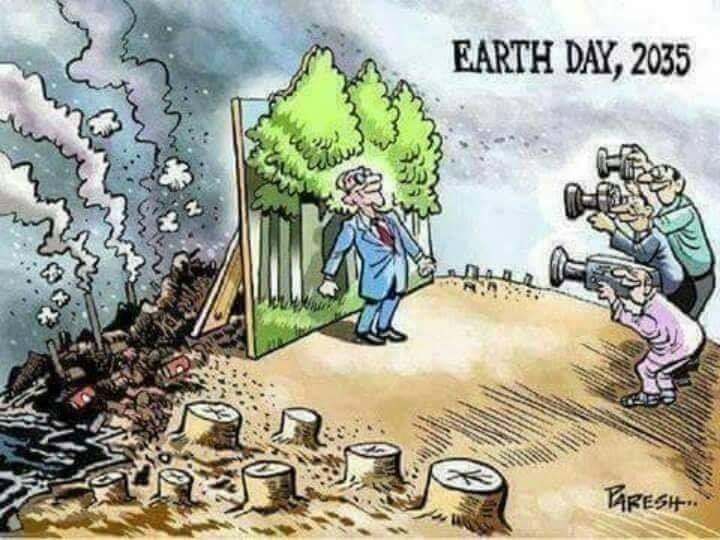
There is something revealing about the way powerful people talk about our future, when they imagine crisis, they imagine their escape. A luxury bunker, fortress border, a private city, a rocket or an #AI cloud. A place for the self chosen few to survive while everyone else is left outside to die.
This is the “logic” of the #deathcult we all worship, if the world is breaking, protect yourself rather than repair the world. It should be obverse to us that this is is not really any actual plan for the future, its just more head down worship, an admission that this class have stopped believing in any thing at all.
But, yes they hid this, they still tend to tell a story, the shiny version of this story is always the same, out of catastrophe comes a golden city, the old world burns, the rubble is cleared, and the self selecting few build something beautiful on top of it.
We have heard this story for thousands of years, apocalypse, judgement, Armageddon, collapse, then purification for paradise for the few survivors. The modern retelling simply replaces heaven with a billionaire bunker, an exclusive smart city, an AI utopia or a colony on Mars, different technology, same path.
On this #mainstreaming path some people, who we call the #nastyfew in the #OMN hashtag story, deserve to survive the mess they created. But what is not told in this simply story is that the bunker is hard right politics – #climatechaos, pandemics, resource conflicts, economic insecurity and technological disruption are real problems. But there are two very different ways to respond to systemic crisis.
One response is – How do we protect everyone and make the system more resilient?
The other is – How do I make sure I am on the inside when it collapses?
The second path is not surprisingly increasingly visible in #nastyfew billionaire culture, authoritarian politics and in the #dotcons industry we all spend way to much time inside.
in this modern story, the bunker is not just a building underground, it is a political metaphor, fortress borders are bunkers, private security is a bunker, gated communities are bunkers, #closedweb platforms are bunkers. What matters for us in #FOSS is monopolized infrastructure is a bunker. Even the fantasy of escaping humanity through #AI or space is another bunker, an attempt to leave the shared social and ecological world rather than compost our dysfunctional relationship with it.
This path is the opposite of the #openweb,it is were the #deathcult turns fear into control. The right-wing answer to social crisis is always built around fear – Fear of outsiders, fear of immigrants, fear of social change, fear of losing status, fear of disorder, fear of the future. But, then comes the golden lie, the promise, we will protect you, but this protection soon becomes control. The anger that should be directed toward concentrated wealth and political power gets redirected sideways and downwards toward other ordinary people.
The poor become the problem, migrants become the problem, minorities become the problem, the left becomes the problem. The messy complexity of society is reduced to enemies, it is an old political trick that the #blinded technological #closedweb makes much more powerful. Today’s authoritarian politics doesn’t arrive wearing an old-fashioned uniform. the phone in our pocket, influencers, algorithms, targeted advertising, surveillance systems, AI-generated propaganda and permanently monetised outrage. The infrastructure of the #dotcons is a bunker.
But what we focus on the #OMN path is there is alternative, this alternative isn’t pretending that everything is fine, not another shiny utopia, and it certainly isn’t waiting for some perfect political party, perfect technology or perfect leader to save us. The alternative is much more boring – Build things that work, trust, commons, local resilience. Create media systems where communities can see and understand what is happening. Focus more on building technologies that people can actually control by #KISS keeping the infrastructure understandable so participation is possible. Create spaces where people can disagree without immediately becoming enemies. That sounds much less exciting than an AI god or a $50 million survival bunker, good, what we need to do as the #DIY grassroots is move from bunkers to bridges
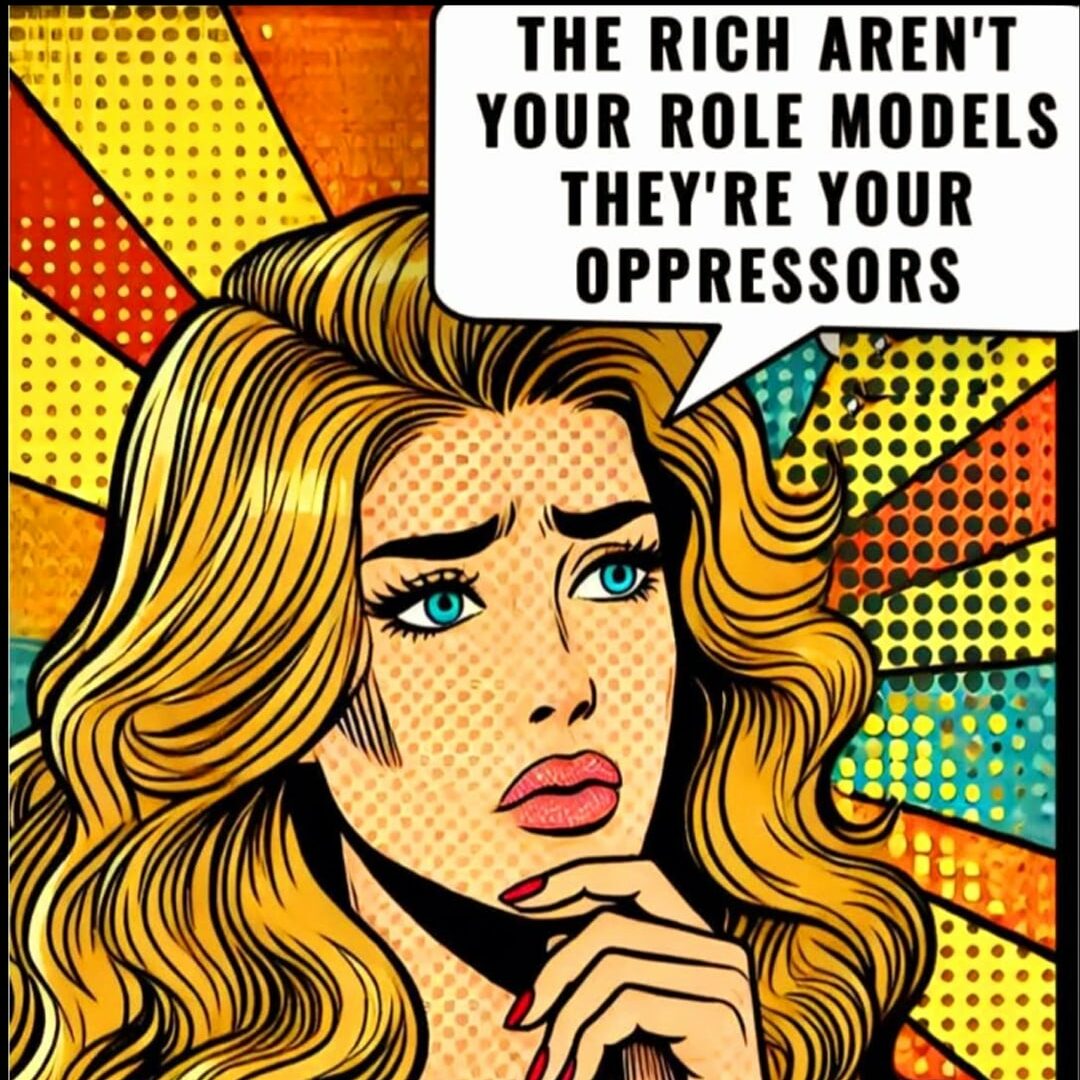
The important question is not, who gets into the bunker? The question is, what are we building outside it? Because humans have already built an enormous number of bunkers, political bunkers, economic bunkers, cultural bunkers, technological bunkers, information bunkers. We don’t need more, we need bridges, and bridges are fundamentally different from bunkers.
A bunker protects something by excluding people, a bridge creates value by connecting people. That is the deeper #openweb possibility – not a technological escape from society, but technology that helps society organize itself. Not centralized control, but distributed participation, not ownership of everything, but stewardship of shared resources, not fear as the organizing principle, but trust. Not “how do I survive when everything collapses?” but “How do we make collapse less likely, and life better, together?”
Its about composting the apocalypse – the world really is messy, but fear doesn’t have to become a bunker, it can become a reason to organize. This is where social composting matters, take the accumulated waste of the last decades — #neoliberalism, authoritarianism, #techshit, platform capitalism, political tribalism, broken institutions and the endless fear machine. Don’t pretend it isn’t there, don’t worship it or spend your entire life fighting it head-on. Compost it, break it down, learn from it, keep what is useful, let the dead parts become soil to then grow something different.
The #deathcult says the future belongs to the #nastyfew who can buy their way out, the #lifecult says the future belongs to those who can build relationships strong enough to stay. The choice isn’t really between apocalypse and utopia, it is between bunkering down or building commons. The planet doesn’t need another billionaire bunker, it needs people willing to pick up shovels.
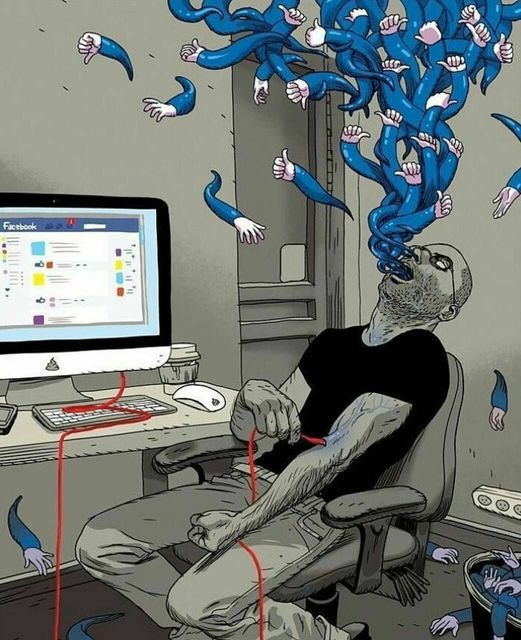
The problem of #dotcons is attention capture, its why #digitaldetox is a part of the #OMN toolbox. So lets look at why we need to act on the digital drug problem. The everyday digital drug fix starts with a notification, you pick up your phone because you get a notification. You unlock it, check the notification. Then maybe you look at one thing, then another, then another and suddenly an hour have disappeared.
You didn’t decide to spend the next hour staring at short videos selected by a #dotcons in the service of the #nastyfew. You didn’t sit down and make a conscious choice to enter the endless scroll, you just responded to a notification. Swipe – maybe this one is rubbish – swipe – that’s funny – swipe – boring – swipe – interesting – swipe – somebody attractive, and on it goes. This is the basic addiction of the #dotcons: turning our attention into a reaction rather than a choice. The important thing isn’t that one particular video is good or bad, the problem is loss of focus.
Every notification creates another injection, every swipe gives the algorithm a signal about what keeps you looking. The drug learns what holds you there, while you gradually lose track of why you picked up the phone in the first place. This isn’t communication in any real way, it’s an attention stealing machine and the more time we spend looking at it, the more normal the behaviour becomes. This is why #DigitalDetox project isn’t about telling people to “use their phones less”, its an AA meeting, we need to understand the drug is difficult to stop.
The phone isn’t the problem – digitaldetox is about #KISS technology to help people have more focus to participate in their communities. This mess we need to composting is social, the technology is a part, and yes the is piles of #techshit but under this surface is blinded ideology – the business model and the social architecture we think of as common sense.
The question is what infrastructure we build around those addictive behaviours, it is the problem with #mainstreaming, that it rarely looks like control from the inside the trap, it looks like common sense. People are presented with acceptable ideas, organizations, technologies and ways of working. Then, because everybody around them makings the same choices, those choices are “natural” – “This is just how things are done.”
But that “common sense” has a history. – for forty years, a mixture of #neoliberalism, #postmodernism, professionalisation and institutional culture has created a particular political and technological environment, that tells us that change should happen through recognized organizations, recognized experts, recognized funding structures and recognized channels.
Alternative paths are not forbidden, they are simply made difficult to see, and when people have spent decades inside this environment, asking them to look outside it can produce strong negative reaction. Then the problem is not simply bad people, it is tempting to describe this as a problem of individual personalities. Someone is arrogant, someone is ideological, someone is a gatekeeper, someone is “woke”, someone is a bureaucrat. But that misses the deeper problem, that people are shaped by the systems they live inside.
If your professional environment rewards certain ideas and punishes others, eventually you learn what can safely be said, learn which projects look fundable, learn which language gets accepted. You learn which organizations are considered legitimate. You also learn which people are worth listening to, its a #KISS social filter. The result is not only a conspiracy, it is something mundane and, more difficult to challenge, a culture reproducing itself. The people keep selecting things that make sense in the current #mainstreaming paths, and become evidence that the current #techshit mess is right all along.
This is one of the traps of #mainstreaming – its the grassroots problem we need to compost – grassroots projects come from somewhere completely different, they are messy, experimental and don’t always have professional language. They are built by people who see a #DIY problem and start doing something about it. That is where interesting alternatives begin, when these projects enter the mainstream funding and organizational environment, something bad happens. The project is asked to translate itself, then translate itself again to fit into a recognized category, demonstrate impact, scalability, governance, sustainability etc.
Then comes the compleat #block, it has to demonstrate that it already looks like something the funder understands, by the end, the thing being funded is very different from the thing that originally mattered. This fuck-up is not always malicious, it’s a structural problem of mainstreaming trying to make the unfamiliar familiar, and in doing so, it removes the qualities that made the grassroots project interesting in the first place. When we try and compost this #mainstreaming mess, people become defensive. When you challenge somebody’s “common sense”, you are not challenging an opinion, you may end up challenging their social position, their professional identity and their understanding of how the world works. That feels threatening, so its normal that the response is defensive.
Instead of asking “Could this alternative actually work?” the conversation becomes “Why aren’t you doing this properly?” Then comes the familiar #blocking “Use the proper channels.”“Talk to the right people.” “Get the stakeholders together.” “Build consensus.” “Follow the process.” “That’s not how things work.” And sometimes these are perfectly reasonable suggestions, but sometimes “proper process” is simply #blocking, ensuring that nothing outside the existing system can ever become legitimate.
The #OMN is built from a different starting point, it does not share any assumption that the existing institutions can solve the problems. It starts with people, communities, media and flows to build useful things the people can use, avoiding technical complexity to make participation is possible. We need these native technology’s as tech has its own version of the problem, the #geekproblem that assumes, if something is technically possible, the technical architecture should determine how people behave. This is the way power accumulates around administrators, developers, institutions and large communities, it is social. Thus, simply making something “open source” does not automatically make it socially open.
It is why #4opens matters, open data, open source, open standards and open processes are not the whole answer, but they can create space for communities to make their answers. Mediation rather than control, the answer to messy human behaviour is not more control. The #OMN is closer to a river than a filing cabinet, objects flow, people contribute to the flow, communities filter and shape the flow. Different places can create different views of the same underlying information. Some things become trusted – some things remain uncertain. Some things disappear from a particular view without pretending that they have magically ceased to exist everywhere.
This is a very different idea of network governance, its organic, its about composting the mess. The #openweb has accumulated decades of corporate platforms, closed APIs, surveillance economics, status games, technological churn, institutional habits and ideological baggage. There is a huge pile of shit, the answer is not to pretend otherwise, we compost it, take what is useful, break down what is harmful. Reuse existing tools, keep the lessons, discard the assumptions to help grow something new from what remains.
That is a more practical form of radicalism than simply traditional #fashionista left declaring that everything has to be destroyed and rebuilt from zero. It is also why #KISS matters, keep it simple, make the useful thing work. The real challenge to compost is cultural, the barrier to alternative technology is often not technology it self, it is the problem of common sense imagination. People need to imagine that things could work differently, then after this grassroots paths need space to experiment, to grow, before they are forced into the current #mainstreaming.
Funders like #NLnet need to recognize that something can be valuable before it has already become institutionally respectable. And #mainstreaming organizations need to understand that they are not the source of innovation, as to often they are the last people to notice this, that does not mean abandoning them, but it means not making them the only path.
So the question becomes, how can we convince them to build real alternatives, we can just to spend another twenty years trying to convince a closed system that it should become open. The path out of this mess is simple build something open, don’t waist to much time and focus explaining to institutions why grassroots communities deserve infrastructure. And don’t wait for “the right people” to give permission, start with the people who are already doing the work.
The important shift is from permission to participation, from ownership to commons, from control to mediation, from platforms to flows. From mainstreaming the grassroots into existing institutions to letting grassroots practice grow outward into the wider culture. The existing “common sense” can be composted, it is not inevitable, it is simply what has grown around us, to become a mess. We don’t have to worship the mess, we can pick up a shovel, turn the pile, let it breathe and grow something better from it.
There is such a thing as reality, and humans have an intrinsically limited idea of what it actually is. All human thought and culture are created by humans. In that process, there is a strong tendency for our ideas to become religion, things we believe to be true rather than things we keep testing.
The West developed a useful hack to try to escape this trap. Religions are built around truth. Science is built around doubt. Make an observation. Test it. Try to prove yourself wrong. Keep the results. Let someone else test them. This simple hack has worked VERY well – for good and for evil. Science doesn’t tell us what we should do. That’s the next problem.
One of the meany problems with modern capitalism is not simply that some corporations are greedy. It is that we have built institutions around the assumption that people are greedy, and then wondered why they behave that way.
Since the 1970s, #neoclassical economics became dominant in business schools and corporate thinking. An older social democratic idea of the manager as a professional with responsibilities to workers, customers, communities and society was displaced by a #geekproblem model of management built around financial incentives, shareholder value and measurable returns.
This became part of what is commonly called #neoliberalism. At the #OMN we polemically and, we argue, factually call the resulting social system the #deathcult: a system that places financial accumulation, competition and individual economic interest above the social relationships and ecological systems that actually make society, and life possible.
The darkness at the centre of this system is the idea of #Homoeconomicus – the simplified economic human who is assumed to rationally pursue personal advantage and maximise material rewards. Applied to the corporation, the logic becomes straightforward, managers cannot be trusted to act in the interests of shareholders because they have interests of their own, so we need incentives.
Give managers shares and stock options. Tie their bonuses to share prices. Measure everything. Monitor everything. Make individual financial reward correspond with corporate financial performance. This became part of the intellectual foundation for shareholder value.
The corporation increasingly stopped being understood as a social institution with multiple responsibilities and became something closer to a machine for maximising financial returns. Workers become costs, communities externalities, nature becomes a resource, customers markets. Managers become agents, shareholders become the priority. And success becomes a number.
The problem is that people aren’t actually like this – the fascinating thing is that the economic model is a very dangerous description of how humans actually behave. Research from behavioural economics and even game theory has repeatedly demonstrated that people are motivated by much more than financial self-interest.
People care about: honesty, fairness, trust, reciprocity, reputation, pride in their work, belonging and professional responsibility. People will often sacrifice financial rewards in order to behave in ways they consider right, cooperate when they trust each other, reward cooperation and punish behaviour they believe is unfair – sometimes even when doing so costs them something.
This matters enormously for how we organise institutions – if people are capable of cooperation, trust and reciprocity, then building institutions on the assumption that everybody is fundamentally selfish can actually make society more selfish, a institutional feedback loop
This is the real problem, a narrow and blinded theory about human behaviour becomes institutional reality. We start by saying: People are selfish, so we design institutions around that assumption. We create bonuses, stock options, surveillance, competition.
Then people learn that these are the behaviours that matter, cooperation becomes secondary, professional pride becomes secondary, community responsibility becomes secondary. Trust becomes something that needs to be managed rather than something that can be built.
People adapt to the system, and then we look at the resulting behaviour and say: “See? People really are selfish.” it is the trap we have all walked into. Assume people are selfish → build institutions around selfishness → reward selfish behaviour → weaken trust and professional norms → observe selfish behaviour → conclude that the original assumption was correct.
The institution has created the behaviour it claims merely to measure, is the #mainstreaming problem. Once a particular model becomes normal, it stops looking like ideology, it becomes common sense. Eventually, people forget that things could have been organised differently.
This is one of the most powerful things institutions do: they turn particular assumptions about human beings into apparently neutral systems. The system then reinforces those assumptions is how ideology becomes infrastructure.
This argument is more subtle, and more important. A narrow economic model has had enormous influence over how corporations understand management, incentives and organisational success. It helped legitimise corporate culture with its head bowed down worshipping a #deathcult.
And once that becomes the default, even people who personally reject the model have to bow there heads or be banished. To let the light into this mess, the path itself has to change, from extraction to participation. This connects directly to the #OMN projects.
We need to stop designing social systems around the assumption that people are isolated individuals competing for maximum personal advantage. Humans are social, we build relationships, we cooperate, create communities, develop shared norms. We care about reputation, we care about doing a good job, care about whether other people treat us fairly.
This is also why the #OMN puts so much emphasis on trust, participation, commons and the #4opens. As the alternative to the #deathcult isn’t simply a nicer version of the same system, it is a different understanding of what people are. Instead of designing systems to control selfish individuals, we need to #KISS design systems that enable cooperation between social beings.
Instead of endless surveillance, build trust, of individual competition, build participation.
Instead of extracting value from communities, build commons, recognise them as contributors.
Instead of measuring everything through financial value, recognise social and ecological value.
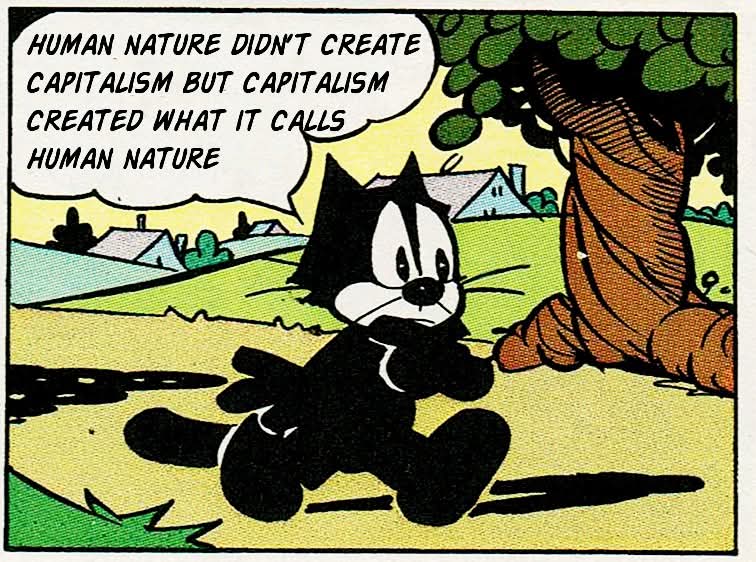
The path isn’t simply “How do we make selfish people behave better?” the bigger question is “Why are we building institutions that require people to behave selfishly in the first place?” That is the question we need to ask of corporations, business schools, governments, NGOs and our own activist institutions. Because when a system repeatedly produces the behaviour it claims is simply human nature, perhaps the problem isn’t human nature, perhaps the problem is the system.
Our institutions are not neutral observers; they actively shape human nature. The path away from this mess is simple and native to the #openweb, compost the #deathcult, build the commons.
Our current working models of “governance” in #opensource are mostly:
Monarchy – the dictator for life. Aristocracy – the devs. Oligarchy – NGOs/funders. And way out on the edge: Democracy – the users.
We need better governance native to the #openweb. Let’s look at this at a more personal level before the normal wider social view. Yes, in #FOSS development the devs doing the work deserve respect, and #OMN isn’t arguing that users should simply demand things from volunteers.
The point about “aristocracy” is about more where decision-making power sits, less whether devs are privileged people or whether their work has value. If the people who write and maintain the code also decide what the project is, what gets built, what gets rejected and how the project develops, then you have a governance structure where technical expertise becomes political authority.
Hope am clear, that isn’t a criticism of individual developers, it’s a structural observation. The #OMN approach is to separate doing the work from owning the direction. Developers are essential participants, but so are users, moderators, communities and other contributors. Different kinds of knowledge need different kinds of power.
The challenge is building governance where devs don’t get bossed around by users, users don’t get bossed around by devs, funders don’t get to buy the direction, and nobody gets to become the permanent ruler.
That’s what the #OGB work is trying to explore: governance native to the #openweb, based on trust, transparency, participation and voluntary cooperation. This alternative isn’t “users rule”, it’s shared power with different roles.
With this in mind lets talk about the wider issue, a reminder: when I talk about the internet and society, I am not necessarily talking about you, I am talking about groups, cultures, classes, institutions and patterns of behaviour that you might be part of. You can recognise yourself in a critique without the critique being a personal attack – Simple – Take the useful bit and move on.
What is interesting – and a pretty good example of #stupidindividualism – is how difficult this has become. We increasingly seem to believe that we are not allowed to talk about groups any more. Everything has to be reduced to the individual “Are you saying I’m stupid?” “Are you attacking me?” “Who exactly are you talking about?” This makes it difficult to discuss social patterns, and that matters because many of the problems we face are not individual problems. They are produced by relationships between people, institutions, technologies and economic systems.
If we cannot talk about groups, we cannot talk properly about the #geekproblem, #mainstreaming, the #dotcons, #NGOs and funders, tech communities, activist cultures, class interests, institutional power, #neoliberalism or the wider #deathcult culture. We end up privatising a public conversation.
This is one of the things that makes #dotcons-style social media so destructive, as everything becomes personalised, emotional and reactive when structural criticism gets turned into interpersonal conflict. But a feeling is not a fact, a feeling attacked does not necessarily mean someone is attacking you. Sometimes it means that something has made you uncomfortable, or challenged a worldview you have become accustomed to.
That discomfort can actually be useful as the point isn’t to find individuals to blame, the point is to understand the systems and cultures we are collectively caught inside. We need to get beyond the #neoliberal#TINA – There Is No Alternative – thinking that reduces everything to individual choice and responsibility. We need to be able to say – This is a group pattern, a cultural pattern, a class interest, an institutional problem. It’s about how power reproduces itself, then we can actually talk about what to do about it. That is the conversation we need to reclaim: public, collective and capable of naming the structures that shape our lives.
Remember none of this is about personal attacks, not tribal prat fights, not individualised outrage. It’s a public conversation about public problems.
The current wave of wildfires across Europe is not simply a natural disaster, it is also exposing a deeper mess, the failure of our information systems. Instead of explaining why Europe is burning, significant sections of the corporate media are either ignoring #climatechaos or distracting by blaming rewilding, net-zero policies and environmental protections. Rather than confronting the #KISS scientific evidence that fossil fuel combustion is driving global heating, they redirect public anger towards the policies intended to mediate the damage.
This isn’t simply corrupt journalism, it’s a theological and political choice. The reality inversion – when forests burn, rivers dry, crops fail and people die from extreme heat, the obvious question should be – What is causing this? The scientific answer is clear, human emissions of greenhouse gases – from burning coal, oil and gas – will increase the frequency and intensity of heatwaves, droughts and wildfire conditions. This is one of the strongest areas of scientific consensus in modern research.
Yet much of the corporate press is #blocking this connection. A look through thousands of UK newspaper articles covering the June 2026 heatwave found that around three-quarters never mentioned #climatechange at all. Yes, the public was shown the symptoms while the cause was quietly edited out. This matters because information shapes action, if people don’t understand why disasters are happening, they cannot understand what needs to change.
This is manufacturing confusion – the right-wing press push reality inversion. Europe burns, the blame shifts to rewilding, the mess – heatwaves become evidence that environmental policy has gone too far, wildfires become an argument against restoring ecosystems, net-zero becomes the problem rather than one of the responses. The effect is to move negative attention away from fossil fuels and towards environmental movements. When the cause of a crisis threatens #nastyfew interests, our “journalists” redefine the problem until those interests disappear from the story. The debate becomes about forestry management, or environmental activists. Or planning regulations, migrants, or bureaucracy. Almost anything except the continued extraction and burning of fossil fuels.
In the #OMN vocabulary this is the logic of the #deathcult – A system organised around endless growth cannot admit that endless growth is destroying the conditions that make civilisation possible. With the shift to the hard right – every crisis becomes someone else’s fault – every solution becomes economically impossible – every warning becomes political exaggeration – every disaster becomes “unexpected.” The current path survives by refusing to recognise the consequences of their own actions.
This is why “common sense” has become part of the problem. After forty years of #neoliberalism, what many people call common sense is the common sense of the market. Growth is always good, markets always know best, corporations are inevitable, consumption equals freedom and thus environmental limits are optional. But, this isn’t common sense, it’s forty years of shaping people to see the world through the eyes of only capital.
So why do we still let fossil fuel companies still shape public policy decades after the science became overwhelming? The language changes, the power structures remain. This is #mainstreaming, the appearance of addressing the problem while carefully avoiding the changes needed to solve it. The #mainstreaming problem isn’t confined to openly conservative newspapers. Much liberal media performs a softer version of the same function. Climate change is acknowledged, the latest disaster is reported, scientists are quoted. Then coverage moves on, the structural questions are rarely asked – Who profits? Who owns the media? Who funds political influence?
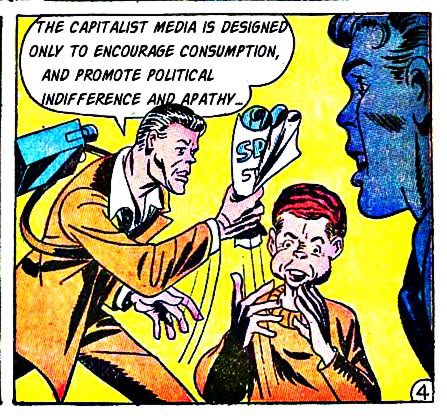
The #OMN perspective is that this isn’t only a journalism problem, it’s an infrastructure problem. When a handful of corporations control the majority of communication, they also shape which stories become visible, which connections are made and which questions remain invisible. Feed this narrow mess through the #dotcons that amplify engagement rather than understanding, we get stinking mess. It is easy to understand that corporate newspapers depend upon commercial interests controlled by the #nastyfew and political institutions still focus communicate through the same commercial traditional media and #dotcons platforms, the result an information ecosystem optimised for attention and control rather than any truth.
The path we need for survival – the coming decades of #climatechaos will test every institution we have – communication systems, food systems, energy systems, governance and public trust. If our media continues to hide causes while amplifying distractions, societies will become less capable of responding when they need clear information the most. A community that cannot accurately describe its own reality cannot organise to change it to move beyond the #deathcult. The uncomfortable truth is that there is no path through the coming century while remaining politically loyal to the assumptions that created the crisis. The #deathcult has reached its limits.
The question is no longer whether that model is sustainable, it isn’t. The question is what replaces it. The #OMN answer begins with rebuilding the commons, open media, open governance, open standards, open knowledge. Communities capable of telling their own stories and acting on shared reality rather than manufactured distraction. Because if we cannot agree on what is happening, we cannot respond together.
And if we continue allowing corporate media to define reality for us, they will continue pushing the systems that are driving us deeper into #climatechaos. The future depends not only on changing our energy systems, it depends on changing the information systems that tell us what is real.
For 45 years we’ve been told that “economic efficiency” means making the rich richer and the poor poorer. By that narrow measure, the system has been a huge success. The problem is we’ve sacrificed everything else. Environmental responsibility? Ignored. Social sustainability? Undermined. Community? Hollowed out.
The result is #climatechaos, collapsing social trust, and an economy designed to extract rather than nurture. We urgently need to rebalance our priorities. The economy should serve society and the living world – not the other way around.
We spend a lot of time talking about crises as if they’re sudden events, they rarely are, crises are the outcome of decades of accumulated social, political, economic and technological choices. The challenge isn’t simply understanding why societies enter periods of instability, it’s understanding how they find their way back out again.
History suggests something important – entering crisis is often easier than leaving it – it’s a downhill path. For long periods, societies can appear stable. Institutions function, people get on with their lives, and conflict remains manageable, yet beneath the surface something changes.
Power concentrates.
Wealth accumulates upward.
Institutions begin serving themselves rather than the commons
Public trust erodes.
By the time these trends become obvious, society has already gathered momentum, think of it like a huge ball rolling down a steep valley, once it begins rolling, it becomes incredibly difficult to stop. This is where much of today’s #climatechaos, democratic decline and digital enclosure fit. They are symptoms of long-running structural shifts rather than isolated failures.
To understand this recurring mess, it’s useful to think about this is as a wealth pump. Healthy societies circulate resources, were unhealthy societies increasingly extract resources from ordinary people while concentrating wealth and decision-making power into ever smaller circles. Eventually this creates reinforcing problems – the growing insecurity for everyone else, competition between increasingly numerous elitists leads to weakening of public institutions, eventually the system becomes unstable. This describes much of the last forty years of #neoliberalism just as well as many earlier historical periods.
In #OMN language, this is one way of describing the growth of the #deathcult. Technology follows politics, so the same process appears online. The early #openweb distributed power, the #dotcons recentralised it. Open participation became algorithmic engagement, communities became audiences, citizens became products. This wasn’t a simple a technical change, it’s the same mess of concentration of power occurring throughout the wider society. Technology amplified existing political and economic trends, crisis created the possibility.
The encouraging part of history is that outcomes are not predetermined, although the path into crisis is narrow, the path out is surprisingly open. Once institutions begin failing, many futures become possible. Some societies descend into violence, some replace one ruling group with another while changing very little. A few manage genuine reform, the difference comes from organised social movements that are able not merely to seize attention, but to rebuild institutions capable of creating trust again. This matters as moments of instability are also moments when relatively small interventions can have disproportionately large effects.
This is where #OMN fits, the Open Media Network is not a project to seize power. It is a project to rebuild commons infrastructure. Instead of reinforcing extraction, it strengthens trust. Instead of creating new gatekeepers, it distributes responsibility. Instead of proprietary platforms, it builds open processes. Instead of replacing one monopoly with another, it supports federation and shared ownership.
This is why the #4opens matter, not as ideological slogans, they’re much more useful as practical safeguards against rebuilding the same systems that created today’s crisis. Trying to engineer perfect systems produces new failures, complex societies never become tidy, so the useful goal is not perfection. Rather to create institutions capable of learning, adapting and redistributing power before crises become catastrophic. This is why #OMN emphasises mediation over control, commons over ownership, participation over spectatorship to push trust over extraction.
Building the next commons matters – if we accept that we’re living through a period of structural instability, then waiting for institutions to solve it is unlikely to succeed, the work we need belongs to communities.
Building archives.
Building media.
Building governance.
Building trust.
We can play a part in this by building technologies that reinforce this path rather than undermine it as history suggests that societies emerge from crises when they reverse the flows of concentrated power to begin rebuilding the commons, that’s the path #OMN is on.
All startups are expressions of the #deathcult, every #VC is, in effect, a bishop preaching endless growth, extraction and enclosure. This isn’t innovation. It’s a business model accelerating social breakdown, deepening inequality, and feeding the #climatechaos that will displace billions and cost millions of lives over the coming century. If you’re serious about activism, stop feeding the machine. Put your energy into building the #openweb commons instead.
The whole value system behind startups and #VC is the problem, not the solution. The #KISS truth is simple: endless growth, extraction and enclosure cannot solve the crises they create. They are accelerating today’s breakdown and shaping tomorrow’s catastrophes. We don’t need more investment in the #deathcult. We need investment in the digital commons, the #openweb, and the #4opens.
The #Fediverse is an accidental reboot of the #openweb, it wasn’t designed from the top down, it emerged because thousands of people built alternatives to the #dotcons. That’s its greatest strength, it’s also why it’s so messy.
Herding cats – the #Fediverse has no central authority, every project, server, and community has its own priorities, culture, and governance. It’s often like herding cats. This can be frustrating, but it’s also what makes the network resilient. There is no single point of failure, no CEO to sell it, and no corporation that can simply shut it down. The challenge this leave us with is not eliminating the mess, but learning how to live with it productively.
The invisible problem that keeps blocking this path is in part the limits of “common sense”, what the #geekproblem refuses to see is that the difficulty isn’t primarily technical. For over forty years, #neoliberalism and #postmodernism have shaped what people experience as “common sense.” Competition replaces cooperation. Individualism replaces commons. Endless critique replaces collective construction. People absorb these assumptions without realising it, then push them over real alt paths.
When alternative ways of organising are introduced, many people instinctively react with hostility or retreat. Push too hard, and they disappear back into familiar habits, like snails retreating into their shells. This isn’t usually bad faith, it’s learned behaviour.
We have a project to mediate this mess, native governance without hierarchy. This is where the Open Governance Body (#OGB) comes in. The goal isn’t to control the #Fediverse or impose bureaucracy, the goal is to create lightweight, transparent ways for communities to coordinate, resolve conflict, share responsibility, and make decisions together.
Governance should emerge from the grassroots, not be imposed from above. That’s why #OGB builds on the principles of the #4opens:
Open Data
Open Source
Open Standards
Open Process
The last of these – Open Process – is the missing piece. Technical openness alone isn’t enough. Communities also need visible, participatory ways of building trust. What matters is creating processes that turn #mainstreaming failures into shared learning instead of endless conflict.
The future of the #openweb won’t be built by perfect software, it’s built by imperfect people who learn how to cooperate despite their differences. That’s the real work of #OMN and #OGB: not replacing the mess, but giving it enough structure to grow into a healthy commons.
The current #AI boom is built on a huge contradiction, you can see this in #mainstreaming terms. That AI companies are not paying the real costs of what they consume. They haven’t paid for the copyrighted material they trained on. They haven’t paid the environmental costs of the water and electricity they use. They haven’t paid for the pressure they place on public infrastructure, or for the social costs of flooding the web with synthetic content.
Yet AI services are sold below their true cost, subsidised by investors gambling on future monopolies. This should sound familiar as we saw the same pattern with social media, with the gig economy, with cryptocurrency. First comes the hype, then investor money, then comes market capture, only later do the public pay the real costs.
The problem is like every time before is not the technology itself, it is that we’re allowing it to develop within the logic of the #deathcult, where growth matters more than social value, extraction matters more than care, and monopoly matters more than the commons. Simply shouting “ban AI” won’t solve this, nor will pretending everything is fine. We need to actively and democratically mediate this technology socially, which means asking (and acting on) questions the tech industry never asks.
This is where the #OMN approach matters, technology doesn’t exist outside society as every technical system embeds social values, whether intentionally or not. If we leave the current mess AI is making entirely to venture capital, Big Tech and the market, we shouldn’t be surprised when it reproduces the same inequalities and failures of those systems.
This mess is a part of our long-standing #geekproblem, that technical culture mistakes technical possibility for social progress. Yes, sometimes it is not driven by malice, more often it’s a feedback loop of arrogance and ignorance, where clever engineering is assumed to be enough, while questions of governance, trust and community are treated as secondary, or more likely ignored altogether. The result is endless #techchurn: one wave of disruption after another, each promising liberation while quietly or noisily reproducing the same concentrations of power.
We don’t need to knee-jerk reject technology, we need to compost the culture that keeps producing these #techshit outcomes. The #4opens offer one practical path, this needed path is not anti-tech, but it is pro-society. On the path we need to take, the challenge isn’t stopping progress, it is widening the culture that guides creativity, so technology can better serves people and the planet rather than the current narrow blinded interests of capital, feeding the #nastyfew.
That’s the work of the #openweb, and the path of #OMN.
What part can you play? The #openweb is one place to start, keep it simple (#KISS), build commons, compost the mess. The political centre created this mess. Four decades of neoliberal “common sense” deepened inequality, weakened democracy, privatised public goods, and pushed us beyond ecological limits. Yet much of the centre still offers only more of the same: better management of the #deathcult rather than a path beyond it.
That leaves a dangerous vacuum. If progressive movements cannot offer practical alternatives, the far right will continue to grow by presenting itself as the only force willing to confront the crisis. Their answers are built on fear, exclusion and authoritarianism – but they resonate because they acknowledge that the old system is failing, while the centre too often pretends it can be repaired.
Simply defending the status quo is not enough. Nor is retreating into abstract radicalism disconnected from everyday life. We need practical, grassroots alternatives that people can participate in and build themselves.
This same pattern appears in technology. Our #geekproblem isn’t primarily bad code – it’s a culture of arrogance and ignorance. Technical communities often reproduce the assumptions of the wider society without questioning them. They celebrate disruption while recreating centralisation. They mistake individual freedom for collective liberation, reproducing #stupidindividualism while unconsciously serving the logic of the #deathcult.
This isn’t usually malicious. It’s a feedback loop. The culture produces the technology, and the technology reinforces the culture. The answer isn’t to reject technology. It’s to mediate it socially.
Open Process ensures communities – not just developers or investors – shape the progress.
We need to use this to composting 40 Years of “Common Sense”, For the last 40 years, #neoliberalism and #postmodernism have shaped what passes for “common sense” in #mainstreaming society. Their influence runs so deep that many assumptions now feel natural rather than ideological. When these assumptions are challenged, people react defensively, not because they’re bad people, but because their worldview feels under attack.
This isn’t just a mainstream problem. Activist spaces reproduce the same patterns. The result is endless circular arguments, performative politics, and fragmentation rather than solidarity. Our task isn’t simply to oppose this culture, it’s to mediate it, to compost the mess rather than pretend it doesn’t exist. Composting means taking the waste of the last forty years – failed assumptions, captured institutions, #techchurn, #fashionista politics, and individualism – and turning it into fertile ground for something better.
The worrying trend is that the grassroots signal is being submerged beneath an echo chamber of #mainstreaming voices. On many #fashionista threads, noise overwhelms practical action. We spend time performing politics rather than building the infrastructure movements need. That requires empathy, patience, and practical organising. It means creating spaces where people can step outside inherited “common sense” without feeling they have to defend it. It means building working alternatives instead of only criticising broken systems.
The answer isn’t to shout louder, it’s to build better spaces, better tools, and better processes. The signal-to-noise ratio can change again, but only if we do the patient work of mediation, trust-building and commons creation – The work of #OMN.
People sometimes ask why I use the hashtag #deathcult. It isn’t just a provocative label, it is to name the dominant political and economic logic that has shaped the last forty years. By #deathcult, I mean the era of #neoliberalism: a system that treats endless economic growth, privatisation and competition as unquestionable “common sense,” even when the consequences are ecological collapse, growing inequality and social breakdown.
I call it a cult because, like any successful ideology, it becomes difficult to see from the inside. Its assumptions become so normal that alternatives appear impossible. Margaret Thatcher’s famous phrase, “There Is No Alternative,” sums this up perfectly. The “death” part has become harder to ignore, due to movements like #XR (Extinction Rebellion), the reality of #climatechaos has entered mainstream discussion. We can now see that continuing on our current path means ecological collapse, mass displacement and the deaths of millions – and displacement of billions – of people over the coming century.
Of course, neoliberalism is not something entirely new. It is an extreme form of capitalism, and history has seen similar periods before. One example is Britain’s response to the Irish Potato Famine, where market ideology took precedence over human need, contributing to mass starvation, displacement and suffering.
After the Second World War, many countries moved towards forms of social democracy. Capitalism was softened by stronger public services, labour rights and welfare systems. These reforms were far from perfect, but they recognised that completely unrestrained markets created instability and injustice. In part this “liberal golden” era was held in place by there being an alternative of soviet communism.
From the late 1970s onwards, much of that understanding was forgotten. Deregulation, privatisation and financialisation became the dominant ideology once again. Politicians like Jeremy Corbyn and Bernie Sanders represent attempts to move back towards that earlier social democratic settlement. Though this compromise path of social democracy is not a final answer, as it still operates within capitalism, but it is certainly preferable to the #neoliberal model that currently dominates. As radicals, though, we should aim higher. We need to build systems based on commons, cooperation, ecological responsibility and democratic participation, not simply manage capitalism more fairly.
This is where #OMN (Open Media Network) comes in. The problems we face are not only economic, they are also about communication. Today’s digital infrastructure is dominated by #dotcons: corporate platforms that monetise attention, shape public debate and concentrate power. Facebook, Google, Apple, X and similar platforms have become essential infrastructure while remaining accountable only to capital rather than communities.
The answer isn’t simply better regulation, it’s rebuilding the #openweb. Like the #Fediverse, the #OMN is one small contribution towards this path: creating media and communication infrastructure based on the #4opens – Open Data, Open Source, Open Standards and Open Process – so communities can shape their own communication instead of renting it from billion-dollar corporations.
People also ask why I use so many hashtags, the answer is simple, the web is made from links. Hashtags are one of the few linking technologies that work across platforms. They allow conversations to escape individual silos and become discoverable across the wider web. They are not meant to replace ideas; they are signposts pointing towards larger conversations that matter. Yes, they can look cryptic, but every shared language starts somewhere. If we never create language for new problems, we remain only trapped inside the vocabulary of the systems we’re trying to change and challenge.
Changing language doesn’t change the world by itself, but it can change how we think about the world, and changing the conversation is often the first step towards changing society itself. That’s why I still use #deathcult, not as an insult, but as a way of naming a system whose destructive logic has become so familiar that people struggle to imagine anything different. The challenge now is not simply to criticise that system, it is to build practical alternatives.
For those who like to believe in social democracy, this isn’t an argument against the gains it has won. Strong public services, workers’ rights, progressive taxation and democratic institutions have all made life better for millions. They matter, and they are worth defending.
But we should also recognise their limits. As long as investment and production remain under the control of capital, democracy stops at the workplace door. We get to vote for governments, but rarely over what our economies produce, how resources are used, or whose needs come first.
The next step is not simply kinder capitalism, but extending democratic principles into the economy itself. Building commons, cooperatives, public ownership where appropriate, community governance, and digital infrastructure that people collectively control. That’s the direction #OMN points towards: not replacing one elitist crew with another, but growing the practical foundations of economic democracy from the grassroots up.
A lot of our current mess can be understood through the long transition from #modernism to #postmodernism. Not as an academic debate, but as a lived reality. Modernity was about progress. It believed that society could be understood, improved, and consciously shaped. Science, democracy, planning, industry, public institutions, trade unions, education, and infrastructure were all part of this path. The future was something people could build together.
Of course, this vision was never as simple or as benign as some people imagined. Modernity produced extraordinary advances in health, communication, and material abundance. It also produced colonialism, industrial warfare, bureaucracy, environmental destruction, and systems of control on a scale previously unimaginable. Yet despite its contradictions, modernity had confidence. It assumed that problems could be solved, that collective action mattered.
Then came the invisible #postmodern turn. The failing social democratic institutions lost legitimacy, narratives stopped convincing people. Governments increasingly rejected planning and handed decision-making to markets. Globalisation connected everything while making almost nothing feel controllable. Information mess exploded beyond individual’s capacity to understand any of it.
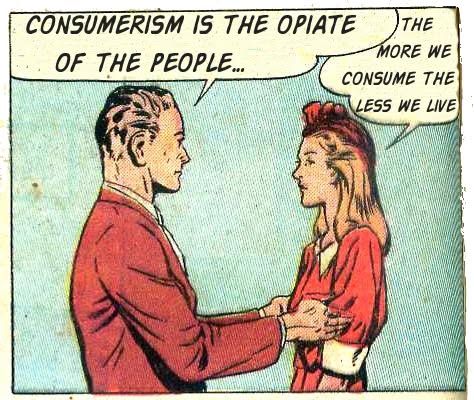
Instead of thoughtful maps, we had endless competing realities. Then, the #deathcult, the promise of #neoliberalism, that deregulated markets and individual freedom would create the best possible outcomes. In practice, much of what happened was the dismantling of collective institutions without replacing them with anything capable of holding society together. People gained consumer “choice” while losing all political agency. We became slaves focused on choosing between products while unable to shape the systems that govern our lives.
This is where contemporary politics becomes difficult to understand if we keep trying to use any grounded categories – mess increased the conflict between people trying to rebuild collective meaning and people retreating into fragments – Some fragments become consumer identities, some become nationalisms. In alt culture we lived through a decade of conspiracy theories while the #mainstreaming become lifestyle brands.
The common thread is that people are still looking for belonging in a world that increasingly feels impossible to influence. This is why so much contemporary politics is irrational, people are not responding to facts, they are responding to the crisis of meaning. A crisis of trust, a crisis of belonging.
Modernism reminds us that collective action matters, that process we build matter’s, DIY infrastructure matters and finally that society can be consciously shaped. Were #Postmodernism at its best reminds us that dogmatic system contains blind spots. That power hides itself behind claims of objectivity. That diversity of experience matters, thus blinded certainty to often leads to oppressive. With the ending of modernity:
We lost confidence in human planning but kept bureaucracy.
We lost collective power but kept #elitists concentrations of power.
We gained diversity of voices but lost shared language.
This mess leaves us trapped in blinded deadens of certainties of yesterday and the endless fragmentation of today. The challenge for projects like the #openweb is finding paths beyond this deadlock – not returning to centralised authority or surrender to endless relativism, but rebuilding shared processes that hold diversity without demanding conformity.
This is where projects like the #Fediverse, #OMN, and the #4opens matter. Their value is not primarily technical, their value is social. They are historical lived experiments in creating spaces where cooperation emerges without central control. Where differences coexist without immediate fragmentation and where communities develop shared infrastructure without surrendering autonomy.
The #KISS task is creating conditions where many narratives can coexist while still allowing collective action. That is harder than either modern certainty or postmodern scepticism. But it is the path through the era of #climatechaos, #dotcons platform monopolies, social fragmentation, and democratic decline.
Power is built, not granted – Power comes from power – it is something people build, organise, and create together. In the best outcomes, power is shared and circulated. But it is rarely something simply handed down from above. A lot of modern political thinking still struggles with this. It imagines power as something that belongs to institutions, leaders, owners, or authorities – something granted through permission.
But historically, power has always been created through collective action. Private property is one example of a social agreement backed by power. The myth is that ownership is a natural thing that existed forever. The reality is that ownership systems are historical arrangements, enforced through social structures.
The old story is simple – Someone draws a line in the sand, they say “Everything on this side is mine.” The group accepts that boundary – or someone has enough force to make them accept it.
That model of power still shapes much of our world, but notice, this is not the foundation of the #Fediverse. The #Fediverse is built on a different assumption, it is based on an open flowing social web of connection rather than enclosure, participation rather than ownership, federation rather than domination and shared infrastructure rather than a single centre.
The lines in the sand are not permanent walls, they move, they adapt, they blow in the wind. That does not mean there is no power. It means power works differently. The challenge is that many people approach the #Fediverse using old assumptions from the #closedweb of who owns it? Who controls it? Who is the authority? Who gives permission? Those questions make sense in a platform economy, they make less sense in a living commons.
This is where some of the current liberal tradition has become confused, as liberalism at its best gave us important ideas of individual rights, freedom of thought, limits on arbitrary power and space for difference. But much of the current political culture has absorbed the logic of the #deathcult: neoliberalism, market absolutism, and a fragmented postmodern culture where everything becomes identity, performance, and competition.
The result is a strange contradiction of a culture that talks endlessly about freedom while creating systems that reduce collective freedom, that celebrates choice while making real alternatives harder to build, that protects individual expression while weakening the shared social foundations needed for that expression to matter. The question is not how we return to some imaginary past.
The question is then how do we build new forms of collective power that fit the world we actually live in? This is the unfinished work of the #openweb. We need constructive thinking beyond “common sense” because much of what is called common sense is simply the habit of old systems.
Technology shapes society, the design of our networks shapes how we relate – Closed systems create dependency – Open systems create possibility. But openness alone is not enough, we need the social practices around openness of trust, care, stewardship, accountability and collective imagination.
The future will not be given to us by institutions, it will be built by people creating alternatives and connecting them together. Power is not permission, power is participation.
One of the uncomfortable truths of activism is that, given a choice between anarchism and anarchy, many anarchists choose anarchism. The ideology, identity, culture, meetings, and certainties feel safer than taking a genuinely risky step into the unknown of stateless liberty and self-organisation.
It’s easier to belong to the subculture than to build the social relationships and trust needed to live without the structures there critiquing. A lot of radical politics gets stuck at this point: defending the identity instead of creating the reality.
From an #OMN perspective, the challenge is not proclaiming freedom, but building the social infrastructure that makes freedom possible.
Been working with #mainstreaming people recently. The experience has been eye-opening, and not in a good way. What strikes me isn’t that they are bad people, most aren’t. The problem is that many seem completely unaware of how badly the culture they inhabit behaves. Gatekeeping is normal. Careerism is normal. Status games are normal. Endless #blocking of ideas, projects, and people that fall outside established comfort zones is normal. Then, they wonder why meaningful change never happens.
The pattern is everywhere. New ideas are treated as threats rather than opportunities. People spend more energy defending positions than solving problems. Institutions become focused on preserving themselves rather than the purpose they were supposedly created for. When challenged, the response is confusion – then #blocking – the behaviour is so deeply embedded that it has become invisible.
This isn’t just a problem of NGOs, public bodies, academia, media organisations, or corporations. It’s a broader cultural issue. The incentives point in the wrong direction as most people choose jobs primarily for income, security, status, and benefits. That’s understandable, we all need to survive. But when entire systems are built around those motivations, contributing to society becomes secondary, something to be mentioned in mission statements rather than lived in practice.
The result, a society full of people managing problems rather than solving them. You can see this in every sector, from the highest levels of management down to the lowest-paid positions. The forms differ, but the logic is the same: don’t rock the boat, protect your position, follow the approved path. This is one reason why grassroots projects struggle, as they are trying to solve problems directly, while mainstream institutions are organised around managing risk, preserving legitimacy, and maintaining existing structures.
From an #OMN perspective, this isn’t only a problem of individual morality, it’s a problem of social systems rewarding the wrong behaviour. The answer is not simply to denounce people, that feeds the cycle, the challenge is to create spaces where different values can actually function:
collaboration over competition
stewardship over careerism
openness over gatekeeping
social usefulness over institutional self-preservation
Some people respond by working less, consuming less, and choosing employers whose purpose is broader than profit. Others build grassroots projects outside the mainstream. But, neither path is easy, both come with costs.
The question is not why change is difficult, it is why we keep organising society around incentives that actively discourage it. With this mess in mind in both tech and activism, if your politics is talking only to people who already agree with you, it’s probably a hobby, not a movement. The #OMN path starts with building bridges between different groups, needs, and cultures, as this is how collective power grows.
We live in an age of #stupidindividualism where everyone broadcasts and few connect, so build bridges, not bubbles. This matters because most people are up shit creek without a paddle, yet keep looking in the same places that got them there. Apathy and laissez-faire “common sense” have become normal. Decades of #neoliberalism taught us to think as isolated individuals rather than communities capable of acting together.
One barrier is that people still don’t see the need to move beyond the #feudalism that shapes much of the tools we need. As a result, huge amounts of energy go into defending existing structures and #blocking alternatives before they have a chance to prove themselves. That’s why the #OGB project approach is simple: build it permissionlessly and let it loose. People will see the value, or they won’t #KISS
The goal isn’t convincing a handful of gatekeepers, the goal is empowering a larger group of people to participate in activism, technology, build consensus, and push the social agenda they actually need of less permission, more practice, less management, more participation.
This is also why so much campaigning, #NGO and alt-tech events can be frustrating. The official conversations are dominated by career paths, institutional interests, branding exercises, and carefully managed narratives. Lots of noise, not always much signal – The useful stuff usually happens elsewhere, in corridors, over coffee. That’s where bridges get built, where ideas get tested and where trust grows. The social layer matters more than the stage.
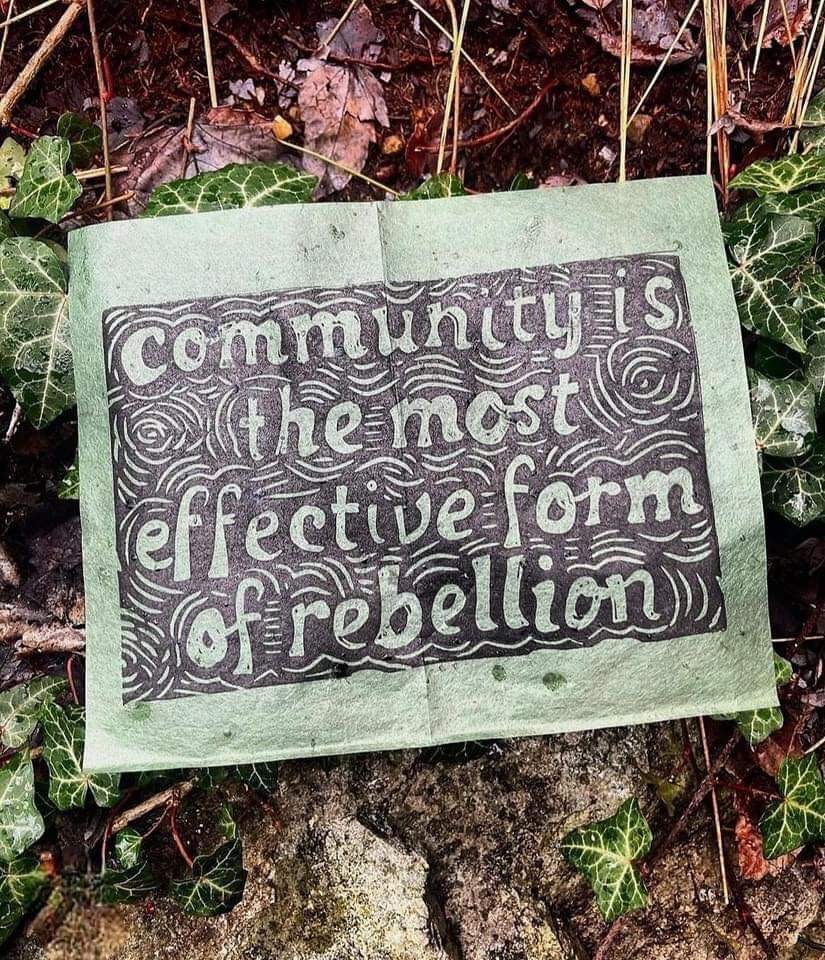
The #OMN lesson is simple – Technology alone doesn’t solve social problems, we need movements grown by connecting people, governance grown by participation, commons grow by use. If we want a better world and #openweb, we need to spend less time protecting silos and more time building bridges. That’s where the signal still lives.
But when documenting moments and movements like this It’s important to focus on what actually matters not only the normal surface mess.
Watching this video reminded me how much activist history gets distorted by sectarianism. At places like #Greenham, divisions formed around the “colour” of the gates – different ideologies, identities, and political cultures. The trouble is that the loudest and most conflict-driven voices end up telling the history afterwards.
The people saying “look at me” get remembered, while the people saying “don’t look at me, I’m busy, look at the issue” are usually too busy doing the actual work to document it.
This leaves us with a skewed activist memory, where internal drama becomes history and the slow, collective labour that made things happen fades into the background.
It’s not just a problem of the past. We keep reproducing the same mess today.