The Meta-Mess of the “Open” Social Web

Signal, Noise, and the missing ground – We have a signal-to-noise problem, that if we’re serious about “paths to growth,” we need to be honest about the paths and people pushing us down paths we’re actually walking. The problem was never just the #dotcons platforms. It’s what we build instead – and more importantly, how and why we build it.

Right now, too much of the #openweb conversation is caught in narrative loops of reframing stagnation as growth, critique as progress and visibility as impact. That’s the “paths to growth” trap. The #fashionista movement where activity is presented as meaningful change, without asking what is materially shifting underneath. From an #NGO perspective, this should ring alarm bells – outputs are being mistaken for outcomes. This is where the signal keeps geting lost.

We don’t lack ideas, frameworks, or commentary, we have an abundance of them. What we lack is grounded, collective practice – work rooted in real-world use, trust, and actual need. Instead, we’ve built layer upon layer of people interpreting the #openweb, narrating it, funding it, branding it. Meanwhile, the “soil layer” – people running infrastructure, building communities, and holding things together day-to-day – remains underrepresented, under-resourced, and largely invisible. That’s where the “Open Social” ecosystem is currently quietly breaking down.

The #fashionista problem is friendly gatekeeping is still gatekeeping. This isn’t about bad intentions, it’s about institutional form. Who decides what counts as “important work”? Who gets visibility, funding, and legitimacy? Which version of the #openweb gets promoted? In NGO thinking, this is a question of agenda-setting power, when soft curation becomes quiet exclusion. Over time, this “problem” shapes the field, not only through explicit decisions, but through accumulated bias. The result is a narrowing of what is seen as valid, fundable, and worth paying attention to.

Let’s look at a current example of this mess we need to compost – This Jury is a Symptom. What follows isn’t a critique of individuals as people. It’s a mapping of roles within the ecosystem, and how those roles, collectively, skew the field.

Audrey Tang

“Prosocial digital tools” and civic tech, but operating within state infrastructure. A ministry is still a ministry when legitimacy flows from above. This is the #openweb translated into a form that fits government and #NGO logic: managed participation that stabilises systems rather than challenging them. Valuable in context, but not the same as bottom-up, native practice.

Mike Masnick

“Protocols Not Platforms” was useful framing. But with Bluesky, it became a foundation for the kind of product it critiqued. This is how #mainstreaming works: good ideas are absorbed, reshaped, and redeployed within existing power structures. From an #NGO lens, this is a classic case of co-option.

Laurens Hof

The Fediverse Report is useful journalism. But it’s still reading as observation from the outside. Analysis without embedded practice becomes detached – what looks like insight drifts into repetition. Even by his own admission, there’s fatigue. This is narrative acting as if it were ground truth.

Johannes Ernst

Advising organisations on “navigating decentralised platforms” sits squarely in the mediation layer. This is where translation happens – but also where capture creeps in. Spaces like #FediForum are structured, controlled, and legible to institutions. That makes them low challenge convening spaces, but also reinforcing the dynamics the #openweb is trying to move beyond.

Melanie Bartos

University-led open science communication. This is the institutional layer doing its best to adapt. Mastodon in a university context is a step forward – but the surrounding structures remain top-down. In #NGO terms: adoption of tools without a shift in governance or practice.

Robin Berjon

Operating at the standards and governance layer. Institutions like the W3C shape the infrastructure of the web, but participation is still dominated by well-resourced actors, often including #dotcons. This is reform from within, important, but with structural limits.

PublicSpaces

A coalition of public institutions building non-commercial alternatives. This is closer to the right instinct – moving away from pure market logic. But it remains institution-led. Public funding is valuable input (good compost), but it can still miss the lived reality of grassroots use.

Waag Futurelab

A long-standing critical tech organisation with roots in DIY culture. Over time, it has become embedded in #NGO and funding ecosystems. The work still has value, but the centre of gravity has shifted toward outputs that are legible to funders and partners. This is a familiar trajectory in NGO spaces.

What’s Missing Matters Most

Taken together, this jury represents the narrative, mediation, and funding layers of the #openweb ecosystem. What’s absent is the soil layer – People running Mastodon instances on minimal budgets, community organisers doing trust-based, messy work and practitioners dealing with moderation, governance, and sustainability in real time. In #NGO language: the implementing layer, the frontline, the lived experience.

This absence isn’t neutral as it shapes outcomes. The mess we need to compost is that the “Open Social Awards” will surface work that is legible to institutions, aligned with existing narratives and cleanly packaged and communicable. Meanwhile, the genuinely native work – the messy, relational, unpolished work that actually sustains the ecosystem – remains invisible. Not because anyone intends harm, but because of #blinded institutional common sense – systems reward what they can see, measure, and understand.

Compost, Soil, and Rebalancing

This systemic bias, if we’re serious about the #openweb, need to shift to be more practical:

  • Less talking about it
  • More building within it
  • Less curation from above
  • More trust from below

For NGOs, this isn’t (only) rejection, it’s a recalibration, a reminder that enabling ecosystems means resourcing soil, not just shaping the story. The key distinction metaphor here is between compost and soil.

A lot of the work described above has real value. It produces compost – ideas, funding, visibility, structure, that’s necessary. But compost only matters if it feeds living systems, if we keep mistaking compost for soil, we end up measuring activity instead of growth. And that’s the meta-mess we need to start composting.

Think I am starting to mix my metaphors – it’s the story I am telling 😉

#OMN Grounding (the roots as a story)

#techchurn is the endless cycle of adopting new platforms, tools, and technologies – not because they solve any real problems, but because novelty is mistaken for progress. It burns community trust, institutional memory, and activist energy, while leaving the underlying #nastyfew power structures untouched.
https://hamishcampbell.com/?s=techchurn


The #OMN uses #stupidindividualism to describe the culturally manufactured habit of prioritising personal gain and self-interest over collective well-being – a behaviour normalised by forty years of #neoliberalism, where people work against their own community and ecological survival while believing they are exercising “freedom”.
https://hamishcampbell.com/?s=stupidindividualism


In the #OMN hashtag story, #spiky is the confrontational, direct, and uncompromising tendency within radical movements – the willingness to push back against power, name uncomfortable truths, and refuse to sand down political edges for mainstream comfort.
https://hamishcampbell.com/?s=spiky


#RSS is the unglamorous but democratic backbone of the #openweb – a simple, open standard that allows content to flow without the gatekeeping, algorithmic manipulation, and the data hoarding of the #dotcons.


#reboot is the necessary reset of the #openweb – stepping away from the dead ends of #techshit and #dotcons to rebuild human-centred, trust infrastructure using tools like #activitypub and the #fediverse, guided by the #4opens.
https://hamishcampbell.com/?s=reboot


#postmodernism is the cultural current that dissolved shared truth into competing narratives, undermines the foundations needed for collective action – leaving people fragmented, cynical, and unable to build solidarity.
https://hamishcampbell.com/?s=postmodern


In the #OMN hashtag story, #Oxford is a grounded example of real-world contradiction – where elitist power (#mainstreaming, #NGO, #deathcult) coexists with genuine grassroots community, making it a test bed for grassroots #openweb organising and the #4opens path.
https://hamishcampbell.com/?s=Oxford


In the #OMN hashtag story, #PGA (Peoples’ Global Action) represents horizontal, grassroots, anti-capitalist organising – a prefiguration of the #openweb, built on direct action and solidarity rather than #NGO bureaucracy or #mainstreaming compromise.
https://hamishcampbell.com/?s=PGA


In the #OMN path, #p2p means people-to-people before peer-to-peer – real human relationships and trust as the foundation that decentralised tech should serve, not replace.
https://hamishcampbell.com/?s=p2p


In the #OMN view, #opensource is not just a licence – it’s a political commitment to transparency, shared ownership, and community control over code, data, and process.
https://hamishcampbell.com/?s=opensource


The #openweb is internet infrastructure built on open standards, open-source code, and community control – where users share power – as opposed to the #dotcons, with the #closedweb which enclose and monetise the commons.
https://hamishcampbell.com/?s=openweb


#openprocess means decisions and governance happen visibly and participatorily – not behind closed doors, so people can see, challenge, and shape outcomes.
https://hamishcampbell.com/?s=openprocess


#opendata means data that is freely accessible and shareable – controlled by communities rather than locked inside corporate silos.
https://hamishcampbell.com/?s=opendata


In the #OMN path, #open means building on the #4opens – open code, data, standards, and process as a foundation for technology that serves people, not profit.
https://hamishcampbell.com/?s=open


#OMN (Open Media Network) is a grassroots project to build human-centred, trust-based digital infrastructure on the #openweb, grounded in the #4opens and focused on community control over technology.
https://hamishcampbell.com/?s=OMN


The #OGB (Open Governance Body) is a framework for transparent, inclusive decision-making – replacing hidden power structures with accountable, federated, messy collective governance.
https://hamishcampbell.com/?s=OGB


In the #OMN story, #nothingnew reminds us that cycles of co-option and failure have all happened before – and ignoring this history is how we repeat mistakes.
https://hamishcampbell.com/?s=nothingnew


In the #OMN story, #NGO refers to professionalised activism that defuses radical politics – replacing grassroots power with managed, funder-friendly “dissent”.
https://hamishcampbell.com/?s=NGO


In the #OMN path, #neoliberalism is the dominant ideology of markets over people – normalising greed and eroding solidarity into the logic of the #deathcult.
https://hamishcampbell.com/?s=neoliberalism


#makinghistory is the practice of communities reclaiming storytelling – building open, living archives rather than leaving history to those in power.
https://hamishcampbell.com/?s=makeinghistory


In #OMN usage, #mainstreaming is how radical ideas get absorbed and neutralised – keeping the language while stripping out real challenge.
https://hamishcampbell.com/?s=mainstreaming


In the #OMN path, #KISS (“Keep It Simple, Stupid”) is a political stance against the #geekproblem – rejecting unnecessary complexity as a form of control.
https://hamishcampbell.com/?s=KISS


#indymediaback is a call to rebuild grassroots, community-controlled media as an alternative to both #dotcons and hollow #NGO media structures.
https://hamishcampbell.com/?s=indymediaback


In the #OMN path, a hashtag is not just a label – it’s a node in a shared political vocabulary, building a map of meaning and direction.
https://hamishcampbell.com/?s=hashtag


#grassroots means bottom-up organising rooted in real communities – accountable to collective need, not institutions.
https://hamishcampbell.com/?s=grassroots


The #geekproblem is the tendency to replace human trust with technical control – embedding narrow values into systems that shape everyone’s lives.
https://hamishcampbell.com/?s=geekproblem


In #OMN, #FOSS is a political commitment to collective ownership of technology – not just a licensing model.
https://hamishcampbell.com/?s=FOSS


In #OMN language, #fluffy describes feel-good politics that avoid conflict – prioritising comfort over any real change.
https://hamishcampbell.com/?s=fluffy


#feudalism describes the emerging digital structure where platform owners extract value like lords from dependent users.
https://hamishcampbell.com/?s=feudalism


#fascism is what happens when the #deathcult drops its mask – authoritarian control to defend failing systems.
https://hamishcampbell.com/?s=fascism


On the #OMN path, the #fediverse is practical #openweb infrastructure – decentralised, federated, and not owned by corporations.
https://hamishcampbell.com/?s=fediverse


#encryptionist describes the tendency to prioritise technical security over social trust – a core expression of the #geekproblem.
https://hamishcampbell.com/?s=Encryptionist


#dotcons are corporate platforms built on data extraction and control, presenting themselves as neutral while enclosing the commons.
https://hamishcampbell.com/?s=dotcon


In the #OMN story, #DIY means reclaiming the ability to build and organise outside institutional control – grounding politics in practice.
https://hamishcampbell.com/?s=DIY


The #deathcult is the self-destructive logic of #neoliberalism – sacrificing social and ecological survival for short-term fear drivern greed.
https://hamishcampbell.com/?s=deathcult


In the #OMN story, #compost means breaking down failure and mess into fuel for new growth.
https://hamishcampbell.com/?s=compost


In #OMN, #closedweb is controlled, extractive digital infrastructure where users have no power.
https://hamishcampbell.com/?s=closed


#climatechaos describes the accelerating breakdown driven by the #deathcult, beyond manageable “climate change.”
https://hamishcampbell.com/?s=climate


#classwar is the ongoing conflict between the #nastyfew and the communities they exploit – often hidden by #mainstreaming narratives.
https://hamishcampbell.com/?s=classwar


#capitalism is the dominant system turning everything – relationships, nature, culture – into “profit”.
https://hamishcampbell.com/?s=capitalism


In #OMN, #block is the reflex to shut down challenge – preventing the messy work needed for real change.
https://hamishcampbell.com/?s=block


#blinded is being unable or unwilling to see beyond #mainstreaming and #dotcons logic.
https://hamishcampbell.com/?s=blinded


#fashernista describes performative activism that prioritises appearance over substance.
https://hamishcampbell.com/?s=fashionistas


#dotcons are the corporate platforms – Facebook, Twitter/X, Instagram, YouTube and their kin – whose business model is built on harvesting user data, manufacturing engagement, and converting human attention and community into profit, while presenting themselves as neutral public spaces.

https://hamishcampbell.com/?s=dotcon


In the #OMN hashtag story, #DIY means reclaiming the practical capacity to build, organise, and maintain tools and communities outside of corporate and state control – not as a lifestyle choice, but as a political act of grounding radical change in real skills, real trust, and real human relationships rather than outsourcing power to institutions that don’t serve you.

https://hamishcampbell.com/?s=DIY


The #deathcult is the #OMN metaphor for the self-destructive logic of forty years of #neoliberalism – an ideology so committed to short-term profit, individualism, and economic growth that it knowingly sacrifices the ecological and social foundations that human life depends on.

https://hamishcampbell.com/?s=deathcult


In the #OMN hashtag story, #compost means taking the failures, mistakes, and accumulated mess of past movements and tech projects – rather than discarding or ignoring them – and breaking them down into something that can feed new growth, treating dysfunction and #blocking dead ends as raw material for building better rather than as waste to be hidden.

https://hamishcampbell.com/?s=compost


In #OMN language, #closedweb refers to the controlled digital infrastructure – platforms like Facebook, Google, and Twitter – built on proprietary code, extractive business models, and centralised power, where people have no meaningful control over their data, their communities, or the rules that govern them.

https://hamishcampbell.com/?s=closed


The #deathcult of #neoliberalism has driven us past the point where “climate change” – with its implication of manageable, orderly shifts – remains any honest description of what we face now. What we actually have is #climatechaos: cascading, systemic breakdown of the ecosystems, weather patterns, and social structures that human civilisation depends on, accelerating faster than institutions built on forty years of market logic are capable of, or willing to, address.

https://hamishcampbell.com/?s=climate


#classwar is the ongoing and unacknowledged conflict between those who benefit from and actively reproduce the #deathcult of #neoliberalism – the #nastyfew, managing, and credentialed classes – and the communities, workers, and ecosystems they exploit. A conflict that #mainstreaming culture works to render invisible, reframing systemic dispossession as individual failure.

https://hamishcampbell.com/?s=classwar


#capitalism is the current common sense – the water we swim in – the economic system that systematically converts collective goods, human relationships, and the natural world into private profit, enforcing this logic through every institution and platform we touch, while presenting itself as the only possible reality.

https://hamishcampbell.com/?s=capitalism


In the #OMN hashtag story, #block refers to the reflexive, unconscious tendency of individuals and communities to shut down unfamiliar and challenging ideas, people, and processes – a defensive gesture rooted in #stupidindividualism and #postmodernism that prevents the trust-building and messy collective work needed for real #openweb organising.

https://hamishcampbell.com/?s=block


#blinded refers to being so captured by #mainstreaming tech orthodoxy and ideological “common sense” – particularly #neoliberalism and #dotcons culture – that you no longer see, or refuse to see, the harms those systems cause or any alternative paths that exist outside them.

https://hamishcampbell.com/?s=blinded


#fashernista describes a person in progressive or radical spaces who prioritises the appearance and aesthetic of activism – the right look, language, and social positioning – over the unglamorous, difficult work of actually building lasting structural change.

https://hamishcampbell.com/?s=fashionistas


If you want, the next step is to cluster these into a clean “chapter flow” (roots → mess → behaviours → solutions) so this stops being just a glossary and becomes a narrative tool.

These are the foundation tags – the ones everything else grows out of – the overall project: grassroots, trust-based, human-centred media infrastructure

#openweb – the political/technical terrain we’re trying to reclam

#4opens – the non-negotiable baseline (open code, data, standards, process)\openprocess – visible, participatory decision-making as default

#grassroots – bottom-up power, not institutional mediation

This cluster is about legitimacy, if it’s not grounded in these, it drifts into #NGO capture or #dotcons logic quickly. This is the “native soil” everything else either grows from or gets rejected by.

The Problem Space (what we’re composting), these tags describe the mess we’re in – the stuff we don’t ignore, but break down.

#deathcult (neoliberalism as destructive common sense)

#neoliberalism – 40 years of market logic shaping behaviour

#dotcons – corporate capture of digital space

#closedweb – controlled, extractive infrastructure

#mainstreaming – dilution and co-option of radical ideas

#NGO – managed dissent and professionalised politics

#classwar – underlying structural conflict

This is the compost heap, you don’t fix this directly, you don’t “win” against it head-on. You break it down, reuse what’s useful, and grow alternatives around and through it.

The #geekproblem Layer (tech distortions) is where things go wrong in implementation.

#geekproblem – replacing social trust with technical control

#techchurn – endless pointless rebuilding

#encryptionists – over-prioritising technical purity over social reality

#KISS – counterbalance: keep things simple and usable.

This cluster is why good ideas fail, not because the ideas are wrong, but because the tools and culture get shaped by people who don’t understand social process. This is where most #openweb projects die.

Cultural/Behavioural Patterns (how people act). The human layer – messy, unavoidable, and central.

#stupidindividualism – learned self-interest over collective good

#postmodernism – fragmentation of shared meaning

#fluffy – avoidance of conflict, feel-good paralysis

#spiky – necessary confrontation and edge

#block – reflex rejection of challenge

#blinded – inability to see outside dominant narratives

#fashernista – prioritising appearance over substance

This is the real battlefield, not tech, not policy – behaviour. If you don’t mediate this layer, everything collapses back into dysfunction, no matter how good your structure is.

The Alternative Infrastructure (what we build), are the actual tools and practices that make change possible.

#fediverse – decentralised network as a base layer

#activitypub – the protocol glue

#RSS – simple, open distribution backbone

#p2p – people-to-people first, tech second

#FOSS / #opensource – shared ownership of tools

#opendata – accessible, non-extractive information

These only work if rooted in the first cluster, otherwise they get captured and turned into another layer of the #closedweb.

Governance & Process (how we hold it together). Where most projects fail – or succeed.

#OGB – structured, open governance

#openprocess – again, because it’s that important

#DIY – practical ownership and responsibility

Without this, informal power takes over. You end up with hidden hierarchies, gatekeeping, and eventual burnout. With it, you get messy but functional collective control.

Practice & Direction (how we move).

#reboot – reset and rebuild from working patterns

#indymediaback – learning from past grassroots media

#makinghistory – documenting and owning our narratives

#nothingnew – grounding in historical cycles

This cluster stops you repeating mistakes, without it, every new wave thinks it’s inventing something new and walks straight into the same traps.

Grounding Example Layer

#Oxford – real-world test bed of contradictions

#PGA – historical example of horizontal organising

Without grounding, this all drifts into theory, these are example tags anchoring it in lived practice, where things break, and where they can actually work.

The Meta Layer (how to use this)

#compost – break down failure into growth

This is the key to the whole thing – Don’t try to “fix” the mess. Don’t try to “win” cleanly, you compost:

bad behaviour → learning

failed projects → patterns

conflict → structure

Final point (this matters) is the mistake people make is trying to tidy this into a neat theory, reduce it to messaging, turn it into a fixed ideology. That kills it, this clustering is not about control – it’s about navigation.

The mess stays messy, but now people can walk through it without getting lost.If you don’t cluster this stuff, it turns into a wall of noise. The mess is useful.


Disciplined curiosity beats IQ, Oxford

There is a persistent myth pushed in our culture that intelligence – high IQ, academic credentials, elitist education – leads naturally to clear thinking. My organic experience suggests the opposite, what matters is disciplined, skeptical, freethinking curiosity. Without that, intelligence simply becomes a tool for defending whatever assumptions people already hold.

This is one of the reasons many academic environments produce people who are, bluntly, credulous. Not because they lack intelligence, but because the institutional structures around them reward conformity and reputation management far more than genuine curiosity.

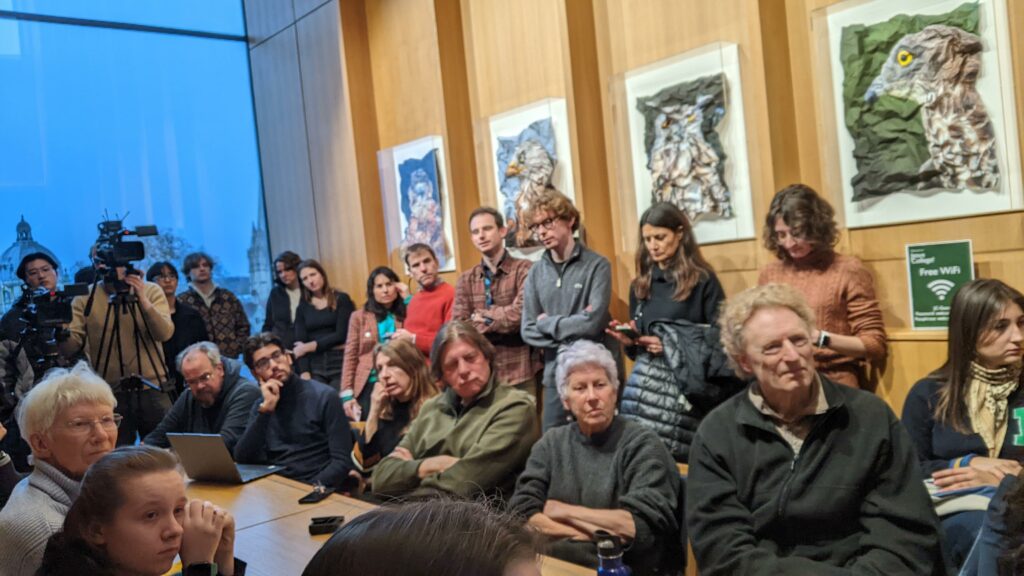
Over the last two years I’ve been spending time in and around the university culture in Oxford, participating in discussions, events, and academic life. The experience has been instructive, if in the end frustrating. You would expect a place associated with University of Oxford to be a centre of open intellectual challenge. In practice, it feels like something else: a system that filters, polishes, and reproduces existing assumptions.

This is not universal, some of the hard scientific disciplines still cultivate a form of disciplined skepticism, experiments fail, evidence contradicts theory, so you are expected to question results. The process encourages a narrow but very real culture of doubt, but outside those narrow areas, skepticism to often fades.

Instead, you find intellectual fashion cycles building reputational alliances that push institutional caution based on #blinded ideological signalling. The result can be a strange mix of high intelligence and low #blocking curiosity. People who are good at working inside established frameworks, but much less comfortable questioning the foundations of privilege those frameworks rest on.

This matters for the #openweb and projects like #OMN. I got nowhere here as many of the institutions that might have supported open digital infrastructure – universities, NGOs, research centres – have shifted toward the same #deathcult #mainstreaming #blocking that dominates the wider tech world. Funding cycles shape research priorities, institutional partnerships shape acceptable ideas and career incentives shape what can safely be questioned.

So even where intelligence and resources exist, the culture of disciplined curiosity that drives the needed real innovation is thin if it exists at all. The irony is that the early internet grew out of exactly the same institutions, but with opposite culture. The original World Wide Web ecosystem, the hacker and #FOSS communities, and early grassroots media projects like #indymedia were built by people who combined technical curiosity with deep skepticism about centralised control.

They didn’t wait for institutional approval, they experimented, built #DIY tools that broke things and rebuilt them. That spirit is what projects like #OMN are trying to revive. The goal is not to outcompete corporate #dotcons platforms or impress #NGO academic institutions. The goal is simpler: to build open media infrastructure that communities can use based on small nodes, trust networks and open metadata flows. Simple tools that allow people to publish, share, and connect.

This is a working #KISS approach to rebuilding grassroots media. If the last twenty years of the web have taught us anything, it’s that intelligence alone doesn’t produce healthy systems. You can have brilliant engineers building platforms that clearly undermine democratic communication, it’s the mess that shapes the current #dotcons world.

What makes the difference is curiosity combined with skepticism, the willingness to question the structures that shape our digital lives. Without that, even the smartest institutions drift into the same patterns of credulity and conformity, which is why rebuilding the #openweb is not just a technical project, it’s a cultural one.

For some reflections from the last couple of years around Oxford life and technology culture, see: https://hamishcampbell.com/tag/oxford/

#Oxford #academic #elitist

Why does it feel like so many people have become intolerant prats? A blunt observation: it increasingly feels like many people today are intolerant prats. And worse, this behaviour has started to feel normal. You see it everywhere. Online discussions collapse quickly into hostility. Small disagreements become unthinking moral #blocking were people retreat into camps where any challenge is treated as an attack.

This isn’t just a social media problem, though the #dotcons have certainly amplified it, it’s a deeper cultural shift. For decades the dominant systems shaping our culture have encouraged competition, individualism, and personal branding. The result is what I often call #stupidindividualism – a worldview where the individual ego becomes the centre of everything. In that environment, disagreement stops being part of learning and becomes a threat to identity, so people react defensively, aggressively or dismissively. What used to be debate becomes performance.

The platform problem is when the #dotcons platforms are designed to amplify this behaviour where algorithms reward outrage, tribal loyalty and moral signalling to push conflict to drive engagement. They do not reward patience, nuance, or curiosity, in other words, they are structurally optimised to turn ordinary people into worse versions of themselves. Over time this becomes cultural habit, people start to assume that hostility is normal conversation.

Another factor is the slow collapse of collective spaces. When communities interact face-to-face, or in smaller trust networks, people have to deal with each other as human beings. Relationships create friction but also accountability. In large anonymous digital environments, those social checks weaken. People become avatars and opinions rather than neighbours, this makes it much easier, “natural” to treat each other badly.

Why this matters for the #openweb. If we are trying to rebuild grassroots media and communication infrastructure, we need to recognise that these cultural habits have already spread into many communities, including the tech and activist spaces that should be alternatives. This is one reason projects fragment so easily as small disagreements spiral, people assume bad faith and thus trust collapses.

You end up with endless internal conflict instead of collective building. This isn’t just a personality problem, it’s the legacy of systems that reward attention and conflict rather than cooperation.

A different path can be grown in projects like #OMN which is partly about rebuilding infrastructure, but they are also about rebuilding culture. The idea is simple: smaller networks, trust-based publishing, open metadata flows and simple tools people can run themselves. A #KISS approach to communication infrastructure.

But technology alone doesn’t solve the deeper issue, what actually makes communities work is something much older and simpler: tolerance and curiosity. The ability to disagree without instantly turning disagreement into war. The ability to assume that the other person might have something worth hearing. Without those habits, no infrastructure – open or closed – will function well for long.

Composting the mess – the current online culture is a mess. A lot of the behaviour we see today is the product of twenty years of #dotcons platform design. But mess is also compost, it shows us clearly what doesn’t work. The next generation of the #openweb has an opportunity to build systems that encourage something better: slower conversation, local trust networks, collective responsibility, shared media infrastructure. Less shouting, more listening.

It won’t magically make people perfect. Some people will still be intolerant prats. But at least we won’t be running the entire communication system of society on platforms designed to encourage it.

#KISS

This Oxford mess is a shadow of a larger mess. We were told the story of Prometheus: fire stolen from the gods and given to humans – our first real piece of technology. The myth asks a simple question: what do we do with power once we have it?

In democratic society why do we put up gig work and side hustles, endless surveillance platforms pushing algorithmic attention traps, housing crises and climate collapse all pushed by a handful of billionaires controlling huge parts of the economy. Why do we put up with What with the mess of technocratic oligarchy – a system where technological infrastructure concentrates power instead of distributing it?

The #mainstreaming mythology of the tech founder helped this happen. The “visionary genius” narrative around people like Bill Gates, Steve Jobs, Mark Zuckerberg, Jeff Bezos, Peter Thiel and Elon Musk turned corporate executives into cultural heroes. This mess is simply #KISS oligarchy with better marketing.

Even ancient thinkers warned about this. Plato and Aristotle described how societies cycle through forms of power, and how rule by the wealthy tends to serve the wealthy above everyone else. The irony is that many of today’s tech elitists think of themselves as the new aristocracy – the “smartest people in the room” guiding humanity forward.

Yet the future they’ve built is #techshit platform #feudalism with people monitored constantly, economic life mediated by a few #dotcons platforms. Infrastructure owned by private empires and democratic institutions bought out then sidelined.

The tragedy isn’t that technology failed, it is more that we let our technological imagination be captured by oligarchs. Prometheus gave humanity fire so we could build civilization together, not so a tiny #nastyfew tech CEOs can privatise the flame and sell back the light.

The real question isn’t whether technology will shape the future, it’s who controls it.

#OMN #OpenWeb #TechPower #Oligarchy #Future #Compost

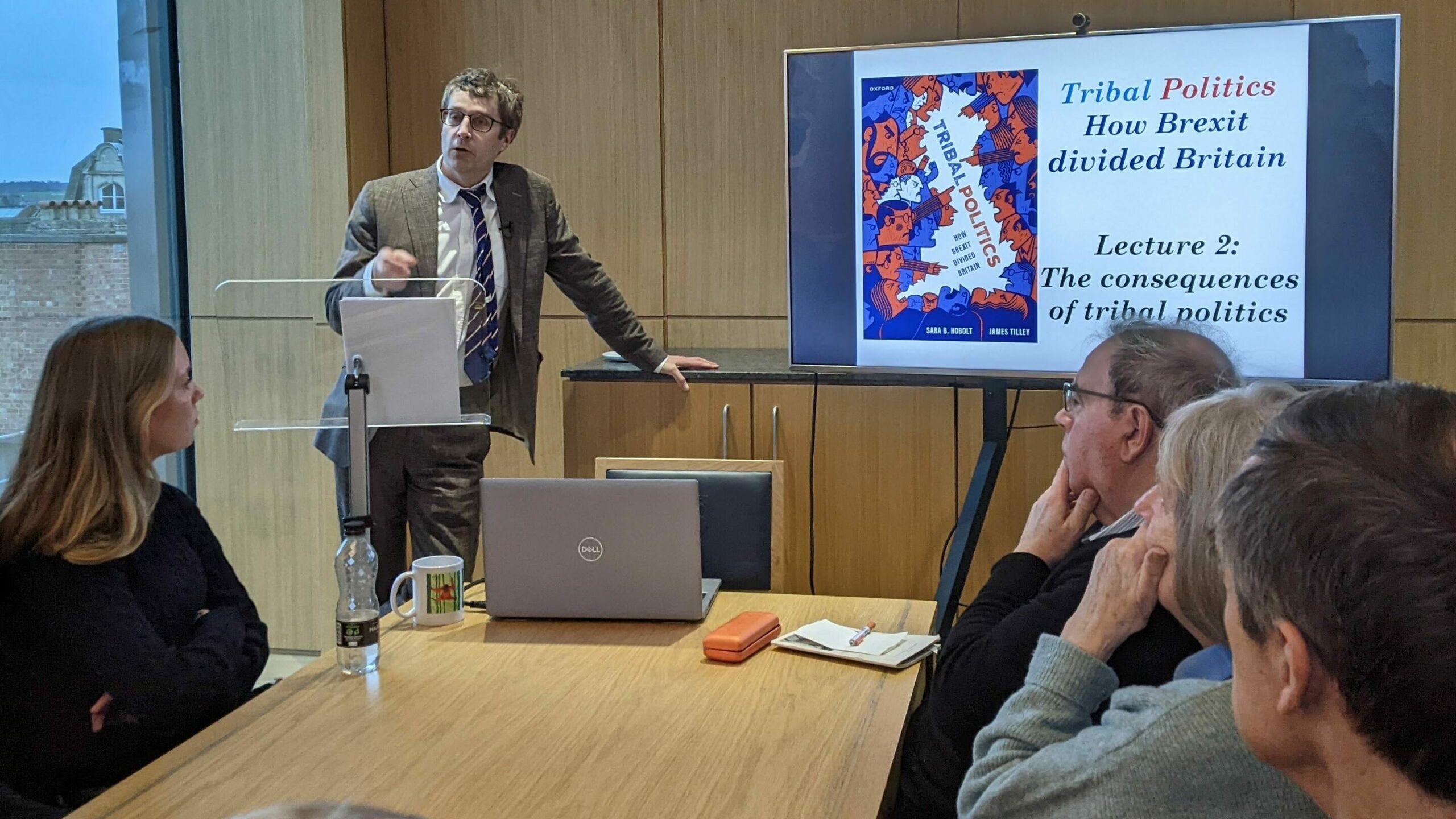
Brexit, tribal politics, ten years on – Still a mess

The tenth anniversary of the #EU referendum is approaching, and there is still talk about economics, institutions, and political strategy. But sitting through a discussion on this subject, the uncomfortable truth remains: the real transformation was not structural, it was psychological. And ten years later, it is still a mess.

The statistics are stark. The divide between “Leavers” and “Remainers” persists long after the referendum itself faded into history. The identities remain entrenched, even as the practical realities that supposedly defined them blur and lose relevance. This suggests the divide is not primarily rational or policy-driven, it is psychological, cultural, and emotional.

In many ways, it is strange – almost absurd – that this split continues to shape British political identity so strongly. The original issue has moved on, the world has shifted, yet the identities remain frozen. For me this persistence comes from the lack of meaningful alternatives, when there is no shared narrative or collective project to replace the old divisions, people hold onto the identities they have, even when they never made any sense.

The hard-right instrumentalisation of the referendum did long-term damage to our social fabric. Political actors pushed tribal framing because it worked, it mobilised people through emotion rather than consensus. But once unleashed, this dynamic did not disappear, it reshaped how people see each other and how they interpret political reality itself.

Political identities existed before Brexit, but there was once a larger middle ground, a messy but functional consensus where disagreement did not translate into mutual hostility. The referendum hardened boundaries that had previously been softer. It turned difference into braking division. A growing disconnect between cultural elitists and broader society, might help to explain why the referendum could become such a powerful symbolic battleground, many people felt excluded from decision-making long before Brexit became the focal point.

What is striking from this event, is how some analyses continue to dismiss the role of algorithmic platforms – the #dotcons – in amplifying these divides. Ignoring the structural role of platform incentives, attention economies, and engagement-driven algorithms feels like a blind spot. Social media did not create division out of nothing, but it undeniably intensified and entrenched #blinded tribal identity. Likewise, dismissing disinformation entirely misses the broader dynamic: even without organised campaigns, for profit algorithm social ecosystems reward emotional narratives over any shared understanding.

Perhaps the most unsettling aspect of discussions about tribal politics is the quiet resignation that often accompanies them. “That’s the way the world is,” some commentators say, as if polarisation were an inevitable feature of modern life rather than a social outcome shaped by technology, media, and bad political choices. From my perspective, this fatalism is part of the problem. Disaster in leads to bigger disaster out, accepting division as normal ensures it continues.

The deeper issue is that we have not yet built credible alternatives – social, technological, or cultural – that allow people to see tribal identity. Without shared spaces for dialogue, without media infrastructures designed for cooperation rather than conflict, the divide persists because there is nowhere else for collective energy to go. Ten years on, the lesson of Brexit may not be about sovereignty or trade deals, it may be about how fragile shared reality is, and how easily societies slide into identity-driven conflict when communication systems reward division over understanding.

The challenge now is not to analyse tribal politics, but to outgrow it. That means rebuilding common ground – culturally, socially, and technologically – rather than accepting fragmentation as the new normal. Because if we keep feeding the same dynamics, the outcome is predictable, mess in, and an even bigger mess out.

#Oxford

Yes, its messy stepping out of the churn

Everywhere we look – what we see, touch, and use – we are living inside systems shaped by decades of economic and technological assumptions. This isn’t only something happening “out there”. It has been normalised and internalised over the last forty years.

The dominance of #stupidindividualism, combined with rigid economic dogma, influenced how we design technology, how we organise communities, and how we imagine progress itself. The outcomes are now starkly visible: #climatechaos, social fragmentation, and a weakening of collective sense-making.

The internet reflects this reality. Online and offline are no longer separate spaces; they feed back and reinforce each other. Recognising this isn’t only about blame, it’s more importantly about understanding the terrain we’re all navigating. These are the technology limits of the current path and why we continue to repeat familiar patterns. New platforms emerge, new interfaces are launched, yet the underlying values remain unchanged. The result does feel like endless churn to people who notice, innovation that rearranges surfaces while leaving deeper structures intact.

This isn’t simply the fault of individuals or communities. Many developers, especially within #FOSS and the #fediverse, are actively trying to build alternatives. But the broader ecosystem still pushes toward centralisation, scaling, and extraction because those are the dominant incentives of the wider paths.

So recognising our #geekproblem isn’t about rejecting technical culture – it’s about expanding it. Technical excellence alone cannot solve social problems without grounding in alt collective needs and lived social realities. This is what the #openweb means, it’s more than #blinded nostalgia for the early internet. It represents a shared direction many communities are already moving toward.

The #openweb is an internet where #4opens information is accessible regardless of platform or location, content can be shared, linked, and reused, participation is not gated by proprietary control. It’s basic: open data, open source, open standards, and open processes.

The growth of the Fediverse demonstrates that alternatives like these are possible. Decentralised social networks, community-run servers, and cooperative governance models show glimpses of a healthier digital ecosystem. Yet within these paths, tensions remain between “native” grassroots values and pressures toward #NGO #mainstreaming and power politics institutionalisation.

For this space to grow, we need to keep moving beyond false choices. On institutional paths, many proposed solutions focus solely on regulation or institutional reform, imagining that better rules will fix systemic problems. While governance matters, relying exclusively on top-down solutions risks becoming another form of dependency to add to the mess.

Another path exists alongside institutional change: horizontal, grassroots approaches rooted in #DIY practice, #4opens shared infrastructure. This path is imperfect and often messy, but it keeps agency within communities rather than outsourcing change to distant structures.

The goal is not purity, it is balance, the #OMN approach grows from this perspective. Grassroots, #DIY, non-corporate, human-scale, not disruption for its own sake, not scaling driven by venture logic. Instead, building social technology that serve collective needs while respecting individual agency. Many people within #FOSS and the Fediverse are already working toward these goals, even if they use different languages. The opportunity now is to deepen collaboration, connect projects that share values, and strengthen the social foundations alongside the technical ones.

So the path we need is about finding each other, it’s the path we made work for a while then failed on socialhub, so I need to repeat, the question isn’t whether alternatives exist, they do. The challenge is finding alignment among people who are already trying to move in similar directions, but feel isolated or fragmented.

Who recognises that technology must serve communities rather than extract from them. If you see value in grassroots, cooperative approaches to technology – if you believe the #openweb is still worth building – then the invitation is simple. Stop churning, start building. Who is ready to move beyond endless reinvention toward shared infrastructure and shared purpose?

Seeds, Safety, and the Chicken-and-Egg Problem – A Q&A on Practical Building vs Intellectual #Blocking. This explores a recurring tension in grassroots technology projects: the gap between practical historical paths and fresh “intellectual” critique, it reflects on a broader patterns seen in #openweb, #FOSS, and #DIY spaces.

Q: What is the “shared path” and why describe it as a seed?

A: The shared path is a practical response to repeated historical failure. It is not a finished solution, a moral demand, or a complete alternative system. It begins as a seed, something small, imperfect, and grounded. If you judge a seed by whether it is already a tree, nothing will ever grow. The idea is to start building despite uncertainty and allow structure to emerge rooted organically through practice.

Q: What is the main critique of this “seed” approach?

A: Critics argue that metaphors like seeds and growth avoid addressing concrete mechanisms. They focus on first-step effects: What signals are being sent? Who carries risk or unpaid labour? What moral pressures are created? What happens when survivability is deferred? From this perspective, issues must be addressed at the beginning rather than grown from the seed.

Q: Why does this debate often become circular?

A: Because both sides are asking different questions. Practical builders ask: Where do the resources come from to implement safety before anything exists? Critics ask: How do we prevent harm if we begin without safeguards? Without answering the resource question, discussions loop endlessly between ethics and feasibility.

Q: What is the “chicken-and-egg” problem here?

A: Many grassroots projects face a structural paradox: You need resources, tools, and commitment to build sustainable alternatives. But those resources only appear after something exists and demonstrates use value, agenst mainstreaming pushback Waiting for perfect conditions prevents starting; starting without resources has risks, but it’s the only thing that can grow change and challenge.

Q: What work is actually happening in practice?

A: Practical work often remains messy, distributed, and unpaid. Examples include: Supporting student journalists in rebooting grassroots media projects like Oxford #Indymedia. Motivating unfunded technical communities to collaborate on shared codebases such as #indymediaback. Maintaining ongoing organisational and community infrastructure through long-term volunteer labour. These efforts are naturally invisible and impossible to summarise because they work organically rather than following formal project structures.

Q: Why is documentation itself a source of conflict?

A: Critics ask for clear summaries or structured documentation of ongoing work. Builders simply see this as additional unpaid labour imposed on already stretched contributors. External demands that assume others should organise information for them, creates friction between expectations of accessibility and the working realities of #4opens and #DIY grassroots work.

Q: What role does #DIY culture play?

A: In #DIY culture, participation is active rather than observational. If someone believes something needs improvement – documentation, tools, funding guides – the expectation is that they step in and contribute rather than stand outside only pointing critique. Critique without participation is too often lazy negative pressure rather than constructive help on “native” DIY paths.

Q: Is this simply a disagreement about ethics?

A: Not entirely. Both sides often share ethical concerns. The deeper disagreement is about sequence: Should, impossible and irrelevant in a practical sense, safety and compensation frameworks exist before building begins? Or can these frameworks emerge better through #DIY messy real-world working practice?

Q: What is the takeaway?

A: Grassroots building requires balancing, ethical awareness and practical starting points. Intellectual critique can help identify risks, but when detached from material constraints it too often unintentionally blocks action at best or turn into trolling at worst. Likewise, practical work can benefit from reflection, but cannot wait for perfect theoretical clarity.

The challenge is to compost both approaches into something that moves forward.

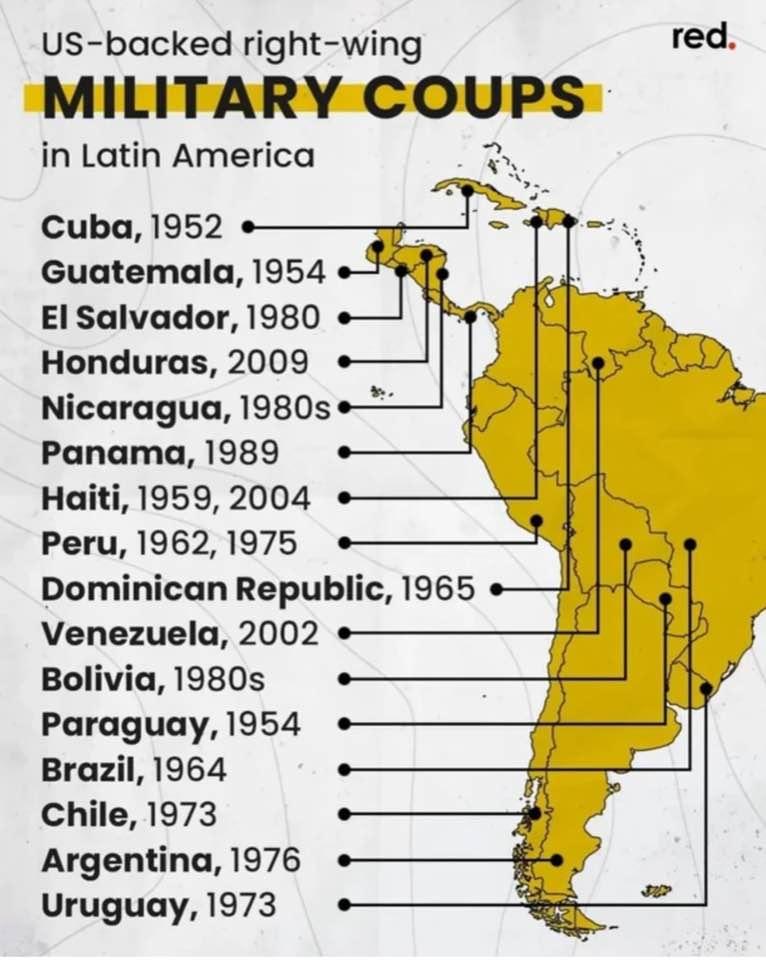
Venezuela – Loot, not legitimacy

A #mainstreaming view of this mess

Venezuela has oil, a lot of it. And in a collapsing global system, access to energy is power – not in the abstract, but in the most brutally material sense. When growth stalls, debt grows, and #climatechaos tightens the margins, oil stops being a commodity and becomes leverage. Control over it is no longer about markets; it’s about survival for #blinded states and profit for capital.

What the United States offers in this context is not persuasion or principle, it is a deal. Side with us, and you get a cut. Corporations get extraction contracts, infrastructure rebuilds, and long-term revenue streams. Political elitists get stability, recognition, and protection from consequences. Regional allies get leverage in their own power games. Everyone involved understands what is happening. No one at the top is confused. The humanitarian language is not meant to convince – it’s meant to lubricate the transaction.

A simple way of looking at this is as an easy to see shift from neo-imperialism back to straight forward imperialism. This is how late-stage capitalism, when the liberal democratic facing is striped bare, operates. It no longer expands by building new worlds or any possibility of shared futures. It expands by stripping assets, hollowing out states, and converting crisis into opportunity. When growth fails, extraction replaces development. When consent fails, coercion replaces politics, when legitimacy collapses, force and incentives do the work.

Trump didn’t invent this model, he just dropped the pretence. He said the quiet part out loud, tore away the diplomatic language, and treated empire like a property deal. That shocked people who still believed in the performance of norms. But the system has not changed, the Biden administration didn’t reverse this trajectory – they polished it – restoring the language of values, process, and responsibility while keeping the mess running underneath.

Different language, same mess. This is where #mainstreaming progressive critique went wrong for over a decade. It focused on hypocrisy, on broken norms, on credibility and decorum. But that’s a category error. Those critiques assume a system that actorly cares about legitimacy.

  • You can’t shame a system that no longer pretends to need moral authority.
  • You can’t expose corruption when corruption is the operating model.
  • You can’t “hold accountable” a machine that has already priced in outrage as background noise

This isn’t about Trump, it’s not about one administration, or even one country. In the era of #climatecahos it’s about a global order that replaces politics with managed extraction and calls it stability. A system where decisions are only pantomime debated in public, but executed through sanctions, proxy conflicts, financial pressure, and media narratives to prepare the ground.

Seen this way, the war on Venezuela is not a lie to be debunked. It’s a bribe to be refused. And refusal doesn’t work as an individual moral stance. It only works collectively – outside the institutions that profit from the lie, outside the platforms that normalise it, outside the careers built on managing its mess.

That’s the hard part, the work. And that’s why projects like #OMN matter, not to perfect critique, but to build the social and media infrastructure that makes refusal possible at scale.

LIVE at c-base a #fluffy Fediverse conference

It’s been going on for the last few years, let’s look at a current example. Live at c-base is a #Fediverse event that highlights the need for composting the dogmatic #fluffy mess making to keep balance in our shared #openweb reboot. With our #fluffy crew talking about the shared reboot, on the surface it looks positive – friendly conversations, smiles, the right hashtags – but underneath it reveals a deeper problem: there is zero balance at these events. This is the third event I’ve seen with the same issue: the same small group, the same narrow framing, the same blindness. It is not healthy. It is not balanced. And it is not a good path to stay on.

What we are seeing, again and again, is a kind of #blinded #blocking. A narrow circle, reproducing itself, shutting out the very people who dug the digital soil for the seedling stage of the current #Fediverse growth. Sadly, #blindness and #blocking makes these people prats, not because they don’t care, but because they can’t see beyond their narrow bubbles.

Composting the mess, we need to be honest here. We all make messes in movement spaces, and the only way forward is to compost these messes. Composting means breaking down what is toxic, unbalanced, or self-serving and transforming it into nutrients that can grow something better. If we ignore the problem, the mess just piles up until the whole project smells. If we compost it, we can build soil, roots, and future growth.

Where’s the hope? Right now, hope is hard to see in these paths. A purely #fluffy approach – friendly, soft, smiling – is good for atmosphere, but it slides into dogmatic blindness. Fluffy alone does not challenge power. Fluffy alone does not create balance. Fluffy alone does not compost.

What we need is spiky/fluffy. We need the warmth of fluff but also the edge of spike, the courage to challenge, to draw lines, to say when things are going wrong. Without this, we share the same blindness, wrapped in smiles and funding applications. One thing that might explain this narrowness is that we are in the middle of a generation change. The original crew who put real work into growing the #Fediverse in its seedling years are no longer invited, and the real problem is that to this new fluffy crowd the last generation are mostly invisible.

Looking at the Berlin Fedi Day schedule the only person I recognise from that seedling stage, that built the current working reboot is Christine Lemmer-Webber, and they were always firmly within the #NGO-fluffy camp. Everyone else? New faces, from before, like Evan Prodromou who played no role in the atavism of the seedling stage or the people from after ??? Who to often bring the #NGO and funding paths that is at the root of current mess making.

One such event would be understandable. But three in a row? It looks less like an “accident” and more like a PRAT move, hardcoded fork of our shared project. A fork that speaks with arrogance “for all of us” while shutting out the #spiky voices of the community who helped built the current #fedivers path. Towards balance, where do we go from here?

  • Name the mess: We can’t fix what we won’t face. #blinded #blocking is real, and it needs to be called out. This is what I am doing here.
  • Compost, don’t cancel: These are not enemies, just our #NGO, #fashionista in need of wider perspective. We don’t waste energy and focus in burning them out; we compost their mess into fuel for growth, they are a part of the debate.
  • Spiky/Fluffy events: The next gathering should explicitly mix both tendencies. Spikiness to challenge, fluffiness to care. That balance is the only way to keep hope alive, let’s not be prats on this, please.
  • Reconnect with roots: We need to bring back more of the seedling stage #Fediverse builders and seedling voices, not as nostalgia but as grounding. The roots matter if the tree is to grow.
  • Expand the circle: No small group should speak for the whole. Open doors, open process, open web. #4opens. A part of this is embedded in the closed funding of these events and process.

Final thought, right now, what we’re watching is real prat behaviour, dressed up in smiles and #NGO funding. That’s a dead end. If we want the #openweb reboot to be more than another hollow fad, we need balance, humility, and compost. The fluffy mess won’t compost itself. That’s our job.

You likely need a shovel #OMN to work on composting. Or if you want to continue with this kind of mess making then clearer naming the events for the minority they invite and host would help to make less mess, a few #NGO groups have started to do this like #FediForum and the #SWF now have less imperialistic language, which is at least is a little less blinded.

#fediday #c-based

Who are the #nastyfew?

This should be obvious to anyone who as some knolage of left politics. They are the people who always rise to the top when #mainstreaming takes hold. You see them on TV, in parliament, running #NGOs, managing #dotcons tech projects.

On the surface, they don’t always look bad – in fact, they often present as competent, articulate, even charming. But scratch that surface and the pattern is clear: their drive is not shared flourishing, it’s possession and control.

This minority #nastyfew, from a historical view, are today’s bourgeoisie. Marx outlined (https://en.wikipedia.org/wiki/Bourgeoisie), that the bourgeoisie historically gained their power through ownership of the means of production – factories, land, capital – while the working class had nothing but their labour to sell. The bourgeoisie used their control over wealth and coercion to keep society in balance, a balance where they stayed on top and everyone else stayed dependent.

The same dynamic runs through our present, the #nastyfew work to preserve a status quo that serves them. They exploit labour (waged or unwaged), capture resources, and use subtle or blunt coercion to suppress any change or challenge.

Those who hold power – social, technical, financial – remain the #nastyfew unless we actively work to compost them.

Then, in our cultural circles, we have our own “common sense” #blocking, the “parasites” who feed from progressive paths.

  • #fashernistas – chasing visibility, hashtags, and trends instead of substance. They drain energy by endlessly cycling the latest buzzwords while ignoring the compost underneath.
  • #Blinded dogmatic liberals – well-meaning perhaps, but so trapped in their own ideology that they block radical change without even seeing it.
  • The wannabe #nastyfew – those who orbit power, adopting the habits of control in hopes of rising up themselves.
  • Neo-liberals in disguise – the most dangerous, because they consciously wear the clothing of other paths: climate, diversity, openness… while quietly feeding the #deathcult of enclosure, growth, and control.

Some of these act blindly, reproducing harmful patterns without much thought. Others are deliberate: they know what they’re doing, and they’re doing it to consolidate control.

The unthinking #mainstreaming majority are shadows of the above. They’re not directly malicious, but they absorb the surface story: They repost the slogans. They nod along with “common sense” solutions pushed by the #dotcons and NGOs. They go with the flow, even when the flow is a sewer. Without working composting, they become the mulch for the #nastyfew to grow stronger.

The “nice liberals”. Not all liberals are destructive. Sometimes they play a healthy role: They keep projects afloat by doing practical work. They can mediate between radicals and the #mainstreaming. They often mean well, and can be allies if they’re not left holding the steering wheel all the time. They’re not the compost, they’re more like the worms: sometimes useful, sometimes wriggly, but part of the soil cycle.

And beyond, there are what has value, the progressive radical paths – both #fluffy (trust, care, openness) and #spiky (confrontation, defence, rupture). That’s another layer of the compost pile, and deserves its own focus. The key point: the #nastyfew and their parasites will always try to rise up in any fertile ground. The progressive trick is to compost them early – recycle their energy, block their possessiveness, and keep the soil rich for new seeds.

To recap, let’s look at some history. When the #openweb reboot began about a decade ago, it was rooted in grassroots values: #4opens, federation, collective governance, affinity trust networks. But as soon as the energy started to gather, the #mainstreamin pushed in:

  • #Dotcons pivoting into the space – Facebook rebranding as “Meta” and trying to swallow the Fediverse through the #Threads/ActivityPub move. This is enclosure dressed up as “openness”.
  • Standards capture – The #NGO actors increasingly gatekeeper the “neglected” #W3C processes, pushing, more corporate-driven priorities while blocking messy grassroots paths that did the shovelling to grow the reboot during the seedling years.
  • Control of resources – a few “elitist” individuals began hoarding power over infrastructure, domain names, and repos, reproducing the same top-down model we’re supposed to be escaping.

The result? We are seeing the #mainstreaming channeling energy away from collective growth into more controlled, branded silos. The Fediverse started as messy, small-scale, radical. But the same pattern repeated:

  • SocialHub degeneration – once the buzzing hub for ActivityPub, it decayed into a handful of blockers. The sometimes competent-and-charming surface masks a deeper instinct for control. Threads stagnate, dissent is suppressed, and the soil turns barren.
  • Mastodon centralization – while #Mastodon has been vital, its dominance has also let a single dev-team shape the Fediverse “common sense”. That concentration of reputation and technical control looks very much like a wannabe mini-bourgeois class rising.
  • #NGO incursions – funded NGOs present themselves as allies, but bring managerialism, paywalls thinking, and “stakeholder” logic. Instead of composting conflict, they plaster over it with workshops and careerism. Then #block the people who complain.

This is the #Fediverse version of “workers remain workers, employers remain employers”: contributors remain contributors, gatekeepers remain gatekeepers. We face the issue of possession over collaboration – we see that collectives fracture when individuals cling to admin roles, mailing lists, funds, and leadership positions. Possession rots trust and then groups wither.

The people who hold (and hored) resources, contacts, and media attention become more deadened than path, even if they started with good intentions.

The composting lesson, is that over and over, the #nastyfew and their parasites repeat the bourgeois pattern at scale: They present as competent and charming. They consolidate possession and control. They preserve the status quo by suppressing dissent.

And over and over, the solution is the same: compost them. Turn the piles of #techshit and #NGO mess back into fertile ground. Protect the seeds of grassroots tech trust, keep the social soil messy and alive.

The #OMN is based on
human beings doing the right thing.

And they will not,
and it will fail.

Human beings doing the right thing,
and they will not,
and it will fail.

And they will not,
and it will fail.

And will fail.

This is the challenge
in the era of the #deathcult:
A culture that feeds on fear,
on greed,
on possession.

Seeds are planted,
but the soil is barren.
Trust is offered,
but hands close into fists.
A path is drawn,
but the walkers scatter into shadows.

The #OMN is fragile,
thin green shoots
in a field of ash.

It asks the simplest thing:
Do the right thing.
Not once,
but again,
and again,
and again.

And if we do not?
It will fail.

And if we do?
Perhaps,
seeds will take root,
and grow beyond the compost,
beyond the #deathcult,
into the messy, open,
living forest.

Composting the confusion: A critical response to the misreading of the #Openweb

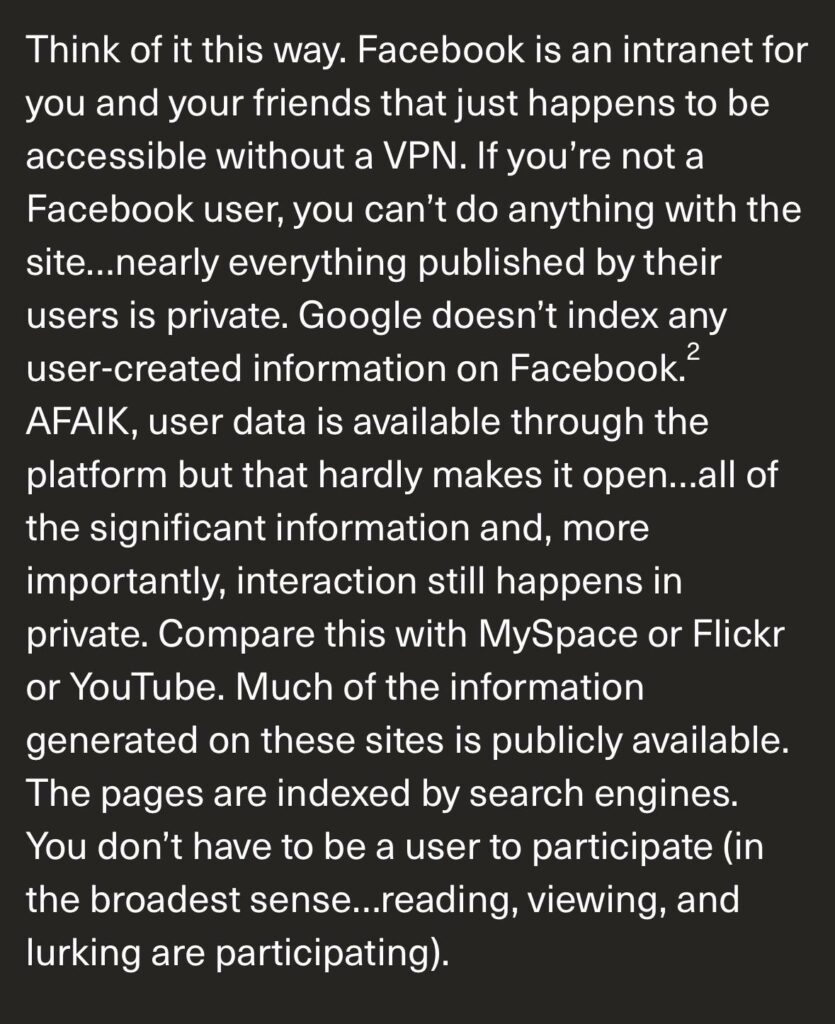
“It’s fascinating to see how the #OpenWeb ideology was formed in the late aughts... Open Web evangelists criticizing early Facebook for being too private is an incredible heap of irony.”
— [Someone missing the point entirely]

Let’s be clear, this is a historical and political mess, and one worth composting. The original #openweb vision, was wide, from the original European social vs the American libertarian, the person quoted is taking the view from inside the #blinded USA path rather than the original #WWW #mainstreaming of the more native social European path.

The idea on both paths was never about exposing personal data, that’s a strawman born of today’s #dotcons-common-sense, where everything gets flattened into privacy = good, openness = bad. It’s a deeply ahistorical take, infected by the post-Snowden wave of #encryptionism mess that conflates liberation with hiding, and assumes the only threat is surveillance by “them,” never enclosure by “us.”

Yes, the original more native #4opens path – Open Data, Open Source, Open Standards, Open Process – is still a radical project rooted in trust, transparency, and collective power. It is about creating shared public spaces and protocols to collaborate, self-organize, and break the silos, both big, built by tech monopolies and small built by our own #encryptionists dogmas. This original path draws from traditions of anarchist publishing and autonomous tech. And yes, it explicitly distinguished between publishing and privacy.

Early Facebook wasn’t “too private.” It was already a walled garden – a corporate trap disguised as a community. The real critique from #openweb folks was that it centralized control, commodified interaction, and locked users in. That’s why people built alternatives like #Indymedia, #RSS networks, (sudo)federated blogging, and early #P2P social tools.

To say the openweb led to surveillance capitalism is like blaming bicycles for car crashes. What happened wasn’t in any way openness going too far, it was openness being abandoned, subsumed, and bastardized by closed platforms under the guise of “convenience” and “safety.” And now, people are rewriting history to serve the logic of today’s bloated encryption silos and #NGO-funded moderation paths. This is not just wrong, it’s dangerous, because without remembering what native open tech looked like, we’ll keep mistaking the problem for the solution.

So yes, this quote we started with, and the worldview it represents, is a mess. But we don’t throw it in the fire, we compost it, break it down, extract the nutrients, and grow something better from the rot. The #openweb was never about exposing people, it was about building shared power. Don’t confuse this in any way with the platforms that sold us out, and don’t mistake critique for irony when it’s actually prophecy.

Don’t push prat thinking, please.

Messy language feeds back into messy culture

Most people understand that culturally, and socially, we are in a growing nasty mess. The #blocking of action, the constant stalls, confusion, and fragmentation, has a lot to do with our use of language. And the deeper issue is how this messy language feeds back into culture, which then loops back to make the language even murkier. It’s a feedback loop that clouds meaning, erodes trust, and paralyses collective action.

The last 40 years of postmodernism and neoliberalism made this worse. #Postmodernism chipped away at the idea of shared reality, leaving us with endless interpretation and “personal truths.” #Neoliberalism, on the other hand, commodified everything, including language itself, into marketing, spin, and #PR. Together, we have hollowed out words like “community,” “freedom,” and even “change,” to the point that we barely recognize practical use value.

Take “mutual aid” for example, a term grounded in solidarity and reciprocal responsibility. Now, on both #dotcons and #openweb platforms, it gets reduced to casual crowdfunding and anonymous asks, with little relational context. Not bad, but far from what it could and needs to be. If we want affinity-based action to work, if we want people to work together and trust and act together, then we have to compost this mess. And the way to do that might be surprisingly simple #KISS – Keep It Simple, Stupid, not stupid as in naive, but stupid as in clear.

We need to reclaim simple language that carries shared meaning. This is exactly what we’re trying to seed with the positive side of the hashtag story. Hashtags act as anchors in this storm of noisy abstraction. They cut through, to the root meaning, and allow collective orientation without needing corporate gatekeepers or #blinded institutional filters. Think:

  • #4opens – a shorthand for open code, open data, open governance, open standards.
  • #deathcult – pointing to the suicidal path of #neoliberalism.
  • #techshit – composting the mess, not throwing it away.
  • #nothingnew – slowing tech churn, reclaiming meaningful pace and paths.

Each of these tags points to deeper, shared narratives that are simple, but not simplistic. They invite action, not common sense confusion. By composting the abstraction we regrow clarity, reclaim trust paths, in both tech and social spaces. Speak simply, act clearly, hashtag wisely with intention is a working path, please use this.

On this path, It is important for the progressives and radicals to come together and focus on real issues and the challenges facing society, rather than fighting among ourselves. To find this balance between being “nice” and being “nasty” is key to being effective about lasting social change.

The #hashtags embody a story and worldview rooted in a progressive and critical perspective on technology and society. By highlighting the destructive impact of neoliberalism (#deathcult) and consumer capitalism (#fashernista) on our shared lives, while promoting the original ideals of the World Wide Web and early internet culture (#openweb).

The #closedweb critiques the for-profit internet and its harmful social consequences, while #4opens advocates for transparency, collaboration, and open-source principles in tech development.

The #geekproblem tag draws attention to a dysfunctional cultural tendency in tech: where geeks, absorbed in their tools and logic, overlook the broader social effects of their creations. This feeds into #techshit, where layers of unnecessary complexity pile up, further distancing people from tech’s social roots. Meanwhile, #encryptionists critiques the knee-jerk reaction that “more encryption” is always the answer, reinforcing control and scarcity, rather than liberating people and community.

Together, hashtags tell a loose, coherent and powerful story. They call for a more humane, collaborative, and transparent approach to both technology and society.

#nothingnew asks whether constant innovation is the right path — or if we need to slow down and improve what already works.

#techchurn names the cycle of flashy, redundant tech that fails to solve core issues.

#OMN and #indymediaback point toward an Open Media Network — and a revival of the radical, decentralized media that once rivalled corporate media on the early web.

#OGB stands for Open Governance Body, an invitation to practice grassroots, transparent, community-led decision-making.

It’s an ambitious, needed path, to build and grow social tech that “fails well”, meaning they fail in a way that can be fixed by the people, through trust and collective action, not closed-source patches and corporate updates, that are control not community. The #OMN’s focus is human-first. Tech comes second, as a mediator, a tool, not the destination.

Yes, the #geekproblem is real. Technical expertise becomes a gatekeeping mechanism. But tech can also empower, if we design for simplicity, accessibility, and community-first paths and values. The only working path is simple, trust-based, and human. That’s why we keep coming back to #KISS.

Why haven’t we been doing this for the last 10 Years? Over the past decade, we’ve lived in a state of quiet paralysis. Climate change, ecological collapse, technological overreach, all of it loomed. And instead of digging in to work on solutions, we froze. Well-meaning people chose fear over action. Understandably. But fear is a poor foundation for building anything sustainable.

We’re not on this site to only blame – we’re here to compost. The problem? We stopped critiquing, we stopped examining the tools in our hands. Not only that, we bought into the illusion that #NGO paths and tech would save us. That shiny apps and startup culture could greenwash a better future. And when the results disappointed, we turned inward, stopped questioning, and left things to rot.

So now, can that rot be composted? By using the #4opens – open data, open code, open standards for open governance, we have a practical framework to call out and compost the layers of #techshit that have built up. Tech that divides us, tech that distracts us, tech that damages the planet and calls it progress. Yep, like gardening, composting takes time, it smells at first, it’s messy. But give it care, and you get soil – to plant better ideas in, soil for hope.

One of the reasons we haven’t made progress is the #geekproblem, a narrow slice of technically-minded culture made up of (stupid)individuals, which so far have dominated the design and direction of our tools. They, sometimes, mean well, but in their obsession with technical elegance and “solutions,” they’ve sidelined the social and the ecological. What’s left is a brittle, sterile infrastructure, constantly churning out newness without any substance.

Meanwhile, #stupidindividualism has flourished, encouraged by #dotcons social media systems built for engagement, not connection. These silos encourage performance over solidarity, branding over community, and endless scrolling over doing. We’ve all felt it.

And most activist groups, instead of resisting this tide, drank the #NGO poison, chased funding, watering down their goals, professionalizing their resistance until it became another logo in a funding application. We’ve lost a decade to fear, distraction, and capture.

But it’s maybe not too late, we have the tools, in the #ActivityPub based #Fediverse. We have the frameworks, the #4opens can guide us to rebuild with transparency, collaboration, and care. The hashtags like #geekproblem, #techshit, #nothingnew, and #OMN give us a shared vocabulary for critique and regeneration. They point to a web where people, not platforms, hold power, and where technology serves life, not control. Let’s stop being afraid to critique, stop outsourcing responsibility and get on with composting.

Because that’s where the soil of a better path will come from.

It’s worth remembering that, in the current political mess, the right-wing and the so-called centre are extremists.

They are insisting that endless growth on a finite planet is “realistic,” that widening inequality is “natural,” that ecological collapse can be managed by markets, and that social breakdown is an acceptable cost of doing business. It’s constant crisis management, coercion, and denial of material reality.

What’s labelled “left-wing” is generally moderate: the belief that people should be able to meet their basic needs, that cooperation works better than competition for shared survival, and that systems should serve society rather than extract from it.

The Overton window has been dragged to exploitation and collapse that proposing care, restraint, and collective responsibility is framed as radical, when it’s the minimum required for any stable future.

Seen this way, extremism isn’t in change and challenge. It’s insisting that a failing system must continue at all costs.

Building #OGB is about power without #powerpolitics

What should be more visible to people now. If we want the #openweb to survive and thrive, we need new forms of power, ones that can defend the community and challenge traditional blinded power dynamics without falling into the traps of control, hierarchy, and co-option.

The problem is clear: If we follow traditional power politics, based on control, manipulation, and exclusion, we will fail. We’ve seen this play out repeatedly, grassroots movements spark change, only to be then sold out and absorbed, neutralized by the #mainstreaming flows of #blinded personal and institutional power.

So what is #blocking, what’s stopping us building a needed project like the #OGB?

This is about “unthinking” the “Silo Path” vs. the “Aggregation Path”. Centralized control (the silo path) is easier to manage, but it kills autonomy and leads to gatekeeping. A decentralized, organic approach (the aggregation path) requires more effort but keeps power in the hands of the community.

The #OGB needs to be built on open trust networks, not locked-down institutions. This leads to perception of a lack of “perceived power” and currently people, default to following power. It’s a chicken-and-egg issue, If we don’t look like power, we will struggle to attract participation. But power doesn’t have to mean hierarchy, it can mean influence, legitimacy, and real impact. We need to keep building structures that feel like power while staying true to open, bottom-up values.

This brings up issues of funding and recognition of grassroots growth, where almost all valuable social and technological change comes from, grassroots movements, not the #mainstreaming institutions that later co-opt are repeatedly funded to claim ownership and CONTROL. The problem is that these CONTROL institutions default to sucking up resources, draining the energy and focus from grassroots projects, leaving hollowed out shells, undervalued and underfunded. To fix this, we need a cultural shift that recognizes and invests in #KISS decentralized, community-driven alternatives.

We need important changes before we can be the change and challenge, to actually make this work. This is the path of supporting “Organic Intellectuals with Muddy Feet”, Change happens on the ground, not in #NGO meetings or #dotcons boardrooms. We need to elevate people who are actively engaged in building solutions, not just talking, or #blocking by co-opting.

To learn from effective grassroots paths, the #OGB is different to the normal mess, it draws from real-world activist organizing, not abstract theories and #fashernista posturing. Let’s look at some examples: In coding, loose scrum for open source dev leads to adapting flexible, iterative structures for governance. In culture, Burning Man’s self-organizing, mutated from Rainbow Gatherings, illustrating that radical decentralization works at scale, though this dose brining issues we need to actively balance. And in tech federated networks (like the #Fediverse), show that distributed, non-hierarchical systems can replace corporate monopolies.

We do not need to rush change, we can move slow, take a few steps, we need to avoid the trap of fighting over power, where internal battles drain energy and distract from the real mission. This “stepping” is needed to keep the focus on building native paths, not wasting focus arguing over control. In this active #KISS path, the #OGB needs to function as a shared infrastructure, not a battleground for egos.

The path isn’t to directly destroy existing power structures, it’s to build alternatives that are too effective to ignore. The #OGB isn’t just another governance tool; it’s a blueprint for creating sustainable, community-led power without falling into the traps of traditional politics.

Let’s work together as we are at a turning point. We can either follow the same old paths of control, stagnation, and failure, or we build something that actually works. The choice is ours. Let’s make it happen, please.

#4opens #nothingnew #DIYculture #openweb #grassroots

Why the Fediverse Needs a Bridge Between Mainstreaming and Grassroots

A key point that often gets misunderstood – #Mainstreaming isn’t inherently good or bad – it depends on who is influencing whom.

  • Good #mainstreaming = Bringing #openweb values into the mainstream (transparency, decentralization, cooperation).
  • Bad #mainstreaming = The mainstream (corporate control, surveillance capitalism, hierarchy) infusing itself into the #openweb and reshaping it in its own image.

In the current context, mainstreaming is mostly bad because it pushes dilution of radical alternatives into market-friendly compromises. The #deathcult (neoliberalism) doesn’t absorb things in good faith, it co-opts and neutralizes them.

That’s why we need mediation, pushback, and a clear understanding of context when talking about #mainstreaming. Sometimes it’s the right move, but right now, the priority is defending and growing the roots of the #openweb before our # #fashionistas can sell it off as a brand.

On this path, one of the best things about the #Fediverse is that real people and community’s get to choose what kind of digital paths they want to take. Don’t want #Meta snooping around? Join or host an instance that blocks them out. Prefer not to have people search your content? Lock it down in your settings. Want to mediate the strong #blinded flow of “normies”? Close the doors via your instance settings. It’s a “nativist” system that offers a radical degree of agency compared to the #dotcons.

But what happens when people start demanding that their version of the #Fediverse become the default for everyone else? That’s where things get tricky, and where we risk losing the most valuable aspect of this messy, decentralized network: the bridges between worlds. The danger of closed loops, it’s understandable that people want their corners of the #Fediverse to feel safe, sustainable, coherent, and aligned with shared values.

The problem is that when we focus on tools so that every group can retreat into its own echo chamber, we recreate the failures of the wider #dotcons web: fragmented bubbles where ideas stagnate, and meaningful conversations can’t happen. This is what I mean when I talked about #mainstreaming echo chambers, the tendency for people to isolate themselves in what feels comfortable, which ultimately makes everything smaller.

The irony is that this impulse to close off is, in a way, the same as the desire to keep the Fediverse open. Both are reactions to the failures of centralized tech platforms. People who want to mediate #mainstreaming influences are trying to nurture the fragile seedlings of the grassroots culture they’ve built, while those advocating for broader adoption hope to prevent the network from collapsing into irrelevance. Both impulses come from wanting the Fediverse to survive, they just express that desire in too often opposite #blocking ways.

The failed bridging of FediverseHouse is a normal, the tension came to a head with projects like #FediverseHouse and #Fediforum, which aimed to be a gathering space but ultimately failed to build lasting bridges. It wasn’t because people didn’t care, it was because there wasn’t enough understanding of how to hold that tension between the grassroots and the mainstream without one swallowing the other. The projects lack the simplicity of #KISS (Keep It Simple, Stupid) and got tangled in the same old dynamics of control and fragmentation.

Keeping the bridge in place has a lot to do which sharing resources, in non #mainstreaming ways, yes, we understand, this is a hard leap for meany people but only people who can make this step can be useful in the end to the “native” #openweb paths. The solution isn’t to pick a side, but to intentionally hold the bridge in place.

In a smaller, view, that might look like running accounts across multiple instances and boosting content between different ideological spaces to keep ideas flowing. It might mean advocating for #4opens values even in mainstream-leaning spaces, or gently nudging the more isolated pockets of the Fediverse to stay curious about what lies outside their walls.

The Fediverse doesn’t need to be one thing, that’s its strength. But if we let the bridges decay, we lose the possibility of cross-pollination, of radical ideas seeping into #mainstreaming consciousness, or of everyday people stumbling into a space that makes them question the status quo. Instead of fighting, as we so often do, to make one version of the #Fediverse dominant, maybe the real work is in keeping the network alive, messy, imperfect, but always connected. Because it’s in those connections that real alternatives grow.