The #deathcult is selling the future as #techshit

We have done this before, we take a useful technology, wrap it in a huge financial story. We centralize it, try and monetize it to turn it into a platform. Then we pretend the social consequences were somehow an accident, it is what we are doing with LLMs. We took an interesting piece of software and started selling it as AI, then AI became AGI, became super-intelligence. This smoke and mirrors feeds the path of building gigantic data centres, burning enormous amounts of energy, raising billions, signing extraordinary infrastructure contracts and concentrating yet more power in a hands of the #nastyfew.

And now we are supposed to believe this is progress, nop, this is the normal #deathcult doing what the #deathcult does – take something useful and turn it into an extraction machine. the mess we need to compost is that “interesting software” doesn’t justify a trillion-dollar mythology – AI will transform everything – AI will replace everyone – AI will solve science – AI will destroy civilization – AI is the next industrial revolution – AI is the singularity – AI is almost AGI – AI is too dangerous to release – AI is progressing faster than anyone expected – AI will change humanity forever. Can you see the smoke and mirrors trick?

Both the utopian story and the apocalypse story sell the same thing, more #AI, more computing, more investment in data centres. More centralization of money for the companies already building the machines of control. Maybe the argument changes, the conclusion doesn’t. Pushing fear is also marketing, this is where the current AI “doom” industry pushes mess. Tell people your machine might destroy the world and you have simultaneously told them your machine is incredibly powerful. This is about grasping for the control of focus, creating scarcity, you have created fear you have created importance.

This mess is about #fashionista capture, its a old story, were you try to created a lever for governments, and the chattering classes, there servants to listen to you, for investors to keep funding you, to build even bigger machines. The apocalypse it self becomes a business model.

That doesn’t mean the risks aren’t real, #AI implementations can create real security, economic, social and political problems. But we need to separate those problems from the mythology. A badly isolated autonomous coding system is an engineering and security failure, it doesn’t mean the machine has “woken up”. An LLM producing confident bullshit isn’t evidence of an emerging artificial mind, it is an LLM producing confident bullshit. And a company repeatedly telling us that its next model might be AGI doesn’t make AGI a meaningful scientific milestone.

Sometimes #KISS is the radical answer, please look at what the machine actually does, not what the marketing department says it might eventually do. We have already seen this mess play through.

Web 1.0.

Web 2.0.

Crypto.

Blockchain.

NFTs.

Metaverse.

Web3.

DAOs.

Now AI.

Every few years Silicon Valley discovers the next thing that will “transform” nothing. The technology changes, were the investment logic barely does. Hype → investment → infrastructure → more hype → bigger investment → pressure to monetize, it is #techchurn.

Except now the machines require gigantic amounts of physical infrastructure and enormous financial commitments. This is the bit that gets hidden behind the shiny chatbot interface, LLM’s isn’t floating in the cloud, it is powered by somebody else’s warehouse, somebody else’s electricity bill and somebody else’s infrastructure. The supposedly weightless future has a very large material footprint.

The #deathcult loves this machine – but something deeper is happening here – the #deathcult has spent fifty years teaching us to worship – growth – efficiency – scale – competition – automation – consumption – financialization – individualism – technology. The AI industry is the last-ist gasp at pushing the mythology – more computing, more scale, more automation, more investment, growth, more efficiency. And because this machine is called “intelligent”, we are encouraged to bow down even further. The machine knows, the machine decides, the machine optimizes, the machine will solve all our knee ach problems. Meanwhile, the #nastyfew who own and direct the machine accumulate power.

Its a part of the #geekproblem were technical people make things work, this has real value, but technical expertise is one tool, not the toolbox. You cannot engineer your way out of social problems, or code trust. You cannot automate democracy. You cannot solve inequality with a better interface. You cannot fix the political economy of capitalism by making the algorithms slightly cleverer. And you certainly cannot hand over social decisions to machines because the humans have become inconvenient to a few nasty people.

This is the same blindness we have been suffering from for decades, if the problem is difficult, make it technical. But then “common sense” technical people become the gatekeepers, becomes the institution, becomes infrastructure. Then fingers in ears, nobody remembers that the original decision was political, as the power disappears into code – #AI becomes just more #dotcons.

To balance this mess, by composting, we need to open our eyes to the history of the #openweb. The original web was built messy on standards. hyperlinks, RSS to grow small websites were people published, people connected built by people making their own tools. Then Web 2.0 arrived, the UX got better, the platforms got bigger, the money arrived and the web became #dotcons.

Blindly, repeating this same mistake with the dotcons LLM’s in the era of #climatechaos is stupidity. Its a big mistake to be building another generation of giant closed systems of control. At best we should be asking – what would an open AI infrastructure look like? What data? What standards? What ownership? What governance? What accountability? What local control? What human oversight? What right to challenge? What right to rollback? What happens when the system is wrong? Who gets to decide? These are political questions.

That is backwards, technology is a tool for people, and yet here we are. agen we are generating the problem to feed the machine built to solve the problem, peak #techshit. So what do we do? We don’t have time for another #fashionista moral panic please. Not “ban everything”, not “AI will save us”, not “AI will kill us”. Not another fucking blinded conference where everybody agrees that governance is important and then goes home and builds the same centralized paths.

What we do need is to compost is this mess, take the useful technology, the useful research, the open models to build automation that actually gives people more time and power. Knowledge is always useful, but please throw the mythology onto the compost heap, the fake AGI worship, the #nastyfew billionaire saviour stories, the singularity smoke. We cant survive the endless-growth assumptions, of the #closedweb platforms, the surveillance economy, we need to compost this social #techshit.

Composting this is why the #openweb is a tool that still matters, not because openness is fashionable, or that another technical architecture will magically save us. It matters because power has to be distributed somewhere. Open data – Open source – Open standards – Open process – The . To make this tool work we need to grow the path of human moderation, community trust, distributed infrastructure and shared public knowledge.

The #OMN has practical projects for this path – archives with #makeinghistory – news with #indymediaback and eventually governance with #OGB. A practical #KISS path that understands that we need useful technology, to help communities organize, remember, communicate and act. We need infrastructure that belongs to the people using it, And the community to use this “shovel” to stop worshipping the mythology of the #deathcult machines and start rebuilding the commons.

Yes, this is a first small step in the path we need, not a dogmatic answer to everything. We clearly do not need more blinded technological salvation story’s. What we do need is a practical path to build news, archiving and eventually governance around open flows, trust and participation rather than surveillance, extraction and platform ownership.

The #deathcult has had fifty years, look at the mess, now lift your eyes and let’s start composting.

As the worshipping the #deathcult for the last 50 years becomes harder to hide, the lies are more naked. The lie of endless growth, trickle-down wealth, technological salvation and individual freedom are running into the material reality they created. The mess can no no longer be hidden in the abstract.

#Climatechaos, inequality, war, social fragmentation, political decay. #techshit. The question now is impossible to keep ignoring, not whether the system has problems, it is whether we can see the problems clearly to stop worshipping the mess that created them.

This is where we need social composting. Turn the pile. Expose the assumptions. Keep what is useful. Let the dead ideas rot down. Then grow something alive.

#OMN #openweb #deathcult #lifecult #techshit #techchurn #dotcons #geekproblem #AI #LLM #commons #compost #KISS

Bunker as a metaphor

There is something revealing about the way powerful people talk about our future, when they imagine crisis, they imagine their escape. A luxury bunker, fortress border, a private city, a rocket or an #AI cloud. A place for the self chosen few to survive while everyone else is left outside to die.

This is the “logic” of the #deathcult we all worship, if the world is breaking, protect yourself rather than repair the world. It should be obverse to us that this is is not really any actual plan for the future, its just more head down worship, an admission that this class have stopped believing in any thing at all.

But, yes they hid this, they still tend to tell a story, the shiny version of this story is always the same, out of catastrophe comes a golden city, the old world burns, the rubble is cleared, and the self selecting few build something beautiful on top of it.

We have heard this story for thousands of years, apocalypse, judgement, Armageddon, collapse, then purification for paradise for the few survivors. The modern retelling simply replaces heaven with a billionaire bunker, an exclusive smart city, an AI utopia or a colony on Mars, different technology, same path.

On this #mainstreaming path some people, who we call the #nastyfew in the #OMN hashtag story, deserve to survive the mess they created. But what is not told in this simply story is that the bunker is hard right politics – #climatechaos, pandemics, resource conflicts, economic insecurity and technological disruption are real problems. But there are two very different ways to respond to systemic crisis.

  • One response is – How do we protect everyone and make the system more resilient?
  • The other is – How do I make sure I am on the inside when it collapses?

The second path is not surprisingly increasingly visible in #nastyfew billionaire culture, authoritarian politics and in the #dotcons industry we all spend way to much time inside.

in this modern story, the bunker is not just a building underground, it is a political metaphor, fortress borders are bunkers, private security is a bunker, gated communities are bunkers, #closedweb platforms are bunkers. What matters for us in #FOSS is monopolized infrastructure is a bunker. Even the fantasy of escaping humanity through #AI or space is another bunker, an attempt to leave the shared social and ecological world rather than compost our dysfunctional relationship with it.

This path is the opposite of the #openweb,it is were the #deathcult turns fear into control. The right-wing answer to social crisis is always built around fear – Fear of outsiders, fear of immigrants, fear of social change, fear of losing status, fear of disorder, fear of the future. But, then comes the golden lie, the promise, we will protect you, but this protection soon becomes control. The anger that should be directed toward concentrated wealth and political power gets redirected sideways and downwards toward other ordinary people.

The poor become the problem, migrants become the problem, minorities become the problem, the left becomes the problem. The messy complexity of society is reduced to enemies, it is an old political trick that the #blinded technological #closedweb makes much more powerful. Today’s authoritarian politics doesn’t arrive wearing an old-fashioned uniform. the phone in our pocket, influencers, algorithms, targeted advertising, surveillance systems, AI-generated propaganda and permanently monetised outrage. The infrastructure of the #dotcons is a bunker.

But what we focus on the #OMN path is there is alternative, this alternative isn’t pretending that everything is fine, not another shiny utopia, and it certainly isn’t waiting for some perfect political party, perfect technology or perfect leader to save us. The alternative is much more boring – Build things that work, trust, commons, local resilience. Create media systems where communities can see and understand what is happening. Focus more on building technologies that people can actually control by #KISS keeping the infrastructure understandable so participation is possible. Create spaces where people can disagree without immediately becoming enemies. That sounds much less exciting than an AI god or a $50 million survival bunker, good, what we need to do as the #DIY grassroots is move from bunkers to bridges

The important question is not, who gets into the bunker? The question is, what are we building outside it? Because humans have already built an enormous number of bunkers, political bunkers, economic bunkers, cultural bunkers, technological bunkers, information bunkers. We don’t need more, we need bridges, and bridges are fundamentally different from bunkers.

A bunker protects something by excluding people, a bridge creates value by connecting people. That is the deeper #openweb possibility – not a technological escape from society, but technology that helps society organize itself. Not centralized control, but distributed participation, not ownership of everything, but stewardship of shared resources, not fear as the organizing principle, but trust. Not “how do I survive when everything collapses?” but “How do we make collapse less likely, and life better, together?”

Its about composting the apocalypse – the world really is messy, but fear doesn’t have to become a bunker, it can become a reason to organize. This is where social composting matters, take the accumulated waste of the last decades — #neoliberalism, authoritarianism, #techshit, platform capitalism, political tribalism, broken institutions and the endless fear machine. Don’t pretend it isn’t there, don’t worship it or spend your entire life fighting it head-on. Compost it, break it down, learn from it, keep what is useful, let the dead parts become soil to then grow something different.

The #deathcult says the future belongs to the #nastyfew who can buy their way out, the #lifecult says the future belongs to those who can build relationships strong enough to stay. The choice isn’t really between apocalypse and utopia, it is between bunkering down or building commons. The planet doesn’t need another billionaire bunker, it needs people willing to pick up shovels.

A #mainstreaming view of this

#OMN #openweb #commons #lifecult #deathcult #dotcons #socialcomposting #KISS

The End of the “Peace Dividend” and the Return of History

#Identitypolitics, is what happens when liberalism turns inward and fragments – call it mad liberalism. #Culturewar is what happens when that same liberalism hardens and lashes out – bad liberalism. Both look like opposites, but they come from the same place.

The uncomfortable part is both were pushed onto the “left” as the way to fight #neoliberalism the very system that’s been tearing apart the social fabric for decades. Instead of building collective power, we pushed endless identity fragmentation, reactive outrage cycles and symbolic battles detached from material change the left is about.

Energy that could have gone into organising, building, and challenging power structures got redirected into managing discourse and fighting each other. That wasn’t an accident, it was the path of least resistance within a liberal framework that can’t actually confront the roots of the problem, because it’s part of the problem.

So while people were arguing over representation and language, the underlying mess – what we call the #deathcult – carried on concentrating wealth, hollowing out communities and locking in structural inequality. And now, that same system is producing a hard shift to the right, feed by anger without direction, backlash without solutions and reaction filling the vacuum left by the failure of the “left” to build alternatives.

So yes, the liberal centre made the mess, but the more important point is this we’re still stuck inside its framing, still reacting, still fighting on terrain that leads nowhere and still avoiding the work of building something that can actually replace what’s failing. Not to dismiss identity or culture – those matter – but to put them back in proportion, grounded in material reality and collective process. Because if we don’t do that, we stay locked in the loop of liberal fragmentation → right-wing reaction → deeper collapse, and this loop doesn’t end well.

The question isn’t only who to blame, it’s whether we can stop playing the same game long enough to build something else. Let’s look at this from a much wider view.

For a long time, the dominant mainstreaming story has been that today’s instability is blamed on the anger of the “left-behind” in the West, a neat, comfortable narrative. But this is shallow, as long before discontent surfaced in the US or UK, entire societies in Eastern Europe and the former Soviet Union went through something far more extreme.

The 1990s transition to #neoliberalism wasn’t just “reform” – it was a peace-time social collapse when life expectancy dropped, savings were wiped out and crime and addiction surged. This “history” matters now because it shows that what we’re living through isn’t new, it’s the long tail of our worshipping of the same #deathcult, that has been breaking societies for decades.

The illusion of stability from the early 1990s to around 2010, when the world looked unusually stable, even peaceful. Major wars between big powers disappeared, military spending dropped, trade and GDP surged – “Democracy” spread across the globe. This period was framed as success, some even called it the end of history. But this “peace” rested on smoke and mirrors.

#globalisation as control – economic interdependence was supposed to prevent war, the idea was simple if everyone is economically connected, conflict becomes irrational. What actually happened was production was off shored, labour was weakened in the West, global supply chains became fragile and unequal and wealth concentrated at the top. This wasn’t peace, it was #classwar.

The fig leaf of “democracy” was always market compliance, less about collective decision-making and more about maintaining economic growth. In practice governments served markets, institutions constrained popular power and politics became technocratic management. In #OMN terms, this is #mainstreaming – reducing real political choices into narrow, “acceptable” to the #nastyfew options.

The hidden cost was hollow societies, this system did produce growth. But hollowed everything out, communities weakened, industries disappeared, inequality exploded and politics lost meaning. People were told everything was fine, while their lived reality worsened.

So the anger we see today isn’t sudden, it’s delayed. The imperial layer is power without accountability at the global level, this system was held together by a dominant power structure. And here’s where the cracks deepen as rules applied selectively, international law was a tool, not a constraint, economic systems weaponised as needed. The result was a loss of legitimacy, as when rules are not applied equally, they lift the veil to stop functioning as rules at all.

We are now moving out of that world back to no longer having a single uncontested centre of power. Instead, we have competing blocs, regional tensions, fragile alliances and increasing militarisation. This is what’s called a multipolar world in #IR terms. Historically, these systems are unstable unless there are shared norms and limits, right now, those norms are weak or collapsing.

So we understand that the liberal #deathcult logic no longer works, globalisation is fragmenting, states are prioritising more self-sufficiency, supply chain control, strategic industries. The old idea of interdependence is now seen as a risk, not a safeguard.

Liberal ideas of democracy aren’t stabilising conflict, instead of reducing tension, elections amplify nationalism, reward confrontation leading to deepen division. The “#deathcult peace” is no longer holding, It’s a dangerous feedback loop, that without strong shared “rules”, the mess drifts toward proxy conflicts, regional wars, arms races and escalating mistrust. Even if full-scale war is avoided, instability becomes normal, and this instability feeds back into domestic politics – creating more fear, more reaction, more breakdown.

The deeper problem is #neoliberal exhaustion, we no longer treat the #deathcult as sacred and with #climatechaos and social break down our deaths are seeping closer. It’s now visible systemic exhaustion of the rule of the #nastyfew who built this era of #neoliberalism to prioritised finance over production, replaced politics with management, concentrated wealth and power and stripped away collective purpose.

This mess making didn’t resolve contradictions, it displaced them into culture wars, liberal identity conflicts and into abstraction. Now those social control is failing, we see the return of “history” where fundamental questions can’t be avoided anymore:

  • What is the purpose of the state?
  • Who benefits from the economy?
  • What do we protect and why?
  • How do we organise collectively?

This is uncomfortable, but necessary. As the previous era avoided these questions, this one forces them.

The #OMN perspective on this mess is compost, don’t collapse, that this moment is not just crisis – it’s raw material. The breakdown of the old system creates space, but we need to use the space, it’s why the #compost thinking matters – don’t deny the mess, don’t romanticise collapse, process it into something usable. Because if we don’t, the vacuum gets filled by reactionary politics, authoritarian control and deeper #mainstreaming mess.

The “end of history” wasn’t an achievement, it was a pause – built on unstable foundations. What we’re living through now is history restarting, messy, risky, uncertain. But also the first real chance in decades to build something that isn’t just a updated version of the same #deathcult logic. We might build a #lifecult if we can hold our nerve, and actually do the work.

So what comes next? We are moving from “stability” without meaning to instability with possibility. Yes, that shift is dangerous, but it also reopens agency, the question is no longer
“how do we maintain the system?” It becomes “what do we build instead?”

The #KISS choice is the #OMN path to grow new #openweb, grassroots, trust-based structures, or we default fall back into more centralised, extractive systems?

The #mainstreaming is talking about the #deathcult – So why are you still waiting?

It took four decades of sleepwalking through #neoliberalism, cultural decay, ecological collapse, and social atomisation, but at last, the #mainstreaming is starting to talk about the #deathcult we’ve been worshipping.

Case in point: Steve Coogan – yes, Alan Partridge – is now publicly accusing Keir Starmer and Labour of “paving the way for Reform UK,” the rising hard-right threat. Here’s the article. It’s not satire, it’s despair. Coogan’s right, and a few years ago, such a comment from a mainstream celebrity would’ve seemed extreme. Today? It’s just stating the obvious.

The “centre” has collapsed. The “left” has hollowed itself out in fear. And the space where #lifecult politics might live is now overrun with fear, cynicism, and opportunism. This is the #deathcult in action, the system that tells you there is no alternative while everything burns down around you. For 40 years we’ve been taught to accept decay as progress, control as freedom, and despair as maturity.

But here’s the thing, we told you so, for people like me, and many others working on open networks, digital commons, grassroots media, and post-capitalist systems, this isn’t news. We’ve been working and talking about this for decades.

In the world I am in, we’ve already working on alternatives: Decentralised governance via the #OGB. Federated publishing through the #OMN. Ethical tech rooted in the . And a cultural path that doesn’t rely on selling your soul to #dotcons or begging #NGOs for scraps.

We weren’t trying to be ahead of the curve. We were trying to get people to notice the damn cliff. Now that we’re tumbling over it, suddenly everyone’s surprised. Now the #mainstreaming, which ridiculed or ignored these grassroots, native paths, is whispering our language, but still to often refuses to take the paths we are on.

On this continuing common sense #blocking, let’s be blunt – now is the time to stop being prats about this necessary change. No more waiting for the next electoral saviour. No more hiding behind polite inaction. No more pretending that rebranded centrism is going to save us from fascism, it won’t.

If you're reading this, you probably already know the centre won't hold. So what's stopping you?

We don’t need more think pieces, what we need is more people to get their hands dirty, pick up the tools we’ve been building, and start doing the real work. This means, in my area of tech activism:

  • Federating your networks.
  • Hosting your own content.
  • Engaging in horizontal governance.
  • Publishing with principles.
  • Building trust and commons, not brands and silos.

The good news? The framework paths exist, the seed communities exist, the infrastructure, with the #Fediverse is small but growing solid. What’s been lacking is you, your time, your courage, your refusal to keep being a prat, to become brave enough to take this different path.

This Isn’t about nostalgia – It’s about now. We’re not dreaming of the past, we’re recovering futures that were lost when the #dotcons, the NGOs, and the #neoliberals buried the #opwnweb’s radical possibilities under a mountain of grift and branding. This isn’t utopianism. it’s simple pragmatism, resilience. It’s how we survive the rise of the new right without defaulting into the arms of the old centre – the ones who made this mess in the first place.

And for the record, if you need reminding: In this tech path, we don’t need another “platform.” We don’t need another fake “community” run by venture capital. We don’t need more loud voices doing nothing. What we need is to take paths back to rooted, open, and federated ways of working.

This is what the #OMN and have always been about. You can ignore it for another year or two, but you won’t outrun what’s coming, better to start planting now – it’s not too late to grow something real.

The time is now, if you’re waiting for permission, this is it. The people who once called us cranks are now writing op-eds about the collapse we have seen coming for years. The centre is falling, the right is mobilising, the old paths are dead ends.

The future will be built by those who show up now.

We need you, not in six months, not after the next election, now. Stop being a prat, pick up the tools to help build the next world – before the current one burns it all down.

First step is #KISS – Stop being a prat

The story: power, truth, and walking the fun path

Our powerlessness feeds our desire to hate. This is not a personal failing – it’s a social design flaw. A social problem built on alienation and distraction that funnels frustration into polarisation. That’s why the controversy-driven algorithms of the #dotcons (corporate social media platforms) are not just annoying, but actively harmful. They feed on our despair, and we, often unknowingly, feed on the drama they serve back to us.

It’s a closed loop of spectacle and spite, profitable to the #nastyfew but corrosive to us, the meany. An extractive business model built on social breakdown. And yet, many of us know this, so why do we stay? Likely It’s because stepping away from this mess is hard, it takes more than wishful thinking, it takes movement, not only that, but it takes organising. It takes the kind of networked activism and lived alternatives the Open Media Network (#OMN) has been building and trying to seed for the last ten years

Let us not overlook vital things, because of the bulk of trifles confronting us.

Truth isn’t declared, it’s built. #Postmodernism taught us that truth is slippery. That’s fine, but in the hands of #mainstreaming culture, that slipperiness has become a tool of endless distraction and decay. People say things like they are true because they feel true. They build tech platforms because they believe in them. They sell movements as brands because it looks like change. But let’s be honest: wishing something into truth does not make it true.

What makes things true is collective struggle, shared purpose, and concrete acts of solidarity. A load of social work, grounded activism, and careful trust-building make something true. This is the hard path, but it’s also the only one worth walking, and when we do it together with joy it’s the happy path.

Pettiness separates; breadth unites. Let us be broad and big.

The #geekproblem is too often a part of this mess. Writing code is seen as a kind of truth declaration. “Look, it runs! So it must be real!” But a thing that compiles is not the same as a thing that lives. Tech without community is a corpse. For anything to matter, you need people. And to keep people, you need some rough-and-ready PR, actual engagement. You need trust, time, and probably a bit of music and food too. We can’t engineer our way out of this crisis, we have to organise our way out.

The #Lifecult vs. the #Deathcult. What we’re up against isn’t just bad ideas, it’s a worship of stability, spectacle, and control, the illusion of movement through aesthetic alone, no real challenge to the dominant system. It feels warm, it promises safety, but it leaves no room for difference, contradiction, or rebellion, this is inside our “cults”.

It requires less mental effort to condemn than to think

This is why we don’t need worship, we need practical action. Change and challenge are not side effects of our projects – they are the sharp point. We don’t do this work to be liked, we do it because there is no other way to make things true. And if we do this together, it becomes fun and meaningful – we create social “truth”.

Working with the #Eurocrats (and other impossible people). Let’s talk about the institutions, the #EU, local governments, #NGOs, big tech “allies.” They are hopelessly incompetent when it comes to grassroots tech and progressive social change. But here’s the thing, they will not go away on their own. If we don’t push, the right-wing will step in and push harder. That mess is already happening.

Revolution is but thought carried into action.

So we take the harder path, we show up, try to guide. We keep the door open even when it slams in our face. And yes, it’s exhausting. We’ve tried to work with #mainstreaming people, many are unbelievably vile, and worst of all, they have no idea they’re behaving badly. They don’t see their role in the decay, they don’t see the crisis, because the spectacle of control makes everything look fine.

Yes, the current #mainstreaming is a mess, a deep, systemic, soul-grinding mess. But we see it, and we are not powerless, refusing the mess is about rebuilding the commons. We don’t need to put up with it, that’s what #OMN is for. That’s what projects like #indymediaback, #OGB (Open Governance Body), and the broader #openweb movement are trying to hold space for.

We don’t need more hype, we do need, slow, messy, grounded work:

  • Listen more than we preach.
  • Read each other’s code, politics, and history before rewriting.
  • Talk about our failures honestly.
  • Grow media and networks that are native to community, not layered on top like #dotcons digital colonialism.
  • Build up our own cultures of care and collaboration in the #openweb to replace the dying ones.

This is fun, when it’s not a strategy of purity or perfection, it’s a strategy of survival, and even joy. This is not a closed story, it’s a beginning. If you’re reading this and feeling the weight of it, good. That’s where we start from. But let’s not stop there, come build, talk, and argue. Come plant seeds, come help make the mess into compost. Ideas? Responses?

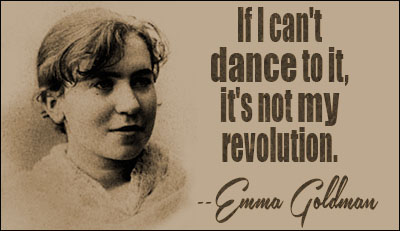
All the quotes are from Emma Goldman

The #mainstreaming mess

The #mainstreaming project is visibly failing. Worse, it is set to catastrophically fail over the next 30 years as #climatechaos escalates. The signs are everywhere: environmental collapse, political instability, and the hollow nature of mainstream culture. Yet, large parts of liberal society continue to bow to the #deathcult, a path of power, greed, and control over life, community, and sustainability. The end result we can now clearly see is the rule of big, dumb, ugly men with guns, a world driven by violence and fear rather than cooperation and creativity.

But we do still have a choice, on the internet we can build and support alternative projects and paths. Instead of kneeling before the #deathcult, we could embrace a #lifecult dedicated to nurturing the #grassroots, growing resilient communities, and reclaiming our collective autonomy. This path is not easy, nor is it comfortable, but it is one of the humane outcomes we can hope for. Am not up for cults my self, but if this is what people won’t let’s make it life rather than death.

The challenge of change, is that this does not emerge from #mainstreaming circles without friction. When alternative movements gain traction, they are both rejected outright and then co-opted and diluted until they become meaningless. The #OMN hashtag story highlights this process, and pushes back the rejection, to balance the struggle, and the slow but real impact on agendas we need.

The question is whether people can engage with this, in the needed processes. The is a completely obverse “social” restating of the #FOSS development process, with a crucial addition: #openprocess. Over the last decade, much of this transparency has been lost as activist communities and developers shifted towards encrypted chat for process, locking away vital discussions from needed public discourse.

The weaponization of process, in my experience, whenever we create rigid structures, people inevitably pick them up and start hitting each other with them. This pattern has repeated over decades, killing countless effective grassroots social challenge/change projects. Nearly all of them, in fact. The result? Communities that should be working together end up tearing each other apart over minor ideological differences, procedural disagreements, or personal conflicts. This cycle of infighting and stagnation serves the interests of those in power, it ensures that no real alternative ever gains momentum.

Food for thought is how do we break this cycle? One path is rebuilding the commons, which is currently possible in the digital spaces. Yes, more evaluation than revolution. It’s not about grand theoretical debates or ideological purity, it’s about doing the work by getting involved in your communities. By gather a group together to take practical steps towards #stepaway to move to the #openweb and start rebuilding commons outside the #dotcons.

From a growing network of people and groups doing this, we might get real social change, or we might not. But at least we’ll be doing something practical, rather than simply feeding the current corporate machine.

Seeding the #OMN is a solution to a universal problem, the shit nature of both mainstream/traditional media and the #dotcons that dominate the media landscape. Our lives, economies, and governments are now totally embedded in these corporate-controlled spaces, leaving us little room to manoeuvre. The #OMN offers an alternative, but the biggest barrier is not technology, it’s people’s capture and passivity. Right now, the ONLY thing holding us back is the mass acceptance of despair. The #mainstreaming system breeds apathy. It tells us there’s no alternative, that change is impossible, that resistance is futile. But we know that’s a lie.

The question is: will we act before it’s too late?

We need real shifts to things that matter in #openweb tech dev

The Open Governance Body (#OGB) is a radical approach to decentralized governance, designed from the experience of the failures of existing governance models by combining activist organizing techniques with decentralized federated technology like #ActivityPub. It provides a very flexible governance framework that can be used across different communities, from local markets to the #Fediverse itself, creating a scalable and human-centric decision-making path.

Examples: Local Market Self-Governance: Stakeholders, such as vendors, customers, and authorities, can collaboratively make decisions without reliance on centralized institutions. Fediverse and Online Communities: Federated instances can adopt the #OGB for cooperative decision-making, ensuring grassroots control over digital spaces.

Why this path works, activist organizing as a foundation, social movements have driven radical change for centuries using decentralized, trust-based governance. The #Fediverse itself is a proof of this concept, it has demonstrated that federated, open-source technologies can scale without corporate control. Human-centric governance is built by merging these time-tested approaches, the #OGB fosters sustainable, non-hierarchical governance models rooted in values. This combination ensures adaptability and resilience against co-option by #mainstreaming forces.

Then we have permissionless rollout, the #OGB is designed to spread organically, self-initiated setup: Any individual or group can start an instance, onboard participants, and begin governance discussions. This will push network effect growth, as more people engage, the system scales naturally, shaping governance from the ground up. This bottom-up path challenges traditional top-down governance structures and paves the way for a more equitable #openweb. This needs supporting with more political paths, funding and support.

Using #RSS and #ActivityPub as core technologies offers significant advantages in grassroots politics:

  • Decentralization: Resistant to censorship and corporate control.
  • Interoperability: Enables seamless communication across platforms.
  • Transparency: Enhances accountability and public engagement.
  • Ownership & Autonomy: Empowers people to control their own data.
  • Accessibility: Breaks down barriers for marginalized voices.

The #Fediverse exemplifies this by offering a decentralized alternative to #dotcons. But the is still an often invisible ideological battle for the #openweb, the issues we aim to mediate is that programming is never neutral. Ideology inevitably shapes the systems we build. We see this in:

  • The Fediverse mirroring the #dotcons, many platforms unintentionally replicate centralized models rather than embracing true decentralization.
  • The risk of #mainstreaming takeover, without active resistance, corporate and NGO interests will attempt to co-opt the #openweb.
  • The #OMN as a counterforce, focused on linking alternative and grassroots media, the #OMN is part of a broader push to prevent the enclosure of the digital commons.

The #openweb needs to remain a space for radical inclusion and self-determination, free from corporate and direct state control. This challenging of the status quo needs real alternative paths, to get this we must critically examine the ideological underpinnings of our current world and ask:

The answers to these #blocking forces lie in building, not just critiquing, alternative paths and structures that embody the change we wish to see. The #OGB and wider #OMN projects, and the framework are part of this effort to reclaim community, autonomy from the ground up.

A world we see as normal

Can you smell it? Can you feel the unease, the hard shift to the right is feeding off? The dead ideology of Neo-liberalism is everywhere. It’s a rotten corpse in everything we look at, everything we touch. And yes while it might feel uncomfortable, we should actively feel distaste when we look at it and revulsion when we touch it, this is the reality of living under a #deathcult.

For the past 40 years, we’ve been immersed in a system that most people still worshipped as if there’s no alternative. But, where is the path out of this smell of this uneasy feeling? Where is the vision for something different, something rooted in solidarity and sustainability rather than profit and exploitation?

To find a different path, take a moment to look at this example of a project from a simpler time: Wikipedia revision history from 2011. Note the commitment to “strict scrutiny”, which required that any security measures serve a compelling community interest and be narrowly focused to achieve that and nothing else.

Compare that principle to the current state of tech, where the #encryptionsist agenda overshadows transparency and community accountability. The shift has been stark, away from openness, away from scrutiny, and towards the path where security becomes a shield for entrenched power and control.

This is what we need to confront, the #deathcult thrives on our passive acceptance of #neoliberal norms of #closed. Revulsion in this mess isn’t just justified; it’s necessary. The path we need to take is in rejecting this hard blocking to open spaces to build the alternatives we so desperately need.

You need to think about this more? Let’s look at an example of this in our current lives, people have been living in the shadow of neoliberalism for so long that worshipping the #deathcult has become their nature. The values of exploitation, competition, and #stupidindividualism are baked into what’s considered “normal” behaviour. In contrast, embracing a #lifecult, based on collaboration, community, and sustainability – feels alien, even threatening, to many of these “normal” people.

This is one of the reasons the #Fediverse and alternative social media platforms have struggled to gain traction with the huge influx of #mainstreaming people fleeing the growth of tech fascism. The Fediverse embodies #lifecult principles: decentralisation, mutual aid, and the rejection of exploitative corporate models. While these are positive ideals, they feel too far removed from the familiar patterns of the #deathcult for most people to take the leap.

A cynical path we could take is to meet people halfway. Instead of demanding they abandon their comfort zone entirely, we could make the Fediverse appear less like a #lifecult at first glance by presenting it in ways that feel more approachable and less intimidating, more like the #deathcult they are used to. On this compromise path, yes, the Fediverse should stay true to its principles, but making it less of an overt #lifecult and more of a practical, attractive alternative, this could be the “common sense” step we need to bring people over. Once they’re in, the actually, very needed, hopefully still existing culture, the values of the Fediverse will begin to work their magic.

What do you think? Should we focus on shadowing the approach to reach more people, or would that risk diluting the values that make the #Fediverse what it is? How do we live this balance in our shared #openweb reboot.

OMN #indymediaback #openweb #makehistory #OGB

What can we learn, what can we do?

People need to understand that the tension between different approaches to activism highlights the need for creative synthesis in our current broad social and ecological crises.

  1. Fluffy vs. #Spiky is about a Diversity of Tactics. The idea that both working within the system (#fluffy) and challenging it directly (#spiky) are necessary to creating a robust and adaptive movement. On this native path, building “common ground” is crucial, but the left’s fragmentation under decades of #neoliberalism and #postmodernism has left it standing waist deep in a metaphorical swamp. Moving anywhere requires reclaiming a grounded, shared space – intellectually, socially, and ecologically.
  2. Revisiting #Modernism, to return to modernist thinking – despite its flaws -can offer clarity and purpose, emphasizing structure, progress, and shared goals. Balancing this with the experimental potential of socialism and anarchism, especially on a distributed scale (enabled by #federation and #P2P technologies), creates room for growth outside the mainstream.
  3. Liberal Social Democracy, yes, is a step back because while the goal may lie in more radical transformations. Maybe a return to liberal social democracy could serve as a stepping stone away from the creeping threat of fascism. This pragmatic approach might help to stabilize the ground for further progress.
  4. Deathcult vs. #Lifecult is a Cultural Meta-Narrative. The #deathcult metaphor encapsulates a culture driven by greed, materialism, and ecological destruction. The #lifecult offers a messy but hopeful alternative, grounded in values like ecology, social justice, and collective care. The process of “composting” – transforming negative aspects into fertile ground – is a powerful metaphor for this shift.
  5. The Role of Undercurrents True hope lies in the grassroots undercurrents of social movements that always challenge #mainstreaming culture to provide alternative narratives. These undercurrents, messy as they may be, are where transformative potential resides. A focus on “life-affirming values” helps to communicate with those who may be entrenched in rationality or blinded by the logic of the #deathcult.

Suggestions, focus on finding shared values between different activist approaches to grow solidarity while respecting diversity of tactics. Encourage scalable experimentation with alternative economic and social models, with federation and P2P tech. Storytelling using metaphors like #deathcult and #lifecult to reframe conversations and make complex issues relatable and actionable. Education and agitation to challenge apathy and #stupidindividualism by helping people reconnect with collective action and shared purpose. Thinking in an ecology of movements, can be helpful. . On this, recognize the importance of both reformist (#fluffy) and radical (#spiky) approaches as complementary rather than contradictory.

And most importantly, please try not to be a #blocking prat, thanks.

Women & Online Television in Senegal – Screening of Mistress of a Married Man + Q&A with director Kalista Sy

St John’s Cinema Club and the TORCH African Languages, Literatures and Cultures Network are excited to welcome Senegalese online television series screenwriter, director and producer Kalista Sy.

The event will start with a brief introduction by Dr Estrella Sendra (Department of Culture, Media and Creative Industries at King’s College London), followed by the screening of the first episode of the series Maîtresse d’un homme marié (Mistress of a Married Man) and a discussion with the filmmaker. Khadidiatou Sy, known as Kalista Sy, is a Senegalese screenwriter, director and producer, who became famous in Africa and beyond following the success of her first series, Maîtresse d’un homme marié (Mistress of a Married Man), known as MDHM. MDHM is the first Senegalese women-led television series where women are placed at the very centre of the narrative. The series, first released on 25 January 2019, and broadcasted online via YouTube, became viral, with over 5 million viewers per episode, and being compared to Sex and the City in international media. In 2019, following the international success of MDHM, Kalista Sy made it to the BBC’s list of the 100 most inspiring and influential women from around the world.

———————————–

The trubbles of middle class African life, dressed in postmodern feminism. A Women’s view of plastic black consumerism.

It’s the #deathcult playing out in the current mess, dressed in western ideas of social norms. It’s not that the life and experiences are not real, it is that the culture they push, and it’s assuming are the problem that I am talking about. The videos try and mediate a “better” path within this #mainstreaming “common sense”.

The is no #lifecult in this TV, the reflection of mess makes more mess. The ideology of the era, the filmmaker says I am the radical, the feminist, people look to me.

The filmmakers are funded by product placement, this is thought out the videos, part of the middle class assumptions and binding to the subject. “People buy their identity” the brands push this into the film’s. This is a #NGO path being pushed throughout Africa. This is the “sex in the city” world view translated to local “common sense” in this it is pushing liberal norms.

One question, “very middle class, is this represented as aspiration. She says this look and aspiration is “normal” there, bueity is their strength. Mental health and sexuality to grow the couching and Therapy industries.

A question of the capitalism of the production, the root story is a reaction agenst male repression, seed money from the husband, then support from the women, it is run at a local level, now it is “sponsored” to tell the stores of the people who pay the bills, this is the sustaining push.

It ends in heroic liberalism, and individualism fighting the good fight, by pushing western #mainstreaming

#Oxford

Clues on how to compost #mainstremining #deathcult worshiping

 This is a #lifecult that has been overwhelmed with the mess we all push. The activists are shovelling and composting for the first time in 40 years faster than we all spread shit over the world. Help them please, don’t be a “common sense” #deathcult worshipper.

This is a #deathcult the only power the isolated individual can find is the power of death he grasps in his hand.

In the UK the trains we have are not for us, they are to exploit us. We don’t have “public services” for us, we have individual exploitation for us, with transport as a secondary role. This is the same for water, energy and the rest. This is what we suffer from 40 years of #deathcult “common sense”. It’s a mess we now have to compost, you need a shovel #OMN

We have had beggars on the last 3 trains, this is normal now in the UK

#deathcult and #lifecult are useful metaphors for human nature

#deathcult and #lifecult are metaphors of human nature, both are “cults” so very human. On this life and death is a better truth to speak, but not human to communicate, we compromise with the world as it is and join you to live in the world of cults.

For the logic choppers, the words are not for you, you are a knife, we are talking about metaphors and inspiration, the building of hope. The knife that you know divides, which is a small part of building hope, the hashtags use is touching on the wider cloth, the social “truths” in these metaphors.

#deathcult is the mainstreaming, “greed is good” it is a modern glimpse.

#lifecult is a counter current that makes up a part of mainstream, you can find this in “left” politics, ecological movements and some religious heretics and sects.

Death and Life are a balance in the wide view, we humans generally push a more narrow view, some for life, some for death.

We build our hope in the #undercurrents of our social movements, these feed into/or feed the mainstreaming cultures that reshape us.

At best, “life” is the spring/flow, though often our society builds sewers and the filth of “death” contaminates this spring this is the worlds we live in today.

The answer is simple, composting to purify the shit that fill the mainstream. Our job, “life”, is building this composting social system.

Ideas thanks? And please communicate this to the logisticians who are our need “blinded” alias in this building work.