People fight against or/and ignore the #KISS (Keep It Simple Stupid) approach to social movements because simplicity can expose power. Complexity gives cover, making control look like competence. When paths are simple and transparent, everyone can see who’s blocking, who’s hoarding, who’s acting in bad faith. Many “experts” and institutions are emotionally and professionally invested in keeping things complicated as simplicity threatens their authority and their identity.
As second step in change and challenge we need to face some uncomfortable roots: fear of death, fear of the “other.” Fear, as the man said, is the mind killer. Too few people trying to change the world bother to look at the psychological ground they’re standing on. Our social mess isn’t random, it grows from somewhere. If we don’t deal with the roots, we just keep trimming the leaves and wondering why the weeds grow back.
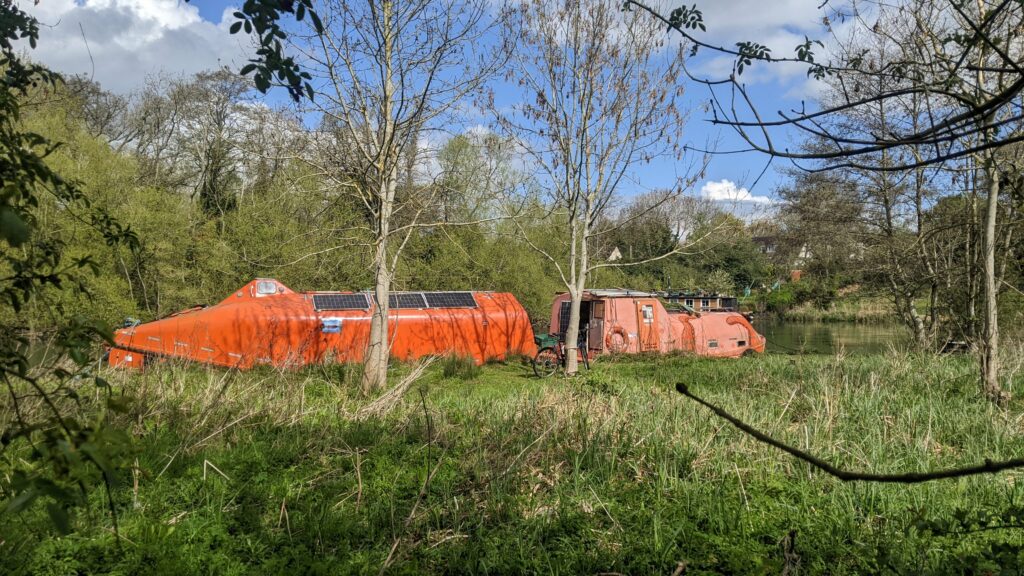
At the centre of this is trust, it is what makes social change possible. It’s the messy, ongoing tussle between horizontal and vertical forces, between collective process and imposed control. Take Oxford boaters as a lived example, this is observational, based on 40 years of doing this kind of work.
Face-to-face meetings? They start at maybe 50% trust and can rise to 70% without too much trouble. That’s because the people who show up are self-selecting – a mix of fluffy and spiky, but open enough to engage. You get debate, but also movement.
Then we go back online were trust drops fast – down to 20–30%, sometimes even into negative territory. That becomes the dominant tone as things splinter. Work that was built collaboratively offline gets pulled apart, the focus doesn’t hold.
On the open collective website, trust is actually high – but usage is low, again, self-selecting. So rollout stalls, no shared space, no shared understanding, no momentum.
So we call another face-to-face, the “whisper fire.” Trust shoots up – 90%, easy. People align, decisions get made, it feels like progress. But then everyone goes home, the next day? Momentum evaporates, as few people feel responsible for carrying things forward. And very quickly, we slide back into the low-trust dynamics of online chat.
Meanwhile, the group has grown, more people from offline outreach and leafleting. But the website is still stalled, so there’s nowhere to hold shared knowledge. We keep re-arguing basics, we don’t even have a solid FAQ. Trust drops again.
Next meeting: bigger pool, smaller turnout. Trust starts at near zero, the first half is rough – people filtering out, clashing, posturing. Slowly, some shared ground emerges and trust crawls up to maybe 50% but still, nothing concrete gets resolved. A few working groups are seeded. Environment sort of functions. Media splinters from the start, but manages a press release, but without any clear #4opens process. Beyond that, the next steps remain unanswered.
Back online? Trust gets ripped apart again. The whisper fire is supposed to be every week, but we have lost focus, but we try agen – half-heartedly at first. Poor turnout, then people drift in after a couple of hours. Trust rebuilds to around 70%. Real decisions get made, consensus emerges, it starts to feel like an actual working affinity group.
But the chat? Still toxic, low trust, constant tearing-down, fixation on side issues, and a push toward rushed bureaucratic structures that crumble under their own weight. The only thing that actually works is the consensus built in the whisper fire – because that’s what people really agree on, underneath the passive-aggressive noise. But after each cycle, trust in the online chat drops again, down below 30% on the surface. Maybe 40% underneath, if you’re generous.
And now we hit the next stage: formal process, bureaucracy, decisions that actually matter, where it gets real. And because online trust is still so low, everything becomes harder than it needs to be, friction everywhere, misunderstanding as default.
But – and this is the hopeful bit – offline trust is slowly growing. So maybe, just maybe, we can carry that through, if we don’t let the chat tear it apart first.

@info hear hear
Remote Reply
Original Comment URL
Your Profile
Why do I need to enter my profile?
This site is part of the ⁂ open social web, a network of interconnected social platforms (like Mastodon, Pixelfed, Friendica, and others). Unlike centralized social media, your account lives on a platform of your choice, and you can interact with people across different platforms.
By entering your profile, we can send you to your account where you can complete this action.