I am not religious, but that does not mean religion is something that can only be dismissed as irrational, stupid or obsolete. There is a useful distinction between believing in a religion and understanding the social, cultural and philosophical work that religion has historically done.
This matters for the #OMN because we are interested in how human beings make meaning, build communities and organise themselves when they don’t have complete knowledge of the world. We don’t know everything – one of the interesting things is that science and theology both eventually run into the same thing – mystery.
Science starts with observation, evidence and experiment, to builds theories from what we can discover and then changes those theories when better evidence appears. Religion starts where empirical knowledge runs out and tries to construct stories, symbols and ethical frameworks around the things we cannot yet explain.
That doesn’t mean the paths science and religion are on identical, they aren’t. A scientific theory is not the same thing as a religious myth, evidence, testing and falsifiability matter. But there is a shared human problem underneath both – we are trying to understand a world that is bigger than our ability to understand it. The problem begins when either side claims to have finally solved the mystery.
In my view It’s useful to look at religion as a social technology – for thousands of years, religion has been a kind of social technology that helped people organise communities, explain death, create rituals, transmit stories, establish ethical expectations and give people ways of dealing with uncertainty. Before modern science, medicine and large bureaucratic institutions, people had very few tools for dealing with an unpredictable world.
- Storms happened.
- Crops failed.
- Children died.
- People became sick.
- Wars arrived.
People didn’t know what was going to happen tomorrow, religion provide a framework for living with that uncertainty. Prayer, ritual, myth and community provide a sense of meaning when there was very little else available. Yes, that doesn’t mean the explanations were factually correct, it means they performed social functions.
And this is where the conversation becomes interesting for the #OMN – the danger is false certainty – there is a big difference between living with mystery and selling people certainty. The religious con begins when somebody says “I know exactly what God wants.”,”I know what happens after death.”, “I know the future.” or “Give me money and I can protect you from it.”
This isn’t limited to religion, modern society is full of people selling certainty – politicians, corporations, economists all sell certainty. As do most of our #dotcons technology companies which are pushing the cult of influencers trying to sell certainty. And on the other side increasingly the #geekproblem sells us the idea that every social problem can be solved with the correct application, platform or algorithm.
That #techshit is another kind of theology, the technology of certainty, a lot of contemporary technology culture is built around the assumption that uncertainty is a technical problem waiting to be eliminated. We want perfect systems, perfect moderation, perfect security, perfect prediction etc.
But human society doesn’t work like that – people are messy, cultures are messy, communities disagree, knowledge changes. Context matters, things break, and sometimes we simply don’t know. The attempt to remove all of this uncertainty produces something worse than the original problem – systems of control.
This is one reason the #openweb matters – #OPEN is about living with uncertainty – on this native path the #OMN isn’t an attempt to build a perfect system, quite the opposite. The aim is to build social and technical infrastructure that allows people to work together without requiring perfection.
The #4opens approach is useful precisely because it doesn’t require everyone to agree. It creates conditions where disagreement can remain visible and productive, this is very different from trying to create one system that finally gets everything right.
We need better stories, not final answers – human beings need stories – we need ways of explaining where we came from, where we are going and what we should care about. Religion has historically provided some of those stories, art, politics, philosophy and community life provide others. Now science is trying to provide new ones to replace the dieing religions. The mistake is thinking that one of these “correct paths” has to completely replace all the others.
The #OMN is interested in the space between – how do we build the communication systems through which communities can create, challenge, preserve and share their stories? That is what #MakingHistory is about too – history isn’t just a collection of “facts”. It is a living social process of deciding what happened, who experienced it, what mattered and what we should remember.
If we leave that process to corporations, governments, algorithms and closed platforms, we increasingly lose control of our collective memory. In this mess, there is an uncomfortable parallel between religious fundamentalism and technological fundamentalism, both can become systems of faith. Both create sacred texts, produce priesthoods, punish heresy and both can promise salvation.
The work to compost this mess, is to keep thinking, keep questioning and keep the systems open enough for other people to challenge us. That is a very #KISS principle – we don’t know everything – so build systems that allow us to learn. We need a culture of epistemic humility, an acceptance that our understanding is partial, provisional and socially constructed.
We need tools that help communities see what they know what they don’t know – what they disagree about and how their understanding changes over time. That means moving away from closed systems that manufacture certainty and toward open systems that make the process visible. That is the #openweb, and the social purpose of the #OMN.
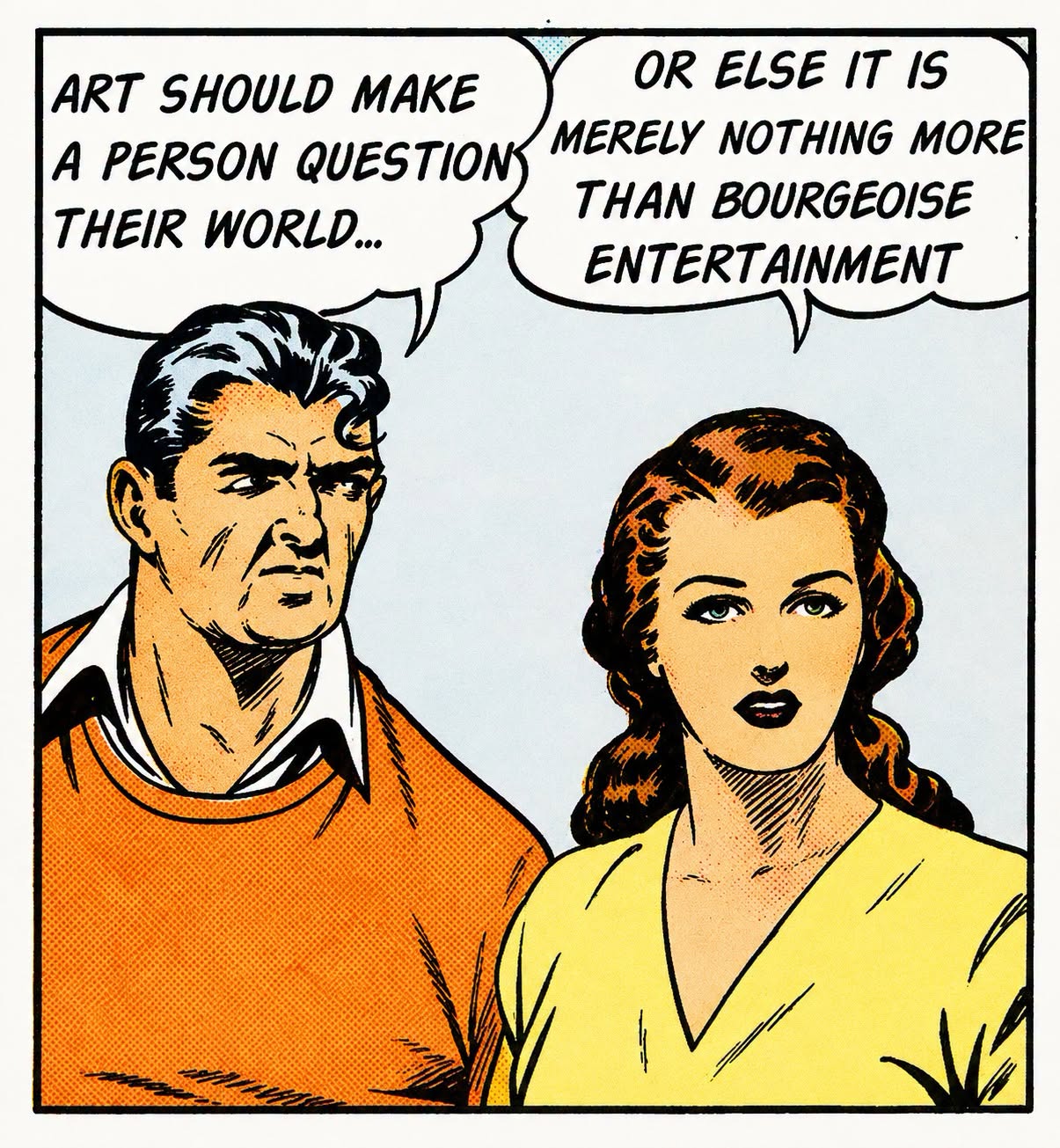
And perhaps the most important lesson from religion, science, art and everything between them is remarkably simple “We don’t know.” so let’s build systems that help us find out, together.
#OMN #OpenWeb #4opens #MakingHistory #IndymediaBack #OGB #KISS #geekproblem #stupidindividualism #commons
