There are meany problems with some of the Western left, it has become good at telling people what is wrong with the world, but poor at building the capacity to change or challenge the mess we live and likely die in. Instead of understanding how power works, too much political energy goes into judging the people living under this mess. We get endless admonishment, moral posturing, purity tests and a growing contempt for ordinary people, this is a political dead end.
The last ten years of much of the left has confused denunciation with analysis, purity with strategy and contempt with critique. Rather than raising consciousness and building collective power, it behaves like a push to moral judgements about the people it claims to represent. This isn’t simply a problem of individual attitudes, it is part of a wider historical failure, the capture of radical politics by liberal assumptions and institutions that obviously leave the existing order intact.
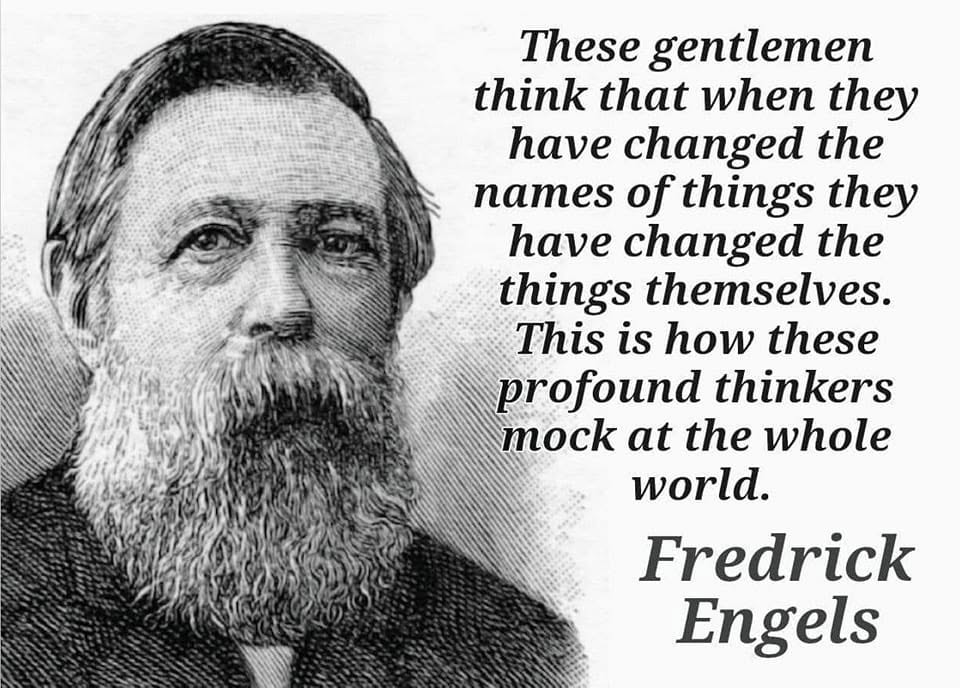
Reform is not the same as transformation – there is an important distinction in the history of socialist thinking, reform and revolution are not simply two different speeds of political change. A reform can be large, ambitious and genuinely improve people’s lives while still leaving the underlying framework of power untouched. The existing system can absorb improvements, adapt to them and continue operating.
The problem is not fighting for reforms – people need better housing, healthcare, education, wages and working conditions now, the problem is treating reform as the ultimate political destination. A non dogmatic progressives argument is that reforms are a means towards transformation, not a substitute for it. If we spend all our political energy improving the operation of a broken system, without building the capacity to move beyond it, we are #KISS making that system more stable rather than less powerful.
This is where much of contemporary #mainstreaming activism gets stuck, focusing on negotiating the terms of the existing system while losing sight of the need to build something outside it. This is the mess we talk about so much about composting at the #OMN.
We are living through a period of instability in the existing failing global order – economic inequality, ecological breakdown, political fragmentation and the consequences of hundreds of years of imperial power are exposing the limits of the systems we depended on for the last 200 years… The last 45 years of #deathcult worship promised us that that the same structures, with a few adjustments, will somehow deliver a different future.
But what happens when the framework itself is the problem? The answer cannot be another round of campaigning for better management of the same institutions, we need to build practical alternatives. Healthcare, education, housing, energy, food and communications are not abstract political issues. They are the foundations of everyday life, if communities cannot organize and sustain these things themselves, they remain dependent on the institutions they are trying to change.
This is not about pretending that small community projects can replace entire state systems overnight. It is about building capacity, relationships, knowledge and infrastructure that can grow beyond the limits of the existing order. Revolution as the practice of building, is where I think the argument becomes important.
Revolution is often imagined as a dramatic political event, a moment when the existing order falls and something new takes its place. But what happens the morning after? Who runs the food systems? Who maintains the infrastructure? Who organizes healthcare? Who keeps communications working? Who has the skills, relationships and trust needed to sustain a different society?
If we haven’t built those capacities beforehand, we are left trying to construct a new world using the organizational habits and institutional structures of the old one, that is not a good revolution. The more useful approach is to build alternatives while we still have the space to do so. Develop shared resources, independent networks, community infrastructure and practical ways of working together.
This is not a slower version of revolution, it is a different understanding of what meaningful transformation requires. The work is not only to oppose existing power, but to build the capacity to live differently. This brings us back to the problem with the Western left.
We need to stop treating ordinary people as the problem to be corrected, people are living inside systems they did not individually design and often have very little power to change. Moralizing at them doesn’t build political capacity, endless criticism doesn’t create trust, purity tests don’t produce functioning infrastructure. We need to move beyond #stupidindividualism and the habit of treating politics as a performance of personal virtue.
That means building projects where people participate, contribute, disagree and learn through practice, by accepting that collective work is messy, imperfect and sometimes uncomfortable. It also means creating structures that can survive beyond individual personalities, funding cycles and fashionable political agendas.
The #OMN is about building these foundations – a first very practical step is the need for networks that support trust rather than algorithmic manipulation, shared resources rather than private capture, and community participation rather than control by technical or institutional elitists. The same path applies beyond technology, we need to build the practical capacity for communities to organize their own lives.
The path – stop waiting for permission – there is no guarantee that these alternatives will succeed, the is no magic organizational model or technical solution that will naturally produce a better society. But the alternative is to keep asking existing institutions to solve problems that their own structures reproduce. We need to move beyond the false choice between reformist accommodation and revolutionary fantasy.
The choice and path is simple – build #KISS alternatives, develop the skills, create the relationships, share the infrastructure, learn through doing, make mistakes, fix them and keep going. The challenge is not simply to be against the existing system, it is to become capable of building something that can outgrow it. Don’t just criticize the #deathcult, build the #lifecult.
