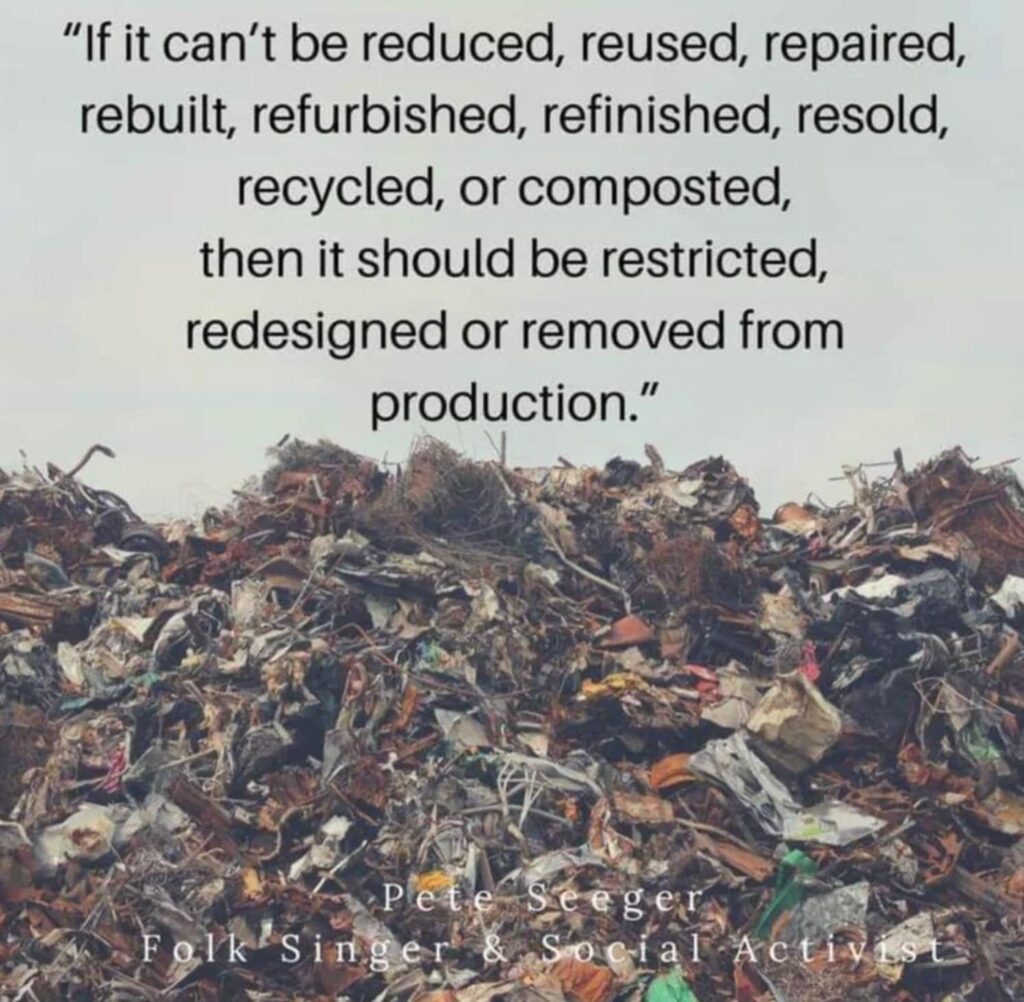
The ecological crisis is not primarily a failure of technology. It is a failure of values. For decades, we’ve been trapped in a toxic logic where growth equals progress, where every solution is expected to expand markets, increase consumption and generate profit for the #nastyfew. The result is a system that treats living ecosystems, human communities and even the future itself as resources to be consumed. This is the logic of the #deathcult.
The #4opens offer a way to break that cycle by starting where the leverage is greatest: information. Digital goods are fundamentally different from physical goods. They are non-rivalrous, freely replicable and infinitely shareable. Knowledge, software, culture and coordination can grow without consuming more material resources. When these become commons instead of commodities, the economic pressure for endless physical expansion begins to weaken.
This isn’t an abstract idea -it’s practical leverage. When knowledge is open, we stop burning forests to print manuals that could be freely shared. When software is commons, we stop manufacturing artificial scarcity through licensing and lock-in. When culture is shared instead of enclosed, we reduce the endless cycle of consumption driven by marketing rather than need.
By moving value creation into digital abundance, we reduce pressure on physical extraction. Fewer products need to be manufactured, shipped, packaged, stored and discarded simply to keep the economy growing. The economy no longer has to pretend that producing more stuff automatically creates better lives. This shift creates the conditions for real ecological transformation.
Energy systems can become local because designs, coordination and maintenance knowledge are openly shared. Communities build, adapt and repair renewable infrastructure without depending on proprietary technology or corporate permission. Circular economies become practical because repair manuals, supply chains and governance are treated as commons rather than trade secrets. Waste becomes a resource instead of an externality.
But the deepest change is cultural. Consumerism loses its grip when identity, creativity and social participation are no longer mediated through purchasing things from the #dotcons. We stop confusing consumption with participation. We stop mistaking marketing for culture. We rediscover that meaning comes from creating, sharing and caring together.
This is where the #OMN path becomes important. The goal is not simply to build better digital tools. It is to create social infrastructure that supports cooperation instead of competition, commons instead of enclosure and participation instead of passive consumption. The #openweb becomes the communication layer for a society organised around resilience rather than extraction.
This is not a call for austerity, it is a different understanding of abundance. Knowledge becomes more valuable the more it is shared. Culture grows richer through participation. Communities become stronger through cooperation. Care increases when it is organised collectively.
Meanwhile, material throughput – extracting, manufacturing, transporting and throwing away – can shrink without reducing human wellbeing. That is the opportunity before us. Not “green capitalism” with better branding, where consumption continues under a different label, but a genuine civilisational shift. Digital abundance allows us to escape the growth trap, while the #4opens provide the governance needed to align human flourishing with ecological limits.
That is not incremental reform, it is a practical path beyond the #deathcult. A future where the planet can recover because we’ve learned to grow what is abundant – knowledge, trust, culture and care – and restrain what is finite. Not just survival, survival with dignity.