I went to the #Oxford event tonight with a slightly awkward position in mind. Before going, I wrote that the #mainstreaming people would probably be idealistic about cynical politics, while I was going to be cynical about idealistic politics. My aim wasn’t to pick a fight. I wanted to stay positive, avoid the usual political trench warfare, and try to build a bridge between idealism and the messy reality of power.
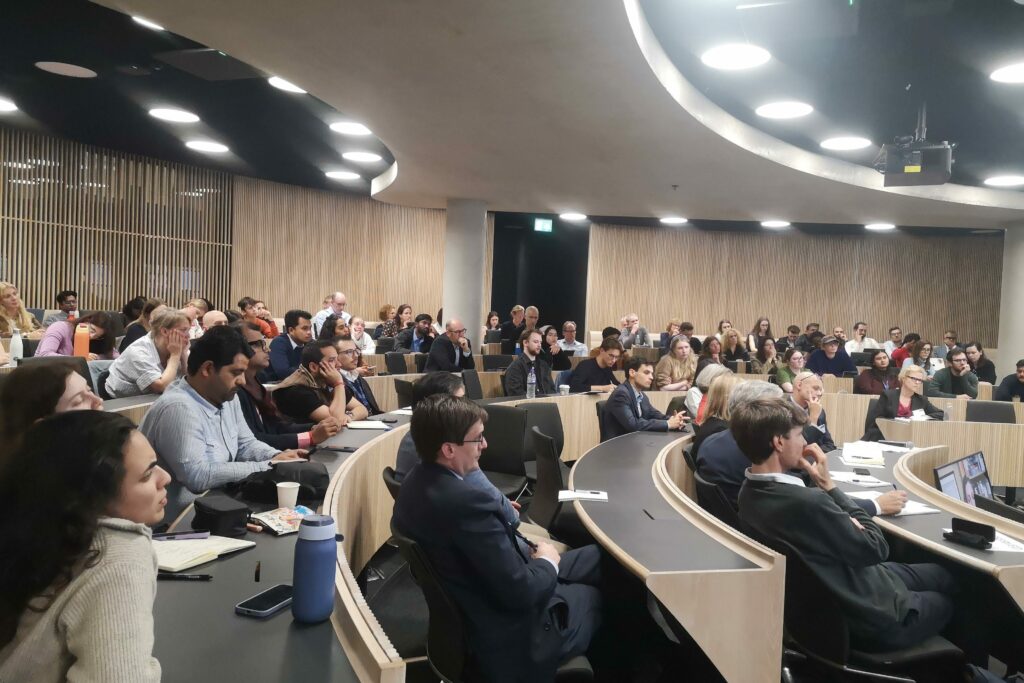
The event was “Democratic Resilience: What Do We Need to Know?”, a panel at the Blavatnik School of Government looking at how democratic institutions might respond to democratic backsliding. The panel brought together a selection of the political and intellectual chattering classes: senior figures from politics, academia, law, international institutions and civil society. The question was how governments, civil society, universities, businesses and international organizations can make democracy more resilient.
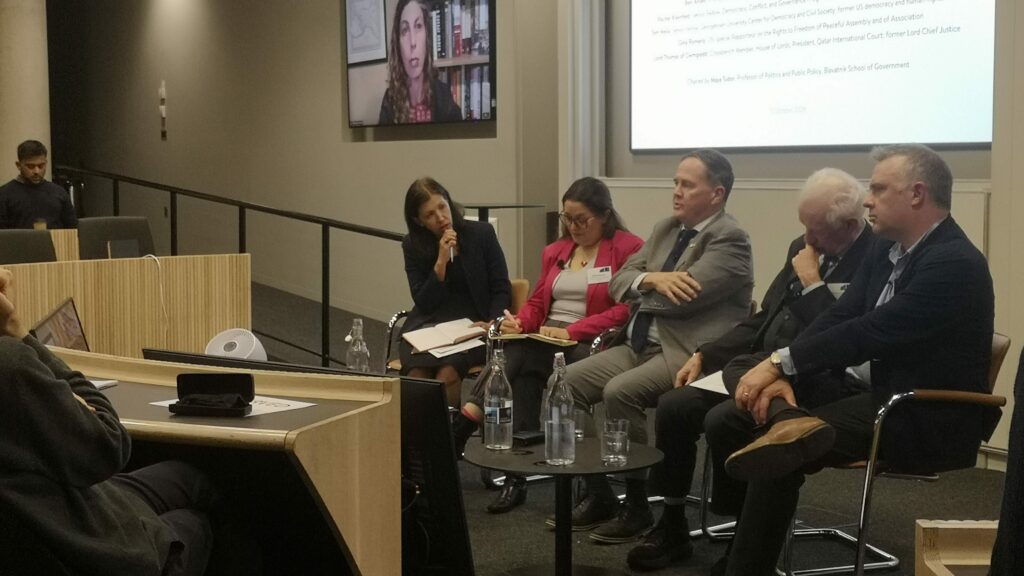
It was an important question, but as the evening went on, I increasingly felt that my cynicism had won. I wasn’t given the opportunity to ask what I thought was the uncomfortable horizontal question: With the hard shift to the right, accelerating #climatechaos, and the clear failure of the liberal class over the last 50 years, are the institutions they are trying to save actually fit for purpose? If we are facing the next forty years of serious systemic social and ecological backdown, we may need something closer to wartime socialist planning simply to hold our societies and civilization together.
So the question I did not put to the room was simple: Are the institutions you are focusing on actually capable of doing that job? Or are we watching the last gasps of a fading political and intellectual chattering class?
That is why my cynicism kicks in. One speaker talked about progressive #mainstreaming, but the solution still sounded bureaucratic and top-down. Another perspective came from a legal and institutional tradition that was confident in the existing structures. There was always a blinded sense of trying to protect the system without asking whether the system itself needs fundamental change.
There was some discussion of horizontal organization, grassroots capacity, open infrastructure, local participation. These are important ideas, and I was glad they were being discussed. But the final answer was always focused on using these approaches as tools to get people back into the institutions and forms of power they were assumed, by the people in the room, to belong in.
Looking at the last 50 years, I think there is a much more basic question, is that still useful? Perhaps the problem is not that people have lost access to power, perhaps some of the structures being pushed at events like this are parts of the problem. That we may need to grow new forms of resilience from the bottom up, real native horizontal organization, grassroots capacity as ways of rebuilding social capacity outside the increasingly brittle institutions these people fixate on.
That is one of the reasons I keep coming back to on the #openweb and projects like the #OMN. Were the point is to give people better tools to build the capacity for communities to organize, communicate, cooperate and govern themselves in different ways. Tonight reinforced my feeling that we need both idealism and cynicism to move away from the path this room sees as normal.
Keep the idealism about what society could become and keep the cynicism about institutions, power, and the assumption that existing structures will somehow fix themselves. The useful question that was not space to ask was: What kinds of institutions and social structures do we actually need for the next forty years – and are we building them yet?
That is the uncomfortable conversation I think we need to have.
On a positive note on shoveling this kinda mess, we need to see the difference between power struggle politics and organizing. Power struggle politics can keep going forever, even if you win, the same struggle comes back because the underlying structures haven’t changed. That is part of the 20th-century political legacy we need to move beyond.
Good organizing doesn’t mean having no conflict, every real group has disagreements, arguments and difficult personalities. The important question is, does the conflict stop the work from growing? Some of the best movements have had serious internal disagreements and still managed to be productive. The problem is when conflict becomes the work – when energy goes into controlling each other instead of building something together.
This is also where good open technology can help. Used well, transparency makes patterns of behaviour visible instead of hiding them inside closed meetings and informal power structures. So the goal isn’t a conflict-free movement, it is where conflict doesn’t consume the capacity to act.
That feels like a very 21st-century organizing problem.
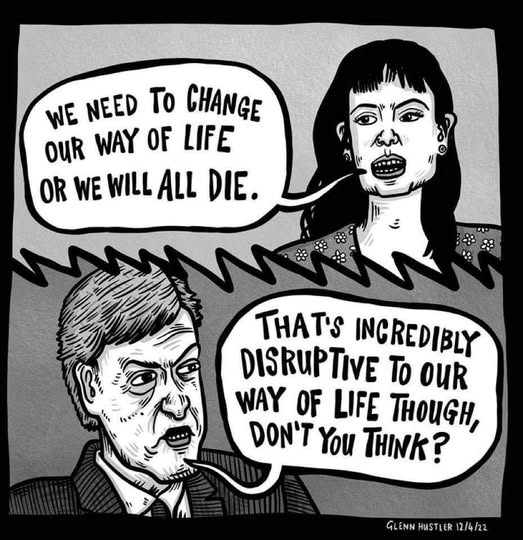
Update: My report back from the Oxford discussion on “Democratic Resilience” left me thinking about a basic problem. They talked about grassroots capacity, horizontal organization and open infrastructure, but mostly as ways of getting people back into existing institutions.
I think we need to turn that around, when the existing institutions are becoming increasingly brittle, and have helped produce many of the problems we now face, why are we still treating them as the destination?
We need to build new capacity from the bottom up, recognizing that there are already different paths developing: institutional, grassroots, #openweb, #FOSS, federated and community-based. They don’t all have to become the same thing, the goal should be mutual recognition and practical bridges between them.
So democratic resilience is more about balancing protecting the institutions we already have and having the courage to build the ones we are going to need.
#organizing #openweb #4opens #OMN #KISS
