We have our current “leadership” of the Fediverse complaining about personal attacks, with little understanding that this is a self inflicted scaling issues from creating pyramids of power – when the current crew took control to setup the #SWF – this mess can only grow. It highlights that we actually don’t have the tools to mediate this… and the is a stress with actually building these tools as then the risk is our spaces shifting to become the problem we are trying to compost.
There is a defacto separation inside the #Fediverse between what we historically call the #fluffy and the #spiky sides of the original #openweb culture. This isn’t simply a difference in personalities or communication styles, it’s a deeper political and cultural split, and our failure to recognize it is making it increasingly difficult to hold any meaningful debate in place.
The first five years of the Mastodon-driven #openweb reboot grew out of a much more diverse grassroots culture. There were people building protocols, people building communities, activists, hackers, journalists and people experimenting with new forms of social organization. It wasn’t always comfortable, and it certainly wasn’t always tidy, but there was space for disagreement and different approaches to coexist.
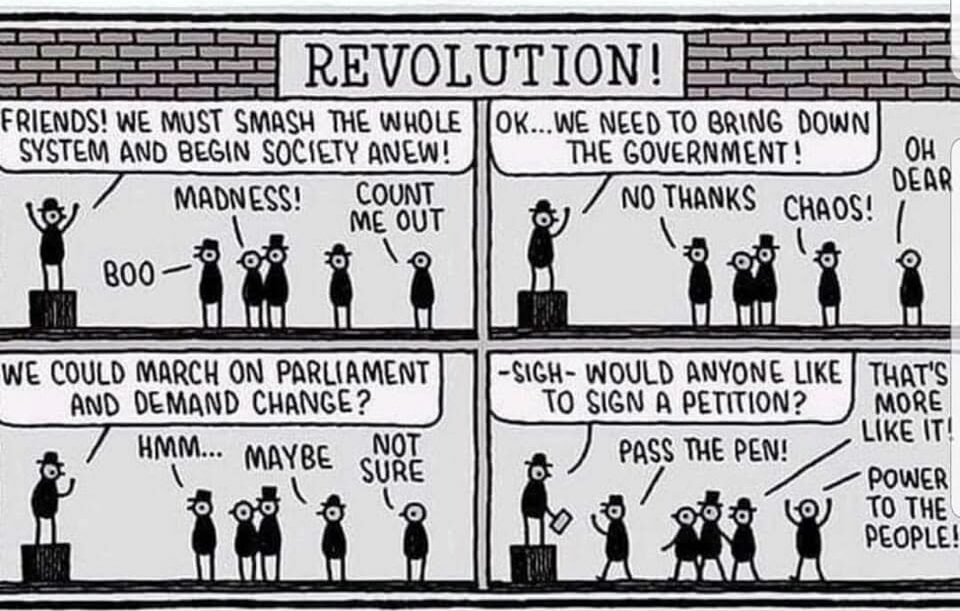
Over the last five years, with #mainstreaming and institutional growth, that balance has shifted. The #fluffy tendency has become increasingly comfortable with professional organizations, formal structures and separating technical development from social and political questions. The #spiky grassroots tendency has become marginalized, often dismissed as difficult, disruptive or simply out of step with the new direction.
This is where the problem sits – when people blindly or self interestedly say that building horizontal political and social power is separate from building protocols, they are reproducing the #blocking of the #geekproblem, that technology is never socially neutral. The structures we build into software shape the relationships, power and culture that grow around it. Equally, the social relationships shape the technology.
You cannot meaningfully or usefully separate the two and expect to build an open social web. The result is that we increasingly have separate conversations, separate spaces and separate organizing cultures. The #fluffy side can discuss protocols and institutional development without having to engage with the more difficult questions of grassroots power. The #spiky side if they are still active raise those questions, but have fewer, if any places where they can be heard and worked through constructively.
Even when we meet in supposedly open forums, we often aren’t holding the same debate, we’re far to often talking past each other from different assumptions about what the #Fediverse is for. This is why recommending separate federated forum, such as ActivityPub.Space, is avoiding the underlying problems. Federation connects the software, but it’s to often still used as social #blocking of connecting the cultures, politics or people using it. We need spaces where these differences can actually be mediated, not hidden behind polite invisible consensus or pushed out through very visible informal gatekeeping.
The #OMN position is that we need both the #fluffy capacity to build bridges, communicate and organize, and the #spiky capacity to challenge power, expose problems and push beyond comfortable consensus. Neither works particularly well without the other – the #4opens gives us some common ground to build shared spaces from: open data, open source, open standards and open process. These aren’t only technical preferences; they are practical ways to hold a shared space where disagreement happens without one side simply taking control.
The failure isn’t that we have different tendencies, diversity and disagreement are necessary. The failure is that we’ve allowed the separation to harden until we can no longer hold the debate in place. If the #Fediverse is going to become a genuine #openweb reboot, we need to compost this division and rebuild the bridges. Otherwise, we’ll end up with a federated network of technically connected communities that are socially and politically unable to talk to each other.
That’s not an open social web, it’s another form of fragmentation, as the #mainstreaming call it polarization… this is both #techshit and social mess, that we all need to help shovel the compost to grow real #openweb #reboot – this should be #KISS – but for meany people it is not.