People sometimes ask why I use the hashtag #deathcult. It isn’t just a provocative label, it is to name the dominant political and economic logic that has shaped the last forty years. By #deathcult, I mean the era of #neoliberalism: a system that treats endless economic growth, privatisation and competition as unquestionable “common sense,” even when the consequences are ecological collapse, growing inequality and social breakdown.
I call it a cult because, like any successful ideology, it becomes difficult to see from the inside. Its assumptions become so normal that alternatives appear impossible. Margaret Thatcher’s famous phrase, “There Is No Alternative,” sums this up perfectly. The “death” part has become harder to ignore, due to movements like #XR (Extinction Rebellion), the reality of #climatechaos has entered mainstream discussion. We can now see that continuing on our current path means ecological collapse, mass displacement and the deaths of millions – and displacement of billions – of people over the coming century.
Of course, neoliberalism is not something entirely new. It is an extreme form of capitalism, and history has seen similar periods before. One example is Britain’s response to the Irish Potato Famine, where market ideology took precedence over human need, contributing to mass starvation, displacement and suffering.
After the Second World War, many countries moved towards forms of social democracy. Capitalism was softened by stronger public services, labour rights and welfare systems. These reforms were far from perfect, but they recognised that completely unrestrained markets created instability and injustice. In part this “liberal golden” era was held in place by there being an alternative of soviet communism.
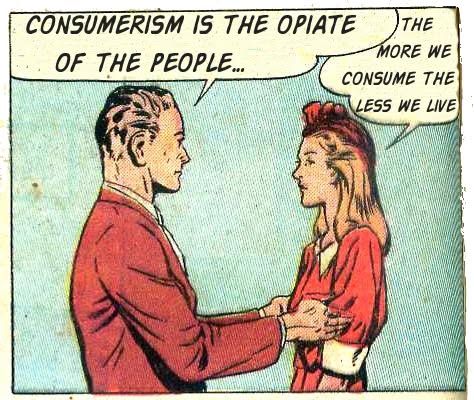
From the late 1970s onwards, much of that understanding was forgotten. Deregulation, privatisation and financialisation became the dominant ideology once again. Politicians like Jeremy Corbyn and Bernie Sanders represent attempts to move back towards that earlier social democratic settlement. Though this compromise path of social democracy is not a final answer, as it still operates within capitalism, but it is certainly preferable to the #neoliberal model that currently dominates. As radicals, though, we should aim higher. We need to build systems based on commons, cooperation, ecological responsibility and democratic participation, not simply manage capitalism more fairly.
This is where #OMN (Open Media Network) comes in. The problems we face are not only economic, they are also about communication. Today’s digital infrastructure is dominated by #dotcons: corporate platforms that monetise attention, shape public debate and concentrate power. Facebook, Google, Apple, X and similar platforms have become essential infrastructure while remaining accountable only to capital rather than communities.
The answer isn’t simply better regulation, it’s rebuilding the #openweb. Like the #Fediverse, the #OMN is one small contribution towards this path: creating media and communication infrastructure based on the #4opens – Open Data, Open Source, Open Standards and Open Process – so communities can shape their own communication instead of renting it from billion-dollar corporations.
People also ask why I use so many hashtags, the answer is simple, the web is made from links. Hashtags are one of the few linking technologies that work across platforms. They allow conversations to escape individual silos and become discoverable across the wider web. They are not meant to replace ideas; they are signposts pointing towards larger conversations that matter. Yes, they can look cryptic, but every shared language starts somewhere. If we never create language for new problems, we remain only trapped inside the vocabulary of the systems we’re trying to change and challenge.
Changing language doesn’t change the world by itself, but it can change how we think about the world, and changing the conversation is often the first step towards changing society itself. That’s why I still use #deathcult, not as an insult, but as a way of naming a system whose destructive logic has become so familiar that people struggle to imagine anything different. The challenge now is not simply to criticise that system, it is to build practical alternatives.
One thing has shifted over the last few years: it’s becoming #mainstreaming to recognise that #neoliberalism is a #deathcult. Composting this mess is the path of #OMN, the #openweb, and the #4opens.
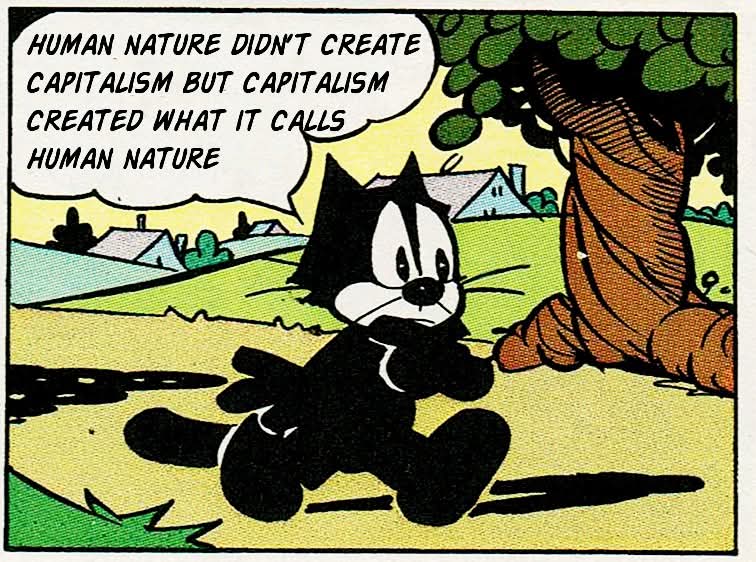
For those who like to believe in social democracy, this isn’t an argument against the gains it has won. Strong public services, workers’ rights, progressive taxation and democratic institutions have all made life better for millions. They matter, and they are worth defending.
But we should also recognise their limits. As long as investment and production remain under the control of capital, democracy stops at the workplace door. We get to vote for governments, but rarely over what our economies produce, how resources are used, or whose needs come first.
The next step is not simply kinder capitalism, but extending democratic principles into the economy itself. Building commons, cooperatives, public ownership where appropriate, community governance, and digital infrastructure that people collectively control. That’s the direction #OMN points towards: not replacing one elitist crew with another, but growing the practical foundations of economic democracy from the grassroots up.
