This is a mess we are finally starting to move away from. For over a decade, #failbook was one of the main organising spaces for progressive activism. On the surface it looked useful: easy groups, fast sharing, broad reach. But structurally it was never neutral. It was built as a #dotcons attention machine, optimised for engagement, conflict, and dependency. That design matters.
Platforms like this don’t just host activism – they reshape it. They push people toward reaction over reflection, outrage over organisation, and constant presence over sustained collective work. As we now recognise, they breed argument loops, emotional exhaustion, and political burnout. Not because activists are doing it “wrong”, but because the environment is engineered to reward exactly that behaviour.
From an #OMN perspective, this sits inside a wider enclosure cycle: grassroots online energy gets poured into #dotcons corporate infrastructure, that infrastructure extracts value (attention, data, control), and movements quickly become dependent on systems structurally hostile to long-term collective growth.
This is where the critique of the #deathcult becomes useful – not as a slogan, but as a description of how #neoliberal “common sense” gets embedded into everyday tools. If everything is individualised, reactive, and algorithmically amplified, then solidarity becomes very hard to sustain.
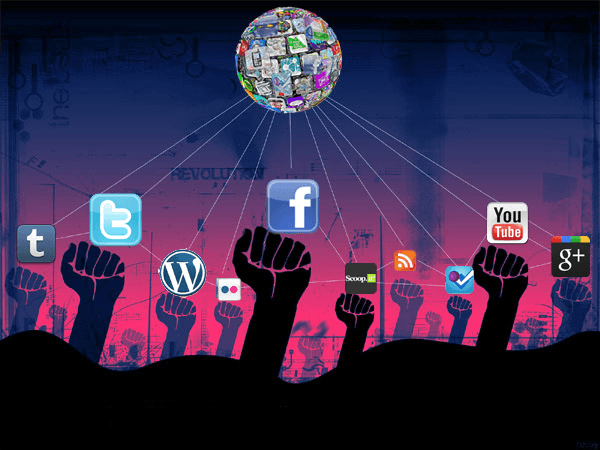
So yes: a huge amount of activist energy over the last 20 years has been absorbed into producing “empty” reach and visibility inside the #dotcons, rather than building durable autonomous spaces outside them. That has consequences, it weakens movements over time, even when it feels productive in the moment to the blinded #fashionistas. Simply it was a dead end.
Finally, we are now seeing something important – fatigue and recognition. Many groups are realising that #dotcons are no longer reliable organising spaces – but not only because of corporate control, but because of rising right-wing trolling, algorithmic hostility, and the general degradation of signal into noise. This has helped trigger a shift toward #openweb projects like the #Fediverse over the last few years.
Some parts of the activist ecosystem are beginning to look back toward federated tools and slower, more resilient forms of coordination. This is where the #OMN argument becomes practical rather than theoretical: if we want movements that last, we need spaces designed for cooperation, not capture.
The lesson is simple, even if uncomfortable – if you organise inside systems designed to fragment you, you should expect fragmentation.

The next phase is not louder posting, it’s building elsewhere. Every time someone shares an article about how terrible the world is, my first question is simple – What are you doing about it?
Outrage without action is another form of consumption, doomscrolling isn’t organising, sharing isn’t building, knowing isn’t enough.
The world won’t change because we comment on the mess. It changes when we create alternatives, challenge power, and work together to build something better.

@info is it only me, or there’s a bunch of images on this post which don’t have alt text? or maybe that’s because of how the blog exports posts to the fediverse?
Remote Reply
Original Comment URL
Your Profile
Why do I need to enter my profile?
This site is part of the ⁂ open social web, a network of interconnected social platforms (like Mastodon, Pixelfed, Friendica, and others). Unlike centralized social media, your account lives on a platform of your choice, and you can interact with people across different platforms.
By entering your profile, we can send you to your account where you can complete this action.
They are just there as link holders, do the links show up?
In general all the content is in the text and links – the images are ONLY there for eye candy for the #dotcons or as link holders. If we had more resources we could do a better but been running on negative resources for the last 5 years. If anyone wants to chip in https://opencollective.com/open-media-network we are currently short nearly 1K a year to cover basic #OMN running costs before basic improvements can be made.