DRAFT: Let’s look at this as an example of effective and ineffective activism. The mess we make and how we can compost this. Let’s start with an example outreach text that has not been sent out yet.
WHO WE ARE
We are resident boaters living on a stretch of the River Thames near Donnington Bridge. For many years, people have made their homes here peacefully and continuously as part of a long-standing river community.
WHAT’S HAPPENING
New signage already in place states that mooring, anchoring, or remaining stationary requires a licence in addition to the licence already paid to the river authority. Only a limited number of moorings may be available, and additional fees could apply for continuous occupation.
WHO IS AFFECTED
Long-term residents, low-income households, people living with serious illness, and vulnerable members of the river community. For many people, the river is not a lifestyle choice – it is their home.
WHY PEOPLE ARE CONCERNED
At a time of rising housing costs and increasing housing insecurity, these changes could reduce access to long-standing mooring spaces, push vulnerable residents out of the area, leave people without secure housing alternatives, reduce access to affordable river living, and undermine an established and historic river community.
WHAT WE ARE ASKING FOR
Protection for long-term residents, no forced removal of vulnerable people, fair and transparent consultation with all boaters, and respect for existing river communities.
BOATS ARE HOMES!
WE SUPPORT environmental protection, safe navigation, responsible shared river use, and respectful cooperation between all river users.
WE DO NOT SUPPORT loss of homes, exclusion of vulnerable residents, reduction of social diversity on the river, or the enclosure of historic river commons.
The first thing that needs to be said is this path people need to take is pretty simple #KISS
Affectiveness is – Trust = speed and power, every action flows from this, immediate actions:
- Working Groups – activate, not just name. Fill the gaps (Moorings WG is missing people). Each group needs tasks and a timelines. Media, Environment, Legal, Moorings are the four pillars.
- Summer visibility campaign. Litter picks were a start – now make them scheduled, social, and photographed. Visible care builds public sympathy faster than arguments.
- Public messaging. Posters and leaflets with LINKED to online messaging. Creative subversion of public space – keep it warm and community-facing, not aggressive.
- Media outreach – urgent. Contact sympathetic journalists now, before a hostile narrative sets in. Reach Green Party contacts, housing groups, environmental organisations, river users. Positive stories first, defence second.
Offline organising – sensitive coordination stays face-to-face in trusted spaces, not in public chats. Trust meeting prep for small delegations. Agreed talking points only. Anticipate reframing and deflection. Stay calm, stay on message, make clear asks.
Holding the physical space – Committed, confident people physically and socially present on the land
We are walking the horizontal path when groups strengthen: Working Groups coordinate laterally – not waiting for a centre to direct them. Visible action builds public trust, community care as the face of the campaign. Messaging stays simple and consistent, across all groups and channels. Relationships are built offline, where real trust and real decisions live. Institutions are engaged strategically, not reactively
What we’ve had so far is #BLOCKING and more BLOCKING.
The initial process was supposed to be simple: a short, wide consensus stage to build enough trust and shared direction for people to move together. This happened, but, that process got bogged down by aggressive fluffy and spiky pushing from different directions. What should have taken a short time stretched into months of churn.
The fluffy path kept smoothing over conflict with endless distractions, feelings, and disconnected “positive” non activity. The spiky path kept pushing outcomes through hard positioning and confrontation without the collective grounding needed to make that effective. Both ended up feeding the same result: paralysis.
Then, just as we were finally beginning to move toward the next stage – actual coordinated action through working groups – the same blocking pattern repeated itself. The working groups, which were supposed to move us past endless whole-group debate, got dragged backwards into re-running the original consensus arguments all over again. So instead of moving from consensus, to coordination, to action, we got trapped in a loop:
- process,
- argument,
- process again.
The result has been mess for the last three months. At best, people scattered into redundant, uncoordinated fluffy actions:
- litter picks,
- isolated messaging,
- disconnected outreach,
- individual goodwill projects with no #KISS cumulative strategy.
At worst, individuals entrenched themselves into blocking positions that lacked any collective backing, making any attempt at movement easy to isolate, dismiss, and weaponise against the broader outcomes, dissipate energy instead of concentrating it.
This is the hard truth about horizontal organising that people often avoid saying out loud: a horizontal movement without functioning working groups is not horizontal, it is just flat. And flat structures spread energy equally in all directions until nothing gains traction.
Working groups are supposed to solve this problem. They are the mechanism that turns shared trust into coordinated action. But instead of empowering them, thus our selves, we allowed the unresolved tensions of the first stage to spill endlessly into the second.
The deeper issue is that people are still acting from the poisoned culture we are supposedly fighting against of individual performance over collective strategy, emotional positioning over grounded coordination, symbolic activity over practical outcomes, leading us to the normal #stupidindividualism of identity and ego overtrust and process.
This is why trust matters so much, trust is not fluffy morality, it is practical movement infrastructure. Trust creates speed, coordination, resilience, and collective power. Without it, every decision reopens old arguments, every action fragments, and every process becomes another site of blockage.
Meanwhile, the mainstreaming benefits from all of this, they gain time, they shape public narratives uncontested, they observe our fragmentation, and they plan strategically while we churn internally.
The frustrating thing is that the movements already understands the problems, the issue is less lack of understanding. The blocking is active – the inability to stop reproducing the blocking dynamics long enough to move collectively.
This is the mess we need to compost
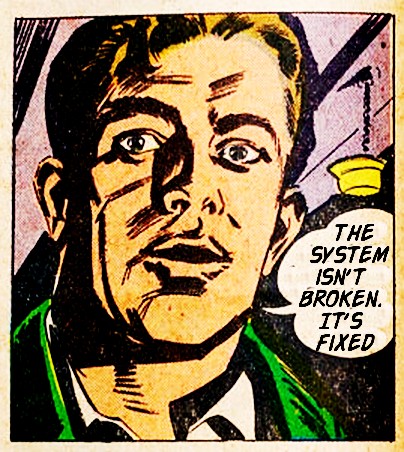
Until we create affinity groups to break this cycle, the next three months of this campaign risk looking exactly like the last three months – more shrinking and inflating big meetings full of hot air and scattering outcomes leading to more frustration, and little accumulated power.
The path is actually simple, though not easy – stop reopening the foundation process, empower the working groups, coordinate action, build trust through doing, and focus collective energy where it creates leverage instead of churn. Otherwise, we remain trapped in performative movement culture while the real decisions continue being made elsewhere.
