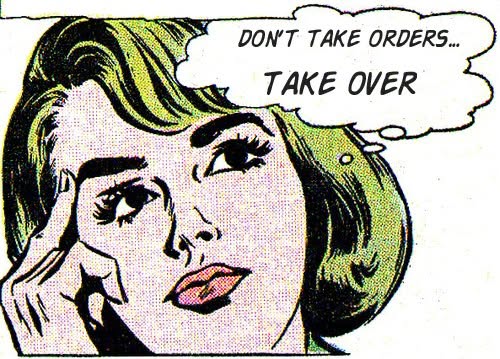
We need to incurage people to better balance personal coping with collective power to challenge the #DeathCult as we are living through a time when the world is becoming harder to live in, yet the dominant message is that we must learn to cope better as individuals. #Climatechaos accelerates, inequality deepens, and the #nastyfew accumulate wealth and power while communities struggle to meet basic needs. Democracy is hollowed out, public services are weakened, and the institutions that should protect us increasingly serve the interests of those who already hold power.
The answer our #fashionistas sell us is to often more self-help, become more resilient, set better boundaries, meditate, journal, practise mindfulness and learn to manage our anxiety. Some of these things can help, and people need space to rest and recover. But something is deeply wrong when the response to a collective crisis is an endless demand for individual self-improvement. If we are all busy fixing ourselves, we have less time and energy to challenge the systems making our lives harder.
This is #stupidindividualism, the assumption that social problems can be solved through private choices, personal discipline and consumer spending, rather than collective action and shared responsibility. It is one of the ways we worship the #deathcult – learning to experience structural failure as personal inadequacy. When work becomes unbearable, we are told to improve our resilience. When communities fall apart, we must develop better coping strategies. When insecurity becomes normal, we must manage our anxiety. The system remains unquestioned, while the individual becomes the problem to be solved.
Even care becomes another market, we are sold products, subscriptions and services to help us endure conditions we have little power to change alone. We are encouraged to become healthier and more resilient while the social and ecological foundations of our lives continue to deteriorate. Self-care matters. But there is a difference between caring for ourselves so we can live, and being encouraged to care for ourselves so we can tolerate the intolerable indefinitely. Self-care without community becomes sedation.
The same problem runs through the economy – this individualizing logic is not confined to self-help. It runs through the mainstream story about how the economy works. We are told that markets are natural, competition is inevitable, profitability is the ultimate measure of success, and alternatives must prove themselves within the very system they seek to change. Even the economic left remains trapped in arguments about how to improve capitalism’s imperfections, rather than questioning the assumptions that organize it.
The liberal fantasy of perfect competition hides the struggle taking place inside the economy. Real firms fight for markets, push down costs and seek advantages over workers, suppliers and rivals. This is not an unfortunate deviation from a harmonious market, it is central to how capitalism operates. Profit, and exploitation, is not simply a side effect, it is an organizing principle.
Businesses invest where they expect returns. Capital moves towards greater profitability, shaping employment, production, trade and investment. Communities lose industries and economic security because production has moved elsewhere. Environmental destruction can remain profitable when its costs are pushed onto workers, communities and future generations. What is profitable and what is socially useful are not the same thing.
An economy can grow while people lose security, solidarity and control over their futures. Environmental protection is supported when it makes money, and decent wages are defended when they improve productivity. But what happens when doing the right thing becomes less profitable? When justice depends on profitability, justice remains conditional.
This is the wider #deathcult, a path that treats accumulation as success even when the social and ecological consequences are destructive. Our head down worship of this mess teaches us to accept the economy as an impersonal machine, beyond our collective control, rather than as a set of human relationships and institutions that people have built, and can change.
The myth of the isolated individual. The economic story and the self-help story share a deeper assumption, that people are fundamentally isolated individuals, responsible for maximizing their own interests. But people are not calculating machines operating outside society. Our behaviour is shaped by relationships, emotions, culture, class, gender, nationality, history and the influence of others. What we want, what we believe is possible and how we act are all shaped by the communities and institutions in which we live.
When we build institutions around the assumption that everyone is an isolated competitor, we reward competition and weaken cooperation. We then point to the resulting behaviour as proof that competition is simply human nature. The system produces the behaviour it expects, then uses that behaviour to justify itself.
The same pattern appears in our personal lives. We are encouraged to compete for work, status and security, then blamed when we become exhausted, anxious or isolated. We are told to become better individuals rather than asking why our lives have been organized in ways that make collective well-being so difficult. This is not an argument against personal responsibility, it is a rejection of the idea that personal responsibility can substitute for shared responsibility. We cannot solve collective problems by treating every person as a separate problem to be fixed.
From private survival to collective care – the alternative is not to shame people who are tired, overwhelmed or unable to do more. Demanding that everyone become a full-time activist would reproduce the same pressure to perform and succeed that helped create the problem. People need rest, they need friendships, personal space and the freedom to step away from constant crisis. But personal peace is not the same as collective freedom.
We need to rebuild the social structures that make care possible: mutual aid, local groups, shared spaces, grassroots media, community resources and relationships where people participate without turning everything into a transaction. This means making participation possible at a human scale. Share skills and resources. Build trust, create spaces where people can disagree, work through conflict and take practical action together. Let people contribute what they can, rather than expecting everyone to do everything.
Care is not simply something we consume, it is part of how we organize our lives together. Real freedom means more than managing our own private existence, it also means having a collective say in the conditions we live in. The path we need now is from collective care to the commons, this is where the #OMN – Open Media Network – fits into a wider political project.
If the existing system organizes life around profitability and private accumulation, we need to build spaces where social usefulness, collective participation and shared responsibility can become organizing principles in their own right. We need grassroots media and archives that serve communities rather than advertisers. We need cooperatives and worker-owned organizations where people have a meaningful stake in decisions. We need shared infrastructure that communities govern, rather than relying on corporate #dotcons platforms and institutional #NGO gatekeepers.
We need to move past the people currently #blocking. The #OMN is not another platform promising to solve society through technology, it is a practical attempt to help communities share news, preserve collective memory, connect local struggles and build trusted flows of information. It is about moving power towards the people who create and use media, rather than leaving it concentrated in the hands of corporate platforms or a small groups of technical elitists.
The challenge is to better connect the technical, economic and social dimensions of the commons. To grow a different common sense. Were we have ways of understanding society that connect theory to lived experience, expose the power relationships hidden behind supposedly neutral systems, and help us test alternatives in practice. We need to stop treating the market as a neutral measure of human value, just as we need to stop treating individual resilience as the answer to collective breakdown.
The personal and the political meet in our everyday lives, in whether we have time to rest, whether we can afford to live, whether our communities have places to gather, whether our work is meaningful, whether we can trust one another, and whether we have any real power over the decisions shaping our futures. These are not separate problems, they are connected expressions of how society is organized.
So to sum up, the task is to move from private coping towards collective agency. Less pressure to optimism ourselves, more power to change the conditions we live in. Less isolation, more mutual aid. Less consumption disguised as healing, more care organized through community. Less dependence on profitability as the measure of value, more collective power to decide what matters.
We are not simply broken individuals who need to become better at surviving a broken society, we are people who need the collective space, trust and tools to build a better one. That is the work of the #OMN, the #openweb and the grassroots commons paths, connecting personal well-being with community well-being, critical understanding with practical participation, and #4opens technology with pushing collective power.
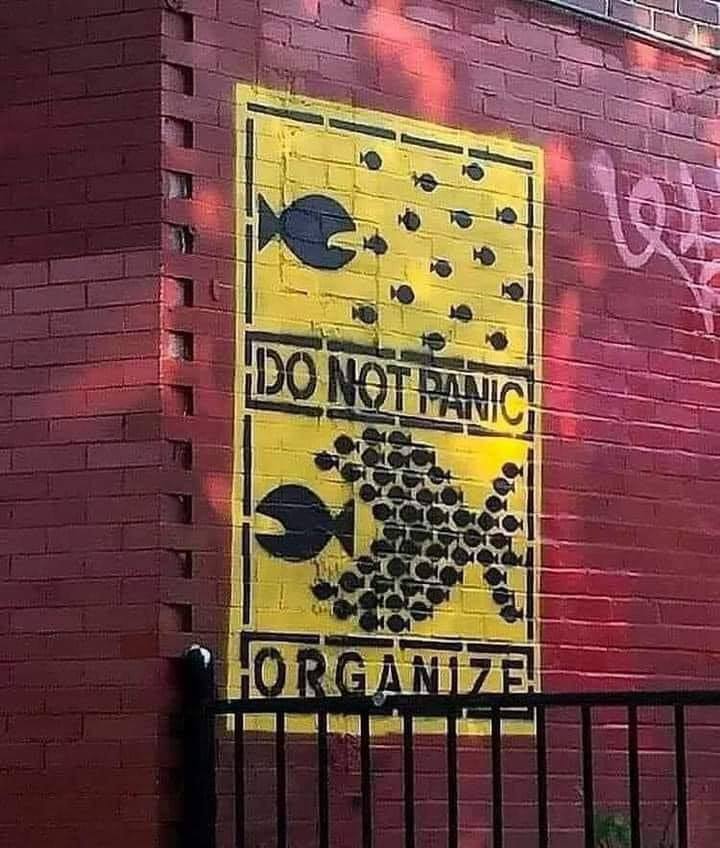
#KISS #OMN #4opens #openweb #commons #stupidindividualism #deathcult #oxfordboaters
