Techno #feudalism is a description of the power that large #dotcons technology platforms now have over the economy and society. The comparison is with medieval feudalism. Under feudalism, land was the critical means of production and ordinary people worked land they did not own. Lords controlled access to it and extracted rents or surplus from those who depended on it.
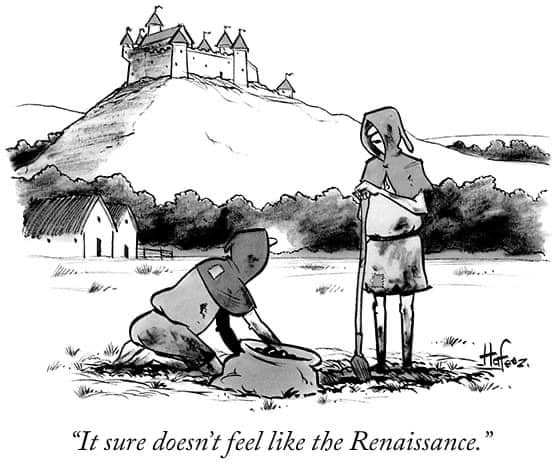
This is relevant today were the critical bottleneck is increasingly digital capital: platforms, servers, algorithms, data, cloud infrastructure, app stores and enormous networked captured user bases. A few corporations, run by an increasingly visible #nastyfew control this infrastructure. Communities, businesses, workers and creators are dependent on platforms they do not control.
The current shift is from ownership to access, instead of owning software, music, games or other digital tools, people rent access through subscriptions and platforms. This means wealth and control accumulate with the owners of the infrastructure rather than with the people using it.
The #closedweb platform economy creates rent extraction. App stores, marketplaces, hosting platforms and gig-economy companies take a percentage from the economic activity that passes through them. Network effects make dominant platforms increasingly difficult to challenge, as we are seeing, allowing those rents to rise.
#AI is we get past the narrow use case of #LLMs could intensify this dynamic by replacing human labour with capital-intensive systems. If a few companies own the #AI infrastructure, the bargaining power of labour will fall while the power of capital owners, the #nastyfew takes over the levers of power over the #mainstreaming.
The political dimension – #dotcons don’t merely control economic infrastructure; their algorithms influence what billions of people see, discuss, believe and buy. This gives the #nastyfew platform owners an extraordinary ability to shape public discourse.
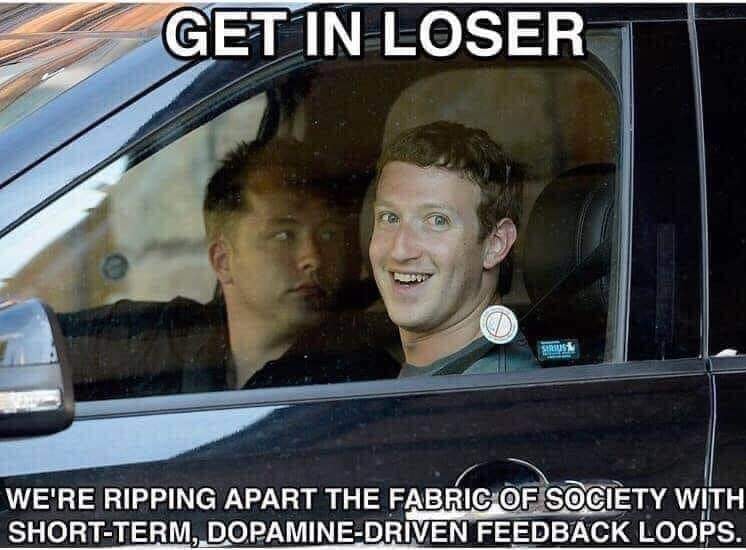
But yes, you would be right to point out this is just the normal monopoly capitalism for now, these companies still invest enormous amounts in research, infrastructure and innovation. They operate within markets and people are not legally bound to them in the way medieval serfs were bound to their lords. The system can also be understood as an intensification of monopoly capitalism and rent extraction.
For the #OMN, the strongest point is that the problem isn’t technology itself, it is concentrated ownership and control of the technological infrastructure. A simple stepping to #4opens network changes the relationship, instead of everyone being tenants on somebody else’s platform, we build infrastructure around open standards, federation, interoperability, shared ownership, participation and commons-based production.
That makes the #openweb and projects such as the #OMN more than technical alternatives. They become part of the struggle over whether the digital world develops into a feudalistic landscape of platform landlords and digital tenants, or remains a genuinely distributed native #openweb commons.
In that sense, #4opens is an economic and political argument as much as a technical one: keep the infrastructure open enough that nobody can permanently own the flows through which everyone else has to live and communicate.
It’s a #KISS project.
