People fight against or/and ignore the #KISS (Keep It Simple Stupid) approach in tech because simplicity exposes power. Complexity, jargon, and process give cover – they make control look like competence. When paths are simple and transparent, everyone can see who’s blocking, who’s hoarding, who’s acting in bad faith. Many “experts” and institutions are emotionally and professionally invested in keeping things complicated; simplicity threatens their authority, their funding, and their identity.
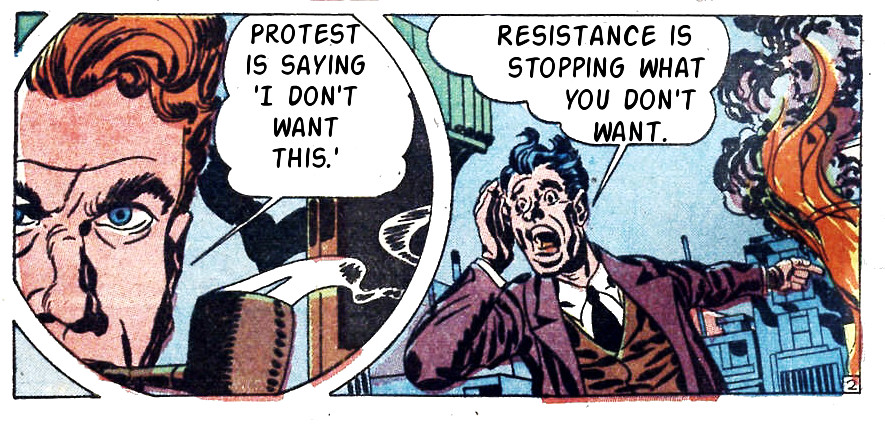
All the #OMN projects are not directly about social change – they’re about making social change possible. That distinction matters as people don’t step into change unless they first believe change can happen. If the world feels fixed, locked, inevitable, then nothing moves. Our role is simpler, and maybe more important, to open that door a crack, to show that different paths exist.
Think of #OMN as a helping hand, not dragging people forward, not telling them what to do – just making it easier for them to take that first step when they’re ready. But to do this, we need to think more clearly – and more fundamentally – about technology itself. As most of the current “open paths” are cosplay at best, we need a network that links them as flows for there use to be unlocked from the current limits of #stupidindividualism shaping them – to become a native part of the expanding #openweb reboot.
I’ve been working on this for over 30 years, and one thing keeps proving true: we need roughly 90% open and 10% closed, the balance matters. As the current push from the #encryptionists flips this – aiming for 90% closed and 10% open. That current mess isn’t a solution, it’s a retreat, as it breaks the social fabric that makes collective tools usable and meaningful. It fragments, isolates, and ultimately shrinks the space where shared culture can exist.
Yes, privacy matters, yes, some things should be closed, that’s the 10%. But the commons – the space where we meet, talk, organize, and build trust – has to be open. Without that, there is no network, just silos. Take a simple example: you’re reading this via #activitypub. That’s a system built on being mostly open, with just enough closure to function safely, it works, people are here, conversations happen, networks grow.
Compare that to more closed, encryption-heavy systems like old school Diaspora. Technically interesting, sure, but socially? Empty, few people, little flow, no impact. That’s the point we need to make better, this isn’t just about functions or features, it’s about culture.
Open federated, networked systems create the possibility of shared culture, and from that, the possibility of social change. Closed systems protect individuals, but they rarely build movements. We need both – but we need to get the balance right. Right now, too many people are getting it the wrong way round.
This Isn’t New: Decentralisation Was the Point All Along
Decentralised servers – what we now call the #Fediverse – are often talked about as if they’re some new, radical innovation. They’re not, they’re a return to the original design of the network. The early internet wasn’t built to be controlled, it was built to survive. The core idea was simple: if parts of the network were destroyed – even something as extreme as a nuclear strike – the rest would keep functioning, no centre or single point of failure no “off switch.”
That’s what decentralization actually means, and this thinking didn’t even start with the #openweb. Systems like Usenet already embodied this, distributed, federated, run by many, owned by none. Messy? Yes, but resilient, open, and hard to capture. What we’ve been living through for the last 20+ years – the rise of the #dotcons – is the opposite of this. Centralized platforms with single points of control. Easy to use for control and monetize, easy to manipulate, easy to shut down. We didn’t lose the #openweb by accident, we blindly traded it away for this convenience.
What we’re seeing now with the #Fediverse, #ActivityPub, and related projects isn’t innovation in the common sense, it’s a reboot, a return to the path we were on before we derailed it. The difference is that now we’re trying to rebuild this in a world that has spent decades normalizing centralization and control. 40 years of #deathcult worship has changed people, institutions, social groups and our very internal selves. That’s where the friction comes from, people arrive expecting #dotcons platforms, what they find is networks. People expect control, what they get is responsibility. People expect “free” what they face is shared cost and care.
So, it was never about the tech, the mistake we keep making is ONLY thinking this is a technical shift, it’s not, it’s cultural. You can spin up a decentralized server in minutes, that’s not the hard part, the hard part is everything around it:
- Who runs it
- Who pays for it
- How decisions are made
- How conflict is handled
- How trust is built and maintained
This is the work the #dotcons hide from us, they wrap control as “free services” paid for with surveillance, extraction. Now that we’re back on the #openweb path, that work becomes visible again, and yes – it’s harder.
Why this matters (Again). Resilience isn’t an abstract idea anymore as we’re living through cascading crises: political instability, #climatechaos, infrastructure fragility. A centralized network fails catastrophically were a decentralized network degrades – but keeps going – that’s the difference between a system you depend on and a system you can trust.
We don’t need to overcomplicate this – Keep It Simple (#KISS)
- The #openweb is decentralized
- The #dotcons are centralized
One builds commons, the other extracts value, everything else is detail. And yes nobody thinks the #Fediverse is not messy, uneven, (yet) to match the polish of corporate platforms. That’s fine, mess is where growth happens – if we compost it properly.
The #OMN view, we’re not trying to invent something new, we’re trying to make what already works usable at scale for media, trust, and collective action. The infrastructure is there, the protocols exist, the history is long. What’s missing is the shared layer – the commons – where information flows in ways people can actually rely on, that’s what we’re building.
If decentralization feels radical, it’s only because we’ve spent so long inside systems that forgot #OMN #openweb #KISS

One thought on “Closed systems protect individuals, but they rarely build movements”