There is a familiar voice resurfacing in today’s debates about the future of the web, its measured, reflective, earnest, often grey-bearded., and it has funding. These are the people who were there in the Web 2.0 era. The #Flickr builders. The early platform designers. The conference speakers who once talked about “community”, “social objects”, and “public infrastructure”. Many of them now occupy foundations, NGOs, advisory boards, and policy circles.
And they are doing something dangerous, as their thinking is too trapped inside capitalism. They are selling the #openweb reboot for a second time. Not maliciously. Not cynically. But from a place of deeply internalised capitalist thinking that they cannot – or will not – step outside.
The original Web 2.0 was built on a powerful lie, one many progressive people wanted to believe: That privately owned platforms could become public infrastructure. “social” media might actually mean social in a public, civic sense, that venture capital could somehow birth commons. As one of the original designers of Flickr puts it:
“We had sort of deluded ourselves into thinking in Web 2.0 that we were building public infrastructure.”
Yes. Exactly. But that delusion wasn’t accidental, it was structural, it came from trying to build public goods inside a system whose legal obligation is to maximise shareholder value. The moment scale arrived, the moment infrastructure emerged, the public was quietly enclosed. This wasn’t a failure of design, it was a failure of basic political economy.
The problem isn’t insight – it’s the frame – what makes the current moment frustrating isn’t that these voices lack insight. On the contrary: their analysis of algorithmic control, enclosure, loss of stewardship, and extractive business models is often sharp. The problem is where their thinking stops.
Again and again, the horizon of possibility remains trapped inside capitalism:
- Regulation instead of abolition
- Better governance instead of collective ownership
- NGOs instead of grassroots power
- “Public–private partnerships” instead of commons
Even when they correctly identify that platforms have become infrastructure, the proposed solutions remain managerial, institutional, and polite. The unspoken assumption is always the same, capitalism stays, “we” sand the sharp edges. This is the limit of their self-imposed view, and the danger we need to see is that this mirrors of the original sell-out and what makes this especially dangerous is that this thinking now takes up far more space than it deserves.
Just like in the Web 2.0 era, these voices dominate conferences, funding channels, policy conversations, and media narratives. Grassroots alternatives are marginalised as “naïve”, “unscalable”, or “too political”. This is abusive sidelining where the outcome at best is: Once again, we are told to be patient. Once again, we are told to trust institutions. Once again, the radical edges are smoothed away.
This mirrors the original sell-out:
- Then: “Let’s build community on platforms.”
- Now: “Let’s fix platforms with better policy.”
Different language, same enclosure. We see this agen with the #NGO trap and the illusion of stewardship, ones agen #foundations and #NGOs are presented as the solution. “Public product organisations”. “Stewardship entities”. Carefully designed governance models that still orbit state and capital power. The mess we need to see to compost is that NGOs are not the commons, they are buffers.
They absorb dissent, professionalise resistance, and translate radical demands into grant-safe language. They reproduce hierarchy while speaking the language of participation. This is not an accident, it is how capitalism metabolises critique.
This is why bridges keep collapsing, I have said my self: “Let’s build bridges. We need these people on side.” Yep, we’ve tried that, the problem is that when challenged – when the underlying mess is named – the response is not dialogue, its #blocking, muting, institutional silence, invitations withdrawn and funding evaporates.
This mess keeps tells us what we need to know, bridge-building only works when both sides are willing to move. When one side controls the platforms, the conferences, and the purse strings, “bridges” become assimilation pipelines.
So yes the path we need to take is compost, not deference, not cancellation, not personal attack. But refusing to let this thinking dominate the space again. Compost is how dead ideas become fertile ground for new growth. It is messy, uncomfortable, and necessary.
We don’t need another generation of politely regulated enclosures. We don’t need a warmed up Web 2.0, reboot with better language and worse outcomes.
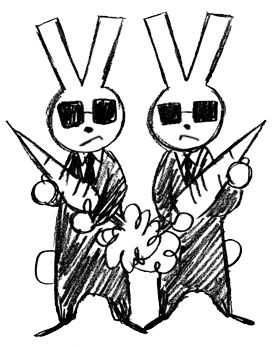
We need:
- Commons, not platforms
- Collective ownership, not stewardship theatre
- Grassroots infrastructure, not NGO mediation
We need the #4opens, not “ethical-ish” branding. The #openweb will not be rebooted by the same people, using the same frameworks, who helped bury it the first time.
- If you want to bridge, comment and engage honestly.
- If you want to defend the mess, expect compost.
That’s where new growth actually comes from.
PS: I kinda like the strong metaphor of house slaves and field slaves, these people are the metaphorical house slaves.

One thought on “The greybeards and the second sell-out of the #openweb”