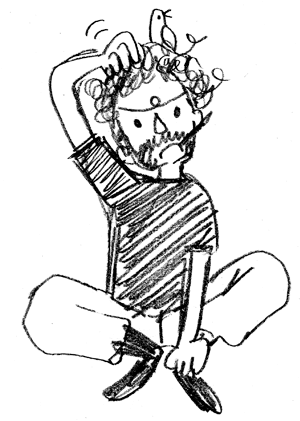
One of the quiet assumptions built into almost every #dotcons platform is that the user secretly wants to become a #techbro. Not literally, of course, but culturally.
You are expected to optimise yourself by building your “personal brand” to track your metrics. Engage with algorithmic growth loops by understand platforms, feeds, APIs, monetisation tools, creator dashboards. You’re supposed to treat communication as a kind of performance engineering problem.
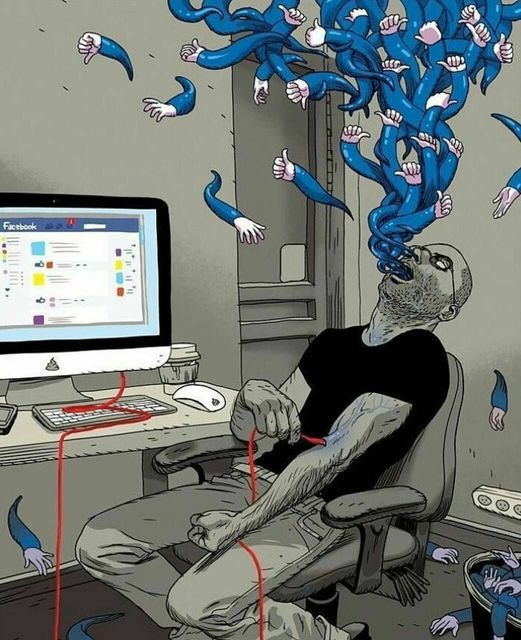
Most people never asked for this, they just wanted to talk to friends, share ideas, organise communities to publish things that matter. Instead, they got trapped inside systems designed around growth hacking and behavioural manipulation.
This is one of the reasons people are quietly, sometimes timidly, stepping away from the #dotcons, not always loudly, not always politically, but gradually. People feel something is wrong.
But when they look toward the #openweb, the path isn’t always easy either. Too often the tools we build assume something similar – just with a different flavour of geek culture. The user is expected to understand servers, protocols, instances, keys, forks, configuration files, federation quirks. In other words, the user is still expected to become a tech person.
This is the #geekproblem showing up again, if the #openweb is going to be a real alternative, we need to take this seriously. The vast majority of people do not want to be #techbros, sysadmins, protocol engineers or crypto specialists. They want tools that work socially, tools that support community rather than demanding narrow blind identity.
This doesn’t mean hiding the technology. The power of the #openweb comes from openness, the #4opens of open data, open source, open process and open standards. But openness should not mean unfriendly #UX.
The challenge for #FOSS and #openweb projects is to build tools with human-first design: Interfaces that feel welcoming rather than intimidating, workflows that reflect how communities actually organise with systems that support trust and relationships, not optimisation and metrics. We need onboarding that doesn’t require a technical worldview
In short: non-techbro #UX. This doesn’t mean dumbing things down, it means remembering what the web was originally good at, simple tools that let people publish, connect, and collaborate without needing permission or expertise.
Right now there is a real opportunity as people step away from the #dotcons, slowly, unevenly, sometimes reluctantly, but the shift is happening. If the #openweb meets them with only complicated tools and insider culture, they’ll drift back to the platforms they know. If we meet them with simple, social, welcoming infrastructure, the shift becomes something much bigger.
So the question for #FOSS developers is simple: Are we building tools for techbros? Or tools for people? If we want the #openweb to grow, the answer matters.