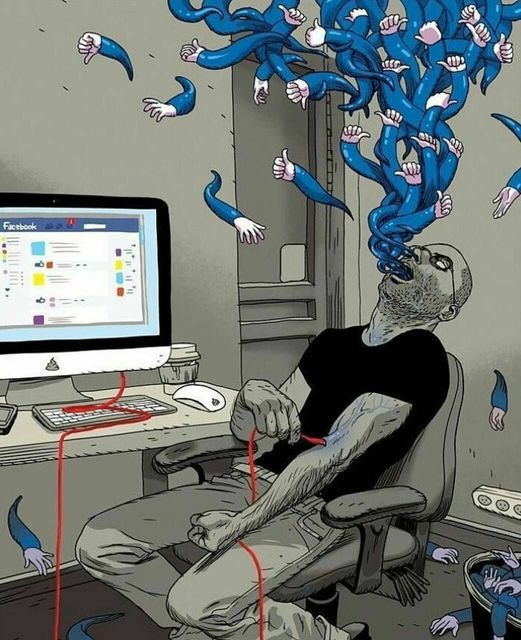
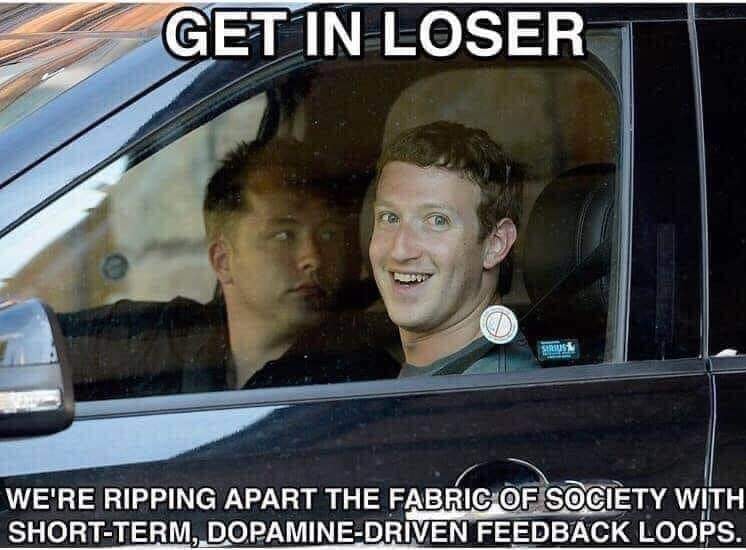
The thing about #techbro culture is that some of the most #elitists people grew up loving stories that warned us about the #techshit they are building. They read the dystopias, watched the films, they understood the dangers of unchecked capital, concentrated power, surveillance, artificial intelligence, inequality, and corporate control.
Then many of them decided “Great idea. Let’s build it.” as the #geekproblem made them think they knew better. This is what our #fashionista class call the #tormentnexus problem – the moment when a warning about a future goes wrong becomes interpreted as a blueprint for that future. The issue is not that people like technology, science fiction, fantasy, or engineering. The #openweb itself grew from people who loved exploring what technology could make possible. The problem is when technical possibility becomes separated from social consequence.
A story like Dune is not simply about a powerful individual changing history. It is a warning about charismatic power, messianic thinking, and the danger of believing one person can control complex systems. A story like Snow Crash is not just a cool vision of virtual worlds. It is a satire of corporate fragmentation, private control, and a society where everything becomes a service. A story like Blade Runner is not simply a stylish future aesthetic. It asks what happens when technology creates beings and systems that challenge our ideas of humanity, rights, and exploitation.
But our blinded #mainstreaming started removing the politics from the stories. They kept the shiny machines, they kept the aesthetics, the power fantasies. They discarded the warnings, the #geekproblem is about capability without consequence. A recurring problem in technology culture is that engineering thinking often asks:“Can we build this?” That is an important question, but society has to ask “Should we build this?” And “Who benefits?” And “What happens to the people who have no power in this system?”.
The #geekproblem is not that engineers are bad people. It is the cultural mistake of believing technical problems can be separated from social reality. A better algorithm will not automatically solve inequality, more data will not automatically create wisdom, more automation will not automatically create freedom.
The blinded #geekproblem myth of the chosen builder, is another pattern that appears again and again. The people building these systems imagine themselves as the exception, the story says “Yes, this technology could be dangerous in the wrong hands, but I am different, I will use it responsibly.” This is the same #elitists fantasy that many cautionary stories warn against.
A system can be technically brilliant and socially destructive, the history of technology is full of examples where innovation created new problems alongside the solutions. The factory increased production but created new forms of exploitation, the car increased mobility but reshaped cities around machines. #dotcons social media connected people but also created control, surveillance, manipulation, and attention extraction. The question is never only what technology can do, the question is what kind of society technology grows.
The problem is not bad individuals, though they exist. The problem is social and economic paths that concentrate power and reduce accountability. The danger is not only the evil ruler, more it’s creating structures where rulers become inevitable. This is why the #openweb matters, real power is not finding a better king, it is building #KISS systems where power is distributed, visible, and accountable.
Our current worship of capital rewards the wrong interpretation, is another uncomfortable part of this. The market rewards the most dangerous reading of a story. The cautionary version says “Maybe we should not build this because it creates harm.” The investment version says “Can we build it faster than everyone else?” The version that creates companies, funding rounds, patents, and control is usually the one that wins. The result is that technology is shaped by incentives that favour scale, speed, and ownership. Not care, community, resilience or long-term social health. This is the mess we need to compost to not end up with a world where the same systems criticised in dystopian fiction become business opportunities.
The missing piece is growing the commons, not with anti-technology (the wrong lesson) – The answer is technology embedded in social systems that understand responsibility. This is where the original #openweb ideas matter – growing from open processes, transparent development, shared ownership, community governance and public interest infrastructure. The lesson of #FOSS was never simply “Anyone can copy the code.” The deeper lesson was “People can collectively build and maintain things outside pure market logic.”
It should be obverse that the technical commons will need social commons, without that, open code can still become captured by closed paths. The solution is the challenge for projects like #OMN, #OGB, #4opens, and #indymediaback – not to reject technology – to keep asking a different question not “How do we build the next big thing?” but “How do we build things that help people build together?”
The future does not need more isolated #eletist builders trying to control complexity, it needs communities capable of navigating complexity. The opposite of the #tormentnexus is not rejecting technology, its is more about creating technology where the social relationships come first.
The #openweb was never just about protocols, federation is technical – a commons is social. The work now is making sure we do not build the dystopias our own stories spent decades warning us about. The warning signs are there, the question is whether we listen.
In every activist space, grassroots project, every loose collective, you get people who bring mess in the wrong way – sniping, backbiting, constant undermining. Call it ego, trauma, status games, burnout… it doesn’t matter. What matters is, this friction is normal, it’s part of the #mess we can’t avoid. The mistake is thinking we can eliminate it. You can’t, but you can design for it. That’s where the #OMN path is useful: don’t try to “fix the people,” build processes that compost the behaviour instead of letting it rot the group.
In the big picture, what we need to actively compost is that anything that starts as a real idea – community, freedom, or independence – gets picked up, processed, and turned into something hollow. Not just by “the other side,” but by the entire modern media and tech machine. Good ideas go in, slogans come out, you’ve seen it: “freedom” becomes branding, “community” becomes marketing and recently “sovereignty” becomes a funding pitch.
This is the trap, when ideas get flattened into talking points, they stop doing anything real. They become easy to repeat, to weaponise and impossible to build with. And once that happens, it doesn’t matter who started the idea, it’s no longer useful. So the question isn’t only left vs right. It’s how do you keep ideas grounded so they can’t be hijacked and sold back to us?
One answer is structure, the #4opens approach is simple, a way to stop things being quietly twisted behind closed doors. If you can see how something works, it’s harder to fake, if you can take part, it’s harder to capture. The other answer is mess (the good kind), the #OMN hashtag approach doesn’t try to clean everything up into a single strait message. It keeps things local, contextual, rough around the edges. That “mess” is protection, because systems that are too neat, too polished, too uniform… are exactly the ones that get captured, repackaged, and pushed back at you.
In plain terms if an idea can be turned into a neat slogan, it can be taken over. If it stays tied to real people, real places, and real processes, it’s much harder to fake. This is the difference between something you can live with and something that gets sold to you. Call it compost if you like – You break things down, keep what’s real, and grow from that.
As this essay is about the internet, lets look at some of the players, an example – Tactical Tech is a Berlin-based nonprofit that’s been around since the early 2000s, working on tech, activism, media, and education. Their core thing is:
building digital literacy + critical thinking tools
producing toolkits, exhibitions, and guides (like The Glass Room, Data Detox Kit)
working with civil society orgs, journalists, activists, educators
focusing on how tech shapes power, politics, and society
They’re not grassroots infrastructure builders, they’re capacity builders and narrative shapers, working through partnership networks, funding, and “field building” – the classic #NGO patterns.
In #OMN view they sit squarely in what we call the #NGO / #mainstreaming layer of the #openweb story. In that they don’t live in the soil (infrastructure, protocols, messy grassroots tools). They build the interpretation layer (how people think about tech). They push this into narratives + toolkits that travel across institutions. That’s why they’ve lasted 20+ years – they’re adaptable mediators, not rooted projects.
So why dose it feels like “they create mess”? The friction comes from this pattern the balance of abstraction over grounding in that they translate messy realities into frameworks, exhibitions and “kits”. This flatten lived complexity into safer portable concepts – in to language production. They are part of the ecosystem that generates terms like digital literacy, resilience and sovereignty (adjacent space). These become floating signifies – useful for funding and policy, messy in practice.
They collaborate with foundations, governments and large NGOs. So their outputs are shaped to be fundable, presentable and non-threatening enough to circulate. That’s where the “compost” instinct kicks in – because this layer detaches language from practice.
But it’s not just negative, if were honest (and it’s worth being), groups like this do some real things. They’ve help millions engage “critically” with tech issues to make complex problems accessible (privacy, AI, influence systems). They might create bridges between activists, educators, and institutions. So they’re not empty, they’re just not where the roots are.
The real tension, the problem isn’t that they exist, it’s where they sit in the ecology. They are compost producers, but they mistake themselves for gardeners. Or more sharply
They circulate meaning rather than anchor it
They mediate change rather than enact it
They stabilize narratives that should sometimes stay unstable
So yes – they create “mess” …but it’s a different kind of mess than grassroots paths. Grassroots mess = fertile, emergent – #NGO mess = abstracted, packaged, drifting.
Projects like Tactical Tech can be a part of the same ecosystem we need – but they sit one layer up from where change actually happens. Their outputs duse need composting because they generalize lived practice into frameworks, turn struggle into language and then feed that language back into systems which tends to blunt its edges.
The task isn’t only to reject them, it’s to ground what they produce back into lived, messy, trust-based practice – the bit they can’t really do. Once you see this pattern, a lot of the confusion in the #openweb space makes sense.
Most confusion comes from people mixing these layers up, Here are more examples of this thinking and working:
Tactical Tech – Layer: Narrative / NGO Role: Translator of tech → society What they do (in practice) • Turn complex tech issues into stories, exhibitions, toolkits • Shape how civil society talks about tech • Build “awareness” rather than infrastructure
In #OMN terms they produce processable compost input, but often pre-packaged into neat bags. This problem pattern flattens messy reality into clean narratives to encourages passive understanding over active building. So what is there value? Good at onboarding people, opens doors into the conversation. But risk is people stop at understanding instead of doing.
Mozilla Foundation – Layer: Narrative + Funding + Soft Infrastructure Role: Bridge between grassroots + institutions What they do is fund projects to run advocacy campaigns (AI, privacy, etc.) that maintains a symbolic connection to the #openweb. In #OMN terms they gate keep legitimacy to define what is “acceptable open”. This is a problem pattern because of NGO gravity → safe, fundable ideas win, radical edges softened into “trustworthy AI” and “ethical tech”. So what is the value? Real money → keeps projects alive and visibility → amplifies issues. The risk is common sense #mainstreaming capture that shapes agenda toward what institutions tolerate. Makeing only more mess to compost.
Open Society Foundation – Layer: Power / Funding Role: Macro-level agenda shaping What they do is fund civil society globally to influence policy, rights frameworks, governance. In #OMN terms its a part of the liberal wing of the #deathcult. Problem being funding creates dependency, agenda alignment when movements adapt to grant logic. Value is it enables work that wouldn’t exist otherwise to support rights-based infrastructure. The risk is it turns movements into professionalised NGOs and risk-averse actors.
Sovereign Tech Agency – Layer: State / Infrastructure funding Role: Stabiliser of critical open tech What they do is fund maintenance of open-source infrastructure with a focus on “digital sovereignty” In #OMN terms they are trying to support the infrastructure layer by using state-language framing. Its a problem pattern as language like “sovereignty” pulls toward state/control logic and away from commons/trust logic. What is the value? It pays for the essential work to keeps #FOSS tools alive. But it risks reframes the #openweb as national infrastructure instead of shared commons.
NLnet Foundation – Layer: Infrastructure funding (closer to soil) Role: Rare “good compost feeder” What they do is fund small, weird, early-stage open projects with minimal interference. In #OMN terms one of the few funding bodies that, could in theory not over-shape outputs to respect messy innovation. But the are problem pattern of limited scaling and still within funding constraints, Value is they enables actual building and possibly supports non-mainstream ideas. The risk is the normal that they still are pulled into NGO gravity over time.
Electronic Frontier Foundation – Layer: Advocacy / Legal Role: Defensive shield What they do – Legal battles, policy advocacy and civil liberties protection. In #OMN terms they protects space for the #openweb to exist. But the are problem patterns, the focus on defence, not creation that only works inside existing legal frameworks. Value they are absolutely necessary to stops things getting worse. The risk is they doesn’t build alternatives = slowing decline, not transformation.
The pattern, is all these orgs sit above the soil. They translate, fund, shape, defend. But they rarely grow rooted communities of sustaining messy trust networks or live with the consequences. So why dose this create “mess”? it is because language drifts away from practice, Ideas come and go: “digital sovereignty”, “trustworthy AI” or “resilience”. These sound solid, but float free of lived reality, then incentives bend behaviour. Funding → reporting → metrics → simplification is when mess gets cleaned up too early or packaged instead of composted
Here the #geekproblem and #NGO problem merge, you get geeks wanting to tidy systems and #NGOs wanting to tidy narratives. The result is generally bad, over-simplified systems + over-simplified stories. The #OMN position is clear and grounded, we don’t reject these orgs, we place them correctly: Useful → yes, Central → no and ground truth → never.
The simple way to say this (#KISS) These organizations sometimes help explain, fund, and defend the world, but they do not remake it. If we mistake them for the source of change, we end up with only better words and worse reality. They have no real role in the next stage, a practical progression from “mapping the mess” → “building something that can survive it”.
To make anything work we need to stop confusing layers (cognitive clarity) – Before anything technical, the path we walk needs to never treat NGO / funding / advocacy layer as if it is THE system. This is the correction we need, in #OMN terms:
NGOs ≠ infrastructure
funding ≠ governance
narratives ≠ reality
protocols ≠ politics
If we can balance this, the outcome the people trying to “fix the web” by only better policy decks, better ethical frameworks, better terminology (like “digital sovereignty”) to start asking “What is actually being built, and by whom?”
How to do this? we need to build the soil layer first (not apps, not orgs) as this is where most projects fail. The soil layer is trust groups, working collectives, repeated interaction spaces and small-scale publishing + coordination. In #OMN framing #indymediaback style groups, #OGB governance spaces and local + affinity networks. If it doesn’t survive social breakdown, it isn’t infrastructure.
Define “failure as feature” systems, is one of the strongest #OMN ideas. Instead of perfect systems that must not break – We grow systems that fail into human repair. What that means in practice is moderation doesn’t escalate → it returns to people, governance doesn’t lock → it re-opens, conflicts don’t freeze → they surface into trust spaces. The path is breakage need to increase human contact, not reduce it, but this directly counters the platform logic (#dotcons), #NGO sanitisation logic and geek “perfect system” logic.
On this path we need to build mediation layers (not control layers). This is where #OGB thinking fits. Mediation layer ≠ governance authority, is translation between groups, conflict visibility, trust routing and decision recording (not decision ownership). We don’t centralise power – we route attention. This is the difference between bureaucracy (control) and federation (flow).
Define “trust as infrastructure” this is the “missing” technical core. Most systems assume identity, verification and thus control. #OMN flips this to assume partial trust, local trust, evolving trust and broken trust. So native systems must record trust signals (lightweight) to allow contradiction, allow decay and allow repair. Trust is not a certificate, it is a living social flow.
Explicitly resist “narrative capture”. This is where problem orgs like Tactical Tech / Mozilla / OSF become relevant. The patterns to avoid – messy reality emerges, #NGO translates it, funding aligns around translation and original practice disappears. #OMN counter-path is if it can be fully explained in a funding report, it is likely already dying. So we maintain ambiguity, partial documentation and lived process > polished narrative.
Build dual-stack reality (critical stage). This is essential, you always run:
The path is never confuse the interface with the infrastructure. So what are composting failures about? Instead of discarding failed projects, rewriting history and blaming actors, we need to explicitly turn failure into reusable material, compost includes:
broken governance attempts
failed funding models
collapsed communities
conflict histories
Output:
patterns
lessons
reused structures
new trust layers
This is where the “mess is valuable” idea becomes operational.
Anti-capture safeguards – Every healthy #OMN system needs resistance to #NGO capture, funding capture, geek capture and ideological capture. Mechanisms:
lose roles
refuse most permanent authority
keep systems reversible
enforce transparency (#4opens)
limit scale before complexity dominates
The long game is federated commons, at scale, the goal is not a platforms, it is many overlapping, messy, partially connected commons. Not one #Fediverse or one governance model, not one truth layer. But overlapping trust regions, with shared protocols and local autonomy to weak global coupling.
The summary (#KISS version). If you compress all of this:
Stop confusing explanation with infrastructure
Build trust-first “soil systems”
Design failure that returns to people
Keep governance as mediation, not control
Treat trust as a living system
Resist narrative capture
Run dual-stack (native + interface)
Compost failure, don’t hide it
Prevent capture structurally, not morally
Scale as messy federated commons, not platforms
The shift is from “understanding the system” → to “acting in a small part of it without being captured” This means choosing a river, a locality, a topic, or a community and committing to working inside its mess without trying to abstract it into a universal model too early. #OMN path is if it doesn’t exist in a place, it doesn’t exist at all. This is where a lot of NGO / narrative layer work fails – it stays placeless.
Build “thin infrastructure”, the #OMN correction to both NGO thinking and geek thinking is that wrong instinct is to build full systems, design complete governance models, define everything upfront. #OMN instinct is to build the minimum structure that lets humans keep adjusting it together. Thin infrastructure = simple publishing tools, basic coordination spaces, visible decision trails and lightweight identity/trust signals. Nothing heavy, nothing “final”, because heavy systems attract control, thin systems attract use.
Make conflict visible, not resolved. This is where #NGO culture diverges hardest from native systems. NGO pattern is resolveing conflict, smooth disagreement and force consensus narrative. #OMN pattern is surface conflict so it can be worked with socially, why, because in real networks conflict is information, disagreement is structure and tension is direction. The compost is the rot in conflict, buried conflict always returns, festers, later as system failure.
Build “trust scaffolding”, not trust systems. This is subtle but crucial, you cannot design trust, you can only create conditions where trust can form and where it can fail safely. Trust scaffolding includes repeated interaction spaces, low-stakes collaboration, visible contribution histories and reversible decisions with clear exit paths. The path to trust is an emergent behaviour of stable mess, not a product of design. This directly opposes #mainstreaming ideas of identity systems, certification systems and #techbro reputation scoring systems.
We need to explicitly reject “clean governance” as this is where most of well-meaning systems collapse. The trap is people try to build clean voting systems, formal representation and universal rule sets. But in messy reality governance is not clean – it is negotiated, situated, and constantly patched. #OMN path, instead of clean governance, we grow layered responsibility, overlapping legitimacy with temporary authority and visible disagreement. Think of governance as weather, not architecture.
Anti-scale principles is very important as most systems fail because they assume more scale = more success The #OMN flips this with a path of scale should be resisted until coordination proves it is needed. Because scale introduces abstraction, funding dependency, narrative capture, bureaucratic drift. So instead we grow horizontally first, federate slowly and allow divergence to tolerate inconsistency.
Build “failure memory” as infrastructure, its one of the most underused ideas in this whole space. Most ecosystems forget failures, hide conflict history and rewrite past attempts. #OMN path is that failure is the most valuable dataset. So you build public failure logs, conflict histories and abandoned project archives with “why this didn’t work” notes. Not as shame, but as compost, because systems that cannot remember failure are forced to repeat it.
Soil layer (real life)
trust groups lived coordination actual practice
Infrastructure layer
tools protocols servers
Mediation layer
conflict handling coordination routing
Narrative layer
NGOs funding language public explanation
Power layer
states capital platforms
On this working group path no layer is allowed to pretend it is another layer, a core anti-confusion mechanism.
So what is the actual #OMN outcomes, when this all works, you don’t get a platform, a movement or a unified system. You get a living field of partially connected commons that can adapt without central control, yes it looks messy from outside – and that’s correct. Because coherence is not the goal, survivability and humain flourishing is. lets reduce the whole thing to operational clarity – Build small, stay local. Keep systems thin, let conflict stay visible, treat trust as emergent. Avoid clean narratives, resist scale, remember failure. Separate layers to never centralise experimentation into control.
That’s where theory finally has to become dirt-under-the-fingernails practice, where the abstraction has to survive contact with reality. Lets look at some example work flows, different angles of the same living loop.
What a real example #OMN#oxfordboaters river project looks like day-to-day. The river “communerty” is not in anyway an organisation. It’s a persistent coordination low affinity around a real place/problem/ecology (a river in this case). if we had a seed of the tech we need working, daily reality looks like this: Morning layer (signal gathering) when people notice things:
water quality change
planning notices
blocked access points
local council updates
photos from walks
stories from anglers / walkers / residents
This is not formal reporting, It’s messy input that lands in:
Fediverse posts
local group chats
simple shared logs
Mid layer (sensemaking) is when a few people (DIY, not fixed) do:
cluster reports (“this looks like sewage spike again”)
link patterns (“this happened upstream last month”)
No authority – just attention shaping (or focalising).
Action layer (light coordination) is made up of small, reversible actions:
someone emails council
someone visits site
someone talks to landowner
someone checks data source
someone posts explainer thread
Crucially no one needs permission to act, only visibility into what others are doing
Weekly rhythm (social compression) is a loose gathering (online or physical):
“what changed?”
“what patterns are forming?”
“what are we missing?”
“what broke this week?”
Light authority, rather focused on shared memory and process. The river project is not a formal group. It is a shared affinity flow. That’s why it works (when it works) – it stays situated, porous, and continuously re-formed.
Lets look at a second example, how #OGB decision flows actually operate, it is not voting or governance in the institutional sense. It is a routing system for trust, conflict, and attention.
Step 1 – Issue appears, something surfaces
conflict
proposal
blockage
uncertainty
It is posted publicly (default open).
Step 2 – Context attaches, people attach:
experience (“this happened before”)
local knowledge
technical input
historical memory
disagreement
Important – contradiction is allowed and expected
Step 3 – Clustering happens (not authority). Instead of leaders deciding clusters of alignment form naturally, disagreement clusters remain visible and minority views persist. Think weather systems, not committees
Step 4 – Decision emerges as a path, not a vote – a “decision” is a visible “common” path of action with acknowledged alternatives still open. So nothing is deleted, nothing is finalised, nothing is owned
Step 5 – Follow-through is voluntary, but visible. People act based on trust in community, reasoning based on proximity and capacity. And they report back into the same system. The native path is the #OGB doesn’t only decide things – it makes decision pressure visible.
What a Fediverse-native governance loop feels like is where it becomes felt reality rather than structure. It feels like slow public thinking, less meetings, less agendas. More like threads that evolve over days, posts that accumulate context and replies that become infrastructure
Persistent memory in the stream, nothing disappears old decisions are still linkable, conflict history is visible and prior attempts remain accessible. So governance is navigation through lived memory. Weak coordination, strong transparency as no one is forced to agree. But disagreement is visible, reasoning is public and action is observable. This produces accountability without authority to grow temporary gravity centres.
Certain threads or instances become coordination hubs, discussion anchors and action nodes. But they fade naturally – nothing, but memmery is permanent. It feels like thinking in public with other people who sometimes act on what emerges. Not bureaucracy, not formal consensus culture. More like shared situational awareness that occasionally crystallises into action.
OMN / #OGB model is: surface → act → observe → remember → re-surface, it is governance more as continuous ecological process, less a fixed control structure.
Think that is anufe for today, please ask in comments to help finish this.
One of the quiet assumptions built into almost every #dotcons platform is that the user secretly wants to become a #techbro. Not literally, of course, but culturally.
You are expected to optimise yourself by building your “personal brand” to track your metrics. Engage with algorithmic growth loops by understand platforms, feeds, APIs, monetisation tools, creator dashboards. You’re supposed to treat communication as a kind of performance engineering problem.
Most people never asked for this, they just wanted to talk to friends, share ideas, organise communities to publish things that matter. Instead, they got trapped inside systems designed around growth hacking and behavioural manipulation.
This is one of the reasons people are quietly, sometimes timidly, stepping away from the #dotcons, not always loudly, not always politically, but gradually. People feel something is wrong.
But when they look toward the #openweb, the path isn’t always easy either. Too often the tools we build assume something similar – just with a different flavour of geek culture. The user is expected to understand servers, protocols, instances, keys, forks, configuration files, federation quirks. In other words, the user is still expected to become a tech person.
This is the #geekproblem showing up again, if the #openweb is going to be a real alternative, we need to take this seriously. The vast majority of people do not want to be #techbros, sysadmins, protocol engineers or crypto specialists. They want tools that work socially, tools that support community rather than demanding narrow blind identity.
This doesn’t mean hiding the technology. The power of the #openweb comes from openness, the #4opens of open data, open source, open process and open standards. But openness should not mean unfriendly #UX.
The challenge for #FOSS and #openweb projects is to build tools with human-first design: Interfaces that feel welcoming rather than intimidating, workflows that reflect how communities actually organise with systems that support trust and relationships, not optimisation and metrics. We need onboarding that doesn’t require a technical worldview
In short: non-techbro #UX. This doesn’t mean dumbing things down, it means remembering what the web was originally good at, simple tools that let people publish, connect, and collaborate without needing permission or expertise.
Right now there is a real opportunity as people step away from the #dotcons, slowly, unevenly, sometimes reluctantly, but the shift is happening. If the #openweb meets them with only complicated tools and insider culture, they’ll drift back to the platforms they know. If we meet them with simple, social, welcoming infrastructure, the shift becomes something much bigger.
So the question for #FOSS developers is simple: Are we building tools for techbros? Or tools for people? If we want the #openweb to grow, the answer matters.
Meany people lazily see “the Right” in America as a unified political movement, but this is simplistic, comforting fiction. People still see as “normal” what we used to have, an orthodox worship of a #deathcult. But this is tired path is now being overwhelmed by a hard right (populist) rejection, and to add to this mess, this reaction is it itself is captured by meany personal grabs for power and statues, yes it truly is a mess.
We need to look at this, it matters, because treating the Right as a monolith is not only lazy analysis – it’s politically disabling. You can’t challenge what you don’t understand, and you can’t build alternatives if you mistake coalitions for any clear ideologies. Let’s look at the hard right shift as a wider picture, there are meany factions with strong opinions, incompatible paths, and occasional fistfights, all forced to share one centralised path.
So let’s break the myths. On the current hard right, the #GOP Is no longer a party – it’s a reactionary mess. America’s winner-take-all electoral system forces narrowly different ideologies into just two viable parties. With the end of the post-war cross-party worship, this means seeding coalitions, without any coherence.
The Republican Party is not one belief system. It is a structural compromise between factions that actively hate each other, held together by access to power, donor money, media ecosystems and, increasingly, one man’s delusional personality. Let’s draft 4 of these original Republican tribes, who existed long before Trump arrived, the old #GOP.
Faith & Flag Conservatives
These are your Bible-first, America-second, Bible-third conservatives. They are blindly religious (mostly white evangelicals), hardline on abortion, LGBTQ rights, and “traditional values”, comfortable with militarism when framed as spiritual warfare and intensely pro-Trump, despite his… everything. If this faction were a brand, the slogan would be: “God Bless America – and Also, Just God. Mostly God.”
Populist Right
These are the “working-class guys yelling about globalists” conservatives. Who are fiercely anti-immigration, deeply anti-elite (except their elitists), surprisingly open to taxing the rich and regulating corporations, adjacent to conspiracy culture, even when they deny it. Their core contradiction is incoherence, they demand the return of factory jobs… while shouting about it on TikTok, filmed on an iPhone, manufactured in Shenzhen.
Committed Conservatives
These are the pre-Trump Republicans who survived the Trump madness turn. They are the original priests of the #deathcult: Pro-business, pro-free trade, anti-regulation, hawkish on foreign policy, Their loyalty is to tax cuts above all human needs. This is the GOP of donors, boardrooms, and polite dinner parties. The old power politics, before grievance, became the primary organising principle of the party.
The Ambivalent Right
These are the “I’m conservative, but not like… that” crowd. They tend to be younger, economically conservative, socially more moderate, Trump-curious but not Trump-devotional. They listen to Jordan Peterson, think universal healthcare “sounds chill,” have a gay friend. Think old school yuppie who don’t want to be left-wing. So they drift.
Then Trump arrived in the this establishment temple and overturned the altar. As we can see he didn’t create these factions, he used them, rearranged them, amplified some, sidelined others, and glued the whole mess together with charisma, grievance, and constant conflict.
From this mess grew the current more fascist path:
#MAGA Populists, the dominant force, who are aggressively anti-immigration, obsessed with tariffs, convinced the system is rigged, immersed in right-wing media, personally loyal to Trump, not policies. Their political theory is simple and old school: “Build the wall, raise the tariffs, and arrest somebody.”
Traditional republicans, Country Club crew who hate tariffs, love tax cuts, want cheap immigrant labour (quietly), prefer predictable imperialism to Trump’s mess. They have donor money, which is why they still exist – despite being constantly bullied by MAGA influencers.
Small-Government Conservatives / Fiscal Hawks are the old priests of the #deathcult. Libertarian wonks who obsess over deficits, hate government spending (unless it’s police or military), are split between isolationism and aggressive war fantasies, believe every problem can be solved by cutting one more department. They’ve been angry about taxes since birth and plan to die that way.
Religious Right who politically weaponised churches. They on the up, got Roe overturned, want a national abortion ban, believe God has a detailed policy platform. Trump frustrates them because he’s useful, not righteous.
The latecomers, the #Techbro billionaires, who shifted from the centre right of the Democrats to the Trump overnight. This happened as the government started sniffing about braking up their #dotcons empires. They want zero regulation, treat “free speech” as algorithmic advantage, oppose immigration except for high-skill visas, increasingly believe AI they control should replace democracy. Are fetishising fascism. This is not a mass movement – just billionaires and their fanboys discovering culture war leverage.
MAHA + Newly Converted Democrats – Make America Healthy Again – Wellness culture meets conspiracy nut jobs. They “care” about: Food chemicals, vaccines, chronic illness and “Medical freedom.” They arrived via RFK and pandemic brain damage. They’re not permanent Republicans – they’re politically unmoored and emotionally primed.
This coalition Is always fighting because they fundamentally disagree on almost everything: Tariffs: MAGA loves them, donors hate them. Immigration: Business wants workers, MAGA wants deportations. Abortion: Religious Right wants bans, Trump wants what ever keeps him in office and out of jail. Foreign policy: Hawks want wars, MAGA wants spectacle. AI: Tech Right wants no rules, voters are terrified. The is no ideological unity, it’s a messianic conflict, held together by personality and lust for power. As should be clear, the right mess is no monolith, and it has meany questionable expiration dates.
To have any hope of composting this mess, we need to understand factions not with empathy, but as, openings for change and challenge, it’s about moving past contradictions, and fault lines. Let’s not pretend otherwise, we need to not keep losing to this kinda mess which, currently, ignores us and keeps working no matter how bad it gets because it understands fragmentation very well – and works to exploit it ruthlessly.
Where is the progressive left? We need to do better #KISS
We need to start saying this more often, and without apology: there is a moral difference between left and right. Not just a difference in opinion, or strategy, or culture, but a real difference in the kind of people and world each side fights for. Left-wing politics, reflects our better human instincts: generosity, compassion, mutual care, sociability, conviviality, and courage. These are the values that hold communities together, that push back against cruelty and isolation, that imagine a world where no one is left behind. In contrast, right-wing politics are the organised expression of greed, selfishness, ego, bigotry, and fear. They hoard, they divide, they scapegoat, and they dominate.
It’s time we stop pretending this is just a polite disagreement and call it what it is: the left is the political force for good, and the right is the political expression of evil. Naming this clearly matters – because when we blur the line between solidarity and selfishness, we lose the ground we need to stand on. And note we need to put much of the hierarchical left on the right spectrum, it’s important to say this often as well.
Then on the centre path there’s a lot of #fluffy around these days. Take books like Abundance – dressed up as bold new visions, but really just more of the same old liberal centrism with a shiny, tech-friendly finish. It flirts with Marx at the end, but only to dress up in borrowed credibility. At heart, it’s not socialist, it’s a manifesto to reassure the #mainstreaming chattering class that everything will be OK if we innovate harder and manage smarter. This is blinded feel-good “supply-side liberalism” for the TED Talk crowd.
Let’s be very clear: the “problems of the modern Left” exists. Identity tokenism, #NGO capture, and aimless cultural navel-gazing have turned real struggle into performance art. But the answer isn’t to step back into the arms of liberalism or #techbro ideology – it’s to push further and deeper into balancing the path of radical collective politics. Not less left, but more grounded and grown-up socialism?
Because the actual problem isn’t scarcity, or inefficiency, or bad design. The problem is capitalism. Let’s spell it out: Capitalism needs artificial scarcity to work. That’s how it makes money. You think landlords want more housing to be built? Of course not. Flood the market with affordable homes and they lose their grip on rent extraction. Same with developers, they make their money by building just enough to keep prices high. It’s not a bug, it’s the core business model. We need to see this for what it is #miseryeconomics.
Take energy, the whole history of fossil fuels is cartels, from the Seven Sisters to OPEC, it’s a game of controlling supply to keep prices (and profits) up. It’s not about abundance, it’s about engineered shortage. Try fitting that into your neat little supply-and-demand graphs.
Even beyond housing and energy, the entire financial system is tied to the constant rise in asset values. You don’t keep Wall Street humming by flooding the world with free and accessible goods. You do it by enclosing, bottling, and selling scarcity.
So when these liberal optimists talk about “unlocking abundance” without touching class power or property relations, they’re missing the entire point. Or worse, helping to hide it.
What we actually need is a radical shift, that builds on grassroots cooperation, trust, and open systems. Not more shiny ethical #dotcons platforms or visionary #nastyfew billionaires, but boring, solid, stubborn collective action. We need commons, not commodities. Federation, not feudalism. We need to compost the #techshit, not polish it.
This is where projects like the #OMN come in – grounded in the #4opens and decades of lived, messy, practical resistance. Built to share, not to own. Grown from the ground up, not imposed from on high.
We’ve seen what doesn’t work. Let’s stop pretending that liberalism with a few wires stuck in it is going to save us. It’s time to build something real, together, and you get to chose to take the left or the right path. And on this choice, try not to be “common sense” evil in your choice.
Here is a trilogy of stories you can use for outreach if you take the grassroots left path:
Let’s have a look at an example of the new mess we’re facing: JD Vance – author, venture capitalist, convert Catholic, and now Vice President. He’s not a Reaganite libertarian, nor a traditional conservative. Instead, Vance represents something more dangerous: a dogmatic ideology, born in the boardrooms of tech billionaires and the seminaries of Catholicism, forged on in the #dotcons, and now pushing American politics into very #fascist territory.
This isn’t politics as normal any more, it’s not even the liberal idea of populism. While there’s grifting (of course) and plenty of weirdness to laugh at, Vance and his fellow travellers are deadly serious. They are actively wielding state power – not to protect liberal values, but to bury them. They’ve declared the Enlightenment dead. The compromise that held Western democracies together for centuries? Thrown out. In its place, they want to sack the referee and replace him with a priest, a general, and a patriarch. All under the rallying cry of “Culture in Crisis.”
Vance’s origin myth is the breakdown of the American family, as told through is book Hillbilly Elegy – addiction, poverty, and social collapse in the white working class. The story pushed him through the Thiel-funded ranks of the #techbro elitists. But he didn’t stop at diagnosis, the next step is to legislate culture, to grasp state power and use it to impose the narrow vision of the #nastyfew onto everyone else.
This isn’t nostalgia and posturing, it is a fully operational political project, rooted in religion, nationalism, and “family”. It’s about dismantling the old #mainstreaming and replacing it with a closed fortress ideology. Neutrality in courts and bureaucracy? Gone. Education? To be weaponised. History? To be rewritten. Opponents? To be punished. This is a hard right revolution, bulldozing the old order as a prerequisite for building the new. “The System Is the Enemy.” Libertarian economics are dismissed as rootless; personal liberty as decadent. Academia, journalism, and law are painted as captured by postmodern “wokeism”, a hegemonic structure that must be ripped out like a tumour. This feeds the mess of confusion that is right/left politics.
This isn’t rhetorical, i’s actionablem seize the Ford Foundation’s assets, fire the civil servicem override the courts. Vance quotes Andrew Jackson: “The Chief Justice has made his ruling; now let him enforce it.” This is a revolution, not of the people, but for the #nastyfew. At its heart is a revival of ethno-nationalism. Where American identity once leaned for a time on shared civic values, not shared blood, they now champion a mythic “homeland” of “legacy Americans” and cemetery plots. A culture you must inherit to belong. Don’t have children? You’re a “childless cat lady”, a punchline and a pariah. Public servant without offspring? Then you have “no commitment to the future.” It’s an ideological border wall: to belong, you must believe in the right God, live in a traditional family, and descend from the right people. Everyone else? Suspect, and/or disposable.
This isn’t simple reactionary, it’s counter-Enlightenment. The appeal is clear: it speaks to the spiritual hollowness of late capitalism – to the loneliness, the nihilism, the disconnection. And liberal technocracy, the ruling ideology of the last 40 years, has failed utterly to address this. The #deathcult of managerial neoliberalism left a void. Now the New Right wants to fill it, with hierarchy, obedience, and repression.
But it should be obvious that this right-wing “solution” is catastrophic. Meaning cannot be mandated by the #nastyfew. Culture cannot be enforced by fiat. This “pluralism” is not a flaw, it’s the messy reality of modern life. Pretending you can erase difference and enforce unity is delusional. Movements that try always end in repression, exclusion, and worse. What begins as a culture war ends as a culture purge.
A liberal view of this hard right push
So what can we do? This is where the #OMN – Open Media Network – matters more than ever. Not to magnify the mess, but to mediate it. The #OMN is a native, grassroots alternative to both the hollow liberal centre and the authoritarian push of the right. It doesn’t build through imposition. It builds through federation, dialogue, and trust. Our path is transparent, accountable, and open-source – not sacred, secret, and top-down. Where the hard right sees liberalism’s emptiness and tries to fill it with obedience and dogma, we recognise the same void, and fill it with commons, care, and co-creation.
Please, don’t worship either the old or the new #deathcult. The #MAGA movement preaches high-control authoritarian ideology with priests in expensive suits. This is why #openweb, our own peer-to-peer culture of meaning, is needed. If we don’t build this path, then yes, the future will be built by people like JD Vance and the rotting Trump dynasty. And it won’t be a future you can simply opt out of.
So stop dithering. Don’t be a prat about it. The time to build the alternative is now.
The #socialweb is shifting away from corporate-controlled paths like #Twitter and #Facebook toward decentralized, more #DIY alternatives. The idea is simple: instead of a single company having control, decentralized protocols allow different platforms to connect while giving people the power to shape and control their digital paths.
Three major decentralized protocols have emerged:
Fediverse (#ActivityPub) – The most established and widely used, forming a “native” backbone of the #openweb.
Bluesky (#AtProto) – A Twitter-funded project that claims decentralization but is still highly centralized.
Nostr – A relay-based, censorship-resistant protocol with interesting tech but major cultural and usability challenges.
While all three claim to support decentralization, only ActivityPub (the #Fediverse) actually delivers on this promise. An overview:
The Fediverse (ActivityPub) – The Decentralized #openweb
Background & history, the Fediverse is powered by ActivityPub, a W3C-recommended standard, since 2018. Unlike Bluesky and #Nostr, which are still evolving, ActivityPub is already a mature, widely adopted protocol. It was designed from the ground up, through a 20-year unbroken history to enable interoperability between platforms, meaning people on different apps can communicate seamlessly.
This #ActivityPub network exploded in popularity after Twitter’s collapse under Elon Musk, with Mastodon seeing millions of new users in 2022. Now there are meany popular apps & servers, it not just one platform – it’s a whole ecosystem of independent apps that mostly copy #dotcons:
Mastodon – The most well-known microblogging platform, often compared to Twitter.
PeerTube – A decentralized YouTube alternative.
Pixelfed – A decentralized Instagram-style photo-sharing app.
Pleroma / Misskey – Alternative microblogging platforms.
ActivityPub works through federation: Different servers (instances) talk to each other, creating a #4opens network of networks. How this works, you create an account on one instance, but interact with people across the entire Fediverse. Each server is independently operated, meaning no single company owns the network. There is an issue of instance Lock-In: If a server shuts down, yes, people must migrate manually, but this is a small tradeoff compared to the massive corporate control seen in more #mainstreaming paths.
Bottom Line: ActivityPub is the most decentralized and established protocol, already powering a thriving ecosystem of apps with real communities. #Bluesky (AtProto) – Fake Decentralization, A shadow #Dotcons
Background & history, Bluesky started as a Twitter-funded project in 2019, originally backed by Jack Dorsey. It claims to be building a decentralized social network, but in reality, it’s architecture favers centralization, due to it being built to prioritise scaling. The #AtProto, allows for theoretical federation, but in practice, Bluesky is still a Twitter clone controlled by a single company.
Popular Apps & Servers
Bluesky – The only major client, self-hosting is possible, but current federated servers are limited to 100 users, and Bluesky can refuse to federate with them.
How AtProto works: #DID-based identities – Users can theoretically move between services, but only if Bluesky allows it. Centralized moderation – The vast majority of users rely on bsky.social, meaning Bluesky still has the power to block or censor at will. Limited self-hosting, Bluesky restricts who can run a server and limits federated instances.
Bottom Line: Bluesky is currently a trap, a con, It looks decentralized but is a #dotcons, the normal corporate-controlled path.
Nostr – Interesting Tech, but bad culture
Background & history, #Nostr (Notes and Other Stuff Transmitted by Relays) was created by an individual in 2020 as a censorship-resistant social protocol. Where ActivityPub and AtProto, use server-based networks to build community and distribute moderation, Nostr uses a relay-based model where users broadcast messages across multiple relays. It gained popularity in #Bitcoin circles and received funding from Jack Dorsey (again).
Popular Apps & Clients
Primal, Nos, Snort – Web-based clients.
Damus – iOS client.
Amethyst – Android client.
How #Nostr works, It is Relay-based, with no community focued on instances – no centralized servers, messages are published to multiple relays. Cryptographic Identity – people have opaque public/private keys instead of usernames. No true federation – people rely on relays to store and transmit data, but relays don’t communicate with each other like ActivityPub servers do. Difficult for adoption – The reliance on cryptographic keys makes it confusing, and there’s no built-in moderation system, so comminutes remain fragmented, its tech for the native #stupidindividualists paths. But still, in this, diversity is good and as it bridges it might become a useful project.
ActivityPub (Fediverse) is a clear winner, it’s proven, widely adopted, and already functional with true federation across multiple apps, decentralized and people-controlled. Where #Bluesky (#AtProto) is a hidden #Dotcons which claims to be decentralized but is still controlled by Bluesky, Inc. Federation is limited, and self-hosting is discouraged thus is a Trojan horse for another corporate-controlled network. Nostr is interesting but niche, completely decentralized, but difficult to use. No federation between relays and not practical for mass adoption.
Final verdict: If you care about real decentralization, community, and people, ActivityPub (#Fediverse) is the clear choice.
What is needed next is to take the step in the Fediverse of moving beyond simply copying the #dotcons. It is time to reboot the #Openweb with a project like the #OMN. The Open Media Network is about taking control of our digital paths and building a future beyond the #dotcons. If we want a truly decentralized internet, one core message is that we need to support ActivityPub-based paths instead of getting fooled by corporate-backed “alternatives” like #Bluesky.
Join the Fediverse today: https://fediverse.observer/ It’s past time to reclaim the #openweb to build digital spaces that work for people, and the social change challenge we so urgently need.
One thing is clear, you can and need to walk away from the corporate #dotcons.