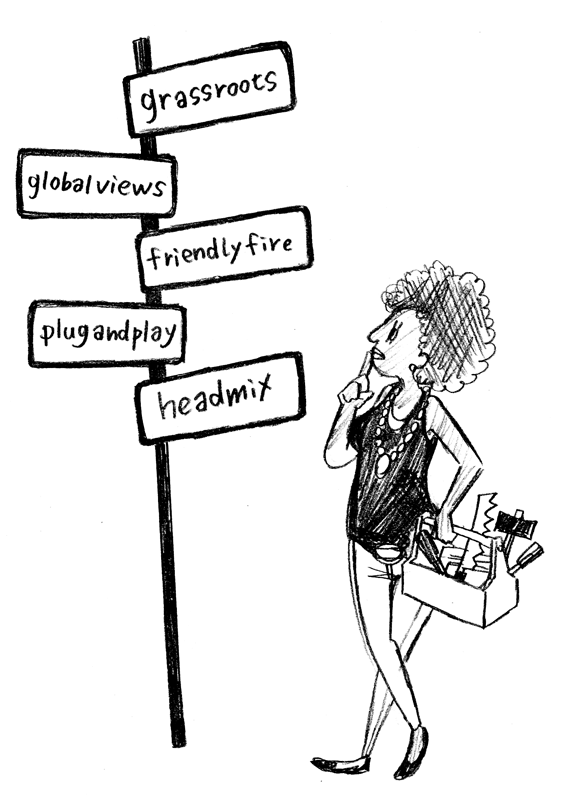
Are a simple way to judge the value of a “alt/grassroots” tech project.
Open data – is the basic part of a project https://en.wikipedia.org/wiki/Open_data without this open they cannot work.
* there is no way to get your data out or to access the metadata. Its copyright. No open
Open source – as in “free software” https://en.wikipedia.org/wiki/Free_software this keeps development healthy by increasing interconnectedness and bringing in serendipity. The Open licences are the “lock” that keep the first two in place, what we have ain’t perfect, but they do expand the area of “trust” that a project needs to work, creative commons is a start here.
* its closed source on the surface, not obvious what is happening under the surface. No open
Open “industrial” standards – this is a little understood but core open, it’s what the open internet and WWW are built from. Here is an outline https://en.wikipedia.org/wiki/Open_standard
* no RSS I can see, it’s a basic website I think with a forum? No open
Open process – this is the most “nebulous” part, examples of the work flow would be wikis and activity streams. Projects are built on linking trust networks, so open process is the “glue” that binds the links together. https://en.wikipedia.org/wiki/Process
* it’s a forum so kinda open process but no look at the running of the project. 1/2 open
To sum up, it’s a project that could be made more #4opens if the was a community involved. This depends on the guys running it and their tech support being willing and having time to push the project out into the “commons”.
Please remember before posting liberal stuff that just about everything around you and meany things you think you value are in reality a part of the #deathcult
Neoliberalism that we live and breath is the coureas of our current mess, not Trump or Brexit, they are outcomes. So when you look at any solution is it a “common sense” neoliberal idea or something else? Please think about the #deathcult before you share propaganda on #dotcons
Neoliberalism that we live and breath is the coureas of our current mess, not Trump or Brexit, they are outcomes. So when you look at any solution is it a “common sense” neoliberal idea or something else? Please think about the #deathcult before you share propaganda on #failbook
Its #tredtionalmedia liberal media pushing dysfunctional people at us. The was a generation of actavists telling this obvious story. Its intresting that they are not the story. Liberal documentary makeing always has a limited view, this is a particularly bad example.
Its got a sad ending the liberals at TED pleading with the tech gods to not be evil with a knowing wink that they will be ignored. But the liberals will still build there lives in this mess. The is no alternative inside liberalism in the data era its sadly a #deathcult
Throwing ideas into the air to see where they land, this is a sketch, not a blueprint – a thought experiment. As if we’re serious about using the #openweb to challenge #mainstreaming to build alternatives to failing capitalist status quo, we have to start somewhere. So let’s ask: what does a world built around the #4opens look like?
We’re talking about a soft move away from capitalism, not an apocalyptic collapse or utopian leap, but a pragmatic, grounded shift in how we live, relate, and build together in the digital era. A society governed by openness, not profit, future rooted in collaboration, not control.
The End of Money as the Primary Motivator
In a #4opens world, exchange is no longer driven by the blunt instrument of money. The logic of scarcity fades when information is abundant and freely shared. With open data and transparent process, value can be tracked, distributed, and balanced – not hoarded.
Imagine a path where you give not to accumulate, but to re-balance. Where you’re recognized and supported for what you contribute, openly. This doesn’t mean the end of value, it means the end of commodification as the only language for it. Capitalism made money sacred. The #4opens world breaks that spell in the digital paths, which can then be used as a lever to re-balance this in the more physical world.
Radical Reductions in Inequality
The current digital economy centralises control in the hands of the #nastyfew, the platform owners, the server landlords, the data hoarders. In contrast, a #4opens world puts common infrastructure – physical and digital – under #FOSS democratic stewardship. Open code, open governance, open data, open processes. These tools dismantle the gatekeeping logic of closed silos. We stop renting access to our lives and can then stop working to make the rich richer. What results is not just a redistribution of resources, but a recomposition of power. Rich and poor stop being natural categories, we start down the path of inequality becoming a historical memory.
Ecological Transformation via Digital Abundance
In this world changing, we break the toxic loop where growth = progress. As digital goods expand – freely shareable, replicable, adaptable – the material basis of economic growth shrinks. Instead of growth for its own sake, we can choose to sift focus to ecological outcomes. Energy systems localise, circular economies flourish. The planet breathes again because we’ve stopped mistaking consumerism for culture. On this post-consumption, we can meet human needs without destroying the biosphere.
Real Community, Not Algorithmic Spectacle
When your networks are open, knowable is modifiable, you stop being a metric or a data point. You become a person in a community again, who can re-build networks of care and trust. The #4opens give us tools to know each other better, to collaborate without permission, and to keep relationships alive across distance and time. We escape the isolation of the #dotcons by remembering what it means to belong, not to brands, but to people.
Reclaiming the Meaning of ‘Common Sense’
In this transition, we’ll have to rethink almost everything we take for granted. Why do we work so much? Why do we compete instead of collaborate? Why is everything a secret? Why are we trained to distrust? The capitalist world naturalised its own ideology, it taught us that exploitation was just “how the world works.” The #4opens world undoes this conditioning. We’ll discover that our “common sense” was a prison, and that open thinking makes new realities possible.
We already lost privacy, let’s be honest that the #dotcons and the surveillance state see everything. This isn’t a warning, it’s the present, there’s no going back to closed data, not legally or technically. The dream of sealed-off privacy is gone. So what can we do? We open the #metadata bag, all of it. We make the hidden flows of power visible to stop pretending that corporate surveillance is okay while peer-to-peer is dangerous. Yes, it’s uncomfortable, but in a world where we’ve already been stripped naked by Google, Amazon, and the NSA, radical transparency becomes the preferd path to justice. The question isn’t “how do we hide?” but “how do we share wisely and govern openly?”
What Does a Post-Capitalist, Open Society Look Like?
It’s not utopia, it’s messy, it’s federated, full of tension and debate. But it’s also a world where:
Decisions are made in the open, not behind closed doors.

Software is built to be forked, not locked.

Platforms are governed by people and communitys, not shareholders.

Care is more valuable than control.

Collaboration is default, not an afterthought.
This is the vision of the #4opens, not a theory, but a practice. A lived, everyday politics to shift from passive consumption to active creation. It’s the beginning of something new, rooted in old #FOSS, where everything we already know works if we just trust each other enough to try. So, what does a #4opens world look like? It looks like the world we’re already building, underneath the rubble of the old one, time to pick up your shovel.
Lets look for a moment at a fundamental question few people are asking that already shapes society and will drive social change in the next 50 years.
The question of who has access to data and more importantly metadata.
* Open – everyone can use most of the data and all the meta data
* Closed- only you can use the data only corporations and governments can use most of the metadata.
* Hybrid- the data is open to the hosting corporation, governments and companies that pay for it. Your friends can see only what you share with them. The metadata is owned by the corporations used by governments.
The future will be dominated by this issue if computer networks keep running during the #climatechaos disaster.
Putting content into #dotcons creates a feedback loop with diminishing returns. The impact is marginal – and shrinking – because all you are really doing is training #failbook’s algorithms to better sell you, and everyone who interacts with your content, more “stuff.” This includes not just products, but ideology: the subtle shaping of thought, behaviour, and community through algorithmic social control.
It’s very easy to get pulled into a #flamewar on #failbook, because conflict drives engagement, and engagement drives ad views for the #dotcons. The system is designed for this. Outrage is profitable.
If you’re serious about progressive change, you could instead be having a grounded, meaningful conversation on the #openweb with millions of other people, where human activity and community are the outcome, not ad-driven consumerism.