Across Europe, large-scale “mainstreaming” tech projects are increasingly shaping the future of the digital commons. From infrastructure initiatives to sovereign cloud strategies and federated social technologies, the EU tech stack is becoming more organised, more funded, and more institutionalised.
On the surface, this looks like progress. But history suggests that without active counter-currents, #mainstreaming inevitably drifts toward bureaucracy, risk-aversion, and quiet capture by institutional and corporate interests. The problem is almost all current European tech funding is poured down the drain of soft painless corruption.
This is why a small but intentional flow of funding toward grassroots, activist, and counter-cultural projects within #FOSS is not a luxury, it is essential infrastructure.
- Innovation rarely if ever starts in the mainstream
Most genuinely transformative ideas in #FOSS and free software and #openweb did not originate from institutional programmes. They came from messy edges of volunteer collectives, activist media projects feed by autonomous spaces building #FOSS social infrastructure.
These environments allow experimentation without needing immediate legitimacy or scalability. They tolerate failure and contradiction, conditions that mainstream programmes often cannot. Without supporting these edge spaces, mainstream funding feeds an echo chamber that only produces incremental improvements, if any, to existing paradigms. Counter-currents are not only opposition; they are the ecosystem that generates future pathways.
- Activism keeps governance honest
Institutional projects naturally optimise for stability, compliance, and reputation. This creates blind spots where needed difficult political questions get softened and avoided, governance becomes less participatory over time leading to decisions shift toward funders and professional stakeholders. Activist communities provide necessary friction by asking uncomfortable questions about power concentration and co-option by #NGO and corporate actors.
This friction is often misinterpreted as negativity or disruption. In reality, it acts as a corrective force that keeps projects aligned with the original European values, and the values of the #openweb and #FOSS. Without activist pressure, mainstreaming tends toward the same #closedweb patterns it now claims to be resisting.
- Diversity of approach is a resilience strategy
A healthy ecosystem requires multiple approaches operating simultaneously, with institutional scaling projects in balance with community-led infrastructure. When funding flows only toward “safe” and easily measurable projects, the ecosystem loses adaptive capacity. Counter-currents provide alternative models and paths that become critical when dominant approaches fail. This is something repeatedly demonstrated in the history of internet development. Funding these spaces is therefore not charity; it is long-term risk management.
- The current gap: refusal to fund counter-currents
Some current alternative funding bodies – including initiatives like #NLnet – have done valuable work supporting open technology. However, when funding structures avoid explicitly supporting activist or counter-cultural paths, a structural imbalance emerges. By prioritising technical outputs without investing in the social and political ecosystems that sustain them, funding breaks down, reinforcing the same dynamics that previously enabled enclosure and platform capture. Technical neutrality is not neutral. It implicitly favours existing power structures.
A truly balanced funding flow would intentionally support more grassroots organising capacity to build activist infrastructure projects with working governance experimentation like the #OGB to open spaces to shape community memory and historical continuity. Without this, mainstream funding cannot claim to represent the full health of the #FOSS ecosystem.
- Why this matters now
The European tech stack is at a turning point. As public funding grows, so does the risk of institutionalising the very problems open technology originally emerged to resist. Activism is not only an external threat to mainstream projects, it is also a feedback system.
Supporting counter-currents prevents stagnation and helps to surface blind spots early by keeping alignment with public values. It’s needed to keep the tech ecosystem genuinely open rather than merely #NGO branded as such. The simple principle is if mainstream funding only supports what already looks safe and legitimate, it stops being an engine of innovation and becomes a mechanism of consolidation.
To keep the #openweb alive, we need funding flows that intentionally include the messy edges – the activists, the grassroots builders, and the experiments that don’t yet fit neat categories.
Not because they are comfortable, because they are necessary.
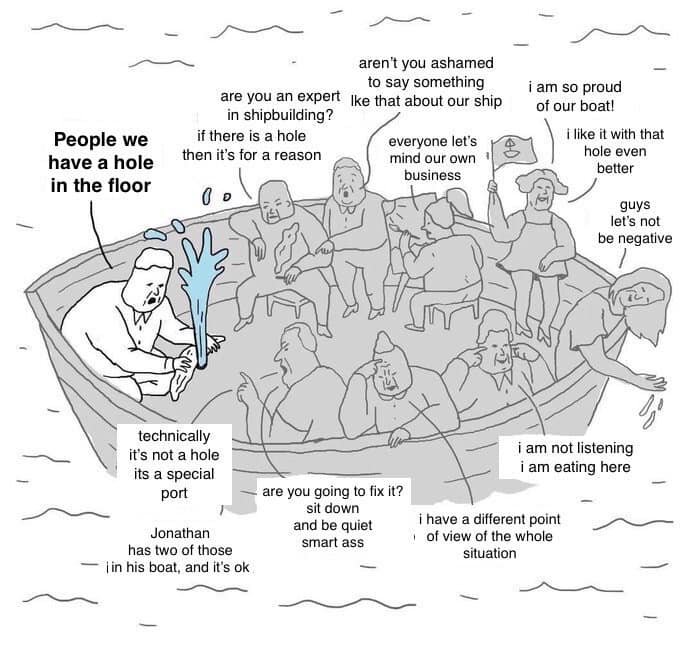
And to tell the truth we need a better balance of useful verses funding poured down the drain #NLnet #EU #NGI #NGIzero and likely more, please post in the comments.

One thought on “Why mainstream EU tech funding needs counter-currents, why tech activism matters”