As #climatechaos accelerates, European politics will not stay where it is now. History suggests that periods of instability push politics to the right, because right-wing politics tends to be driven by fear and control. If that trajectory holds, then the digital infrastructure we build today needs to be resilient in a more hostile political environment tomorrow. This matters for the EU’s current technology strategy.
Most policy thinking still focuses on industrial competitiveness – AI funding, semiconductor independence, cloud sovereignty, cybersecurity frameworks. These are important, but they mostly reinforce state and corporate power structures. What is missing is investment in grassroots civic infrastructure.
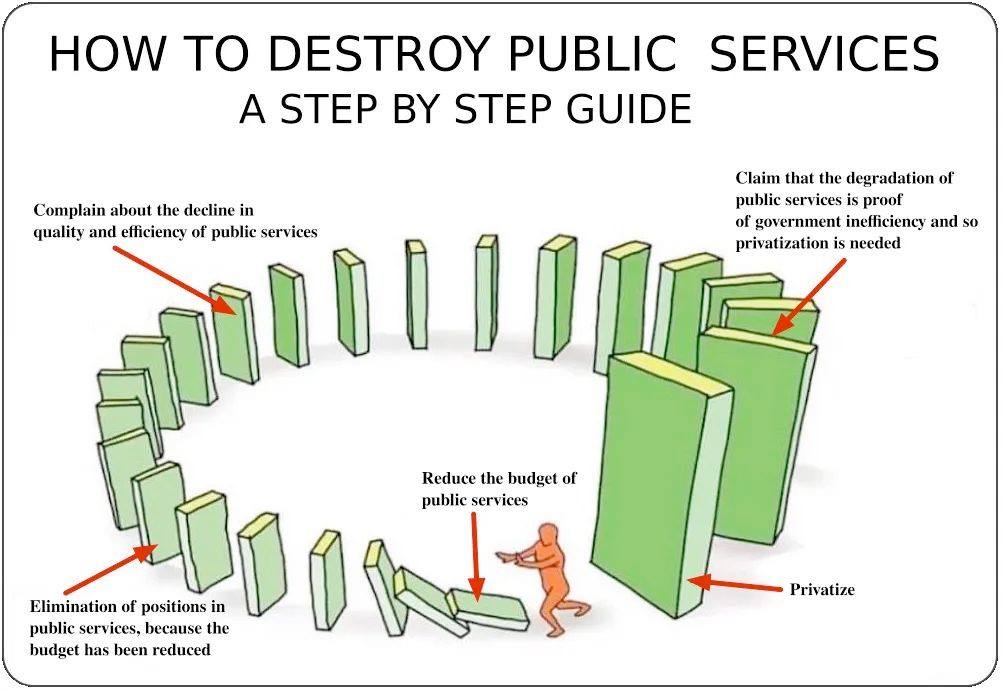
If democratic societies are going to survive the pressures of climate disruption, economic instability, and political polarisation, they will need independent communication systems that communities themselves can run and trust. This is where projects like #OMN, #OGB, #indymediaback, and #makeinghistory fit.
The starting point: is yes, we are all inside #neoliberal systems. For forty years Europe has been shaped by neoliberal infrastructure – platforms, markets, and institutions designed around extraction and competition. In the hashtag story language this is the #deathcult we have worshipped. None of us are outside this mess, the realistic mission is not purity but gradual exit.
That means: building small affinity groups, creating tools that allow communities to organise themselves to develop infrastructure that scales socially, not just technically. The #openweb is a core path for this. The #4opens – open data, open source, open process, open standards – provide a practical way to judge whether infrastructure actually supports commons-based development we need.
Why this matters politically? The dominant platforms – the #dotcons – centralised the web’s communication power. Grassroots movements traded their own infrastructure for convenience. In doing so, they gave away their media power. The problem we need to balance is if you have no power, talking directly to power is usually pointless. Grassroots power grows from the soil, from collective organisation.
What we need are projects like the #OMN which are not more platforms, rather it is an attempt to build simple trust-based media infrastructure, the design principle is #KISS – Keep It Simple. At its core, building and boot-up media nodes run by communities, systems for publishing and sourcing content with flows of rich metadata linking media together. Technically this becomes a very simple semantic layer: media objects linked through open metadata streams.
Think of it as a network of media “cauldrons” and flows, growing from local publishing outward. The important point is that the infrastructure is open and decentralised. Communities decide how to use it. Initial examples include: #makeinghistory and #indymediaback, the architecture is intentionally general. Once you have open pipes and flows, many other uses become possible. Protocols like #RSS and #ActivityPub are starting points for this type of infrastructure.
The path looks like this: Create a focus (hashtags, projects, shared language). Grow community networks around that focus. Use those networks to regain collective power. Then speak to power with power, this matters as we have mess to compost.
The control myth in tech policy? A lot of current EU tech thinking is built around control frameworks: cybersecurity regimes, digital identity systems, privacy enforcement and regulatory compliance layers. These are needed protections, but they also reflect a deeper ideological assumption: that the internet must be controlled to be safe. In practice, many of these approaches close possibilities for social paths we need.
Two concepts in particular have been used in ways that reinforce centralisation: security and privacy. Both are important. But when implemented through centralised systems, they become tools that close infrastructure rather than open it. Security without social trust becomes just another form of control.
So trust versus control. One of the biggest ideological shifts needed in tech infrastructure is moving from control-based systems to trust-based systems. In tech culture we to often fetishise control: permissions, identity verification, cryptographic enforcement and algorithmic moderation. But the internet originally grew through something very different: open trust networks.
The early World Wide Web forced enormous social change because it was built around open protocols and shared infrastructure. The #dotcons later captured that infrastructure and turned it into centralised platforms. Rebuilding the #openweb means reopening those pathways.
Digital infrastructure is a mode of production we need this deeper economic perspective, Karl Marx famously argued that the mode of production shapes social consciousness. The digital era represents a new mode of production, built on information flows, network effects, and data infrastructures. If those infrastructures are controlled by a handful of #dotcons corporations, they shape society accordingly. If they are open, distributed, and collectively governed, they create very different possibilities.
What this means for EU policy is we need better balance in EU funding, legislation and thinking. An effective EU digital strategy should not only fund: AI research, blockchain experiments and industrial platforms. It should balance support for public digital common’s infrastructure, funding projects that: follow the #4opens, strengthen the #openweb to enable local community media networks and reduce dependence on corporate platforms. These paths will not look like Silicon Valley platforms. They will look messier, smaller, and more local. But they are also more resilient.
King Canute and the digital tide. There is an old story about King Cnut, who supposedly ordered the tide to stop to demonstrate that even kings could not control nature. The digital tide is similar. No amount of regulation or platform power can permanently control networked communication. The question is not whether the tide moves, the question is who builds the boats.
Projects like #OMN are attempts to start building them, and yes – the tools required are simple.
Shovels and compost come to mind.

https://shkspr.mobi/blog/2026/01/where-is-bitcoin
