We are feeling a cultural current many of us recognise but rarely name clearly. A feeling that something fundamental has gone wrong, not just politically or economically, but culturally. An experience that imagination has narrowed, participation has thinned, and people are increasingly pushed into the role of spectators rather than participants in shaping the world.
This didn’t appear overnight. It grew out of decades of #neoliberal restructuring that reshaped culture, technology, and social life. Collective institutions were hollowed out, public spaces became marketplaces, creativity became branding and community became “audience”. Instead of shared projects, we were offered platforms, instead of commons, we were given services, instead of any participation, metrics.
This cultural shift produced a generation who feel the weight of a system that seems unavoidable – a reality that presents itself as permanent even as it fails to meet human needs. People sense the limits, but struggle to imagine alternatives because the cultural language for collective agency has been systematically eroded.
This is the environment the #dotcons thrive in, where the #closedweb turns culture into extraction and participation becomes only more engagement metrics. Community, user base, conversation content streams are where cooperation is #blocked due to competition for visibility.
And over time, this reshapes what people think about organising itself. Grassroots action begins to look unrealistic, messy, and inefficient compared to polished controlled platform experiences. Then trust disappears, replaced by algorithmic mediation and institutional management.
Yet beneath this dominant culture, another current has always existed, the #openweb culture, rooted in collaboration, experimentation, shared stewardship, and imperfect but real participation. IP protocol stack built on mailing lists, wikis, federated systems, grassroots media, DIY infrastructures, spaces where people build together rather than consume.
This culture never fully disappeared, as it was needed by the mainstreaming, it was just pushed to the margins. The #OMN project grows from this undercurrent, not as a reaction against technology, as a continuation of the parts of internet culture that treated technology as commons rather than a commodity. It #KISS recognises that infrastructure shapes social behaviour, and that rebuilding a healthier culture requires rebuilding the spaces where people meet, publish, and organise.
The difference is social logic, from social platform ownership grows to shared protocols, from central moderation to community mediation, from passive users to active participants. It’s the change from scale-as-growth to scale-as-federation.
Importantly, this isn’t nostalgia or any path to purity politics. The culture that produces #OMN understands that systems are messy. Grassroots projects fail, fork, and struggle. But instead of seeing this as weakness, it treats messiness as the natural process of collective growth. Composting rather than perfection.
The mistake of both corporate platforms and #NGO approaches is trying to engineer clean solutions to fundamentally social problems. The #geekproblem looks for perfect systems; the grassroots path builds resilient ones through ongoing practice.
This is why affinity groups, federated networks, and the #4opens matter. They create structures where trust emerges from shared action rather than imposed authority. The culture behind #OMN is not defined by ideology alone, it is defined by lived practice of people who build together and communities that govern themselves, to remain open to change
In a world that tells us “there is no alternative,” the simple act of building functioning alternatives becomes quietly radical. And when enough small, federated efforts connect, what once felt impossible begins to look normal again. That is how cultural change happens, not through grand declarations, but through many small working examples growing from shared soil.
For sceptical #FOSS engineers, this isn’t an argument for abandoning structure, security, or technical rigour, it’s the opposite. The lesson from decades of open-source development is that trust does not mean naïveté; it means building systems where failure modes are expected and mitigated through transparency, modularity, and federation. #OMN applies these same engineering principles socially: small loosely-coupled groups instead of monoliths, open protocols instead of platform lock-in, observable processes instead of hidden governance.
If “pure trust” sounds unrealistic, think instead of reproducible builds, version control, and peer review, trust emerges from verifiable processes and shared ownership. The goal isn’t utopian social engineering; it’s creating resilient sociotechnical systems where collaboration scales horizontally because no single node becomes a point of failure or control.
A practical bridge-building approach for the #openweb / #OMN – for grassroots organisers, Fediverse communities, and sceptical #FOSS engineers.
An affinity group is not simply “a group of people who agree.” It is a functional social tool: small enough to build trust, structured enough to act, and open enough to grow.
A working path is to start with purpose, not only ideology. The biggest mistake is forming around identity or theory rather than function. Affinity groups work when they are built around shared work, not shared labels. So for #OMN, instead of saying “let’s build an affinity group for radical media,” we try something concrete like: “a small group committed to building and testing OMN publishing workflows for real users.” A clear, practical purpose lowers defensive reactions and creates common ground.
Ideal size and composition matter. Affinity groups historically work best with around 4–8 people – large enough for diversity, small enough for trust. This avoids both NGO-style bureaucracy and lone-founder burnout. Useful roles include: builder (technical), organiser (social process), storyteller or documenter, critic/tester (essential for reducing groupthink), and connector (linking to the wider network). These are roles, not hierarchy.
Trust must be built through practice. Many people distrust grassroots projects because they have seen “pure trust” models fail. So don’t rely only on ideological alignment, build procedural trust instead. Examples include small, regular deliverables (“what did we actually ship?”), rotating facilitation, transparent public logs where possible, and shared infrastructure ownership, so no single person holds control. Trust grows from repeated, visible action.
Clear boundary rules prevent both NGO capture and chaos. Without boundaries, affinity groups dissolve. Keep rules simple and aligned with #KISS: anyone can observe, participation requires contribution, decisions are made by consent or rough consensus, and there are no permanent leaders, focus more on rotating roles. Forking is allowed, following federation principles. This mirrors ActivityPub socially as well as technically.
Mediation is built into #OMN. Use soft mediation practices such as assuming good faith but verifying through actions, and asking whether behaviour supports the shared task. When conflicts cannot be resolved, allow parallel experiments rather than endless arguments. This avoids the classic problem of well-meaning people unintentionally derailing collective work.
Avoid the #NGO trap from the start. Instead of mission statements, boards, and strategic documents, focus on working notes, small experiments, and iterative prototypes. Document reality rather than intentions. NGO structures often push power upward; affinity groups keep power at the edges.
Bridge-building with #FOSS and Fediverse communities is essential for adoption. Frame #OMN affinity groups as neither anti-engineering nor anti-structure, but anti-centralised control. Messaging like “we’re applying federation principles socially, not just technically” resonates strongly with #ActivityPub builders and open-source contributors.
Growth should happen through replication, not scaling. The affinity group is not the movement – it is a seed node. New participants do not simply accumulate; instead, new affinity groups form. Groups coordinate through federation via shared protocols and culture. This approach mirrors #Indymedia nodes, the early Fediverse, and many successful activist networks.
Concrete first steps: identify 3–5 people already doing related work; define one narrow OMN goal; hold a weekly 60–90-minute working session with a public log; rotate facilitation from the beginning; and ship something small within two weeks. Momentum builds legitimacy.
Affinity groups solve three problems simultaneously: they prevent NGO-style centralisation, reduce lone-founder burnout through shared responsibility, and resist #dotcons growth-for-growth’s-sake logic. In many ways, they are the social equivalent of federation.
If we want meaningful change rather than internal noise, it helps to talk less about individual personalities and more about roles, structures, and class. Individuals come and go, but the patterns they operate within repeat. Shifting focus this way isn’t about avoiding accountability, it’s about understanding the dynamics that shape behaviour across projects and communities.
When we centre individuals, discussions drift into blame or hero narratives, which generates more temporary heat than permanent light. When we look more at structural incentives, cultural habits, and class dynamics, we start to see why the same problems reappear across different spaces – from grassroots projects to NGOs to #FOSS communities.
This is a signal-to-noise issue. A native #KISS path helps keep analysis simple, structural, and grounded in shared experience. By reducing personalisation and increasing systemic understanding, we create more room for collaboration, learning, and mediation, which is important when building sustainable paths like the #openweb and #OMN.
What we then need to compost. It’s a normal mainstreaming augment that systems built primarily on trust will inevitably rot, decay, and collapse. That concern is understandable. Many people’s lived experience tells them that without strong control structures, things fall apart. And honestly – sometimes they do.
But the story is more complicated than that. First, there are long-term examples of trust-based or grassroots systems working, though they rarely look neat or institutional enough to be recognised as “successful” by mainstream standards. The difficulty is that these systems are best understood through participation rather than observation. They are lived processes, not static models. I document some of this history on this site, but reading alone rarely communicates the full reality, experience does.
Second, yes, grassroots projects can be damaged by well-meaning people. That isn’t paranoia; it’s everyday reality. Social dynamics, unconscious habits from institutional culture, and imported control patterns all create friction. The #OMN approach accepts this and builds mediation strategies directly into projects. These strategies are imperfect, we often get things wrong, but acknowledging the problem openly is part of making the work sustainable.
And to the harder question: if good intentions can cause disruption, what happens when bad actors show up? The answer is that no system is immune. Control-heavy systems fail too – sometimes more dramatically because their rigidity hides problems until they become catastrophic. The goal isn’t to create a perfect system (the classic #geekproblem), but to build a more humane messy system that can adapt, respond, and recover.
All functioning social systems are messy. Trying to eliminate that mess usually creates more fragility, not less. Instead, the path forward is to embrace smaller, resilient units that federate horizontally, many small experiments linked together rather than one central structure trying to manage everything. This is where the #fediverse and projects like #OMN become interesting: we now have technologies that allow small-scale trust networks to interconnect without collapsing into centralized control.
Will people try to take control or undermine these spaces? Of course. That’s part of reality. The work is to build cultures and processes that mediate this continuously, rather than pretending it can be eliminated.
What we maybe need to convince sceptical engineers is not ideology but demonstrated failure modes and working counter-patterns. Trust-based systems are not naive if they are designed with clear threat models, transparent processes, and layered social/technical safeguards. The question is not “can grassroots projects fail?” – all systems fail – but whether they fail visibly, recover ably, and without capture.
Long-lived commons like Wikipedia moderation structures, Debian governance, early Apache development, and parts of the Fediverse show that in tech messy, trust-anchored collaboration can operate for decades when legitimacy is distributed and process is open.
#OMN is not proposing blind trust; it proposes observable trust – where actions, history, and reputation are legible through open process (#4opens), allowing engineers to audit the social layer much like they audit code.
The real engineering challenge is not eliminating messiness (a classic #geekproblem trap), but designing systems where messiness becomes resilient rather than brittle. Nobody said it would be easy, but difficulty doesn’t mean impossibility. It means the work is social as much as technical.
None of this new – as Bakunin put it, “The peoples’ revolution will arrange its revolutionary organization from the bottom up and from the periphery to the centre, in keeping with the principle of liberty.” Whether or not we use the language of revolution, the underlying insight is practical rather than ideological: durable systems grow from lived participation outward, not from abstract design imposed from above.
In #openweb and #OMN thinking, this means building structures that enable agency at the edges while allowing coordination to emerge through federation and shared practice. The goal isn’t purity or perfection, but resilient networks where trust, mediation, and collective responsibility evolve through use – messy, iterative, and grounded in real communities rather than centralized control.
We need to describe a real structural problem that shows up again and again in grassroots projects. Well-meaning people arrive claiming to help “community”, but operate through control patterns learned from institutions, #dotcons platforms and professional #NGO culture. They work very hard, believe they are doing good, and unintentionally damage horizontal processes they want to become a part of.
This isn’t primarily a personal problem – it’s a culture clash problem. And yes, mediation, especially embedded mediation, is what we’re building into #OMN to correct direction. Let’s break this down in to practical approaches that actually work in messy grassroots ecosystems. First we need to name the real tension clearly, the conflict is NOT good people vs bad people, activists vs NGOs and grassroots vs professionals. The real tension is: Control logic vs Trust logic
Control logic (learned from #dotcons / NGO structures) is about optimising for risk reduction by centralise decision-making to push standardisation. They measure success through outputs and metrics, and assume governance must prevent failure.
Trust logic (#DIY / grassroots / early #openweb) is about optimise for participation and learning by distributed responsibility and messy iteration. Success is measured by living community, where governance supports emergence rather than preventing mistakes.
Most people don’t consciously choose control, they import it because it’s what they know. So #OMN mediation starts by framing this as different operating paths, not moral failure. We build “translation layers” instead of confrontation, the worst outcome is ideological escalation, leading to #blocking
Instead, we try to create structures that translate between cultures. Examples: Write governance docs describing WHY things are messy, explicitly explain “social messiness is intentional design”. We to do this to frame openness as resilience, not lack of structure.
People from institutional backgrounds need permission to stop controlling. We can try and use process friction as onboarding. Maybe sending people through archaeology (reading posts, repos, etc). Might be actually GOOD – but only if framed constructively. Instead of “read this before asking questions” we could try “The project is built through shared learning – exploring this material helps you understand why we work this way.” Make friction educational, intentional, welcoming but firm. Not defensive.
One contradictory thing is that we need to recognise is the hardest workers are risk points, the worst ones work the hardest. Yes, because control-oriented people express care through effort, effort becomes legitimacy, legitimacy becomes informal authority. What’s the solution maybe to balance effort and decision power, decisions require some consensus and transparent process, not only labour contribution. We can also help by make invisible labour visible (care work, mediation, maintenance).
On this path, we need to introduce “soft boundaries” instead of hard blocking, as hard blocking only escalates conflict. Instead, we can focus on redirecting energy into specific roles or tasks, channel control impulses into infrastructure or documentation. Example: “That’s an interesting governance idea, can you prototype it in a parallel working group?”. This, preserves autonomy, avoids direct rejection and tests ideas in practice.
What works if you have the resources and patience is to teach #DIY culture implicitly, not by argument. Many problems come from lack of exposure to horizontal culture. Best not to lecture about #DIY, instead make participation experiential, let people see how trust works through doing. Design processes where newcomers experience collective decision-making, and failure is visible but safe.
Structural mediation patterns for #OMN are strengthened by regularly asking:
Are we slipping into control patterns?
Are we excluding through complexity?
Are we drifting too far into informal hierarchy?
Make this normal so that multiple pathways allow for experimental edges, stable core infrastructure and messy periphery. People can self-select into environments matching their comfort level.
We should always be making visible social values, not just technical #4opens. This needs to be explicit: openness to disagreement, expectation of plural narratives, composting failure, a powerful governance guidance – Compost works because decomposition is allowed, friction produces transformation, nothing is wasted, but everything changes form. Translating into policy – that conflict is expected, critique is welcomed but must produce something, few things are sacred – but everything is documented.
The deep strategic insight (important) is the goal is NOT to eliminate control-oriented people. We need them as healthy ecosystems require institutional thinkers (stability), grassroots experimenters (innovation), activists (accountability) and bridge-builders (translation). The problem occurs when one mode dominates. So mediation is about maintaining ecological balance.
Let’s look at an example of how belief systems shape political reality. Some people still deliberately conflate anti-Zionism with anti-Semitism. This confusion isn’t neutral, it shapes how discussions are framed, who gets silenced, and which political paths remain possible. Let’s be clear:
Anti-Semitism is racism. It targets Jewish people as a people. It is hate, exclusion, and violence, and it must be opposed wherever it appears.
Anti-Zionism is political opposition to a state ideology and to actions carried out in its name, particularly when that ideology manifests as ethnic nationalism, apartheid, and genocide. Criticising state power and political structures is not racism; it is part of political accountability.
Much of the current framing is not about honest thinking, it is about strategy. By collapsing these two terms together, critics of state violence can be delegitimised without engaging with what they are actually saying. Debate is shifted away from material realities and toward defensive arguments about identity.
We need to refuse this mess-making. Instead of getting trapped in endless semantic battles, shift the focus toward power and consequences of who holds power? Who is being harmed? What structures enable that harm? Then, how do we build paths toward justice that do not reproduce oppression?
Moments of political rupture – scandals, revelations, shifting alliances – expose how #mainstreaming narratives are constructed and maintained. When these moments occur, people become more open to questioning “common sense.” That creates opportunities for real social change and challenge.
The goal is not to win rhetorical battles inside broken frames, but to move discussion toward ethical clarity and collective responsibility. Focus on actions, structures, and outcomes, not weaponised labels designed to shut conversation down.
This dynamic reflects a broader pattern. People often live inside belief systems that function like religions, even when they present themselves as purely rational. These systems shape what appears normal, possible, or inevitable, and define which questions are allowed.
Modern economics is one of the most powerful of these belief systems. Despite presenting itself as objective and scientific, much contemporary economic thinking has only a tenuous connection to physical reality – ecosystems, material limits, social relationships, and lived community experience. Instead, it operates through abstract models centred on growth, competition, and individual optimisation. These abstractions become controlling myths of markets become invisible gods, “efficiency” becomes moral virtue and growth becomes salvation.
Humans have always created symbolic systems to understand complexity. The problem emerges when these systems detach from the material world. When that happens, distorted decision-making becomes inevitable. Ethnic cleansing, #climatechaos, ecological breakdown, social fragmentation, and recurring conflict are not anomalies, they are predictable outcomes of a worldview that treats nature and community as externalities.
One of the deepest misunderstandings reinforced by liberal ideology is the belief that society is simply the sum of independent individuals. In reality, the individual – their freedom, reason, and identity – emerges from social relationships. Strong individuals are produced by healthy collective structures, not opposed to them.
This insight sits at the heart of anarchist and commons-based traditions, and it was central to the original spirit of the #openweb. This is why the open web – and #OMN – matter, they represent a break from economic fundamentalism because they treat infrastructure as commons rather than commodities by prioritises interoperability, shared stewardship, and collective agency over enclosure and extraction.
By strong contrast, the #mainstreaming#closedweb (#dotcons platforms) reflects economic dogma of enclosure instead of openness, surveillance instead of trust and platform ownership instead of shared governance leading to individual extraction instead of collective flourishing.
The tragedy is that many “alternatives” risk reproducing the same patterns because they inherit the same assumptions. This is why #OMN matters, it isn’t simply another technical project, it is a shifting of the underlying social logic from product thinking to ecosystem thinking, from institutional control to community process (#4opens), from scale as success to resilience as success, to move from abstract models to lived social reality
If modern economics functions as a religion disconnected from nature, then grassroots digital commons are a form of re-grounding. They reconnect technology with human needs, ecological awareness, and collective agency.
We need to be composting the myths. Across both examples – geopolitical narratives and economic ideology – the task is similar: compost the myths. Recognise which assumptions no longer serve us so that new forms can grow. That means questioning inherited narratives, rejecting reactionary nationalism, and building alternatives rooted in shared stewardship and open process.
The #openweb, at its best, is not nostalgia or utopian fantasy. It is a recognition that healthy systems grow from real communities and collective care. And perhaps the most radical step is simply this: step outside our inherited belief systems long enough to remember that we built the web together – and we can rebuild it differently.
It’s interesting to think about the idea of good and bad faith when dealing with people in change and challenge interactions. If you spend time in life doing activism, this will be an ongoing, unpleasant reacuringing relationship. When pushing aside, pushing back #mainstreaming there will be a lot of bad faith coming at you, your good faith is the best and likely only defence.
Open Media Network (OMN): Portable Digital Commons for a Federated Europe
Summary
The Open Media Network (#OMN) is a real grassroots initiative to build sustainable, human-centred digital infrastructure aligned with the principles of the #openweb and the #4opens. To providing easy-to-use, hosted cloud services with service portability and freedom at their core – OMN focuses on creating living social ecosystems alongside technical infrastructure.
At a time when the European Union is investing in alternatives to dominant platform monopolies (#dotcons), The OMN addresses a critical gap: ensuring that open infrastructure remains socially grounded, decentralised in governance, and accessible to grassroots communities, not only institutional actors.
This project proposes to develop practical tools, governance models, and community infrastructure to support a resilient federated ecosystem built on open standards such as #ActivityPub.
Problem Statement
The digital public sphere is currently dominated by large corporate platforms that centralise power, restrict portability, and commodify user participation.
The EU’s growing investment in digital sovereignty and open infrastructure presents a historic opportunity. However, there is a structural risk of replacing Californian platform capitalism with European platform capitalism; building technical infrastructure without sustainable social ecosystems; funding professionalised, institutional actors while excluding needed grassroots innovation.
Healthy digital ecosystems require tension and balance between institutional stability and grassroots experimentation. Without this, “commons infrastructure” risks becoming technocratic infrastructure lacking community participation – leading to failure, abandonment, and wasted investment.
Project Vision
The Open Media Network aims to develop a federated, portable digital ecosystem where: individuals and communities retain control over their data and identity; services are interoperable and portable across providers; governance is participatory and transparent; grassroots actors can build and sustain independent infrastructure.
The goal is not only technological decentralisation but social decentralisation, ensuring that federation is lived practice rather than technical abstraction.
Objectives
Portable Hosted Services. Develop and deploy easy-to-use hosted services based on open standards that prioritise: service portability between providers; user-controlled data ownership; interoperability via ActivityPub and related protocols.
Grassroots Governance Models. Design and test governance frameworks rooted in #4opens principles, with open data where appropriate; open process and decision-making; open standards and open participation. These models will be documented as reusable frameworks for wider adoption.
Experimental Commons Infrastructure. Create an experimental environment where: grassroots communities can launch federated services; low-resource groups can participate without heavy technical barriers; experimentation is encouraged alongside stability.
Historical Memory and Knowledge Transfer. One of the recurring failures of digital movements is loss of institutional memory. OMN integrates documentation and archiving into the infrastructure itself, ensuring lessons learned are preserved and accessible.
Key Activities
Develop and maintain ActivityPub-compatible hosted services.
Build onboarding pathways for non-technical users and grassroots organisations.
Establish pilot communities using OMN infrastructure (e.g. activist media, local networks, cooperative publishing).
Produce documentation and toolkits for governance and sustainability.
Engage with EU initiatives (e.g., NGI Commons) to bridge grassroots and institutional approaches.
Innovation
Unlike many decentralisation projects that focus primarily on technical architecture, OMN emphasises social infrastructure as core technology; governance experimentation alongside code; low-barrier participation for grassroots actors. This creates a resilient ecosystem where innovation emerges from diverse communities rather than centralised development teams.
Expected Impact
Increased adoption of federated technologies across grassroots communities to reduced dependency on proprietary platforms. Strengthened European digital commons aligned with democratic values by development of replicable governance models for decentralised ecosystems. Long-term sustainability through community ownership rather than platform lock-in.
Alignment with EU Priorities
This project supports digital sovereignty and European autonomy, open standards and interoperability, sustainable digital commons, privacy and data portability and innovation through diversity and experimentation.
Sustainability Strategy
OMN operates on a low-cost, distributed model, prioritising: community stewardship; cooperative hosting paths; modular infrastructure that can be replicated and adapted. Rather than scaling toward centralisation, sustainability emerges through federation and shared maintenance.
Consortium and Community
OMN builds upon decades of grassroots media and openweb experience, including work on Indymedia and federated social networks. The project actively collaborates with FOSS communities, federated platform developers, grassroots media networks and independent infrastructure providers.
Funding Request
We seek funding to support: development and seed infrastructure hosting, coordination and community facilitation, documentation and knowledge sharing leading to governance experimentation and research.
Closing Statement
Europe has a unique opportunity to build digital commons that avoid the failures of platform capitalism. The Open Media Network provides a grassroots pathway that complements institutional initiatives, ensuring that the future European internet remains participatory, portable, and human-centred.
The #openweb reminds us that meaningful autonomy comes from shared infrastructure, collective governance, and mutual trust. Projects like #OMN are built on this understanding: individuals do not create networks alone; networks create the conditions that allow individuals to flourish. Real freedom grows from commons-based collaboration, not from isolated platforms or competitive silos.
A Practical Infrastructure Layer for Portable, Human-Centred Digital Commons
Summary
The Open Media Network (OMN) is a pragmatic effort to improve the usability, portability, and resilience of federated digital infrastructure through incremental engineering grounded in existing open standards.
Rather than introducing new protocols or replacing existing ecosystems, OMN focuses on integrating known working components – ActivityPub, open hosting practices, and activist community traditions – into deployable, reusable infrastructure patterns.
The goal is straightforward we build a practical layer that allows grassroots communities and small organisations to deploy federated services that are portable, interoperable, and socially sustainable.
This project addresses a persistent gap between technically sound decentralised systems and real-world adoption by non-specialist users.
Problem Statement
The technical foundations of decentralised social infrastructure already exist. Protocols such as ActivityPub demonstrate interoperability and federation at scale. However, adoption barriers remain that existing solutions optimise for developers rather than communities. And institutional funding risks producing technically impressive systems that fail socially due to missing grassroots participation.
This results in a paradox, an ecosystem has functional protocols but lacks usable grassroots infrastructure patterns. The OMN addresses this gap, it’s not a new platform or protocol, more an integration and implementation project that focuses on packaging existing federated technologies into existing cultures. Creating reproducible deployment models for small-scale operators, that natively scale by federating. Supporting data flows and thus service migration between providers. And embedding governance into operational practice rather than treating governance as a theoretical layer.
The core engineering philosophy is to use existing tools.
We need to work on flows and commons they are coded into the current ActivityPub instance code but not “implemented” so barely used. The most developed might be #peertube with kinda hidden idea of flows of media objects, videos. You can see the #OMN path for this here https://hamishcampbell.com/human-tech-omn/
The Fediverse in its current form works, but in a narrowband way. The Fediverse right now is largely instance-centric and account-centric. But ActivityPub itself is object-centric and flow-capable, we barely use that layer. The protocol encodes flows of objects between actors – but most implementations collapse this into timelines and accounts. That’s not the only path available.
Take PeerTube as an example, it quietly models media as flowing objects – videos circulating across nodes, mirrored, cached, redistributed. That’s closer to a commons’ logic. The idea of flows is there – but it isn’t foregrounded in most social implementations. What you’re pointing toward with #OMN is not “radical overhaul.” It’s activating parts of the protocol that are already there. Not replacing the Fediverse, extending it, using what is latent.
The real risk isn’t experimentation. If we don’t develop shared media commons, resource flows between nodes, governance rooted in users and admins with public-first infrastructure. We risk the inrush of #NGO and commercial scale pressure, funding gravity, and the commercial entrants will define those flows for us.
The #openweb reminds us that meaningful autonomy comes from shared infrastructure, collective governance, and mutual trust. Projects like #OMN are built on this understanding: individuals do not create networks alone; networks create the conditions that allow individuals to flourish. Real freedom grows from commons-based collaboration, not from isolated platforms or competitive silos.
What can grassroots #openweb people actually do when the EU is building alternatives to #dotcons, but with very real risks of recreating European versions of the same problems? This is a historic moment, for the first time in decades public funding is flowing toward digital commons and infrastructure sovereignty is being taken seriously. Federated technologies like #ActivityPub are gaining traction, largely due to years of grassroots work which is leading to initiatives such as @NGICommons attempting to support open infrastructure.
But alongside this opportunity comes an obvious risk, that they replace Californian platform capitalism with European platform capitalism. The danger: is European #dotcons. Institutional “common sense” – especially when combined with bureaucracy and the #NGO class – tends to reproduce familiar patterns of projects prioritise compliance and institutions over communities. Tech governance becomes professionalised and detached from users and seed communities. Yes, open standards exist, but power centralises anyway as funding rewards scale, stability, and safety rather than needed native grassroots paths.
The result is predictable, European #dotcons. The structural problem is institutions optimise for safety when #EU funding systems are designed around risk avoidance, measurable outcomes to build controlled delivery structures. This leads to only professional actors and institutional partnerships. Grassroots projects – messy, political, horizontal – rarely fit comfortably into this narrow thinking.
So even when the intention is to “build commons,” the outcome becomes safe-looking infrastructure that lacks living social ecosystems. The commons turn into infrastructure without community, and frequently fail, leaving funding poured down the drain and more #techshit to compost.
Why grassroots counter-currents matter is that healthy technology ecosystems need tension between institutional builders for stability, grassroots radicals for innovation and activists for accountability. This balancing leads to communities and real-world grounding.
Without this tension, governance ossifies and technology becomes abstracted from users. Political imagination shrinks and becomes #blocked. Grassroots projects like #OMN represent the compost layer, the messy soil where new forms grow. Institutions rarely generate this energy themselves.
Where initiatives like #NGICommons sit is that some people inside these initiatives genuinely want openness. Much like early Google’s “don’t be evil” phase, there is still a window of possibility. This means influence is still possible and direction is not fully locked in. Individuals inside may be allies, even if institutional structures trend toward mainstreaming. The danger is not simply bad intentions, it is the structural gravity toward institutionalisation.
We need practical strategies (not just critique) to move grassroots actors to shift direction, critique alone is not enough. Practical engagement matters to frame grassroots work as ecosystem infrastructure. Don’t argue only from ideology, speak in terms institutions understand: that tech ecosystems need experimental edges as monocultures fail. We need to argue that diversity increases resilience.
Policy language travels further, when we push for small “wild funding” streams. Instead of demanding institutional transformation, push for small structural openings:
microgrants
low-bureaucracy funding
experimental tracks
funding for governance experiments, not just technical deliverables.
Small budgets can create disproportionate impact.
Promote ActivityPub + social governance together as many EU projects adopt federation technically while retaining centralised governance culturally. We need to communicate that federation without social decentralisation is fake decentralisation. This is where #OMN has strong positioning.
Build parallel legitimacy, not only opposition, as institutions might respond to working prototypes with visible communities that demonstrated outcomes. Critique alone rarely shifts funding flows. Working alternatives do.
We need to find sympathetic insiders, every institutional structure contains pragmatists, a few idealists and sometimes meany reformers. So bridge-building matters. Not everyone inside #NGICommons or EU initiatives is an opponent, some are actively trying to resist corporate capture from within.
The EU currently has three possible futures:
European #dotcons – platform capitalism with EU branding
Technocratic infrastructure without social life (#techshit to compost)
Living digital commons grounded in grassroots communities.
The third path requires messy activism with strong social processes (#4opens) and historical memory rooted in #openweb culture. Without pressure from the grassroots edge, institutions drift toward the first outcome by default.
The deeper insight is that grassroots movements do not need to “win” against mainstreaming. They need to remain the compost layer that keeps the ecosystem alive. That means critique combined with collaboration where possible, strong and grounded independent experimentation and most importantly refusal of capture.
Across Europe, large-scale “mainstreaming” tech projects are increasingly shaping the future of the digital commons. From infrastructure initiatives to sovereign cloud strategies and federated social technologies, the EU tech stack is becoming more organised, more funded, and more institutionalised.
On the surface, this looks like progress. But history suggests that without active counter-currents, #mainstreaming inevitably drifts toward bureaucracy, risk-aversion, and quiet capture by institutional and corporate interests. The problem is almost all current European tech funding is poured down the drain of soft painless corruption.
This is why a small but intentional flow of funding toward grassroots, activist, and counter-cultural projects within #FOSS is not a luxury, it is essential infrastructure.
Innovation rarely if ever starts in the mainstream
Most genuinely transformative ideas in #FOSS and free software and #openweb did not originate from institutional programmes. They came from messy edges of volunteer collectives, activist media projects feed by autonomous spaces building #FOSS social infrastructure.
These environments allow experimentation without needing immediate legitimacy or scalability. They tolerate failure and contradiction, conditions that mainstream programmes often cannot. Without supporting these edge spaces, mainstream funding feeds an echo chamber that only produces incremental improvements, if any, to existing paradigms. Counter-currents are not only opposition; they are the ecosystem that generates future pathways.
Activism keeps governance honest
Institutional projects naturally optimise for stability, compliance, and reputation. This creates blind spots where needed difficult political questions get softened and avoided, governance becomes less participatory over time leading to decisions shift toward funders and professional stakeholders. Activist communities provide necessary friction by asking uncomfortable questions about power concentration and co-option by #NGO and corporate actors.
This friction is often misinterpreted as negativity or disruption. In reality, it acts as a corrective force that keeps projects aligned with the original European values, and the values of the #openweb and #FOSS. Without activist pressure, mainstreaming tends toward the same #closedweb patterns it now claims to be resisting.
Diversity of approach is a resilience strategy
A healthy ecosystem requires multiple approaches operating simultaneously, with institutional scaling projects in balance with community-led infrastructure. When funding flows only toward “safe” and easily measurable projects, the ecosystem loses adaptive capacity. Counter-currents provide alternative models and paths that become critical when dominant approaches fail. This is something repeatedly demonstrated in the history of internet development. Funding these spaces is therefore not charity; it is long-term risk management.
The current gap: refusal to fund counter-currents
Some current alternative funding bodies – including initiatives like #NLnet – have done valuable work supporting open technology. However, when funding structures avoid explicitly supporting activist or counter-cultural paths, a structural imbalance emerges. By prioritising technical outputs without investing in the social and political ecosystems that sustain them, funding breaks down, reinforcing the same dynamics that previously enabled enclosure and platform capture. Technical neutrality is not neutral. It implicitly favours existing power structures.
A truly balanced funding flow would intentionally support more grassroots organising capacity to build activist infrastructure projects with working governance experimentation like the #OGB to open spaces to shape community memory and historical continuity. Without this, mainstream funding cannot claim to represent the full health of the #FOSS ecosystem.
Why this matters now
The European tech stack is at a turning point. As public funding grows, so does the risk of institutionalising the very problems open technology originally emerged to resist. Activism is not only an external threat to mainstream projects, it is also a feedback system.
Supporting counter-currents prevents stagnation and helps to surface blind spots early by keeping alignment with public values. It’s needed to keep the tech ecosystem genuinely open rather than merely #NGO branded as such. The simple principle is if mainstream funding only supports what already looks safe and legitimate, it stops being an engine of innovation and becomes a mechanism of consolidation.
To keep the #openweb alive, we need funding flows that intentionally include the messy edges – the activists, the grassroots builders, and the experiments that don’t yet fit neat categories.
Not because they are comfortable, because they are necessary.
And to tell the truth we need a better balance of useful verses funding poured down the drain #NLnet#EU#NGI#NGIzero and likely more, please post in the comments.
Everywhere we look – what we see, touch, and use – we are living inside systems shaped by decades of economic and technological assumptions. This isn’t only something happening “out there”. It has been normalised and internalised over the last forty years.
The dominance of #stupidindividualism, combined with rigid economic dogma, influenced how we design technology, how we organise communities, and how we imagine progress itself. The outcomes are now starkly visible: #climatechaos, social fragmentation, and a weakening of collective sense-making.
The internet reflects this reality. Online and offline are no longer separate spaces; they feed back and reinforce each other. Recognising this isn’t only about blame, it’s more importantly about understanding the terrain we’re all navigating. These are the technology limits of the current path and why we continue to repeat familiar patterns. New platforms emerge, new interfaces are launched, yet the underlying values remain unchanged. The result does feel like endless churn to people who notice, innovation that rearranges surfaces while leaving deeper structures intact.
This isn’t simply the fault of individuals or communities. Many developers, especially within #FOSS and the #fediverse, are actively trying to build alternatives. But the broader ecosystem still pushes toward centralisation, scaling, and extraction because those are the dominant incentives of the wider paths.
So recognising our #geekproblem isn’t about rejecting technical culture – it’s about expanding it. Technical excellence alone cannot solve social problems without grounding in alt collective needs and lived social realities. This is what the #openweb means, it’s more than #blinded nostalgia for the early internet. It represents a shared direction many communities are already moving toward.
The #openweb is an internet where #4opens information is accessible regardless of platform or location, content can be shared, linked, and reused, participation is not gated by proprietary control. It’s basic: open data, open source, open standards, and open processes.
The growth of the Fediverse demonstrates that alternatives like these are possible. Decentralised social networks, community-run servers, and cooperative governance models show glimpses of a healthier digital ecosystem. Yet within these paths, tensions remain between “native” grassroots values and pressures toward #NGO#mainstreaming and power politics institutionalisation.
For this space to grow, we need to keep moving beyond false choices. On institutional paths, many proposed solutions focus solely on regulation or institutional reform, imagining that better rules will fix systemic problems. While governance matters, relying exclusively on top-down solutions risks becoming another form of dependency to add to the mess.
Another path exists alongside institutional change: horizontal, grassroots approaches rooted in #DIY practice, #4opens shared infrastructure. This path is imperfect and often messy, but it keeps agency within communities rather than outsourcing change to distant structures.
The goal is not purity, it is balance, the #OMN approach grows from this perspective. Grassroots, #DIY, non-corporate, human-scale, not disruption for its own sake, not scaling driven by venture logic. Instead, building social technology that serve collective needs while respecting individual agency. Many people within #FOSS and the Fediverse are already working toward these goals, even if they use different languages. The opportunity now is to deepen collaboration, connect projects that share values, and strengthen the social foundations alongside the technical ones.
So the path we need is about finding each other, it’s the path we made work for a while then failed on socialhub, so I need to repeat, the question isn’t whether alternatives exist, they do. The challenge is finding alignment among people who are already trying to move in similar directions, but feel isolated or fragmented.
Who recognises that technology must serve communities rather than extract from them. If you see value in grassroots, cooperative approaches to technology – if you believe the #openweb is still worth building – then the invitation is simple. Stop churning, start building. Who is ready to move beyond endless reinvention toward shared infrastructure and shared purpose?
Seeds, Safety, and the Chicken-and-Egg Problem – A Q&A on Practical Building vs Intellectual #Blocking. This explores a recurring tension in grassroots technology projects: the gap between practical historical paths and fresh “intellectual” critique, it reflects on a broader patterns seen in #openweb, #FOSS, and #DIY spaces.
Q: What is the “shared path” and why describe it as a seed?
A: The shared path is a practical response to repeated historical failure. It is not a finished solution, a moral demand, or a complete alternative system. It begins as a seed, something small, imperfect, and grounded. If you judge a seed by whether it is already a tree, nothing will ever grow. The idea is to start building despite uncertainty and allow structure to emerge rooted organically through practice.
Q: What is the main critique of this “seed” approach?
A: Critics argue that metaphors like seeds and growth avoid addressing concrete mechanisms. They focus on first-step effects: What signals are being sent? Who carries risk or unpaid labour? What moral pressures are created? What happens when survivability is deferred? From this perspective, issues must be addressed at the beginning rather than grown from the seed.
Q: Why does this debate often become circular?
A: Because both sides are asking different questions. Practical builders ask: Where do the resources come from to implement safety before anything exists? Critics ask: How do we prevent harm if we begin without safeguards? Without answering the resource question, discussions loop endlessly between ethics and feasibility.
Q: What is the “chicken-and-egg” problem here?
A: Many grassroots projects face a structural paradox: You need resources, tools, and commitment to build sustainable alternatives. But those resources only appear after something exists and demonstrates use value, agenst mainstreaming pushback Waiting for perfect conditions prevents starting; starting without resources has risks, but it’s the only thing that can grow change and challenge.
Q: What work is actually happening in practice?
A: Practical work often remains messy, distributed, and unpaid. Examples include: Supporting student journalists in rebooting grassroots media projects like Oxford #Indymedia. Motivating unfunded technical communities to collaborate on shared codebases such as #indymediaback. Maintaining ongoing organisational and community infrastructure through long-term volunteer labour. These efforts are naturally invisible and impossible to summarise because they work organically rather than following formal project structures.
Q: Why is documentation itself a source of conflict?
A: Critics ask for clear summaries or structured documentation of ongoing work. Builders simply see this as additional unpaid labour imposed on already stretched contributors. External demands that assume others should organise information for them, creates friction between expectations of accessibility and the working realities of #4opens and #DIY grassroots work.
A: In #DIY culture, participation is active rather than observational. If someone believes something needs improvement – documentation, tools, funding guides – the expectation is that they step in and contribute rather than stand outside only pointing critique. Critique without participation is too often lazy negative pressure rather than constructive help on “native” DIY paths.
Q: Is this simply a disagreement about ethics?
A: Not entirely. Both sides often share ethical concerns. The deeper disagreement is about sequence: Should, impossible and irrelevant in a practical sense, safety and compensation frameworks exist before building begins? Or can these frameworks emerge better through #DIY messy real-world working practice?
Q: What is the takeaway?
A: Grassroots building requires balancing, ethical awareness and practical starting points. Intellectual critique can help identify risks, but when detached from material constraints it too often unintentionally blocks action at best or turn into trolling at worst. Likewise, practical work can benefit from reflection, but cannot wait for perfect theoretical clarity.
The challenge is to compost both approaches into something that moves forward.
Need to update this, looking at cheap outboards and expanding the battery bank to power duel outboards.
Single 1.8 kW motor is fine for:
downstream cruising
canals
sheltered water
Not fine for:
crosswinds
tide
emergency manoeuvres
Dual 1.8 kW motors (3.6 kW total)
This is where it starts to make sense, with comfortable 3–4 knots through water
Good control
Redundancy
Differential thrust steering (huge win)
Stern platform + outboards solves several problems at once:
Clean water flow to the props, adjustable motor height, easy removal for tender use and redundancy (with twin). Prop centreline is likely impossible to get below keel depth. Set them wide is better so not tucked in, so best not to hug the centreline and place outboards far enough apart that each prop gets clean flow. This massively improves steering when running electric-only.
The individual, their freedom, and their capacity for reason are products of social relationships, not independent origins. Society is not built from isolated individuals; individuals arise from shared culture, history, and collective life. As society grows richer and more humane, individuals gain the conditions needed for deeper development and freedom emerges from this shared foundation.
What’s really at stake is power. The shift has to be away from private ownership and toward the commons – not just in licensing, but in governance, culture, and decision-making. The whole #OMN project is grounded in this understanding. It’s about building shared infrastructure that people can actually use, shape, and grow trust.
One of the great ironies of many “alternative” spaces is that people believe they’re resisting power, yet by locking everything down – secret decisions, closed processes, gatekeeping – they end up recreating the systems they claim to oppose. The result is stasis, nothing moves or grows, everything fragments.
Paranoia is one of the biggest blocking forces in alt-tech and radical spaces. It breeds mistrust, isolation, and internal sabotage, making collective action almost impossible. Some caution is necessary, we’re not naïve, but when paranoia becomes the default posture, it hardens into control. At that point, it stops being defensive and starts being corrupting.
The #4opens is a direct antidote to this. Transparency punctures paranoia. When decisions, processes, and networks are open, there’s less space for suspicion to fester. Trust isn’t built through secrecy or technical cleverness; it’s built through visible, accountable practice over time. Open process beats “good intentions” every time.
This is also why letting technical people make final product decisions is a mistake, overemphasizing technology then underplaying the social problems we’re actually trying to solve. We end up designing better mousetraps without ever asking whether we’re even trying to catch mice. Tech becomes the point, rather than a tool.
This is where the #fashernista problem kicks in, being seen to hold the correct stance replaces doing the work. But staying “right” while nothing changes is another form of failure. If we want alternatives that function, we have to move past paranoia, reopen flows, and accept that trust is something you build, not something you secure with walls.
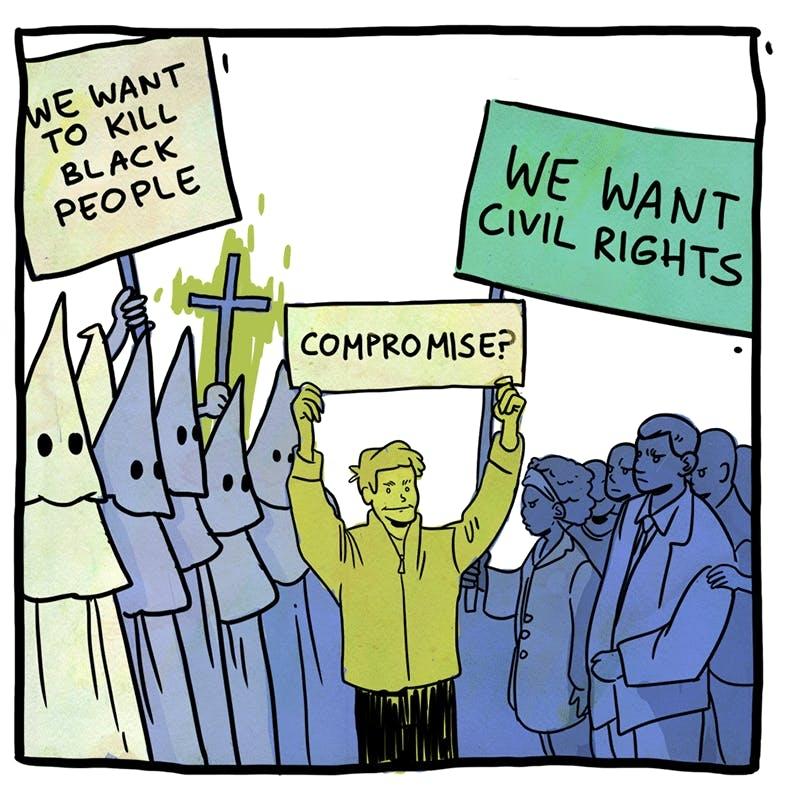
The uncomfortable truth is that it’s easy to be “right” in theory. It’s much harder to take part in the compromises that building anything real requires. Most people prefer the comfort of ideological purity over the messiness of collective practice, especially when dealing with complex social truths. That’s the trap.
#OMN is often critiqued as if it were a finished system, a moral framework, or an alternative economy. It is none of those things. We need to be clear about scope, sequence, and intent if discussion is going to move forward instead of circling the same ground.
#OMN is a commons-first, tool-building project. It exists to create shared infrastructure, processes, and cultural practices that can grow non-extractive media and communication. It prioritizes shared ownership, open process (#4opens), and reducing capture in order to build the needed public-first infrastructure. It’s about creating conditions, not declaring outcomes.
It’s an early-phase project, an affinity-building space to create tools and governance to reconnect fragmented activist and media histories. It is not claiming to already provide economic survivability, stable long-term livelihoods, or a full replacement for existing systems. Confusing the step with the destination is the root of most disagreement.
It’s grounded in lived historical practice. #OMN grows out of more than 30 years of real projects – Indymedia, grassroots media, squatting and DIY cultures, trust-based networks – and a clear view of where #NGO-driven paths have failed. This history matters. The path is not speculative theory, it’s an attempt to compost what worked, acknowledge what failed, and try again with better tools.
That’s based on a simple historical reality, society does not pay people to challenge itself. Early change is driven by passion, not wages, and support structures emerge after commons exist, not before. This isn’t a moral claim, it’s an observation drawn from experience. #OMN is also a space where tone is a process tool. Friction is used to slow things down, open space for challenge, and form affinity where none yet exists. This is messy by design, not a finished social contract.
We don’t set out to solve how everyone is paid, how risk is evenly distributed, or how long-term security is guaranteed. These are unsolved problems, not denied ones. #OMN exists because these tools do not yet exist, so expecting it to already provide them misunderstands its scope and phase. Participation is voluntary, alignment is practical, not moral. Funding may be used tactically, but OMN is not structured around chasing it.
This is not a safe, smooth, or finished space. The path is unfinished, uneven, and sometimes uncomfortable. If a project has to be safe, stable, and fully funded before it can exist, it will never challenge anything.
The core misunderstanding is that the #OMN is judged for failing to deliver something it has never claimed to already be. What we are doing is building the tools that make survivability possible later, without reproducing the failures that keep repeating. That work is slow, messy, and incomplete – because it has to be.
The shared path is a practical response to repeated historical failure. It is not a promise, a moral demand, or a finished alternative. If you judge a seed by whether it is already a tree, you will never grow anything.
Why groups matter, in our “common sense” we like to pretend society is made up of strong, independent individuals who freely choose everything about their lives. That story is comforting, but it’s also mostly false, humans are group creatures first. People don’t start as individuals. We are born into families, cultures, languages, histories. Our values, assumptions, and sense of what’s “normal” are learned socially long before we ever get a chance to reflect on them. Groups aren’t an add-on to human life – they’re the foundation.
Individual identity is hard work, as modern culture tells us we must be ourselves, define our own path, build a unique identity. But doing that alone is exhausting, being an “individual” means constant self-definition, self-presentation, self-justification. You’re never finished as you’re always proving who you are, to employers, platforms, institutions, and peers.
That permanent uncertainty is what people mean when they talk about burnout, anxiety, and imposter syndrome. Groups reduce that pressure, as belonging to a group shares the load, with values, purpose, norms, responsibility. You don’t have to invent everything from scratch, you’re part of something that existed before you and will continue after you. This isn’t about conformity, it’s about being human, support and continuity.
The current #deathcult myth of pure individual freedom, where individuals are fully free and self-made #KISS serves power. When people are isolated, all problems look personal instead of structural, failure feels like a moral flaw and collective solutions disappear. You can’t organise if everyone thinks and acts as if they’re alone.
Healthy groups vs. toxic groups, yep, groups aren’t automatically good. Some are rigid, exclusionary and authoritarian. Healthy groups are porous and open to change, allow disagreement, are based on trust, not fear and exist to serve their members, not control them. The solution to bad groups isn’t no groups – it’s better ones.
Why this matters for media and the web? The #openweb wasn’t built by isolated individuals chasing personal brands. It grew out of horizontal’ish communities, shared tools, and mutual aid. What broke it, was pushing of individual status, platforms replacing communities then metrics replacing relationships. Projects like #OMN are about rebuilding group-based publishing, shared infrastructure, and collective voice, not amplifying lone influencers.
In short, (stupid) Individualism puts people in a permanent liminal state – alone, unstable, competing. Groups give people grounding, belonging, continuity, and the ability to act together. If we want social change, resilient media, and a future beyond the current mess, we on balance don’t need better individuals, we need better groups.
I proposed a long time ago that #openweb is a less tribal, more expansive framing than #fediverse socially and technically. It’s also #nothingnew, which is honestly a breath of fresh air. We can (and should) use both terms, but if we want meaningful change and challenge to the #mainstreaming mess, we need to foreground the more generic one.
Predictably, this gets pushback from two directions: the non-political #FOSS crowd, and the mainstreaming crew. And yes, when you bring #NGO behaviour into the #fediverse, there’s going to be friction. Try being #openweb-native on this, please.
People are going to keep doing self- and socially-destructive things. That’s a human problem, not a branding one. But the language we choose does shape how we respond to it.
One of the reasons we use a #4opens process is to balance the reality that people often arrive with strong opinions before understanding the history, context, or existing work. The process isn’t there to exclude anyone, it’s there to slow things down just enough so people can orient themselves before trying to reshape what already exists.
At the moment this only works partially, because some people still interpret being asked to explore existing materials as dismissal. For example “You have sent me on a ride through Mastodon posts and two repos while not providing direct answers.”
What may feel like dismissal is actually part of a #DIY open process. The intention is to encourage people to engage with the work already done so conversations can move forward from shared context rather than restarting the same debates repeatedly.
Similarly: “Why assume blog archaeology is the right approach instead of presenting everything in a more processed way?” In grassroots projects, documentation is often messy, organic, and evolving rather than packaged into clean summaries. Exploring this material isn’t busywork, it’s a way to understand the social and historical layers that shape the project. Without that grounding, discussions can unintentionally repeat old loops to propose changes that have already been explored.
And when people say: “Most people don’t have time or energy for this.” That’s a real constraint, but it also highlights the core challenge. Open, collective projects rely on participants investing some effort to understand shared context. Without that, the burden shifts onto existing contributors to repeatedly re-explain the basics, which keeps stalling progress.
The aim here is not gatekeeping or dismissal. It’s #KISS: keep the process simple, open, and grounded in shared effort. If something needs improving – documentation, summaries, onboarding – the most constructive path in a #DIY culture is to step in and help build that improvement together.
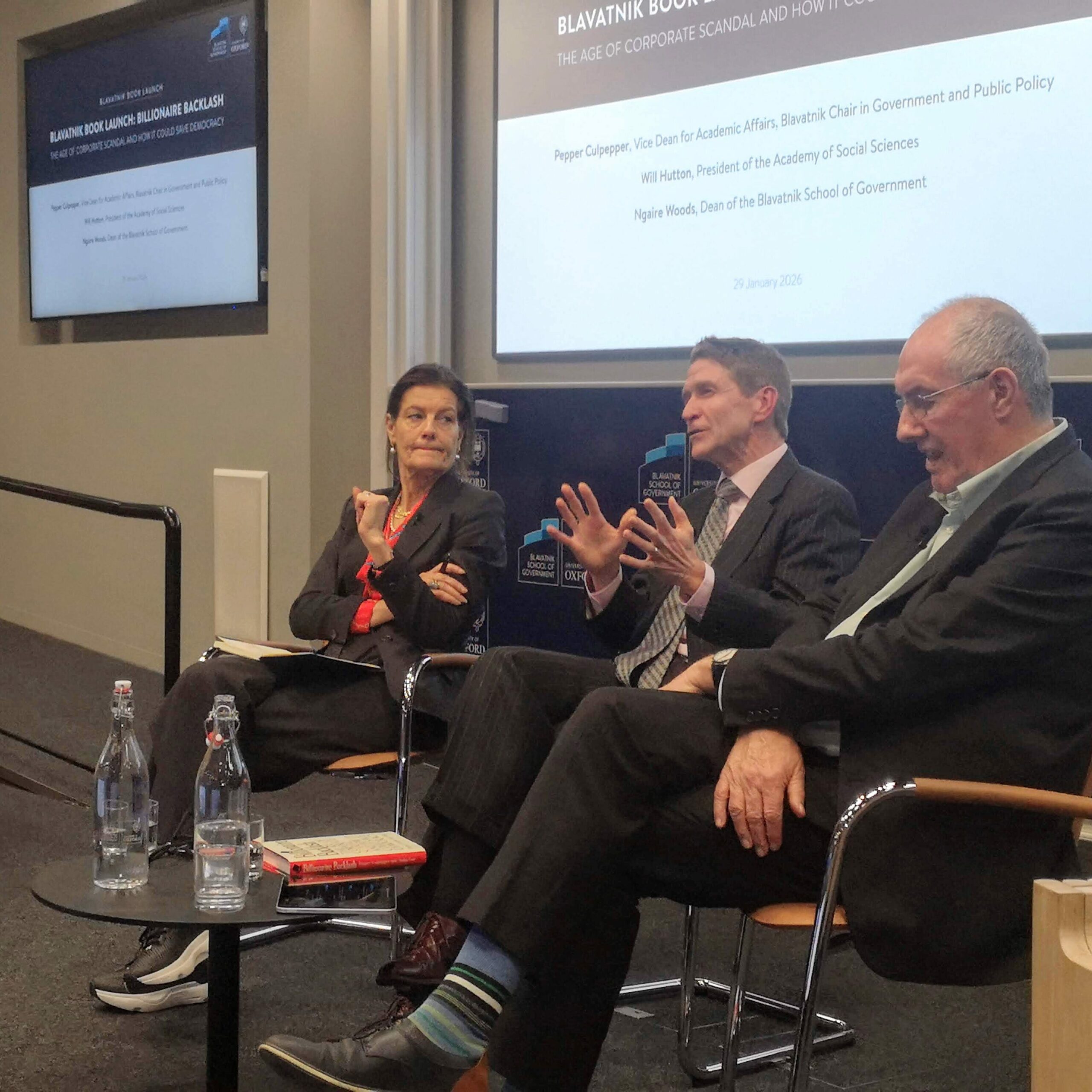
A talk on a new book by Pepper Culpepper on how corporate scandals could be used to save liberal “democracy”. This talk is the familiar fantasy of elitist institutions like the Blavatnik School, Oxford. Culpepper and co author Lee reframe disasters from Enron to Cambridge Analytica not as structural failures of a system built to concentrate power, but as healthy “corrections” that supposedly can be used by people like them to renew democracy.
In this telling, public anger is something to be safely channelled into regulation, corporations remain indispensable, and democracy survives as a managerial process overseen by the normal “progressive” liberalish policy priests. It is #deathcult logic, polished up, to worship the system while denying its violence, recurring catastrophe not as proof of collapse, but as evidence that the machine still works – if only the right people are allowed to control it.
The Blavatnik worldview in one sentence “Capitalism is broken, but only experts can fix it, without threatening those who benefit from it.” The tone is elitists pessimism dressed as realism, the talk opens with managed the pessimism “Yes, things are bad…” “…but lives are improving” “…and the liberal order still basically works” “…we just need better policy”. Everything else is ornamentation, democracy is talked about constantly, but control is never offered.
This is the #deathcult chant, not in any way apocalyptic enough to demand rupture, and also not hopeful enough to empower people. It’s pessimism, justifying elitist management, so no real change. They talk about democracy, but notice how it’s framed: Democracy = policy capacity, regulatory competence, party systems and institutional continuity. Democracy is not found in any real popular control, public ownership, exit, refusal, redistribution, or material power. The people appear as voters, outrage generators, legitimacy providers, but never as agents who might take any part in control, the old mainstreaming tradition of social democracy as crowd management.
The book is worship of policy nerds vs fear of the #techbrows, a strange inversion at work, that billionaires are dangerous, reckless and markets are running amok. The solution for them, is therefore, “we need policy experts to save us.” who can circulate through the same elitist institutions, depend on the same funding systems and never threaten ownership or accumulation. Yes, capitalism is “broken” – but only as a governance problem to solve. This is instead of any stress of public vs concentrated power, in their book, it’s an intra-elite turf war, sold as democracy.
They get very close to truth here “capitalism is a minority of people with a lot of power, unafraid to use it.” But then they refuse any logical conclusion, if what they say is true, then regulation is insufficient, as any real accountability requires ownership change and democracy requires material leverage to function. Instead, they do a quick pivot to stakeholder capitalism and value generation as a path to “put capitalism back on its feet”. This is a system that’s killing people, while insisting itself must stay alive.
Public capitalism is a bloodless fantasy that might sound radical to a privileged chattering class. But it’s the same failed mess, where the public gets, exposure, risk, volatility while the elitists keep control and set the agenda. It is inequality, endlessly acknowledged, but never touched, the normal elitists preference disguised as inevitability.
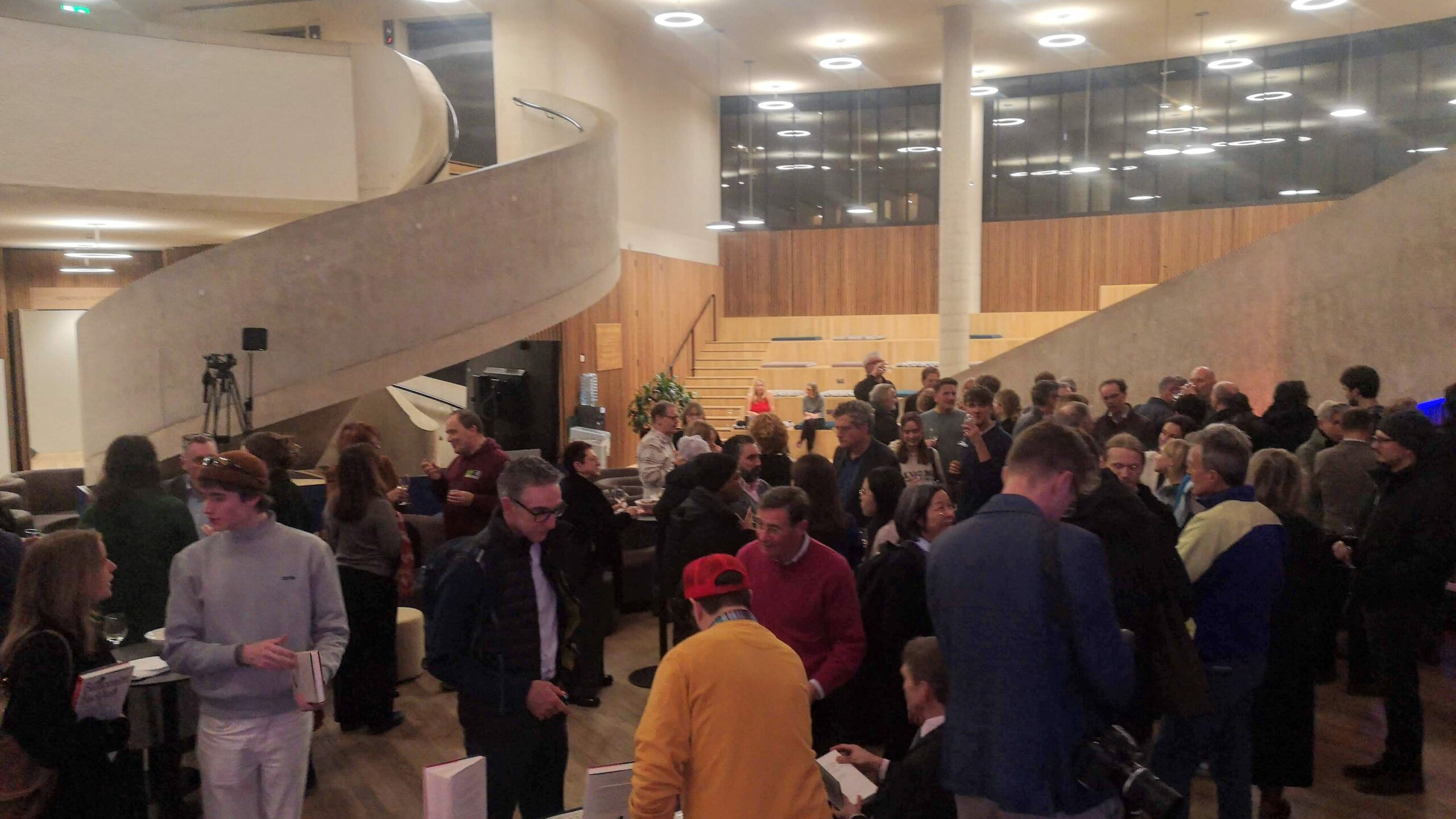
There, assumptions are wrong, yes, the is a very real fear of autocracy, but not of oligarchy, they are worried about autocracy, but they are not worried enough about billionaires controlling media, capital, thus veto over policy, regulatory capture and economic coercion. Why? Because oligarchy is their ecosystem. Autocracy is framed as something external, crude, foreign, where oligarchy is polite, networked, respectable… and pays for book launches at the Blavatnik School we sip wine at, after the event.
They are scared by “bad populism” but love “good populism” as outrage without power, believing, outrage can be used to drive a very narrow idea of reform, scandals and anger can be “harnessed” as a fuel for what they see as elitist balance. The public is a matchstick, a controlled burn to open up a space for their class (literally their children) the future“policy entrepreneurs” who, with generational wealth, still rich enough to volunteer, bored enough to care and insulated enough to fail, its politics as a hobby of the ideal rich.
In the Q&A they talk about media fragmentation = democracy in trouble (but not elitist paths). They worry we “can’t agree on facts”. But they don’t worry about who owns platforms, who shapes narratives, who funds think tanks, who sets the Overton window. Fragmentation is blamed on the public, concentration is never blamed on capital. Then we have #AI outrage already being pre-neutralised, the AI bubble “will pop”, they say. The question is, “how do we use that outrage?” Not, how do we let people decide, how do we transfer control, how do we prevent enclosure in the first place.
Outrage is something to be channelled into managerial politics with the Churchillian cop-out “democracy is the worst system except all the others.” Which translates into, lower expectations, accept elitist rule to manage decline politely.
In this path, corporations are treated as unavoidable, people are treated as incapable, you get a strong feeling from this talk and book that this is it is not democratic theory, rather paternalism with footnotes. The core lie, unspoken underneath everything, is “we can fix capitalism without shifting power.” Every answer assumes that capitalism must remain, corporations must remain, and that the elitists must mediate and guided the public not to challenge this.
It’s elite self-soothing, but yes, they aren’t wrong that the system is broken, they’re wrong about who is allowed to fix it.