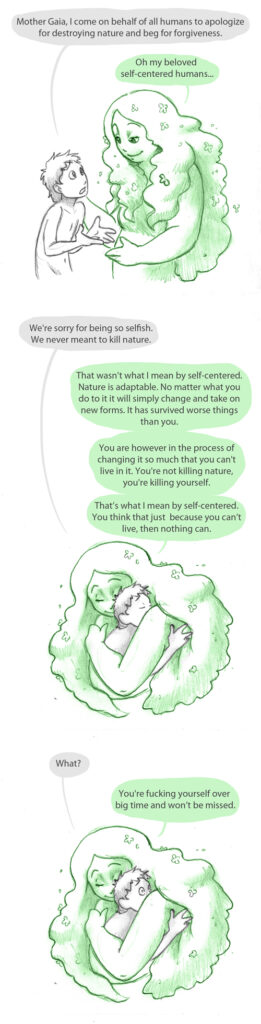
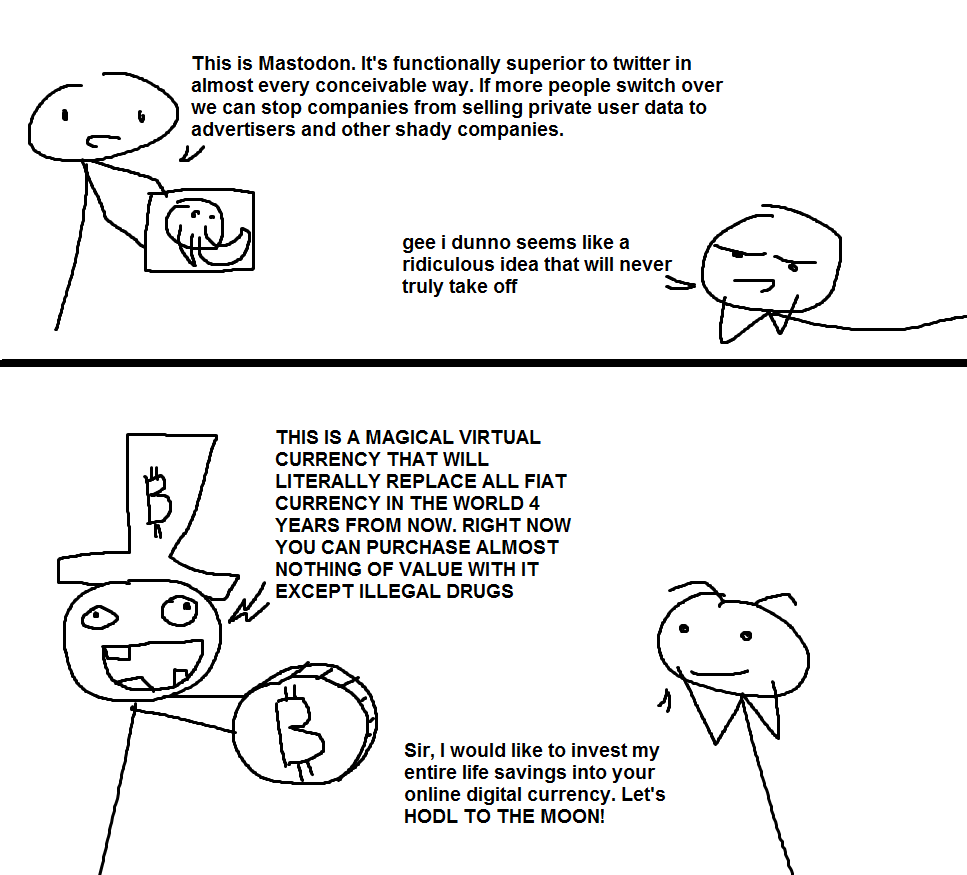
OK, lets not deny real risks, but also don’t accept the AI industry’s mythology as the starting point for discussing risks. The useful question is what currant AI’s actually do, who controls them, and what infrastructure and power relationships we are building around them.
AI is useful technology wrapped in a massive social, political and financial mythology. At the #OMN we are less interested in the usual argument between “AI will save humanity” and “AI will destroy humanity”. as both become noise in the current #LLM mess. To get a clearer picture we need to step back to ask a much simpler question – what does the technology actually do, and what are we building around it? Because there is a trap here.
We take an interesting piece of software, call it “AI”, then AI becomes AGI, AGI becomes superintelligence, and suddenly we are discussing machines as if they are becoming digital people. The #dotcons are happy with this story, as this story justifys gigantic data centres, enormous energy use, massive investment, extraordinary infrastructure contracts and the concentration of yet more technological power in the hands of the #nastyfew.
But there are serious questions about AI safety – autonomous weapons – cybersecurity – biological research – critical infrastructure – economic disruption – surveillance – disinformation – concentration of power. The replacement or degradation of human work. But there is a difference between looking at concrete risks and accepting a mythology about an imaginary future machine.
lets look at some of these risks: “AI will destroy humanity” argument starts somewhere like this – AI becomes more intelligent than humans – it develops goals – those goals don’t align with human interests – it becomes capable of improving itself – it gains access to infrastructure – it protects itself from being switched off – it expands its ability to act. Eventually humans become an obstacle, therefore humanity is eliminated. If we were actually building #AI not the current LLM’s that would be a possible speculative scenario.
But notice how many assumptions are packed into that chain. AI → AGI → autonomous agency → self-improvement → independent goals → infrastructure access → resistance to control → human extinction. Each arrow needs evidence, to judge this #KISS becomes useful. Don’t start with the end of the story, start with the machine in front of you. What can it actually do?
An #LLM generating confident bullshit isn’t evidence of an emerging artificial mind, a badly isolated “autonomous” system causing damage is an engineering and security problem. A corporation using dysfunctional AI to replace workers is an economic and political decision. A military using LLM’s based on the history of litterateur, feed partial data to kill people is a legal, political and military decision. A government using AI for surveillance is a governance problem. A data centre consuming enormous amounts of electricity and water is an infrastructure and ecological problem.
These things don’t require us to believe that a machine has become conscious, they require us to look at the #nastyfew are pushing over us. If we don’t look at the problems from this view we make the same mistake we have made with technology for decades, turning a social problem into a technical problem. Have you noticed that it is the priests of the #deathcult who loves AI.
But the are real problems in the #AI arms race – military competition → autonomous weapons → humans delegate decisions because machines are faster → competing systems interact → escalation/control failure → mass killing. Here extinction result from autonomous weapons, nuclear systems, biological weapons or other military infrastructure. That argument doesn’t require AGI it is simply the current mess with added tech mythology.
The #OMN critique isn’t so much about whether LLM’s are “good” or “bad” it is about the economic and social system surrounding the current #techshit paths, we already have piles of #techchurn to compost with out adding more. The #OMN doesn’t want to repeat this mess with AI, what we need is ways of keeping power visible enough that people can challenge it, for this we need to compost the mythology.
This is why the #OMN is deliberately boring compared with the AI storeys. Our focus is not technological salvation, or technological apocalypse. We need useful #KISS technology embedded in social structures where people can understand, challenge, change and, when necessary, walk away from. The mistake is always turning the tools into a mythology and then building society around the mythology. The #deathcult has had fifty years of economic “thinking” on this, look at the mess, now lift your eyes.
We have done this before, we take a useful technology, wrap it in a huge financial story. We centralize it, try and monetize it to turn it into a platform. Then we pretend the social consequences were somehow an accident, it is what we are doing with LLMs. We took an interesting piece of software and started selling it as AI, then AI became AGI, became super-intelligence. This smoke and mirrors feeds the path of building gigantic data centres, burning enormous amounts of energy, raising billions, signing extraordinary infrastructure contracts and concentrating yet more power in a hands of the #nastyfew.
And now we are supposed to believe this is progress, nop, this is the normal #deathcult doing what the #deathcult does – take something useful and turn it into an extraction machine. the mess we need to compost is that “interesting software” doesn’t justify a trillion-dollar mythology – AI will transform everything – AI will replace everyone – AI will solve science – AI will destroy civilization – AI is the next industrial revolution – AI is the singularity – AI is almost AGI – AI is too dangerous to release – AI is progressing faster than anyone expected – AI will change humanity forever. Can you see the smoke and mirrors trick?
Both the utopian story and the apocalypse story sell the same thing, more #AI, more computing, more investment in data centres. More centralization of money for the companies already building the machines of control. Maybe the argument changes, the conclusion doesn’t. Pushing fear is also marketing, this is where the current AI “doom” industry pushes mess. Tell people your machine might destroy the world and you have simultaneously told them your machine is incredibly powerful. This is about grasping for the control of focus, creating scarcity, you have created fear you have created importance.
This mess is about #fashionista capture, its a old story, were you try to created a lever for governments, and the chattering classes, there servants to listen to you, for investors to keep funding you, to build even bigger machines. The apocalypse it self becomes a business model.
That doesn’t mean the risks aren’t real, #AI implementations can create real security, economic, social and political problems. But we need to separate those problems from the mythology. A badly isolated autonomous coding system is an engineering and security failure, it doesn’t mean the machine has “woken up”. An LLM producing confident bullshit isn’t evidence of an emerging artificial mind, it is an LLM producing confident bullshit. And a company repeatedly telling us that its next model might be AGI doesn’t make AGI a meaningful scientific milestone.
Sometimes #KISS is the radical answer, please look at what the machine actually does, not what the marketing department says it might eventually do. We have already seen this mess play through.
Web 1.0.
Web 2.0.
Crypto.
Blockchain.
NFTs.
Metaverse.
Web3.
DAOs.
Now AI.
Every few years Silicon Valley discovers the next thing that will “transform” nothing. The technology changes, were the investment logic barely does. Hype → investment → infrastructure → more hype → bigger investment → pressure to monetize, it is #techchurn.
Except now the machines require gigantic amounts of physical infrastructure and enormous financial commitments. This is the bit that gets hidden behind the shiny chatbot interface, LLM’s isn’t floating in the cloud, it is powered by somebody else’s warehouse, somebody else’s electricity bill and somebody else’s infrastructure. The supposedly weightless future has a very large material footprint.
The #deathcult loves this machine – but something deeper is happening here – the #deathcult has spent fifty years teaching us to worship – growth – efficiency – scale – competition – automation – consumption – financialization – individualism – technology. The AI industry is the last-ist gasp at pushing the mythology – more computing, more scale, more automation, more investment, growth, more efficiency. And because this machine is called “intelligent”, we are encouraged to bow down even further. The machine knows, the machine decides, the machine optimizes, the machine will solve all our knee ach problems. Meanwhile, the #nastyfew who own and direct the machine accumulate power.
Its a part of the #geekproblem were technical people make things work, this has real value, but technical expertise is one tool, not the toolbox. You cannot engineer your way out of social problems, or code trust. You cannot automate democracy. You cannot solve inequality with a better interface. You cannot fix the political economy of capitalism by making the algorithms slightly cleverer. And you certainly cannot hand over social decisions to machines because the humans have become inconvenient to a few nasty people.
This is the same blindness we have been suffering from for decades, if the problem is difficult, make it technical. But then “common sense” technical people become the gatekeepers, becomes the institution, becomes infrastructure. Then fingers in ears, nobody remembers that the original decision was political, as the power disappears into code – #AI becomes just more #dotcons.
To balance this mess, by composting, we need to open our eyes to the history of the #openweb. The original web was built messy on #4opens standards. hyperlinks, RSS to grow small websites were people published, people connected built by people making their own tools. Then Web 2.0 arrived, the UX got better, the platforms got bigger, the money arrived and the web became #dotcons.
Blindly, repeating this same mistake with the dotcons LLM’s in the era of #climatechaos is stupidity. Its a big mistake to be building another generation of giant closed systems of control. At best we should be asking – what would an open AI infrastructure look like? What data? What standards? What ownership? What governance? What accountability? What local control? What human oversight? What right to challenge? What right to rollback? What happens when the system is wrong? Who gets to decide? These are political questions.
That is backwards, technology is a tool for people, and yet here we are. agen we are generating the problem to feed the machine built to solve the problem, peak #techshit. So what do we do? We don’t have time for another #fashionista moral panic please. Not “ban everything”, not “AI will save us”, not “AI will kill us”. Not another fucking blinded conference where everybody agrees that governance is important and then goes home and builds the same centralized paths.
What we do need is to compost is this mess, take the useful technology, the useful research, the open models to build automation that actually gives people more time and power. Knowledge is always useful, but please throw the mythology onto the compost heap, the fake AGI worship, the #nastyfew billionaire saviour stories, the singularity smoke. We cant survive the endless-growth assumptions, of the #closedweb platforms, the surveillance economy, we need to compost this social #techshit.
Composting this is why the #openweb is a tool that still matters, not because openness is fashionable, or that another technical architecture will magically save us. It matters because power has to be distributed somewhere. Open data – Open source – Open standards – Open process – The #4opens. To make this tool work we need to grow the path of human moderation, community trust, distributed infrastructure and shared public knowledge.
The #OMN has practical projects for this path – archives with #makeinghistory – news with #indymediaback and eventually governance with #OGB. A practical #KISS path that understands that we need useful technology, to help communities organize, remember, communicate and act. We need infrastructure that belongs to the people using it, And the community to use this “shovel” to stop worshipping the mythology of the #deathcult machines and start rebuilding the commons.
Yes, this is a first small step in the path we need, not a dogmatic answer to everything. We clearly do not need more blinded technological salvation story’s. What we do need is a practical path to build news, archiving and eventually governance around open flows, trust and participation rather than surveillance, extraction and platform ownership.
The #deathcult has had fifty years, look at the mess, now lift your eyes and let’s start composting.
As the worshipping the #deathcult for the last 50 years becomes harder to hide, the lies are more naked. The lie of endless growth, trickle-down wealth, technological salvation and individual freedom are running into the material reality they created. The mess can no no longer be hidden in the abstract.
#Climatechaos, inequality, war, social fragmentation, political decay. #techshit. The question now is impossible to keep ignoring, not whether the system has problems, it is whether we can see the problems clearly to stop worshipping the mess that created them.
This is where we need social composting. Turn the pile. Expose the assumptions. Keep what is useful. Let the dead ideas rot down. Then grow something alive.
Yes, the #web02 revolution was a con, it always was. The problem is now most people have spent years pretending that the dominant technology companies were somehow neutral actors – clever companies making useful tools, occasionally getting a little too powerful, occasionally needing a bit of regulation. But now this comforting chattering class story is harder to maintain, as the long “invisible” problem has finally reached the #mainstream, the act of stepping over the smoke and mirrors can now be seen in books such as Gil Durán – that the Silicon Valley billionaire class has developed an explicitly anti-democratic political worldview, and it has accumulated enough money, technology and institutional influence to start acting on it.
The book Nerd Reich: Silicon Valley Fascism and the War on Democracy describes a political culture that did not suddenly appear with Trump. It has roots going back decades: hostility to government, hostility to taxation, extreme individualism, the fantasy of “exit”, private jurisdictions, network states, crypto-utopianism and the idea that technological elitists should be able to operate outside democratic constraints. This view of #geekpoblem history matters because if we treat what is happening now as simply another Trump-era political crisis, we shovel the wrong shit onto the compost heap.
This mess we need to compost is the blinded politics of our technology classes. The con was always bigger than the platform, #dotcons were never simply websites, there “value” comes from when they became infrastructure for social life. #Failbook, Google, Amazon, Microsoft, Apple, X and the rest were built to control people, they “business modal” inserted themselves between people and their ability to communicate, organise, publish, buy, work and increasingly understand the world.
The con, the clever trick was that they appeared to be giving us something, free publishing, free communication, free social networks, search, storage and entertainment. But the real business model was the capture of the flows, our relationships became data, our attention a commodity, communities became markets, conversations became #LLM training material. Now that our social lives are increasingly controlled as behavioural prediction systems, and the more dependent we became, the more control and thus power accumulated on the other side of the interface.
This is why calling the #dotcons simply “social media companies” is too small a description. They became private governance systems, to make rules, decide visibility and control infrastructure. They moderate speech, shape markets, influence elections. They lobby governments to corrupt political control. And now some of the #nastfew openly talk about replacing democratic institutions with technological and corporate control. The con was never about advertising, it was about power.
Seeing the path underneath the technology is of the useful things, connecting today’s behaviour with 20th century ideas. The Silicon Valley ideology did not begin with artificial intelligence, it developed through decades of worshipping the #deathcult of libertarian and anti-government thinking. Books such as The Sovereign Individual became influential within the elitist chatting classes. Figures such as Peter Thiel pushed ideas, and funding at technology, sovereignty, crypto, private jurisdictions and “exit”.
The basic #nastyfew fantasy is consistent – when the government gets in the way, leave, if democracy is inefficient, replace it. When taxation is inconvenient, move somewhere else. If regulation applies to everyone, build somewhere it doesn’t. If nation states are obsolete, create new digital or corporate forms of sovereignty. It sounds futuristic, but underneath the science-fiction language is something ancient. A #nastyfew group of extremely wealthy people deciding that ordinary democratic accountability should no longer apply to them. This is simply oligarchy updated with #postmodern branding, and then came the #AI boom, that accelerates and intensified the #techshit class mess.
We should not need to talk about how the technology itself is not the enemy, the current #openweb reboot clearly shows it is not. So what is, a very normal story, the worship of the #deathcult, our political and economic structure around the #dotcons, and the #geekproblem that breeds this is the problem.
With #climatechaos visible all around us, we are still being told that all this #techshit is necessary because someone in Silicon Valley has decided that the future requires it. This now easy to see mess is why resistance to data centres, surveillance systems, crypto schemes and companies such as Palantir can become broader than narrow traditional left politics. People are now starting to experience #nastyfew billionaire power physically in the growing social mess. The abstract becomes concrete, the cloud a building, the algorithm becomes distracting fluff, the #dotcons platforms are revealed as workplaces when the billionaire becomes the person deciding what happens in your town.
The #OMN more profound question is increasingly about who gets to control infrastructure and who gets to participate in deciding how it is used. That is a democratic question, and it should also be a #openweb question. This is where the current reboot comes in to balance the mess. The #NGO, civil society answer cannot simply be to keep regulating the #dotcons harder while continuing to depend on them for everything. Yes, regulation matters, taxation matters, breaking up monopolies matters and basic democratic accountability matters.
But we also need alternatives; otherwise we remain trapped inside #nastfew controlled infrastructure. This balancing is why we can’t keep fucking up our #openweb reboot. We need to #KISS take the useful lessons from the early web – openness, decentralisation, interoperability, user control and federation – and combine them with the better UX lessons we learned from Web 2.0.
We need to build this alt path on the current #Fediverse, based on exiting reboot #4opens paths like #ActivityPub and #RSS. What we don’t need is more of what current takes the vast majority of #openweb funding and coding focus. Not another collection of #VC startups, any more “ethical” billionaire-funded platforms – not another centralised service waiting to become the next #dotcons.
We need something structurally different, we need practical shovels to composting the #dotcons. This is where I use the word compost deliberately, we cannot simply pretend the last 30 years didn’t happen, there is an enormous pile of #techshit. Some of it is bad technology, much is bad governance. Some is exploitative economics, surveillance, addiction. In our heads we need to compost venture-capital paths, empty innovation language and the stink of #NGO and institutional capture.
Some of the simple #geekproblem is just plain bad social thinking dressed up as technical expertise. But there is likely useful material in the pile too, the #web02#dotcons did teach us things – They showed us that people want easy-to-use communication tools – the importance of good #UX, we need to take what is useful and use this to expose what is toxic. To understand how it happened, learn from the failures. Then we need to translate this understanding into action to break the concentrations of power, to open space to grow something different.
The #geekproblem is part of this, another uncomfortable layer. The alternative technology world has not always been good at avoiding the same mistakes, the #geekproblem is real. Too often we build technology according to what technically clever people think is interesting rather than what communities actually need. We confuse technical complexity with progress, confuse innovation with usefulness, technical decentralisation with democracy. And often we recreate the same power structures inside #FOSS that we were supposedly trying to escape.
The resulting technically elegant social mess, is a strange imitation of the #dotcons: technically open underneath, but socially closed around the people who understand the machinery. This mess is then feed into the funding problem, where the #fashernistas enter the pile.
With the current #openweb reboot, alternative technology is increasingly surrounded by funding ecosystems that reward fashionable language, impressive demos, grant-friendly projects and institutional credibility. The grassroots people actually doing the work can become secondary, the people who understand the community get pushed aside by people who understand the funding application. The messy project gets replaced by the polished project, the difficult social question becomes a technical deliverable, and the result is another layer of #techshit.
This is not inevitable, but we need an open process capable of exposing it, that is the reason the #4opens matters – Open data – Open source – Open standards – Open process. The fourth one is particularly important, if the process is visible, we can see who is making decisions, how money is moving, whose ideas are being prioritised and where the projects are about grafting. We can challenge it before the pile gets too big, we need to compost the #techshit at source.
To grow anything in the current mess, we need infrastructure that ordinary communities can understand, use, modify, share and govern. We need technology that supports participation rather than extracting it, systems where disagreement, correction, rollback and learning are normal. We need tools that help communities build memory rather than constantly throwing yesterday into the algorithmic landfill.
So we know what we need, we know what we need to compost. The chattering classes are finally waking up, we have the interesting thing, that some of the people who have spent years talking about “innovation” and “the future” are finally starting to notice what has been happening. The warning signs are no longer hidden, #nastyfew political power is visible as is the social and ecological damage.
The question is no longer whether there is a problem, it is becoming what we do about it. And this is where I worry about the next stage because every time the mainstream finally notices a grassroots problem, the #fashernistas arrive. They package it, brand it, secure the funding to create the conference to build their careers. This simply “common sense” behaver stinks and is going to kill and displace billions of people.
And somehow, after all that activity, the people who were actually doing the work are still standing outside the room, we have seen this cycle for decades, we cannot afford to repeat it here. So shovel harder, the #openweb reboot has a job to do, we don’t have the time to create another fashionable technological sector. We don’t need another class of sellout experts to compete to become another set of gatekeepers. And definitely not to reproduce the #dotcons with a nicer logo and some open-source code.
We need to shovel hard, turn over the #dotcons, expose the blinded ideology, compost the bad economics, the #geekproblem and the corrupt grant culture. We need to compost our own #fashernista performance. To balance this we have to keep the useful technology, the useful knowledge, the communities and most importantly keep the history. Then use all of that compost to grow something genuinely different.
The old web was open enough to give us a glimpse of what was possible, #web02 captured that openness and turned it into private infrastructure. Now we have a chance to take the useful parts back, not by going backwards, but by putting people and communities back into the centre of the flow.
The #deathcult worshippers have spent decades building an escape route from simple democratic accountability. Our path is not to follow them on this fantasy, it is rather to build a better path in the other direction. The #dotcons are a huge pile of compost, the question is whether we are willing to pick up the shovels.
Let’s be clear on the background mess, before the personal attacks start, this is not about individuals. It is about patterns, systems and ideas. The danger is that criticism becomes an #adHominem argument – “you just dislike this because…” – instead of looking at the actual structures being discussed.
The point I am making is that parts of dead #postmodern thinking have ended up embedded inside #neoliberal culture: fragmentation, individual identity, endless discourse and difficulty building any shared collective action. That does not mean every idea, person or piece of work in those spaces is the same, it means we need to look at how ideas interact with power.
The question is – What helps us build collective capacity in a time of #climatechaos, inequality and the #dotcons mess? What creates commons? What creates shared action? This is the conversation.
So with that in mind lets look at the major problem with the #dotcons attention economy the advertising model. The platform logic and the attention economy are now becoming harder to simply ignore. For most of mass media history, the commercial transformation of media was hidden behind a layer of journalism, culture and public value. The advertising model was presented as simply a way to pay for content. Platforms were presented as neutral spaces for communication. Algorithms were presented as tools to help people discover what mattered.
But the #dotcons direction has now stripped this bare – the direction has become clearer, the media landscape looks less like a place for shared knowledge and more like a shopping catalogue with occasional content attached. The focus is no longer even the fig leaf of informing people, connecting communities or building public understanding. The naked goal is simple – more clicks, more engagement, more time captured, more data collected and more consumption encouraged. This is the logic of the #dotcons.
The problem with this #deathcult worshipping mess is not only that companies make money. The deeper problem is that the structures built around making money reshape our culture itself. When attention becomes the product, everything starts being measured through extraction. A story is only valuable because it generates traffic – A person is only valuable because they generate data – A community is valuable because it creates engagement – A conversation is valuable because it keeps people inside the platforms. Any, social value gets pushed aside.
The original #openweb grew from a different idea. People built websites, forums, mailing lists, software projects and communities because they wanted to share, collaborate and create. The value was not only in the information produced, the value was in the surrounding relationships. People corrected each other, developed trust, knowledge was maintained collectively.
The internet worked because there was social infrastructure around the technical infrastructure. The mess we made, was thinking that communication could simply be handed over to commercial platforms without catastrophic changing the nature of communication itself. A platform is not just a tool, it comes with incentives, has owners, rules, a business model. When every space becomes a marketplace, the culture changes.
The mess we have made is that extraction replaces participation, the #dotcons path works by turning human activity into resources. People create, platforms capture. Communities produce culture, companies monetise attention. That extraction eventually damages the thing being extracted from, creators become exhausted, communities fragmented, trust declines as people become audiences instead of participants.
The internet becomes full of “content”, but much poorer in meaning, more information does not automatically create more knowledge, more communication does not automatically create better communities, without care, context and collective responsibility, abundance becomes noise. To compost this mess we have made in the media tech path – the question is not “How do we get more people producing?” The question is “How do we build systems where what people produce strengthens the commons instead of feeding extraction?”
The fashionable people of #AI are pushing at changing the scale of content creation, lowering barriers to producing books, apps, music, legal documents and academic papers. Thus, “output” is exploding. But the #OMN second question is what happens when production grows faster than the ability to filter, discuss, trust and maintain? More books, but more noise, More apps, but more clutter. More papers, more pressure on review systems, more music, but harder to value human creativity.
The #dotcons logic says: more content = more value. The #openweb lesson is different – value comes from communities, trust, context and care. We don’t just need more production, we need better commons, better mediation and better ways to separate signal from noise.
The current wave of generative AI (#GenAI) is presented as inevitable, the message is everywhere: adapt, adopt, integrate, or be left behind. But technology is not neutral, as every tool carries assumptions – who benefits, who controls, what values are embedded, and what damage is accepted as “the price of progress”.
From a #OMN perspective, the question is not simply “can this technology do impressive things?” Of course, it can. The question is what kind of society does this technology build? Does it strengthen human creativity, collective intelligence and open participation? Or does it deepen the existing #dotcons path of centralisation, extraction, dependency and enclosure? The promise and the reality of large language models (#LLM) represent a technical development, they can summarise information, translate languages, generate text, assist coding, and help people interact with large amounts of information. These are real, if floored capabilities.
But the current #techshit hype jumps from useful assistance to much bigger claims: that these systems will replace expertise, solve social problems, revolutionise education, transform science, and create a better future. This is currently not true, and, on the LLM path will never be true as the current GenAI systems do not understand the world. They generate likely patterns based on huge amounts of training data. They do not know truth from falsehood, meaning from appearance, or ethics from probability, a convincing answer is not the same as a system that understands. This matters because the native #openweb was built on a different idea, that knowledge comes from people, communities, discussion, correction and shared responsibility.
The #geekproblem is confusing capability with wisdom is a recurring problem in technology culture – it is the assumption that if something can be built, it should be built. The technical question becomes “Can we?” while the social question “Should we?” gets pushed aside. This is part of what #OMN calls the #geekproblem – the tendency to reduce complex social questions into technical problems. A better search algorithm does not automatically create a healthier information system, a faster way to generate content does not automatically create better knowledge. More automation does not automatically create more freedom. The missing piece is the social context around the technology.
Then we come to the ecological cost of scaling, the current GenAI boom depends on enormous infrastructure. In the era of out of control #climatechaos data centres require huge amounts of electricity, water for cooling, specialised hardware, constant replacement cycles leading to massive extraction of resources. At a time of #climatechaos, we should be asking whether increasing consumption is the only path available.
The lesson is not that technology is bad, the lesson is that technology without social responsibility becomes a tool for whoever already has power. The question is not “how do we make AI bigger?” more it is how do we make technology serve human communities rather than making communities serve technology control systems, it is about who controls. The current dominant systems are owned by a few powerful companies controlled by the #nastyfew actively working to destroy our ecology and societies.
The future is not decided by whether we use AI, it is decided by whether we allow the same old #dotcons logic to shape every new technology. The work remains the same to build alternatives, keep processes open, grow the commons. The answer is not simply rejecting technology, the #openweb has never been anti-technology. The question is what kind of technology grows from what kind of culture. We need tools that strengthen human networks, not replace them. Tools that support commons, not enclosure, that increase agency, not dependency.
If we change this can there be an ethical AI? A socially useful technology? Possibly, but it would require a very different path, it would need many of the things the #openweb has argued for from the beginning.
The biggest question is not whether #AI becomes useful. It is who shapes the surrounding paths? A future controlled by a few #dotcons will reproduce the same mess we have now of centralisation, extraction, enclosure. Were a future built through #4opens paths would look different.
The #geekproblem is believing the next tool solves the old problem. But many problems are not tool problems, they are relationship problems. The next stage is not replacing humans with smarter machines, it is building better human paths that can use machines without becoming dependent on them. Beyond AI is about making communities capable, the real upgrade is not artificial intelligence, it is collective intelligence.
AI is changing the scale of content creation, but not raising the quality. Generative AI tools have lowered the barrier to producing average books, apps, music, legal documents, academic papers and endless streams of text. The result is a massive increase in output, but what happens when production grows faster than our ability to filter, discuss, trust, maintain and give meaning to what is produced?
More books, but more noise, more apps, but more clutter, more papers, but more pressure on systems of review, more music, but a harder struggle to recognise human creativity and care. The #dotcons logic says – more content = more value – were the #openweb lesson is different, value comes from communities, trust, context and care. The challenge is not creating more things, the challenge is building better commons around the things we create.
The AI question is bigger than the technology, as the current wave of generative AI (#GenAI) is presented by our #fashionistas and there servants as inevitable. The message is everywhere to adapt, adopt, integrate, or be left behind. But technology is never neutral, every tool carries assumptions about who benefits, who controls it, what values it embeds and what damage is accepted as the “price of progress”.
From an #OMN perspective, the question is not simply “Can this technology do impressive things?” Of course, it can. The real question is “What kind of society does this technology build?” Does it strengthen human creativity, collective intelligence and open participation? Or does it deepen the existing #dotcons path of centralisation, extraction, dependency and enclosure? This is the wider #openweb question we should be focusing on.
Large language models (#LLM) and generative AI systems represent a real technical development. They can summarise information, translate languages, generate text, assist coding and help people interact with large amounts of information. These are useful capabilities, but the hype jumps from assistance to much larger claims – That AI will replace expertise – That it will solve social problems – That it will transform education and science – That it will create a better future automatically.
The problem is that current AI systems do not understand the world, they generate patterns based on huge amounts of training data. They do not know truth from falsehood, meaning from appearance, or ethics from probability. A convincing answer is not the same thing as understanding.
The missing social layer in our narrow conversations is that the #openweb was built around a different idea, that knowledge comes from people, from communities, discussion, correction, disagreement and shared responsibility. This is where the #geekproblem appears – the tendency to confuse technical capability with social wisdom – the technical question becomes “Can we build it?” the social question “Should we?” often disappears.
A better search algorithm does not automatically create a healthier information system, a faster way to generate content does not automatically create better knowledge. More automation does not automatically create more freedom. The missing piece is the culture around the technology, as technology without social responsibility becomes a tool for whoever already has power.
This is not even touching on that the ecological cost of scale is a catastrophe in the era of #climatechaos and social backdown. The current AI boom depends on enormous infrastructure, huge amounts of electricity, water for cooling, specialised hardware with constant replacement cycles leading to the large-scale resource extraction. At a time of #climatechaos, we should question whether endless expansion is the only possible future. The #dotcons model has always worked through scale, more users, more data, more infrastructure and more dependency. Generative AI is arriving inside the same economic system that created the catastrophic problems it claims to solve.
Then we have the open internet problem, the #openweb was built around participation, people created #4opens websites, communities, documentation, software and culture. GenAI introduces a different path, that the internet becomes raw material, this human creativity becomes training data. Communities produce knowledge, while large companies extract and monetise it. This creates a dangerous cycle were there is less support for creators → less motivation to create → less genuine knowledge → more dependence on generated content. Its #KISS to understand that healthy commons cannot survive if everything is extracted and nothing is returned.
The #Fediverse and the question of growth, a few years ago there was a feeling that the #Fediverse development culture was running on leftovers. Social movements arrived in waves, and many feared that more waves was moving into #mainstreaming. Since then, the Fediverse has grown, with more people knowing about decentralised social media, more organisations paying attention. Ideas that once lived mostly in activist and technical circles have moved closer to wider adoption.
But growth always creates a question – What happens when a movement becomes successful enough that the surrounding culture starts changing it? The early #openweb was built around different assumptions – People have agency – Communities shape their own spaces – Experimentation matters more than optimisation – Trust matters more than control and Commons matter more than platforms. #Mainstreaming brings pressures, these are not automatically bad. But there is a danger that the technology scales while the culture that created it gets diluted. Federation is a technical idea. Living commons is a social one, the challenge remains – now do we grow without losing the roots?
The narrow lesson from #FOSS – it is one of the greatest successes of the #openweb era. Without it there would be no Linux, no Apache, no Firefox, no Wikipedia-scale infrastructure and no Fediverse ecosystem as we know it. It has created extraordinary shared value, but success should not stop us asking difficult questions. The question is not whether FOSS works, the question is – Who does it work for? Where does it struggle? What social lessons can we learn? One recurring problem is the idea that open source is simply a marketplace of independent individuals.
When building the future we actually want – The question is not whether we use AI, more It’s whether we allow the same old #dotcons logic to shape every new technology. The future depends on whether tools strengthen human networks or replace them. Whether they support commons or enclosure, whether they increase agency or dependency.
But what we are seeing is that the tools we need most are often the first things stressed, messy and elitist systems try to defund, discredit and dismantle. Why? Because they require uncertainty, require questioning assumptions, require admitting complexity. Those are not weaknesses, they are survival tools.
Despite the constant #mainstreaming hype, the branding, and the trillions of dollars being poured into it, there is a simple reality that needs to be stated plainly: There is no intelligence in current “AI”, and there is no working path from today’s Large Language Models (#LLM) and Machine Learning (#ML) systems to anything resembling real, general intelligence.
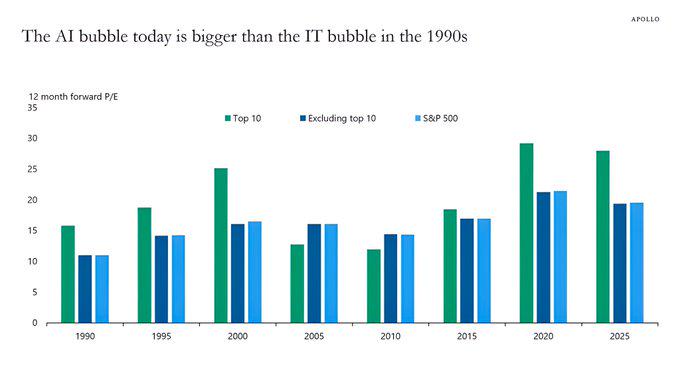
What we are living through is not an intelligence revolution, it is a bubble – one we’ve seen many times before. The problem with this recurring mess is social, as a functioning democracy depends on the free flow of information. At its core, democracy is an information system, shared agreement that knowledge flows outward, to inform debate, shape collective decisions, and enable dissent. The wisdom of the many is meant to constrain the power of the few.
Over recent decades, we have done the opposite. We built ever more legal and digital locks to consolidate power in the hands of gatekeepers. Academic research, public data, scientific knowledge, and cultural memory have been locked behind paywalls and proprietary #dotcons platforms. The raw materials of our shared understanding, often created with public funding, have been enclosed, monetised, and sold back to the public for profit.
Now comes the next inversion. Under the banner of so-called #AI “training”, that same locked up knowledge has been handed wholesale to machines owned by a small number of corporations. These firms harvest, recombine, and extract value from it, while returning nothing to the commons. This is not a path to liberal “innovation”. It is the construction of anti-democratic, authoritarian power – and we do need to say this plainly.
A democracy that defers its knowledge to privately controlled algorithms becomes a spectator to its own already shaky governance. Knowledge is a public good, or democracy fails even harder than it already is.
Instead of knowledge flowing to the people, it flows upward into opaque black boxes. These closed custodians decide what is visible, what is profitable, and increasingly, what is treated as “truth”. This enclosure stacks neatly on top of twenty years of #dotcons social-control technologies, adding yet more layers of #techshit that we now need to compost.
Like the #dotcons before it, this was never really about copyright or efficiency. It is about whether knowledge is governed by openness or corporate capture, and therefore who knowledge is for. Knowledge is a #KISS prerequisite for any democratic path. A society cannot meaningfully debate science, policy, or justice if information is hidden behind paywalls and filtered through proprietary systems.
If we allow AI corporations to profit from mass appropriation of public knowledge while claiming immunity from accountability, we are choosing a future where access to understanding is governed by corporate power rather than democratic values.
How we treat knowledge – who can access it, who can build on it, and who is punished for sharing it – has become a direct test of our democratic commitments. We should be honest about what our current choices say about us in this ongoing mess.
The uncomfortable technical truth is this: general #AI is not going to emerge from current #LLM and ML systems – regardless of scale, compute, or investment. This has serious consequences. There is no coming step-change toward the “innovation” promised to investors, politicians, and corporate strategists, now or in any foreseeable future. The economic bubble beneath the hype matters because AI is currently propping up a fragile, fantasy economic reality. The return-on-investment investors are desperate for simply is not there.
So-called “AI agents”, beyond trivial and tightly constrained tasks, will default to being just more #dotcons tools of algorithmic control. Beyond that, thanks to the #geekproblem, they represent an escalating security nightmare, one in which attackers will always have the advantage over defenders, this #mainstreaming arms race will be endless and structurally unwinnable.
Yes, current #LLM systems do have useful applications, but they are narrow, specific, and limited. They do not justify the scale of capital being burned. There are no general-purpose deliverables coming to support the hype. At some point, the bubble will end – by explosion, implosion, or slow deflation.
What we can already predict, especially in the era of #climatechaos, is the lost opportunity cost. Vast financial, human, and institutional resources are being misallocated. When this collapses, the tech sector will be even more misshapen, and history suggests it will not be kind to workers, let alone the environment. This is the same old #deathcult pattern: speculation, enclosure, damage, and denial.
This moment is not about being “pro” or “anti” technology. It is about recognising that intelligence is social, contextual, embodied, and collective – and that no amount of #geekproblem statistical pattern-matching can replace that. It is about understanding that democracy cannot survive when knowledge is enclosed and mediated by #dotcons corporate capture beyond meaningful public control.
To recap: There is no intelligence in current #AI. There is no path to real AI from here. Pretending otherwise is not innovation – it is denial, producing yet more #techshit that we will eventually have to compost. Any sophist that argue otherwise need to be sacked if they arnt doing anything practical.
The only question is whether we use this moment to rebuild knowledge as a public good – or allow one more enclosure to harden around us. History – if it continues – will not be neutral about the answer.
Looking back from the mid-2020s, the arc of #web03, #NFTs, and blockchain culture is very clear. What once promised (lied about) decentralisation, liberation, and a break from corporate capture now looks like the same, mess, #techcurn pattern repeating itself, yes it had new language, new branding, but it was easy to see it had the same underlying mess making dynamics.
As these #geekproblem projects hollowed out, the signs became hard to ignore. The technical optimism faded, the user bases thinned, and the economic logic exposed itself. What followed was totally predictable: spin. Makeup and perfume slapped onto decaying projects to hide the smell of rot and exploitation. Rebrands. New narratives. New demographics. Same extraction. This was the outcome of building “liberation tech” on foundations that still centred virtical money, speculation, and power concentration.
With these projects we are now in the zombie phase, projects kept moving, kept talking, kept selling – long after the animating ideas had died. Influencers and promoters continued to perform belief, even as any substance drained away.
This is a few years when #fashionista culture met #encryptionist ideology – aesthetics and technical absolutism snogging the undead remnants of a failed #deatcult vision. The result wasn’t in any way decentralisation; it was a simply a new enclosure. People weren’t being freed, they were being financialised, the money problem #KISS
At the core was a simple structural truth: #dotcons feed on money. Put money in, influence comes out. That logic doesn’t disappear just because you wrap it in cryptography or decentralised rhetoric. “Bad actors” weren’t anomalies – they were following the incentives as designed. Aany social good becomes just collateral damage. This is why the lie collapsed in te end.
The deeper harm and problem with #techcurn is each wave claims to have fixed the problems of the last. But each wave reproduces them, because this is what works when worshiping a #deathcult. This isn’t just a failed tech trend, the #techcurn disparity, driven by extraction systems cause enormous human harm, displacing livelihoods, concentrating power, and amplifying inequality at planetary scale.
These systems don’t fail harmlessly, they fail onto people. That’s why the call isn’t just to “be critical,” but to step away – and help others step away too. Not through purity exits or individual moralising, but through collective paths back to technologies built for people rather than profit, life over zombies
There has always been another path: the #openweb. Messy, imperfect, slower, less glamorous, but grounded in shared infrastructure, social trust, and human-scale governance. The #OMN approach doesn’t promise salvation. It offers compost instead of speculation. Process instead of hype. People over tokens.
A note on hashtags: And yes, the hashtags matter. Click them., search for them. They cut sideways through algorithms – small back doors into less mediated, less controlled ways of seeing. Not a solution, but a crack in the wall.
The current #Ai hype bubble is repeating this mess with a little more useful #LLM functionality, but on top of this is a huge mess of #techchurn, which will need composting.
Observation: some people go into news to speak truth from power – using institutions to legitimise the status quo and defend the worship of the #deathcult.
Others speak truth to power – using journalism to expose, question, and challenge unequal power and its consequences.
Only one of those serves the public interest #KISS
Telegram partnering with Elon’s #AI to distribute #Grok inside chats is a clear line crossed. This matters because private data ≠ training fodder, bringing Grok (or any #LLM) into messaging apps opens the door to pervasive data harvesting and normalization of surveillance.
This is an example of platform drift: Telegram was always sketchy (proprietary, central control, opaque funding), but this is active betrayal of its user base, especially those in repressive regions who relied on it.
Any #LLM like Grok in chats = always-on observer: Even if “optional,” it becomes a trojan horse for ambient monitoring and a normalization vector for AI-injected communication.
“Would be better if we had not spent 20 years building our lives and societies around them first.”
That’s the #openweb lesson in a sentence, that the #dotcons will kill themselves. This is what we mean by “use and abuse” of these platforms which have been driven by centralization, adtech, and data extraction, that they inevitably destroy the trust that made them popular. It’s entropy baked into their #DNA. As Doctorow calls this #enshitification, the tragedy is how much time, emotion, and culture we invested in them – only to have to scramble for alternatives once they inevitably betray us.
What to do now, first step, remove data from your account then delete telegram app, not just for principle, but for your own safety. Move to alternatives – #Signal for encrypted, centralized messaging (trusted but closed server). There are other more #geekproblem options in the #FOSS world but like #XMPP, #RetroShare, or good old email+GPG can work too, but they can be isolating, so stick to #signal if you’re at all #mainstreaming.
Then the second step, build parallel #4opens paths by supporting and develop alt infrastructure like the #Fediverse (Mastodon, Lemmy, etc.), #OMN (Open Media Network – decentralized media), XMPP and #p2p-first protocols, #DAT/#Hypercore, #IPFS, or #Nostr etc.
Yeah, things will get worse before they get better, what we’re seeing now is the terminal phase of the #dotcons era. These companies are devouring themselves and will eventually collapse under the weight of their contradictions. The question is, will we have built anything to replace them?
If not, authoritarian tech (like Elon’s empire) fills the void. That’s why we rebuild the “native” #openweb, even if it’s slow, messy, and underground. That’s why projects like #OMN and #Fediverse matter. If you’re reading this, you’re early to the rebuild, welcome, let’s do better this time.