Why use strong words, because there are parasites and shit to shovel. Why this is helpful? Because it gives the people who are currently being default parasitic a chance not to be, and the people who are creating #techshit space to compost some of this mess making. If they do, fantastic, a kindness has been done. If they don’t, we can compost the #fuckwits ourselves to grow something better #KISS.
“Impossible” is a horizon, not a boundary, not a fantasy, it is a pattern in history – slavery abolition was “impossible.”, Universal suffrage was “impossible.”, Worker self-organisation was “impossible.” An open, global communication network outside state control was “impossible.” Until people acted as if it weren’t. The function of calling something impossible is too often, political, about narrowing imagination and disciplining ambition, to keep demands within the limits of what current power structures find tolerable.
But structural shifts rarely start as “reasonable proposals.” they start as overreach – commons infrastructure, resisting enclosure, pushing back on identity-gated speech, building beyond scarcity logic – If we only aim for what seems immediately feasible within existing incentives, we tend to only reinforce those incentives. If we aim beyond them, we can change the terrain, we may not reach the “impossible” goal, but we shift what becomes possible next. That’s the wager, it’s not utopian perfection or strategic overreach, historically, it’s acturly #KISS how the boundaries move.
With this firmly in mind, it’s useful to talk in metaphors, the poetry of life balances communication with blunt truth. Let’s look at current mess making. Open spaces attract life, they also attract parasites, that’s ecology. The #openweb and #4opens spaces generate value:
- code
- trust
- collaboration
- legitimacy
- cultural capital
By non of this is stable, composting Is real work, when drift sets in, someone has to shovel. It’s messy, exhausting, unpaid and constant, because digital commons produce nutrients – and institutional actors are trained to harvest nutrients. If nobody composts the shit, the projects choke. Where value accumulates, extraction follows, the “parasite class” in tech isn’t evil masterminds. They tend to come from a layer of actors – often institutional, often NGO-aligned, often career-professional – who attach themselves to commons projects and redirect energy toward grant cycles, branding positioning and compliance governance trends. They don’t build the soil, they feed on it.
One of the Infections that feed this mess is digital scarcity, the most common parasite logic is simple, “Everyone should pay their way.” It sounds responsible, mature, it sounds sustainable. It’s also a direct import from market ideology. Digital infrastructure is non-rivalrous. It can be shared at near-zero marginal cost, but scarcity logic is reintroduced through:
- subscriptions
- premium tiers
- paywalled functionality
- SaaS dependency
- professional gatekeeping
That’s enclosure wearing a cardigan, not building commons, it’s rebuilding platforms with nicer vibes.
The #NGO layer brings its own metabolism of risk aversion, soferned by consensus theatre. This “game” is about measurable outputs, depoliticised language and in the end branding as reputational management. Again, not directly evil, but structurally parasitic to native grassroots paths. Because the moment legitimacy becomes more important than usefulness, the centre of gravity shifts. You start designing for funders instead of participants, optimise optics instead of flows. You’re protecting the brand instead of the commons.
So it’s useful to ask why this keeps happening? Because the commons produce surplus of trust, energy, attention and infrastructure. Institutional actors are trained to capture surplus. They don’t see themselves as parasites. They see themselves as stabilisers, but when their survival depends on control by managing narratives, they can’t help bending the project toward those needs. That’s structural parasitism.
The real questions, where the value is, are you building soil or feeding off soil someone else built? Are you increasing abundance or reintroducing scarcity through “sustainable” monetisation? Are you decentralising power materially or professionalising it? Be honest, use the shovel test, are you building out the commons, or are you feeding on commons energy. Commons infrastructure should reduce dependence on gatekeepers, not multiply them.
The spiky bottom line: Yes, there are parasites. Yes, there’s shit to shovel. No, pretending everything is collaborative harmony doesn’t help. The work of the #OMN and #4opens isn’t trend-chasing or NGO alignment, it’s building resilient soil, designing against digital scarcity, protecting flows from enclosure by keeping governance open and messy.
If that makes institutional actors uncomfortable, that’s fine. Composting always smells bad before it becomes fertile. The question is whether we’re willing to pick up the shovel – or whether we’d rather keep pretending the pile isn’t growing.
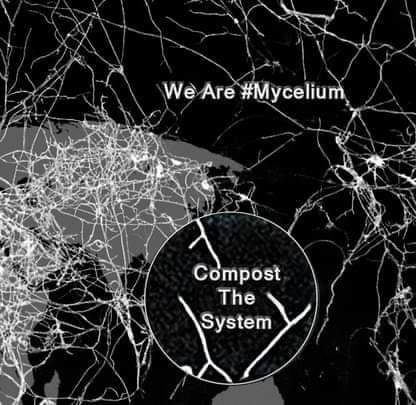
Some advice, stop burning out alone, the number of good people burning out right now is not accidental. It’s what happens when systemic problems are framed as personal responsibility.
Collective infrastructure is weak and crisis is constant. No one can carry that alone, and no one should try.
The solution isn’t heroic effort, it’s shared architecture. In #FOSS terms: if the system keeps crashing, stop blaming the users, redesign the stack, that’s the composting we actually need to do.

One thought on “Yes, There Are Parasites. And Yes, There’s Shit to Shovel”