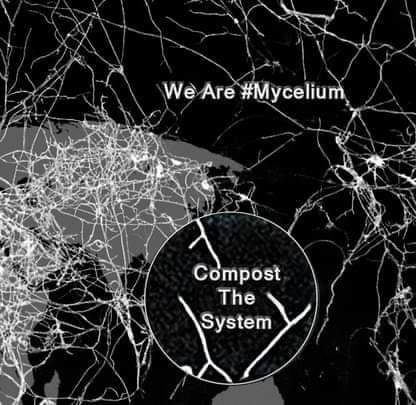
Take a moment to think about basics: activism/campaigning is about building resistance to the mainstream to change its flow in progressive directions. Were #mainstreaming is about shifting activism to reduce these resistances to the mainstream flow. Thus, it’s good to understand that #mainstreaming is a #NGO agenda to build the jobs of the people involved, and is in turn funded to this end. Good not to get this shit mixed up.
Lifestyle is a way of forming a tribe inside this mainstream flow. The problem for activism is that this old school tribalism is obviously a BLOCK on social change, as looking and talking right are MORE important than being right. Being right would be “resistance” and lifestyle is about going with the counter flow.
On the other hand, there are advantages to “modern” tribal and lifestyle activism – it functions as social glue to hold campaigns together and provides a “uniform” flag to rally round. You notice I do not use words like anarchist, socialist, liberalism here as these have a different role in social change thinking – they are the ideas – the clothing is what I am taking about #fashionista is the hashtag.
#Revolution is about blowing up the flow of the mainstream so it floods into a different path, with much “collateral” damage in the process as we live inside a highly urban complex society. Both paths can be useful, both have costs.
Good not to mix this shit up, let’s build something to compost this mess #OMN
For the last 40 years, we have had #neoliberalism pushed into every part of our living human and natural world. This was designed to disintegrate the social democratic 20th century consensus and replace it with a 19th century market fundamentalism. This has successfully and obviously pushed selfish over selfless. Over the last 20 years, this fundamentalism pushes social democratic norms out of the internet and #openweb and replace these values with powerful tools for social control based on market logic of “want to be” powerful individuals and capital agenda.
Who does your code actually empower? (#FOSS reality check for #openweb builders). In web application development there are broadly three groups you can empower. Every architectural decision – whether you acknowledge it or not – shifts power toward one of these groups.
Understanding which group your system empowers is probably the single most important design question in social technology. In the “fluffy thinking” the three power centres:
1) Users, people who consume, participate, and live inside the system. They care about usability, safety, autonomy, continuity and real-world outcomes. Users are rarely technical, but they are the reason the system exists. If users lack agency, your project is a toy or a control mechanism – not infrastructure.
2) Producers are people who create content, knowledge and value. Examples: writers, organisers, artists, moderators and community builders. These are the people who make platforms meaningful. Without empowered producers networks stagnate, communities collapse and content becomes algorithmic sludge.
3) Geeks (developers/admins). The builders, maintainers, infrastructure operators who care about architecture, performance, elegance, security and scalability. This group is essential – but historically, especially in #FOSS and federated spaces, it becomes the dominant power holder.
This is the #geekproblem. Most #openweb projects “accidentally” empower the third group above all others. Why? Because developers build tools primarily for themselves, #UX is treated as secondary, social dynamics are assumed to be solvable through technical controls and complexity becomes a gatekeeping mechanism.
The result is systems that might be technically impressive, but socially brittle, unusable by normal humans. The tiny group of unthinking “elitists” end up deciding what is good for everyone else, not because they are evil – but because the system structurally centres their perspective. Good #UX in social technology is extremely hard precisely because it requires humility about what engineers don’t know.
The #dotcons model works much “better”, as corporate platforms take a different path. They empower capital which then hires geeks to serve producers, extract from users and optimise engagement and surveillance.
Power structure is: Capital → Developers → Producers → Users. The users become the product, producers become dependent and developers become instruments of extraction. It’s an efficient machine – and a socially destructive one.
The missing model is basic democracy of user empowerment, an uncomfortable truth in practically all the current mess is that users are rarely genuinely empowered. Some partial attempts that worked in the past are early #Indymedia (open publishing + collective moderation. Wikipedia (community governance + editable commons), email protocols (user portability, decentralised identity) and RSS/blogosphere era (subscription over algorithm). None are perfect – but they shift power closer to participants.
What we need more of is non-extractive incentives, as good #openweb projects try to do, real grassroots projects empower users AND producers together. Not by removing structure, but by #4opens distributing power through federation, open standards, collective moderation and visible process.
These are still rare because they are harder to build. They require solving social problems, not just technical ones. It’s why we keep repeating the same failure, oscillate between two broken patterns of #geekproblem systems → technically elegant, socially inaccessible and #dotcons systems → socially addictive, structurally extractive. The problem we now need to compost is that both have produced piles of stinking manure across the tech landscape of the last 20 years.
The #OMN approach is not perfection, it is #KISS shifting the default power alignment to infrastructure that empowers users to participate without needing technical expertise. Producers retain agency over their work and context and most importantly developers build frameworks that decentralise their own authority over time.
In short, build systems where developers are gardeners, not rulers. Questions for #FOSS developers are, before writing code, ask:
Who can say “no” inside this system? Who owns the data?
Who can leave without losing their social graph?
Who defines moderation rules? Who can fork socially, not just technically?
Questions like these help reveal where power really sits.
You have a shovel, we really don’t need more abstract debate. We need people willing to compost the failures and build differently. That means accepting messiness, designing for humans, not idealised users, building structures where power flows outward rather than upward. That’s the path #OMN is trying to walk.
This is a truth that our #encryptionists need to be held to account on. The issue is not their code, though we should trust nothing that is not open source and p2p, which rules out almost all of their favourite projects for the last 10 years. And the stuff that in theory could be secure is not because it runs on insecure operating systems, insecure firmware and completely insecure networking equipment.
It’s a closed fantasy that has been a block on working open structures for way to long. Much more than 99.99% of our information infrastructure is “insecure” and let’s be generous .01% that just might be secure is impossible for any normal person to use.
We can’t keep repeating closed, we really need to rebalance with open.
Update: And if anyone thinks encrypted clientservers can be secure. Look at the police spy cases. They drove our vans and were at the heart of our activist meetings… you really do not think they were not running our activist internet infrastructure? The friendly shadowy internet geek who volunteers.. You never quite know who he is but the servers stay online and it’s all “encrypted” so must be safe, just trust “us” who ever “us” is.
Conclusion: Open is a large part of the fix for this and whispering in the forest. Never trust digital devices if you are doing anything illegal. Use them to built trust networks if you would like to do something effective. Then go off-line and whisper in the forest, its fun.
Update: To try and be a part of the .01% you have to use single use “burner” equipment from a not obvious public resource. Use a “burner” SIM card or public Wi-Fi. This is harder to do as almost all public spaces have CCTV. Then only Tor not logging into anything you normally log into. When the equipment is used dispose of right away. Preferably by destroying it with prejudice so no data can remain.
Every time you access a resource you have to go through this process a fresh. As each piece of technology has numerous digital “fingerprints” as you do personally, due to how you move mice/gestures on touch screens etc.
Does this sound anything like what your friendly #encryptionists actually dose you would be right 99% of their behaver is actually security theatre, the rest is lifestyle.
We can’t keep believing in the security fairy tail. Its socially unhealthy and obviously silly.
With the current #openweb reboot going on there’s a lot of default thinking that is bad, and we do need to learn to judge between the good and bad paths if it’s to live up to its potential. Let’s start to give examples:
* Promoting silos vs promoting networks – as our current thinking is based on closed/silo thinking then when we promote #openweb projects we continue to use this thinking and promote silo/closed thinking rather than harder to understand open/network thinking.
– Protocols rather than platforms, balance talk about #Fediverse/#ActivityPub and #mastodon or branded projects. Our brand thinking is a failure of networking and contains strong unseen #deathcult thinking.
– Always outreach a wide selection of instances rather than a single one, the strength is in the network and not in the silo. Networks scale downwards, more/balanced, with stability is better than one “solution”. Be weary of sites that push themselves as the “place”.
– Networks are based on trust, in this look for groups/families of projects to support. Lose is always good, do not support “we are THE solution” closed siloed thinking. Write articles about a spread of views is better outreach as this is actually the project.
– be weary of projects that promise digital security/privacy first – these projects are always lying and thus dangerous and unhealthy for trust based networks. This is a hard-to-understand open/closed issue, we all need to have real conversations about this.
So we live in a #deathcult that we all have worshipped at for the last 40 years of neoliberalism. This is #XR now a normal understanding that we all have to face. What do you think of this mess?
My initial thought on most academia is wank, most is poisoned by the last 40 years of the #deathcult It’s better to go back to radical basics and reboot something from outside the poisoned mainstream, we are doing this with #indymedia reboot.
Most “activism” from this source is little more than a funding drain 99.999% of progressive funding goes straight down the #fashionista drain in academia and #NGO land.
Thinking on the modern UX for the #indymedia reboot. Tabs are a line at the top of the page – metaphor is not buttons. You are switching sheets of paper. The page is the paper. The top banner is the desk under the paper. It’s an interesting challenge to think through metaphors.
Using buttons you are outside the desk/paper metaphor so it’s a whole different thing, to mix them is not KISS and confusing. You are into early computer metaphors with the buttons – think mainframes. We are a “newspaper” so the tabs and table and paper sheets make a feeling for the project. Always echo back if you can for a project that is based on a solid past.
For new stuff “invention” is good and there will be lots of space and growth for this when the #OMN is up and running…
One thing the fediverse taught us is that copying existing successfully projects is a root out of the #geekproblem that #fashernistas embrace. So this up to a point is the right thing to do for social change. We for the first time put a spin on it by rebooting a radical grassroots social tech project. But behind this is something much more radical. The #OMN lets see if we can plant and nurture a seed. Think the soil is a little dry pastime for some compost, get your spades out.
A complex, counterintuitive subject. When Capitalism and “free-market” stop being the trust that glues society together. You are left with social data and who controls it. Open or closed becomes the choice we face.
Open, it’s a shared commons.
Closed, It’s something else.
The closed path of the #encryptionists for the last 10 years. The open path of the #fediverse for the last 5 years. Interestingly, the #Fediverse was built as a lie as a hybrid open/closed. It feeds this lie to grow. In fact, it’s naively open, which is why it grew so strong so fast. Goda’s respect a good social con. But learn the right lesson, that open rather than closed is the path.
Judge projects by the #4opens then by #PGA hallmarks is a good first step.
PS. and YES before you comment it’s a balance not one or the other.
I have been developing and using #opensource and #openweb projects for nearly 40 years. For the last 20 years at the coalface of development, this is my experience.
Most #openweb projects are more than 99.9% unusable this is normal. A few come up to 5% usability; these are the “successful” ones. It’s very rare for a project like mastodon to be 50% useable – but more than 90% of the people I push in that direction still bounce – though this is more likely because of digital drug habits of the #dotcons than the UX of the project which is good itself.
Let’s be generous our #indymedia reboot project is currently 90% unusable; this is normal for openweb projects. It’s hard to build something with limited resources and training.
Our plan is to make it as simple and #KISS looking as possible to roll out to small groups of testers to develop it into being 20% useable by their feedback. While doing this we can roll out the idea of the project to bring more energy and resources into this shift from 10% to 20% usability.
We only open outreach when we are beyond that 20% level, because it would obviously be self-defeating otherwise. Then inch up the usability while shifting the social expectations of good #UX to a social harmony.
This all did not work out due to covid stopping the on the ground training and outreach, no affinity groups of use could be formed during lockdown. Then the tech went bad, do to the usual #geekproblem
Think of the fedivers as a flowerbed in a big (#openweb) garden surrounded by concrete. We are interested in the garden and bracking up the concrete (#dotcons) to make room for more flower beds and wild forest.
#Activertypub is a part of the flow, as is #RSS and maybe #Odata etc. The apps are the pipes. The human community produces and mediates the flow, in a metaphorical sense is the flow.
The fedivers is lovely healthy’ish flower bed, a small part of the #openweb garden that we are caring/nourishing in our work. When we are down and dirty working in tech it is important to remember this. In the end the garden is the human community’s living as part of a wider natural ecosystem.
The current priority is to get the flow working in a small and sustainable way – thus the hyperlocal test rollout and #epicyon.
This is why i use “mess” “shit” “compost” and “spades” as communication metaphors. The stinking mess we are in is a fertile time for change. For the last 10 years the #encryptionists agender and the #dotcons have been a sterile time, in this shit is a good thing, to live in stinking times 🙂
We have to keep focus on nurturing the seedlings with nutrition rich flows otherwise they wither and die. “Priority is to get the flow working in a small and sustainable way – thus the hyperlocal test rollout and epicyon.”
Looking at wordpress (WP) as a option, would like to try this out on my blog (http://hamishcampbell.com) thus the desire to get it working better. We have already mastodon and peertube. With out a bigger crew we should concentrate on creating a flow with epicyon as this is work anufe. If we can join WP to this flow a bonus.
Remember we are ONLY planting the seeds in the cracks and nurturing them. The roots of the plants (community) bracks the concrete. If we spend time trying to break the concrete we will soon be exorsted and achieve little.
So our mission is to find cracks and plant seeds. Of courses gathering the seeds (crews/code) is a first step – thus outreach and the messiness this brings – we do live in stinky times.
Then think of #searx (http://openworlds.info) as the map to the garden and as a way for people to find out of the concrete paths to the fresh #openweb grass fields. It can all grow up slowly if we keep a nourishing flow going. If we forget, it dries up and dies as it has done meany times in the last 20 years.
You would be surprised how fast nature reclaims concrete given a chance 🙂