Sophists – From Ancient Greece to the current #mainstreaming

“Being in #Oxford today, I popped into the #OxfordUnion to use a room. Glancing through the term card, it’s absolutely vile – and has been consistently so for the two years I’ve been back in the city. It’s a useful, if deeply dispiriting, exercise in reading the people and place. This is where parts of the next ruling class form their opinions and sharpen their instincts. Judging by what they’re platforming, we are not heading for a good time…”

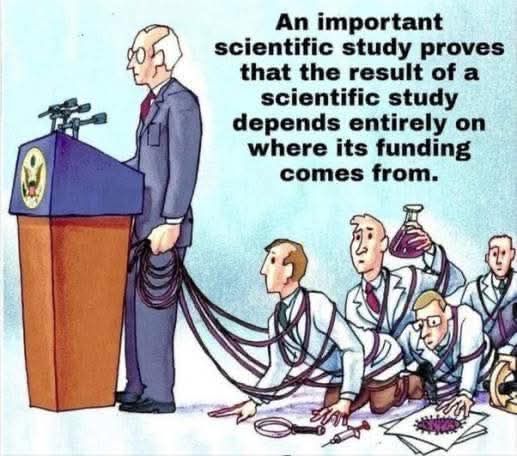
One useful term about this mess on the #OMN path is “Sophist”. Historically, the Sophists were traveling teachers in Ancient Greece during the 5th and 4th centuries BC. They taught rhetoric, politics, philosophy, and persuasion to the sons of the ruling elite. In many ways, they were the media consultants, communication strategists, and public intellectuals of their time. Their ideas were, and still are, deeply useful to elitist power. Truth was treated not as something to strive for, but as something relative to perspective and circumstance. Protagoras summed this up with the phrase “Man is the measure of all things.”

From this flowed a power-based philosophy – if truth is flexible, then gaining and holding power is less about discovering what is true, and more about learning how to persuade people effectively. Sophists became famous for teaching students how to win arguments regardless of the facts, make “the weaker argument appear stronger,” and manipulate rhetoric and perception for advantage.

This is why philosophers like Socrates and Plato attacked them so fiercely. Classical philosophy, much like the modern scientific ideal, was supposed to be a search for truth, ethics, wisdom, and understanding. The Sophists instead treated philosophy as a competitive social tool for gaining status, influence, and power.

That conflict has never gone away, when we look at the last 40 years, it becomes obvious that we now live inside a revived Sophist culture. Under neoliberal #mainstreaming, politics, media, academia, branding, and online culture have steadily shifted away from questions of shared reality and toward competitive narrative management.

The central questions are no longer what is true? what is just? and what works for the commons? Instead, the “common sense” questions become what performs well? What wins attention? What controls the narrative? What protects the brand? What keeps the funding flowing? And finally, the #stupidindividualism of, what keeps the career safe?

This is the culture the #dotcons perfected, were algorithms reward emotional reaction over understanding, public relations replaces public reasoning, identity replaces grounded collective politics so that communication becomes performance instead of dialogue. Truth becomes aesthetic.

That is in part why so many people now experience a constant feeling of unreality, we are swimming in rhetorical systems optimized not for understanding, but for engagement, manipulation, and market positioning. The modern “post-truth” condition is not accidental, it is the logical outcome of self-interested #postmodern Sophist culture merged with #dotcons platform capitalism feedback loops.

What do we have to balance this, the #OMN path matters because it tries to push against this drift. The goal is not some fantasy of perfect objectivity, humans are always partial, messy, emotional, and socially situated. But there is still a huge difference between collectively searching for grounded truth together, and treating all communication as strategic manipulation. The first builds commons – the second destroys trust. This is why the #4opens matter:

Open process,
Open data,
Open standards,
Open licences.

These are not only technical principles, they are social tools designed to reduce hidden manipulation and rebuild shared trust. Visible process matters because invisible power breeds Sophistry. Open discussion matters because branding culture hides contradictions behind managed messaging. Shared media matters because without public memory, every conversation resets into manipulation and spin.

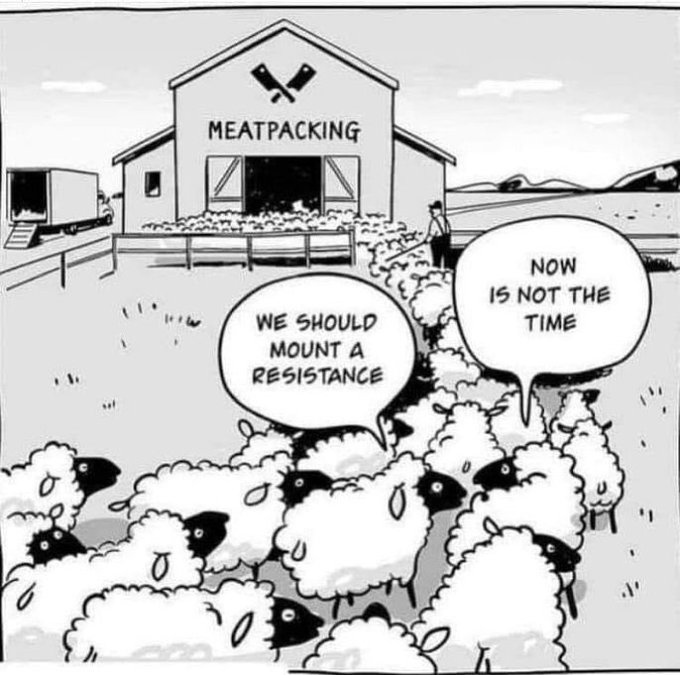
The danger of endless rhetoric is that a society trapped in Sophist culture loses the ability to act collectively. Everything becomes performance, positioning, optics, career management, and endless dead-end symbolic conflict. Meanwhile the real flowing crises deepen, #climatechaos, enclosure, collapsing infrastructure, rising authoritarianism and the destruction of public life. People are trained to argue endlessly while losing the ability to build together.

This is one of the many reasons the #openweb matters, yes, native #openweb culture is imperfect, messy, and chaotic, but it is also rooted in a stronger relationship between communication and shared reality. People built infrastructure together, they argued, but they also created commons, this spirit still survives in fragments across the #Fediverse path.

We need to use these tools to compost the Sophist mess – not through purity politics or ideological certainty, because that simply creates another closed rhetorical system. The path is to reboot cultures where truth matters again, evidence matters, lived experience matters, dialogue matters, and collective accountability matters. This needs focus because the current system trains exactly the opposite habits.

The #OMN path tries to compost this mess instead of reproducing it – with less rhetorical theater and more grounded process, less manipulation, more trust, less “winning the argument,” more building shared understanding strong enough to support collective action. That is the underlying conflict beneath much of today’s social and political confusion – the struggle between communication as manipulation and communication as commons.

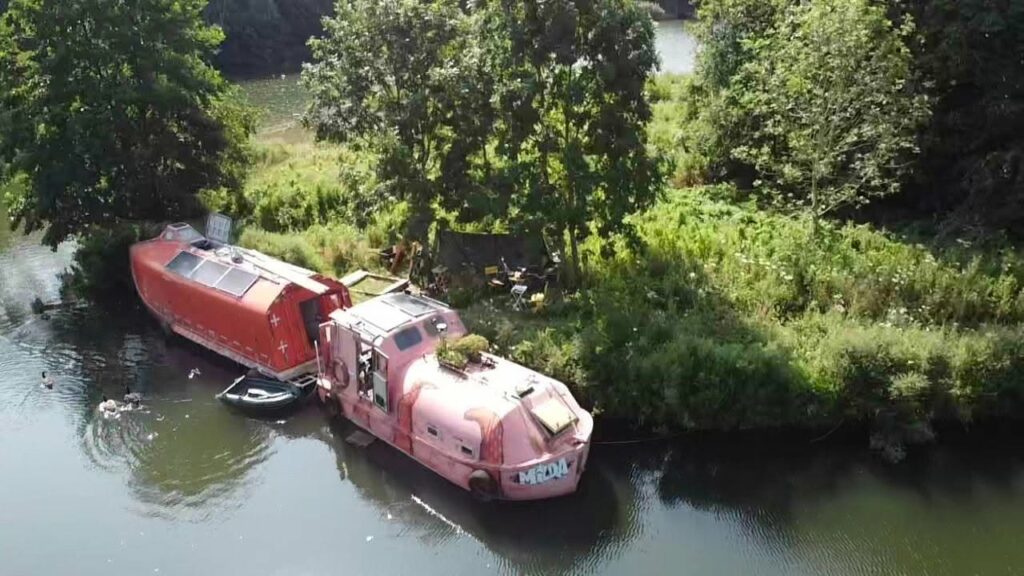
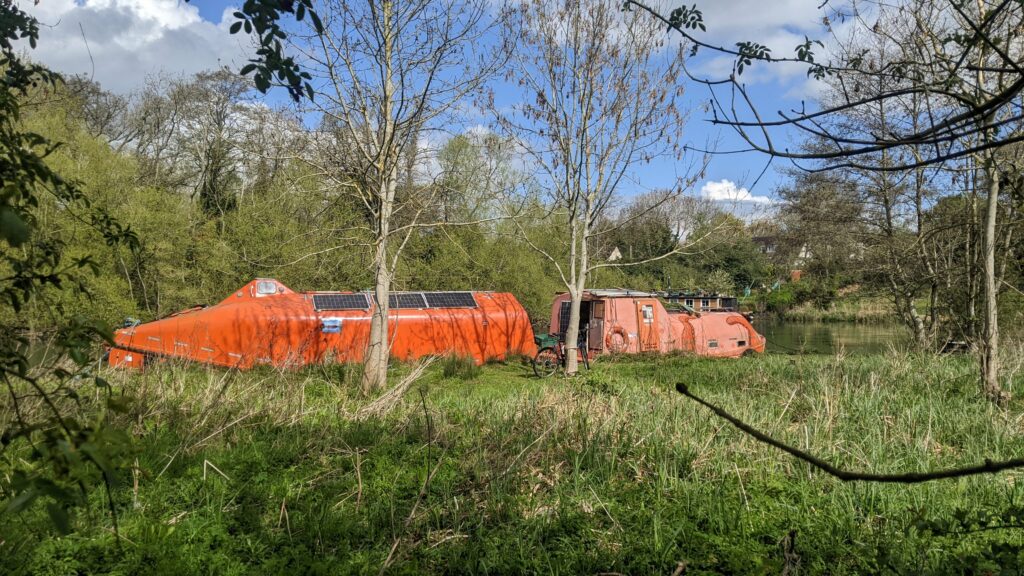
And right now, the commons desperately need rebuilding, and this matters for both the #openweb reboot and the #OxfordBoaters struggle. Both are fundamentally fights over who controls reality, narrative, legitimacy, and public memory. The landowners’ push in Oxford is a small-scale example of modern Sophistry in action. The issue is not simply “facts” about moorings, river access, safety, or management. The battle is over framing of who gets presented as “reasonable,” who gets framed as “problematic,” whose voices count, whose history becomes visible and who’s gets erased. This is how eliteist power works – not only through visible force, but through narrative management, institutional framing, bureaucratic process, selective legitimacy, and most importently control of communication channels.

The boaters to often fail to engage with this power because of the atomized #stupidindividualism that dominates our lives. Yet they are precisely the people with lived experience, practical knowledge, and deep historical connection to the river, metaphor and real.

Instead, the conflict becomes nastier than it needs to be because it shifts away from solving shared problems and toward managing perception. That is modern Sophistry in practice, the same thing happens across the wider internet. The early #openweb was messy, but it was rooted in participation, shared infrastructure, transparency, and collective building. People made websites, forums, federated systems, community media, and open tools together. There were arguments, conflicts, and failures, but there was also visible process and public memory.

The rise of the #dotcons replaced much of this with managed perception systems optimised for engagement, advertising, behavioural manipulation, and social control. Communication shifted from dialogue to performance, from publishing to branding, from communities to audiences,
from commons to platforms and from participation to passive consumption. Again, this is Sophistry – communication not for understanding, but for influence and control.

This is why the #OMN path matters. The project is not simply about “better media” or “better activism.” It is about rebuilding the social conditions where grounded collective understanding becomes possible again. For the #openweb reboot this means rebuilding commons infrastructure, restoring public conversation, protecting shared memory, creating transparent governance to resist platform manipulation.

For the #OxfordBoaters struggle this means creating our own media stories to document lived reality, preserving collective memory, make hidden processes visible. This is why the #4opens are practical anti-Sophist tools – Open process counters hidden manipulation – Open data counters selective framing – Open standards counter enclosure – Open licences protect shared social knowledge from privatisation. Without these, power disappears into invisible structures while presenting itself as neutral management.

One of the deepest problems today is that many people now trust polished institutional narratives and #dotcons tools more than messy lived experience. Boaters should already understand this because they directly experience the gap between official language and material reality. The boat struggle and the #openweb struggle are connected because both are about defending commons against enclosure: river commons, communication commons, social commons and democratic commons. And both are being undermined by the same Sophist culture of managed perception, institutional branding, bureaucratic abstraction, and invisible power.

So the task is not simply to “win arguments.” That is the Sophistry trap. The native path we need is rebuild is gthe environments where truth emerge collectively, trust grows, so conflict can become productive instead of performative, and people can act together in the real world.

In short, the fight is not just against bad policies or bad platforms. It is between communication as manipulation and communication as commons. And if we do not consciously rebuild the commons side of that divide, both the rivers and the web will continue disappearing into managed enclosure #KISS

#powerpolatics #mess #compost

People ask why the articles are hard to follow without background, it’s a fair point

People ask why the articles are hard to follow without background, it’s a fair point, but a distraction as these are not stand-alone hot takes, they are all a part of a long flowing story about how we got into this mess and how we might get out of it.

So, focus, please share this and the other posts if we’re going to recover focus and direction on the #openweb path. What happened over the last ten years on the Fediverse wasn’t random. It was a slow drift away from the native path that worked, and toward a confused mess of branding, #NGO careerism, platform thinking, and endless social noise.

The problem is most people now arrive in the #Fediverse with no memory of the culture that built the #openweb of trust networks, grassroots publishing, the messy but functional commons, the #4opens, the idea that media belongs in public and the understanding that social process matters more than shiny tech.

Instead, people arrive carrying the assumptions of the #dotcons – branding over community, engagement overtrust and control over openness. Leading to assumptions of private chat over public knowledge and algorithmic mediation over human responsibility. Then they push focus to rebuild the same broken structures again and again while calling it “innovation”.

That’s the real story of the last ten years, we inherited working social and technical traditions, then forgot why they worked. Now we’re drowning in signal-to-noise, fake “governance”, performative moderation, invisible power structures, startup logic and endless #fashionista churn.

The answer is probably much simpler than people want – public media, open processes, visible governance, trust networks, federation, and rebuilding commons culture from the ground up #KISS. Start reading the story flow https://hamishcampbell.com/stories/ and if you like semi hard definitions you can dip in here https://hamishcampbell.com/hashtags/ and for a bit of history of the #OMN path the Fediverse piece https://hamishcampbell.com/what-happened-over-the-last-ten-years-on-our-fediverse-path/

And yes, this matters beyond tech culture, because while people are busy polishing identities and building another pointless #techshit platform layer, the world is burning – #climatechaos, collapsing public infrastructure, rising authoritarianism and corporate enclosure of every part of public life. So yes, we need “alt sense” – alternative common sense – or we are genuinely beaten, not only in an abstract future way, but in ten years in a “rubber truncheons and floodwater” way.

Make the effort to understand the path built from alt common sense history, or we’ll keep repeating the same mistakes until there’s nothing left worth defending.

The End of the “Peace Dividend” and the Return of History

#Identitypolitics, is what happens when liberalism turns inward and fragments – call it mad liberalism. #Culturewar is what happens when that same liberalism hardens and lashes out – bad liberalism. Both look like opposites, but they come from the same place.

The uncomfortable part is both were pushed onto the “left” as the way to fight #neoliberalism the very system that’s been tearing apart the social fabric for decades. Instead of building collective power, we pushed endless identity fragmentation, reactive outrage cycles and symbolic battles detached from material change the left is about.

Energy that could have gone into organising, building, and challenging power structures got redirected into managing discourse and fighting each other. That wasn’t an accident, it was the path of least resistance within a liberal framework that can’t actually confront the roots of the problem, because it’s part of the problem.

So while people were arguing over representation and language, the underlying mess – what we call the #deathcult – carried on concentrating wealth, hollowing out communities and locking in structural inequality. And now, that same system is producing a hard shift to the right, feed by anger without direction, backlash without solutions and reaction filling the vacuum left by the failure of the “left” to build alternatives.

So yes, the liberal centre made the mess, but the more important point is this we’re still stuck inside its framing, still reacting, still fighting on terrain that leads nowhere and still avoiding the work of building something that can actually replace what’s failing. Not to dismiss identity or culture – those matter – but to put them back in proportion, grounded in material reality and collective process. Because if we don’t do that, we stay locked in the loop of liberal fragmentation → right-wing reaction → deeper collapse, and this loop doesn’t end well.

The question isn’t only who to blame, it’s whether we can stop playing the same game long enough to build something else. Let’s look at this from a much wider view.

For a long time, the dominant mainstreaming story has been that today’s instability is blamed on the anger of the “left-behind” in the West, a neat, comfortable narrative. But this is shallow, as long before discontent surfaced in the US or UK, entire societies in Eastern Europe and the former Soviet Union went through something far more extreme.

The 1990s transition to #neoliberalism wasn’t just “reform” – it was a peace-time social collapse when life expectancy dropped, savings were wiped out and crime and addiction surged. This “history” matters now because it shows that what we’re living through isn’t new, it’s the long tail of our worshipping of the same #deathcult, that has been breaking societies for decades.

The illusion of stability from the early 1990s to around 2010, when the world looked unusually stable, even peaceful. Major wars between big powers disappeared, military spending dropped, trade and GDP surged – “Democracy” spread across the globe. This period was framed as success, some even called it the end of history. But this “peace” rested on smoke and mirrors.

#globalisation as control – economic interdependence was supposed to prevent war, the idea was simple if everyone is economically connected, conflict becomes irrational. What actually happened was production was off shored, labour was weakened in the West, global supply chains became fragile and unequal and wealth concentrated at the top. This wasn’t peace, it was #classwar.

The fig leaf of “democracy” was always market compliance, less about collective decision-making and more about maintaining economic growth. In practice governments served markets, institutions constrained popular power and politics became technocratic management. In #OMN terms, this is #mainstreaming – reducing real political choices into narrow, “acceptable” to the #nastyfew options.

The hidden cost was hollow societies, this system did produce growth. But hollowed everything out, communities weakened, industries disappeared, inequality exploded and politics lost meaning. People were told everything was fine, while their lived reality worsened.

So the anger we see today isn’t sudden, it’s delayed. The imperial layer is power without accountability at the global level, this system was held together by a dominant power structure. And here’s where the cracks deepen as rules applied selectively, international law was a tool, not a constraint, economic systems weaponised as needed. The result was a loss of legitimacy, as when rules are not applied equally, they lift the veil to stop functioning as rules at all.

We are now moving out of that world back to no longer having a single uncontested centre of power. Instead, we have competing blocs, regional tensions, fragile alliances and increasing militarisation. This is what’s called a multipolar world in #IR terms. Historically, these systems are unstable unless there are shared norms and limits, right now, those norms are weak or collapsing.

So we understand that the liberal #deathcult logic no longer works, globalisation is fragmenting, states are prioritising more self-sufficiency, supply chain control, strategic industries. The old idea of interdependence is now seen as a risk, not a safeguard.

Liberal ideas of democracy aren’t stabilising conflict, instead of reducing tension, elections amplify nationalism, reward confrontation leading to deepen division. The “#deathcult peace” is no longer holding, It’s a dangerous feedback loop, that without strong shared “rules”, the mess drifts toward proxy conflicts, regional wars, arms races and escalating mistrust. Even if full-scale war is avoided, instability becomes normal, and this instability feeds back into domestic politics – creating more fear, more reaction, more breakdown.

The deeper problem is #neoliberal exhaustion, we no longer treat the #deathcult as sacred and with #climatechaos and social break down our deaths are seeping closer. It’s now visible systemic exhaustion of the rule of the #nastyfew who built this era of #neoliberalism to prioritised finance over production, replaced politics with management, concentrated wealth and power and stripped away collective purpose.

This mess making didn’t resolve contradictions, it displaced them into culture wars, liberal identity conflicts and into abstraction. Now those social control is failing, we see the return of “history” where fundamental questions can’t be avoided anymore:

  • What is the purpose of the state?
  • Who benefits from the economy?
  • What do we protect and why?
  • How do we organise collectively?

This is uncomfortable, but necessary. As the previous era avoided these questions, this one forces them.

The #OMN perspective on this mess is compost, don’t collapse, that this moment is not just crisis – it’s raw material. The breakdown of the old system creates space, but we need to use the space, it’s why the #compost thinking matters – don’t deny the mess, don’t romanticise collapse, process it into something usable. Because if we don’t, the vacuum gets filled by reactionary politics, authoritarian control and deeper #mainstreaming mess.

The “end of history” wasn’t an achievement, it was a pause – built on unstable foundations. What we’re living through now is history restarting, messy, risky, uncertain. But also the first real chance in decades to build something that isn’t just a updated version of the same #deathcult logic. We might build a #lifecult if we can hold our nerve, and actually do the work.

So what comes next? We are moving from “stability” without meaning to instability with possibility. Yes, that shift is dangerous, but it also reopens agency, the question is no longer
“how do we maintain the system?” It becomes “what do we build instead?”

The #KISS choice is the #OMN path to grow new #openweb, grassroots, trust-based structures, or we default fall back into more centralised, extractive systems?

#OMN Grounding (the roots as a story)

#techchurn is the endless cycle of adopting new platforms, tools, and technologies – not because they solve any real problems, but because novelty is mistaken for progress. It burns community trust, institutional memory, and activist energy, while leaving the underlying #nastyfew power structures untouched.
https://hamishcampbell.com/?s=techchurn


The #OMN uses #stupidindividualism to describe the culturally manufactured habit of prioritising personal gain and self-interest over collective well-being – a behaviour normalised by forty years of #neoliberalism, where people work against their own community and ecological survival while believing they are exercising “freedom”.
https://hamishcampbell.com/?s=stupidindividualism


In the #OMN hashtag story, #spiky is the confrontational, direct, and uncompromising tendency within radical movements – the willingness to push back against power, name uncomfortable truths, and refuse to sand down political edges for mainstream comfort.
https://hamishcampbell.com/?s=spiky


#RSS is the unglamorous but democratic backbone of the #openweb – a simple, open standard that allows content to flow without the gatekeeping, algorithmic manipulation, and the data hoarding of the #dotcons.


#reboot is the necessary reset of the #openweb – stepping away from the dead ends of #techshit and #dotcons to rebuild human-centred, trust infrastructure using tools like #activitypub and the #fediverse, guided by the #4opens.
https://hamishcampbell.com/?s=reboot


#postmodernism is the cultural current that dissolved shared truth into competing narratives, undermines the foundations needed for collective action – leaving people fragmented, cynical, and unable to build solidarity.
https://hamishcampbell.com/?s=postmodern


In the #OMN hashtag story, #Oxford is a grounded example of real-world contradiction – where elitist power (#mainstreaming, #NGO, #deathcult) coexists with genuine grassroots community, making it a test bed for grassroots #openweb organising and the #4opens path.
https://hamishcampbell.com/?s=Oxford


In the #OMN hashtag story, #PGA (Peoples’ Global Action) represents horizontal, grassroots, anti-capitalist organising – a prefiguration of the #openweb, built on direct action and solidarity rather than #NGO bureaucracy or #mainstreaming compromise.
https://hamishcampbell.com/?s=PGA


In the #OMN path, #p2p means people-to-people before peer-to-peer – real human relationships and trust as the foundation that decentralised tech should serve, not replace.
https://hamishcampbell.com/?s=p2p


In the #OMN view, #opensource is not just a licence – it’s a political commitment to transparency, shared ownership, and community control over code, data, and process.
https://hamishcampbell.com/?s=opensource


The #openweb is internet infrastructure built on open standards, open-source code, and community control – where users share power – as opposed to the #dotcons, with the #closedweb which enclose and monetise the commons.
https://hamishcampbell.com/?s=openweb


#openprocess means decisions and governance happen visibly and participatorily – not behind closed doors, so people can see, challenge, and shape outcomes.
https://hamishcampbell.com/?s=openprocess


#opendata means data that is freely accessible and shareable – controlled by communities rather than locked inside corporate silos.
https://hamishcampbell.com/?s=opendata


In the #OMN path, #open means building on the #4opens – open code, data, standards, and process as a foundation for technology that serves people, not profit.
https://hamishcampbell.com/?s=open


#OMN (Open Media Network) is a grassroots project to build human-centred, trust-based digital infrastructure on the #openweb, grounded in the #4opens and focused on community control over technology.
https://hamishcampbell.com/?s=OMN


The #OGB (Open Governance Body) is a framework for transparent, inclusive decision-making – replacing hidden power structures with accountable, federated, messy collective governance.
https://hamishcampbell.com/?s=OGB


In the #OMN story, #nothingnew reminds us that cycles of co-option and failure have all happened before – and ignoring this history is how we repeat mistakes.
https://hamishcampbell.com/?s=nothingnew


In the #OMN story, #NGO refers to professionalised activism that defuses radical politics – replacing grassroots power with managed, funder-friendly “dissent”.
https://hamishcampbell.com/?s=NGO


In the #OMN path, #neoliberalism is the dominant ideology of markets over people – normalising greed and eroding solidarity into the logic of the #deathcult.
https://hamishcampbell.com/?s=neoliberalism


#makinghistory is the practice of communities reclaiming storytelling – building open, living archives rather than leaving history to those in power.
https://hamishcampbell.com/?s=makeinghistory


In #OMN usage, #mainstreaming is how radical ideas get absorbed and neutralised – keeping the language while stripping out real challenge.
https://hamishcampbell.com/?s=mainstreaming


In the #OMN path, #KISS (“Keep It Simple, Stupid”) is a political stance against the #geekproblem – rejecting unnecessary complexity as a form of control.
https://hamishcampbell.com/?s=KISS


#indymediaback is a call to rebuild grassroots, community-controlled media as an alternative to both #dotcons and hollow #NGO media structures.
https://hamishcampbell.com/?s=indymediaback


In the #OMN path, a hashtag is not just a label – it’s a node in a shared political vocabulary, building a map of meaning and direction.
https://hamishcampbell.com/?s=hashtag


#grassroots means bottom-up organising rooted in real communities – accountable to collective need, not institutions.
https://hamishcampbell.com/?s=grassroots


The #geekproblem is the tendency to replace human trust with technical control – embedding narrow values into systems that shape everyone’s lives.
https://hamishcampbell.com/?s=geekproblem


In #OMN, #FOSS is a political commitment to collective ownership of technology – not just a licensing model.
https://hamishcampbell.com/?s=FOSS


In #OMN language, #fluffy describes feel-good politics that avoid conflict – prioritising comfort over any real change.
https://hamishcampbell.com/?s=fluffy


#feudalism describes the emerging digital structure where platform owners extract value like lords from dependent users.
https://hamishcampbell.com/?s=feudalism


#fascism is what happens when the #deathcult drops its mask – authoritarian control to defend failing systems.
https://hamishcampbell.com/?s=fascism


On the #OMN path, the #fediverse is practical #openweb infrastructure – decentralised, federated, and not owned by corporations.
https://hamishcampbell.com/?s=fediverse


#encryptionist describes the tendency to prioritise technical security over social trust – a core expression of the #geekproblem.
https://hamishcampbell.com/?s=Encryptionist


#dotcons are corporate platforms built on data extraction and control, presenting themselves as neutral while enclosing the commons.
https://hamishcampbell.com/?s=dotcon


In the #OMN story, #DIY means reclaiming the ability to build and organise outside institutional control – grounding politics in practice.
https://hamishcampbell.com/?s=DIY


The #deathcult is the self-destructive logic of #neoliberalism – sacrificing social and ecological survival for short-term fear drivern greed.
https://hamishcampbell.com/?s=deathcult


In the #OMN story, #compost means breaking down failure and mess into fuel for new growth.
https://hamishcampbell.com/?s=compost


In #OMN, #closedweb is controlled, extractive digital infrastructure where users have no power.
https://hamishcampbell.com/?s=closed


#climatechaos describes the accelerating breakdown driven by the #deathcult, beyond manageable “climate change.”
https://hamishcampbell.com/?s=climate


#classwar is the ongoing conflict between the #nastyfew and the communities they exploit – often hidden by #mainstreaming narratives.
https://hamishcampbell.com/?s=classwar


#capitalism is the dominant system turning everything – relationships, nature, culture – into “profit”.
https://hamishcampbell.com/?s=capitalism


In #OMN, #block is the reflex to shut down challenge – preventing the messy work needed for real change.
https://hamishcampbell.com/?s=block


#blinded is being unable or unwilling to see beyond #mainstreaming and #dotcons logic.
https://hamishcampbell.com/?s=blinded


#fashernista describes performative activism that prioritises appearance over substance.
https://hamishcampbell.com/?s=fashionistas


#dotcons are the corporate platforms – Facebook, Twitter/X, Instagram, YouTube and their kin – whose business model is built on harvesting user data, manufacturing engagement, and converting human attention and community into profit, while presenting themselves as neutral public spaces.

https://hamishcampbell.com/?s=dotcon


In the #OMN hashtag story, #DIY means reclaiming the practical capacity to build, organise, and maintain tools and communities outside of corporate and state control – not as a lifestyle choice, but as a political act of grounding radical change in real skills, real trust, and real human relationships rather than outsourcing power to institutions that don’t serve you.

https://hamishcampbell.com/?s=DIY


The #deathcult is the #OMN metaphor for the self-destructive logic of forty years of #neoliberalism – an ideology so committed to short-term profit, individualism, and economic growth that it knowingly sacrifices the ecological and social foundations that human life depends on.

https://hamishcampbell.com/?s=deathcult


In the #OMN hashtag story, #compost means taking the failures, mistakes, and accumulated mess of past movements and tech projects – rather than discarding or ignoring them – and breaking them down into something that can feed new growth, treating dysfunction and #blocking dead ends as raw material for building better rather than as waste to be hidden.

https://hamishcampbell.com/?s=compost


In #OMN language, #closedweb refers to the controlled digital infrastructure – platforms like Facebook, Google, and Twitter – built on proprietary code, extractive business models, and centralised power, where people have no meaningful control over their data, their communities, or the rules that govern them.

https://hamishcampbell.com/?s=closed


The #deathcult of #neoliberalism has driven us past the point where “climate change” – with its implication of manageable, orderly shifts – remains any honest description of what we face now. What we actually have is #climatechaos: cascading, systemic breakdown of the ecosystems, weather patterns, and social structures that human civilisation depends on, accelerating faster than institutions built on forty years of market logic are capable of, or willing to, address.

https://hamishcampbell.com/?s=climate


#classwar is the ongoing and unacknowledged conflict between those who benefit from and actively reproduce the #deathcult of #neoliberalism – the #nastyfew, managing, and credentialed classes – and the communities, workers, and ecosystems they exploit. A conflict that #mainstreaming culture works to render invisible, reframing systemic dispossession as individual failure.

https://hamishcampbell.com/?s=classwar


#capitalism is the current common sense – the water we swim in – the economic system that systematically converts collective goods, human relationships, and the natural world into private profit, enforcing this logic through every institution and platform we touch, while presenting itself as the only possible reality.

https://hamishcampbell.com/?s=capitalism


In the #OMN hashtag story, #block refers to the reflexive, unconscious tendency of individuals and communities to shut down unfamiliar and challenging ideas, people, and processes – a defensive gesture rooted in #stupidindividualism and #postmodernism that prevents the trust-building and messy collective work needed for real #openweb organising.

https://hamishcampbell.com/?s=block


#blinded refers to being so captured by #mainstreaming tech orthodoxy and ideological “common sense” – particularly #neoliberalism and #dotcons culture – that you no longer see, or refuse to see, the harms those systems cause or any alternative paths that exist outside them.

https://hamishcampbell.com/?s=blinded


#fashernista describes a person in progressive or radical spaces who prioritises the appearance and aesthetic of activism – the right look, language, and social positioning – over the unglamorous, difficult work of actually building lasting structural change.

https://hamishcampbell.com/?s=fashionistas


If you want, the next step is to cluster these into a clean “chapter flow” (roots → mess → behaviours → solutions) so this stops being just a glossary and becomes a narrative tool.

These are the foundation tags – the ones everything else grows out of – the overall project: grassroots, trust-based, human-centred media infrastructure

#openweb – the political/technical terrain we’re trying to reclam

#4opens – the non-negotiable baseline (open code, data, standards, process)\openprocess – visible, participatory decision-making as default

#grassroots – bottom-up power, not institutional mediation

This cluster is about legitimacy, if it’s not grounded in these, it drifts into #NGO capture or #dotcons logic quickly. This is the “native soil” everything else either grows from or gets rejected by.

The Problem Space (what we’re composting), these tags describe the mess we’re in – the stuff we don’t ignore, but break down.

#deathcult (neoliberalism as destructive common sense)

#neoliberalism – 40 years of market logic shaping behaviour

#dotcons – corporate capture of digital space

#closedweb – controlled, extractive infrastructure

#mainstreaming – dilution and co-option of radical ideas

#NGO – managed dissent and professionalised politics

#classwar – underlying structural conflict

This is the compost heap, you don’t fix this directly, you don’t “win” against it head-on. You break it down, reuse what’s useful, and grow alternatives around and through it.

The #geekproblem Layer (tech distortions) is where things go wrong in implementation.

#geekproblem – replacing social trust with technical control

#techchurn – endless pointless rebuilding

#encryptionists – over-prioritising technical purity over social reality

#KISS – counterbalance: keep things simple and usable.

This cluster is why good ideas fail, not because the ideas are wrong, but because the tools and culture get shaped by people who don’t understand social process. This is where most #openweb projects die.

Cultural/Behavioural Patterns (how people act). The human layer – messy, unavoidable, and central.

#stupidindividualism – learned self-interest over collective good

#postmodernism – fragmentation of shared meaning

#fluffy – avoidance of conflict, feel-good paralysis

#spiky – necessary confrontation and edge

#block – reflex rejection of challenge

#blinded – inability to see outside dominant narratives

#fashernista – prioritising appearance over substance

This is the real battlefield, not tech, not policy – behaviour. If you don’t mediate this layer, everything collapses back into dysfunction, no matter how good your structure is.

The Alternative Infrastructure (what we build), are the actual tools and practices that make change possible.

#fediverse – decentralised network as a base layer

#activitypub – the protocol glue

#RSS – simple, open distribution backbone

#p2p – people-to-people first, tech second

#FOSS / #opensource – shared ownership of tools

#opendata – accessible, non-extractive information

These only work if rooted in the first cluster, otherwise they get captured and turned into another layer of the #closedweb.

Governance & Process (how we hold it together). Where most projects fail – or succeed.

#OGB – structured, open governance

#openprocess – again, because it’s that important

#DIY – practical ownership and responsibility

Without this, informal power takes over. You end up with hidden hierarchies, gatekeeping, and eventual burnout. With it, you get messy but functional collective control.

Practice & Direction (how we move).

#reboot – reset and rebuild from working patterns

#indymediaback – learning from past grassroots media

#makinghistory – documenting and owning our narratives

#nothingnew – grounding in historical cycles

This cluster stops you repeating mistakes, without it, every new wave thinks it’s inventing something new and walks straight into the same traps.

Grounding Example Layer

#Oxford – real-world test bed of contradictions

#PGA – historical example of horizontal organising

Without grounding, this all drifts into theory, these are example tags anchoring it in lived practice, where things break, and where they can actually work.

The Meta Layer (how to use this)

#compost – break down failure into growth

This is the key to the whole thing – Don’t try to “fix” the mess. Don’t try to “win” cleanly, you compost:

bad behaviour → learning

failed projects → patterns

conflict → structure

Final point (this matters) is the mistake people make is trying to tidy this into a neat theory, reduce it to messaging, turn it into a fixed ideology. That kills it, this clustering is not about control – it’s about navigation.

The mess stays messy, but now people can walk through it without getting lost.If you don’t cluster this stuff, it turns into a wall of noise. The mess is useful.

Closed systems protect individuals, but they rarely build movements

People fight against or/and ignore the #KISS (Keep It Simple Stupid) approach in tech because simplicity exposes power. Complexity, jargon, and process give cover – they make control look like competence. When paths are simple and transparent, everyone can see who’s blocking, who’s hoarding, who’s acting in bad faith. Many “experts” and institutions are emotionally and professionally invested in keeping things complicated; simplicity threatens their authority, their funding, and their identity.

All the #OMN projects are not directly about social change – they’re about making social change possible. That distinction matters as people don’t step into change unless they first believe change can happen. If the world feels fixed, locked, inevitable, then nothing moves. Our role is simpler, and maybe more important, to open that door a crack, to show that different paths exist.

Think of #OMN as a helping hand, not dragging people forward, not telling them what to do – just making it easier for them to take that first step when they’re ready. But to do this, we need to think more clearly – and more fundamentally – about technology itself. As most of the current “open paths” are cosplay at best, we need a network that links them as flows for there use to be unlocked from the current limits of #stupidindividualism shaping them – to become a native part of the expanding #openweb reboot.

I’ve been working on this for over 20 years, and one thing keeps proving true: we need roughly 90% open and 10% closed, the balance matters. As the current push from the #encryptionists flips this – aiming for 90% closed and 10% open. That isn’t a solution, it’s a retreat. It breaks the social fabric that makes collective tools usable and meaningful. It fragments, isolates, and ultimately shrinks the space where shared culture can exist.

Yes, privacy matters, yes, some things should be closed, that’s the 10%. But the commons – the space where we meet, talk, organise, and build trust – has to be open. Without that, there is no network, just silos. Take a simple example: you’re reading this via #activitypub. That’s a system built on being mostly open, with just enough closure to function safely. And it works, people are here, conversations happen, networks grow.

Compare that to more closed, encryption-heavy systems like old school Diaspora. Technically interesting, sure, but socially? Empty, few people, little flow, no impact. That’s the core point: this isn’t just about functions or features, it’s about culture.

Open federated, networked systems create the possibility of shared culture, and from that, the possibility of social change. Closed systems protect individuals, but they rarely build movements. We need both – but we need to get the balance right. Right now, too many people are getting it the wrong way round.

This Isn’t New: Decentralisation Was the Point All Along

Decentralised servers – what we now call the #Fediverse – are often talked about as if they’re some new, radical innovation. They’re not, they’re a return to the original design of the network. The early internet wasn’t built to be controlled, it was built to survive. The core idea was simple: if parts of the network were destroyed – even something as extreme as a nuclear strike – the rest would keep functioning. No centre, single point of failure or “off switch.”

That’s what decentralisation actually means. And this thinking didn’t even start with the #openweb. Systems like Usenet already embodied this approach: distributed, federated, run by many, owned by none. Messy? Yes. But resilient, open, and hard to capture.

What we’ve been living through for the last 20+ years – the rise of the #dotcons – is the opposite of this. Centralised platforms with single points of control. Easy to use for control and monetise, easy to manipulate, easy to shut down. We didn’t lose the #openweb by accident, we blindly traded it away for this convenience.

What we’re seeing now with the #Fediverse, #ActivityPub, and related projects isn’t innovation in the common sense. It’s a reboot, a return to the path we were on before we derailed it. The difference is that now we’re trying to rebuild this in a world that has spent decades normalising centralisation and control. 40 years of death cult worship has changed people, institutions, social groups and our very internal selves. That’s where the friction comes from, people arrive expecting #dotcons platforms, what they find is networks. People expect control, what they get is responsibility. People expect “free” what they face is shared cost and care.

So, it was never about the tech, the mistake we keep making is ONLY thinking this is a technical shift, it’s not, it’s cultural. You can spin up a decentralised server in minutes, that’s not the hard part, the hard part is everything around it:

  • Who runs it
  • Who pays for it
  • How decisions are made
  • How conflict is handled
  • How trust is built and maintained

This is the work the #dotcons hide from us, they wrap control as “free services” paid for with surveillance, extraction, and control. Now that we’re back on the #openweb path, that work becomes visible again, and yes – it’s harder.

Why this matters (Again). Resilience isn’t an abstract idea anymore as we’re living through cascading crises: political instability, #climatechaos, infrastructure fragility. A centralised network fails catastrophically were a decentralised network degrades – but keeps going. That’s the difference between a system you depend on and a system you can trust.

We don’t need to overcomplicate this – Keep It Simple (#KISS)

One builds commons, the other extracts value, everything else is detail. And yes nobody thinks the Fediverse is not messy, uneven, (yet) match the polish of corporate platforms. That’s fine, mess is where growth happens – if we compost it properly.

The #OMN view, we’re not trying to invent something new. We’re trying to make what already works usable at scale for media, trust, and collective action. The infrastructure is there, the protocols exist, the history is long. What’s missing is the shared layer – the commons – where information flows in ways people can actually rely on, that’s what we’re building.

If decentralisation feels radical, it’s only because we’ve spent so long inside systems that forgot #OMN #openweb #KISS

Toward Healthier Digital Public Spaces: A Cultural and Structural Challenge

From a practical perspective, the challenges in digital and social technology are not technical, they are cultural. This may seem obvious, but it is often overlooked in policy and implementation. At a basic level, there are two broad approaches to handling disagreement and complexity in online spaces:

  • Exclusion-focused approaches (e.g. blocking, filtering, silencing), which reduce immediate friction but reinforce fragmentation and polarisation.
  • Engagement approaches (e.g. dialogue, questioning, listening, and iterative response), which are more demanding but can, over time, reduce conflict and build shared understanding.

In the current mess – shaped by strong norms of individualism and personal optimisation – the first dysfunctional approach dominates. This grows increasingly fragmented discourse, where communities become isolated and less resilient.

Understanding this we can start to show the limits of “Common Sense” in today’s mess, were governance relies on this “common sense.” Over the past four decades, economic and cultural frameworks – market-driven individualism – has controlled how we design and use digital systems contributing to:

  • Increased social fragmentation
  • Growing economic inequality
  • Incentive structures prioritising engagement over well-being
  • Environmental and social externalities (including visible #climatechaos impacts)

These outcomes tell us that existing models are not sufficient for building sustainable digital public spaces, so we need to #KISS revisit platform dynamics and structural Incentives.

The dominant digital platforms (the #dotcons) operate on business models that prioritise data extraction, engagement metrics, and advertising revenue. These incentives shape what information is amplified, how users interact and which behaviours are rewarded. While these systems are effective at scaling control, they are not in any way aligned with public interest outcomes such as trust, accountability, or democratic participation.

Current trends – ranging from disinformation to polarisation and environmental stress – highlight the limits of systems based purely on competitive, self-interested models. At the same time, alternative approaches – such as the #openweb and federated systems – offer more aligned values but face basic challenges of coordination, usability, and governance. So we need to move from fragmentation to constructive engagement, to reframe the problem, from crisis to stewardship.

This more sustainable approach emphasises stewardship over extraction, collaboration over isolation to help build resilience over short-term optimisation. This does not mean abandoning innovation or individual freedom, but rather #KISS balancing these with responsibility for shared outcomes. As the current challenges in digital spaces are not only the result of “bad actors” or isolated failures. In simple terms we need to move from systems that amplify division toward systems that support understanding and the common good.

To compost this mess we need a willingness to engage with complexity and a commitment to building systems (technical and social) that prioritise long-term public value over short-term individual gains. This is not easy work – but it is necessary if digital infrastructure is to support healthy, democratic societies.

KISS – Keep it simple, sustainable, and focused on the common good.

EU tech strategy, composting the mess

As #climatechaos accelerates, European politics will not stay where it is now. History suggests that periods of instability push politics to the right, because right-wing politics tends to be driven by fear and control. If that trajectory holds, then the digital infrastructure we build today needs to be resilient in a more hostile political environment tomorrow. This matters for the EU’s current technology strategy.

Most policy thinking still focuses on industrial competitiveness – AI funding, semiconductor independence, cloud sovereignty, cybersecurity frameworks. These are important, but they mostly reinforce state and corporate power structures. What is missing is investment in grassroots civic infrastructure.

If democratic societies are going to survive the pressures of climate disruption, economic instability, and political polarisation, they will need independent communication systems that communities themselves can run and trust. This is where projects like #OMN, #OGB, #indymediaback, and #makeinghistory fit.

The starting point: is yes, we are all inside #neoliberal systems. For forty years Europe has been shaped by neoliberal infrastructure – platforms, markets, and institutions designed around extraction and competition. In the hashtag story language this is the #deathcult we have worshipped. None of us are outside this mess, the realistic mission is not purity but gradual exit.

That means: building small affinity groups, creating tools that allow communities to organise themselves to develop infrastructure that scales socially, not just technically. The #openweb is a core path for this. The #4opens – open data, open source, open process, open standards – provide a practical way to judge whether infrastructure actually supports commons-based development we need.

Why this matters politically? The dominant platforms – the #dotcons – centralised the web’s communication power. Grassroots movements traded their own infrastructure for convenience. In doing so, they gave away their media power. The problem we need to balance is if you have no power, talking directly to power is usually pointless. Grassroots power grows from the soil, from collective organisation.

What we need are projects like the #OMN which are not more platforms, rather it is an attempt to build simple trust-based media infrastructure, the design principle is #KISS – Keep It Simple. At its core, building and boot-up media nodes run by communities, systems for publishing and sourcing content with flows of rich metadata linking media together. Technically this becomes a very simple semantic layer: media objects linked through open metadata streams.

Think of it as a network of media “cauldrons” and flows, growing from local publishing outward. The important point is that the infrastructure is open and decentralised. Communities decide how to use it. Initial examples include: #makeinghistory and #indymediaback, the architecture is intentionally general. Once you have open pipes and flows, many other uses become possible. Protocols like #RSS and #ActivityPub are starting points for this type of infrastructure.

The path looks like this: Create a focus (hashtags, projects, shared language). Grow community networks around that focus. Use those networks to regain collective power. Then speak to power with power, this matters as we have mess to compost.

The control myth in tech policy? A lot of current EU tech thinking is built around control frameworks: cybersecurity regimes, digital identity systems, privacy enforcement and regulatory compliance layers. These are needed protections, but they also reflect a deeper ideological assumption: that the internet must be controlled to be safe. In practice, many of these approaches close possibilities for social paths we need.

Two concepts in particular have been used in ways that reinforce centralisation: security and privacy. Both are important. But when implemented through centralised systems, they become tools that close infrastructure rather than open it. Security without social trust becomes just another form of control.

So trust versus control. One of the biggest ideological shifts needed in tech infrastructure is moving from control-based systems to trust-based systems. In tech culture we to often fetishise control: permissions, identity verification, cryptographic enforcement and algorithmic moderation. But the internet originally grew through something very different: open trust networks.

The early World Wide Web forced enormous social change because it was built around open protocols and shared infrastructure. The #dotcons later captured that infrastructure and turned it into centralised platforms. Rebuilding the #openweb means reopening those pathways.

Digital infrastructure is a mode of production we need this deeper economic perspective, Karl Marx famously argued that the mode of production shapes social consciousness. The digital era represents a new mode of production, built on information flows, network effects, and data infrastructures. If those infrastructures are controlled by a handful of #dotcons corporations, they shape society accordingly. If they are open, distributed, and collectively governed, they create very different possibilities.

What this means for EU policy is we need better balance in EU funding, legislation and thinking. An effective EU digital strategy should not only fund: AI research, blockchain experiments and industrial platforms. It should balance support for public digital common’s infrastructure, funding projects that: follow the #4opens, strengthen the #openweb to enable local community media networks and reduce dependence on corporate platforms. These paths will not look like Silicon Valley platforms. They will look messier, smaller, and more local. But they are also more resilient.

King Canute and the digital tide. There is an old story about King Cnut, who supposedly ordered the tide to stop to demonstrate that even kings could not control nature. The digital tide is similar. No amount of regulation or platform power can permanently control networked communication. The question is not whether the tide moves, the question is who builds the boats.

Projects like #OMN are attempts to start building them, and yes – the tools required are simple.

Shovels and compost come to mind.

https://shkspr.mobi/blog/2026/01/where-is-bitcoin

Shovels, Hashtags, and Revolutions: Roots of the #openweb

It’s obvious to everyone paying attention that the relentless push of #mainstreaming over the last forty years has not made society healthier or more stable. Quite the opposite, the result has been accelerating social disintegration and the rapid expansion of #climatechaos.

When the current trajectory continues, the consequences are catastrophic. Over the next fifty years we are looking at millions dead and billions displaced by climate breakdown, ecological collapse, and the political instability that follows. Flooded cities, failing agriculture, collapsing states, mass migration, these are no longer speculative futures. They are already visible on the horizon.

What makes this situation so disturbing is not ignorance. For the last decade, the consequences have been very clear. Climate science, ecological data, and lived experience have converged into a single message, that the system driving this crisis cannot continue. Yet those with the power to change course continue pushing the same policies, the same economic logic, and the same institutional inertia that produced the crisis in the first place.

This is not simply failure, it is knowing failure. And that raises an uncomfortable question of when does systemic negligence become a crime? For forty years the dominant ideology has been the worship of endless growth, deregulation, privatization, and extraction – what many people now recognize as the #DeathCult of #neoliberalism. On this path, ecosystems are treated as expendable, communities are hollowed out, and public institutions are dismantled in the name of “efficiency”.

The result is the hollowing-out of social structures and the destabilization of the planet itself. This isn’t an accident, the evidence has been overwhelming for decades. From early climate warnings in the 1980s to the now constant stream of scientific reports and disasters, we have known were this path leads. And yet the machine keeps running.

At some point we have to confront the idea that what we are witnessing is not just bad policy but something closer to systemic criminality. When leaders, corporations, and institutions knowingly pursue actions that will cause mass death and displacement, we enter the territory of #CrimeAgainstHumanity. The historical analogy that needs resurfacing is Nuremberg.

After the Second World War, the world established that individuals in positions of power could be held legally responsible for crimes that harmed humanity as a whole. The principle was simple: “just following the system” is not a defence. Today we face a different kind of global crime – slower, more bureaucratic, wrapped in economic language – but far larger in scale.

If millions die and billions are displaced because decision-makers continued destructive policies long after the dangers are clear, then if social democracy survives, future generations will have every reason to enforce people as accountable? This is not about vengeance, it’s about accountability and the possibility of changing course before the worst outcomes arrive.

The tragedy is that alongside this destructive path there have always been alternatives – social, technological, and cultural. Grassroots networks, commons-based governance, cooperative systems, and the original ideals of the #openweb all point toward more resilient and humane ways of organising society. But these paths have been buried under forty years of blinded #mainstreaming, where every institution, including our own #NGO people, force alignment with this narrow economic logic.

Digging out of this mess requires more than better technology or better policy papers, it requires collective action, memory, and courage. In other words: Shovels. Hashtags. And revolutions. Because the first step in changing the future is digging up the truth about how we got here.

#OMN #techshit #compost

Why good faith is a technical requirement for #FOSS

If you’ve spent years in #FOSS, you’ve likely developed a strong allergy to vague political language. You care about licenses, reproducibility, governance models, and whether something actually runs. Good. That discipline is why free software exists at all.

But here’s the uncomfortable question, what if the biggest blocker to the #openweb right now isn’t technical debt – but social debt? And what if “good faith” is not a moral nicety, but a core infrastructure requirement?

The problem is when activism meets the #geekproblem. Anyone who pushes for change – especially against #mainstreaming pressures – develops a recurring relationship with bad faith. You see this when:

  • Corporate actors adopt the language of openness while enclosing the commons.
  • Institutions celebrate “community” while centralizing control.
  • Projects technically comply with openness while culturally gatekeeping participation.

This isn’t new, but the scale is new, in the age of #dotcons, #NGO enclosure is polished, funded, and normalized. Resistance generally fragmented, exhausted, and defensive as years of platform manipulation and extractive models have left people burnt out and cynical. In that climate, good faith is fragile, yet without it, nothing decentralized works. Good faith is infrastructure, decentralized systems cannot rely on coercion at scale. They rely on:

  • Trust
  • Transparency
  • Shared norms

The assumption is that participants are not actively trying to sabotage the commons, as when bad faith dominates, decentralized governance collapses into:

  • Endless meta arguments
  • Capture by the loudest actors
  • Drift toward hierarchy “for efficiency”

Sound familiar? This is why good faith isn’t sentimental, it’s structural. If you’ve ever tried to maintain a FOSS project while navigating trolls, corporate opportunists, and purity politics, you already know this.

To help the #4opens is a practical test, not a vibe. The #4opens framework exists precisely to operationalize good faith. It asks four simple questions of any grassroots tech project:

  • Is the data open?
  • Is the source open?
  • Are the processes open?
  • Are the standards open?

This extends beyond traditional open data initiatives (often institutional, often cosmetic). It covers the entire ecosystem of a project, not just its outputs. The value is not ideological purity, it’s resilience. When data, code, process, and standards are open:

  • Capture becomes harder.
  • Forking remains possible.
  • Governance can be contested transparently.
  • Communities can leave without losing everything.

That’s not abstract politics, it’s survival architecture. Composting the current rot is why #OMN exists as a project. We are living in a digital environment thick with enclosure and manipulation. Years of bad faith, disempowerment, and algorithmic extraction have created social decay. The instinct of many geeks is to build a cleaner stack and hope people migrate. But the problem isn’t just software, it’s trust collapse.

If the #openweb is to mean anything beyond developer autonomy, it has to support collective storytelling and coordination, not just individual expression. #OMN is a shovel, not a cathedral. It’s a way to compost the mess rather than pretend it isn’t there.

The #OMN (Open Media Network) is not a shiny new protocol. It’s deliberately simple: Publish, Subscribe, Moderate, Rollback, Edit. That’s it, no engagement hacks, no growth funnels and no surveillance capitalism. It’s a #DIY, trust-based, human-moderated space. Messy, organic, built for communities, not only users.

This matters in the era of #climatechaos and social break down. As climate instability accelerates, centralized platforms will align with state and corporate power to prioritize “order” over dissent and optimize for profitability in shrinking margins.

To balance these communities will need coordination without permission, information flows that aren’t algorithmically distorted and infrastructure they can adapt locally, that’s a social demand. If #FOSS remains culturally optimized for the small minority who enjoy living inside the #geekproblem, it will not meet that demand at all.

We need to understand that the vast majority do not want to self-host, they do not want to debate licences, they do not want to live inside issue trackers. They want functioning, trustworthy spaces, if we can’t provide that, someone else will – and it won’t be #4opens.

The hard part is working with the empowered disempowered of our #fashionista class. We have a generation trained in #closed systems that reward performative critique over collective construction. On #dotcons platforms and strands of #NGO thinking, people are empowered to disempower others with common sense #blocking of call-out culture, optics over substance and branding over shared process. You get a strange anti-politics, egotistical, individualistic, allergic to long-term responsibility. A culture that critiques power while replicating it. Escaping this dynamic may be uncomfortable, it may get nasty before it stabilizes.

But here are some kinder strategies we can use:

  • Make contributions obvious and low-drama, clear process reduces ego battles.
  • Reward maintenance, not only innovation, culture follows incentives.
  • Default to transparency over suspicion, sunlight reduces paranoia looping.
  • Design for groups, not influencers, collective accounts, shared moderation, distributed ownership.
  • Keep it simple (#KISS), as complexity amplifies gatekeeping.

None of this eliminates conflict, but it shifts the terrain from personality warfare to shared work.

An invitation to the sceptics, you don’t need to buy the rhetoric, maybe ask instead does this increase forkability? Reduce capture risk? Does it lower dependence on extractive infrastructure to strengthen collective agency? If the answers are yes, they belong in the #FOSS conversation. The future of the #openweb will not be secured by better branding or cleverer stacks. It will be secured by projects that treat good faith as a design constraint and collective resilience as the goal.

This is not about purity, it’s about durability. We can keep polishing tools for the tiny minority who enjoy living inside the #geekproblem, but, we need to build infrastructure that ordinary communities can also use to navigate the storms ahead. The invitation stands, pick up a shovel, help compost the mess by build something that gives back more than it extracts.

#4opens #indymediaback #openweb #compostingthemess #KISS #makeinghistory #OMN

State Funding of #FOSS and Open Source: Is it a Good Idea or a Bad Idea?

#FOSS needs to take a social lead

This matters for #FOSS because as if it remains culturally trapped inside the #geekproblem, it becomes socially irrelevant at the exact historical moment it is most needed. Right now, most #FOSS energy still assumes that if you build complex tools, argue narrowly, and keep everything technically “open,” people will come. But only a tiny minority actually want to live the full-stack geek life: self-hosting, compiling, debating licenses, maintaining infra. That path selects for a personality type. It is not neutral.

The problem isn’t that this path exists, it’s that it quietly tries to define culture. The tension is that the #geekproblem tends to reduce political and social questions to technical architecture. It too often treats freedom as a property of code, rather than a property of relationships. But in an era of #climatechaos, people don’t need abstract freedom in protocol design. They need mutual aid to build trust networks and local resilience. They need collective agency in open spaces to coordinate without corporate capture. These are #KISS social demands.

If #openweb remains framed as a technical alternative to Big Tech, it will only attract geeks and edge cases. If it is framed as a public infrastructure for collective survival, it suddenly matters to everyone. This shift in focus is urgent as climate disruption accelerates: Centralized platforms will prioritize profit and state alignment, infrastructure failures will become normal, feeding political polarization. Authoritarian coordination models will look “efficient.” If #FOSS cannot step outside the geek subculture, it leaves the field open to #dotcons and state/corporate hybrids to define digital coordination. That’s not a tech failure. It’s a social failure.

So, what changes this frameing? To make #openweb meaningful to the majority, we need to shift from tools to practices. Don’t only ask people to install software, ask what they are trying to do with digital tools together. Then lower cultural barriers, not just technical ones, by building code for groups, not only individuals. The mainstream internet optimizes for #stupidindividualism, the alternative needs to be balancing this mess, by optimizing for collectives.

Accept messiness, social systems are not elegant, they compost, they fork culturally before they fork technically. Centre use in crisis, not only ideology, when floods hit, when heatwaves hit, when services fail – what does the #openweb enable that corporate #dotcons platforms cannot? If the answer is “we have a nicer licence,” it won’t matter. If the answer is “your community can coordinate and survive without asking permission,” it becomes essential.

The hard truth is only a minority want to be geeks, but almost everyone wants dignity, voice, belonging and some stability in chaos. If #FOSS and #openweb can’t translate into those terms, they remain culturally marginal. This is why the issue is urgent, not because the code is broken – but because the social imagination around it is too small for the scale of the social and ecological crisis. And in the age of #climatechaos, infrastructure that doesn’t scale socially (#fluffy) will be replaced by infrastructure that scales politically (#spiky) – whether we like it or not.

The question isn’t whether #openweb works, it’s whether it can grow beyond the #geekproblem long enough to matter.

Scale changes everything

Human behaviour does not stay the same as groups grow. The instincts that helped small tribes survive – loyalty, signalling belonging, defending boundaries, competing for status, consolidating influence – functioned well within natural limits. In small groups, feedback was immediate. Consequences were visible. Power was constrained by proximity and material reality.

But when those same instincts operate at contemporary social scale – inside complex technological societies, or even something like the current #NGO-fediverse – they stop stabilising systems and begin to destabilise them.

What once supported survival can amplify fragmentation.
What once built cohesion can produce polarisation.
What once protected the group can spiral into extraction and enclosure.

This isn’t a moral failure of the human species. It’s a predictable outcome of scale.

We now live inside systems where old social instincts interact with global networks, algorithmic amplification, financial abstraction, and industrial metabolism. The more-than-human crisis – #climatechaos, biodiversity collapse, geopolitical fracture – isn’t a collection of isolated problems. These are symptoms.

Beneath them are recurring systemic patterns.
Beneath those patterns are society-scale incentives.
And beneath those incentives are deep assumptions about growth, control, competition, and scarcity.

We are not outside these layers. We are embedded within them. So the questions become:

  • What does responsibility look like in a world where structural incentives shape collective outcomes?
  • Where do social thresholds appear when scale removes the natural limits that once kept us in balance?
  • How do we avoid treating symptoms while reinforcing the deeper forces producing them?

And if our instincts helped seed the early #Fediverse – when we for a time glimpsed a system that worked with human nature while balancing against #dotcons reality – how do we stay true to that path?

Because the tensions we see in the #fediverse today are not just about #blocking or governance disagreements. They are a microcosm of the larger scale problem of how human coordination patterns behave when they move from small, trust-based communities into larger networked infrastructures. The fediverse is not separate from this dynamic. It is one of the places where we should be actively trying to work it out.

To begin that work, we need to understand how the last #openweb reboot was enclosed. We can start by naming the #dotcons.

The #dotcons aren’t just “big tech companies.” They are a structural class of platforms that follow a repeatable pattern:

  1. Present themselves as open, liberating, participatory spaces.
  2. Attract huge numbers of people through network effects and free access.
  3. Gradually enclose that activity.
  4. Monetise attention by shaping reach, visibility, and behaviour.

The “con” isn’t that they charge money, it is the bait-and-switch:

  • First: open participation, organic reach, community.
  • Later: algorithmic throttling, pay-to-play visibility, advertising optimisation.

The “dot” is the monetisation layer – advertising markets, behavioural profiling, engagement engineering.

Even the so-called ethical platforms often operate on the same structural logic:

  • growth first
  • enclosure second
  • monetisation through mediated reach
  • shaping discourse toward advertiser-compatible norms.

You can swap leadership, branding, or tone, but if the core model is:

capture network → centralise control → monetise attention

… then it sits in the same class.

Naming them #dotcons isn’t moral outrage, it’s structural clarity. If we don’t name enclosure as a pattern, we end up debating personalities and features instead of structure. And this matters for the fediverse as if we don’t consciously build flows, commons, and #4opens practices into infrastructure and culture, the same enclosure dynamics will re-emerge, just more politely. The difference isn’t tone, it’s structure.

The real tension in the Fediverse is more about the idea and direction are broadly right:

  • decentralised social web
  • commons infrastructure
  • alternatives to #dotcons.

But the institutional reality is hollow, not enough resources go into the “native,” messy, grassroots work that actually keeps things alive. People like Evan and others stepping into organisational roles are, from their perspective, trying to:

  • stabilise infrastructure
  • secure institutional funding
  • reduce fragmentation
  • make the ecosystem legible to funders and regulators.

From that side, the fear is clear that without coordination and institutional structure, the fediverse remains marginal or collapses under maintenance debt.

From the native grassroots perspective, however, that institutionalisation risks repeating Web 2.0 capture in softer form – NGO-isation, depoliticisation, mainstream drift, and soft #blocking control. Can be framed as:

  • stability vs autonomy
  • funding vs independence
  • coordination vs organic growth

But it’s more accurate to call it what it is, a resource bottleneck. “ZERO resources for what we actually need” is widely felt as funding currently flows to:

  • protocol development
  • interoperability standards
  • software maintenance grants
  • governance experiments legible only to funders.

Funding rarely if ever flows to:

  • non-#NGO community organising
  • onboarding and social infrastructure
  • local/regional native networks
  • alternative governance rooted in users/admins
  • public-first infrastructure like #OMN.

In short, technical sustainability gets funded, where social sustainability struggles, this is why the friction persists. Funding bodies – including ones like #NLnet – operate within a narrow philosophy:

  • fund bounded technical projects
  • avoid political positioning
  • prioritise measurable outputs (code, specs, deployments).

But grassroots media and social organising don’t fit clean grant deliverables. Long-term community building is messy and hard to quantify. Native or openly political framing scares institutional funders. So money exists, but flows on balance toward the wrong layers for movement-building. #Blocking systems like this rarely change because people ask, they change when parallel practice makes the gap obvious. History shows this:

  • Indymedia didn’t wait for permission.
  • Early blogs didn’t wait for foundation approval.
  • Mastodon grew outside institutional planning.

The fediverse reboot itself began as parallel infrastructure.

How do we shift direction to balance resources to:

  • finding seed funding and affinity groups
  • building alternatives that demonstrate missing layers
  • creating public-first media networks (#OMN)
  • experimenting with governance rooted in users/admins (#OGB)
  • reframing the fediverse as one implementation of a broader #openweb ecology.

Institutions may shift, they may not. They likely believe they are solving the resource problem – just at a different layer (protocol legitimacy, policy access). So the conflict isn’t simply “they are wrong.” It’s that they are solving a different problem than native actors see as urgent.

The real power map is that formal governance in the fediverse is weak. Influence networks are strong. Power =

  • maintainers (code gravity)
  • large instance admins (network gravity)
  • narrative shapers (discourse gravity)
  • funding flows (resource gravity)
  • UX defaults (silent governance)
  • momentum and path dependency.

Most people assume power = foundations. It doesn’t, and this mismatch creates frustration. Grassroots actors see norms solidifying without transparent process. Institutional actors see chaos and feel pressure to stabilise. Both misidentify where power actually sits. The deepest divide is not ideological. It’s psychological. People are defending different survival strategies inherited from earlier internet generations. Until that’s recognised, discussions loop.

This is a much shorter version of the last post worth reading that as well. What do you think – when you step back and look at it this way?

We need to look at counter common sense. Peter Kropotkin “In existing States a fresh law is looked upon as a remedy for evil.” Cuts straight into the #Fediverse tension, because the pattern is scale reflex: Problem appears → create rule → assume order emerges. It’s not stupidity, it’s institutional instinct, in spaces, when instability appears, the reflex is legislate, regulate, formalise and centralise. Law becomes the default instrument of repair.

Kropotkin’s critique is that law treats symptoms while leaving underlying social relations intact. It stabilises the surface while preserving the structure that produced the harm. Mapped onto #NGO governance frameworks, we see as this as the cure for cultural conflict, moderation rules as cure for social breakdown, foundation structures as cure for coordination failure, compliance processes as cure for scale instability. The risk isn’t only law itself, it is in mistaking rule-production for structural transformation.

When scale increases, institutions reach for formalisation, as trust erodes, systems reach for control. That instinct once helped small groups survive, but at scale, it reinforces the dynamics causing instability. #openweb networked infrastructure like the Fediverse, this equivalent of “fresh law” is played out as new governance bodies, new codes of conduct, compliance layers, blocking norms and new funding gatekeeping mechanisms. While each framed as remedy instead they are increasing enclosure.

Kropotkin isn’t arguing for mess, he’s pointing toward something harder – If problems emerge from structural incentives and social relations, then layering rules on top of those incentives won’t solve them, it will entrench them.

That’s the deeper tension, do we solve #Fediverse instability by adding structure? Or by changing flows, commons, and material relations underneath? That question is the uncomfortable one for people who still common sense worship the #deathcult.

Composting the myths: power, hidden religions, and why the #openweb matters

Let’s look at an example of how belief systems shape political reality. Some people still deliberately conflate anti-Zionism with anti-Semitism. This confusion isn’t neutral, it shapes how discussions are framed, who gets silenced, and which political paths remain possible. Let’s be clear:

  • Anti-Semitism is racism. It targets Jewish people as a people. It is hate, exclusion, and violence, and it must be opposed wherever it appears.
  • Anti-Zionism is political opposition to a state ideology and to actions carried out in its name, particularly when that ideology manifests as ethnic nationalism, apartheid, and genocide. Criticising state power and political structures is not racism; it is part of political accountability.

Much of the current framing is not about honest thinking, it is about strategy. By collapsing these two terms together, critics of state violence can be delegitimised without engaging with what they are actually saying. Debate is shifted away from material realities and toward defensive arguments about identity.

We need to refuse this mess-making. Instead of getting trapped in endless semantic battles, shift the focus toward power and consequences of who holds power? Who is being harmed? What structures enable that harm? Then, how do we build paths toward justice that do not reproduce oppression?

Moments of political rupture – scandals, revelations, shifting alliances – expose how #mainstreaming narratives are constructed and maintained. When these moments occur, people become more open to questioning “common sense.” That creates opportunities for real social change and challenge.

The goal is not to win rhetorical battles inside broken frames, but to move discussion toward ethical clarity and collective responsibility. Focus on actions, structures, and outcomes, not weaponised labels designed to shut conversation down.

This dynamic reflects a broader pattern. People often live inside belief systems that function like religions, even when they present themselves as purely rational. These systems shape what appears normal, possible, or inevitable, and define which questions are allowed.

Modern economics is one of the most powerful of these belief systems. Despite presenting itself as objective and scientific, much contemporary economic thinking has only a tenuous connection to physical reality – ecosystems, material limits, social relationships, and lived community experience. Instead, it operates through abstract models centred on growth, competition, and individual optimisation. These abstractions become controlling myths of markets become invisible gods, “efficiency” becomes moral virtue and growth becomes salvation.

Humans have always created symbolic systems to understand complexity. The problem emerges when these systems detach from the material world. When that happens, distorted decision-making becomes inevitable. Ethnic cleansing, #climatechaos, ecological breakdown, social fragmentation, and recurring conflict are not anomalies, they are predictable outcomes of a worldview that treats nature and community as externalities.

One of the deepest misunderstandings reinforced by liberal ideology is the belief that society is simply the sum of independent individuals. In reality, the individual – their freedom, reason, and identity – emerges from social relationships. Strong individuals are produced by healthy collective structures, not opposed to them.

This insight sits at the heart of anarchist and commons-based traditions, and it was central to the original spirit of the #openweb. This is why the open web – and #OMN – matter, they represent a break from economic fundamentalism because they treat infrastructure as commons rather than commodities by prioritises interoperability, shared stewardship, and collective agency over enclosure and extraction.

By strong contrast, the #mainstreaming #closedweb (#dotcons platforms) reflects economic dogma of enclosure instead of openness, surveillance instead of trust and platform ownership instead of shared governance leading to individual extraction instead of collective flourishing.

The tragedy is that many “alternatives” risk reproducing the same patterns because they inherit the same assumptions. This is why #OMN matters, it isn’t simply another technical project, it is a shifting of the underlying social logic from product thinking to ecosystem thinking, from institutional control to community process (#4opens), from scale as success to resilience as success, to move from abstract models to lived social reality

If modern economics functions as a religion disconnected from nature, then grassroots digital commons are a form of re-grounding. They reconnect technology with human needs, ecological awareness, and collective agency.

We need to be composting the myths. Across both examples – geopolitical narratives and economic ideology – the task is similar: compost the myths. Recognise which assumptions no longer serve us so that new forms can grow. That means questioning inherited narratives, rejecting reactionary nationalism, and building alternatives rooted in shared stewardship and open process.

The #openweb, at its best, is not nostalgia or utopian fantasy. It is a recognition that healthy systems grow from real communities and collective care. And perhaps the most radical step is simply this: step outside our inherited belief systems long enough to remember that we built the web together – and we can rebuild it differently.

Best not to be evil about this. #KISS

It’s interesting to think about the idea of good and bad faith when dealing with people in change and challenge interactions. If you spend time in life doing activism, this will be an ongoing, unpleasant reacuringing relationship. When pushing aside, pushing back #mainstreaming there will be a lot of bad faith coming at you, your good faith is the best and likely only defence.