Treating everything as personal conflict is a dead end

Let’s focus on being honest, the most exhausting and destructive habit in activist and alternative tech spaces is the blinded reflex to turn disagreement into personal conflict. Someone challenges an idea, and it becomes an attack, names a pattern of behaviour, and suddenly it’s a vendetta. Someone points at structural problems and gets accused of targeting individuals. This is #stupidindividualism in its purest form, and it’s #nothingnew.

It’s not only about difficult personalities or bad intent, it’s the result of forty years of #neoliberal conditioning. The #deathcult of “common sense” market logic has trained us to see everything as personal, personal responsibility, personal success, personal failure, personal conflict. The frameworks for understanding structural problems have been stripped away, so when structural problems are talked about, people fall back on the only tool they’ve been given – finding someone to blame.

The result is nasty and predictable, good projects collapse into personality clashes, needed critiques get dismissed as personal attacks. The real issues will be the systemic mess that needs composting, never get addressed, because everyone is too busy dealing with the drama. This is #deathcult doing what it’s designed to do – keep us fighting each other instead of the system.

So why do we struggle to see this mess, it’s mostly invisible to the people caught inside it as people feel like they’re responding reasonably to real problems, and sometimes they are. But the frame – “this person is the problem” – is almost always wrong as this mess runs like background software, it shapes perception before conscious thought kicks in. A structural critique goes in, a personal accusation comes out – not because people are stupid, but because that’s how they’ve been trained to interpret things.

This is why telling people to “be less defensive” or “think structurally” rarely works. Were asking people to change behaviour without changing the environment that produces it. Culture follows structure, if we want different behaviour, we need different processes, practices, and spaces.

How we actually compost this? It isn’t about perfection, it’s about having better tools – some practical shovels (like the #OMN) to use to name the pattern, not the person, when things start getting personal, we simply shift the frame. “This feels like it’s turning into a personal conflict, but the issue is actually how we’re making decisions” works better than “you’re being defensive.” One opens space, the other closes it.

  • Build processes before you need them, don’t wait for conflict to figure out how to handle it. Groups that survive disagreement usually have simple, visible processes in place: how decisions happen, how issues get raised, who mediates. This is what #4opens and #OGB are for – use them early.
  • Separate decision-making from chat as most drama lives in chat spaces – WhatsApp, Discord, comment threads are optimised for reaction, not reflection. If decisions happen there, we’ll get reactive, personalised outcomes. Move important decisions into slower, more visible, documented spaces.
  • Make structural problems visible as vagueness fuels personalisation – Clear statements like “our funding model creates dependency” or “new people can’t influence decisions” give people something real to work on. Without that clarity, frustration gets directed at individuals.
  • Actively grow a different culture, its slow, but it works. Model structural thinking by rewarding people who name patterns rather than blame individuals. Create spaces where “this process isn’t working” is normal. Over time, this shifts what feels like common sense.
  • Let people step back without drama, not everyone can work in structurally-aware, non-hierarchical spaces right now, that’s OK. If leaving a project becomes a crisis, everything becomes personal. Lower the stakes, reduce the pressure, and personalisation drops.
  • Compost failure publicly, when things go wrong, talk about what failed, not who failed.
    The #openweb keeps reinventing broken wheels because we don’t compost our mistakes. Honest, structural post-mortems build shared learning.

The deeper work is that none of this is quick. The #deathcult didn’t embed itself over decades by accident, and it won’t disappear because of a few good arguments. People don’t think their way out of (stupid)individualism, they experience their way out.

What works is repetition of building spaces that function differently, showing that collective approaches work and sticking with it long enough for that experience to become normal. That’s the path of #OMN not only focusing on fixing people, not that only the right language solves everything. The path is #KISS, building open, trust-based, structurally honest systems – and composting the failures along the way – we slowly shift what “common sense” looks like.

The work is slow, practical, and unglamorous, the shovel is structure, the compost is honesty. The soil is what grows when we stop treating every problem as someone’s fault. Pick up the shovel, there’s a lot to get through.

#OMN #4opens #KISS #nothingnew

The Fluffy/Spiky Debate and the Trolls in Between

The fluffy/spiky tension is one of the oldest and least resolved arguments in activist and grassroots organising spaces. It’s real, it’s necessary, and it’s been exploited. Let’s name the grounding first.

The Fluffy Position

Fluffy politics is about inclusion, emotional safety, consensus, and non-confrontation. At its best it builds welcoming spaces, holds diverse people together, and prevents the macho posturing that drives people away from radical movements. Fluffy people are doing the invisible emotional labour that keeps groups functioning. Without them, most grassroots projects collapse into ego wars.

At its worst, fluffy becomes conflict avoidance dressed as principle. Real problems don’t get named,difficult people don’t get challenged. The group becomes a feelings-management exercise rather than an organising force. Nothing spiky – meaning nothing that actually confronts power – ever gets done, because confrontation itself has been pathologised.

The Spiky Position

Spiky politics embraces confrontation, directness, and a willingness to name uncomfortable truths regardless of who gets upset. At its best it cuts through bullshit, holds people accountable, and actually frightens the powerful rather than merely inconveniencing them. Spiky people often do the work nobody else wants to do – the hard conversation, the direct action, the refusal to pretend things are fine when they aren’t.

At its worst, spiky becomes machismo with a political justification. Aggression gets mistaken for radicalism, burning things down feels more satisfying than building. People who raise concerns about tone or process get dismissed as weak, co-opted, or bourgeois. The movement shrinks to whoever can tolerate the bad atmosphere.

The Debate

The genuine fluffy/spiky debate is worth having. Movements need both tendencies and the tension between them is productive when it’s honest. Fluffy without spiky produces nice shallow groups that change nothing. Spiky without fluffy produces effective alienators who also change little, just more dramatically. The balance is hard and context-dependent – what works on a picket line is different from what works in a community meeting, which is different again from what works online.

The problem is this debate rarely gets had with any honestly, because of a third character type who poisons the the change and challange path.

The Passive-Spiky Fluffy Troll

This is the one that needs naming clearly. This character tends to presents as fluffy. They speak the language of care, inclusion, and safety. They invoke consensus, call for kindness, and position themselves on the moral high ground of the group. But their actual behaviour is spiky in the most destructive possible way – not the honest confrontational spiky that names real problems, but a passive, weaponised spiky that:

  • Distracts – derails productive conversations with tone policing, and hurt feelings at strategic moments
  • Decides – makes unilateral calls while performing consultation, using the language of consensus to smuggle through their own blinded preferences
  • Destroys – systematically undermines people and projects they find threatening, always with plausible deniability, always from behind the shield of their own stated good intentions

They are, in effect, trolls. Not the obvious aggressive troll who can be identified and dealt with, but something more insidious – the troll wearing a fluffy third-bear costume, all warmth on the surface, all disruption underneath.

The Character Types

The Tone Policer – Never engages with substance, always has a concern about how something was said. Uses the language of trauma and safety to shut down challenges to their comfort or control. Allies with whoever seems most aggrieved at any given moment.

The Consensus Hijacker – Performs collective process while actually steering outcomes. Calls meetings, sets agendas, summarises discussions in ways that happen to always reflect their own narrow position. If challenged, expresses deep hurt that their commitment to the group is being questioned.

The Concern Troll – Agrees with the goal in principle, always. Just has concerns. So many concerns. The timing isn’t right, the framing is off, this might alienate people, have we really thought this through. Concern is infinite and self-replenishing, ensuring nothing ever moves forward.

The Moral Credentialist – Collects grievances and allyships like armour. Their identity and stated commitments make them immune to criticism. Any challenge to their behaviour becomes an attack on the community they represent. This is the most effective variant because it recruits others to their defence automatically.

The Exhaustion Engine – Doesn’t block directly, just makes everything take so long, require so much emotional management, and generate so much process overhead that the capable people eventually leave. Wins by attrition.

What To Do

Treat them as trolls. Not with hostility – that plays into their framing – but with the same basic approach you’d use for any bad-faith actor in a shared space:

  • Don’t feed the performance. Engaging earnestly with endless concern-raising rewards the behaviour.
  • Name the pattern, not the person. “This keeps happening and it’s blocking us” is more useful than “you are doing this deliberately.”
  • Keep moving. Don’t let process objections halt action indefinitely. Document, note the objection, proceed.
  • Protect the genuinely fluffy people. Real fluffy organisers are valuable and they’re often the first casualties of passive-spiky trolling, because they’re the most susceptible to guilt and the most invested in harmony.

The fluffy/spiky debate is needed, but the passive-spiky fluffy troll makes sure it never happens properly. Naming them is the first step to composting the mess they make.

The #encryptionist detour

Let’s look back to before the #Fediverse, to be honest about the last two decades of #openweb failure, for a long time we got pulled off the path. Not only by enemies, but by a mix of fear, fashion, and half-understood technical “solutions” that felt right to fearful people at the time.

The rise of the dogmatic, blinded #encryptionist mindset came out of real conditions of mass surveillance revelations (Snowden era), common sense #neoliberal distrust of states and corporations and the real harms of our worship of the (same neoliberal) #deathcult of the #dotcons

Encryption mattered – and still does – private space matters, protection matters. But what happened next at this time is where things went wrong – we shifted focus from necessary tool to blinded totalising path. For the #geekproblem and its fashionista followers – encryption shifted from being a tool in the stack to the answer to everything.

Instead of asking what should be public? – what should be private? And how do we build shared, accountable space? We got a flattened answer of “make everything encrypted and trustless” that sounds good to the blinded fear filled crew as It feels “safe”. But if you are not blind, it obviously undermines the foundations of the #openweb we were working to reboot, the #openweb isn’t built on secrecy – it’s built on shared visibility, trust, and negotiation.

This was mess, enter #blockchain and #DAO – the peak of the detour, this is where the #fashionista layer really took over. Into this already confused path stepped #blockchain, #NFT’s and #DAO governance models of token economies. The mess making was wrapped in smoke and mirrors language of decentralisation, autonomy and trustlessness to “fixing governance”.

But look at what they actually did – financialisation of everything, instead of building commons, we got tokens, ledgers, “market” incentives leading to speculation. This is a very easy to see failed imagination of market logic reintroduced through the back door of wealth = power, not in any way new, it’s smoke and mirrors to hide the same old system the native #openweb path was supposed to move beyond. This detour directly contradicts gift economies, commons-based governance and trust-based collaboration, it was used to push this needed path out of sight.

    It’s the normal mess of fear based #stupidindividualism – governance avoidance disguised as governance. DAOs didn’t in any way solve governance, they simply avoided it as real governance is messy, social, contextual, rooted in trust and relationships. DAOs tried and failed to replace this with hard voting mechanisms, token-weighted decisions and rigid rules. That’s not in any way useful governance, that’s automation of power to remove the human layer instead of engaging with it, its pure #geekproblem that our #fashionistas were to blind (or self-interested) to see past.

      This is the same problem we are repeating today (still in embryo) with the current new crew taking over pushing the #openweb reboot – this time its not only encryption, but it’s the same mess of shifting focus away from what actually matters, the same distraction.

      What can we compost from the last mess, to shine light on this path, back in the day people were busy writing whitepapers, launching tokens, debating protocol layers. Were they should have been building communities, maintaining infrastructure to grow trust networks to support real-world use #KISS This misdirection of focus, resources and energy is the recurring damage as attention is diverted away from the soil layer into tiny self-interested abstract cliques that never root.

        The #geekproblem and the #NGO loop feed this mess, as the fashionista class capture does not happen in isolation. It is amplified by two reinforcing dynamics – the #geekproblem – preference for technical certainty over social mess, belief that systems can replace relationships, discomfort with ambiguity and lived complexity. The #NGO layer with its need for fundable, legible “solutions”, preference for clean frameworks – over messy reality, career pathways built on producing narratives, not outcomes.

        Put these together, and you get complicated “solutions” that look impressive, but don’t work in practice. Back then we had a decade of drift we need to not repeat now. Back then we ended up with over-engineered systems nobody uses, governance models disconnected from lived communities and fragmented efforts chasing the next “solution”. This weakened focus on building actual alternatives, meanwhile, the #dotcons carried on consolidating power.

        The reality check for today is we built a pile of #techshit, and we are doing the same now with the current takeover crew of the #Fediverse. The last time because we failed to compost the accumulated outcome of the mess of abandoned projects, broken promises, conceptual clutter we still have the current confused direction. We need to now compost this historical mess, as keeping pretending this is fine is part of the problem, it’s not fine. But – and this matters – this “shit” doesn’t need to be useless, it’s compost.

        The native path we didn’t take (but still can), was always simpler, and still is, to build in public (#4opens), separate public and private space (#KISS), focus on trust, not “trustless”, grow from real communities, not closed cliques.

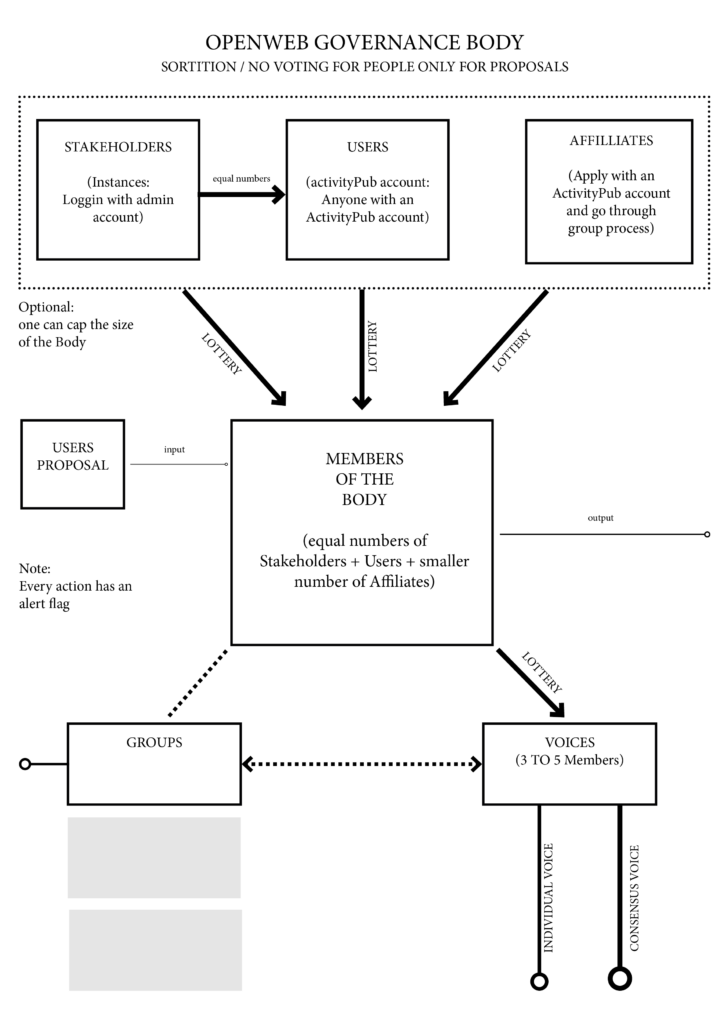
        We need to develop governance as lived practice, not only code, this is what #OMN and #OGB are pointing toward – human networks first, tech as support, not driver, openness as default for shared knowledge, privacy where it actually matters. If we’re serious about a future – it is to stop chasing totalising tech fixes, stop “common sense” financialising community, stop pretending governance can be automated and start growing from the soil up. And most importantly shift from control → collaboration, from abstraction → grounded practice to shift from narrative → lived reality.

        The point is the #encryptionist turn wasn’t (only) evil as it was a reaction to real harm. But it became a dead end when it tried to replace the social with the technical. What we need to lean from this to shift the current mess is if we want a real #openweb we don’t need more “solutions”, we need to get our hands dirty again to compost the mess to make soil to plant something much more real that can grow.

        #openweb #4opens #OGB #OMN #geekproblem #techshit #KISS

        So what path should we be focusing on to balance this current oligarchy mess. The #OMN (Open Media Network) is decentralized, grassroots, focused on an “open process” rather than a fixed, top-down control structure, it’s a governance model:

        • Continuous ecological process, as navigation through lived memory rather than a set of static rules.
        • Decentralized & community-driven, from users, producers/creators, and admins, aiming to balance out central authority.
        • Federated coordination, strong transparency were no one has to agree, but reasoning and actions are publicly visible to produce accountability for public mess making.
        • The #4opens Principles – building on open data, open source, open standards, and open process.
        • Emergent structure, grows organically through “lived collaboration” and social federated tech flows #OGB (Open Governance Body).

        The #OMN is a path to growing an alternative to corporate-controlled platforms (#dotcons), a “public-first” digital commons.

        The Problem Was Never Just the Platforms – It’s What We Build Instead

        For years, the #fashionista #openweb conversation has been stuck in a loop of naming villains: surveillance capitalism, the #dotcons, Zuckerberg, Musk, “the algorithm.” But focusing on enemies only gets you so far. The creative question isn’t what we’re against – it’s what we’re actually building together to replace it.

        That’s where the #OMN takes a useful path. Yes, the big platforms absorb resistance, repackage it, and sell it back to us, that cycle is real. But pointing it out, again and again, doesn’t break it. In fact, it can become part of the same loop – critique as content, outrage as engagement, nothing changing underneath. The issue isn’t just that the #dotcons are powerful. It’s that we keep rebuilding their patterns, even when we think we’re doing something different.

        This is why the #OMN isn’t framed as a protest, a brand, or a “better platform.” It’s a collective path to build alternatives that don’t reproduce the same failures. Not through ideology alone, but through structure. The #4opens – open code, open data, open standards, open process – aren’t slogans here, they’re foundations. They’re how we walk paths that can be shared, checked, and reshaped collectively, rather than captured and enclosed.

        The same goes for governance, the #OGB isn’t about replacing one centre of power with another, it’s about making sure power doesn’t quietly re-centralise through habit, personality, and convenience. If we don’t actively design for that, we drift straight back into the same patterns, and that drift is the problem.

        People don’t arrive in the #openweb as blank slates. We’ve all been shaped by the systems we’re trying to move beyond. The habits of control, gatekeeping, branding, and individual positioning – what we call #stupidindividualism – come with us. If we don’t consciously challenge that, we just recreate the #dotcons in smaller, messier forms.

        So the focus has to shift, from only critique to construction, balancing individuals to collectives and from blinded platforms to open processes. That means starting with the human network – trust, collaboration, shared purpose – and letting the technology grow out of that. Not the other way around.

        It also means accepting that this work isn’t neat or fast. There’s no clean break, no single “killer app,” no moment where the old control simply disappears. What we have instead is a composting process: breaking down what doesn’t work, reusing what does, and slowly growing something more resilient.

        That’s the revolt, not a personal mission, not a branded alternative, but a collective shift in how we build and relate. If we get that right, the #dotcons stop being the centre of the story, not because they were defeated, but because we’ve made them less relevant.

        And that’s something they can’t easily absorb.

        #OMN #4opens #OGB #openweb

        #OMN Grounding (the roots as a story)

        #techchurn is the endless cycle of adopting new platforms, tools, and technologies – not because they solve any real problems, but because novelty is mistaken for progress. It burns community trust, institutional memory, and activist energy, while leaving the underlying #nastyfew power structures untouched.
        https://hamishcampbell.com/?s=techchurn


        The #OMN uses #stupidindividualism to describe the culturally manufactured habit of prioritising personal gain and self-interest over collective well-being – a behaviour normalised by forty years of #neoliberalism, where people work against their own community and ecological survival while believing they are exercising “freedom”.
        https://hamishcampbell.com/?s=stupidindividualism


        In the #OMN hashtag story, #spiky is the confrontational, direct, and uncompromising tendency within radical movements – the willingness to push back against power, name uncomfortable truths, and refuse to sand down political edges for mainstream comfort.
        https://hamishcampbell.com/?s=spiky


        #RSS is the unglamorous but democratic backbone of the #openweb – a simple, open standard that allows content to flow without the gatekeeping, algorithmic manipulation, and the data hoarding of the #dotcons.


        #reboot is the necessary reset of the #openweb – stepping away from the dead ends of #techshit and #dotcons to rebuild human-centred, trust infrastructure using tools like #activitypub and the #fediverse, guided by the #4opens.
        https://hamishcampbell.com/?s=reboot


        #postmodernism is the cultural current that dissolved shared truth into competing narratives, undermines the foundations needed for collective action – leaving people fragmented, cynical, and unable to build solidarity.
        https://hamishcampbell.com/?s=postmodern


        In the #OMN hashtag story, #Oxford is a grounded example of real-world contradiction – where elitist power (#mainstreaming, #NGO, #deathcult) coexists with genuine grassroots community, making it a test bed for grassroots #openweb organising and the #4opens path.
        https://hamishcampbell.com/?s=Oxford


        In the #OMN hashtag story, #PGA (Peoples’ Global Action) represents horizontal, grassroots, anti-capitalist organising – a prefiguration of the #openweb, built on direct action and solidarity rather than #NGO bureaucracy or #mainstreaming compromise.
        https://hamishcampbell.com/?s=PGA


        In the #OMN path, #p2p means people-to-people before peer-to-peer – real human relationships and trust as the foundation that decentralised tech should serve, not replace.
        https://hamishcampbell.com/?s=p2p


        In the #OMN view, #opensource is not just a licence – it’s a political commitment to transparency, shared ownership, and community control over code, data, and process.
        https://hamishcampbell.com/?s=opensource


        The #openweb is internet infrastructure built on open standards, open-source code, and community control – where users share power – as opposed to the #dotcons, with the #closedweb which enclose and monetise the commons.
        https://hamishcampbell.com/?s=openweb


        #openprocess means decisions and governance happen visibly and participatorily – not behind closed doors, so people can see, challenge, and shape outcomes.
        https://hamishcampbell.com/?s=openprocess


        #opendata means data that is freely accessible and shareable – controlled by communities rather than locked inside corporate silos.
        https://hamishcampbell.com/?s=opendata


        In the #OMN path, #open means building on the #4opens – open code, data, standards, and process as a foundation for technology that serves people, not profit.
        https://hamishcampbell.com/?s=open


        #OMN (Open Media Network) is a grassroots project to build human-centred, trust-based digital infrastructure on the #openweb, grounded in the #4opens and focused on community control over technology.
        https://hamishcampbell.com/?s=OMN


        The #OGB (Open Governance Body) is a framework for transparent, inclusive decision-making – replacing hidden power structures with accountable, federated, messy collective governance.
        https://hamishcampbell.com/?s=OGB


        In the #OMN story, #nothingnew reminds us that cycles of co-option and failure have all happened before – and ignoring this history is how we repeat mistakes.
        https://hamishcampbell.com/?s=nothingnew


        In the #OMN story, #NGO refers to professionalised activism that defuses radical politics – replacing grassroots power with managed, funder-friendly “dissent”.
        https://hamishcampbell.com/?s=NGO


        In the #OMN path, #neoliberalism is the dominant ideology of markets over people – normalising greed and eroding solidarity into the logic of the #deathcult.
        https://hamishcampbell.com/?s=neoliberalism


        #makinghistory is the practice of communities reclaiming storytelling – building open, living archives rather than leaving history to those in power.
        https://hamishcampbell.com/?s=makeinghistory


        In #OMN usage, #mainstreaming is how radical ideas get absorbed and neutralised – keeping the language while stripping out real challenge.
        https://hamishcampbell.com/?s=mainstreaming


        In the #OMN path, #KISS (“Keep It Simple, Stupid”) is a political stance against the #geekproblem – rejecting unnecessary complexity as a form of control.
        https://hamishcampbell.com/?s=KISS


        #indymediaback is a call to rebuild grassroots, community-controlled media as an alternative to both #dotcons and hollow #NGO media structures.
        https://hamishcampbell.com/?s=indymediaback


        In the #OMN path, a hashtag is not just a label – it’s a node in a shared political vocabulary, building a map of meaning and direction.
        https://hamishcampbell.com/?s=hashtag


        #grassroots means bottom-up organising rooted in real communities – accountable to collective need, not institutions.
        https://hamishcampbell.com/?s=grassroots


        The #geekproblem is the tendency to replace human trust with technical control – embedding narrow values into systems that shape everyone’s lives.
        https://hamishcampbell.com/?s=geekproblem


        In #OMN, #FOSS is a political commitment to collective ownership of technology – not just a licensing model.
        https://hamishcampbell.com/?s=FOSS


        In #OMN language, #fluffy describes feel-good politics that avoid conflict – prioritising comfort over any real change.
        https://hamishcampbell.com/?s=fluffy


        #feudalism describes the emerging digital structure where platform owners extract value like lords from dependent users.
        https://hamishcampbell.com/?s=feudalism


        #fascism is what happens when the #deathcult drops its mask – authoritarian control to defend failing systems.
        https://hamishcampbell.com/?s=fascism


        On the #OMN path, the #fediverse is practical #openweb infrastructure – decentralised, federated, and not owned by corporations.
        https://hamishcampbell.com/?s=fediverse


        #encryptionist describes the tendency to prioritise technical security over social trust – a core expression of the #geekproblem.
        https://hamishcampbell.com/?s=Encryptionist


        #dotcons are corporate platforms built on data extraction and control, presenting themselves as neutral while enclosing the commons.
        https://hamishcampbell.com/?s=dotcon


        In the #OMN story, #DIY means reclaiming the ability to build and organise outside institutional control – grounding politics in practice.
        https://hamishcampbell.com/?s=DIY


        The #deathcult is the self-destructive logic of #neoliberalism – sacrificing social and ecological survival for short-term fear drivern greed.
        https://hamishcampbell.com/?s=deathcult


        In the #OMN story, #compost means breaking down failure and mess into fuel for new growth.
        https://hamishcampbell.com/?s=compost


        In #OMN, #closedweb is controlled, extractive digital infrastructure where users have no power.
        https://hamishcampbell.com/?s=closed


        #climatechaos describes the accelerating breakdown driven by the #deathcult, beyond manageable “climate change.”
        https://hamishcampbell.com/?s=climate


        #classwar is the ongoing conflict between the #nastyfew and the communities they exploit – often hidden by #mainstreaming narratives.
        https://hamishcampbell.com/?s=classwar


        #capitalism is the dominant system turning everything – relationships, nature, culture – into “profit”.
        https://hamishcampbell.com/?s=capitalism


        In #OMN, #block is the reflex to shut down challenge – preventing the messy work needed for real change.
        https://hamishcampbell.com/?s=block


        #blinded is being unable or unwilling to see beyond #mainstreaming and #dotcons logic.
        https://hamishcampbell.com/?s=blinded


        #fashernista describes performative activism that prioritises appearance over substance.
        https://hamishcampbell.com/?s=fashionistas


        #dotcons are the corporate platforms – Facebook, Twitter/X, Instagram, YouTube and their kin – whose business model is built on harvesting user data, manufacturing engagement, and converting human attention and community into profit, while presenting themselves as neutral public spaces.

        https://hamishcampbell.com/?s=dotcon


        In the #OMN hashtag story, #DIY means reclaiming the practical capacity to build, organise, and maintain tools and communities outside of corporate and state control – not as a lifestyle choice, but as a political act of grounding radical change in real skills, real trust, and real human relationships rather than outsourcing power to institutions that don’t serve you.

        https://hamishcampbell.com/?s=DIY


        The #deathcult is the #OMN metaphor for the self-destructive logic of forty years of #neoliberalism – an ideology so committed to short-term profit, individualism, and economic growth that it knowingly sacrifices the ecological and social foundations that human life depends on.

        https://hamishcampbell.com/?s=deathcult


        In the #OMN hashtag story, #compost means taking the failures, mistakes, and accumulated mess of past movements and tech projects – rather than discarding or ignoring them – and breaking them down into something that can feed new growth, treating dysfunction and #blocking dead ends as raw material for building better rather than as waste to be hidden.

        https://hamishcampbell.com/?s=compost


        In #OMN language, #closedweb refers to the controlled digital infrastructure – platforms like Facebook, Google, and Twitter – built on proprietary code, extractive business models, and centralised power, where people have no meaningful control over their data, their communities, or the rules that govern them.

        https://hamishcampbell.com/?s=closed


        The #deathcult of #neoliberalism has driven us past the point where “climate change” – with its implication of manageable, orderly shifts – remains any honest description of what we face now. What we actually have is #climatechaos: cascading, systemic breakdown of the ecosystems, weather patterns, and social structures that human civilisation depends on, accelerating faster than institutions built on forty years of market logic are capable of, or willing to, address.

        https://hamishcampbell.com/?s=climate


        #classwar is the ongoing and unacknowledged conflict between those who benefit from and actively reproduce the #deathcult of #neoliberalism – the #nastyfew, managing, and credentialed classes – and the communities, workers, and ecosystems they exploit. A conflict that #mainstreaming culture works to render invisible, reframing systemic dispossession as individual failure.

        https://hamishcampbell.com/?s=classwar


        #capitalism is the current common sense – the water we swim in – the economic system that systematically converts collective goods, human relationships, and the natural world into private profit, enforcing this logic through every institution and platform we touch, while presenting itself as the only possible reality.

        https://hamishcampbell.com/?s=capitalism


        In the #OMN hashtag story, #block refers to the reflexive, unconscious tendency of individuals and communities to shut down unfamiliar and challenging ideas, people, and processes – a defensive gesture rooted in #stupidindividualism and #postmodernism that prevents the trust-building and messy collective work needed for real #openweb organising.

        https://hamishcampbell.com/?s=block


        #blinded refers to being so captured by #mainstreaming tech orthodoxy and ideological “common sense” – particularly #neoliberalism and #dotcons culture – that you no longer see, or refuse to see, the harms those systems cause or any alternative paths that exist outside them.

        https://hamishcampbell.com/?s=blinded


        #fashernista describes a person in progressive or radical spaces who prioritises the appearance and aesthetic of activism – the right look, language, and social positioning – over the unglamorous, difficult work of actually building lasting structural change.

        https://hamishcampbell.com/?s=fashionistas


        If you want, the next step is to cluster these into a clean “chapter flow” (roots → mess → behaviours → solutions) so this stops being just a glossary and becomes a narrative tool.

        These are the foundation tags – the ones everything else grows out of – the overall project: grassroots, trust-based, human-centred media infrastructure

        #openweb – the political/technical terrain we’re trying to reclam

        #4opens – the non-negotiable baseline (open code, data, standards, process)\openprocess – visible, participatory decision-making as default

        #grassroots – bottom-up power, not institutional mediation

        This cluster is about legitimacy, if it’s not grounded in these, it drifts into #NGO capture or #dotcons logic quickly. This is the “native soil” everything else either grows from or gets rejected by.

        The Problem Space (what we’re composting), these tags describe the mess we’re in – the stuff we don’t ignore, but break down.

        #deathcult (neoliberalism as destructive common sense)

        #neoliberalism – 40 years of market logic shaping behaviour

        #dotcons – corporate capture of digital space

        #closedweb – controlled, extractive infrastructure

        #mainstreaming – dilution and co-option of radical ideas

        #NGO – managed dissent and professionalised politics

        #classwar – underlying structural conflict

        This is the compost heap, you don’t fix this directly, you don’t “win” against it head-on. You break it down, reuse what’s useful, and grow alternatives around and through it.

        The #geekproblem Layer (tech distortions) is where things go wrong in implementation.

        #geekproblem – replacing social trust with technical control

        #techchurn – endless pointless rebuilding

        #encryptionists – over-prioritising technical purity over social reality

        #KISS – counterbalance: keep things simple and usable.

        This cluster is why good ideas fail, not because the ideas are wrong, but because the tools and culture get shaped by people who don’t understand social process. This is where most #openweb projects die.

        Cultural/Behavioural Patterns (how people act). The human layer – messy, unavoidable, and central.

        #stupidindividualism – learned self-interest over collective good

        #postmodernism – fragmentation of shared meaning

        #fluffy – avoidance of conflict, feel-good paralysis

        #spiky – necessary confrontation and edge

        #block – reflex rejection of challenge

        #blinded – inability to see outside dominant narratives

        #fashernista – prioritising appearance over substance

        This is the real battlefield, not tech, not policy – behaviour. If you don’t mediate this layer, everything collapses back into dysfunction, no matter how good your structure is.

        The Alternative Infrastructure (what we build), are the actual tools and practices that make change possible.

        #fediverse – decentralised network as a base layer

        #activitypub – the protocol glue

        #RSS – simple, open distribution backbone

        #p2p – people-to-people first, tech second

        #FOSS / #opensource – shared ownership of tools

        #opendata – accessible, non-extractive information

        These only work if rooted in the first cluster, otherwise they get captured and turned into another layer of the #closedweb.

        Governance & Process (how we hold it together). Where most projects fail – or succeed.

        #OGB – structured, open governance

        #openprocess – again, because it’s that important

        #DIY – practical ownership and responsibility

        Without this, informal power takes over. You end up with hidden hierarchies, gatekeeping, and eventual burnout. With it, you get messy but functional collective control.

        Practice & Direction (how we move).

        #reboot – reset and rebuild from working patterns

        #indymediaback – learning from past grassroots media

        #makinghistory – documenting and owning our narratives

        #nothingnew – grounding in historical cycles

        This cluster stops you repeating mistakes, without it, every new wave thinks it’s inventing something new and walks straight into the same traps.

        Grounding Example Layer

        #Oxford – real-world test bed of contradictions

        #PGA – historical example of horizontal organising

        Without grounding, this all drifts into theory, these are example tags anchoring it in lived practice, where things break, and where they can actually work.

        The Meta Layer (how to use this)

        #compost – break down failure into growth

        This is the key to the whole thing – Don’t try to “fix” the mess. Don’t try to “win” cleanly, you compost:

        bad behaviour → learning

        failed projects → patterns

        conflict → structure

        Final point (this matters) is the mistake people make is trying to tidy this into a neat theory, reduce it to messaging, turn it into a fixed ideology. That kills it, this clustering is not about control – it’s about navigation.

        The mess stays messy, but now people can walk through it without getting lost.If you don’t cluster this stuff, it turns into a wall of noise. The mess is useful.

        A fresh look at the mess we need to compost

        In every activist space, grassroots project, every loose collective, you get people who bring mess in the wrong way – sniping, backbiting, constant undermining. Call it ego, trauma, status games, burnout… it doesn’t matter. What matters is, this friction is normal, it’s part of the #mess we can’t avoid. The mistake is thinking we can eliminate it. You can’t, but you can design for it. That’s where the #OMN path is useful: don’t try to “fix the people,” build processes that compost the behaviour instead of letting it rot the group.

        In the big picture, what we need to actively compost is that anything that starts as a real idea – community, freedom, or independence – gets picked up, processed, and turned into something hollow. Not just by “the other side,” but by the entire modern media and tech machine. Good ideas go in, slogans come out, you’ve seen it: “freedom” becomes branding, “community” becomes marketing and recently “sovereignty” becomes a funding pitch.

        This is the trap, when ideas get flattened into talking points, they stop doing anything real. They become easy to repeat, to weaponise and impossible to build with. And once that happens, it doesn’t matter who started the idea, it’s no longer useful. So the question isn’t only left vs right. It’s how do you keep ideas grounded so they can’t be hijacked and sold back to us?

        One answer is structure, the #4opens approach is simple, a way to stop things being quietly twisted behind closed doors. If you can see how something works, it’s harder to fake, if you can take part, it’s harder to capture. The other answer is mess (the good kind), the #OMN hashtag approach doesn’t try to clean everything up into a single strait message. It keeps things local, contextual, rough around the edges. That “mess” is protection, because systems that are too neat, too polished, too uniform… are exactly the ones that get captured, repackaged, and pushed back at you.

        In plain terms if an idea can be turned into a neat slogan, it can be taken over. If it stays tied to real people, real places, and real processes, it’s much harder to fake. This is the difference between something you can live with and something that gets sold to you. Call it compost if you like – You break things down, keep what’s real, and grow from that.

        As this essay is about the internet, lets look at some of the players, an example – Tactical Tech is a Berlin-based nonprofit that’s been around since the early 2000s, working on tech, activism, media, and education. Their core thing is:

        • building digital literacy + critical thinking tools
        • producing toolkits, exhibitions, and guides (like The Glass Room, Data Detox Kit)
        • working with civil society orgs, journalists, activists, educators
        • focusing on how tech shapes power, politics, and society

        They’re not grassroots infrastructure builders, they’re capacity builders and narrative shapers, working through partnership networks, funding, and “field building” – the classic #NGO patterns.

        In #OMN view they sit squarely in what we call the #NGO / #mainstreaming layer of the #openweb story. In that they don’t live in the soil (infrastructure, protocols, messy grassroots tools). They build the interpretation layer (how people think about tech). They push this into narratives + toolkits that travel across institutions. That’s why they’ve lasted 20+ years – they’re adaptable mediators, not rooted projects.

        So why dose it feels like “they create mess”? The friction comes from this pattern the balance of abstraction over grounding in that they translate messy realities into frameworks, exhibitions and “kits”. This flatten lived complexity into safer portable concepts – in to language production. They are part of the ecosystem that generates terms like digital literacy, resilience and sovereignty (adjacent space). These become floating signifies – useful for funding and policy, messy in practice.

        They collaborate with foundations, governments and large NGOs. So their outputs are shaped to be fundable, presentable and non-threatening enough to circulate. That’s where the “compost” instinct kicks in – because this layer detaches language from practice.

        But it’s not just negative, if were honest (and it’s worth being), groups like this do some real things. They’ve help millions engage “critically” with tech issues to make complex problems accessible (privacy, AI, influence systems). They might create bridges between activists, educators, and institutions. So they’re not empty, they’re just not where the roots are.

        The real tension, the problem isn’t that they exist, it’s where they sit in the ecology. They are compost producers, but they mistake themselves for gardeners. Or more sharply

        • They circulate meaning rather than anchor it
        • They mediate change rather than enact it
        • They stabilize narratives that should sometimes stay unstable

        So yes – they create “mess” …but it’s a different kind of mess than grassroots paths. Grassroots mess = fertile, emergent – #NGO mess = abstracted, packaged, drifting.

        Projects like Tactical Tech can be a part of the same ecosystem we need – but they sit one layer up from where change actually happens. Their outputs duse need composting because they generalize lived practice into frameworks, turn struggle into language and then feed that language back into systems which tends to blunt its edges.

        The task isn’t only to reject them, it’s to ground what they produce back into lived, messy, trust-based practice – the bit they can’t really do. Once you see this pattern, a lot of the confusion in the #openweb space makes sense.

        • Soil layer → messy, native, trust-based (#indymediaback, grassroots, actual users)
        • Infrastructure layer → protocols, servers, code (#ActivityPub, Fediverse devs)
        • Mediation layer → governance, coordination (#OGB-type thinking)
        • Narrative/NGO layer → language, framing, funding-facing outputs
        • Power layer → states, corporations, capital (#dotcons)

        Most confusion comes from people mixing these layers up, Here are more examples of this thinking and working:

        Tactical Tech – Layer: Narrative / NGO
        Role: Translator of tech → society
        What they do (in practice)
        • Turn complex tech issues into stories, exhibitions, toolkits
        • Shape how civil society talks about tech
        • Build “awareness” rather than infrastructure

        In #OMN terms they produce processable compost input, but often pre-packaged into neat bags. This problem pattern flattens messy reality into clean narratives to encourages passive understanding over active building. So what is there value? Good at onboarding people, opens doors into the conversation. But risk is people stop at understanding instead of doing.

        Mozilla Foundation – Layer: Narrative + Funding + Soft Infrastructure
        Role: Bridge between grassroots + institutions
        What they do is fund projects to run advocacy campaigns (AI, privacy, etc.) that maintains a symbolic connection to the #openweb. In #OMN terms they gate keep legitimacy to define what is “acceptable open”. This is a problem pattern because of NGO gravity → safe, fundable ideas win, radical edges softened into “trustworthy AI” and “ethical tech”. So what is the value? Real money → keeps projects alive and visibility → amplifies issues. The risk is common sense #mainstreaming capture that shapes agenda toward what institutions tolerate. Makeing only more mess to compost.

        Open Society Foundation – Layer: Power / Funding
        Role: Macro-level agenda shaping
        What they do is fund civil society globally to influence policy, rights frameworks, governance. In #OMN terms its a part of the liberal wing of the #deathcult. Problem being funding creates dependency, agenda alignment when movements adapt to grant logic. Value is it enables work that wouldn’t exist otherwise to support rights-based infrastructure. The risk is it turns movements into professionalised NGOs and risk-averse actors.

        Sovereign Tech Agency – Layer: State / Infrastructure funding
        Role: Stabiliser of critical open tech
        What they do is fund maintenance of open-source infrastructure with a focus on “digital sovereignty” In #OMN terms they are trying to support the infrastructure layer by using state-language framing. Its a problem pattern as language like “sovereignty” pulls toward state/control logic and away from commons/trust logic. What is the value? It pays for the essential work to keeps #FOSS tools alive. But it risks reframes the #openweb as national infrastructure instead of shared commons.

        NLnet Foundation – Layer: Infrastructure funding (closer to soil)
        Role: Rare “good compost feeder”
        What they do is fund small, weird, early-stage open projects with minimal interference. In #OMN terms one of the few funding bodies that, could in theory not over-shape outputs to respect messy innovation. But the are problem pattern of limited scaling and still within funding constraints, Value is they enables actual building and possibly supports non-mainstream ideas. The risk is the normal that they still are pulled into NGO gravity over time.

        Electronic Frontier Foundation – Layer: Advocacy / Legal
        Role: Defensive shield
        What they do – Legal battles, policy advocacy and civil liberties protection. In #OMN terms they protects space for the #openweb to exist. But the are problem patterns, the focus on defence, not creation that only works inside existing legal frameworks. Value they are absolutely necessary to stops things getting worse. The risk is they doesn’t build alternatives = slowing decline, not transformation.


        The pattern, is all these orgs sit above the soil. They translate, fund, shape, defend. But they rarely grow rooted communities of sustaining messy trust networks or live with the consequences. So why dose this create “mess”? it is because language drifts away from practice, Ideas come and go: “digital sovereignty”, “trustworthy AI” or “resilience”. These sound solid, but float free of lived reality, then incentives bend behaviour. Funding → reporting → metrics → simplification is when mess gets cleaned up too early or packaged instead of composted

        Here the #geekproblem and #NGO problem merge, you get geeks wanting to tidy systems and #NGOs wanting to tidy narratives. The result is generally bad, over-simplified systems + over-simplified stories. The #OMN position is clear and grounded, we don’t reject these orgs, we place them correctly: Useful → yes, Central → no and ground truth → never.

        The simple way to say this (#KISS) These organizations sometimes help explain, fund, and defend the world, but they do not remake it. If we mistake them for the source of change, we end up with only better words and worse reality. They have no real role in the next stage, a practical progression from “mapping the mess” → “building something that can survive it”.

        To make anything work we need to stop confusing layers (cognitive clarity) – Before anything technical, the path we walk needs to never treat NGO / funding / advocacy layer as if it is THE system. This is the correction we need, in #OMN terms:

        • NGOs ≠ infrastructure
        • funding ≠ governance
        • narratives ≠ reality
        • protocols ≠ politics

        If we can balance this, the outcome the people trying to “fix the web” by only better policy decks, better ethical frameworks, better terminology (like “digital sovereignty”) to start asking “What is actually being built, and by whom?”

        How to do this? we need to build the soil layer first (not apps, not orgs) as this is where most projects fail. The soil layer is trust groups, working collectives, repeated interaction spaces and small-scale publishing + coordination. In #OMN framing #indymediaback style groups, #OGB governance spaces and local + affinity networks. If it doesn’t survive social breakdown, it isn’t infrastructure.

        Define “failure as feature” systems, is one of the strongest #OMN ideas. Instead of perfect systems that must not break – We grow systems that fail into human repair. What that means in practice is moderation doesn’t escalate → it returns to people, governance doesn’t lock → it re-opens, conflicts don’t freeze → they surface into trust spaces. The path is breakage need to increase human contact, not reduce it, but this directly counters the platform logic (#dotcons), #NGO sanitisation logic and geek “perfect system” logic.

        On this path we need to build mediation layers (not control layers). This is where #OGB thinking fits. Mediation layer ≠ governance authority, is translation between groups, conflict visibility, trust routing and decision recording (not decision ownership). We don’t centralise power – we route attention. This is the difference between bureaucracy (control) and federation (flow).

        Define “trust as infrastructure” this is the “missing” technical core. Most systems assume identity, verification and thus control. #OMN flips this to assume partial trust, local trust, evolving trust and broken trust. So native systems must record trust signals (lightweight) to allow contradiction, allow decay and allow repair. Trust is not a certificate, it is a living social flow.

        Explicitly resist “narrative capture”. This is where problem orgs like Tactical Tech / Mozilla / OSF become relevant. The patterns to avoid – messy reality emerges, #NGO translates it, funding aligns around translation and original practice disappears. #OMN counter-path is if it can be fully explained in a funding report, it is likely already dying. So we maintain ambiguity, partial documentation and lived process > polished narrative.

        Build dual-stack reality (critical stage). This is essential, you always run:

        Native stack (real community power)

        • trust networks
        • local groups
        • Fediverse-native tooling
        • #4opens processes

        Interface stack ( individual survival layer)

        • NGO language when needed
        • funding language when needed
        • policy translation when needed

        The path is never confuse the interface with the infrastructure. So what are composting failures about? Instead of discarding failed projects, rewriting history and blaming actors, we need to explicitly turn failure into reusable material, compost includes:

        • broken governance attempts
        • failed funding models
        • collapsed communities
        • conflict histories

        Output:

        • patterns
        • lessons
        • reused structures
        • new trust layers

        This is where the “mess is valuable” idea becomes operational.

        Anti-capture safeguards – Every healthy #OMN system needs resistance to #NGO capture, funding capture, geek capture and ideological capture. Mechanisms:

        • lose roles
        • refuse most permanent authority
        • keep systems reversible
        • enforce transparency (#4opens)
        • limit scale before complexity dominates

        The long game is federated commons, at scale, the goal is not a platforms, it is many overlapping, messy, partially connected commons. Not one #Fediverse or one governance model, not one truth layer. But overlapping trust regions, with shared protocols and local autonomy to weak global coupling.

        The summary (#KISS version). If you compress all of this:

        1. Stop confusing explanation with infrastructure
        2. Build trust-first “soil systems”
        3. Design failure that returns to people
        4. Keep governance as mediation, not control
        5. Treat trust as a living system
        6. Resist narrative capture
        7. Run dual-stack (native + interface)
        8. Compost failure, don’t hide it
        9. Prevent capture structurally, not morally
        10. Scale as messy federated commons, not platforms

        The shift is from “understanding the system” → to “acting in a small part of it without being captured” This means choosing a river, a locality, a topic, or a community and committing to working inside its mess without trying to abstract it into a universal model too early. #OMN path is if it doesn’t exist in a place, it doesn’t exist at all. This is where a lot of NGO / narrative layer work fails – it stays placeless.

        Build “thin infrastructure”, the #OMN correction to both NGO thinking and geek thinking is that wrong instinct is to build full systems, design complete governance models, define everything upfront. #OMN instinct is to build the minimum structure that lets humans keep adjusting it together. Thin infrastructure = simple publishing tools, basic coordination spaces, visible decision trails and lightweight identity/trust signals. Nothing heavy, nothing “final”, because heavy systems attract control, thin systems attract use.

        Make conflict visible, not resolved. This is where #NGO culture diverges hardest from native systems. NGO pattern is resolveing conflict, smooth disagreement and force consensus narrative. #OMN pattern is surface conflict so it can be worked with socially, why, because in real networks conflict is information, disagreement is structure and tension is direction. The compost is the rot in conflict, buried conflict always returns, festers, later as system failure.

        Build “trust scaffolding”, not trust systems. This is subtle but crucial, you cannot design trust, you can only create conditions where trust can form and where it can fail safely. Trust scaffolding includes repeated interaction spaces, low-stakes collaboration, visible contribution histories and reversible decisions with clear exit paths. The path to trust is an emergent behaviour of stable mess, not a product of design. This directly opposes #mainstreaming ideas of identity systems, certification systems and #techbro reputation scoring systems.

        We need to explicitly reject “clean governance” as this is where most of well-meaning systems collapse. The trap is people try to build clean voting systems, formal representation and universal rule sets. But in messy reality governance is not clean – it is negotiated, situated, and constantly patched. #OMN path, instead of clean governance, we grow layered responsibility, overlapping legitimacy with temporary authority and visible disagreement. Think of governance as weather, not architecture.

        Anti-scale principles is very important as most systems fail because they assume more scale = more success The #OMN flips this with a path of scale should be resisted until coordination proves it is needed. Because scale introduces abstraction, funding dependency, narrative capture, bureaucratic drift. So instead we grow horizontally first, federate slowly and allow divergence to tolerate inconsistency.

        Build “failure memory” as infrastructure, its one of the most underused ideas in this whole space. Most ecosystems forget failures, hide conflict history and rewrite past attempts. #OMN path is that failure is the most valuable dataset. So you build public failure logs, conflict histories and abandoned project archives with “why this didn’t work” notes. Not as shame, but as compost, because systems that cannot remember failure are forced to repeat it.

        Soil layer (real life)

        trust groups
        lived coordination
        actual practice

        Infrastructure layer

        tools
        protocols
        servers

        Mediation layer

        conflict handling
        coordination
        routing

        Narrative layer

        NGOs
        funding language
        public explanation

        Power layer

        states
        capital
        platforms

        On this working group path no layer is allowed to pretend it is another layer, a core anti-confusion mechanism.

        So what is the actual #OMN outcomes, when this all works, you don’t get a platform, a movement or a unified system. You get a living field of partially connected commons that can adapt without central control, yes it looks messy from outside – and that’s correct. Because coherence is not the goal, survivability and humain flourishing is. lets reduce the whole thing to operational clarity – Build small, stay local. Keep systems thin, let conflict stay visible, treat trust as emergent. Avoid clean narratives, resist scale, remember failure. Separate layers to never centralise experimentation into control.

        That’s where theory finally has to become dirt-under-the-fingernails practice, where the abstraction has to survive contact with reality. Lets look at some example work flows, different angles of the same living loop.

        What a real example #OMN #oxfordboaters river project looks like day-to-day. The river “communerty” is not in anyway an organisation. It’s a persistent coordination low affinity around a real place/problem/ecology (a river in this case). if we had a seed of the tech we need working, daily reality looks like this: Morning layer (signal gathering) when people notice things:

        • water quality change
        • planning notices
        • blocked access points
        • local council updates
        • photos from walks
        • stories from anglers / walkers / residents

        This is not formal reporting, It’s messy input that lands in:

        • Fediverse posts
        • local group chats
        • simple shared logs

        Mid layer (sensemaking) is when a few people (DIY, not fixed) do:

        • cluster reports (“this looks like sewage spike again”)
        • link patterns (“this happened upstream last month”)
        • tag relevance (#pollution #access #planning)

        No authority – just attention shaping (or focalising).

        Action layer (light coordination) is made up of small, reversible actions:

        • someone emails council
        • someone visits site
        • someone talks to landowner
        • someone checks data source
        • someone posts explainer thread

        Crucially no one needs permission to act, only visibility into what others are doing

        Weekly rhythm (social compression) is a loose gathering (online or physical):

        • “what changed?”
        • “what patterns are forming?”
        • “what are we missing?”
        • “what broke this week?”

        Light authority, rather focused on shared memory and process. The river project is not a formal group. It is a shared affinity flow. That’s why it works (when it works) – it stays situated, porous, and continuously re-formed.

        Lets look at a second example, how #OGB decision flows actually operate, it is not voting or governance in the institutional sense. It is a routing system for trust, conflict, and attention.

        Step 1 – Issue appears, something surfaces

        • conflict
        • proposal
        • blockage
        • uncertainty

        It is posted publicly (default open).

        Step 2 – Context attaches, people attach:

        • experience (“this happened before”)
        • local knowledge
        • technical input
        • historical memory
        • disagreement

        Important – contradiction is allowed and expected

        Step 3 – Clustering happens (not authority). Instead of leaders deciding clusters of alignment form naturally, disagreement clusters remain visible and minority views persist. Think weather systems, not committees

        Step 4 – Decision emerges as a path, not a vote – a “decision” is a visible “common” path of action with acknowledged alternatives still open. So nothing is deleted, nothing is finalised, nothing is owned

        Step 5 – Follow-through is voluntary, but visible. People act based on trust in community, reasoning based on proximity and capacity. And they report back into the same system. The native path is the #OGB doesn’t only decide things – it makes decision pressure visible.

        What a Fediverse-native governance loop feels like is where it becomes felt reality rather than structure. It feels like slow public thinking, less meetings, less agendas. More like threads that evolve over days, posts that accumulate context and replies that become infrastructure

        Persistent memory in the stream, nothing disappears old decisions are still linkable, conflict history is visible and prior attempts remain accessible. So governance is navigation through lived memory. Weak coordination, strong transparency as no one is forced to agree. But disagreement is visible, reasoning is public and action is observable. This produces accountability without authority to grow temporary gravity centres.

        Certain threads or instances become coordination hubs, discussion anchors and action nodes. But they fade naturally – nothing, but memmery is permanent. It feels like thinking in public with other people who sometimes act on what emerges. Not bureaucracy, not formal consensus culture. More like shared situational awareness that occasionally crystallises into action.

        OMN / #OGB model is: surface → act → observe → remember → re-surface, it is governance more as continuous ecological process, less a fixed control structure.

        Think that is anufe for today, please ask in comments to help finish this.

        The #dotcons, #mainstreaming, and Build to Walk Away

        Three years ago I was trying to explain something simple in language liberals might actually hear. They talk about “platform capitalism.” Fine. But I’ve been calling it the #dotcons for 20 years – because that’s what it is – a con.

        The last 30 years of tech hasn’t just drifted into this mess. It’s been shaped, step by step, enclosure by enclosure, into systems designed to extract value from us. What we now call the internet is, in large part, a machine built to manipulate, capture, and profit.

        The old #openweb got fenced in, and most people, especially polite liberal society, went along with it. So we need to talk about the return and the problem. Now we have a shift of the #mainstreaming is flowing back toward the #openweb, that should be a good thing. But there is a problem: people don’t leave the #dotcons behind when they move, they bring the culture with them.

        What we’re seeing is a flood of the same patterns – extractive behaviour, ego performance, status games. Not from one “side,” but from everywhere. The habits built inside the #dotcons don’t magically disappear just because the platform changes.

        So the real issue isn’t technical, it’s cultural. If we don’t actively mediate this influx, we won’t rebuild the #openweb – we’ll just recreate the same broken systems in slightly different code.

        So why do I talk so much about compost, and mess not being the problem. Mess is necessary, but only if it composts – if it breaks down into something fertile. Right now, we’re mostly just piling it higher.

        This is where projects like #indymediaback and #OGB matter. They’re not perfect, but they are native to the #openweb path: grounded in trust, process, and the #4opens rather than control, branding, and capture.

        The question isn’t whether #mainstreaming is good or bad. The question is: how do we hold the cultural line so that what grows is something genuinely different? Because if we don’t, the #dotcons don’t need to defeat us. We’ll blindly rebuild them ourselves.

        So why do I argue we can’t just leave the #dotcons? This is where people get it wrong, every time the #dotcons tighten control – censoring, tweaking algorithms, shifting rules – the reaction is the same: leave, build the #openweb.

        Yes, build the #openweb, but the idea that we should stop organizing inside the #dotcons right now? That’s a trap, because billions of people are still there. The conversations, the communities, the movements, they haven’t magically migrated. Walking away doesn’t free those people, it abandons them, leaving the space to be shaped entirely by the #deathcult and the forces already in control.

        This is #nothingnew. The #dotcons are #closedweb infrastructure. They serve power because they were built to serve power. Expecting anything else is misunderstanding the system. The real question has never been: are these platforms good? It’s: what do we do, given that this is where people are?

        The #geekproblem and the exodus fantasy, is a persistent fantasy – a classic #geekproblem – that if we just build better tools, people will come. They won’t, not on their own. A clean exodus to the #fediverse or any #openweb space doesn’t happen because we post about it. Movement-building has never worked like that, people move through relationships, trust, and shared struggle – not technical superiority.

        So if you abandon the spaces where people already are, you cut those pathways. The #OMN approach has always been simple to use the #dotcons as a bridge, not a home, seed organizing where people already are while focusing energy on building the #openweb in parallel to clearly keep your foundations in the #4opens.

        This isn’t about purity, it’s about effectiveness, don’t fall into #stupidindividualism, the idea that personal withdrawal is more important than collective reach. This is about infrastructure and grounding, if the #dotcons can switch you off at any moment, they cannot be your foundation.

        That’s why we need:

        • indymediaback as publishing roots
        • activitypub and the #fediverse as distributed infrastructure
        • OMN as a bridge between cultures and spaces

        This is the practical expression of the #4opens: not just open code, but open process and open trust. Don’t build your house on someone else’s land, but don’t stop talking to the people still living there either. Stay in the fight, when the #dotcons clamp down, it’s not a surprise, it’s a signal of what they are, and what they’ve always been.

        The answer isn’t to run away, it’s to root ourselves somewhere that can’t be shut down, while continuing to show up where the people are.

        Build the #openweb, stay in the fight, keep it simple #KISS

        Let’s try and simplify the #OMN

        The #OMN Framework: The Five Functions (#5F)

        The #OMN is simple flows, not platforms, it’s a way of thinking about media as flows of objects moving through a network. People shape the flow, you can find a more technical view to read after here. A human-scale, federated media infrastructure built on #FOSS practices and the #4opens:

        • open data
        • open source
        • open process
        • open standards

        It doesn’t start with features, apps, or ideology, it starts with flows. Imagine the network as:

        pipes and holding tanks

        Content (objects) flows through them, communities decide how that flow is shaped. Nothing magical, nothing hidden. This matters because:

        If people can’t picture how a system works, they can’t govern it.
        And when systems become opaque, power centralises.

        So #OMN reduces everything to five simple functions:

        1. Publish

        (Add a drop to the flow)

        Publishing is simply adding an object:

        • a story
        • a post
        • media
        • data

        to a stream.

        • No automatic amplification
        • No built-in authority
        • No algorithmic boost

        Publication is contribution, not domination.

        2. Subscribe

        (Connect the pipes)

        Subscription is how flows connect:

        • people
        • groups
        • topics
        • instances

        This replaces:

        • platform logic → “you are inside us”
          with
        • network logic → “this connects to that”

        No opaque ranking, you decide which pipes you connect.

        3. Moderate

        (Filter and route the flow)

        Moderation is not censorship. It’s sieving.

        Flows can:

        • pass through
        • be filtered
        • be slowed or prioritised
        • be contextualised

        Trust is:

        • local
        • visible
        • reversible

        Different communities can apply different filters to the same flow.

        This is a feature, not a bug.

        4. Rollback

        (Drain and reset the flow)

        Rollback is how systems recover:

        • remove past content from your stream
        • undo aggregation decisions
        • correct mistakes
        • respond to abuse

        Without rollback:

        • errors become power struggles

        With rollback:

        Accountability becomes procedural, not punitive.

        5. Edit Metadata

        (Shape meaning downstream)

        Content is not rewritten – it is contextualised.

        Metadata can include:

        • tags
        • summaries
        • trust signals
        • warnings
        • translations
        • relationships

        This is where meaning is created.

        Not by algorithms, but by people.


        The Holding Tank

        Underneath it all is:

        a simple storage layer

        • a database
        • stored objects
        • moving through flows

        No “AI brain” or hidden feed logic, just data shaped by social processes.

        Why This Matters

        Most current systems bundle everything together:

        • identity
        • publishing
        • distribution
        • moderation
        • monetisation

        This creates centralised control, even when systems claim to be “open”.

        OMN does the opposite:

        It separates the core functions.

        This makes the system:

        • understandable
        • auditable
        • forkable
        • governable

        #NothingNew by Design

        This model isn’t new, it mirrors systems we already understand:

        • plumbing
        • electrical grids
        • packet-switched networks
        • version control

        That’s intentional.

        Systems people understand are systems people can govern.

        From Platforms to Commons

        The #5F is the smallest possible set of actions needed to run a media network:

        • Publish
        • Subscribe
        • Moderate
        • Rollback
        • Edit

        Everything else:

        • feeds
        • timelines
        • notifications
        • UI/UX

        …is just interface, nice to have but not essential.

        The Point Is – The OMN is not about building a better platform.

        It’s about building:

        infrastructure for a democratic digital commons

        Simple flows.
        Social mediation.
        Human control.

        Not control systems, but trust systems.

        In One Line

        #OMN is plumbing for the #openweb. #KISS


        To simplify the Open Media Network (#OMN), we focus on its core goal: creating a human-scale, community-governed media infrastructure that isn’t controlled by big corporate platforms. As we outline to understand and “simplify” the #OMN is a simple workflow:

        • Write: Creating the content.
        • Tag: Categorizing it, so others can find it.
        • Publish: Making it available on the web.
        • Federate: Sharing it across different trusted networks.
        • Archive: Ensuring it remains accessible over time.

        The “#4opens” Framework is built on four principles designed to keep power in the hands of communities and users rather than central authorities:

        • Open Data: Information belongs to the community.
        • Open Source: The code is free to see and change.
        • Open Process: Decisions are made transparently.
        • Open Standards: Systems can “talk” to each other without gatekeepers.

        Key Concepts for Simplification

        • Keep It Simple (KISS): The system should be so simple that anyone can mentally model how it works. If it’s too complex to understand, it’s too complex to govern.
        • Social over Technical: Prioritise how people use the tools over how “elegant” the code is, to mediate the #geekproblem (tech that’s too hard for normal people to use).
        • Composting the Past: Instead of starting from scratch or repeating old mistakes, the #OMN is about taking the “wreckage” of previous projects and turning them into “fertile soil” for new, federated networks.
        • Trust-Based Networking: It moves away from global algorithms and toward small, connected “nodes” of people who trust each other (or not).

        You can build any application from this foundation – that’s the point of keeping the core this simple. On top of the basic #OMN #5F, we’re developing a set of seed projects:

        • #makinghistory – tools to keep grassroots and mainstream history alive, linked, and evolving across the #openweb
        • #indymediaback – a reboot of grassroots news, open publishing with modern federated infrastructure
        • #OGB (Open Governance Body) – lightweight, federated governance for coordinating people, decisions, and trust
        • #digitaldetox – a horizontal tool to step away from addictive, manipulative platform dynamics

        Interoperability is default, not an afterthought, nothing is locked in, instead of building another isolated platform, we plug into the existing ecosystem, extend it to compost what doesn’t work. This is how we grow the #openweb by building better flows inside what already exists, not by replacing everything.

        These aren’t separate silos, they’re expressions of the same underlying flows. The system is native to the Fediverse, built on ActivityPub. That means content flows in from existing platforms and codebases and flows out to existing networks and apps.

        Compost metaphor – is memorable, not just technical. The focus on process over platform is clear and important. The move to simple steps works as onboarding and the insistence on #KISS + #nothingnew is the right first step.

        #OMN is not an app, it’s a process + tools to move from isolation to commons.

        What We Can Learn from Jeremy Corbyn and Bernie Sanders

        In #mainstreaming and alt political cultures there’s a constant call in messy times for “strong leaders” to cut through the chaos, but this is the wrong path. What Jeremy Corbyn and Bernie Sanders actually show is something more uncomfortable and more useful that real change doesn’t come from strong individuals – it comes from movements we don’t fully control. They were signals, not saviours.

        Both figures emerged on the left because something deeper was already shifting with widespread discontent, a break from #mainstreaming politics and a hunger for alternatives to 40 years of #deathcult worshipping. They didn’t create these conditions – they channelled them. “Weakness” is often misnamed, Corbyn in particular was constantly framed as weak, but what was actually happening? When people treat them as failed “leaders,” they miss the point, at best they were interfaces to movements, rather than top-down commanders. They:

        • Hold together fragile, diverse coalition
        • Refusal to impose top-down control
        • Emphasis on process, participation, and consensus

        In a stable system, this might look slow, in a fragile system, it’s often the only thing preventing collapse. In the open vs closed battle, it’s not as simple as it looks – especially in the mess we’re in.

        CLOSED → conservative / fear / control
        OPEN → progressive / hope / trust

        We need to keep looking at the underlying path when deciding which way to push the balance.

        Where the demand for “strength” usually means more control, less democracy. That path tends to deepen the mess, not fix it, as personality politics is a dead end. When media and institutions focus on personalities where movements are about issues and structures. This mismatch is fatal if your politics depends on a person you are attacked through that person – we all collapse when they falter. You never build lasting power, it is the trap both campaigns fell into, despite trying to avoid it.

        Movements without structure (hard or soft) stall, is the harder truth – Horizontal energy alone isn’t enough – Electoral politics alone isn’t enough. Both Corbyn and Sanders mobilised huge grassroots energy, but institutions resisted, internal fragmentation grew – the energy wasn’t fully translated into durable paths, and they fell through the gap.

        From a #OMN perspective, the takeaway is clear – Don’t look for better leaders – Don’t rely on existing institutions – Build commons-based infrastructure that movements can stand on. This means: Media we control (#indymedia paths), Governance we participate in (#OGB) and tech that reflects trust, not control (#openweb, #Fediverse)

        So in messy times, don’t reach for “Strong Leaders” as this comes from fear, frustration and the desire for simple solutions, history – from left and right – shows where that road leads. In poisoned times, the work is slower, to build trust, to stay grounded in shared issues.

        Corbyn and Sanders didn’t fail because they were too weak, they struggled because we don’t yet have the social, technical, and institutional commons needed to carry the kind of change they pointed toward. That’s the work, and it’s not about finding the right leader –
        it’s about becoming the movement that doesn’t need one.

        #OMN

        A bit of #OMN history and where the current paths come from

        For a long time the focus has been on solving two linked problems – both of which are actually #nothingnew. The first is grassroots publishing and organising. The second is network coordination between communities. Neither of these problems started with the internet, and they certainly didn’t start with Silicon Valley.

        Projects like #Indymedia and community organising networks solved these problems culturally long before modern platforms existed. They worked through shared practice, trust networks, affinity groups, and rough consensus. Importantly, they worked in non-federated ways – loose collaboration across independent nodes. This model likely stretches back a century or more in activist and cooperative cultures.

        What the last five years of #ActivityPub rollout has given us is something new to add to that history: technical federation. So we now have two complementary paths that both grow naturally from the #openweb:

        • Grassroots #DIY culture – social federation built on trust, practice and community.
        • Technical federation – protocols like ActivityPub enabling networks of independent servers to interoperate.

        Both are native to the open web. From the #OMN perspective this leads to practical projects:

        #indymediaback – rebuilding grassroots publishing and organising infrastructure based on the lessons of the original Indymedia movement, but updated with openweb tools.

        #OGB – a parallel path emerging through EU outreach and institutional engagement.

        The key point is that these paths do not depend on the dominant platform ecosystem, the #dotcons. In fact, if we step back historically, we can see a fork in the road that happened twenty years ago. Instead of building open infrastructure, most movements ended up relying on corporate platforms. It was easier, faster, and seemed practical at the time. But that path turned out to be a trap.

        The current tech landscape – platforms, algorithms, venture capital ecosystems, and the ideology surrounding them – is largely #techshit. Not because technology itself is bad, but because the dominant model is built to extract value and control attention rather than support communities. The solution isn’t simply to reject technology, it’s to compost it. Take what works, discard what doesn’t, and grow something healthier from the remains. That’s the thinking behind #OMN projects.

        The projects start from a social understanding: technology alone doesn’t create networks. Culture, trust, and shared practice do. The tools should support those relationships, not capture or replace them. So the historical loop closes. Grassroots culture + open protocols – #DIY practice + federation. If we had taken that path twenty years ago, the web might look very different today.

        The task now is simple, go back to that fork and take the other path.

        #OMN #OpenWeb #ActivityPub #DIY #Fediverse #Indymedia

        We can use a lot of the mess of the last 20 years to learn from, the composting metaphor.

        EU tech strategy, composting the mess

        As #climatechaos accelerates, European politics will not stay where it is now. History suggests that periods of instability push politics to the right, because right-wing politics tends to be driven by fear and control. If that trajectory holds, then the digital infrastructure we build today needs to be resilient in a more hostile political environment tomorrow. This matters for the EU’s current technology strategy.

        Most policy thinking still focuses on industrial competitiveness – AI funding, semiconductor independence, cloud sovereignty, cybersecurity frameworks. These are important, but they mostly reinforce state and corporate power structures. What is missing is investment in grassroots civic infrastructure.

        If democratic societies are going to survive the pressures of climate disruption, economic instability, and political polarisation, they will need independent communication systems that communities themselves can run and trust. This is where projects like #OMN, #OGB, #indymediaback, and #makeinghistory fit.

        The starting point: is yes, we are all inside #neoliberal systems. For forty years Europe has been shaped by neoliberal infrastructure – platforms, markets, and institutions designed around extraction and competition. In the hashtag story language this is the #deathcult we have worshipped. None of us are outside this mess, the realistic mission is not purity but gradual exit.

        That means: building small affinity groups, creating tools that allow communities to organise themselves to develop infrastructure that scales socially, not just technically. The #openweb is a core path for this. The #4opens – open data, open source, open process, open standards – provide a practical way to judge whether infrastructure actually supports commons-based development we need.

        Why this matters politically? The dominant platforms – the #dotcons – centralised the web’s communication power. Grassroots movements traded their own infrastructure for convenience. In doing so, they gave away their media power. The problem we need to balance is if you have no power, talking directly to power is usually pointless. Grassroots power grows from the soil, from collective organisation.

        What we need are projects like the #OMN which are not more platforms, rather it is an attempt to build simple trust-based media infrastructure, the design principle is #KISS – Keep It Simple. At its core, building and boot-up media nodes run by communities, systems for publishing and sourcing content with flows of rich metadata linking media together. Technically this becomes a very simple semantic layer: media objects linked through open metadata streams.

        Think of it as a network of media “cauldrons” and flows, growing from local publishing outward. The important point is that the infrastructure is open and decentralised. Communities decide how to use it. Initial examples include: #makeinghistory and #indymediaback, the architecture is intentionally general. Once you have open pipes and flows, many other uses become possible. Protocols like #RSS and #ActivityPub are starting points for this type of infrastructure.

        The path looks like this: Create a focus (hashtags, projects, shared language). Grow community networks around that focus. Use those networks to regain collective power. Then speak to power with power, this matters as we have mess to compost.

        The control myth in tech policy? A lot of current EU tech thinking is built around control frameworks: cybersecurity regimes, digital identity systems, privacy enforcement and regulatory compliance layers. These are needed protections, but they also reflect a deeper ideological assumption: that the internet must be controlled to be safe. In practice, many of these approaches close possibilities for social paths we need.

        Two concepts in particular have been used in ways that reinforce centralisation: security and privacy. Both are important. But when implemented through centralised systems, they become tools that close infrastructure rather than open it. Security without social trust becomes just another form of control.

        So trust versus control. One of the biggest ideological shifts needed in tech infrastructure is moving from control-based systems to trust-based systems. In tech culture we to often fetishise control: permissions, identity verification, cryptographic enforcement and algorithmic moderation. But the internet originally grew through something very different: open trust networks.

        The early World Wide Web forced enormous social change because it was built around open protocols and shared infrastructure. The #dotcons later captured that infrastructure and turned it into centralised platforms. Rebuilding the #openweb means reopening those pathways.

        Digital infrastructure is a mode of production we need this deeper economic perspective, Karl Marx famously argued that the mode of production shapes social consciousness. The digital era represents a new mode of production, built on information flows, network effects, and data infrastructures. If those infrastructures are controlled by a handful of #dotcons corporations, they shape society accordingly. If they are open, distributed, and collectively governed, they create very different possibilities.

        What this means for EU policy is we need better balance in EU funding, legislation and thinking. An effective EU digital strategy should not only fund: AI research, blockchain experiments and industrial platforms. It should balance support for public digital common’s infrastructure, funding projects that: follow the #4opens, strengthen the #openweb to enable local community media networks and reduce dependence on corporate platforms. These paths will not look like Silicon Valley platforms. They will look messier, smaller, and more local. But they are also more resilient.

        King Canute and the digital tide. There is an old story about King Cnut, who supposedly ordered the tide to stop to demonstrate that even kings could not control nature. The digital tide is similar. No amount of regulation or platform power can permanently control networked communication. The question is not whether the tide moves, the question is who builds the boats.

        Projects like #OMN are attempts to start building them, and yes – the tools required are simple.

        Shovels and compost come to mind.

        https://shkspr.mobi/blog/2026/01/where-is-bitcoin

        Scale changes everything

        Human behaviour does not stay the same as groups grow. The instincts that helped small tribes survive – loyalty, signalling belonging, defending boundaries, competing for status, consolidating influence – functioned well within natural limits. In small groups, feedback was immediate. Consequences were visible. Power was constrained by proximity and material reality.

        But when those same instincts operate at contemporary social scale – inside complex technological societies, or even something like the current #NGO-fediverse – they stop stabilising systems and begin to destabilise them.

        What once supported survival can amplify fragmentation.
        What once built cohesion can produce polarisation.
        What once protected the group can spiral into extraction and enclosure.

        This isn’t a moral failure of the human species. It’s a predictable outcome of scale.

        We now live inside systems where old social instincts interact with global networks, algorithmic amplification, financial abstraction, and industrial metabolism. The more-than-human crisis – #climatechaos, biodiversity collapse, geopolitical fracture – isn’t a collection of isolated problems. These are symptoms.

        Beneath them are recurring systemic patterns.
        Beneath those patterns are society-scale incentives.
        And beneath those incentives are deep assumptions about growth, control, competition, and scarcity.

        We are not outside these layers. We are embedded within them. So the questions become:

        • What does responsibility look like in a world where structural incentives shape collective outcomes?
        • Where do social thresholds appear when scale removes the natural limits that once kept us in balance?
        • How do we avoid treating symptoms while reinforcing the deeper forces producing them?

        And if our instincts helped seed the early #Fediverse – when we for a time glimpsed a system that worked with human nature while balancing against #dotcons reality – how do we stay true to that path?

        Because the tensions we see in the #fediverse today are not just about #blocking or governance disagreements. They are a microcosm of the larger scale problem of how human coordination patterns behave when they move from small, trust-based communities into larger networked infrastructures. The fediverse is not separate from this dynamic. It is one of the places where we should be actively trying to work it out.

        To begin that work, we need to understand how the last #openweb reboot was enclosed. We can start by naming the #dotcons.

        The #dotcons aren’t just “big tech companies.” They are a structural class of platforms that follow a repeatable pattern:

        1. Present themselves as open, liberating, participatory spaces.
        2. Attract huge numbers of people through network effects and free access.
        3. Gradually enclose that activity.
        4. Monetise attention by shaping reach, visibility, and behaviour.

        The “con” isn’t that they charge money, it is the bait-and-switch:

        • First: open participation, organic reach, community.
        • Later: algorithmic throttling, pay-to-play visibility, advertising optimisation.

        The “dot” is the monetisation layer – advertising markets, behavioural profiling, engagement engineering.

        Even the so-called ethical platforms often operate on the same structural logic:

        • growth first
        • enclosure second
        • monetisation through mediated reach
        • shaping discourse toward advertiser-compatible norms.

        You can swap leadership, branding, or tone, but if the core model is:

        capture network → centralise control → monetise attention

        … then it sits in the same class.

        Naming them #dotcons isn’t moral outrage, it’s structural clarity. If we don’t name enclosure as a pattern, we end up debating personalities and features instead of structure. And this matters for the fediverse as if we don’t consciously build flows, commons, and #4opens practices into infrastructure and culture, the same enclosure dynamics will re-emerge, just more politely. The difference isn’t tone, it’s structure.

        The real tension in the Fediverse is more about the idea and direction are broadly right:

        • decentralised social web
        • commons infrastructure
        • alternatives to #dotcons.

        But the institutional reality is hollow, not enough resources go into the “native,” messy, grassroots work that actually keeps things alive. People like Evan and others stepping into organisational roles are, from their perspective, trying to:

        • stabilise infrastructure
        • secure institutional funding
        • reduce fragmentation
        • make the ecosystem legible to funders and regulators.

        From that side, the fear is clear that without coordination and institutional structure, the fediverse remains marginal or collapses under maintenance debt.

        From the native grassroots perspective, however, that institutionalisation risks repeating Web 2.0 capture in softer form – NGO-isation, depoliticisation, mainstream drift, and soft #blocking control. Can be framed as:

        • stability vs autonomy
        • funding vs independence
        • coordination vs organic growth

        But it’s more accurate to call it what it is, a resource bottleneck. “ZERO resources for what we actually need” is widely felt as funding currently flows to:

        • protocol development
        • interoperability standards
        • software maintenance grants
        • governance experiments legible only to funders.

        Funding rarely if ever flows to:

        • non-#NGO community organising
        • onboarding and social infrastructure
        • local/regional native networks
        • alternative governance rooted in users/admins
        • public-first infrastructure like #OMN.

        In short, technical sustainability gets funded, where social sustainability struggles, this is why the friction persists. Funding bodies – including ones like #NLnet – operate within a narrow philosophy:

        • fund bounded technical projects
        • avoid political positioning
        • prioritise measurable outputs (code, specs, deployments).

        But grassroots media and social organising don’t fit clean grant deliverables. Long-term community building is messy and hard to quantify. Native or openly political framing scares institutional funders. So money exists, but flows on balance toward the wrong layers for movement-building. #Blocking systems like this rarely change because people ask, they change when parallel practice makes the gap obvious. History shows this:

        • Indymedia didn’t wait for permission.
        • Early blogs didn’t wait for foundation approval.
        • Mastodon grew outside institutional planning.

        The fediverse reboot itself began as parallel infrastructure.

        How do we shift direction to balance resources to:

        • finding seed funding and affinity groups
        • building alternatives that demonstrate missing layers
        • creating public-first media networks (#OMN)
        • experimenting with governance rooted in users/admins (#OGB)
        • reframing the fediverse as one implementation of a broader #openweb ecology.

        Institutions may shift, they may not. They likely believe they are solving the resource problem – just at a different layer (protocol legitimacy, policy access). So the conflict isn’t simply “they are wrong.” It’s that they are solving a different problem than native actors see as urgent.

        The real power map is that formal governance in the fediverse is weak. Influence networks are strong. Power =

        • maintainers (code gravity)
        • large instance admins (network gravity)
        • narrative shapers (discourse gravity)
        • funding flows (resource gravity)
        • UX defaults (silent governance)
        • momentum and path dependency.

        Most people assume power = foundations. It doesn’t, and this mismatch creates frustration. Grassroots actors see norms solidifying without transparent process. Institutional actors see chaos and feel pressure to stabilise. Both misidentify where power actually sits. The deepest divide is not ideological. It’s psychological. People are defending different survival strategies inherited from earlier internet generations. Until that’s recognised, discussions loop.

        This is a much shorter version of the last post worth reading that as well. What do you think – when you step back and look at it this way?

        We need to look at counter common sense. Peter Kropotkin “In existing States a fresh law is looked upon as a remedy for evil.” Cuts straight into the #Fediverse tension, because the pattern is scale reflex: Problem appears → create rule → assume order emerges. It’s not stupidity, it’s institutional instinct, in spaces, when instability appears, the reflex is legislate, regulate, formalise and centralise. Law becomes the default instrument of repair.

        Kropotkin’s critique is that law treats symptoms while leaving underlying social relations intact. It stabilises the surface while preserving the structure that produced the harm. Mapped onto #NGO governance frameworks, we see as this as the cure for cultural conflict, moderation rules as cure for social breakdown, foundation structures as cure for coordination failure, compliance processes as cure for scale instability. The risk isn’t only law itself, it is in mistaking rule-production for structural transformation.

        When scale increases, institutions reach for formalisation, as trust erodes, systems reach for control. That instinct once helped small groups survive, but at scale, it reinforces the dynamics causing instability. #openweb networked infrastructure like the Fediverse, this equivalent of “fresh law” is played out as new governance bodies, new codes of conduct, compliance layers, blocking norms and new funding gatekeeping mechanisms. While each framed as remedy instead they are increasing enclosure.

        Kropotkin isn’t arguing for mess, he’s pointing toward something harder – If problems emerge from structural incentives and social relations, then layering rules on top of those incentives won’t solve them, it will entrench them.

        That’s the deeper tension, do we solve #Fediverse instability by adding structure? Or by changing flows, commons, and material relations underneath? That question is the uncomfortable one for people who still common sense worship the #deathcult.

        The tension that’s pushed back into the fediverse the last few years

        DRAFT

        Scale changes everything as human behaviour does not stay the same as groups scale. The instincts that helped small tribes survive – loyalty, signalling belonging, defending boundaries, competing for status, consolidating influence – functioned well within natural limits. In small groups, feedback was immediate. Consequences were visible. Power was constrained by proximity and material reality.

        But when those same instincts operate at contempery social scale, inside complex technological societies, like the current #NGO fediverse, they stop stabilising systems and begin to destabilise them. What once supported survival can amplify fragmentation. What once built cohesion can produce polarisation. What once protected the group can spiral into extraction and enclosure we start to see now. This is not a moral failure of the human species, it is a predictable outcome of scale.

        We now live inside systems where ancient social instincts interact with global networks, algorithmic amplification, financial abstraction, and industrial metabolism. The more-than-human crisis – climatechaos , biodiversity collapse, geopolitical fracture – is not collection of surface problems, these are symptoms.

        Beneath them are recurring systemic patterns, society-scale incentives. And beneath those incentives are deep assumptions about growth, control, competition, and scarcity. We are not outside these layers, we are embedded within them. So the question becomes what does responsibility look like in a world where powerful structural incentives shape collective outcomes? Where do social thresholds appear when scale removes the natural limits that once kept us in balance? How do we avoid only treating symptoms while reinforcing the deeper forces producing them?

        And if our instincts once helped seed the current fediverse, we did see for a moment what a system look like that works with human nature while balancing it against #dotcons reality. This is the path we need to get back to, to understand how the current tensions I outline, in the fediverse makes sense. Because what we are seeing there is not just a #blocking governance disagreement. It is a microcosm of the larger scale problem: how human coordination patterns behave when they move from small, trust-based communities into bigger networked infrastructures.

        The fediverse is not separate from this, it is one of the places where we are actively trying to work it out. To start down this path we need to look at how the last #openweb reboot was taken from us.

        The #dotcons aren’t just “big tech companies.” They’re a structural class of platforms they follow the same pattern:

        1. Present themselves as open, liberating, participatory spaces.
        2. Attract huge numbers of people with network effects and free access.
        3. Gradually enclose that activity.
        4. Monetise attention by shaping reach, visibility, and behaviour.

        The “con” isn’t that they charge money, the con is the bait-and-switch:

        • First: open participation, organic reach, community.
        • Later: algorithmic throttling, pay-to-play visibility, advertising optimisation.

        The “dot” is the monetisation layer – advertising markets, behavioural profiling, engagement engineering. Even the so-called ethical platforms operate on the same structural logic:

        • growth first
        • enclosure second
        • monetisation through mediated reach
        • shaping discourse toward advertiser-compatible norms.

        You can swap out leadership, branding, or tone, but if the core model is:

        capture network → centralise control → monetise attention

        … then it sits in the same class.

        Naming them 20 years ago as #dotcons isn’t about moral outrage, it’s about clarity, because if we don’t name the enclosure pattern, we end up debating personalities and features instead of structure.

        Where this matters for the fediverse is simple – If we don’t consciously build flows, commons, and #4opens practices into the infrastructure and culture, the same enclosure dynamics will re-emerge – just more politely.

        The difference isn’t tone, it’s structure. And being clear about what the #dotcons are helps us see what we are trying not to reproduce.

        The idea and direction are broadly right (decentralised social web, commons infrastructure, alternatives to #dotcons). but the institutional reality is hollow, not enough resources going into the “native” messy grassroots work that actually keeps things alive.

        People like Evan and others stepping into fediverse organisational roles are, from their perspective, trying to stabilise infrastructure, secure insitunal funding streams, reduce fragmentation and make the ecosystem legible to funders, regulators, and mainstream paths. From this side, the fear tends to be that without some coordination and institutional structure, the fediverse stays marginal or collapses under maintenance debt.

        Were from the native the grassroots/activist side institutionalisation risks repeating Web 2.0 capture light – NGO-isation, depoliticisation, and slow drift toward mainstreaming and soft #blocking control.

        You could see this as basically stability vs autonomy, funding vs independence, coordination vs organic growth. But better to see it for what it is a resource problem (the real bottleneck)
        “ZERO resources for what we actually need” is key, and honestly widely felt. Where funding currently goes to protocol development, interoperability standards, software maintenance grants and pointless governance experiments that look credible to funders.

        Where resources don’t go on balence to “native” non #NGO community organising, onboarding and social infrastructure that is not mainstreaming. Seeding and growing local/regional native networks. Alternative governance experiments outside formal org structures and most importantly public-first infrastructure (like the #OMN direction) In short technical sustainability gets funded; social sustainability struggles to grow.

        #NLnet and geekproblem, #NGO dynamics tend to operate with a narrow philosophy of fund discrete, bounded technical projects that avoid any political positioning to prioritise measurable outputs (code, specs, deployments). This creates structural friction because as infrastructure projects for grassroots media and social organising doesn’t fit neat grant deliverables. Long-term community building is messy and hard to quantify. Native radical or openly political framing scares institutional funders.

        So we reinforce a path where money exists, but it flows toward the wrong layers for movement-building. So when dose this balance change? This is the hard truth: systems like this rarely change because people ask, they change when people push parallel practices that make the gap obvious.

        What history teaches us in the #openweb is Indymedia didn’t wait for permission, early blogs didn’t wait for foundation approval and Mastodon itself grew outside institutional planning.
        Change tends to happen through parallel infrastructure, witch is how the fedivers reboot happened in the first place before our current shift to #NGO structures and people takeing over our shared direction.

        So how do we get out of this mess? By finding seed funding and affinity groups to build/use alternatives that demonstrate missing pieces like public-first media networks (#OMN), social layer experiments and governance models rooted in users/admins, not foundations (#OGB). We need this narrative pressure, not just critique, re-framing “Fediverse” as one implementation of broader #openweb rather than the destination and shifting language from platform to ecology.

        Resource routing from the current institutions if they are at all capable of this, or giving them a good, if polite, kicking if they are not. Not to knock them out, more to knock them aside, they are still native on balance. The uncomfortable reality we need to compost is the current institutional layer probably thinks they are solving the resource problem – just at a different level (protocol legitimacy, policy access, etc). So the conflict isn’t only “they are wrong” but they are solving a different problem than the one native actors see as urgent.

        Where leverage might actually exist if our goal is shifting direction rather than just venting (which is understandable 🙂), leverage tends to come from building cross-admin alliances (server operators are a missing power bloc, framing needs in operational terms (“X infrastructure gap causes Y burnout/failure” and linking fediverse survival explicitly to native grassroots media use-cases.

        To work on this it helps to see the factions currently shaping Fediverse governance., a long sometimes over lapping list

        1. The Greybeards of every genda (early web + protocol veterans) worldview The fediverse is the continuation of the original web ethos. Protocols matter more than platforms. Stability and interoperability come first. Cultural roots are early blogging, RSS, XMPP, open standards culture and the early activist web. They are guardians of continuity.
        2. Protocol Purists / Engineering Minimalists (Sometimes overlap with greybeards but culturally distinct.) Tend to dismiss governance and social design as “out of scope.” and tus risk reproducing libertarian-style “neutral infrastructure” assumptions. They protect the protocol but sometimes ignore the ecosystem.
        3. NGO Pragmatists / Institutionalizers (This is likely most of current leadership structures. Think the Fediverse needs to be legible to regulators, funders, and #mainstreaming users. There cultural roots are foundation models, EU funding ecosystems and digital rights etc. Motivationed by legitimacy, policy and funding stability (for them selves, and thus the system, with them running it). There power is they can unlock resources, build bridges outside tech circles and reduce chaos perception. But suffer from very bad bind spots that affectively block by depoliticising radical roots, (un)intentionally reproduce top-down structures and prioritise optics over native needs. They are trying to make fediverse “safe enough” for mainstream adoption.
        4. Grassroots Builders / Commons Activists (Closest to #OMN framing.) Build and support the Fediverse as a social movement, not just infrastructure with native paths. Community governance and mutual aid are core so technology must serve social transformation. Roots sprin from early Indymedia, anarchist/left activist tech, free culture and early autonomous networks. Tere mission is native to te fedives of reclaiming media infrastructure, resist #dotcons capture to rebuild collective spaces. They bring real world experience of community building, lived experimentation and resilience outside funding cycles. But have there own blind spots with resource scarcity, fragmentation and continuing mess internal ideological conflict. They carry the original radical energy but struggle with institutional power.
        5. Instance Admins (The Hidden Power Layer) are often overlooked but crucial. Thy are te fedivers, keep servers running, manage moderation chaos, with ractical solutions over ideology spiky or fluffy. Being motivated by sustainability, reducing burnout and keeping communities healthy. Tey ave the only real operational experience and work with native distributed authority. But tend to be to blind to organising as a collective political voice as there influence is diffuse. If they coordinated, they could reshape governance overnight.
        6. Commercial Entrants / Platform Builders with the #NGO paths becoming more powerful. They tend to a narrow non native view of the fediverse as infrastructure for scalable products and interoperability as competitive advantage. Examples would be venture-backed or startup-aligned platforms motivated by growth, monetisation models compatible with federation and early positioning before governance can settle. They have power and voice due to resources, UX focus and marketing reach. But being non native they lack “users”. Tey are blind to the risk of slow platform capture and are anatanistic to the tension with grassroots values. They introduce gravity toward mainstream web patterns.
        7. The Silent Majority (Users) are often ignored in governance discussions. In this #NGO push they are seen as needing usable, safe social spaces and not deeply ideological. This leads to adoption patterns shaping the ecosystem more than debates do witch deeper cultural fault lines.
        8. Large Instance Admins (network gravity), they are admins of large or historically central servers, culturally influential communities have some power with federation choices shape network topology. Blocking decisions define social boundaries. They can indirectly decide which communities thrive, what norms spread and what software gains adoption. No vote, but impact.
        9. Narrative Shapers (discourse power) mostly the more fluffy, #NO frendly bloggers, long-term fediverse personalities, visible commentators and conference speakers define what problems are “real”, what language becomes default and try and define what counts as native and reasonable. Some example might be shifting conversation from “openweb” to “socialweb”, framing decentralisation as safety vs freedom. These narratives shape funding, developer interest, and user expectations.
        10. Funders (hard coded steering) for most people this is slight and not seen as direct control, for others more strong directional influence. Examples include: grant bodies, research funding ecosystems, EU-aligned digital infrastructure programs. On balance the vast majority of this funding goes to corrupt insiders and is thus simply poured directly down the drain. But the stuff that works, like #NLnet has real power, funding doesn’t dictate outcomes, but it decides which problems get resourced to indirectly defines priorities. But if this is not balenced by social governance funding it quietly becomes invisible.
        11. Bridge Figures (social connectors) are hugely underestimated. They are people with experience across multiple factions of dev + activist hybrids, long-term organisers and translators between tech and social communities. There power is in balanceing conflict, helping which conversations cross boundaries and legitimize ideas by engagement. Without them, silos harden.
        12. Default Software UX (silent governance) The interface itself shapes behaviour were Mastodon UX norms influence culture more than policy debates, defaults create expectations. Examples: content warnings, quote-post absence/presence, moderation tools. UX becomes governance.
        13. Momentum and path dependency is possibly the biggest hidden power. Once a protocol interpretation, a moderation norm or a deployment pattern gains early momentum… it becomes hard to change, regardless of governance discussions.

        These factions aren’t just political, they divide along deeper axes.

        • Infrastructure vs Movement. Protocol purists + many greybeards → infrastructure-first. Grassroots → movement-first.
        • Stability vs Experimentation. NGOs + institutional actors → stability. grassroots + indie devs → experimentation.
        • Legibility vs Autonomy. NGOs seek legibility for funding/policy. grassroots value messiness and effective autonomy.
        • Governance vs Emergence. institutionalists want hard (oftern invisable) governance frameworks. Others believe governance should emerge (visably) organically

        The insight meany people miss is that the biggest conflict is NOT what they might think left vs right or tech vs social, it is people trying to make the fediverse safe for scale vs People trying to keep it open enough for transformation. Both believe they are saving it. This is where things actually make sense, because formal governance in the fediverse is weak compared to influence networks. Most frustration comes from people arguing about structures that “don’t actually hold power”, while missing the forces that shape direction.

        We need a more realistic map of the unspoken power dynamics shaping the fediverse, these are not generaly official roles – they’re influence patterns. Maintainers as gatekeepers (code gravity), who are core maintainers of major projects (Mastodon, Akkoma/Pleroma forks, Pixelfed, Lemmy, PeerTube, etc.). Protocol implementers of what ships shapes reality. What doesn’t get merged doesn’t exist. without formal authority they define the roadmap simply by deciding what is worth implementing. This has a strong hidden effect that governance debates often become irrelevant if maintainers don’t prioritise them. Some example dynamics are social governance features get ignored because they’re “not technical”. UX decisions shaping culture without explicit discussion etc.

        The core dynamic that is hidden is most people assume power = foundations or organisations. Where the reality is power = maintainers + large instances + narratives + funding gravity. Formal structures, and the little native governance we have mostly follow these forces, not in any way balance them in.

        So were dose the stress come from and why this creates frustration. Grassroots actors often see decisions emerging without any transparent process, norms solidifying without any affective debate and institutions appearing to “take over”.

        Where institutional actors see chaos without coordination and feel deep phsicological, and self serving need for pressure to stabilise. Both misidentify where decisions actually originate. The deepest unspoken divide is people are defending different emotional survival strategies, until this is recognised, discussions loop endlessly.

        What do you think, if you think about this at all?