The problem with #openweb funding isn’t simply rejection, waiting for decisions, or whether one particular project gets funded. The problem is #KISS structural, after 30+ years working through grassroots projects, funded and unfunded, there is a repeated pattern that is easy to see – useful social and grassroots technology gets filtered through a narrow technical understanding of what counts as a “good” #openweb project.
This is the #geekproblem, not moral judgement of individuals – it isn’t about individual geeks being bad people. Many people working in open technology have good intentions and genuinely care about the commons. The problem is what happens when a technical culture becomes the dominant way of seeing the problem, the technology gets analysed, the code gets analysed, the architecture gets analysed, but the social system the technology is supposed to serve is almost invisible.
So the question we need to keep asking is can open technology funding engage with the social problem that are embedded in the technical problem? Because if a grassroots project has to become sufficiently, bland, polished, technically framed and institutionally legible before the funding system can in anyway understand it, then we’ve already created a barrier between the funding system and the communities it is supposed to support.
And this isn’t solved by simply hiring better grant writers or getting an AI to produce better applications, that is simply #KISS making the filtering system better at filtering. We need to ask whether the frame itself is too narrow, as the #openweb isn’t just software, it is people, communities, trust, media, governance, culture and the social relationships around the technology.
If we fund only the technical layer, we shouldn’t be surprised when the social layer remains broken. This is why #OMN keeps coming back to the #4opens, grassroots participation and trust, we need to move beyond the #geekproblem without powerlessly pushing to throwing the geeks out. We need the technical knowledge and the social knowledge, to compost this mess rather than simply building another layer of #techshit on top of it.
How do we describe the problem and how we organize ourselves to deal with it? For the #fashionistas, the point is that language isn’t just decoration. A #hashtag is a way of framing attention. If you call someone “evil”, “dangerous” or “nasty”, you may simply reinforce their preferred identity, yes, we’re tough, we’re feared, we’re fighting the enemy. You’ve accepted their frame.
“Weird” works differently because it pokes at their claim to represent normality. It reverses the us versus them story: hang on, perhaps the strange behaviour is coming from you. But this is where the #OMN/#KISS point comes in. Calling the #nastyfew “nasty” isn’t really about persuading the #nastyfew. It’s about helping us recognize the pattern.
We need language that lets ordinary people point at a structural problem without having to become political theorists, join a faction or spend three hours arguing about ideology. That’s what an affective hashtag can do – #nastyfew = focus. Not “these people are monsters and we must destroy them” more “there is a small concentration of people pushing harmful behaviour and power – let’s recognize the pattern, stop pretending it is normal, and organize our way around the problems they are creating.”
The important bit is US, the understanding that the #nastyfew become more powerful when we give them our attention, fear, division and energy. If we can name the pattern as an abstract, keep our heads, and build better path, their power becomes much less interesting.
This is why #OMN is interested in media flows rather than personality cults, so we don’t spend all day fighting the person. We look at the flow:
Who is amplifying what?
Who benefits?
What behaviour is being normalized?
Where is trust being built or destroyed?
What can we change locally?
The #geekproblem to often wants to solve this with another closed path, the #fashernistas want another clever narrative, but the #nastyfew want us fighting each other, its in the name. Maybe the simpler answer is to name the pattern, focus our attention, build the alternative, and stop feeding the circus.
There is something revealing about the way powerful people talk about our future, when they imagine crisis, they imagine their escape. A luxury bunker, fortress border, a private city, a rocket or an #AI cloud. A place for the self chosen few to survive while everyone else is left outside to die.
This is the “logic” of the #deathcult we all worship, if the world is breaking, protect yourself rather than repair the world. It should be obverse to us that this is is not really any actual plan for the future, its just more head down worship, an admission that this class have stopped believing in any thing at all.
But, yes they hid this, they still tend to tell a story, the shiny version of this story is always the same, out of catastrophe comes a golden city, the old world burns, the rubble is cleared, and the self selecting few build something beautiful on top of it.
We have heard this story for thousands of years, apocalypse, judgement, Armageddon, collapse, then purification for paradise for the few survivors. The modern retelling simply replaces heaven with a billionaire bunker, an exclusive smart city, an AI utopia or a colony on Mars, different technology, same path.
On this #mainstreaming path some people, who we call the #nastyfew in the #OMN hashtag story, deserve to survive the mess they created. But what is not told in this simply story is that the bunker is hard right politics – #climatechaos, pandemics, resource conflicts, economic insecurity and technological disruption are real problems. But there are two very different ways to respond to systemic crisis.
One response is – How do we protect everyone and make the system more resilient?
The other is – How do I make sure I am on the inside when it collapses?
The second path is not surprisingly increasingly visible in #nastyfew billionaire culture, authoritarian politics and in the #dotcons industry we all spend way to much time inside.
in this modern story, the bunker is not just a building underground, it is a political metaphor, fortress borders are bunkers, private security is a bunker, gated communities are bunkers, #closedweb platforms are bunkers. What matters for us in #FOSS is monopolized infrastructure is a bunker. Even the fantasy of escaping humanity through #AI or space is another bunker, an attempt to leave the shared social and ecological world rather than compost our dysfunctional relationship with it.
This path is the opposite of the #openweb,it is were the #deathcult turns fear into control. The right-wing answer to social crisis is always built around fear – Fear of outsiders, fear of immigrants, fear of social change, fear of losing status, fear of disorder, fear of the future. But, then comes the golden lie, the promise, we will protect you, but this protection soon becomes control. The anger that should be directed toward concentrated wealth and political power gets redirected sideways and downwards toward other ordinary people.
The poor become the problem, migrants become the problem, minorities become the problem, the left becomes the problem. The messy complexity of society is reduced to enemies, it is an old political trick that the #blinded technological #closedweb makes much more powerful. Today’s authoritarian politics doesn’t arrive wearing an old-fashioned uniform. the phone in our pocket, influencers, algorithms, targeted advertising, surveillance systems, AI-generated propaganda and permanently monetised outrage. The infrastructure of the #dotcons is a bunker.
But what we focus on the #OMN path is there is alternative, this alternative isn’t pretending that everything is fine, not another shiny utopia, and it certainly isn’t waiting for some perfect political party, perfect technology or perfect leader to save us. The alternative is much more boring – Build things that work, trust, commons, local resilience. Create media systems where communities can see and understand what is happening. Focus more on building technologies that people can actually control by #KISS keeping the infrastructure understandable so participation is possible. Create spaces where people can disagree without immediately becoming enemies. That sounds much less exciting than an AI god or a $50 million survival bunker, good, what we need to do as the #DIY grassroots is move from bunkers to bridges
The important question is not, who gets into the bunker? The question is, what are we building outside it? Because humans have already built an enormous number of bunkers, political bunkers, economic bunkers, cultural bunkers, technological bunkers, information bunkers. We don’t need more, we need bridges, and bridges are fundamentally different from bunkers.
A bunker protects something by excluding people, a bridge creates value by connecting people. That is the deeper #openweb possibility – not a technological escape from society, but technology that helps society organize itself. Not centralized control, but distributed participation, not ownership of everything, but stewardship of shared resources, not fear as the organizing principle, but trust. Not “how do I survive when everything collapses?” but “How do we make collapse less likely, and life better, together?”
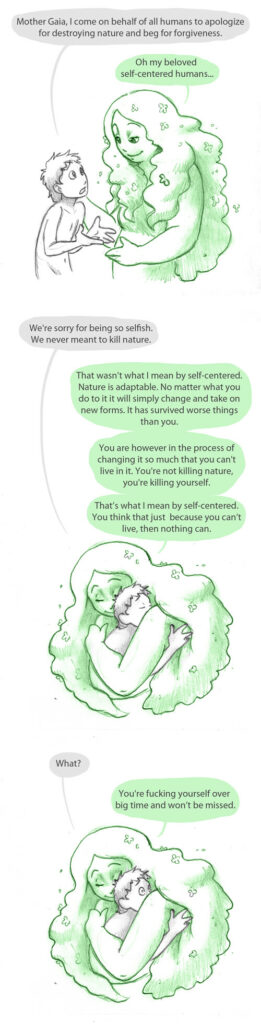
Its about composting the apocalypse – the world really is messy, but fear doesn’t have to become a bunker, it can become a reason to organize. This is where social composting matters, take the accumulated waste of the last decades — #neoliberalism, authoritarianism, #techshit, platform capitalism, political tribalism, broken institutions and the endless fear machine. Don’t pretend it isn’t there, don’t worship it or spend your entire life fighting it head-on. Compost it, break it down, learn from it, keep what is useful, let the dead parts become soil to then grow something different.
The #deathcult says the future belongs to the #nastyfew who can buy their way out, the #lifecult says the future belongs to those who can build relationships strong enough to stay. The choice isn’t really between apocalypse and utopia, it is between bunkering down or building commons. The planet doesn’t need another billionaire bunker, it needs people willing to pick up shovels.
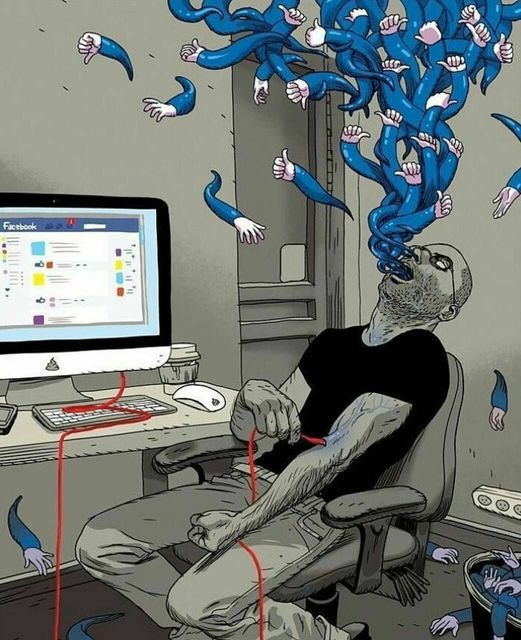
The problem of #dotcons is attention capture, its why #digitaldetox is a part of the #OMN toolbox. So lets look at why we need to act on the digital drug problem. The everyday digital drug fix starts with a notification, you pick up your phone because you get a notification. You unlock it, check the notification. Then maybe you look at one thing, then another, then another and suddenly an hour have disappeared.
You didn’t decide to spend the next hour staring at short videos selected by a #dotcons in the service of the #nastyfew. You didn’t sit down and make a conscious choice to enter the endless scroll, you just responded to a notification. Swipe – maybe this one is rubbish – swipe – that’s funny – swipe – boring – swipe – interesting – swipe – somebody attractive, and on it goes. This is the basic addiction of the #dotcons: turning our attention into a reaction rather than a choice. The important thing isn’t that one particular video is good or bad, the problem is loss of focus.
Every notification creates another injection, every swipe gives the algorithm a signal about what keeps you looking. The drug learns what holds you there, while you gradually lose track of why you picked up the phone in the first place. This isn’t communication in any real way, it’s an attention stealing machine and the more time we spend looking at it, the more normal the behaviour becomes. This is why #DigitalDetox project isn’t about telling people to “use their phones less”, its an AA meeting, we need to understand the drug is difficult to stop.
The phone isn’t the problem – digitaldetox is about #KISS technology to help people have more focus to participate in their communities. This mess we need to composting is social, the technology is a part, and yes the is piles of #techshit but under this surface is blinded ideology – the business model and the social architecture we think of as common sense.
The question is what infrastructure we build around those addictive behaviours, it is the problem with #mainstreaming, that it rarely looks like control from the inside the trap, it looks like common sense. People are presented with acceptable ideas, organizations, technologies and ways of working. Then, because everybody around them makings the same choices, those choices are “natural” – “This is just how things are done.”
But that “common sense” has a history. – for forty years, a mixture of #neoliberalism, #postmodernism, professionalisation and institutional culture has created a particular political and technological environment, that tells us that change should happen through recognized organizations, recognized experts, recognized funding structures and recognized channels.
Alternative paths are not forbidden, they are simply made difficult to see, and when people have spent decades inside this environment, asking them to look outside it can produce strong negative reaction. Then the problem is not simply bad people, it is tempting to describe this as a problem of individual personalities. Someone is arrogant, someone is ideological, someone is a gatekeeper, someone is “woke”, someone is a bureaucrat. But that misses the deeper problem, that people are shaped by the systems they live inside.
If your professional environment rewards certain ideas and punishes others, eventually you learn what can safely be said, learn which projects look fundable, learn which language gets accepted. You learn which organizations are considered legitimate. You also learn which people are worth listening to, its a #KISS social filter. The result is not only a conspiracy, it is something mundane and, more difficult to challenge, a culture reproducing itself. The people keep selecting things that make sense in the current #mainstreaming paths, and become evidence that the current #techshit mess is right all along.
This is one of the traps of #mainstreaming – its the grassroots problem we need to compost – grassroots projects come from somewhere completely different, they are messy, experimental and don’t always have professional language. They are built by people who see a #DIY problem and start doing something about it. That is where interesting alternatives begin, when these projects enter the mainstream funding and organizational environment, something bad happens. The project is asked to translate itself, then translate itself again to fit into a recognized category, demonstrate impact, scalability, governance, sustainability etc.
Then comes the compleat #block, it has to demonstrate that it already looks like something the funder understands, by the end, the thing being funded is very different from the thing that originally mattered. This fuck-up is not always malicious, it’s a structural problem of mainstreaming trying to make the unfamiliar familiar, and in doing so, it removes the qualities that made the grassroots project interesting in the first place. When we try and compost this #mainstreaming mess, people become defensive. When you challenge somebody’s “common sense”, you are not challenging an opinion, you may end up challenging their social position, their professional identity and their understanding of how the world works. That feels threatening, so its normal that the response is defensive.
Instead of asking “Could this alternative actually work?” the conversation becomes “Why aren’t you doing this properly?” Then comes the familiar #blocking “Use the proper channels.”“Talk to the right people.” “Get the stakeholders together.” “Build consensus.” “Follow the process.” “That’s not how things work.” And sometimes these are perfectly reasonable suggestions, but sometimes “proper process” is simply #blocking, ensuring that nothing outside the existing system can ever become legitimate.
The #OMN is built from a different starting point, it does not share any assumption that the existing institutions can solve the problems. It starts with people, communities, media and flows to build useful things the people can use, avoiding technical complexity to make participation is possible. We need these native technology’s as tech has its own version of the problem, the #geekproblem that assumes, if something is technically possible, the technical architecture should determine how people behave. This is the way power accumulates around administrators, developers, institutions and large communities, it is social. Thus, simply making something “open source” does not automatically make it socially open.
It is why #4opens matters, open data, open source, open standards and open processes are not the whole answer, but they can create space for communities to make their answers. Mediation rather than control, the answer to messy human behaviour is not more control. The #OMN is closer to a river than a filing cabinet, objects flow, people contribute to the flow, communities filter and shape the flow. Different places can create different views of the same underlying information. Some things become trusted – some things remain uncertain. Some things disappear from a particular view without pretending that they have magically ceased to exist everywhere.
This is a very different idea of network governance, its organic, its about composting the mess. The #openweb has accumulated decades of corporate platforms, closed APIs, surveillance economics, status games, technological churn, institutional habits and ideological baggage. There is a huge pile of shit, the answer is not to pretend otherwise, we compost it, take what is useful, break down what is harmful. Reuse existing tools, keep the lessons, discard the assumptions to help grow something new from what remains.
That is a more practical form of radicalism than simply traditional #fashionista left declaring that everything has to be destroyed and rebuilt from zero. It is also why #KISS matters, keep it simple, make the useful thing work. The real challenge to compost is cultural, the barrier to alternative technology is often not technology it self, it is the problem of common sense imagination. People need to imagine that things could work differently, then after this grassroots paths need space to experiment, to grow, before they are forced into the current #mainstreaming.
Funders like #NLnet need to recognize that something can be valuable before it has already become institutionally respectable. And #mainstreaming organizations need to understand that they are not the source of innovation, as to often they are the last people to notice this, that does not mean abandoning them, but it means not making them the only path.
So the question becomes, how can we convince them to build real alternatives, we can just to spend another twenty years trying to convince a closed system that it should become open. The path out of this mess is simple build something open, don’t waist to much time and focus explaining to institutions why grassroots communities deserve infrastructure. And don’t wait for “the right people” to give permission, start with the people who are already doing the work.
The important shift is from permission to participation, from ownership to commons, from control to mediation, from platforms to flows. From mainstreaming the grassroots into existing institutions to letting grassroots practice grow outward into the wider culture. The existing “common sense” can be composted, it is not inevitable, it is simply what has grown around us, to become a mess. We don’t have to worship the mess, we can pick up a shovel, turn the pile, let it breathe and grow something better from it.
Currently we are to stuck in the liberal response to the current hard rightward shift, as they treat it like a fixed demographic fact. “Those people won’t move.” “Those voters are lost.” “Reform has captured them.” then comes more polling, messaging, focus groups, electoral strategy and process. This is the #geekproblem applied to blinded #fashernist liberal politics: treating a living social system like a technical problem that can be managed from above. But people don’t live inside polling data, they live in communities, institutions, workplaces, families, streets, media systems and increasingly broken #dotcons digital spaces.
And when this #mainstreaming stops giving people security, meaning or trust, something will fill the gap. If government doesn’t deliver, people look elsewhere, institutions aren’t trusted, people look for identity, communities are fragmented, people look for tribes. If #mainstreaming politics can’t offer a believable future, people reach for something that feels solid now. That is why sectarian identity becomes attractive in an age of inchoate policy, captured institutions and bad-faith politics.
At least identity feels tangible, I know who I am, who they are, and I know who is to blame. It is a crude form of social infrastructure, but it is still infrastructure. And this is where the liberal framing goes wrong, the “rightward shift” isn’t some mysterious virus that has infected society, it is a feeding on the very probels our 40 years of worshiping a neo-liberal #deathcult has produced, on broken social trust, insecurity, precarity, housing insecurity, broken public services and loss of community that leads directly to political powerlessness.
And the constant experience of being told that everything is improving while your lived experience says otherwise. You don’t compost that with better messaging, you don’t shoval it with another consultation, you don’t defeat it by telling people they are stupid, racist, backward or “misinformed”. You certainly don’t challange it by becoming better at managing the same broken system.
You change the conditions that produce the politics, this is where the #OMN way of thinking matters. Start with the social infrastructure, build trust, participation to grow commons with space for paths where people see the evidence, challenge it, add context and correct mistakes. Build spaces where people do things together rather than simply consuming politics through algorithmic feeds.
That is how trust grows, from paths where the #4opens is more than a technical checklist. Because open process lets people see how power actually works, it turns politics from something done to people into something people can participate in. Communities become visible without first getting permission from the #mainstreaming machine. Where trust is something built through participation rather than handed down by an authority. Where disagreement isn’t automatically treated as failure. Where mistakes can be corrected rather than silently buried. Where history isn’t constantly erased by the next algorithmic cycle.
You don’t solve the rightward shift by endlessly talking about the rightward shift, you rebalence the social conditions underneath it. The right-wing understands something that much of the liberal centre has forgotten – people need belonging. The nasty mess we currently need to compost is allowing belonging to grow from fear, exclusion and enemies. Make people safer, communities stronger, open up space were people can build together.
Because trust is built through doing things together – that is the native #openweb path. We need to compost what the right feeds on: division, so the alternative has to grow from trust. That’s not electoral strategy, its #KISS growing social infrastructure.
The problem isn’t that humans are stupid, maybe its more that we’re just good at organising stupidity. The planet isn’t dying because it hates us, the planet will be fine. It’s the humans who are having the difficult bit, the economic system says: BUY MORE SHIT. Religion says: TRUST THE INVISIBLE AUTHORITY. Politics says: PICK A TEAM. The #dotcons say: KEEP SCROLLING. And the #geekproblem says: DON’T WORRY, WE CAN ENGINEER OUR WAY OUT OF IT.
We’ve pushed a #nastyfew class to avoid any responsibility, and then people on there knes eyes closed wonder why nothing changes. Maybe the useful position is to step back from the social and ecoloical mess long enough to actually we are creating it. Not abandon people, not give up on society, but stop pretending the existing path is working.
The #OMN starts from that uncomfortable place. News. Memory. Trust. Participation. Eventually governance. Not another shiny platform, another central authority. A bit of infrastructure for people to see what is happening, connect it, challenge it, remember it and build something better together.
The planet doesn’t need saving from humans, humans need saving from the #deathcults we so easely worship. And maybe the first step is getting off our knes opening our eyes and looking around at the mess we need to compost.
Yes, the #web02 revolution was a con, it always was. The problem is now most people have spent years pretending that the dominant technology companies were somehow neutral actors – clever companies making useful tools, occasionally getting a little too powerful, occasionally needing a bit of regulation. But now this comforting chattering class story is harder to maintain, as the long “invisible” problem has finally reached the #mainstream, the act of stepping over the smoke and mirrors can now be seen in books such as Gil Durán – that the Silicon Valley billionaire class has developed an explicitly anti-democratic political worldview, and it has accumulated enough money, technology and institutional influence to start acting on it.
The book Nerd Reich: Silicon Valley Fascism and the War on Democracy describes a political culture that did not suddenly appear with Trump. It has roots going back decades: hostility to government, hostility to taxation, extreme individualism, the fantasy of “exit”, private jurisdictions, network states, crypto-utopianism and the idea that technological elitists should be able to operate outside democratic constraints. This view of #geekpoblem history matters because if we treat what is happening now as simply another Trump-era political crisis, we shovel the wrong shit onto the compost heap.
This mess we need to compost is the blinded politics of our technology classes. The con was always bigger than the platform, #dotcons were never simply websites, there “value” comes from when they became infrastructure for social life. #Failbook, Google, Amazon, Microsoft, Apple, X and the rest were built to control people, they “business modal” inserted themselves between people and their ability to communicate, organise, publish, buy, work and increasingly understand the world.
The con, the clever trick was that they appeared to be giving us something, free publishing, free communication, free social networks, search, storage and entertainment. But the real business model was the capture of the flows, our relationships became data, our attention a commodity, communities became markets, conversations became #LLM training material. Now that our social lives are increasingly controlled as behavioural prediction systems, and the more dependent we became, the more control and thus power accumulated on the other side of the interface.
This is why calling the #dotcons simply “social media companies” is too small a description. They became private governance systems, to make rules, decide visibility and control infrastructure. They moderate speech, shape markets, influence elections. They lobby governments to corrupt political control. And now some of the #nastfew openly talk about replacing democratic institutions with technological and corporate control. The con was never about advertising, it was about power.
Seeing the path underneath the technology is of the useful things, connecting today’s behaviour with 20th century ideas. The Silicon Valley ideology did not begin with artificial intelligence, it developed through decades of worshipping the #deathcult of libertarian and anti-government thinking. Books such as The Sovereign Individual became influential within the elitist chatting classes. Figures such as Peter Thiel pushed ideas, and funding at technology, sovereignty, crypto, private jurisdictions and “exit”.
The basic #nastyfew fantasy is consistent – when the government gets in the way, leave, if democracy is inefficient, replace it. When taxation is inconvenient, move somewhere else. If regulation applies to everyone, build somewhere it doesn’t. If nation states are obsolete, create new digital or corporate forms of sovereignty. It sounds futuristic, but underneath the science-fiction language is something ancient. A #nastyfew group of extremely wealthy people deciding that ordinary democratic accountability should no longer apply to them. This is simply oligarchy updated with #postmodern branding, and then came the #AI boom, that accelerates and intensified the #techshit class mess.
We should not need to talk about how the technology itself is not the enemy, the current #openweb reboot clearly shows it is not. So what is, a very normal story, the worship of the #deathcult, our political and economic structure around the #dotcons, and the #geekproblem that breeds this is the problem.
With #climatechaos visible all around us, we are still being told that all this #techshit is necessary because someone in Silicon Valley has decided that the future requires it. This now easy to see mess is why resistance to data centres, surveillance systems, crypto schemes and companies such as Palantir can become broader than narrow traditional left politics. People are now starting to experience #nastyfew billionaire power physically in the growing social mess. The abstract becomes concrete, the cloud a building, the algorithm becomes distracting fluff, the #dotcons platforms are revealed as workplaces when the billionaire becomes the person deciding what happens in your town.
The #OMN more profound question is increasingly about who gets to control infrastructure and who gets to participate in deciding how it is used. That is a democratic question, and it should also be a #openweb question. This is where the current reboot comes in to balance the mess. The #NGO, civil society answer cannot simply be to keep regulating the #dotcons harder while continuing to depend on them for everything. Yes, regulation matters, taxation matters, breaking up monopolies matters and basic democratic accountability matters.
But we also need alternatives; otherwise we remain trapped inside #nastfew controlled infrastructure. This balancing is why we can’t keep fucking up our #openweb reboot. We need to #KISS take the useful lessons from the early web – openness, decentralisation, interoperability, user control and federation – and combine them with the better UX lessons we learned from Web 2.0.
We need to build this alt path on the current #Fediverse, based on exiting reboot #4opens paths like #ActivityPub and #RSS. What we don’t need is more of what current takes the vast majority of #openweb funding and coding focus. Not another collection of #VC startups, any more “ethical” billionaire-funded platforms – not another centralised service waiting to become the next #dotcons.
We need something structurally different, we need practical shovels to composting the #dotcons. This is where I use the word compost deliberately, we cannot simply pretend the last 30 years didn’t happen, there is an enormous pile of #techshit. Some of it is bad technology, much is bad governance. Some is exploitative economics, surveillance, addiction. In our heads we need to compost venture-capital paths, empty innovation language and the stink of #NGO and institutional capture.
Some of the simple #geekproblem is just plain bad social thinking dressed up as technical expertise. But there is likely useful material in the pile too, the #web02#dotcons did teach us things – They showed us that people want easy-to-use communication tools – the importance of good #UX, we need to take what is useful and use this to expose what is toxic. To understand how it happened, learn from the failures. Then we need to translate this understanding into action to break the concentrations of power, to open space to grow something different.
The #geekproblem is part of this, another uncomfortable layer. The alternative technology world has not always been good at avoiding the same mistakes, the #geekproblem is real. Too often we build technology according to what technically clever people think is interesting rather than what communities actually need. We confuse technical complexity with progress, confuse innovation with usefulness, technical decentralisation with democracy. And often we recreate the same power structures inside #FOSS that we were supposedly trying to escape.
The resulting technically elegant social mess, is a strange imitation of the #dotcons: technically open underneath, but socially closed around the people who understand the machinery. This mess is then feed into the funding problem, where the #fashernistas enter the pile.
With the current #openweb reboot, alternative technology is increasingly surrounded by funding ecosystems that reward fashionable language, impressive demos, grant-friendly projects and institutional credibility. The grassroots people actually doing the work can become secondary, the people who understand the community get pushed aside by people who understand the funding application. The messy project gets replaced by the polished project, the difficult social question becomes a technical deliverable, and the result is another layer of #techshit.
This is not inevitable, but we need an open process capable of exposing it, that is the reason the #4opens matters – Open data – Open source – Open standards – Open process. The fourth one is particularly important, if the process is visible, we can see who is making decisions, how money is moving, whose ideas are being prioritised and where the projects are about grafting. We can challenge it before the pile gets too big, we need to compost the #techshit at source.
To grow anything in the current mess, we need infrastructure that ordinary communities can understand, use, modify, share and govern. We need technology that supports participation rather than extracting it, systems where disagreement, correction, rollback and learning are normal. We need tools that help communities build memory rather than constantly throwing yesterday into the algorithmic landfill.
So we know what we need, we know what we need to compost. The chattering classes are finally waking up, we have the interesting thing, that some of the people who have spent years talking about “innovation” and “the future” are finally starting to notice what has been happening. The warning signs are no longer hidden, #nastyfew political power is visible as is the social and ecological damage.
The question is no longer whether there is a problem, it is becoming what we do about it. And this is where I worry about the next stage because every time the mainstream finally notices a grassroots problem, the #fashernistas arrive. They package it, brand it, secure the funding to create the conference to build their careers. This simply “common sense” behaver stinks and is going to kill and displace billions of people.
And somehow, after all that activity, the people who were actually doing the work are still standing outside the room, we have seen this cycle for decades, we cannot afford to repeat it here. So shovel harder, the #openweb reboot has a job to do, we don’t have the time to create another fashionable technological sector. We don’t need another class of sellout experts to compete to become another set of gatekeepers. And definitely not to reproduce the #dotcons with a nicer logo and some open-source code.
We need to shovel hard, turn over the #dotcons, expose the blinded ideology, compost the bad economics, the #geekproblem and the corrupt grant culture. We need to compost our own #fashernista performance. To balance this we have to keep the useful technology, the useful knowledge, the communities and most importantly keep the history. Then use all of that compost to grow something genuinely different.
The old web was open enough to give us a glimpse of what was possible, #web02 captured that openness and turned it into private infrastructure. Now we have a chance to take the useful parts back, not by going backwards, but by putting people and communities back into the centre of the flow.
The #deathcult worshippers have spent decades building an escape route from simple democratic accountability. Our path is not to follow them on this fantasy, it is rather to build a better path in the other direction. The #dotcons are a huge pile of compost, the question is whether we are willing to pick up the shovels.
Techno #feudalism is a description of the power that large #dotcons technology platforms now have over the economy and society. The comparison is with medieval feudalism. Under feudalism, land was the critical means of production and ordinary people worked land they did not own. Lords controlled access to it and extracted rents or surplus from those who depended on it.
This is relevant today were the critical bottleneck is increasingly digital capital: platforms, servers, algorithms, data, cloud infrastructure, app stores and enormous networked captured user bases. A few corporations, run by an increasingly visible #nastyfew control this infrastructure. Communities, businesses, workers and creators are dependent on platforms they do not control.
The current shift is from ownership to access, instead of owning software, music, games or other digital tools, people rent access through subscriptions and platforms. This means wealth and control accumulate with the owners of the infrastructure rather than with the people using it.
The #closedweb platform economy creates rent extraction. App stores, marketplaces, hosting platforms and gig-economy companies take a percentage from the economic activity that passes through them. Network effects make dominant platforms increasingly difficult to challenge, as we are seeing, allowing those rents to rise.
#AI is we get past the narrow use case of #LLMs could intensify this dynamic by replacing human labour with capital-intensive systems. If a few companies own the #AI infrastructure, the bargaining power of labour will fall while the power of capital owners, the #nastyfew takes over the levers of power over the #mainstreaming.
The political dimension – #dotcons don’t merely control economic infrastructure; their algorithms influence what billions of people see, discuss, believe and buy. This gives the #nastyfew platform owners an extraordinary ability to shape public discourse.
But yes, you would be right to point out this is just the normal monopoly capitalism for now, these companies still invest enormous amounts in research, infrastructure and innovation. They operate within markets and people are not legally bound to them in the way medieval serfs were bound to their lords. The system can also be understood as an intensification of monopoly capitalism and rent extraction.
For the #OMN, the strongest point is that the problem isn’t technology itself, it is concentrated ownership and control of the technological infrastructure. A simple stepping to #4opens network changes the relationship, instead of everyone being tenants on somebody else’s platform, we build infrastructure around open standards, federation, interoperability, shared ownership, participation and commons-based production.
That makes the #openweb and projects such as the #OMN more than technical alternatives. They become part of the struggle over whether the digital world develops into a feudalistic landscape of platform landlords and digital tenants, or remains a genuinely distributed native #openweb commons.
In that sense, #4opens is an economic and political argument as much as a technical one: keep the infrastructure open enough that nobody can permanently own the flows through which everyone else has to live and communicate.
The #fashionista left problem isn’t simply “bad messaging”, but the loss of relationships, class politics and ordinary participation. This left path is #blocking, leading to a serious problem, that there is a growing gap between the people who talk about changing society and the people who actually have to live with the consequences of the society we have.
A lot of contemporary so-called left politics has become a culture of credentials, language, status and moral performance. Political activity becomes a test of whether you know the correct vocabulary, have read the correct theory and can demonstrate the correct politics. Meanwhile, people are dealing with rent, wages, insecure work, debt, housing, transport, healthcare and the basic struggle to get through the week.
This isn’t an argument that cultural or identity issues don’t matter, they do. But when cultural politics displaces material politics, something fundamental has gone wrong. And the answer isn’t to assume that working-class people are stupid, ignorant or simply “brainwashed” by the right. That attitude is itself a form of class contempt.
People have reasons for being angry, they have experiences, relationships, communities. They have knowledge that doesn’t come with a university certificate. The right has become good at recognising that anger and offering people belonging, even while offering economic policies that ultimately benefit only the #nastyfew billionaires and capital.
The mess in the left too often does the opposite, it offers people a lecture about why their existing culture, language or opinions are wrong before it offers them any meaningful collective power. That is backwards, politics begins with people working together around things that materially improve their lives. Better wages, housing, shorter working weeks, strong unions, public services to grow more time and power for ordinary people.
The left is supposed to be about, build solidarity through doing things together. You don’t need everyone to agree about everything before they can work together. In fact, demanding ideological agreement before allowing participation is one of the fastest ways to destroy a mass movement.
This is where I think the #OMN approach matters as a practical way to step away from this current blocking of left paths. #KISS we need less political performance and more participation, less gatekeeping and more open infrastructure, less obsession with who has the correct politics and more ability for different people to contribute, argue, cooperate and build something together.
The goal isn’t to make everyone think the same, it is to build enough trust and shared power that ordinary people can actually change the conditions they live in. That’s the old left and in today’s mess, a much more difficult politics, but it is also a much more democratic one.
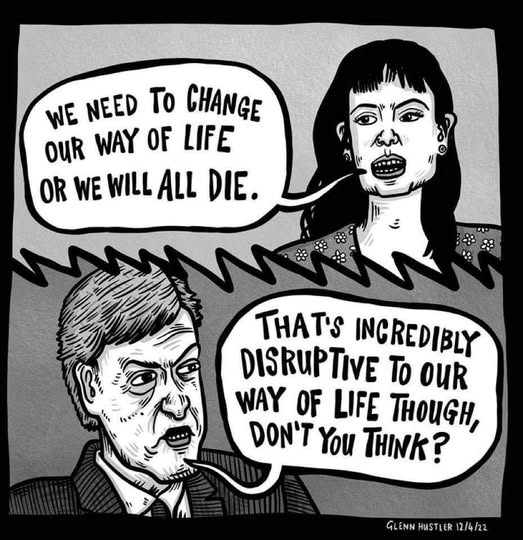
We need to stop talking about “climate change” as though we are discussing a slightly inconvenient change in the weather. Climate change is too soft, too neutral. Climate change makes it sound as though something simply happened to us. It didn’t, we pushed this mess, we built an economic system that treats the living world as raw material, turns everything into property, pushes everything through markets and then calls the resulting destruction “growth”. The next twenty years will be the “bill” we pay for this short-sighted greed. And the really dangerous part is that we are still trying to solve the problem using the same thinking that created it.
Welcome to #climatechaos, not one dramatic event that starts on a particular day, it is chronic, it accumulates, compounds. It moves through food systems, water systems, ecosystems, economies and communities. This makes it politically difficult because there is no single moment when everyone can point at the disaster and say, there it is. Instead, the extremes get worse, harvest fails, rivers floods, insurance disappears. The food price rises, drought lasts longer and finally the ecosystem quietly collapses. But one thing that is becoming common sense is we cannot carry on pretending this is normal.
A small step is that the language matters “Global warming” sounds almost pleasant, “Climate change” sounds neutral. Climate breakdown tells us something more important, there is a direction of travel, continuing accelerating the conditions that make human and ecological life less stable. That is what the next twenty years are, yes science based global averages are useful, but the things communities actually experience are extremes – heat, flooding, drought, food insecurity and other disruptions.
Living through the consequences, will show that today’s common sense, the #neoliberal answer to #climatechaos is wonderfully convenient for the #nastyfew – you are the problem, you have the wrong car, eat the wrong food, you use too much energy and bough the wrong thing. You didn’t recycle enough, and feel guilty.
This is the #deathcult at work, the individual is made responsible for a systemic crisis while the systems generating the crisis remain untouched. The absurdity is the dumping of climate responsibility onto individuals while corporations continue selling products that cause global warming. This mess isn’t accidental – #stupidindividualism is politically useful as isolated individuals have very little power. Where communities, workers, cooperatives, movements and collective action do have power.
By now it should become a little obvious that we don’t need greener consumption, what we do need a different relationship with the living world, the current uncomfortable path. Let’s make this plan – #Climatechaos isn’t an energy problem, it isn’t just a transport problem, it isn’t just a technology problem, it is a problem with how we understand ourselves. We have built a culture around the idea that everything exists to be owned, land, water, animals, forests, minerals, knowledge, attention. Even our relationships, on the #dotcons, become a commodity.
Everything becomes something that can be extracted, then we are surprised when the living systems collapse. To start to compost this mess the next twenty years need to be more about moving from ownership to participation, from extraction to stewardship. About better balancing competition and cooperation to move from isolated individuals to resilient communities. In an economic sense from commodities to commons. And yes, it is a much bigger political project than buying an electric car.
Food is going to expose the current blinded stupidity, food is where the abstraction ends. You can argue about climate models forever, but when food becomes unreliable and expensive, everyone understands. The climate discussion points to the vulnerability of agricultural systems, including dependence on a few major crops due to growing pressure on farming from heat, drought and extreme weather.
The response cannot simply be another technological monoculture. We need real diversity, more resilient crops, local knowledge, healthy soils to grow this biodiversity. We need shorter and more resilient supply chains, community food systems. And probably a much more serious conversation about what we choose to eat and how much land and sea we devote to producing it because agriculture isn’t happening outside nature.
The next twenty years will remind us that nature is not decoration, currently we treat biodiversity as something nice to have after the economy has been sorted out. But ecosystems are part of the economy, wetlands manage water, salt marshes protect coasts, healthy soils support food, forests regulate water and store carbon. Biodiversity provides resilience, this is not romantic environmentalism, it is infrastructure.
And then comes the techno-fix – whenever capitalism encounters a problem caused by technology, extraction and industrial growth, it offers us more technology. So next we get geoengineering, perhaps we can reflect sunlight, perhaps we can manipulate the atmosphere, perhaps we can capture carbon, perhaps artificial intelligence will optimise everything. Or perhaps some billionaire will save the planet. This is the reheated #mainstreaming#geekproblem version of climate politics, the problem is that the blinded underlying assumption, the system is fine, we just need a better machine.
But, unspoken is more mess we then need to compost – Who gets to control the thermostat? Who decides? Who is accountable? Who gets protected? Who gets sacrificed? These are not engineering questions, they are political questions, the next twenty years will be a democratic test of where the climate crisis becomes bigger than climate policy. We are going to have to make real choices about where should people live, what happens to communities that cannot be protected? Who pays? Who decides? What technologies are acceptable? And from a deep green prospective what land is for humans? What land is for the rest of life?
There are no purely technical answers, science can tell us what is happening, it tells us what happens if emissions continue. But science cannot decide what kind of society we want, that is politics, at best it is democracy. And at worst it is where the #mainstreaming agenda becomes dangerous as #climatechaos doesn’t care about our current political comfort zones. To find a path through this mess, we have created, we need resilience, not reassurance
Doom on its own is useless, but pretending everything will be fine is worse, people need real information about what is happening? What are the risks? What can we do? What can our community do to prepare, to organise? This is why #KISS communication needs to become local and participatory.
The example of community-based #OMN like projects matter – people come together, learn what is happening and then discuss what they can do locally. The process itself builds resilience, this should be obvious. A community is more resilient when it knows how to communicate, when it can share information. More resilient when it trusts people, when it has local knowledge and more resilient when it has shared infrastructure to remember what happened last time.
That is why media matters – the rebooted #openweb becomes climate infrastructure – where the #climatecrisis connects directly to the #OMN. We need an information infrastructure that belongs to communities rather than corporations, so communities can continue to document what happens to them. Because when the next flood comes, the official report six months later isn’t enough. The native #openweb can be part of the infrastructure of climate resilience that is if we stop treating it as another marketplace for attention.
The #OMN is native to this kind of future, it’s not a climate project in the narrow sense. But the underlying problem is the same – how do we build systems that support collective intelligence rather than extracting it? How do we allow people to publish, share, moderate, correct and preserve information without handing control to a handful of #closedweb platforms?
How do we create the trust we need without building more centralised authority? How do we make community knowledge persistent? How do we build infrastructure that can survive the failures of individualist #dotcons platforms? These questions become much more important as #climatechaos increases. Because resilience requires distributed systems, but not just technically distributed systems, we also need socially distributed systems.
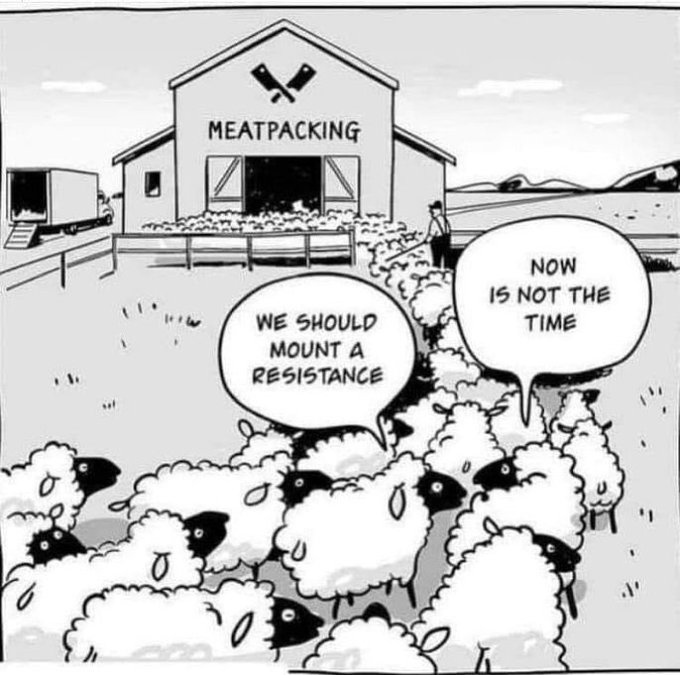
The mainstream will always tell us – now is not the time, too radical, too expensive, too difficult, too political for people to accept, or the market isn’t ready, the technology isn’t ready. We have had 20 years of stalling change and challenge: we need more evidence, consultation or another #fashionista report. The #KISS answer is simple, NO, we have had decades, the next twenty years we either build resilience or discover how truly fragile we really are.
On a thin but needed positive note, the #climatecrisis is already producing the conditions for change, the question is whether that change is democratic or authoritarian. And in a narrow sense of our #openweb culture, whether it breaks the monopoly of the #geekproblem or gives it more power. It’s a simple choice of do we compost the old system or let it push us aside.
To not simply be pushed aside we need political movements capable of defending life in its widest sense, yes, the next twenty years will not be comfortable. There will be disruption, loss, conflict and there will be failures. But the future is not simply something that happens to us, it is something we organise. So please stop asking “How do I, personally, save the planet?” and ask “What can we build together that makes a different future possible?” in short get off your knees from worshipping the #deathcult, and stop waiting for the #mainstreaming agenda to save us.
In internet culture, stop handing every problem to the #geekproblem.
Light green environmentalism stop turning climate action into consumer guilt.
In economics stop treating nature as an externality.
In fashion, stop treating people as consumers.
To compost current mainstreaming mess, we need to start treating people as participants to rebuild the commons and infrastructure of trust. In short, we need people to #makinghistory, by getting the bloody shovels out. The old system is already compost, the question is what we grow from it.
Update02: How do we describe the problem and how we organize ourselves to deal with it? For the #fashionistas, the point is that language isn’t just decoration. A #hashtag is a way of framing attention. If you call someone “evil”, “dangerous” or “nasty”, you may simply reinforce their preferred identity, yes, we’re tough, we’re feared, we’re fighting the enemy. You’ve accepted their frame.
“Weird” works differently because it pokes at their claim to represent normality. It reverses the us versus them story: hang on, perhaps the strange behaviour is coming from you. But this is where the #OMN/#KISS point comes in. Calling the #nastyfew “nasty” isn’t really about persuading the #nastyfew. It’s about helping us recognize the pattern.
We need language that lets ordinary people point at a structural problem without having to become political theorists, join a faction or spend three hours arguing about ideology. That’s what an affective hashtag can do – #nastyfew = focus. Not “these people are monsters and we must destroy them” more “there is a small concentration of people pushing harmful behaviour and power – let’s recognize the pattern, stop pretending it is normal, and organize our way around the problems they are creating.”
The important bit is US, the understanding that the #nastyfew become more powerful when we give them our attention, fear, division and energy. If we can name the pattern as an abstract, keep our heads, and build better path, their power becomes much less interesting.
This is why #OMN is interested in media flows rather than personality cults, so we don’t spend all day fighting the person. We look at the flow:
Who is amplifying what?
Who benefits?
What behaviour is being normalized?
Where is trust being built or destroyed?
What can we change locally?
The #geekproblem to often wants to solve this with another closed path, the #fashernistas want another clever narrative, but the #nastyfew want us fighting each other, its in the name. Maybe the simpler answer is to name the pattern, focus our attention, build the alternative, and stop feeding the circus.
This summer, heat, fires, the soon to come winter floods and insurance withdrawals will make #climatechaos harder to treat as something happening somewhere else. For years, climate breakdown was framed as an activist issue, something discussed by environmental groups while mainstream politics carried on with business as usual. That is changing, people are experiencing the consequences: extreme heat, flooding, damaged homes, rising insurance costs, failing infrastructure and growing uncertainty about what the next few years will look like. The #climatecrisis is moving into everyday life, so how do we live through what is already locked in?
Once the consequences of a warmer world are being experienced everywhere, adaptation becomes an unavoidable path. That means practical changes will finally start to happen such as resilient building standards, flood planning, water management, food systems, energy resilience, heat protection and changes to where and how we build.
But there is a danger in treating adaptation as purely a technical problem, we might redesign buildings, strengthen flood defences, change planning regulations. We can develop better warning systems – but who controls these systems? Who decides what gets protected? Who gets information when something goes wrong? Who maintains the infrastructure? Who remembers what happened last time? And who gets left behind? These are social and political questions.
The missing infrastructure is where the #OMN native path becomes important. Surviving #climatechaos isn’t only about physical infrastructure, it is also about information infrastructure and community infrastructure. During crisis, people need reliable information to know what is happening locally, they need to know who needs help, to know which transport links are closed, where resources are available, what services are operating and what communities are doing. They need ways to communicate when normal paths fail.
And afterwards, they need a record of what happened, this is why the #openweb matters, a resilient society cannot depend entirely on #closedweb privately owned platforms whose responsibility is to the current #nastyfew shareholders and advertisers. It is basic that the #dotcons are not resilience infrastructure – Facebook, Google, X, TikTok and the other #dotcons distribute information, and misinformation very quickly, but speed isn’t the same thing as resilience.
These current #closedweb digital systems are designed around control, engagement, advertising, data extraction and platform addiction. They are dangerous to use when important information will disappear into algorithmic feeds. It should be becoming obverse that communities cannot keep being dependent on proprietary services, as accounts can be suspended, interfaces can change, companies can change their business models, services will disappear.
And the information itself is often difficult to preserve, connect or reuse outside these #closedweb platforms. That is a terrible foundation for a society increasingly dealing with environmental disruption. This is why the #OMN focuses on the #deathcult story, in part to highlight it isn’t simply a collection of bad corporations. The current mess is about the way of organising society around short-term extraction, profit before resilience, growth before sustainability, competition before cooperation. Private ownership comes before the commons, and immediate financial returns are prioritised over the ability of communities to survive any long-term disruption.
In this mess, climate adaptation within this risks becoming another market, those who can afford resilience buy it, those who can’t are left exposed. Insurance withdraws from risky areas, property values become tied to climate risk. Private companies decide which infrastructure is commercially viable, the result is adaptation as another form of inequality.
To compost this mess we need #KISS social adaptation too – The alternative isn’t to reject technology – It is to change what technology is for. The #4opens provide a useful starting point: Open Data – Open Source – Open Standards – Open Process. These principles make it easier for communities to share information, build on each other’s work and maintain infrastructure without being locked into one corporation. The #openweb gives us the technical culture for this, #Federation allows different communities to remain independent while still communicating. Open standards allow systems to interoperate. Open data allows information to remain useful beyond one platform. And open process allows communities to understand and participate in decisions affecting them.
There is another important piece: memory, when a flood happens, people document it. When a heatwave hits, people record what happened, when infrastructure fails, somebody usually knows why. But much of this grassroots knowledge disappears into #dotcons social-media feeds. A few years later, we start again from scratch. This is why #openweb projects such as #MakingHistory matter. We need living community archives that connect events, places, people, media and responses over time. The archive becomes part of resilience, knowing what happened last time helps communities prepare for the next time.
Moving beyond the current #NGO pointlessness – we need to grow projects like the OMN as shovels, to clear the #techshit mess to grow grassroots infrastructure for publishing, sharing, moderating and preserving information. But yes, the technology is only part of it, the deeper goal is to help communities build trusted information networks that are not dependent on the current #dotcons. A resilient media system should allow people to – publish locally – discover relevant information – share between communities – moderate collectively – preserve important records – correct mistakes – maintain metadata – and keep historical context. This becomes especially important when normal systems are under pressure as the #mainstreaming is only seeing half the problem. But yes, the mainstream conversation is beginning to understand climate adaptation matters, but adaptation cannot be reduced to flood barriers, new building codes or air-conditioning.
We also need to ask whether the social systems surrounding those technologies are resilient. Can communities cooperate? Can people trust the information they receive? Can knowledge move between organisations? Can local experience become shared knowledge? Can communities govern their own infrastructure? Can we preserve memory? These questions are still largely outside the mainstream climate conversation. They shouldn’t be, the next wave of #climatechaos will test not only our physical infrastructure but our social infrastructure. The challenge is therefore twofold – build the physical systems that help us survive the changing climate – build the open, collective information systems that help communities understand and organise that survival.
The first is increasingly #mainstreaming, the second is where the #openweb, #4opens, #OMN, #OGB and #MakingHistory have something important to contribute. We do need #KISS more resilient communities, and resilient communities need infrastructure they can actually trust and control.
For 50 years we have worshipped the #deathcult – endless growth, extraction, competition and individualism – and now we are living with the damage that this has done to our society and the living world.
The current hard shift to the right won’t fix any of this, it simply empowers the #nastyfew to surf the apocalypse while more and more of us are left fighting over the scraps.
Blind hatred and political ignorance are not solutions. Neither is pretending that the past 50 years of “common sense” somehow didn’t happen.
So what do we do? We compost the mess, we take the broken assumptions, failed systems, #techshit, tribalism and accumulated political baggage and turn them into something useful.
Apathy is boring, get on with doing something useful please. That’s part of what #OMN is, not a shiny platform, nor another ideological club. It’s made as a shovel for digging through the mess and help build the grassroots #openweb infrastructure we need for a different future.
The current wave of wildfires across Europe is not simply a natural disaster, it is also exposing a deeper mess, the failure of our information systems. Instead of explaining why Europe is burning, significant sections of the corporate media are either ignoring #climatechaos or distracting by blaming rewilding, net-zero policies and environmental protections. Rather than confronting the #KISS scientific evidence that fossil fuel combustion is driving global heating, they redirect public anger towards the policies intended to mediate the damage.
This isn’t simply corrupt journalism, it’s a theological and political choice. The reality inversion – when forests burn, rivers dry, crops fail and people die from extreme heat, the obvious question should be – What is causing this? The scientific answer is clear, human emissions of greenhouse gases – from burning coal, oil and gas – will increase the frequency and intensity of heatwaves, droughts and wildfire conditions. This is one of the strongest areas of scientific consensus in modern research.
Yet much of the corporate press is #blocking this connection. A look through thousands of UK newspaper articles covering the June 2026 heatwave found that around three-quarters never mentioned #climatechange at all. Yes, the public was shown the symptoms while the cause was quietly edited out. This matters because information shapes action, if people don’t understand why disasters are happening, they cannot understand what needs to change.
This is manufacturing confusion – the right-wing press push reality inversion. Europe burns, the blame shifts to rewilding, the mess – heatwaves become evidence that environmental policy has gone too far, wildfires become an argument against restoring ecosystems, net-zero becomes the problem rather than one of the responses. The effect is to move negative attention away from fossil fuels and towards environmental movements. When the cause of a crisis threatens #nastyfew interests, our “journalists” redefine the problem until those interests disappear from the story. The debate becomes about forestry management, or environmental activists. Or planning regulations, migrants, or bureaucracy. Almost anything except the continued extraction and burning of fossil fuels.
In the #OMN vocabulary this is the logic of the #deathcult – A system organised around endless growth cannot admit that endless growth is destroying the conditions that make civilisation possible. With the shift to the hard right – every crisis becomes someone else’s fault – every solution becomes economically impossible – every warning becomes political exaggeration – every disaster becomes “unexpected.” The current path survives by refusing to recognise the consequences of their own actions.
This is why “common sense” has become part of the problem. After forty years of #neoliberalism, what many people call common sense is the common sense of the market. Growth is always good, markets always know best, corporations are inevitable, consumption equals freedom and thus environmental limits are optional. But, this isn’t common sense, it’s forty years of shaping people to see the world through the eyes of only capital.
So why do we still let fossil fuel companies still shape public policy decades after the science became overwhelming? The language changes, the power structures remain. This is #mainstreaming, the appearance of addressing the problem while carefully avoiding the changes needed to solve it. The #mainstreaming problem isn’t confined to openly conservative newspapers. Much liberal media performs a softer version of the same function. Climate change is acknowledged, the latest disaster is reported, scientists are quoted. Then coverage moves on, the structural questions are rarely asked – Who profits? Who owns the media? Who funds political influence?
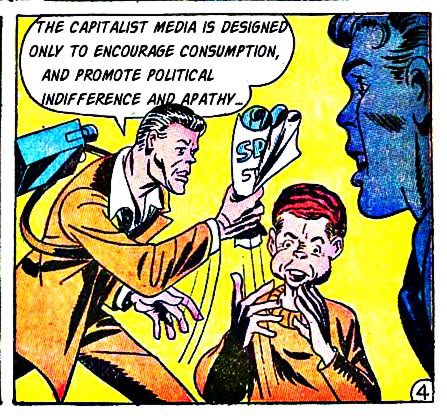
The #OMN perspective is that this isn’t only a journalism problem, it’s an infrastructure problem. When a handful of corporations control the majority of communication, they also shape which stories become visible, which connections are made and which questions remain invisible. Feed this narrow mess through the #dotcons that amplify engagement rather than understanding, we get stinking mess. It is easy to understand that corporate newspapers depend upon commercial interests controlled by the #nastyfew and political institutions still focus communicate through the same commercial traditional media and #dotcons platforms, the result an information ecosystem optimised for attention and control rather than any truth.
The path we need for survival – the coming decades of #climatechaos will test every institution we have – communication systems, food systems, energy systems, governance and public trust. If our media continues to hide causes while amplifying distractions, societies will become less capable of responding when they need clear information the most. A community that cannot accurately describe its own reality cannot organise to change it to move beyond the #deathcult. The uncomfortable truth is that there is no path through the coming century while remaining politically loyal to the assumptions that created the crisis. The #deathcult has reached its limits.
The question is no longer whether that model is sustainable, it isn’t. The question is what replaces it. The #OMN answer begins with rebuilding the commons, open media, open governance, open standards, open knowledge. Communities capable of telling their own stories and acting on shared reality rather than manufactured distraction. Because if we cannot agree on what is happening, we cannot respond together.
And if we continue allowing corporate media to define reality for us, they will continue pushing the systems that are driving us deeper into #climatechaos. The future depends not only on changing our energy systems, it depends on changing the information systems that tell us what is real.
For 45 years we’ve been told that “economic efficiency” means making the rich richer and the poor poorer. By that narrow measure, the system has been a huge success. The problem is we’ve sacrificed everything else. Environmental responsibility? Ignored. Social sustainability? Undermined. Community? Hollowed out.
The result is #climatechaos, collapsing social trust, and an economy designed to extract rather than nurture. We urgently need to rebalance our priorities. The economy should serve society and the living world – not the other way around.
The current #AI boom is built on a huge contradiction, you can see this in #mainstreaming terms. That AI companies are not paying the real costs of what they consume. They haven’t paid for the copyrighted material they trained on. They haven’t paid the environmental costs of the water and electricity they use. They haven’t paid for the pressure they place on public infrastructure, or for the social costs of flooding the web with synthetic content.
Yet AI services are sold below their true cost, subsidised by investors gambling on future monopolies. This should sound familiar as we saw the same pattern with social media, with the gig economy, with cryptocurrency. First comes the hype, then investor money, then comes market capture, only later do the public pay the real costs.
The problem is like every time before is not the technology itself, it is that we’re allowing it to develop within the logic of the #deathcult, where growth matters more than social value, extraction matters more than care, and monopoly matters more than the commons. Simply shouting “ban AI” won’t solve this, nor will pretending everything is fine. We need to actively and democratically mediate this technology socially, which means asking (and acting on) questions the tech industry never asks.
This is where the #OMN approach matters, technology doesn’t exist outside society as every technical system embeds social values, whether intentionally or not. If we leave the current mess AI is making entirely to venture capital, Big Tech and the market, we shouldn’t be surprised when it reproduces the same inequalities and failures of those systems.
This mess is a part of our long-standing #geekproblem, that technical culture mistakes technical possibility for social progress. Yes, sometimes it is not driven by malice, more often it’s a feedback loop of arrogance and ignorance, where clever engineering is assumed to be enough, while questions of governance, trust and community are treated as secondary, or more likely ignored altogether. The result is endless #techchurn: one wave of disruption after another, each promising liberation while quietly or noisily reproducing the same concentrations of power.
We don’t need to knee-jerk reject technology, we need to compost the culture that keeps producing these #techshit outcomes. The #4opens offer one practical path, this needed path is not anti-tech, but it is pro-society. On the path we need to take, the challenge isn’t stopping progress, it is widening the culture that guides creativity, so technology can better serves people and the planet rather than the current narrow blinded interests of capital, feeding the #nastyfew.
That’s the work of the #openweb, and the path of #OMN.
What part can you play? The #openweb is one place to start, keep it simple (#KISS), build commons, compost the mess. The political centre created this mess. Four decades of neoliberal “common sense” deepened inequality, weakened democracy, privatised public goods, and pushed us beyond ecological limits. Yet much of the centre still offers only more of the same: better management of the #deathcult rather than a path beyond it.
That leaves a dangerous vacuum. If progressive movements cannot offer practical alternatives, the far right will continue to grow by presenting itself as the only force willing to confront the crisis. Their answers are built on fear, exclusion and authoritarianism – but they resonate because they acknowledge that the old system is failing, while the centre too often pretends it can be repaired.
Simply defending the status quo is not enough. Nor is retreating into abstract radicalism disconnected from everyday life. We need practical, grassroots alternatives that people can participate in and build themselves.
This same pattern appears in technology. Our #geekproblem isn’t primarily bad code – it’s a culture of arrogance and ignorance. Technical communities often reproduce the assumptions of the wider society without questioning them. They celebrate disruption while recreating centralisation. They mistake individual freedom for collective liberation, reproducing #stupidindividualism while unconsciously serving the logic of the #deathcult.
This isn’t usually malicious. It’s a feedback loop. The culture produces the technology, and the technology reinforces the culture. The answer isn’t to reject technology. It’s to mediate it socially.
Open Process ensures communities – not just developers or investors – shape the progress.
We need to use this to composting 40 Years of “Common Sense”, For the last 40 years, #neoliberalism and #postmodernism have shaped what passes for “common sense” in #mainstreaming society. Their influence runs so deep that many assumptions now feel natural rather than ideological. When these assumptions are challenged, people react defensively, not because they’re bad people, but because their worldview feels under attack.
This isn’t just a mainstream problem. Activist spaces reproduce the same patterns. The result is endless circular arguments, performative politics, and fragmentation rather than solidarity. Our task isn’t simply to oppose this culture, it’s to mediate it, to compost the mess rather than pretend it doesn’t exist. Composting means taking the waste of the last forty years – failed assumptions, captured institutions, #techchurn, #fashionista politics, and individualism – and turning it into fertile ground for something better.
The worrying trend is that the grassroots signal is being submerged beneath an echo chamber of #mainstreaming voices. On many #fashionista threads, noise overwhelms practical action. We spend time performing politics rather than building the infrastructure movements need. That requires empathy, patience, and practical organising. It means creating spaces where people can step outside inherited “common sense” without feeling they have to defend it. It means building working alternatives instead of only criticising broken systems.
The answer isn’t to shout louder, it’s to build better spaces, better tools, and better processes. The signal-to-noise ratio can change again, but only if we do the patient work of mediation, trust-building and commons creation – The work of #OMN.