Treating the Fediverse as #stupidindividualism is a kind of blindness, yes, individuals matter, but the #Fediverse only works because of shared culture, shared norms, and collective responsibility. Without this social layer, federation becomes fragmentation – lots of voices, but little shared direction to hold together.
Since the #twittermigration of a few years ago, many of us are feeling the signal-to-noise shift. New people bring energy, creativity, and different expectations – but also habits shaped by algorithmic platforms. The result is a changing “tribal” self-image in Fediverse spaces. This change is not automatically bad. But it does mean we need to actively strengthen #openweb culture if we want the transition to be two-way rather than simply importing #dotcons habits into decentralised spaces.
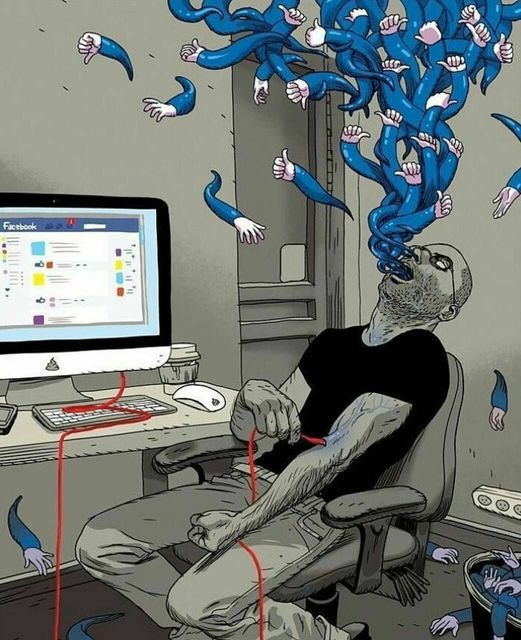
Some conversations frame this as individualism vs collectivism, that’s too simple. Healthy networks hold both, individuals with autonomy, creativity and communities with shared norms and mutual responsibility.
- Too much individualism → fragmentation and noise.
- Too much collectivism → rigidity and exclusion.
The Fediverse works when it behaves more like a murmuration – many independent actors moving with shared awareness.
The “village vs city” problem. When we started on this path, as Mastodon and other Fediverse instances grow, the experience shifted from small instances feeling like villages, to the wider network feeling like a city. What the huge influx of mainstreaming “common sense” did not bring with them, is that tiny or very large instances alone cannot solve signal-to-noise at scale.
Social structures must evolve alongside technical federation. We are now out of balance on this path, and we need to actively find our way back. Some practical paths are to this balance is by creating and boosting thematic tag cultures (#openweb, #4opens, etc.) as social filters, like watering a garden to help it grow.
The old strategies are still good, though now largely blocked on the #dotcons. Publish from independent platforms first, then syndicate outward (self-hosting as roots, social networks as branches). Encourage open, transparent filtering tools – not hidden algorithms but user-visible choices. Curated flows (human moderation, thematic feeds, affinity groups) instead of purely chronological chaos as networks grow.
Back to the risk of importing “closed” habits. One danger of rapid migration is the unconscious push toward familiar “closed” solutions of hidden moderation logic, opaque ranking systems and defensive blocking cultures replacing mediation. Common sense from closed platforms often fails in open environments.
Open systems are harder, they require active participation, shared stewardship, and cultural literacy. If we don’t defend these values, the #openweb reboot risks recreating the same problems we tried to escape.
Judge by the #4opens as a simple compass to use to evaluate projects before boosting them. Not as purity tests, but as practical signals for long-term resilience. The goal isn’t gatekeeping, to grow a living ecosystem where openness survives scaling.
Please boost this #openweb culture content, not as nostalgia, but as active infrastructure. Remember, individual vs collective is false opposition, so please don’t be a prat on this subject, thanks.

@info If there is so much focus in #fediverse on shared culture and ideology, what stops preventing it becoming just another echo chamber, which will drift away from reality?
Remote Reply
Original Comment URL
Your Profile
Why do I need to enter my profile?
This site is part of the ⁂ open social web, a network of interconnected social platforms (like Mastodon, Pixelfed, Friendica, and others). Unlike centralized social media, your account lives on a platform of your choice, and you can interact with people across different platforms.
By entering your profile, we can send you to your account where you can complete this action.