Manifesto for the Hashtag Commons

Outreach for the #OMN path, for the past year, the hashtag story has taken shape, not as branding, not as marketing, but as a shared language for navigating the mess we’re in. Each tag is compost: lived experience, memory of struggle, lessons from broken movements, glimpses of collective futures. Together they form a map of where we have been and the ground we are trying to rebuild.

This story is now done enough to act as a tool: a framework that connects all the projects, all the struggles, all the seeds of the #openweb still alive beneath the concrete of the #dotcons. It is the cultural layer that makes the technical layer possible.

But culture alone doesn’t run servers. Ideas alone don’t federate. And stories alone don’t build the future. We are at the point where the #OMN needs hands, skills, and messy collaboration to move from compost to sprouts.

Why this matters now, the last decades have been dominated by #stupidindividualism, a value system that believes progress comes from isolated actors, personal brands, and vertical structures. It produced a brittle world where resilience is outsourced, where every commons is pushed to monetise, and where the #deathcult logic of extraction is treated as “normal.”

Our work – the hashtag ecosystem, the #4opens, the #OGB, the #OMN – is a counter-current. Not a product, not an app, not a platform chasing hype cycles, it is a path toward:

  • Public-first networks
  • Permissionless publishing
  • Collective governance
  • Local autonomy woven into global flows

This isn’t nostalgia, it’s urgently needed #KISS survival. If we do not rebuild horizontal infrastructure now, the coming decades of #climatechaos will be shaped entirely by closed systems, proprietary protocols, and “solutions” that cannot be questioned.

The Hashtag Story as outreach tool, the hashtag system functions as a shared vocabulary, a way for people to step into the conversation without needing insider history.

#stupidindividualism, #openweb, #deathcult, #climatechaos, #OMN, #OGB, #4opens, #techshit, #nothingnew. These are not memes, they’re a lexicon for agency. The next phase is to combine this cultural layer with working codebases. Once one of the #OMN implementations is stable, the hashtag-combination tools will become transformative. They allow:

  • networked meaning-making
  • distributed editorial processes
  • peer governance
  • cross-platform, public-first publishing
  • local instances that connect into a wider commons without central control

This is the infrastructure the last generation of movements never had. What is blocking? People and Resources, yes, the same old story, funding and people. Here in Oxford, the search for a tech crew hasn’t turned up much yet. The bigger truth is that many potential contributors are scattered, burnt out, or trapped inside the #dotcons economy where every hour of labour must be monetised.

But there are people out there who still believe in the commons. People who want to build rather than brand. People who understand that open infrastructure is not optional.

This manifesto is an invitation to those people. If you want to #KISS work on:

  • federated, non-corporate publishing
  • governance without gatekeepers
  • open metadata and community sorting
  • tools that strengthen movements instead of extracting from them
  • infrastructures that grow like ecosystems rather than like empires

Then the #OMN path is open, we are not looking for heroes, we are looking for collaborators,
for people who can work in the open, for people who understand that messy is healthy, for people who know that compost is more valuable than hype.

If that’s you, step forward. Bring code, or time, or testing, or critique, or even just curiosity. The groundwork is laid, hashtags are seeded, what we need now is the crew to grow the next layer.

Let’s build the commons. Let’s reboot the #openweb. Let’s make the #OMN real.

https://hamishcampbell.com/?s=hashtag+story

We are not suffering from a shortage of “great leaders”

What we are suffering from a shortage of collective pathways. The crisis we are walking into isn’t caused by a lack of charisma or vision at the top. It’s caused by the cultural trap we’ve built around individual solutions to systemic problems. #stupidindividualism – the obsession with personal leaders, personal brands, personal genius – is going to kill millions and displace billions over the next 20 years. Not because individuals are inherently harmful, but because individualism is the wrong tool for a collapsing world.

Vertical thinking can’t see horizontal realities. If your whole value system is built around leaders, ranks, and “key figures,” you will be blind to the commons, to networks, to peer processes, to messy collective agency. And this blindness is not neutral, it accelerates #climatechaos, feeds the #deathcult, and locks us into the same extractive paths that got us here in the first place.

The way forward isn’t another charismatic savior or another “hero innovator.” What we need is to balance collective pathways built from the ground up. Any working future needs:

  • Networks, not heroes. Because no single person can hold the complexity ahead.
  • Practices, not brands. Because technique and culture outlast personalities.
  • Open processes, not closed hierarchies. Because transparency is the only antidote to captured systems.
  • Shared governance, not managed optics. Because appearance won’t save us, but participation might.
  • Messy, compostable infrastructures, not shiny hype machines. Because real change grows from what we renew, reuse, and reimagine, not what we market.

This thinking points toward the #OMN, not as a product, not as a platform, not as “the next big thing,” but as a path. A way of organising, publishing, coordinating, and governing that is native to the horizontal world we actually live in. A way to compost the #techshit and grow something more real.

We don’t need better leaders, we need better collectives, we need spaces where the horizontal becomes visible again. And we need them now.

The #mainstreaming has a crap story, they say that the crisis of communication – the noise, the chaos, the misinformation, the anxiety – can only be solved by “returning to trusted sources.”
They will argue that decentralized media is dangerous, that the “wild internet” must be cleaned up, that only vetted, official voices should have reach.

They will say that decentralized paths, all horizontal spaces are inevitably viral cesspools, and that our #openweb native podcasts, newsletters, open blogs, fedi servers are similer unregulated contamination. The growing fascism, in the end, will push that non-institutional voices are a threat to public order. That public conversation must be brought back under professional management, them.

The line will be simple: “Let the experts speak. Everyone else, sit down.” This is the predictable response of a broken society that lost control of its own narratives. And yes, they are right about one thing, that Big Tech is a sewer. The #dotcons profit from rage, division, algorithmic sewage, and emotional manipulation. Their business model is engineered disinformation. They are the factories of mess we live in.

But the establishment’s mistake, or more accurately, their strategic convenient lie, is pretending we, the #openweb, are the same, we are not. The #fediverse is not Facebook, Podcasts are not TikTok, Blogs and newsletters are not X, the #openweb is not #AlgoMedia.

We are: human-scale, chronological, transparent, open-process, community governed, non-addictive, non-manipulative. Decentralized media is not chaos – it is plurality. The messy public – not the polished elitists – speaking in many voices.

The establishment wants a return to vertical media because they cannot see horizontal people. Their value system literally blinds them. They believe discourse must be orderly, top-down, fact-checked by institutions that have long since been captured by the #deathcult of capital and careerism.

The problem is not that too many people speak, the problem is that too few people have been allowed to listen. The #OMN is the seedling of the opposite vision, many small voices, widely distributed, human editorial networks, community amplification and messy compostable infrastructure. The fedi, podcasts, blogs, newsletters – these are not the disease. They are the immune system emerging in response to the disease.

The establishment sees disorder, we see a rewilding,

They see danger, we see a necessary correction.

They see fragmentation, we see a path back to collective agency.

Not only that, but the current #mainstreaming are desperate to recentralize the narrative because decentralization breaks their #deathcult monopole on truth, framing, and attention. The people do not need saving from themselves, they need saving from the system that hijacked their voices. They need a native path that is open, messy, federated, to push compostable public media, where trust is earned through transparency, not authority.

#KISS

The internet itself isn’t the problem

Let’s be clear: the internet itself isn’t the problem. We knew how to build decentralised, humane, empowering networks long before the #dotcons turned everything into a behavioural extraction machine. The original internet – messy, permissionless, #4opens by default – can’t addict you. It doesn’t care. It doesn’t optimise. It just connects.

What addicts you are, the enclosure layers built on top of the internet. The sticky walls. The velvet handcuffs. The slick, dopamine-juiced engagement loops that the #dotcons built precisely because an open commons is unprofitable to their shareholders.

The tragedy is that we’ve let that thin, commercial crust redefine what people think the internet is. And because people can’t see the difference anymore, they blame “technology” or “the internet” instead of the actual problem, #dotcons corporate capture of communications.

This misframing is not an accident. It’s a political success for Silicon Valley. We do need to call out this #techshit, the compost layer we need to break down and return to the soil, but don’t mistake it for the internet. One is a commons. The other is a shopping mall with mirrors.

And this matters, because if we accept the framing that the entire internet is toxic, addictive, or inherently harmful, we give up the ground needed to fight for a public-first, #openweb future. We surrender the commons to the #dotcons by default. It’s classic #deathcult logic: destroy the shared world, declare it unfixable, then sell the gated alternative.

The #KISS path is still there, just harder to see under the sludge: simple tools, open protocols, people over platforms, and messy, real community instead of “curated engagement.” Things grow in compost. Even #techshit. Especially #techshit.

The task now is helping people tell the difference between the internet and the systems designed to trap them, and then getting them out into the open air again.

“We, we, we,” they say – but who chooses the “we”?

Trump and Putin are the figureheads of the #deathcult and 3ed rate people like Staner are puppets. The #nastyfew, mostly invisible in the smoke and mirrors of #mainstreaming media, are the ones who push the “we”. And they also invest in a part of our “progressive” paths, always much less affective than they need to be, let’s look at this from the latest #AI tech the #dotcons and more importantly our own #NGO crew.

The core of the #NGO mess: they claim to represent everyone, while foreclosing every other possibility. “We, we, we,” they say – but who chooses the “we”? Meanwhile, the parasite class in tech has spent twenty years destroying the social fabric of the internet, turning everything into grift, extraction, and precarious dependence. There is every chance that this new wave of #AI/#NGO/#dotcons fusion will be just more mess for us to compost.

As I said, let’s look at these people who are in bed with the #dotcons, sucking at the teat (LINK) of the #nastyfew. It should be easy to see, at best they’re a warm blanket, precisely when we need a shovel. They always smother real change and real challenge while claiming to “scale impact.” and other buzzwords.

Working within the system and working outside it both have effects – and yes, we need to balance these paths. But let’s be honest: the “inside” path is 98% parasites, and the “outside” path is full of fashionistas hiding insider routes behind radical posturing. So the balance point isn’t where we think it is. It has to be pushed far, far back from the centre we’ve been trained to accept.

Yes, there is some value in their affective progressive-tech narratives, but it is a tiny force against the power of global capital. They love the idea of the “bridging node,” the mythical middle ground where nothing is actually bridged and nothing is actually changed. Soft, persuasive, endlessly consulting, the #NGO path is a warm blanket to snugal when you should be getting up to work. It comforts, it reassures, and it is collectively ineffective. In the end, that blanket is all they have to offer: a feeling, not a transformation.

And then there’s all the #AI, most of it #techshit witch we need to be clear, is not intelligence, just more civic control in the hands of the #nastyfew. LLMs, image recognition, all of it: tools with some utility, but zero real intelligence. What they do enable is more vertical power, refined manipulation, more subtle control, more extraction of attention, behaviour, and labour through the constantly spreading #dotcons.

With our ongoing #openweb reboot we need a real democratic steering wheel again, actual power to change, not ONLY warm blankets and #PR funding. This is why the #OMN, the #4opens, and the slow work of composting matter. Because every other path on offer right now leads straight back to the same smothering, stagnant centre – the place where nothing grows.

#OMN

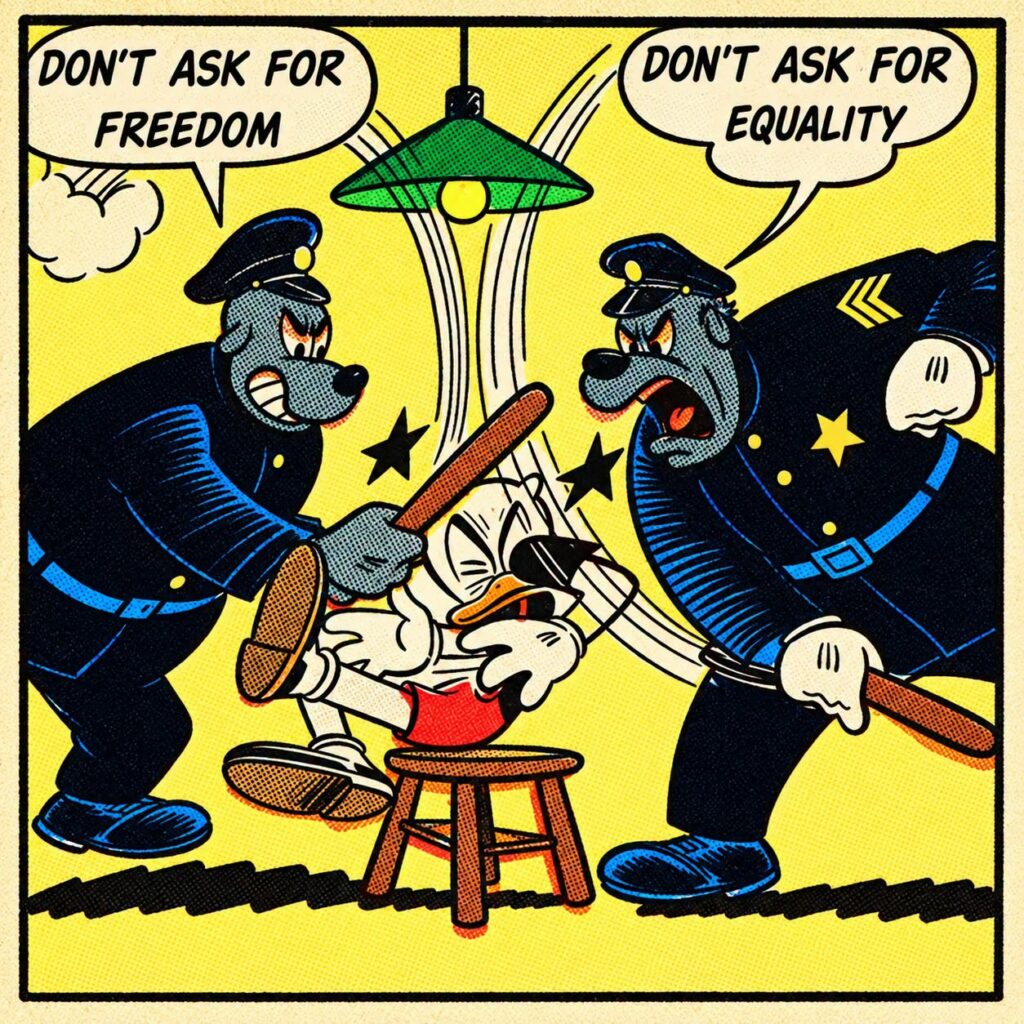
At best, the old #mainstreaming was about equality in worshipping the #deathcult

The old #mainstreaming was only in a limited way about freedom, so we now need to focus on more on what it was about, equality in obedience. Equality in our blinded worship of the #deathcult: growth, consumption, competition, endless mess on a dying planet.

That’s why #fashernista liberal progressivism is always a dead end problem, it plays radical, says radical, but composts nothing. At best, it sells rebellion as a lifestyle. It’s equality inside the system, not about freedom from it.

We’ve seen this play out a thousand times. Movements rise, fresh and alive, then get polished into campaigns, reports, and consultancy slides. Grassroots becomes “stakeholder.” Vision becomes “strategy.” Change becomes “branding.” All form, no compost. All language, no shared life.

Any real change, living change, means turning the dead weight of institutions, egos, and fear into fertile soil. It’s messy, collective, risky. It doesn’t ask permission. It doesn’t chase funding and #NGO approval. It grows because it has to.

That’s what the #OMN (Open Media Network) path is about – composting the old #techshit, the #dotcons, and the NGO decay into something living again. Media that belongs to no one but serves everyone, built on the #4opens.

So the real question is simple. What does real change and challenge look like to you? How do we build it together, in the open, without falling back into the same polite obedience that killed everything before?

The #OMN and the #4opens aren’t abstract ideas, they’re tools for action. If we’re serious about composting the old world into something living, we need hands in the soil, not just words in the air. Here’s how people can start now, from wherever they stand:

#FOSS coding: Build the #openweb, not the #closedweb. Work on #Fediverse tools – join existing native #fashernista projects like Mastodon, PeerTube, Mobilizon, Funkwhale, or the more useful #OMN itself. Fix bugs, improve UI, write docs, or just help test and report issues.

Use the #4opens in practice: No private repos, no hoarding, public decision-making, everyone can use it. Compost old code: take abandoned projects and adapt them. Don’t build shiny new tech for ego points, fix what’s already here. If you’re practical, run small community servers: self-host media, blogs, Fedi instances. Learn how networks breathe.

Then we have social activism, keep it social, messy, and grounded. Form local affinity groups around #openweb media – film nights, repair cafés, public jams. Document everything: record protests, community stories, forgotten spaces.

The next #Indymedia starts with people saying this matters. Challenge control where you see it growing – in meetings, projects, #NGOs, progressive spaces. Ask: is this open? Who holds power here? What’s being hidden? Compost negativity: don’t waste energy on flame wars. Turn frustration into content, conversation, and code.

Avoid the #NGO trap – don’t let money dictate the mission. Use micro-funding and co-ops:
OpenCollective, Liberapay, cooperative hosting. Keep the process/books open: publish budgets, donations, and decisions publicly (#4opens). Value labour differently, not everything needs to be paid. Shared work and mutual aid count as real economy.

Bridging to #NGOs and Institutions but don’t get eaten. Engage, but on your terms, use the #4opens as a boundary tool. If an #NGO don’t work openly, walk away. Offer bridges, not control. Help NGOs learn openness, federate, don’t integrate.

Bring culture into the conversation. Explain why open process and transparency are political acts, not technical choices. Stay autonomous: The moment an institution starts setting your agenda, compost it.

Build the commons, not empires. Everything we do should feed back into the collective soil.
* If you build a tool, make it usable by others.
* If you make media, licence it open.
* If you host something, teach others how to host too.

This is how we win: not through scale, but through replication. Small, self-organizing, composting networks connected through trust. Remember, revolution isn’t about blowing up the system. It’s about composting what’s dead, sharing what’s alive, and keeping the soil open for what’s next.

#openweb #nothingnew #techshit #OMN #fashernista #mainstreaming #deathcult

The Blockchain Socialist: Self-Destruction as Theory

The Blockchain Socialist podcast is the deluded self-destructive talking about the deluded self-destructive in tech. It’s a mirror of our time: intellectuals dissecting the ruins while still worshipping the same #deathcult gods that caused the collapse.

I am listening to an example of this Urbit – about a hardcoded, reactionary tech dream of order built on decentralization, doomed from the start. Not only because the code is bad, but because the culture is. Control disguised as liberation. Hierarchy dressed up as protocol.

This pointless conversation, like so many in the blockchain mess, shows the core #geekproblem: A culture so desperate to escape (old)capitalism that it rebuilds it, line by line, in smart contracts and hard tech algorithms. The people of the blinded tech #deathcult feed on this delusion. Which rewards cleverness over care, abstraction over community, and always, always mistakes power for freedom.

If we want a real alternative, it won’t come from this technocratic dystopias or tokenized cooperation. It will come from composting this mess, from projects grounded in the #4opens, from the living soil of the #openweb, from people who choose the path of trust over control.

Listen to this chattering on the dark enlightenment if you must, but listen as you’d watch decay: as part of the cycle. The old world breaking down so something new can grow.

#OMN #geekproblem #techshit #nothingnew #deathcult

Change is Freedom, Change is Life

You don’t get transformative change by building according to the incentives of the dominant system. A post inspired by rereading Ursula K. Le Guin’s The Dispossessed: An Ambiguous Utopia as part of the Utopia Reading Group in #Oxford

“There’s a point, around the age of twenty, when you have to choose whether to be like everybody else the rest of your life, or to make a virtue of your peculiarities.”
— Ursula K. Le Guin, The Dispossessed

Most people choose the easy path: they find a nice, safe hierarchy and settle in. They obey the rules, repeat the slogans, and mistake obedience for belonging. They stop thinking for themselves. They stop changing.

But change is freedom. Change is life.

Le Guin’s The Dispossessed captures the tension perfectly – between the anarchic, cooperative world of Anarres and the closed, hierarchical planet of Urras. It’s not only a science-fiction metaphor; it’s the current mirror of the #openweb we refuse to look into. The “open” world we imagine is already all around us, fragile, fragile seedlings buried beneath layers of control, ego, and fear.

This is the mess we need to compost, we see it every day. Talented people watching their work and lives being wasted. Good minds submitting to stupid ones. Strength and courage strangled by envy, greed for power, fear of change.

Looking back at web history, think of how #Indymedia burned bright for a moment, then was strangled by internal control and external hostility. Think of how the second reboot – visionOntv on PeerTube – tried to keep that radical history alive, only to collapse again under neglect, lack of support, and the dominance of #dotcons platforms. Ten years of grassroots videos deleted, shadowbanned, or “de-prioritized.” That’s oftern what the suffocation of freedom looks like, not jackboots, but the slow deletion of memory.

Everywhere, the potential for something living and new gets buried under the weight of control. When a grassroots project loses its edge because it’s easier to fit into “funding priorities.” When energy turns to exhaustion, creativity to compliance, rebellion to report-writing. This is the logic of the #deathcult – the slow suffocation of change.

The #deathcult thrives on fear and hierarchy, the illusion that safety comes from control.
It’s not that people don’t care, it’s that the system teaches them not to. Managers, bureaucrats, “leaders” are all terrified of what real openness might unleash.

The banality of obedience. Le Guin warned us that the danger of obedience is not stability, it’s death. Urras, the rich capitalist world, runs on obedience. Anarres, the poor anarchist moon, survives on mutual responsibility.

You can’t get transformative change by operating according to the incentives of that system.
That’s why NGO culture and corporate-funded “innovation” projects always fail the real test.
They replicate the very control structures they claim to challenge.

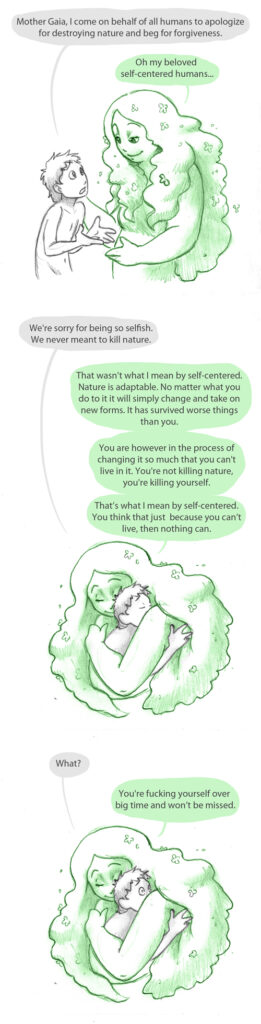
The composting of culture, the natural world understands what our institutions forget: compost happens whether you want it to or not. What’s dead breaks down, and from that decay, new life takes root.

The same is true for culture and technology. The #dotcons and #closedweb platforms trap creativity and channel it into profit. They turn every act of sharing into data extraction, every connection into surveillance. They turn good minds into “content” and living movements into metrics.

We don’t need more “innovation” within this rot, we need composting. That’s what the #OMN (Open Media Network) is for, taking what’s broken and turning it back into living soil.
A simple, federated network built on the #4opens to grow real, grassroots media again, not as a static structure, but as a breathing, evolving commons.

Revolution is not destruction; it’s renewal. It’s the composting of the dead so that the living may grow. Revolution is our obligation, our hope of evolution.

Choosing life over control, to choose change is to choose life. To cling to control is to choose decay. The #OMN is one path to life, open, messy, collective. The alternative is more of what we already have: talent wasted, good minds ground down, courage strangled.

Le Guin’s lesson still stands:
“You cannot buy the revolution.
You cannot make the revolution.
You can only be the revolution.”

Let’s be that change. Let’s compost the dead systems, and make space for what’s next.

#4opens #openweb #OMN #nothingnew #techshit #deathcult #TheDispossessed #UtopiaReadingGroup

The #AI bubble might be nastier than the Dot.com crash

The path the #mainstreaming in tech is taking is clear. #AI is fashion, the valuations are absurd, the cost structures unsustainable, and the hype cycle feels like it’s already outpacing reality.

We’ve been here before, dot.com déjà vu. The #dotcons bubble of 2000 was built on fake demand and fantasy valuations. Venture capital flooded into half-baked platforms that promised to “reinvent” everything, while the effect was to hollow out and enclose the native #openweb. When the bubble burst, it wasn’t just investors who lost, the damage was social, cultural, and technological, it’s the mess we are in today.

The AI bubble, 2025 edition, we’re watching the same movie again, only bigger and nastier. This time, the hype engine is driven by press releases and corporate lobbying, amplified by blinded compliant media desperate to see the next miracle story. Every company claims they’re solving “the biggest problem” with AI. But lift the lid, the rhetoric, and what remains? Business models that don’t add value, expensive wrappers around existing tools. Unsustainable costs – GPU farms burning cash and carbon in equal measure. Speculation over substance, #nastyfew investors betting on domination rather than usefulness.

Why this round may be worse, at least the #dotcons bubble left some infrastructure we could build on: fibre, hosting, and the spread of the web itself. The #AI bubble looks different, as it centralises power even further in the hands of a few #dotcons. Accelerates #climatechaos through energy-intensive training runs and datacentre inflation. It undermines our flawed democracies, trust in media and knowledge with floods of synthetic content.

https://www.youtube.com/watch?v=6e1Tqc_rWeQ
The ending to this video is a shocker, but not unsepreising when you look at the context of the video.

Instead of building open, federated, useful tools, we’re watching another round of #techshit enclosure, hype and money funnelling into projects that can’t last, but which will leave more #techshit scorched-earth legacy when they collapse. The #dotcons crash was messy, the AI crash could be toxic.

What can people do to walk away from this mess? How do you help with the #OMN and #4opens? The AI bubble shows what happens when tech is built on the normal hype, enclosure, and extraction on the #dotcons path. The #OMN is the opposite of this. It’s about building trust-based, federated networks where media, knowledge, and tools aren’t just another asset class to be bought and sold. The #4opens are the activist #FOSS antidote to bubble logic:

  • Open Data – No black boxes. If #AI is going to be part of any future, the training data, biases, and methods must be transparent, not locked up by Google, OpenAI, or Microsoft.
  • Open Code – Instead of closed, centralised data sets and platforms that extract rent, we need free/libre code anyone can run, fork, and improve.
  • Open Standards – The current AI mess is about silos and monopolies. Federated standards (like ActivityPub for social) are how we work to keep diversity alive and break enclosure.
  • Open Process – The opposite of corporate secrecy and hype. Decisions need to be made in the open, accountable to communities, not hidden boardrooms or PR cycles.

The #AI bubble is the normal every day #deathcult logic of the #dotcons playing out again: extract, enclose, collapse, repeat. The #OMN and #4opens give us a way to compost this mess into something more fertile. From enclosure → to federation. From secrecy → to openness. From hype cycles → to slow, messy, sustainable growth.

If we don’t actively build and defend this needed native path, we’ll be left cleaning up another round of collapse, only this time with more concentration of power, more environmental damage, and a deeper erosion of trust. The choice is simple: do we keep betting on bubbles, or do we build commons?

And the path is #KISS, so people please don’t be a prat about this, thanks.

Looking for an affinity group to take the first step #OMN

The #algorithm on #YouTube has flipped hard right wing for me, a few other people have said the same, please add if you have seen this as well? If this is widespread, it shows how important it is to get normal people back to the #openweb reboot we are all involved in here.

This is obviously a form of social control, with the dominating of the #dotcons platforms in most peoples lives, plain and simple, the price of us building this domination.

The #hashtag story begins with disempowering the #mainstreaming in our own minds. First step: breaking the spell, realising we don’t have to live inside their frame.

Second step: forming the affinity group circle. Gathering with others who can see through the smoke and mirrors. From that circle comes the power to build the #OMN shovel.

Third step: composting. Taking all the #techshit – the failed projects, poisoned cultures, and dead ends – and turning them back into fertile soil. #OGB

What we do with that soil is up to us. That’s where the future grows. #KISS

The #geekproblem only sees #cavetechnology. But society is far too complex for that, you’d have to kill billions to make it work.

4opens is the opposite: a data commons. Light as a tool to fight with, not darkness to hide in.

A small view of steps we need

I normally talk and work on big issues, let’s look for a moment at smaller steps. To make a big change, we need to start with practical paths (everyday grassroots & do-able). A personal short step is to detox one feed, not your life. Pick one algorithmic platform and shrink usage: unfollow, mute, or temporarily uninstall the app. Replace 15–30 minutes of scrolling with one intentional action by using replacement tools (not perfect, but better).

  • Try ActivityPub/Fediverse clients (Mastodon, PixelFed, PeerTube), RSS readers, or small community forums. Start with reading, not posting – build habit.
  • Curate your attention, subscribe to a few human-edited newsletters, local news, or blogs (#RSS). Teach friends how to set up an RSS reader or follow a small subject blog.
  • Practice media hygiene, verify before sharing. Pause, check one source, ask “who benefits if this spreads?” Be boringly sceptical.
  • Vote with time and money, support small creators directly (tips, buys, memberships) and donate to independent projects like community news sites, local papers, or tech co-ops.
  • Community & organising moves, host local “show-and-tell” sessions. 1 hour: show alternatives, how to use RSS/Mastodon/PeerTube, and why they matter. Bring tea.
  • Build small trust circles, start a group that publishes a single short community bulletin or podcast – keep it non-algorithmic and share by link.
  • Make open culture visible, put simple “we’re #openweb-friendly” stickers/links in local cafés, libraries, community boards. Make it easy to find one another.
  • Teach the next person, each person teaches one other person how to escape one algorithmic trap – then they teach another. Tiny chain.
  • Tech & product-level tactics (simple, not spectacular). Run a tiny, friendly instance. Local gatherings or collectives host a low-cost Mastodon/PeerTube instance with clear moderation and a friendly onboarding doc. Promote link-first publishing.
  • Encourage people to put content on a simple blog (or even a shared public wiki document) and share links rather than rely on feeds.
  • Use interoperable standards. Favours tech that uses open protocols, so people can migrate and mix services without being trapped.
  • Policy, campaigns & pressure. Demand transparency. Pressure institutions (schools, libraries, local councils) to publish simple rules about algorithmic tools and offer alternatives.
  • Support regulatory fights that protect attention. Back campaigns that limit manipulative design (dark patterns, endless feeds) and push for algorithmic audits. Amplify worker voices. Support platform workers and former moderators who expose harms – they are crucial allies.

What positive outcomes do we want? (clear, concrete). Less algorithmic amplification of fear. Fewer engineered outrage cascades in our local networks. Resilient, localised media ecology. Lots of small, trusted outlets (indymedia, community radio, blogs) that aren’t driven by ad-engagement. Restored civic trust & shared facts. Communities that can act together because they share a baseline of reality.

Shared infrastructure under community control. Instances, archives, and services run by people and collectives, not opaque ad corporations. More empathy in circulation. Content that rewards kindness and care rather than outrage.

This matters because if we don’t act, the future is already written by the #dotcons. Their algorithms don’t just reflect society, they shape it – twisting attention into fear, isolating people in bubbles of paranoia, and feeding the hard right until cruelty looks normal. This isn’t an accident; it’s the business model.

Every minute we spend scrolling through their poisoned feeds, we’re training ourselves to be more divided, more hopeless, more powerless. That’s their plan: keep us distracted, keep us arguing, keep us consuming, while the world burns and the billionaires laugh at us.

We don’t have the luxury of despair. Walking away from the #openweb and our own traditions of collective action left a vacuum, and the hard right rushed in. They stole our language of freedom, community, and even rebellion, and twisted it into authoritarian poison. That’s on us. We fucked up.

Now we fix it. The alternative is watching the world sink into algorithmic fascism, where cruelty is the currency of attention. The positive outcome is right in front of us: small, messy, grassroots networks where kindness and solidarity are amplified instead of hate. The #OMN, the #4opens, the trust-based paths we already know work.

We compost the #techshit because what grows out of this soil is hope, and without hope we’re already lost.

The algorithm is feeding us fascism – Time to step away

The hard right is taking all the agendas, traditions, and paths that the left abandoned, and twisting them to push its authoritarian politics harder. It’s a mess of our own making. When we walked away from the sense-based left paths – trust, solidarity, open debate, collective action – we left a vacuum. The right filled it with fear and control. We fucked this up. Now we have to fix it. #KISS

With the spreading of right-wing propaganda on the #dotcons what we’re experiencing is a late-stage symptom of the #dotcons algorithm machine. Once it starts feeding this level of right-wing “recommended” propaganda, you can be certain that the average person has been saturated with it for years. That’s how we end up with the cultural rot and polarisation we see now.

The dynamic is simple:

  • Engagement is the only metric → anger and fear drive more engagement than trust or hope → the algorithms amplify right-wing and conspiratorial content.
  • Normalisation follows → people stop noticing the manipulation, because it comes wrapped in everyday “banter,” “debate,” or “news.”
  • Politics bends to the feed → #mainstreaming media, #NGOs, and politicians chase the same attention flows, further dragging “common sense” into the gutter.

So yes, getting people to step away from #dotcons and back into the #openweb is crucial. The compost metaphor fits:

  • #techshit to compost → all the broken, manipulative, ad-driven “social” platforms.
  • #OMN → a messy, trust-based garden where communities can grow their own media again, rather than being force-fed monoculture by algorithm.
  • Path forward → build simple, transparent tools (#KISS) and link them to social practices (trust, affinity, #4opens) so people see the difference in their own lives.

The move is urgently necessary because the alternative is to let the rotting #deathcult (#neoliberalism + #dotcons) push smoke and mirrors, feeding on our attention, poisoning our discourse, and steering our politics to the hard right.

The right propaganda, commentators, try to distract us from the extremes of the right by claiming there’s an “extreme left.” Let’s lift the lid on this. The right is driven by individualism and the obsession with “winning” as if it’s a contest. This path breeds selfishness and calculated cruelty with zero empathy – more selfishness, more cruelty. The left, is a strong contrast, it starts from kindness and mutual support. It believes in sharing, in building together. The extreme of that isn’t violent chaos but extreme kindness, extreme empathy. Which side would you rather see amplified by algorithms?

We need to get to work with shovels to compost this mess.

Pick up the shovel, build the commons

Right now, our digital lives are stuck between two bad choices: Stranded silos, your notes, photos, chats locked into one device. #dotcons capture, hand it all to Google, Apple, Meta, and rent your own history back from them.

We deserve better. What we actually need is simple: Blobs of data that syncs across devices and servers. A conflict resolution flow. Sync is hard, but not impossible, better to resolve a clash than lose flow. A protocol path that isn’t “just another cloud,” but part of a commons.

This is the path of the #OMN (Open Media Network). Bridging client/server with #p2p flows, people power, where people hold their own history instead of renting it back from the #deathcult. To make this work, we need to keep it #KISS so normal people, not just geeks, can understand and use it. It’s not about building a new shiny app. It’s about laying the pipes, tanks, and flows – the plumbing – that keeps our media and our history, as a reflection of us, in native flows.

This is shovel work. This is how we compost the #techshit and grow something real. The choice is clear, stay stuck in silos, lease life from the cloud. Or pick up the shovel and build a trust-based, decentralised future. The tools are #OMN, #4opens. What’s missing is you. That’s the shovel work. That’s the compost. The question isn’t “can we build it?” – the question is: who’s going to pick up the shovel first?

https://unite.openworlds.info/Open-Media-Network

https://opencollective.com/open-media-network