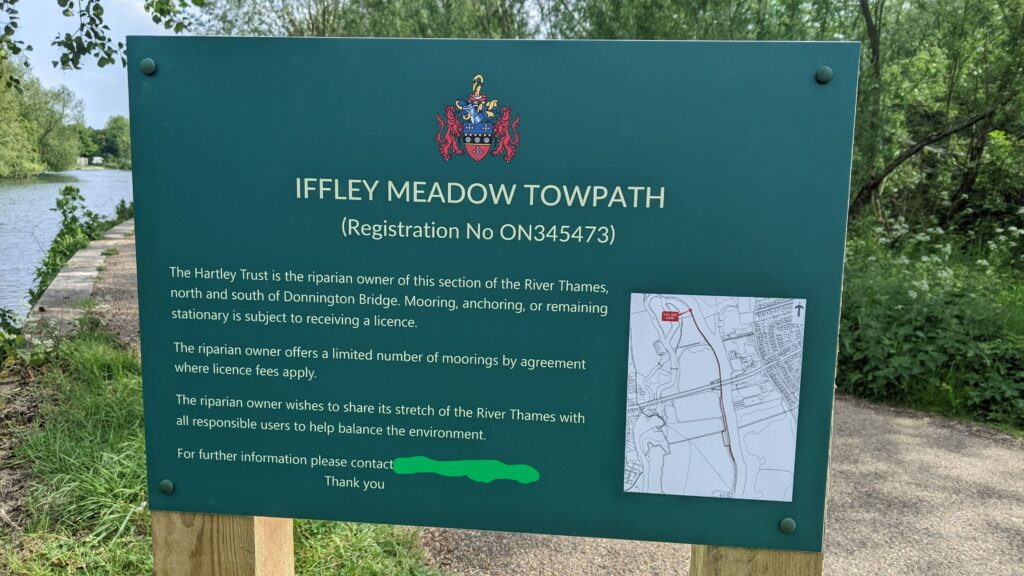
There will be increasing experience of commons as lived infrastructure, not theory, not an idea waiting to be implemented. As the #mainstreaming keeps failing people will need practical, community-led way of meeting shared needs that work and exists wherever people cooperate outside of markets and hierarchy. Commons are not abstract systems, they are what people do when they stop waiting for permission.
We have a recent example – #Oxfordboaters it is messy commons in real time, not a perfect system, more a lived commons under pressure. A community trying to juggle shared infrastructure (boats, moorings, water systems), shared risk (flooding, breakdowns, legal pressure), shared survival (housing precarity, cost of living, access to services) and shared conflict (governance, trust, personality tensions). This example is what commons actually look like in practice, not clean, not tidy, not ideologically pure, but functioning through necessity.
When the state and market do not meet needs, people fall back on each other, that is sometimes the commons’ path… The lesson we learn, it is easy to see, commons are not harmony, they are coordination under pressure. What we can also see is the mistake #fluffy people make in thinking commons are about agreement, they are not, commons are about negotiating conflict, sharing risk, maintaining infrastructure by building trust over time so we can recover from failure repeatedly. The last 4 months of #Oxfordboaters show all of this, the hard truth – Commons fail when they cannot evolve governance faster than crisis accumulates – this is not a moral failure, it is an organisational challenge.
So why do commons break – and why do they keep coming back. Like most grassroots paths, #Oxfordboaters reveals three recurring pressures:
- External pressure – State regulation, land pressure, legal ambiguity, the enclosure dynamic never stops.
- Internal fragility – Informal systems rely on trust. Trust gets strained under stress, inequality, and burnout.
- Governance lag
Decision-making structures rarely evolve as fast as the problems they face, this is a pattern across almost all commons. Commons do not fail because people stop caring, they fail because complexity outgrows structure. But there is a happy part of composting this mess – failure is a part of commons evolution, commons are not stable objects, they are adaptive processes. Oxfordboaters shows that even broken commons still generate mutual aid, shared knowledge, infrastructure repair and survival capacity. Yes, in common sense market logic, this would be “inefficient”, in commons logic, it is resilience under constraint.
The #OMN project framing is why this matters beyond boats. The Open Media Network (#OMN) view is simple – we are not just trying to describe commons. We are trying to improve their ability to survive contact with reality. This example is not a niche story, rather a micro-version of housing systems, digital networks (#fediverse, #openweb), activist spaces, climate adaptation communities and post-institution survival systems. These same patterns repeat everywhere, when systems fail, people build commons whether they call them that or not.
The dangerous mess is we have unlearning commons, the cultural – 40 years of #neoliberal thinking has trained people to believe that trust is weakness, cooperation is fragile, governance must be top-down and commons are “messy exceptions” rather than default behaviour. So even when people build commons, they then try to formalise them into hierarchy by turning them into organisations or burn out trying to manage them individually. This reaction is the mess we need to compost, our example, Oxford boaters currently sits right inside this tension.
We learn what actually works, the pragmatic commons path, a few patterns consistently work: small, local decision loops, visible shared infrastructure, flexible governance that evolves to grow redundancy (no single point of failure), permissionless participation and clear boundaries for conflict resolution. This is not simply, but it is a working #KISS maintenance path.
Markets and states are both reaching limits of adaptive capacity, commons are no longer optional, they are what remains when institutions fail to scale care. The #OMN conclusion is simple, commons are how we survive collapse, that in the wider context is unavoidable, with overlapping systemic crises, ecological, economic, political, informational.
The current mess, and delight at Oxford boaters is a signal, a messy, imperfect signal that says: people will rebuild cooperation when systems break down – but also that we need better ways to support this. Commons are not about perfection, they are about persistence, they are survival systems that people can actually live inside. Our example shows both the fragility and the necessity of this work. The question is not whether commons will exist, it is whether we will learn fast enough to stop repeating the same failures in every new form.
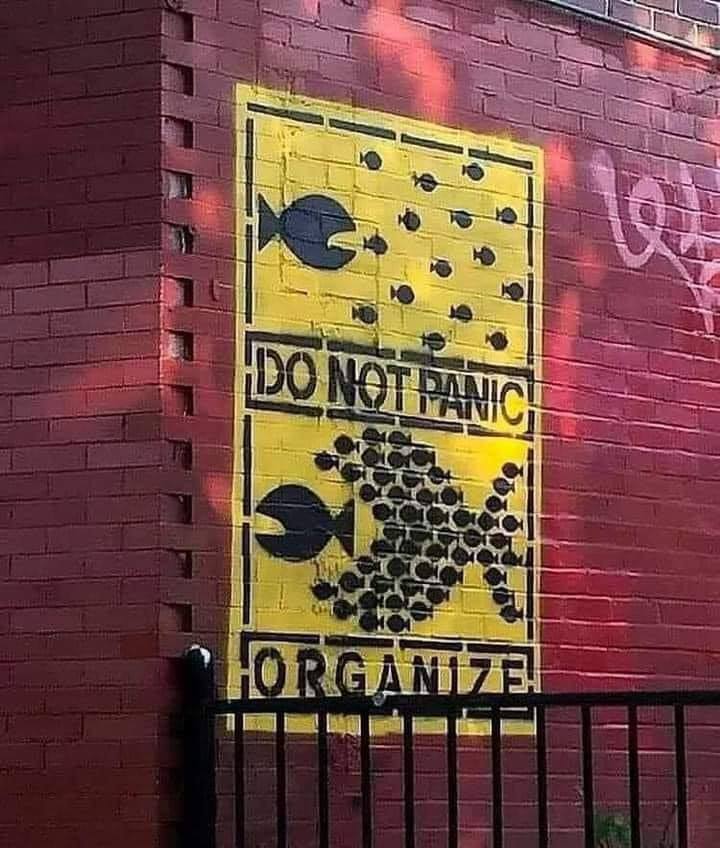
Our #mainstreaming problem. If you are wondering why I keep documenting the issues around activism, this is why. Next time, maybe we can learn, maybe we can mediate our “libertarian cats” a bit better and get a less messy path, because we cannot keep making the same mistakes over and over.
I have been through this mess hundreds of times over 40 years of working on change and challenge, outreach and community building. This is not theory, it is experience. Activism and commons spaces are messy by nature, that is part of their strength. But if we don’t learn from our failures, the same patterns keep returning, so at the very least:
Can we please fuck up differently this time?
Document the lessons.
Build the memory.
Keep the commons alive.
#OMN #commons #openweb #fediverse #4opens #climatechaos #mutualaid #socialsystems #realitycheck