Sophists – From Ancient Greece to the current #mainstreaming

“Being in #Oxford today, I popped into the #OxfordUnion to use a room. Glancing through the term card, it’s absolutely vile – and has been consistently so for the two years I’ve been back in the city. It’s a useful, if deeply dispiriting, exercise in reading the people and place. This is where parts of the next ruling class form their opinions and sharpen their instincts. Judging by what they’re platforming, we are not heading for a good time…”

One useful term about this mess on the #OMN path is “Sophist”. Historically, the Sophists were traveling teachers in Ancient Greece during the 5th and 4th centuries BC. They taught rhetoric, politics, philosophy, and persuasion to the sons of the ruling elite. In many ways, they were the media consultants, communication strategists, and public intellectuals of their time. Their ideas were, and still are, deeply useful to elitist power. Truth was treated not as something to strive for, but as something relative to perspective and circumstance. Protagoras summed this up with the phrase “Man is the measure of all things.”

From this flowed a power-based philosophy – if truth is flexible, then gaining and holding power is less about discovering what is true, and more about learning how to persuade people effectively. Sophists became famous for teaching students how to win arguments regardless of the facts, make “the weaker argument appear stronger,” and manipulate rhetoric and perception for advantage.

This is why philosophers like Socrates and Plato attacked them so fiercely. Classical philosophy, much like the modern scientific ideal, was supposed to be a search for truth, ethics, wisdom, and understanding. The Sophists instead treated philosophy as a competitive social tool for gaining status, influence, and power.

That conflict has never gone away, when we look at the last 40 years, it becomes obvious that we now live inside a revived Sophist culture. Under neoliberal #mainstreaming, politics, media, academia, branding, and online culture have steadily shifted away from questions of shared reality and toward competitive narrative management.

The central questions are no longer what is true? what is just? and what works for the commons? Instead, the “common sense” questions become what performs well? What wins attention? What controls the narrative? What protects the brand? What keeps the funding flowing? And finally, the #stupidindividualism of, what keeps the career safe?

This is the culture the #dotcons perfected, were algorithms reward emotional reaction over understanding, public relations replaces public reasoning, identity replaces grounded collective politics so that communication becomes performance instead of dialogue. Truth becomes aesthetic.

That is in part why so many people now experience a constant feeling of unreality, we are swimming in rhetorical systems optimized not for understanding, but for engagement, manipulation, and market positioning. The modern “post-truth” condition is not accidental, it is the logical outcome of self-interested #postmodern Sophist culture merged with #dotcons platform capitalism feedback loops.

What do we have to balance this, the #OMN path matters because it tries to push against this drift. The goal is not some fantasy of perfect objectivity, humans are always partial, messy, emotional, and socially situated. But there is still a huge difference between collectively searching for grounded truth together, and treating all communication as strategic manipulation. The first builds commons – the second destroys trust. This is why the #4opens matter:

Open process,
Open data,
Open standards,
Open licences.

These are not only technical principles, they are social tools designed to reduce hidden manipulation and rebuild shared trust. Visible process matters because invisible power breeds Sophistry. Open discussion matters because branding culture hides contradictions behind managed messaging. Shared media matters because without public memory, every conversation resets into manipulation and spin.

The danger of endless rhetoric is that a society trapped in Sophist culture loses the ability to act collectively. Everything becomes performance, positioning, optics, career management, and endless dead-end symbolic conflict. Meanwhile the real flowing crises deepen, #climatechaos, enclosure, collapsing infrastructure, rising authoritarianism and the destruction of public life. People are trained to argue endlessly while losing the ability to build together.

This is one of the many reasons the #openweb matters, yes, native #openweb culture is imperfect, messy, and chaotic, but it is also rooted in a stronger relationship between communication and shared reality. People built infrastructure together, they argued, but they also created commons, this spirit still survives in fragments across the #Fediverse path.

We need to use these tools to compost the Sophist mess – not through purity politics or ideological certainty, because that simply creates another closed rhetorical system. The path is to reboot cultures where truth matters again, evidence matters, lived experience matters, dialogue matters, and collective accountability matters. This needs focus because the current system trains exactly the opposite habits.

The #OMN path tries to compost this mess instead of reproducing it – with less rhetorical theater and more grounded process, less manipulation, more trust, less “winning the argument,” more building shared understanding strong enough to support collective action. That is the underlying conflict beneath much of today’s social and political confusion – the struggle between communication as manipulation and communication as commons.

And right now, the commons desperately need rebuilding, and this matters for both the #openweb reboot and the #OxfordBoaters struggle. Both are fundamentally fights over who controls reality, narrative, legitimacy, and public memory. The landowners’ push in Oxford is a small-scale example of modern Sophistry in action. The issue is not simply “facts” about moorings, river access, safety, or management. The battle is over framing of who gets presented as “reasonable,” who gets framed as “problematic,” whose voices count, whose history becomes visible and who’s gets erased. This is how eliteist power works – not only through visible force, but through narrative management, institutional framing, bureaucratic process, selective legitimacy, and most importently control of communication channels.

The boaters to often fail to engage with this power because of the atomized #stupidindividualism that dominates our lives. Yet they are precisely the people with lived experience, practical knowledge, and deep historical connection to the river, metaphor and real.

Instead, the conflict becomes nastier than it needs to be because it shifts away from solving shared problems and toward managing perception. That is modern Sophistry in practice, the same thing happens across the wider internet. The early #openweb was messy, but it was rooted in participation, shared infrastructure, transparency, and collective building. People made websites, forums, federated systems, community media, and open tools together. There were arguments, conflicts, and failures, but there was also visible process and public memory.

The rise of the #dotcons replaced much of this with managed perception systems optimised for engagement, advertising, behavioural manipulation, and social control. Communication shifted from dialogue to performance, from publishing to branding, from communities to audiences,
from commons to platforms and from participation to passive consumption. Again, this is Sophistry – communication not for understanding, but for influence and control.

This is why the #OMN path matters. The project is not simply about “better media” or “better activism.” It is about rebuilding the social conditions where grounded collective understanding becomes possible again. For the #openweb reboot this means rebuilding commons infrastructure, restoring public conversation, protecting shared memory, creating transparent governance to resist platform manipulation.

For the #OxfordBoaters struggle this means creating our own media stories to document lived reality, preserving collective memory, make hidden processes visible. This is why the #4opens are practical anti-Sophist tools – Open process counters hidden manipulation – Open data counters selective framing – Open standards counter enclosure – Open licences protect shared social knowledge from privatisation. Without these, power disappears into invisible structures while presenting itself as neutral management.

One of the deepest problems today is that many people now trust polished institutional narratives and #dotcons tools more than messy lived experience. Boaters should already understand this because they directly experience the gap between official language and material reality. The boat struggle and the #openweb struggle are connected because both are about defending commons against enclosure: river commons, communication commons, social commons and democratic commons. And both are being undermined by the same Sophist culture of managed perception, institutional branding, bureaucratic abstraction, and invisible power.

So the task is not simply to “win arguments.” That is the Sophistry trap. The native path we need is rebuild is gthe environments where truth emerge collectively, trust grows, so conflict can become productive instead of performative, and people can act together in the real world.

In short, the fight is not just against bad policies or bad platforms. It is between communication as manipulation and communication as commons. And if we do not consciously rebuild the commons side of that divide, both the rivers and the web will continue disappearing into managed enclosure #KISS

#powerpolatics #mess #compost

Treating everything as personal conflict is a dead end

Let’s focus on being honest, the most exhausting and destructive habit in activist and alternative tech spaces is the blinded reflex to turn disagreement into personal conflict. Someone challenges an idea, and it becomes an attack, names a pattern of behaviour, and suddenly it’s a vendetta. Someone points at structural problems and gets accused of targeting individuals. This is #stupidindividualism in its purest form, and it’s #nothingnew.

It’s not only about difficult personalities or bad intent, it’s the result of forty years of #neoliberal conditioning. The #deathcult of “common sense” market logic has trained us to see everything as personal, personal responsibility, personal success, personal failure, personal conflict. The frameworks for understanding structural problems have been stripped away, so when structural problems are talked about, people fall back on the only tool they’ve been given – finding someone to blame.

The result is nasty and predictable, good projects collapse into personality clashes, needed critiques get dismissed as personal attacks. The real issues will be the systemic mess that needs composting, never get addressed, because everyone is too busy dealing with the drama. This is #deathcult doing what it’s designed to do – keep us fighting each other instead of the system.

So why do we struggle to see this mess, it’s mostly invisible to the people caught inside it as people feel like they’re responding reasonably to real problems, and sometimes they are. But the frame – “this person is the problem” – is almost always wrong as this mess runs like background software, it shapes perception before conscious thought kicks in. A structural critique goes in, a personal accusation comes out – not because people are stupid, but because that’s how they’ve been trained to interpret things.

This is why telling people to “be less defensive” or “think structurally” rarely works. Were asking people to change behaviour without changing the environment that produces it. Culture follows structure, if we want different behaviour, we need different processes, practices, and spaces.

How we actually compost this? It isn’t about perfection, it’s about having better tools – some practical shovels (like the #OMN) to use to name the pattern, not the person, when things start getting personal, we simply shift the frame. “This feels like it’s turning into a personal conflict, but the issue is actually how we’re making decisions” works better than “you’re being defensive.” One opens space, the other closes it.

  • Build processes before you need them, don’t wait for conflict to figure out how to handle it. Groups that survive disagreement usually have simple, visible processes in place: how decisions happen, how issues get raised, who mediates. This is what #4opens and #OGB are for – use them early.
  • Separate decision-making from chat as most drama lives in chat spaces – WhatsApp, Discord, comment threads are optimised for reaction, not reflection. If decisions happen there, we’ll get reactive, personalised outcomes. Move important decisions into slower, more visible, documented spaces.
  • Make structural problems visible as vagueness fuels personalisation – Clear statements like “our funding model creates dependency” or “new people can’t influence decisions” give people something real to work on. Without that clarity, frustration gets directed at individuals.
  • Actively grow a different culture, its slow, but it works. Model structural thinking by rewarding people who name patterns rather than blame individuals. Create spaces where “this process isn’t working” is normal. Over time, this shifts what feels like common sense.
  • Let people step back without drama, not everyone can work in structurally-aware, non-hierarchical spaces right now, that’s OK. If leaving a project becomes a crisis, everything becomes personal. Lower the stakes, reduce the pressure, and personalisation drops.
  • Compost failure publicly, when things go wrong, talk about what failed, not who failed.
    The #openweb keeps reinventing broken wheels because we don’t compost our mistakes. Honest, structural post-mortems build shared learning.

The deeper work is that none of this is quick. The #deathcult didn’t embed itself over decades by accident, and it won’t disappear because of a few good arguments. People don’t think their way out of (stupid)individualism, they experience their way out.

What works is repetition of building spaces that function differently, showing that collective approaches work and sticking with it long enough for that experience to become normal. That’s the path of #OMN not only focusing on fixing people, not that only the right language solves everything. The path is #KISS, building open, trust-based, structurally honest systems – and composting the failures along the way – we slowly shift what “common sense” looks like.

The work is slow, practical, and unglamorous, the shovel is structure, the compost is honesty. The soil is what grows when we stop treating every problem as someone’s fault. Pick up the shovel, there’s a lot to get through.

#OMN #4opens #KISS #nothingnew

The Fluffy/Spiky Debate and the Trolls in Between

The fluffy/spiky tension is one of the oldest and least resolved arguments in activist and grassroots organising spaces. It’s real, it’s necessary, and it’s been exploited. Let’s name the grounding first.

The Fluffy Position

Fluffy politics is about inclusion, emotional safety, consensus, and non-confrontation. At its best it builds welcoming spaces, holds diverse people together, and prevents the macho posturing that drives people away from radical movements. Fluffy people are doing the invisible emotional labour that keeps groups functioning. Without them, most grassroots projects collapse into ego wars.

At its worst, fluffy becomes conflict avoidance dressed as principle. Real problems don’t get named,difficult people don’t get challenged. The group becomes a feelings-management exercise rather than an organising force. Nothing spiky – meaning nothing that actually confronts power – ever gets done, because confrontation itself has been pathologised.

The Spiky Position

Spiky politics embraces confrontation, directness, and a willingness to name uncomfortable truths regardless of who gets upset. At its best it cuts through bullshit, holds people accountable, and actually frightens the powerful rather than merely inconveniencing them. Spiky people often do the work nobody else wants to do – the hard conversation, the direct action, the refusal to pretend things are fine when they aren’t.

At its worst, spiky becomes machismo with a political justification. Aggression gets mistaken for radicalism, burning things down feels more satisfying than building. People who raise concerns about tone or process get dismissed as weak, co-opted, or bourgeois. The movement shrinks to whoever can tolerate the bad atmosphere.

The Debate

The genuine fluffy/spiky debate is worth having. Movements need both tendencies and the tension between them is productive when it’s honest. Fluffy without spiky produces nice shallow groups that change nothing. Spiky without fluffy produces effective alienators who also change little, just more dramatically. The balance is hard and context-dependent – what works on a picket line is different from what works in a community meeting, which is different again from what works online.

The problem is this debate rarely gets had with any honestly, because of a third character type who poisons the the change and challange path.

The Passive-Spiky Fluffy Troll

This is the one that needs naming clearly. This character tends to presents as fluffy. They speak the language of care, inclusion, and safety. They invoke consensus, call for kindness, and position themselves on the moral high ground of the group. But their actual behaviour is spiky in the most destructive possible way – not the honest confrontational spiky that names real problems, but a passive, weaponised spiky that:

  • Distracts – derails productive conversations with tone policing, and hurt feelings at strategic moments
  • Decides – makes unilateral calls while performing consultation, using the language of consensus to smuggle through their own blinded preferences
  • Destroys – systematically undermines people and projects they find threatening, always with plausible deniability, always from behind the shield of their own stated good intentions

They are, in effect, trolls. Not the obvious aggressive troll who can be identified and dealt with, but something more insidious – the troll wearing a fluffy third-bear costume, all warmth on the surface, all disruption underneath.

The Character Types

The Tone Policer – Never engages with substance, always has a concern about how something was said. Uses the language of trauma and safety to shut down challenges to their comfort or control. Allies with whoever seems most aggrieved at any given moment.

The Consensus Hijacker – Performs collective process while actually steering outcomes. Calls meetings, sets agendas, summarises discussions in ways that happen to always reflect their own narrow position. If challenged, expresses deep hurt that their commitment to the group is being questioned.

The Concern Troll – Agrees with the goal in principle, always. Just has concerns. So many concerns. The timing isn’t right, the framing is off, this might alienate people, have we really thought this through. Concern is infinite and self-replenishing, ensuring nothing ever moves forward.

The Moral Credentialist – Collects grievances and allyships like armour. Their identity and stated commitments make them immune to criticism. Any challenge to their behaviour becomes an attack on the community they represent. This is the most effective variant because it recruits others to their defence automatically.

The Exhaustion Engine – Doesn’t block directly, just makes everything take so long, require so much emotional management, and generate so much process overhead that the capable people eventually leave. Wins by attrition.

What To Do

Treat them as trolls. Not with hostility – that plays into their framing – but with the same basic approach you’d use for any bad-faith actor in a shared space:

  • Don’t feed the performance. Engaging earnestly with endless concern-raising rewards the behaviour.
  • Name the pattern, not the person. “This keeps happening and it’s blocking us” is more useful than “you are doing this deliberately.”
  • Keep moving. Don’t let process objections halt action indefinitely. Document, note the objection, proceed.
  • Protect the genuinely fluffy people. Real fluffy organisers are valuable and they’re often the first casualties of passive-spiky trolling, because they’re the most susceptible to guilt and the most invested in harmony.

The fluffy/spiky debate is needed, but the passive-spiky fluffy troll makes sure it never happens properly. Naming them is the first step to composting the mess they make.

The #encryptionist detour

Let’s look back to before the #Fediverse, to be honest about the last two decades of #openweb failure, for a long time we got pulled off the path. Not only by enemies, but by a mix of fear, fashion, and half-understood technical “solutions” that felt right to fearful people at the time.

The rise of the dogmatic, blinded #encryptionist mindset came out of real conditions of mass surveillance revelations (Snowden era), common sense #neoliberal distrust of states and corporations and the real harms of our worship of the (same neoliberal) #deathcult of the #dotcons

Encryption mattered – and still does – private space matters, protection matters. But what happened next at this time is where things went wrong – we shifted focus from necessary tool to blinded totalising path. For the #geekproblem and its fashionista followers – encryption shifted from being a tool in the stack to the answer to everything.

Instead of asking what should be public? – what should be private? And how do we build shared, accountable space? We got a flattened answer of “make everything encrypted and trustless” that sounds good to the blinded fear filled crew as It feels “safe”. But if you are not blind, it obviously undermines the foundations of the #openweb we were working to reboot, the #openweb isn’t built on secrecy – it’s built on shared visibility, trust, and negotiation.

This was mess, enter #blockchain and #DAO – the peak of the detour, this is where the #fashionista layer really took over. Into this already confused path stepped #blockchain, #NFT’s and #DAO governance models of token economies. The mess making was wrapped in smoke and mirrors language of decentralisation, autonomy and trustlessness to “fixing governance”.

But look at what they actually did – financialisation of everything, instead of building commons, we got tokens, ledgers, “market” incentives leading to speculation. This is a very easy to see failed imagination of market logic reintroduced through the back door of wealth = power, not in any way new, it’s smoke and mirrors to hide the same old system the native #openweb path was supposed to move beyond. This detour directly contradicts gift economies, commons-based governance and trust-based collaboration, it was used to push this needed path out of sight.

    It’s the normal mess of fear based #stupidindividualism – governance avoidance disguised as governance. DAOs didn’t in any way solve governance, they simply avoided it as real governance is messy, social, contextual, rooted in trust and relationships. DAOs tried and failed to replace this with hard voting mechanisms, token-weighted decisions and rigid rules. That’s not in any way useful governance, that’s automation of power to remove the human layer instead of engaging with it, its pure #geekproblem that our #fashionistas were to blind (or self-interested) to see past.

      This is the same problem we are repeating today (still in embryo) with the current new crew taking over pushing the #openweb reboot – this time its not only encryption, but it’s the same mess of shifting focus away from what actually matters, the same distraction.

      What can we compost from the last mess, to shine light on this path, back in the day people were busy writing whitepapers, launching tokens, debating protocol layers. Were they should have been building communities, maintaining infrastructure to grow trust networks to support real-world use #KISS This misdirection of focus, resources and energy is the recurring damage as attention is diverted away from the soil layer into tiny self-interested abstract cliques that never root.

        The #geekproblem and the #NGO loop feed this mess, as the fashionista class capture does not happen in isolation. It is amplified by two reinforcing dynamics – the #geekproblem – preference for technical certainty over social mess, belief that systems can replace relationships, discomfort with ambiguity and lived complexity. The #NGO layer with its need for fundable, legible “solutions”, preference for clean frameworks – over messy reality, career pathways built on producing narratives, not outcomes.

        Put these together, and you get complicated “solutions” that look impressive, but don’t work in practice. Back then we had a decade of drift we need to not repeat now. Back then we ended up with over-engineered systems nobody uses, governance models disconnected from lived communities and fragmented efforts chasing the next “solution”. This weakened focus on building actual alternatives, meanwhile, the #dotcons carried on consolidating power.

        The reality check for today is we built a pile of #techshit, and we are doing the same now with the current takeover crew of the #Fediverse. The last time because we failed to compost the accumulated outcome of the mess of abandoned projects, broken promises, conceptual clutter we still have the current confused direction. We need to now compost this historical mess, as keeping pretending this is fine is part of the problem, it’s not fine. But – and this matters – this “shit” doesn’t need to be useless, it’s compost.

        The native path we didn’t take (but still can), was always simpler, and still is, to build in public (#4opens), separate public and private space (#KISS), focus on trust, not “trustless”, grow from real communities, not closed cliques.

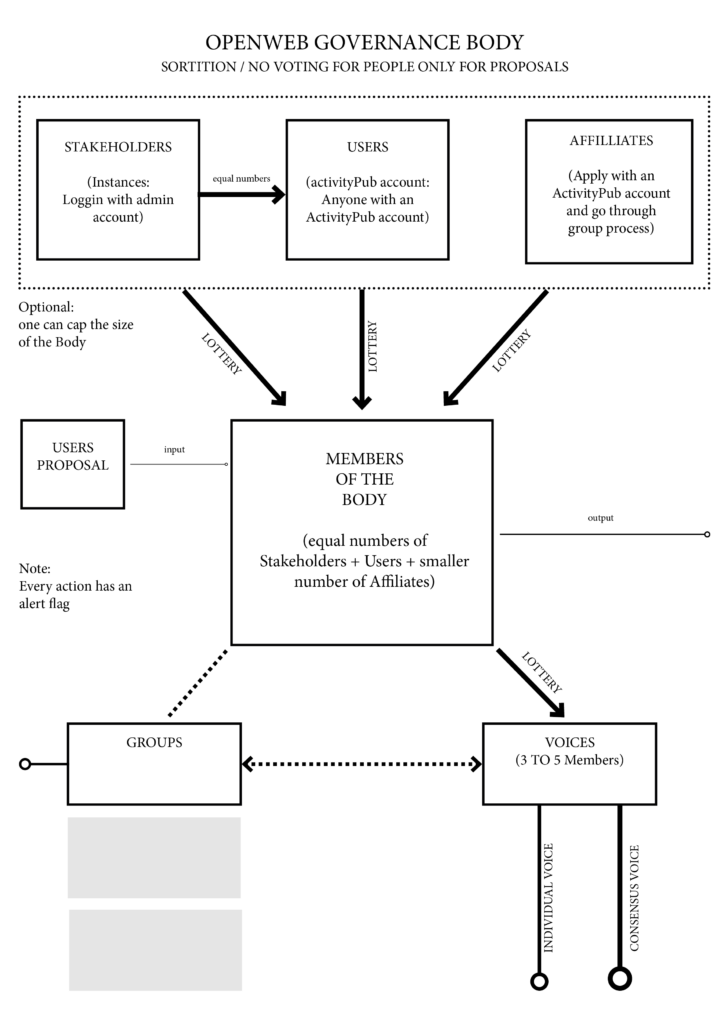
        We need to develop governance as lived practice, not only code, this is what #OMN and #OGB are pointing toward – human networks first, tech as support, not driver, openness as default for shared knowledge, privacy where it actually matters. If we’re serious about a future – it is to stop chasing totalising tech fixes, stop “common sense” financialising community, stop pretending governance can be automated and start growing from the soil up. And most importantly shift from control → collaboration, from abstraction → grounded practice to shift from narrative → lived reality.

        The point is the #encryptionist turn wasn’t (only) evil as it was a reaction to real harm. But it became a dead end when it tried to replace the social with the technical. What we need to lean from this to shift the current mess is if we want a real #openweb we don’t need more “solutions”, we need to get our hands dirty again to compost the mess to make soil to plant something much more real that can grow.

        #openweb #4opens #OGB #OMN #geekproblem #techshit #KISS

        So what path should we be focusing on to balance this current oligarchy mess. The #OMN (Open Media Network) is decentralized, grassroots, focused on an “open process” rather than a fixed, top-down control structure, it’s a governance model:

        • Continuous ecological process, as navigation through lived memory rather than a set of static rules.
        • Decentralized & community-driven, from users, producers/creators, and admins, aiming to balance out central authority.
        • Federated coordination, strong transparency were no one has to agree, but reasoning and actions are publicly visible to produce accountability for public mess making.
        • The #4opens Principles – building on open data, open source, open standards, and open process.
        • Emergent structure, grows organically through “lived collaboration” and social federated tech flows #OGB (Open Governance Body).

        The #OMN is a path to growing an alternative to corporate-controlled platforms (#dotcons), a “public-first” digital commons.

        The Problem Was Never Just the Platforms – It’s What We Build Instead

        For years, the #fashionista #openweb conversation has been stuck in a loop of naming villains: surveillance capitalism, the #dotcons, Zuckerberg, Musk, “the algorithm.” But focusing on enemies only gets you so far. The creative question isn’t what we’re against – it’s what we’re actually building together to replace it.

        That’s where the #OMN takes a useful path. Yes, the big platforms absorb resistance, repackage it, and sell it back to us, that cycle is real. But pointing it out, again and again, doesn’t break it. In fact, it can become part of the same loop – critique as content, outrage as engagement, nothing changing underneath. The issue isn’t just that the #dotcons are powerful. It’s that we keep rebuilding their patterns, even when we think we’re doing something different.

        This is why the #OMN isn’t framed as a protest, a brand, or a “better platform.” It’s a collective path to build alternatives that don’t reproduce the same failures. Not through ideology alone, but through structure. The #4opens – open code, open data, open standards, open process – aren’t slogans here, they’re foundations. They’re how we walk paths that can be shared, checked, and reshaped collectively, rather than captured and enclosed.

        The same goes for governance, the #OGB isn’t about replacing one centre of power with another, it’s about making sure power doesn’t quietly re-centralise through habit, personality, and convenience. If we don’t actively design for that, we drift straight back into the same patterns, and that drift is the problem.

        People don’t arrive in the #openweb as blank slates. We’ve all been shaped by the systems we’re trying to move beyond. The habits of control, gatekeeping, branding, and individual positioning – what we call #stupidindividualism – come with us. If we don’t consciously challenge that, we just recreate the #dotcons in smaller, messier forms.

        So the focus has to shift, from only critique to construction, balancing individuals to collectives and from blinded platforms to open processes. That means starting with the human network – trust, collaboration, shared purpose – and letting the technology grow out of that. Not the other way around.

        It also means accepting that this work isn’t neat or fast. There’s no clean break, no single “killer app,” no moment where the old control simply disappears. What we have instead is a composting process: breaking down what doesn’t work, reusing what does, and slowly growing something more resilient.

        That’s the revolt, not a personal mission, not a branded alternative, but a collective shift in how we build and relate. If we get that right, the #dotcons stop being the centre of the story, not because they were defeated, but because we’ve made them less relevant.

        And that’s something they can’t easily absorb.

        #OMN #4opens #OGB #openweb

        The Crew – Paths to Growth?

        These people are a problem, the group of people who took over running the #Fediverse from us first wave crew. The problem is that they are liars – not out of malice, but in a blinded, dogmatic way. They arrived in this native #openweb movement already carrying this mindset, and it’s only deepened since. That doesn’t make them personally nasty, but it does make them dangerously incompetent. Why? Because they generate serious signal-to-noise problems, misallocate resources, misplace competency, and shift focus away from what actually matters.

        The problem with https://www.blog-pat.ch/moving-sideways-paths-to-growth/ isn’t that it’s wrong – it’s that it emerges from a closed loop of “truthy” ideas that feel insightful but don’t engage with #openweb material reality. That’s where the blind, dogmatic lying comes in, not malicious, but structurally embedded. It recycles a familiar narrative, classic signal-to-noise inflation, where old ideas are dressed up as insight.

        This group of people abstracts away power and material constraints. “Growth” is framed as an individual mindset or path choice, when in reality sideways movement is shaped by structural limits – the very things the #OMN project is addressing: lack of upward mobility, organisational bottlenecks, precarity, stagnation, and misallocation of labour. That’s the “blind lie”: turning systemic limitation into a personal growth narrative. Not evil, but deeply misleading.

        What we see is the individualist path (#stupidindividualism), centres on the individual journey – your path, your growth, your mindset – with no sense of collective structures, shared infrastructure, governance, or power relations. This is the failure mode we should be composting, instead, the current mess drags “open” thinking back into #neoliberal self-optimisation culture. Rather than asking how we build systems that enable meaningful growth, it asks how you reinterpret your path as growth, that’s a dead end.

        It also contributes to resource and focus drift. This kind of thinking has real consequences for projects like #openweb and #OMN as it encourages endless reframing instead of building – validates drift that weakens focus on the native outcomes and infrastructure we actually need. In practice, it leads to misplaced competency, misallocated effort, and degraded signal. That’s the “dangerously incompetent” part – not personal failure, but systemic impact.

        The deeper issue is that these aren’t bad people, it’s that they are aligned – unthinkingly – with #deathcult thinking by individualising systemic issues and amplifying noise in already fragile spaces. They arrived with this mindset, and the environments they shape reinforce it.

        A grounded approach would ask harder questions: how do we build collective structures that make sideways movement meaningful? Without that, this is just narrative smoothing, smoke and mirrors.

        So to sum up: the post linked above isn’t wrong, it’s worse than that, it’s harmless-sounding, blinded ideology that recycles known ideas, strips out material context, reinforces individualist framing, and adds noise where clarity is needed. In a healthy ecosystem, this would be background chatter, in a struggling one – like the current open social web space – it becomes actively damaging.

        “I headed up to Oxford to a Marmalade Festival event: The World Works on WhatsApp.”

        I’m in Oxford, and I saw that event listed. My reaction was: I can’t stomach that. Still, I probably should have gone, it would have been useful to have that conversation in person.

        Old sod talking about the openweb

        The problem we now face is these people will #gatekeep… if the is no way in or out without there agreement we are going to fail, there is a long history of this mess making. I have seen the same problem people destroy numerous grassroots movements over the 40 years I have been working in this path.

        The goal is simple: build tools that serve people, not profit. #KISS

        #OMN Grounding (the roots as a story)

        #techchurn is the endless cycle of adopting new platforms, tools, and technologies – not because they solve any real problems, but because novelty is mistaken for progress. It burns community trust, institutional memory, and activist energy, while leaving the underlying #nastyfew power structures untouched.
        https://hamishcampbell.com/?s=techchurn


        The #OMN uses #stupidindividualism to describe the culturally manufactured habit of prioritising personal gain and self-interest over collective well-being – a behaviour normalised by forty years of #neoliberalism, where people work against their own community and ecological survival while believing they are exercising “freedom”.
        https://hamishcampbell.com/?s=stupidindividualism


        In the #OMN hashtag story, #spiky is the confrontational, direct, and uncompromising tendency within radical movements – the willingness to push back against power, name uncomfortable truths, and refuse to sand down political edges for mainstream comfort.
        https://hamishcampbell.com/?s=spiky


        #RSS is the unglamorous but democratic backbone of the #openweb – a simple, open standard that allows content to flow without the gatekeeping, algorithmic manipulation, and the data hoarding of the #dotcons.


        #reboot is the necessary reset of the #openweb – stepping away from the dead ends of #techshit and #dotcons to rebuild human-centred, trust infrastructure using tools like #activitypub and the #fediverse, guided by the #4opens.
        https://hamishcampbell.com/?s=reboot


        #postmodernism is the cultural current that dissolved shared truth into competing narratives, undermines the foundations needed for collective action – leaving people fragmented, cynical, and unable to build solidarity.
        https://hamishcampbell.com/?s=postmodern


        In the #OMN hashtag story, #Oxford is a grounded example of real-world contradiction – where elitist power (#mainstreaming, #NGO, #deathcult) coexists with genuine grassroots community, making it a test bed for grassroots #openweb organising and the #4opens path.
        https://hamishcampbell.com/?s=Oxford


        In the #OMN hashtag story, #PGA (Peoples’ Global Action) represents horizontal, grassroots, anti-capitalist organising – a prefiguration of the #openweb, built on direct action and solidarity rather than #NGO bureaucracy or #mainstreaming compromise.
        https://hamishcampbell.com/?s=PGA


        In the #OMN path, #p2p means people-to-people before peer-to-peer – real human relationships and trust as the foundation that decentralised tech should serve, not replace.
        https://hamishcampbell.com/?s=p2p


        In the #OMN view, #opensource is not just a licence – it’s a political commitment to transparency, shared ownership, and community control over code, data, and process.
        https://hamishcampbell.com/?s=opensource


        The #openweb is internet infrastructure built on open standards, open-source code, and community control – where users share power – as opposed to the #dotcons, with the #closedweb which enclose and monetise the commons.
        https://hamishcampbell.com/?s=openweb


        #openprocess means decisions and governance happen visibly and participatorily – not behind closed doors, so people can see, challenge, and shape outcomes.
        https://hamishcampbell.com/?s=openprocess


        #opendata means data that is freely accessible and shareable – controlled by communities rather than locked inside corporate silos.
        https://hamishcampbell.com/?s=opendata


        In the #OMN path, #open means building on the #4opens – open code, data, standards, and process as a foundation for technology that serves people, not profit.
        https://hamishcampbell.com/?s=open


        #OMN (Open Media Network) is a grassroots project to build human-centred, trust-based digital infrastructure on the #openweb, grounded in the #4opens and focused on community control over technology.
        https://hamishcampbell.com/?s=OMN


        The #OGB (Open Governance Body) is a framework for transparent, inclusive decision-making – replacing hidden power structures with accountable, federated, messy collective governance.
        https://hamishcampbell.com/?s=OGB


        In the #OMN story, #nothingnew reminds us that cycles of co-option and failure have all happened before – and ignoring this history is how we repeat mistakes.
        https://hamishcampbell.com/?s=nothingnew


        In the #OMN story, #NGO refers to professionalised activism that defuses radical politics – replacing grassroots power with managed, funder-friendly “dissent”.
        https://hamishcampbell.com/?s=NGO


        In the #OMN path, #neoliberalism is the dominant ideology of markets over people – normalising greed and eroding solidarity into the logic of the #deathcult.
        https://hamishcampbell.com/?s=neoliberalism


        #makinghistory is the practice of communities reclaiming storytelling – building open, living archives rather than leaving history to those in power.
        https://hamishcampbell.com/?s=makeinghistory


        In #OMN usage, #mainstreaming is how radical ideas get absorbed and neutralised – keeping the language while stripping out real challenge.
        https://hamishcampbell.com/?s=mainstreaming


        In the #OMN path, #KISS (“Keep It Simple, Stupid”) is a political stance against the #geekproblem – rejecting unnecessary complexity as a form of control.
        https://hamishcampbell.com/?s=KISS


        #indymediaback is a call to rebuild grassroots, community-controlled media as an alternative to both #dotcons and hollow #NGO media structures.
        https://hamishcampbell.com/?s=indymediaback


        In the #OMN path, a hashtag is not just a label – it’s a node in a shared political vocabulary, building a map of meaning and direction.
        https://hamishcampbell.com/?s=hashtag


        #grassroots means bottom-up organising rooted in real communities – accountable to collective need, not institutions.
        https://hamishcampbell.com/?s=grassroots


        The #geekproblem is the tendency to replace human trust with technical control – embedding narrow values into systems that shape everyone’s lives.
        https://hamishcampbell.com/?s=geekproblem


        In #OMN, #FOSS is a political commitment to collective ownership of technology – not just a licensing model.
        https://hamishcampbell.com/?s=FOSS


        In #OMN language, #fluffy describes feel-good politics that avoid conflict – prioritising comfort over any real change.
        https://hamishcampbell.com/?s=fluffy


        #feudalism describes the emerging digital structure where platform owners extract value like lords from dependent users.
        https://hamishcampbell.com/?s=feudalism


        #fascism is what happens when the #deathcult drops its mask – authoritarian control to defend failing systems.
        https://hamishcampbell.com/?s=fascism


        On the #OMN path, the #fediverse is practical #openweb infrastructure – decentralised, federated, and not owned by corporations.
        https://hamishcampbell.com/?s=fediverse


        #encryptionist describes the tendency to prioritise technical security over social trust – a core expression of the #geekproblem.
        https://hamishcampbell.com/?s=Encryptionist


        #dotcons are corporate platforms built on data extraction and control, presenting themselves as neutral while enclosing the commons.
        https://hamishcampbell.com/?s=dotcon


        In the #OMN story, #DIY means reclaiming the ability to build and organise outside institutional control – grounding politics in practice.
        https://hamishcampbell.com/?s=DIY


        The #deathcult is the self-destructive logic of #neoliberalism – sacrificing social and ecological survival for short-term fear drivern greed.
        https://hamishcampbell.com/?s=deathcult


        In the #OMN story, #compost means breaking down failure and mess into fuel for new growth.
        https://hamishcampbell.com/?s=compost


        In #OMN, #closedweb is controlled, extractive digital infrastructure where users have no power.
        https://hamishcampbell.com/?s=closed


        #climatechaos describes the accelerating breakdown driven by the #deathcult, beyond manageable “climate change.”
        https://hamishcampbell.com/?s=climate


        #classwar is the ongoing conflict between the #nastyfew and the communities they exploit – often hidden by #mainstreaming narratives.
        https://hamishcampbell.com/?s=classwar


        #capitalism is the dominant system turning everything – relationships, nature, culture – into “profit”.
        https://hamishcampbell.com/?s=capitalism


        In #OMN, #block is the reflex to shut down challenge – preventing the messy work needed for real change.
        https://hamishcampbell.com/?s=block


        #blinded is being unable or unwilling to see beyond #mainstreaming and #dotcons logic.
        https://hamishcampbell.com/?s=blinded


        #fashernista describes performative activism that prioritises appearance over substance.
        https://hamishcampbell.com/?s=fashionistas


        #dotcons are the corporate platforms – Facebook, Twitter/X, Instagram, YouTube and their kin – whose business model is built on harvesting user data, manufacturing engagement, and converting human attention and community into profit, while presenting themselves as neutral public spaces.

        https://hamishcampbell.com/?s=dotcon


        In the #OMN hashtag story, #DIY means reclaiming the practical capacity to build, organise, and maintain tools and communities outside of corporate and state control – not as a lifestyle choice, but as a political act of grounding radical change in real skills, real trust, and real human relationships rather than outsourcing power to institutions that don’t serve you.

        https://hamishcampbell.com/?s=DIY


        The #deathcult is the #OMN metaphor for the self-destructive logic of forty years of #neoliberalism – an ideology so committed to short-term profit, individualism, and economic growth that it knowingly sacrifices the ecological and social foundations that human life depends on.

        https://hamishcampbell.com/?s=deathcult


        In the #OMN hashtag story, #compost means taking the failures, mistakes, and accumulated mess of past movements and tech projects – rather than discarding or ignoring them – and breaking them down into something that can feed new growth, treating dysfunction and #blocking dead ends as raw material for building better rather than as waste to be hidden.

        https://hamishcampbell.com/?s=compost


        In #OMN language, #closedweb refers to the controlled digital infrastructure – platforms like Facebook, Google, and Twitter – built on proprietary code, extractive business models, and centralised power, where people have no meaningful control over their data, their communities, or the rules that govern them.

        https://hamishcampbell.com/?s=closed


        The #deathcult of #neoliberalism has driven us past the point where “climate change” – with its implication of manageable, orderly shifts – remains any honest description of what we face now. What we actually have is #climatechaos: cascading, systemic breakdown of the ecosystems, weather patterns, and social structures that human civilisation depends on, accelerating faster than institutions built on forty years of market logic are capable of, or willing to, address.

        https://hamishcampbell.com/?s=climate


        #classwar is the ongoing and unacknowledged conflict between those who benefit from and actively reproduce the #deathcult of #neoliberalism – the #nastyfew, managing, and credentialed classes – and the communities, workers, and ecosystems they exploit. A conflict that #mainstreaming culture works to render invisible, reframing systemic dispossession as individual failure.

        https://hamishcampbell.com/?s=classwar


        #capitalism is the current common sense – the water we swim in – the economic system that systematically converts collective goods, human relationships, and the natural world into private profit, enforcing this logic through every institution and platform we touch, while presenting itself as the only possible reality.

        https://hamishcampbell.com/?s=capitalism


        In the #OMN hashtag story, #block refers to the reflexive, unconscious tendency of individuals and communities to shut down unfamiliar and challenging ideas, people, and processes – a defensive gesture rooted in #stupidindividualism and #postmodernism that prevents the trust-building and messy collective work needed for real #openweb organising.

        https://hamishcampbell.com/?s=block


        #blinded refers to being so captured by #mainstreaming tech orthodoxy and ideological “common sense” – particularly #neoliberalism and #dotcons culture – that you no longer see, or refuse to see, the harms those systems cause or any alternative paths that exist outside them.

        https://hamishcampbell.com/?s=blinded


        #fashernista describes a person in progressive or radical spaces who prioritises the appearance and aesthetic of activism – the right look, language, and social positioning – over the unglamorous, difficult work of actually building lasting structural change.

        https://hamishcampbell.com/?s=fashionistas


        If you want, the next step is to cluster these into a clean “chapter flow” (roots → mess → behaviours → solutions) so this stops being just a glossary and becomes a narrative tool.

        These are the foundation tags – the ones everything else grows out of – the overall project: grassroots, trust-based, human-centred media infrastructure

        #openweb – the political/technical terrain we’re trying to reclam

        #4opens – the non-negotiable baseline (open code, data, standards, process)\openprocess – visible, participatory decision-making as default

        #grassroots – bottom-up power, not institutional mediation

        This cluster is about legitimacy, if it’s not grounded in these, it drifts into #NGO capture or #dotcons logic quickly. This is the “native soil” everything else either grows from or gets rejected by.

        The Problem Space (what we’re composting), these tags describe the mess we’re in – the stuff we don’t ignore, but break down.

        #deathcult (neoliberalism as destructive common sense)

        #neoliberalism – 40 years of market logic shaping behaviour

        #dotcons – corporate capture of digital space

        #closedweb – controlled, extractive infrastructure

        #mainstreaming – dilution and co-option of radical ideas

        #NGO – managed dissent and professionalised politics

        #classwar – underlying structural conflict

        This is the compost heap, you don’t fix this directly, you don’t “win” against it head-on. You break it down, reuse what’s useful, and grow alternatives around and through it.

        The #geekproblem Layer (tech distortions) is where things go wrong in implementation.

        #geekproblem – replacing social trust with technical control

        #techchurn – endless pointless rebuilding

        #encryptionists – over-prioritising technical purity over social reality

        #KISS – counterbalance: keep things simple and usable.

        This cluster is why good ideas fail, not because the ideas are wrong, but because the tools and culture get shaped by people who don’t understand social process. This is where most #openweb projects die.

        Cultural/Behavioural Patterns (how people act). The human layer – messy, unavoidable, and central.

        #stupidindividualism – learned self-interest over collective good

        #postmodernism – fragmentation of shared meaning

        #fluffy – avoidance of conflict, feel-good paralysis

        #spiky – necessary confrontation and edge

        #block – reflex rejection of challenge

        #blinded – inability to see outside dominant narratives

        #fashernista – prioritising appearance over substance

        This is the real battlefield, not tech, not policy – behaviour. If you don’t mediate this layer, everything collapses back into dysfunction, no matter how good your structure is.

        The Alternative Infrastructure (what we build), are the actual tools and practices that make change possible.

        #fediverse – decentralised network as a base layer

        #activitypub – the protocol glue

        #RSS – simple, open distribution backbone

        #p2p – people-to-people first, tech second

        #FOSS / #opensource – shared ownership of tools

        #opendata – accessible, non-extractive information

        These only work if rooted in the first cluster, otherwise they get captured and turned into another layer of the #closedweb.

        Governance & Process (how we hold it together). Where most projects fail – or succeed.

        #OGB – structured, open governance

        #openprocess – again, because it’s that important

        #DIY – practical ownership and responsibility

        Without this, informal power takes over. You end up with hidden hierarchies, gatekeeping, and eventual burnout. With it, you get messy but functional collective control.

        Practice & Direction (how we move).

        #reboot – reset and rebuild from working patterns

        #indymediaback – learning from past grassroots media

        #makinghistory – documenting and owning our narratives

        #nothingnew – grounding in historical cycles

        This cluster stops you repeating mistakes, without it, every new wave thinks it’s inventing something new and walks straight into the same traps.

        Grounding Example Layer

        #Oxford – real-world test bed of contradictions

        #PGA – historical example of horizontal organising

        Without grounding, this all drifts into theory, these are example tags anchoring it in lived practice, where things break, and where they can actually work.

        The Meta Layer (how to use this)

        #compost – break down failure into growth

        This is the key to the whole thing – Don’t try to “fix” the mess. Don’t try to “win” cleanly, you compost:

        bad behaviour → learning

        failed projects → patterns

        conflict → structure

        Final point (this matters) is the mistake people make is trying to tidy this into a neat theory, reduce it to messaging, turn it into a fixed ideology. That kills it, this clustering is not about control – it’s about navigation.

        The mess stays messy, but now people can walk through it without getting lost.If you don’t cluster this stuff, it turns into a wall of noise. The mess is useful.

        In the real world

        We’re not dealing with abstract “community dynamics.” we’re dealing with live-aboard boaters under pressure, rowers, landowners, council, Environment Agency and scarcity of space (moorings). This in the end is about visibility vs invisibility on the river, so friction isn’t theoretical – it’s structural. Let’s look at the conflict patterns we’re seeing:

        • Back-channel poisoning (#whispers #splitting) “X group are the problem”, “They’ve already decided this”, “Don’t trust them”. This happens in WhatsApp groups, towpath chats and private cliques. The effect is fragmenting the boating community before anything even reaches #4opens process.
        • Representation fights (#whospeaks) “Who speaks for boaters?”, “Who gave them authority?” or “That meeting wasn’t legitimate” The effect: is paralysis + resentment + delegitimisation of any action at all.
        • Tone wars masking real issues (#signal vs #noise). Personal digs, passive-aggressive comments with people reacting to how things are said, not what is said. The effect is real issues (mooring policy, enforcement, access) gets buried under #stupidindividualism social mess.
        • Burnout + drop-off (#crewdrain). Some people doing everything while others sniping from the sidelines. The effect is core organisers get exhausted → vacuum → more mess.

        So how do we compost this?

        Pull whispers into the open (#openprocess #visibility). Instead of trying to stop gossip (you won’t) create simple habits like “If it matters, bring it to the shared space”, regular open threads / meetings where anything can be raised, even messy, even uncomfortable. Outcome is less shadow conflict, more visible disagreement.

        Create a “good enough” shared space (#KISS #lowbarrier) Not a perfect system, just something consistent like a public website (open collective) and hashtag use like #oxfordboaters. Where updates happen, disagreements are visible and decisions are logged (lightly). Path is #KISS, if it didn’t happen here, it’s not part of collective decision-making.

        Keep grounding in actual doing (#praxis #riverlife). Don’t let it become a talking shop, anchor everything in face to face fire towpath meetings, shared work days (clean-ups, maintenance) and direct engagement with river issues. The outcome is people relate through doing, not just arguing.

        Add lightweight “composting moments” (#retrospective #learning). After anything messy (meeting, conflict, decision). Do a quick loop, what worked, what didn’t, what do we try next. Keep it short, no essays. Outcome is tension gets processed before it hardens into factions.

        Set soft boundaries (protect the commons), (#boundaries #collectivecare). If someone consistently derails, attacks and refuses shared process. You don’t need a big drama, simply reduce engagement, keep process moving without them dominating. As the group will survive without needing perfect agreement. What this feels like when it’s working is not ONLY harmony, not in any way formal consensus.

        It feels like people disagree openly, as some conversations are just messy, but things still move forward, decisions happen (even if imperfectly), no single person controls the narrative. And crucially conflict becomes part of the process, not a blocker to it, what failure looks like (so you can spot it early)- decisions drifting back into private channels, the same 2–3 people becoming permanent spokespeople or “we already talked about this” with no visible record, people disengaging instead of arguing.

        The #KISS version for #Oxfordboaters

        Make things visible (#openprocess)

        Keep tools simple (#KISS)

        Rotate roles (#commons)

        Focus on doing (#praxis)

        Process tension early (#compost)

        The uncomfortable truth is It’s not about removing difficult personalities, conflicting interests or structural pressure from authorities. What we can do is stop those things from tearing the group apart.

        “Digital sovereignty” is more mess we need to compost

        The servent of the #nastyfew wispering in the ear of the #deathcult ists liberals

        From a #OMN perspective, the mess isn’t just the wording – it’s the ideology embedded in the wording, and how that shapes behaviour over time. “Digital sovereignty” sounds harmless, progressive in a liberal policy context. But if you run this through a #KISS ideological lens, its more mess rooted in control, borders, and authority – concepts historically tied to state power. That’s why it’s so easy for the #mainstreaming crew to reuse the language without friction. When they launch something like a “Sovereign Tech fund,” they’re not inventing a new narrative, they’re tapping into one that was already compatible with their narrow worldview.

        That’s the problem we need to keep composting – #mainstreaming language carries “common sense” ideological defaults. So what how can we shovel this mess – Liberals adopt a term to make ideas legible to institutions and funding. But obviously the term carries right-leaning assumptions (control, territory, hierarchy) – assumptions that quietly reshape the thinking and direction of projects. Then right-wing actors step in and feel completely at home using the same language.

        At that point, it’s already too much mess, you’re not just “using” the language, you’ve internalised the worldview – “Sovereignty” is about defensive, fear-based framing (“protecting against others”) that clashes directly with #openweb values of networks over borders, trust over control and interoperability over enclosure. Our native world view is commons over ownership, so even if the intent is good, the term pulls thinking in the wrong direction. Its #KISS we need to shift focus from states → to people and communities, from control → to capability, from fear → to empowerment.

        But here, #OMN pushes much harder – if you need mainstream policy language to explain what you’re doing, you’re already halfway into the #closedweb logic. The #openweb path doesn’t start from sovereignty, autonomy, or even agency. It starts from something simpler – shared standards, visible processes and trust networks (#4opens). That’s why the #OMN path matters, the more abstract the language gets, the easier it is to smuggle in ideology without noticing.

        So what do we do with this mess? Yes, “digital sovereignty” is a dead-end term for open, trust-based politics. Yes, alternatives like “autonomy” are an improvement, but the real work is stepping outside that whole framing, instead of arguing over better words, focus on building systems that demonstrate openness, using language grounded in practice, not policy fashion.

        Bluntly, this is mess we need to compost, it’s the normal mess of “blinded” liberals laying the groundwork – unintentionally – by adopting language that was never native to the #openweb. That’s the messy pattern – #OMN keeps pointing at, if you build with messy concepts, you will get messy outcomes. So yes – compost it. And next time, start from cleaner soil please.

        The recurring theme is digital & social decay – A “trust collapse” resulting from bad faith and disempowerment online. The Goal is #KISS moving beyond individualistic #stupidindividualism, ” common sense to create a balanced collective, community-controlled alternatives.

        The #OMN hashtag story is a shovel to “compost mess” to turn toxic digital decay into valuable, new growth rather than pretending the stinking mess doesn’t exist, the second step is acknowledging that disagreements are not to be avoided but used constructively to build stronger, more empathetic, and more transparent communities.

        Do you notice a recurring theme and issue here? Read and use the hashtag story to help compost this.

        Closed systems protect individuals, but they rarely build movements

        People fight against or/and ignore the #KISS (Keep It Simple Stupid) approach in tech because simplicity exposes power. Complexity, jargon, and process give cover – they make control look like competence. When paths are simple and transparent, everyone can see who’s blocking, who’s hoarding, who’s acting in bad faith. Many “experts” and institutions are emotionally and professionally invested in keeping things complicated; simplicity threatens their authority, their funding, and their identity.

        All the #OMN projects are not directly about social change – they’re about making social change possible. That distinction matters as people don’t step into change unless they first believe change can happen. If the world feels fixed, locked, inevitable, then nothing moves. Our role is simpler, and maybe more important, to open that door a crack, to show that different paths exist.

        Think of #OMN as a helping hand, not dragging people forward, not telling them what to do – just making it easier for them to take that first step when they’re ready. But to do this, we need to think more clearly – and more fundamentally – about technology itself. As most of the current “open paths” are cosplay at best, we need a network that links them as flows for there use to be unlocked from the current limits of #stupidindividualism shaping them – to become a native part of the expanding #openweb reboot.

        I’ve been working on this for over 20 years, and one thing keeps proving true: we need roughly 90% open and 10% closed, the balance matters. As the current push from the #encryptionists flips this – aiming for 90% closed and 10% open. That isn’t a solution, it’s a retreat. It breaks the social fabric that makes collective tools usable and meaningful. It fragments, isolates, and ultimately shrinks the space where shared culture can exist.

        Yes, privacy matters, yes, some things should be closed, that’s the 10%. But the commons – the space where we meet, talk, organise, and build trust – has to be open. Without that, there is no network, just silos. Take a simple example: you’re reading this via #activitypub. That’s a system built on being mostly open, with just enough closure to function safely. And it works, people are here, conversations happen, networks grow.

        Compare that to more closed, encryption-heavy systems like old school Diaspora. Technically interesting, sure, but socially? Empty, few people, little flow, no impact. That’s the core point: this isn’t just about functions or features, it’s about culture.

        Open federated, networked systems create the possibility of shared culture, and from that, the possibility of social change. Closed systems protect individuals, but they rarely build movements. We need both – but we need to get the balance right. Right now, too many people are getting it the wrong way round.

        This Isn’t New: Decentralisation Was the Point All Along

        Decentralised servers – what we now call the #Fediverse – are often talked about as if they’re some new, radical innovation. They’re not, they’re a return to the original design of the network. The early internet wasn’t built to be controlled, it was built to survive. The core idea was simple: if parts of the network were destroyed – even something as extreme as a nuclear strike – the rest would keep functioning. No centre, single point of failure or “off switch.”

        That’s what decentralisation actually means. And this thinking didn’t even start with the #openweb. Systems like Usenet already embodied this approach: distributed, federated, run by many, owned by none. Messy? Yes. But resilient, open, and hard to capture.

        What we’ve been living through for the last 20+ years – the rise of the #dotcons – is the opposite of this. Centralised platforms with single points of control. Easy to use for control and monetise, easy to manipulate, easy to shut down. We didn’t lose the #openweb by accident, we blindly traded it away for this convenience.

        What we’re seeing now with the #Fediverse, #ActivityPub, and related projects isn’t innovation in the common sense. It’s a reboot, a return to the path we were on before we derailed it. The difference is that now we’re trying to rebuild this in a world that has spent decades normalising centralisation and control. 40 years of death cult worship has changed people, institutions, social groups and our very internal selves. That’s where the friction comes from, people arrive expecting #dotcons platforms, what they find is networks. People expect control, what they get is responsibility. People expect “free” what they face is shared cost and care.

        So, it was never about the tech, the mistake we keep making is ONLY thinking this is a technical shift, it’s not, it’s cultural. You can spin up a decentralised server in minutes, that’s not the hard part, the hard part is everything around it:

        • Who runs it
        • Who pays for it
        • How decisions are made
        • How conflict is handled
        • How trust is built and maintained

        This is the work the #dotcons hide from us, they wrap control as “free services” paid for with surveillance, extraction, and control. Now that we’re back on the #openweb path, that work becomes visible again, and yes – it’s harder.

        Why this matters (Again). Resilience isn’t an abstract idea anymore as we’re living through cascading crises: political instability, #climatechaos, infrastructure fragility. A centralised network fails catastrophically were a decentralised network degrades – but keeps going. That’s the difference between a system you depend on and a system you can trust.

        We don’t need to overcomplicate this – Keep It Simple (#KISS)

        One builds commons, the other extracts value, everything else is detail. And yes nobody thinks the Fediverse is not messy, uneven, (yet) match the polish of corporate platforms. That’s fine, mess is where growth happens – if we compost it properly.

        The #OMN view, we’re not trying to invent something new. We’re trying to make what already works usable at scale for media, trust, and collective action. The infrastructure is there, the protocols exist, the history is long. What’s missing is the shared layer – the commons – where information flows in ways people can actually rely on, that’s what we’re building.

        If decentralisation feels radical, it’s only because we’ve spent so long inside systems that forgot #OMN #openweb #KISS

        The #dotcons, #mainstreaming, and Build to Walk Away

        Three years ago I was trying to explain something simple in language liberals might actually hear. They talk about “platform capitalism.” Fine. But I’ve been calling it the #dotcons for 20 years – because that’s what it is – a con.

        The last 30 years of tech hasn’t just drifted into this mess. It’s been shaped, step by step, enclosure by enclosure, into systems designed to extract value from us. What we now call the internet is, in large part, a machine built to manipulate, capture, and profit.

        The old #openweb got fenced in, and most people, especially polite liberal society, went along with it. So we need to talk about the return and the problem. Now we have a shift of the #mainstreaming is flowing back toward the #openweb, that should be a good thing. But there is a problem: people don’t leave the #dotcons behind when they move, they bring the culture with them.

        What we’re seeing is a flood of the same patterns – extractive behaviour, ego performance, status games. Not from one “side,” but from everywhere. The habits built inside the #dotcons don’t magically disappear just because the platform changes.

        So the real issue isn’t technical, it’s cultural. If we don’t actively mediate this influx, we won’t rebuild the #openweb – we’ll just recreate the same broken systems in slightly different code.

        So why do I talk so much about compost, and mess not being the problem. Mess is necessary, but only if it composts – if it breaks down into something fertile. Right now, we’re mostly just piling it higher.

        This is where projects like #indymediaback and #OGB matter. They’re not perfect, but they are native to the #openweb path: grounded in trust, process, and the #4opens rather than control, branding, and capture.

        The question isn’t whether #mainstreaming is good or bad. The question is: how do we hold the cultural line so that what grows is something genuinely different? Because if we don’t, the #dotcons don’t need to defeat us. We’ll blindly rebuild them ourselves.

        So why do I argue we can’t just leave the #dotcons? This is where people get it wrong, every time the #dotcons tighten control – censoring, tweaking algorithms, shifting rules – the reaction is the same: leave, build the #openweb.

        Yes, build the #openweb, but the idea that we should stop organizing inside the #dotcons right now? That’s a trap, because billions of people are still there. The conversations, the communities, the movements, they haven’t magically migrated. Walking away doesn’t free those people, it abandons them, leaving the space to be shaped entirely by the #deathcult and the forces already in control.

        This is #nothingnew. The #dotcons are #closedweb infrastructure. They serve power because they were built to serve power. Expecting anything else is misunderstanding the system. The real question has never been: are these platforms good? It’s: what do we do, given that this is where people are?

        The #geekproblem and the exodus fantasy, is a persistent fantasy – a classic #geekproblem – that if we just build better tools, people will come. They won’t, not on their own. A clean exodus to the #fediverse or any #openweb space doesn’t happen because we post about it. Movement-building has never worked like that, people move through relationships, trust, and shared struggle – not technical superiority.

        So if you abandon the spaces where people already are, you cut those pathways. The #OMN approach has always been simple to use the #dotcons as a bridge, not a home, seed organizing where people already are while focusing energy on building the #openweb in parallel to clearly keep your foundations in the #4opens.

        This isn’t about purity, it’s about effectiveness, don’t fall into #stupidindividualism, the idea that personal withdrawal is more important than collective reach. This is about infrastructure and grounding, if the #dotcons can switch you off at any moment, they cannot be your foundation.

        That’s why we need:

        • indymediaback as publishing roots
        • activitypub and the #fediverse as distributed infrastructure
        • OMN as a bridge between cultures and spaces

        This is the practical expression of the #4opens: not just open code, but open process and open trust. Don’t build your house on someone else’s land, but don’t stop talking to the people still living there either. Stay in the fight, when the #dotcons clamp down, it’s not a surprise, it’s a signal of what they are, and what they’ve always been.

        The answer isn’t to run away, it’s to root ourselves somewhere that can’t be shut down, while continuing to show up where the people are.

        Build the #openweb, stay in the fight, keep it simple #KISS

        The value of the #Fediverse comes from its cultural roots in the #openweb

        YOU can’t do social change or challenge without annoying people If you think you can, you’re probably play-acting – and part of the problem – does that annoy you? If it does… maybe sit with that. 🙂 Food for thought, #4opens is a shovel for composting.

        The value of the #Fediverse comes from its cultural roots in the #openweb. The tech – like ActivityPub – grew out of that culture. It wasn’t built by #mainstreaming interests.

        Now money is flowing in, and with it comes risk of dilution of culture, capture of direction and loss of the commons. As more #mainstreaming users return to the #openweb, we need better tools and processes to handle the mess this brings.

        And yes – sometimes the problem is us – when people inside our own spaces act badly, we need ways to respond, mediate, and move forward – without falling into cycles of negativity. That’s part of the work, part of #OMN.

        The #Fediverse is native to #openweb thinking, it works. It will likely destroy billions of dollars of #CONTROL, and create billions in actual human value in return. But like the early #openweb, it can also be captured and pulled back into the same old control systems, this is the balance.

        So the question is, are you on the side of CONTROL or TRUST?

        Our obsession with control is doing real damage, it’s fed by dead-end ideology (#postmodernism), and amplified by #fashernistas pushing surface over substance.
        Yes – it’s messy. Yes – it’s complex, but ignoring that just makes it worse.

        #stupidindividualism and the #deathcult are building an inhuman world, we can do better – but only if we’re willing to do the uncomfortable work.

        Disciplined curiosity beats IQ, Oxford

        There is a persistent myth pushed in our culture that intelligence – high IQ, academic credentials, elitist education – leads naturally to clear thinking. My organic experience suggests the opposite, what matters is disciplined, skeptical, freethinking curiosity. Without that, intelligence simply becomes a tool for defending whatever assumptions people already hold.

        This is one of the reasons many academic environments produce people who are, bluntly, credulous. Not because they lack intelligence, but because the institutional structures around them reward conformity and reputation management far more than genuine curiosity.

        Over the last two years I’ve been spending time in and around the university culture in Oxford, participating in discussions, events, and academic life. The experience has been instructive, if in the end frustrating. You would expect a place associated with University of Oxford to be a centre of open intellectual challenge. In practice, it feels like something else: a system that filters, polishes, and reproduces existing assumptions.

        This is not universal, some of the hard scientific disciplines still cultivate a form of disciplined skepticism, experiments fail, evidence contradicts theory, so you are expected to question results. The process encourages a narrow but very real culture of doubt, but outside those narrow areas, skepticism to often fades.

        Instead, you find intellectual fashion cycles building reputational alliances that push institutional caution based on #blinded ideological signalling. The result can be a strange mix of high intelligence and low #blocking curiosity. People who are good at working inside established frameworks, but much less comfortable questioning the foundations of privilege those frameworks rest on.

        This matters for the #openweb and projects like #OMN. I got nowhere here as many of the institutions that might have supported open digital infrastructure – universities, NGOs, research centres – have shifted toward the same #deathcult #mainstreaming #blocking that dominates the wider tech world. Funding cycles shape research priorities, institutional partnerships shape acceptable ideas and career incentives shape what can safely be questioned.

        So even where intelligence and resources exist, the culture of disciplined curiosity that drives the needed real innovation is thin if it exists at all. The irony is that the early internet grew out of exactly the same institutions, but with opposite culture. The original World Wide Web ecosystem, the hacker and #FOSS communities, and early grassroots media projects like #indymedia were built by people who combined technical curiosity with deep skepticism about centralised control.

        They didn’t wait for institutional approval, they experimented, built #DIY tools that broke things and rebuilt them. That spirit is what projects like #OMN are trying to revive. The goal is not to outcompete corporate #dotcons platforms or impress #NGO academic institutions. The goal is simpler: to build open media infrastructure that communities can use based on small nodes, trust networks and open metadata flows. Simple tools that allow people to publish, share, and connect.

        This is a working #KISS approach to rebuilding grassroots media. If the last twenty years of the web have taught us anything, it’s that intelligence alone doesn’t produce healthy systems. You can have brilliant engineers building platforms that clearly undermine democratic communication, it’s the mess that shapes the current #dotcons world.

        What makes the difference is curiosity combined with skepticism, the willingness to question the structures that shape our digital lives. Without that, even the smartest institutions drift into the same patterns of credulity and conformity, which is why rebuilding the #openweb is not just a technical project, it’s a cultural one.

        For some reflections from the last couple of years around Oxford life and technology culture, see: https://hamishcampbell.com/tag/oxford/

        #Oxford #academic #elitist

        Why does it feel like so many people have become intolerant prats? A blunt observation: it increasingly feels like many people today are intolerant prats. And worse, this behaviour has started to feel normal. You see it everywhere. Online discussions collapse quickly into hostility. Small disagreements become unthinking moral #blocking were people retreat into camps where any challenge is treated as an attack.

        This isn’t just a social media problem, though the #dotcons have certainly amplified it, it’s a deeper cultural shift. For decades the dominant systems shaping our culture have encouraged competition, individualism, and personal branding. The result is what I often call #stupidindividualism – a worldview where the individual ego becomes the centre of everything. In that environment, disagreement stops being part of learning and becomes a threat to identity, so people react defensively, aggressively or dismissively. What used to be debate becomes performance.

        The platform problem is when the #dotcons platforms are designed to amplify this behaviour where algorithms reward outrage, tribal loyalty and moral signalling to push conflict to drive engagement. They do not reward patience, nuance, or curiosity, in other words, they are structurally optimised to turn ordinary people into worse versions of themselves. Over time this becomes cultural habit, people start to assume that hostility is normal conversation.

        Another factor is the slow collapse of collective spaces. When communities interact face-to-face, or in smaller trust networks, people have to deal with each other as human beings. Relationships create friction but also accountability. In large anonymous digital environments, those social checks weaken. People become avatars and opinions rather than neighbours, this makes it much easier, “natural” to treat each other badly.

        Why this matters for the #openweb. If we are trying to rebuild grassroots media and communication infrastructure, we need to recognise that these cultural habits have already spread into many communities, including the tech and activist spaces that should be alternatives. This is one reason projects fragment so easily as small disagreements spiral, people assume bad faith and thus trust collapses.

        You end up with endless internal conflict instead of collective building. This isn’t just a personality problem, it’s the legacy of systems that reward attention and conflict rather than cooperation.

        A different path can be grown in projects like #OMN which is partly about rebuilding infrastructure, but they are also about rebuilding culture. The idea is simple: smaller networks, trust-based publishing, open metadata flows and simple tools people can run themselves. A #KISS approach to communication infrastructure.

        But technology alone doesn’t solve the deeper issue, what actually makes communities work is something much older and simpler: tolerance and curiosity. The ability to disagree without instantly turning disagreement into war. The ability to assume that the other person might have something worth hearing. Without those habits, no infrastructure – open or closed – will function well for long.

        Composting the mess – the current online culture is a mess. A lot of the behaviour we see today is the product of twenty years of #dotcons platform design. But mess is also compost, it shows us clearly what doesn’t work. The next generation of the #openweb has an opportunity to build systems that encourage something better: slower conversation, local trust networks, collective responsibility, shared media infrastructure. Less shouting, more listening.

        It won’t magically make people perfect. Some people will still be intolerant prats. But at least we won’t be running the entire communication system of society on platforms designed to encourage it.

        #KISS

        This Oxford mess is a shadow of a larger mess. We were told the story of Prometheus: fire stolen from the gods and given to humans – our first real piece of technology. The myth asks a simple question: what do we do with power once we have it?

        In democratic society why do we put up gig work and side hustles, endless surveillance platforms pushing algorithmic attention traps, housing crises and climate collapse all pushed by a handful of billionaires controlling huge parts of the economy. Why do we put up with What with the mess of technocratic oligarchy – a system where technological infrastructure concentrates power instead of distributing it?

        The #mainstreaming mythology of the tech founder helped this happen. The “visionary genius” narrative around people like Bill Gates, Steve Jobs, Mark Zuckerberg, Jeff Bezos, Peter Thiel and Elon Musk turned corporate executives into cultural heroes. This mess is simply #KISS oligarchy with better marketing.

        Even ancient thinkers warned about this. Plato and Aristotle described how societies cycle through forms of power, and how rule by the wealthy tends to serve the wealthy above everyone else. The irony is that many of today’s tech elitists think of themselves as the new aristocracy – the “smartest people in the room” guiding humanity forward.

        Yet the future they’ve built is #techshit platform #feudalism with people monitored constantly, economic life mediated by a few #dotcons platforms. Infrastructure owned by private empires and democratic institutions bought out then sidelined.

        The tragedy isn’t that technology failed, it is more that we let our technological imagination be captured by oligarchs. Prometheus gave humanity fire so we could build civilization together, not so a tiny #nastyfew tech CEOs can privatise the flame and sell back the light.

        The real question isn’t whether technology will shape the future, it’s who controls it.

        #OMN #OpenWeb #TechPower #Oligarchy #Future #Compost