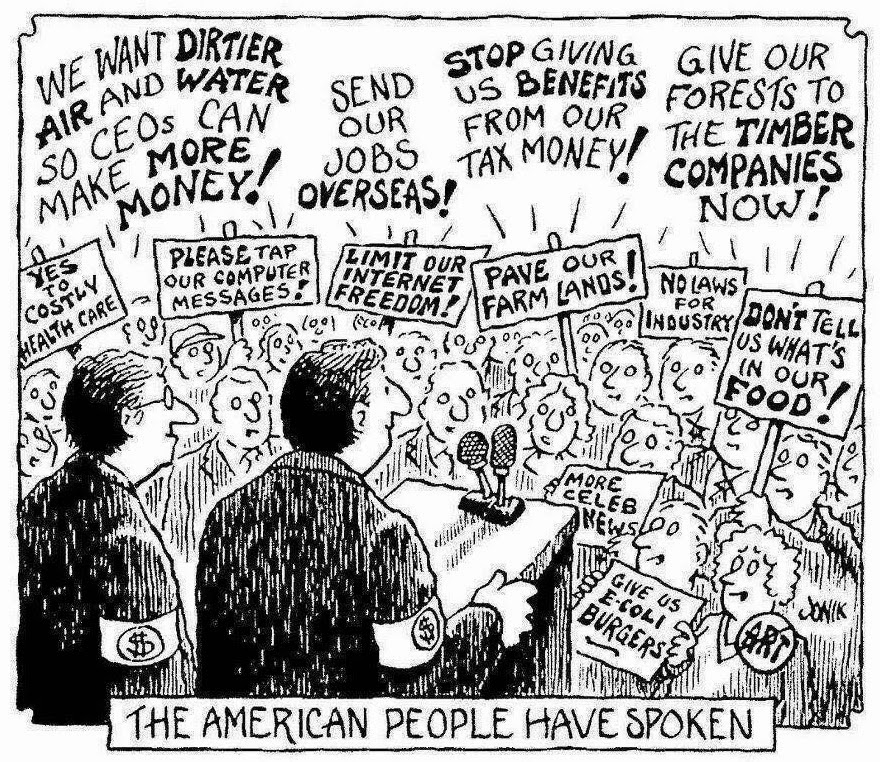
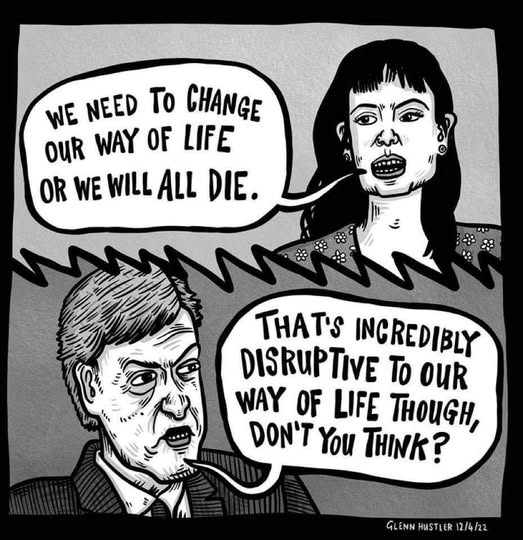
The current political and economic systems don’t just sustain the mess, we are drowning in them. Every major institution, from governments to corporations, actively pushes crisis after crisis, while refusing to deal with the root causes of the disasters they create. For decades, politicians across the spectrum have fuelled endless wars and military interventions, while militarising domestic police forces. Justified global instability and repression in the name of “security” while making the world more dangerous. Celebrated economic growth, while wages stagnate, inflation crushes ordinary people, and skyrocketing rents make survival a daily struggle.
This directly leads to the ecological collapse we are living through, record heat waves, wildfires, extreme weather, it is not an accident. It is the result of decades of environmental neglect, corporate greed, and political cowardice. None of the major parties have taken meaningful action; they always in the end prioritise profit over the survival of the planet and future generations.
At the same time, the state clamps down on dissent with mass incarceration and police crackdowns, which aren’t about safety, they’re about control. Social movements are repressed, not because they are wrong, but because they threaten the status quo. Then the public anger at #neoliberal policies is hijacked by demagogues like #Farage and #Trump, who sell hate, racism, and authoritarianism as the alternative. But this does not bring solutions, only the march towards #fascism.
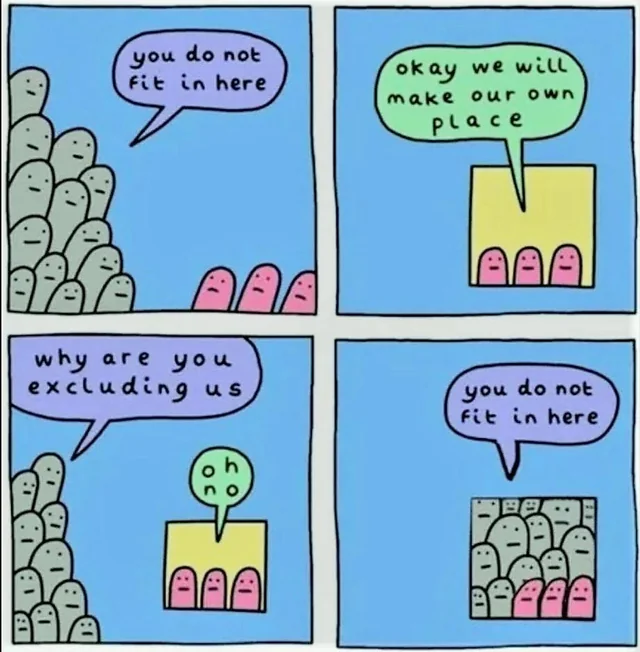
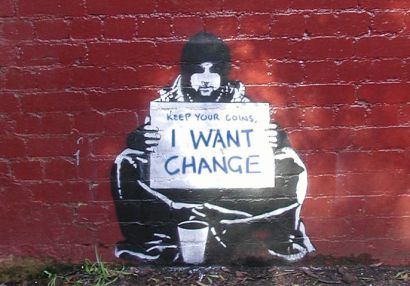
#KISS real change is not coming from these institutions. We need to step away from the #mainstreaming mess by rejecting the ongoing pushing of “common sense” of liberal, neoliberal, and fascist agendas. To organise and resist what we oppose, and push towards building something different. To create alternative communities and economies, humanistic, decentralised, and free from the grip of collapsing #mainstreaming structures.
This isn’t only a negative fight, it’s a positive necessity. The world built by the #deathcult is falling apart. We either allow ourselves to be dragged down with it, or we joyously build something new.
Maybe with Starmer in the UK and Trump in the USA more people are ready to see that the true extremists in today’s society are the right-wing and the centrists, while the left-wing represents the moderates. This may seem counterintuitive, to a few people, but when you examine the dynamics of power and ideology, it becomes clear. The past 40 years of neo-liberal dogma, embedded in every corner of our institutions, have pushed society apart. This deliberate fragmentation created fertile ground for extreme reactions.
In the 20th century, we understood why soft social democracy was necessary. It provided a buffer, a compromise that kept society from tearing itself apart. But the #neoliberal project, championed by the so-called “centrist elitists”, dismantled that social compact in pursuit of unregulated markets and building corporate power. They planted and ploughed this mess, blinded by their own hubris. And now, those same centrists, the article-writing class, weep over the chaos they sowed.
Our liberals, many of them lovely and fluffy, and a few still hard and spiky, do not have the answers to today’s crises. Their “thinking,” is rooted in this historical mess, is the problem. They can’t see past the path they’ve perpetuated, systems that have led us to this breaking point.
The reality is stark: for the next 40 years, it’s either the right or the left. There’s no neutral ground any more, no room for centrist dithering. It’s time to take a side and buckle in for the ride. At the end of this upheaval, we might claw our way back to a social democratic compromise – or we might not.
The choice is clear, but the path will not be easy. The centrists and right-wingers won’t relinquish power without a fight, and the left will need to be bold, clear-eyed, and united to counter their influence. Whether we end up with a more equitable society or descend further into chaos depends on where we push today.
Can you smell it? Can you feel the unease, the hard shift to the right is feeding off? The dead ideology of Neo-liberalism is everywhere. It’s a rotten corpse in everything we look at, everything we touch. And yes while it might feel uncomfortable, we should actively feel distaste when we look at it and revulsion when we touch it, this is the reality of living under a #deathcult.
For the past 40 years, we’ve been immersed in a system that most people still worshipped as if there’s no alternative. But, where is the path out of this smell of this uneasy feeling? Where is the vision for something different, something rooted in solidarity and sustainability rather than profit and exploitation?
To find a different path, take a moment to look at this example of a #4opens project from a simpler time: Wikipedia revision history from 2011. Note the commitment to “strict scrutiny”, which required that any security measures serve a compelling community interest and be narrowly focused to achieve that and nothing else.
Compare that principle to the current state of tech, where the #encryptionsist agenda overshadows transparency and community accountability. The shift has been stark, away from openness, away from scrutiny, and towards the path where security becomes a shield for entrenched power and control.
This is what we need to confront, the #deathcult thrives on our passive acceptance of #neoliberal norms of #closed. Revulsion in this mess isn’t just justified; it’s necessary. The path we need to take is in rejecting this hard blocking to open spaces to build the #4opens alternatives we so desperately need.
You need to think about this more? Let’s look at an example of this in our current lives, people have been living in the shadow of neoliberalism for so long that worshipping the #deathcult has become their nature. The values of exploitation, competition, and #stupidindividualism are baked into what’s considered “normal” behaviour. In contrast, embracing a #lifecult, based on collaboration, community, and sustainability – feels alien, even threatening, to many of these “normal” people.
This is one of the reasons the #Fediverse and alternative social media platforms have struggled to gain traction with the huge influx of #mainstreaming people fleeing the growth of tech fascism. The Fediverse embodies #lifecult principles: decentralisation, mutual aid, and the rejection of exploitative corporate models. While these are positive ideals, they feel too far removed from the familiar patterns of the #deathcult for most people to take the leap.
A cynical path we could take is to meet people halfway. Instead of demanding they abandon their comfort zone entirely, we could make the Fediverse appear less like a #lifecult at first glance by presenting it in ways that feel more approachable and less intimidating, more like the #deathcult they are used to. On this compromise path, yes, the Fediverse should stay true to its principles, but making it less of an overt #lifecult and more of a practical, attractive alternative, this could be the “common sense” step we need to bring people over. Once they’re in, the actually, very needed, hopefully still existing culture, the values of the Fediverse will begin to work their magic.
What do you think? Should we focus on shadowing the approach to reach more people, or would that risk diluting the values that make the #Fediverse what it is? How do we live this balance in our shared #openweb reboot.
The failures of the liberal class, should now be obvious, and are rooted in their worship of neo-liberal “common sense,” that eroded our collective capacity for thought and solidarity. For 40 years, the #mainstreaming “left” abandoned the principles of class struggle, leaving the majority of people isolated and alienated. This complacency, steeped in postmodernist detachment, has created a vacuum that allows fear and hate to flourish. Over the past two decades, left identity politics, though well-meaning in its inception, has fragmented movements, prioritising narrow individualism over collective power.
The right wing has seized this opportunity to co-opt and distort progressive narratives, using them instead to fuel division and weaponise fear. This has paved the way for a shift towards authoritarianism and fascism, deepening the crisis of inequality, climate collapse, and social disintegration.
Yet, amidst this ongoing bleak reality, there is hope. The growing failures of the mainstream can be a turning point. They create the conditions for a return to #KISS (Keep It Simple, Stupid) class-based left-wing movements, movements grounded in shared struggle, solidarity, and common purpose. This shift needs to sweep away the current #mainstreaming crew, who refuse to lift their heads from #deathcult worshipping dogma, and consign these long dead ideologies to the compost heap of history where they belong.
As a community, we face immense challenges: The hard shift to the far right, surviving the next generation of #climatechaos, enduring social breakdown, and creating systemic change in the face of these crises. But the solutions lie in coming together, rediscovering the power of collective action, and rejecting the #stupidindividualism that isolates us.
The biggest obstacle is that many people cannot see this. Years of cultural conditioning, relentless propaganda, and the atomisation of society have blinded people to the possibilities of collective power. They are trapped in a path that convinces them that there is no alternative – that the only option is to keep their heads down, live inside the status quo, and hope for survival.
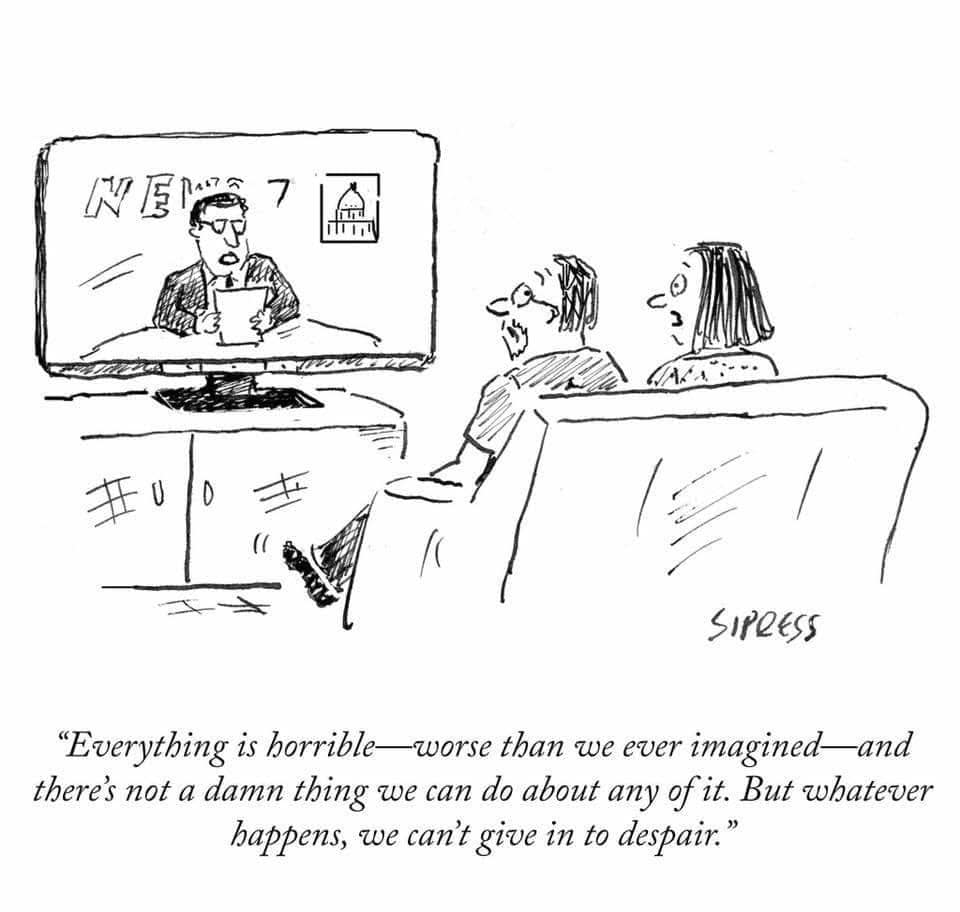
But history tells us a different story: when communities organise, they can and do change the world. This is not a time for despair, it is a time for action. The current economic paths are failing, but this failure opens the door to something new, something better. The time for change is now, and it’s up to us to make the challenge happen.
So lift your heads to see clearly, and take action, not as isolated individuals but as a community. Together, we can not only survive, but create a future of growth, humanistic and ecological flourishing.
The #OMN is a social tech step on the path we need to take.
The madness is everywhere – online, offline, doesn’t really make much difference any more. After four decades of being spoon-fed #neoliberal garbage, individualism has rotted collective sense-making. The tech we use? Built by a geek class lost in its own deterministic tunnel vision.
Sanity, then, is about stepping outside that churn. The #OMN approach: grassroots, #DIY, non-corporate, and actually human-focused, has to be a path forward. The question is, who else sees this? Who’s willing to do something genuinely different, not just repackage the same #techshit and call it innovation?
The #OMN hashtag story revolves around the #geekproblem and deeper ideological and structural issues in the tech world. There are meany internal conflicts in open movements, an example I like to talk about is the UK Indymedia project as a case study of ideological and technical battles between groups with different visions for open media. #Encryptionists: Advocated for security and privacy at the expense of openness, blocking aggregation efforts like RSS. #Fashernistas, sought control over media flows through proprietary yet “better” alternatives to open standards, undermining compatibility. #Openweb advocates promoted aggregation and widely adopted standards like RSS but were sidelined by other factions. The result was a self-destructive cycle that caused the UK Indymedia project to become irrelevant, exemplifying a broader failure to embrace shared, open paths.
The broader, #geekproblem, refers to the cultural and ideological blind spots of the tech community. A fetishization of privacy, encryption, and individualism, which serve market-driven ideologies rather than social good. A failure to address systemic social and environmental issues (e.g., #climatechaos, #deathcult worship) in favour of isolated, tech-first solutions. The division between “open” (sharing power) and “closed” (hoarding power) reflects fundamental tensions blurring between altruistic and exploitative visions of technology.
With its society and technology paths, the story draws parallels between historical ideologies (e.g., capitalism’s greed vs. socialism’s altruism) and the current state of tech. Examples: Closed systems reinforce inequality, greed, and control. Open systems, guided by #4opens principles, prioritize cooperation, connection, and social benefit. The problem of dogmatism on both sides of progressive tech (spiky vs. fluffy) hinders collaboration and slows any real progress.
Working grassroots projects need to return to #KISS basics, embrace openness, foster flow rather than blocking, and reject the destructive patterns embedded in blinded #neoliberal tech culture. The #4opens framework is a shovel to compost the ideological and technical mess, enabling meaningful technological change. Social movements and tech must integrate this change and challenge to prevent centralization and co-option.
The simple, yet complex, story shows how it’s good to critique the ideological blindness of the tech world and clearly shows that only by growing trust and openness can we build any sustainable future #KISS
“the crew gathered around #SocialHub worked remarkably well for a while, organising good gathering, conferences and very useful outreach of #ActivityPub to the #EU that seeded much of the current #mainstreaming. But yes, it was always small and under utilised due to the strong forces of #stupidindividalisam that we need to balance. Ideas?“
From grassroots origins, #SocialHub emerged as a community-driven platform, rooted in the #openweb principles, focusing on the interplay of technology and “native” social paths. Its initial success lay in its collaborative ethos, free from mainstream interference. This promising start has since failed, due to lack of core consensuses and the active #blocking of any process to mediate the mess making.
Current challenges are from the influx of non-native perspectives, The twitter migrants and rapid #Fediverse expansion has diluted what was left of the original focus. Then in reaction to this the has been a retreat to tech paths over the social paths. This shift toward technical priorities marginalized the social aspects that initially empowered and defined the community, this is a mirroring of broader #geekproblem struggles that are a continuing of the fading of the project.
What actually works is always grassroots messiness and constructive processes, that is messy in a good way, authentic, grassroots movements are inherently untidy, this ordered/chaos is where real social value is born and nurtured. Attempts to overly structure or mainstream these paths risks losing the path, this together with lifestyleism, and fragmented tribalism, distract from meaningful change. These behaviours breed from #stupidindividualism, a core outcome of the #deathcult we pray to, the culture that undermines collective action.
There is a needed role for activism, based on learning from history, to avoid repeating mistakes. This can lead to wider social engagement, and an embrace of messiness to counteract the stifling tendencies of rigid mainstreaming and isolated tech focus. The metaphor of “shovels” is useful to turn the current pile of social and technical “shit” into compost is apt. Grassroots communities nurture a healthier ecosystem that balances tech and social. The imbalance favouring tech over social needs to be addressed, reinvigorating the core social crew with a focus on community-oriented discussions and actions can restore equilibrium.
For this, it can be useful to challenge neoliberal narratives, use the #openweb/#closedweb framework to critique and dismantle pushing of #neoliberal “common sense”. Highlight how these ideologies breed the individualistic and exploitative tendencies that undermine collective progress. The need for vigilance against co-option and the importance of nurturing the messy authenticity of grassroots movements. The path forward requires not just shovelling but planting seeds of collaboration, transparency, and collective action. By embracing the messiness and keeping the focus on social value, the #openweb can flourish as a genuine alternative to the #closedweb.
To revive radical grassroots media, we need to return to the basics, and that means embracing #FOSS, #opensource, and the #4opens. These aren’t just technical choices; they’re political ones. The 4 opens: open data, open standards, open process, and open licenses act as both a key and a lock. A key to unlock collaborative, transparent networks and a lock to keep out the dilution and co-option that comes with #mainstreaming.
Activism vs. Mainstreaming. Activism seeks to challenge and change the system. Mainstreaming, often via NGO channels, seeks to manage and defuse resistance. One leads to transformation. The other leads to stable careers, conferences, and incremental tweaks. If we’re serious about building change, we must know the difference and act accordingly.
The #OMN Mission is to support that activist path. We don’t chase shiny toys. We focus on the 1% of tech and workflows that actually help people. That means filtering out distractions and rooting projects in shared ethics: the #PGA hallmarks, the #4opens, and a clear commitment to anti-capitalist, anti-patriarchal, grassroots-oriented collaboration. We don’t need more “disruptive innovation.” We need human-centred tools that support collective work, transparency, and trust.
Why the right is winning (And how we catch up). Let’s be honest: the right wing has outpaced the left on #openweb coordination. They’ve built propaganda farms, community hubs, and direct action tools, while we keep getting lost in over-academic jargon, fractured efforts, and endless reinvention.
We need to reboot and federate, not fragment. Let’s pick up where successful movements left off. Think: #Indymedia, updated for today, grounded in the #4opens, and governed with #KISS principles, to avoid the #deathcult, build for the Commons
Most mainstream tech is built on 40 years of #neoliberal assumptions: that people are selfish, fixed, and controlled. That’s the core ideology of the #deathcult, and most tech just reflects it back at us. Grassroots media must reject that. We build from a belief in people’s potential. That means tech designed for trust, collaboration, and autonomy.
Ask yourself:
"Does this serve the commons?"
"Does it align with the #4opens and the PGA hallmarks?"
That’s the filter we need to apply — especially as we face burnout, co-option, and the churn of #fashernista tech that solves nothing. We don’t need to start from scratch. We need to compost the mess, reuse what works, and rebuild the rest. That’s what the #OMN is: A shovel, A seedbed, A place to federate purposefully. Let’s stop spinning wheels and start building something that lasts.
Join the effort. Shape the future of radical media and open governance. Learn more at OMN on this path, the resurgence of grassroots radical media projects requires a return to foundational principles, particularly the embrace of #FOSS and #opensource practices. These principles align with the #4opens framework, which acts as both a lock and a key for building sustainable and accountable media networks.
The path I am and have pushed is rooted in a few #KISS principles: a return to grassroots governance, prioritizing community-driven technology, and composting failed ideas for new growth. Then the common sense that to enable this, we need to develop tools and frameworks that uphold transparency, empower collective action, and keep the focus on sustainable, open alternatives.
I believe to try and balance much of the current mess, people should focus on grassroots activism and building alternative systems to combat the current social, ecological, and technological mess. With a strong emphasis on open processes (#4opens), collective action, to challenge the #neoliberal status quo (#deathcult) through direct engagement, rebooting independent media, and creating sustainable, community-driven alternatives to #mainstreaming mess. The path is agen #KISS to reclaim agency and work toward positive, systemic change from the grassroots up.
I am thus critical of #NGOs and #mainstreaming paths, as they compromise their radical potential by seeking funding and approval from larger institutions and establishment hierarchies. This too often leads to co-optation and dilution of “native” grassroots values of, turning them into tools for maintaining the status quo rather than challenging it. We need to actively resist this corruption and ensuring that alternative, community-driven projects thrive without becoming fatally entangled in the mainstreaming mess.
I have extensive experience navigating radical activism and grassroots media projects. Having been involved in open technology movements, such as #Indymedia and #OMN (Open Media Network) and more recently the Fediverse and ActivityPub movement, emphasizing trust-based, DIY approaches. Thus, the critique of the #NGO sector for undermining radical efforts through the influence of funding and institutionalization, having witnessed how NGO paths often lead to stagnation and failure.
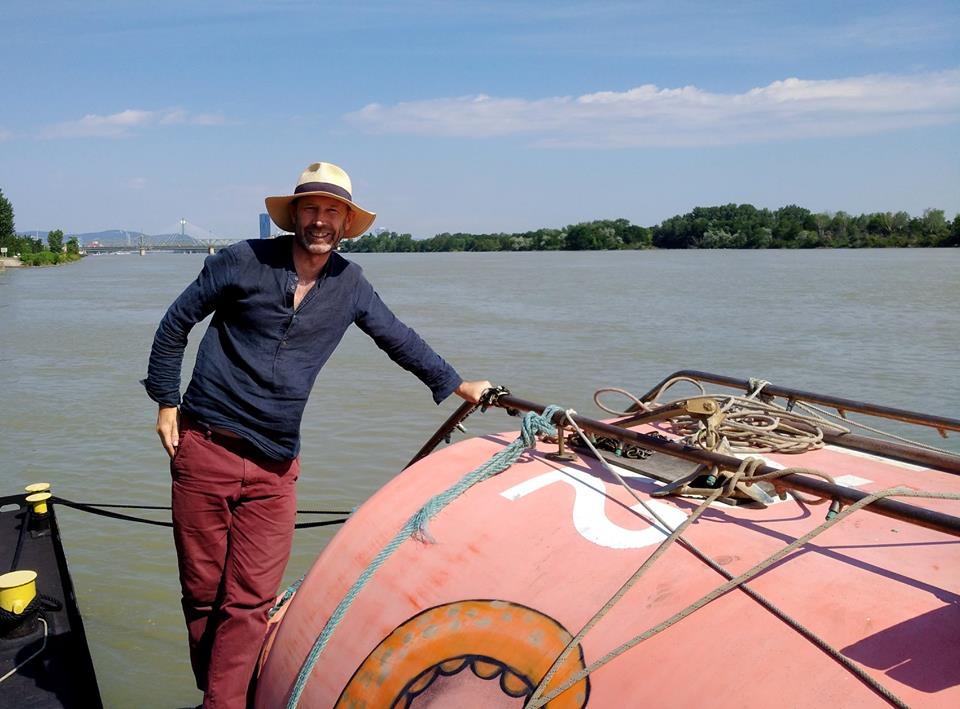
My #boatingeurope life reflects a life outside the #mainstreaming, a simpler “native” more sustainable #DIY lifestyle, away from the chaos of every day #deathcult worship. Living on the water is a metaphor for self-reliance, resilience, and independence, while offering life connected with nature. The lifeboat is a metaphor for #climatechaos, I sailed away ten years ago, after campaigning agenst #climatchange and ecological destruction for 20 years, continuing the path to live outside conventional structures, a little away from the stress of activism. However, the world is round, so have since returned, re-engaging with tech activism, a remainder that retreat won’t solve the broader systemic issues facing the world and the people that live in it
I see a core tension between alternative cultures and the mainstream: the mainstream demands that alternative cultures conform in order to be effective, while the alt paths intentionally resist this push, aiming to remain distinct and radical. This clash creates a deeper issue – #mainstreaming voices tend to block and reject the need for a bridge between these two spaces. The failure to recognize the importance of building such bridges leads to division and stagnation, perpetuating the current social and political mess. The root problem lies in mainstream “common sense” blocking and an intolerance toward the very idea of bridging these divergent paths, hindering progress from both sides.
NOTE: This might seam a little confused because it is, I am arguing for “balance” and “use” in truths, and arguing against dogmatic, blinded, worshipping of the #deathcult as a moral argument. None of this shit is rational, it’s a mess that I am pointing to, and a shovel to use for composting is needed work to build the needed truth.
In the postmodern mess we inhabit, “truth” that becomes deliberately obscured by those who view it as subjective, fragmented, and relative. This is more than denying an objective reality; it’s an embrace of #nihilism, where truth dissolves into endless, conflicting, interpretation. Combined with #Neoliberalism, that itself blurs the lines between fact and fiction while it commodifies knowledge, we find ourselves in a world where power and influence, rather than evidence, define what passes for truth.
This distortion is evident in how conflicting “truths” clash with each other. Instead of an honest pursuit of any path of understanding, debates become competitions of influence, narratives backed by the most powerful voices are treated as “truth.” For example, corporate media giants and political power politics shape public discourse by determining which facts matter and which are dismissed or simply ignored. Consider #climatechange, where scientific consensus is downplayed or outright ignored by industries whose profits depend on denial. The truth, in this case, becomes buried under the weight of vested interests.
The is a story to this, sophism, using clever but misleading arguments, has replaced honest discussion. Truth is no longer about what is empirically verifiable, but about what can be sold as convincing in a highly fragmented, pluralistic, and increasingly polarised spaces. This problem of competing narratives, shaped by power, leads to a collective confusion where “truth” is more mess than ground to build on.
Ultimately, this is not a sustainable path for any society. A world where truth is shaped by power rather than facts is a path of instability and distrust. To change this path we need to take simpler, grounded approaches, what you might call #KISS (Keep It Simple, Stupid) – where clear thinking and evidence-based understanding are our guides.
It’s time to unearth the power of #KISS truth, stripped of #neoliberal distortions and #postmodern doubt. To make this appen we need to work to reject the noise and focus on reality, on (social) truths that exist in communities outside #mainstreaming power games and manipulative sophistry.
But, #blocking, when this pushing of truth-telling is penalized, it’s a clear sign we’re navigating a post-modern, obfuscating mess. Instead of addressing issues openly, too often societies hide and punishes those who expose inconvenient views, letting problems rot and fester. It’s a reminder that transparency is essential for creating a healthier culture. When truth is composted rather than suppressed, it breaks down unhealthy systems and makes way for healthy growth and accountability.
If you’ve spent time on my website, you’ve come across the term neoliberalism. It’s a word that’s used so much that its meaning has maybe been diluted. You might have a surface-level understanding: deregulation, privatization, tax cuts for the rich, the classic “trickle-down” nonsense where we’re supposed to believe that if the rich get richer, everyone will magically benefit. It’s not entirely wrong, but it only scratches the surface.
So, what really is neoliberalism? It’s the core of what I call the #deathcult – this unquestioning faith in the free market, a belief that capitalism, when left completely to its own devices, will allocate resources efficiently and justly. Spoiler alert: it doesn’t. This ideology has been pushed to the heart of why our society and is now why it is collapsing, why inequality is rampant, why climate change isn’t being addressed meaningfully, and why we’re on a collision course with disaster.
#Neoliberalism isn’t new. We’ve seen it before in the laissez-faire economics of the late 19th century, which crashed into the Great Depression. It ended in global upheaval, political unrest, and the rise of authoritarian regimes, leading to globe war. And now we’re on the same path with social disintegration and #climatechaos, this time the mess is even more poisonous, with ecological collapse looming.
At its core, neoliberalism is about giving all the power to the #nastyfew in the “business class”. Not the people, not communities, not workers – just businesses, capitalists and what remains of the old feudal orders. In a #neoliberal world, the capitalist class gets to make all the decisions: setting wages, determining prices, managing resources, polluting freely, without interference from governments and collective movements. It’s a system designed to serve the interests of the most evil people while pretending to offer “freedom” to “consumers” what ever this means. But that “freedom” is a lie. What kind of choice is it when you can’t afford housing, healthcare, or basic survival? “Pick one” shiny piece of crap they say, while everything crumbles around us.
And the worst part? Neoliberalism doesn’t just push suffering, it justifies it. If you’re poor, it’s your fault. You didn’t work hard enough. You’re lazy. The cruelty of it is staggering: the rich hoard their wealth, built on the backs of workers, while the system vilifies those who are struggling to get by. This ideology isn’t just economic, it’s political. Neoliberalism co-opts the state, transforming it into an enforcer for the business class. The state’s role becomes about protecting corporate interests, not public welfare. Deregulation, privatization, militarization, these are its tools to keep the market “free” for capitalists while making life increasingly unfree for everyone else.
This is the mess we are in now. We’re witnessing the slow, methodical destruction of the real social safety nets built up by workers after the second world war, of any meaningful government oversight, and of collective power. Neoliberalism hates unions, despises activism, and fears real challenge and challenge to class interests and power. And when push comes to shove, it would rather align with #fascism than allow any alternative like socialism or genuine collective power to rise to balance the current mess.
So when I talk about the #deathcult, this is what I mean. It’s a simple metaphor for #neoliberalism, an ideology of destruction, dressed up as “freedom” and “efficiency.” The task before us isn’t just to critique it but to compost it, to build affinity groups, to seed movements that understand the depth of the problem and are ready to nurture the seeds of real alternatives. We can’t afford any more to just sit back and let it continue. We have worshipped this #deathcult for 40 years, we need to lift our heads and shovels (#OMN), and we need to do this now.
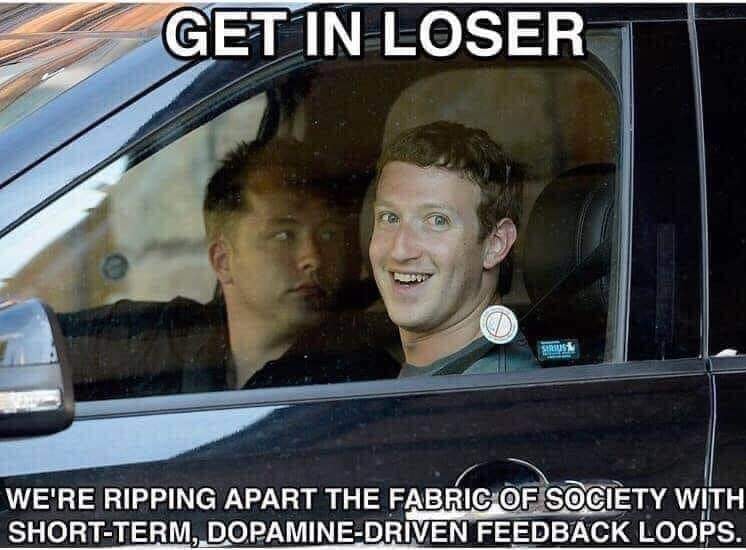
The mainstream internet, #dotcons, seduces us with dopamine hits, saps our creativity, and turn us into sad, noisy, powerless complainers. It steals our time with endless distractions, buries the pathways that lead to real change, and, in the end, empties our wallets.
We do need to stress how ingrained the #deathcult mentality has become. After decades of #neoliberal ideology, people have internalized the “no alternative” mindset, making it difficult to embrace radical solutions. Moving public opinion, especially outside the #dotcons bubble, requires patience and strategic optimism. It’s frustrating when potential allies focus too much on tearing things down instead of building up new, relevant/radical paths.
How do you think we can inspire collaborative and hopeful action movements, without them getting lost in the negativity?
There is a visible to some/invisible to meany split between isolationists and communicators in decentralized tech. This, if you can see it, highlights a tension that exists in these spaces: the drive for autonomy versus the desire to connect and build community. The isolationists tend to come from a place of distrust—towards government, society, and even other people, while the communicators are motivated by collaboration and the desire for the balance of freedom without “control”. This is from’ish this thread
To build a community of positive-minded, collaborative people around decentralized technology, it might help to frame it with a focus on inclusivity and openness, rather than a dogmatic political alignment. Positioning the project as radically progressive and inclusive can attract those who share ethical values without alienating people who might not identify with specific left-leaning ideologies, but do align with collectivism paths and community-building to make these paths real.
What can help build a project native to this, like the #OMN? We start with clear, shared values, like the #4opens then build these into strong myths and traditions, inclusive, mutual aid, transparency, and collaboration to hold the path, no matter how messy it gets. This might help to grow an affinity group of action to draw in, by holding the space open, people who want to contribute positively and filter out those who don’t share those #KISS goals.
Decentralized, communal governance, like the #OGB is a path to empower communities to moderate a healthy and welcoming space. Decentralized decision-making allows more voices to be heard and helps to mediate conflicts before they become toxic. This distributing power and responsibility, to build open, curated discussions and ensure these remain constructive and don’t descend into conspiracy and extremism. Yes, make it clear that free speech is valued, but the community is not tolerate of hate speech and fascist ideologies. On this native path various approaches and ideas, coexist in collaboration and messiness, a path to avoid dogmatism and the mess that ideological purity can so easily spread.
To build this we can use existing networks, the #fediverse is a great example of how decentralized tech works to scale, and a good place to draw inspiration, an example of community building, moderation practices, and fostering healthy interactions. We can start with highlighting successful models of cooperation and interdependence that try and resolve conflicts organically.
The challenges are real, especially in keeping out toxic elements without being authoritarian or losing the balance of openness. By focusing on shared, values and building a community where contributions are judged by their alignment with the collective goals rather than personal politics, you create a space that encourages progressive ideas that fosters a sense of solidarity.
This is a real path to open a space to build alternatives #OMN
Stop complaining. Just step away to help build the alternative #OMN
Resilience is community and trust, this resilience grows by connecting the actions of today to the possibilities of tomorrow, even when that future is unknowable. It’s rooted in community, and community thrives on mutual trust. Trust isn’t about keeping a ledger; it’s about giving freely without expectation. Money is not the foundation of resilience. Across the world, billions live resilient lives by supporting each other, because if they don’t, they all go under. From our privileged view, we often forget that resilience is nurtured in these commons.
We need to think about this: The idea of dual power isn’t new. It goes back to revolutionary moments when people realized the need to build alternatives to existing oppressive structures rather than only confronting them head-on. In the current political climate, where the failures of state and capitalist control are glaring, we need to revisit and reframe this idea of “dual power”. This isn’t a utopian dream or a naïve belief that we can merely build around the edges while the world burns. It’s about creating practical, grounded alternatives that directly challenge the existing system by living outside of it and dismantling it from the inside.
The current mess, look around. We are surrounded by a mess of our own making. The relentless march of #neoliberalism has commodified every aspect of our lives, and the #dotcons have taken over our social spaces, transforming genuine human interaction into data points for corporate profit and control. The state, meant to serve the people, is a tool of the greedy and nasty, maintaining control through fear, surveillance, and repression. It doesn’t take much to see that the paths we are currently on are leading to #climatechaos, widespread inequality, social and ecological breakdown.
But here’s the problem: most people still think we have choices within this mess. They talk about reforming the system, fixing capitalism, or making dotcons tech more ethical while continuing to operate on the same lost paths. This is delusion, a comfortable delusion for some, but a delusion nonetheless.
On the #DIY path, dual power is about creating parallel paths that coexist with the current ones but serve entirely different functions. Instead of asking for scraps from the masters’ table, we build our own tables, with food that nourishes everyone. It’s about constructing alternative social, economic, and political structures that are directly in opposition to the current hierarchies and power dynamics.
It’s not just about building alternative structures, though. It’s more important for actively delegitimizing and dismantling the existing power structures of capitalism and the state. This involves #directaction, solidarity, and collective organizing to challenge and change state and capitalist control in all its forms. It’s about a two-fold strategy: building the new while composting the old.
Why dual power matters, for too long, the left and radical movements have been stuck in reactionary paths, fighting battles on terrain chosen by the state and capital. We need to change this by recreating a new path, a space where we shape the traditions and myths that shape us. This is not just some theoretical exercise; it’s already happening in many parts of the world.
We see it in the #fediverse, on #mastodon, #bluesky and #noster networks, in grassroots mutual aid networks springing up during the current crises when the state and corporate structures fail. We see it in community run food cooperatives, decentralized digital spaces, and local assemblies where decisions are made collectively, rather than by a few in power. This is not an abstract idea, it’s lived practice, a shift from fighting against the system to creating something new and more humane.
Building dual power in a digital age, the #openweb and federated networks offer a glimpse of what dual power can look like. Unlike the #dotcons that feed on greed and manipulation, the openweb is rooted in principles that serve the community, #4opens, transparency, open collaboration, and autonomy. But even here, we often fall into the trap of merely copying the structures we’re trying to replace, creating the same mess under a different banner. The next step needs to be truly native to the 4opens path, transparent, open, and accountable, rejecting the commodification that the dotcons have normalized.
But digital spaces alone won’t save us. They are tools, important ones, no doubt, but we need a broader focus. We need to create real-world spaces of resistance and creation. Think community gardens that also serve as meeting points for local decision-making. Think of decentralized energy cooperatives that break free from corporate control. Think of neighbourhood assemblies that replace the hollow, bureaucratic local governments that most people have lost faith in. This is dual power in practice.
The roadblocks, the #Geekproblem and #Fasherista paths, let’s not romanticize this process. We need to acknowledge the challenges within our movements, the #geekproblem and the #fashernista paths that unconsciously block the change we need. The geekproblem is the obsession with technical solutions over social and political ones, while the fashernista path focuses on trendy but superficial activism that serves as more of a social club, careerism, than a serious challenge to power. Both paths have their place, but they should not dominate our paths. We need to keep our focus on the bigger picture.
Moving beyond the noise, to those who say, “Now is not the time,” I ask, “When will it be?” The crisis is here. We are all worshiping the #deathcult, masking 40 years of #neoliberal ideology, pretending we have choices that simply don’t exist. Now is precisely the time to dig in, get our hands dirty, and start composting this mess we’ve been dragged into. The work ahead isn’t easy, and there will be mistakes, missteps, and mess-ups along the way. But that’s okay. Composting is messy work, and so is building a more open and sustainable world.
If you’re waiting for someone to tell you what to do, you’ve already missed the point. Dual power isn’t a blueprint; it’s a living practice. It’s a call to start building the new and composting the old, right now, where you are. Lift your head, look at the mess, and start digging. Together, we can build something better than the scraps we’ve been given. Join us on this humanistic adventure in social technology and direct action. The #openweb, the #commons, and the real-world spaces we build are where the future lies. Let’s make it happen #OMN