Rebuilding Shared Meaning in a Fragmented World

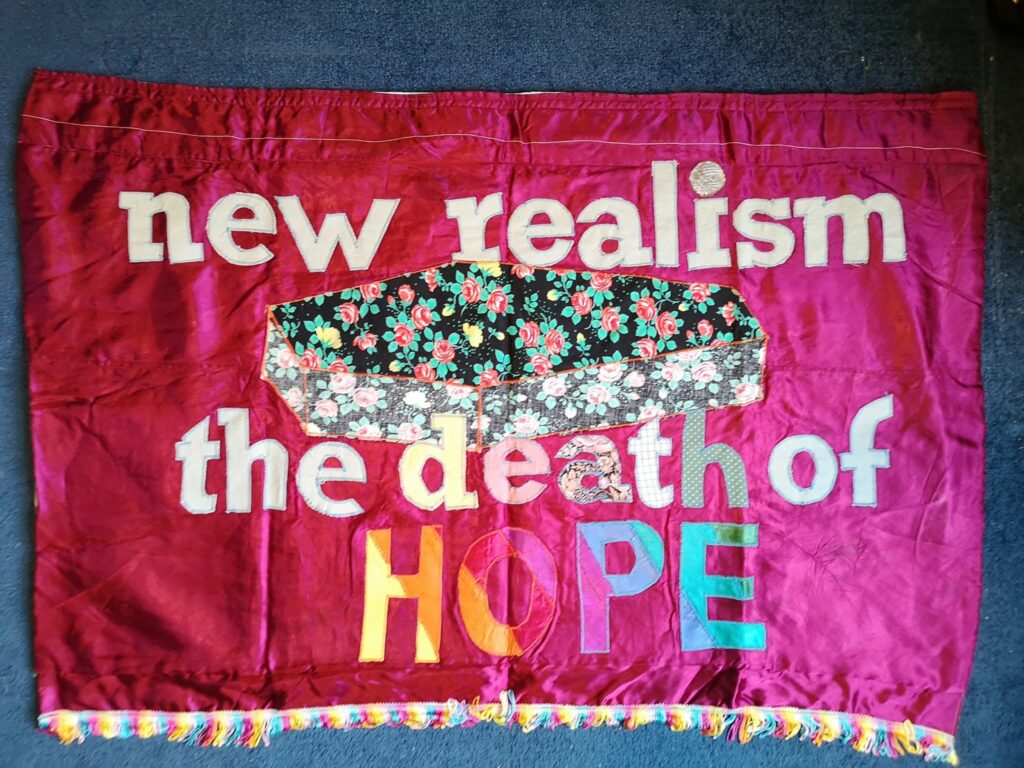
A lot of our current mess can be understood through the long transition from #modernism to #postmodernism. Not as an academic debate, but as a lived reality. Modernity was about progress. It believed that society could be understood, improved, and consciously shaped. Science, democracy, planning, industry, public institutions, trade unions, education, and infrastructure were all part of this path. The future was something people could build together.

Of course, this vision was never as simple or as benign as some people imagined. Modernity produced extraordinary advances in health, communication, and material abundance. It also produced colonialism, industrial warfare, bureaucracy, environmental destruction, and systems of control on a scale previously unimaginable. Yet despite its contradictions, modernity had confidence. It assumed that problems could be solved, that collective action mattered.

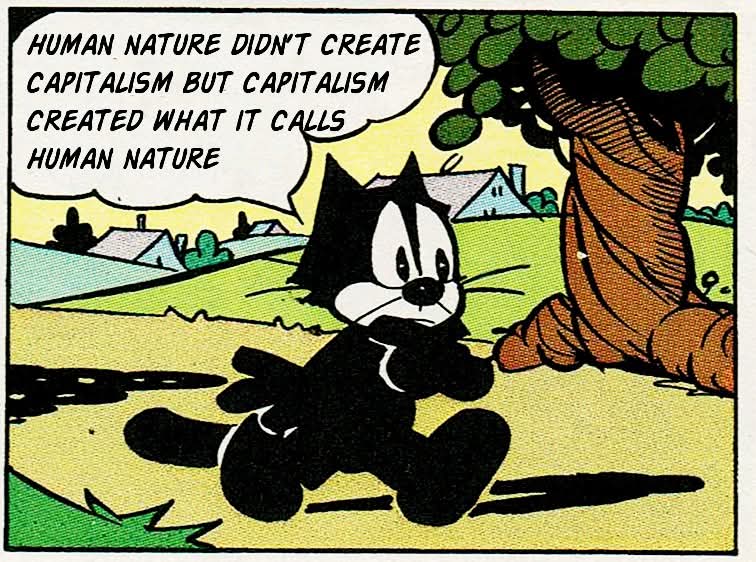
Then came the invisible #postmodern turn. The failing social democratic institutions lost legitimacy, narratives stopped convincing people. Governments increasingly rejected planning and handed decision-making to markets. Globalisation connected everything while making almost nothing feel controllable. Information mess exploded beyond individual’s capacity to understand any of it.

Instead of thoughtful maps, we had endless competing realities. Then, the #deathcult, the promise of #neoliberalism, that deregulated markets and individual freedom would create the best possible outcomes. In practice, much of what happened was the dismantling of collective institutions without replacing them with anything capable of holding society together. People gained consumer “choice” while losing all political agency. We became slaves focused on choosing between products while unable to shape the systems that govern our lives.

This is where contemporary politics becomes difficult to understand if we keep trying to use any grounded categories – mess increased the conflict between people trying to rebuild collective meaning and people retreating into fragments – Some fragments become consumer identities, some become nationalisms. In alt culture we lived through a decade of conspiracy theories while the #mainstreaming become lifestyle brands.

The common thread is that people are still looking for belonging in a world that increasingly feels impossible to influence. This is why so much contemporary politics is irrational, people are not responding to facts, they are responding to the crisis of meaning. A crisis of trust, a crisis of belonging.

Modernism reminds us that collective action matters, that process we build matter’s, DIY infrastructure matters and finally that society can be consciously shaped. Were #Postmodernism at its best reminds us that dogmatic system contains blind spots. That power hides itself behind claims of objectivity. That diversity of experience matters, thus blinded certainty to often leads to oppressive. With the ending of modernity:

  • We lost confidence in human planning but kept bureaucracy.
  • We lost collective power but kept #elitists concentrations of power.
  • We gained diversity of voices but lost shared language.
  • We gained infotainment but lost trust.

This mess leaves us trapped in blinded deadens of certainties of yesterday and the endless fragmentation of today. The challenge for projects like the #openweb is finding paths beyond this deadlock – not returning to centralised authority or surrender to endless relativism, but rebuilding shared processes that hold diversity without demanding conformity.

This is where projects like the #Fediverse, #OMN, and the #4opens matter. Their value is not primarily technical, their value is social. They are historical lived experiments in creating spaces where cooperation emerges without central control. Where differences coexist without immediate fragmentation and where communities develop shared infrastructure without surrendering autonomy.

The #KISS task is creating conditions where many narratives can coexist while still allowing collective action. That is harder than either modern certainty or postmodern scepticism. But it is the path through the era of #climatechaos, #dotcons platform monopolies, social fragmentation, and democratic decline.

Power is built, not granted – Power comes from power – it is something people build, organise, and create together. In the best outcomes, power is shared and circulated. But it is rarely something simply handed down from above. A lot of modern political thinking still struggles with this. It imagines power as something that belongs to institutions, leaders, owners, or authorities – something granted through permission.

But historically, power has always been created through collective action. Private property is one example of a social agreement backed by power. The myth is that ownership is a natural thing that existed forever. The reality is that ownership systems are historical arrangements, enforced through social structures.

The old story is simple – Someone draws a line in the sand, they say “Everything on this side is mine.” The group accepts that boundary – or someone has enough force to make them accept it.

That model of power still shapes much of our world, but notice, this is not the foundation of the #Fediverse. The #Fediverse is built on a different assumption, it is based on an open flowing social web of connection rather than enclosure, participation rather than ownership, federation rather than domination and shared infrastructure rather than a single centre.

The lines in the sand are not permanent walls, they move, they adapt, they blow in the wind. That does not mean there is no power. It means power works differently. The challenge is that many people approach the #Fediverse using old assumptions from the #closedweb of who owns it? Who controls it? Who is the authority? Who gives permission? Those questions make sense in a platform economy, they make less sense in a living commons.

This is where some of the current liberal tradition has become confused, as liberalism at its best gave us important ideas of individual rights, freedom of thought, limits on arbitrary power and space for difference. But much of the current political culture has absorbed the logic of the #deathcult: neoliberalism, market absolutism, and a fragmented postmodern culture where everything becomes identity, performance, and competition.

The result is a strange contradiction of a culture that talks endlessly about freedom while creating systems that reduce collective freedom, that celebrates choice while making real alternatives harder to build, that protects individual expression while weakening the shared social foundations needed for that expression to matter. The question is not how we return to some imaginary past.

The question is then how do we build new forms of collective power that fit the world we actually live in? This is the unfinished work of the #openweb. We need constructive thinking beyond “common sense” because much of what is called common sense is simply the habit of old systems.

Technology shapes society, the design of our networks shapes how we relate – Closed systems create dependency – Open systems create possibility. But openness alone is not enough, we need the social practices around openness of trust, care, stewardship, accountability and collective imagination.

The future will not be given to us by institutions, it will be built by people creating alternatives and connecting them together. Power is not permission, power is participation.

Build it permissionlessly and let it loose

One of the uncomfortable truths of activism is that, given a choice between anarchism and anarchy, many anarchists choose anarchism. The ideology, identity, culture, meetings, and certainties feel safer than taking a genuinely risky step into the unknown of stateless liberty and self-organisation.

It’s easier to belong to the subculture than to build the social relationships and trust needed to live without the structures there critiquing. A lot of radical politics gets stuck at this point: defending the identity instead of creating the reality.

From an #OMN perspective, the challenge is not proclaiming freedom, but building the social infrastructure that makes freedom possible.

Been working with #mainstreaming people recently. The experience has been eye-opening, and not in a good way. What strikes me isn’t that they are bad people, most aren’t. The problem is that many seem completely unaware of how badly the culture they inhabit behaves. Gatekeeping is normal. Careerism is normal. Status games are normal. Endless #blocking of ideas, projects, and people that fall outside established comfort zones is normal. Then, they wonder why meaningful change never happens.

The pattern is everywhere. New ideas are treated as threats rather than opportunities. People spend more energy defending positions than solving problems. Institutions become focused on preserving themselves rather than the purpose they were supposedly created for. When challenged, the response is confusion – then #blocking – the behaviour is so deeply embedded that it has become invisible.

This isn’t just a problem of NGOs, public bodies, academia, media organisations, or corporations. It’s a broader cultural issue. The incentives point in the wrong direction as most people choose jobs primarily for income, security, status, and benefits. That’s understandable, we all need to survive. But when entire systems are built around those motivations, contributing to society becomes secondary, something to be mentioned in mission statements rather than lived in practice.

The result, a society full of people managing problems rather than solving them. You can see this in every sector, from the highest levels of management down to the lowest-paid positions. The forms differ, but the logic is the same: don’t rock the boat, protect your position, follow the approved path. This is one reason why grassroots projects struggle, as they are trying to solve problems directly, while mainstream institutions are organised around managing risk, preserving legitimacy, and maintaining existing structures.

From an #OMN perspective, this isn’t only a problem of individual morality, it’s a problem of social systems rewarding the wrong behaviour. The answer is not simply to denounce people, that feeds the cycle, the challenge is to create spaces where different values can actually function:

  • collaboration over competition
  • stewardship over careerism
  • openness over gatekeeping
  • social usefulness over institutional self-preservation

Some people respond by working less, consuming less, and choosing employers whose purpose is broader than profit. Others build grassroots projects outside the mainstream. But, neither path is easy, both come with costs.

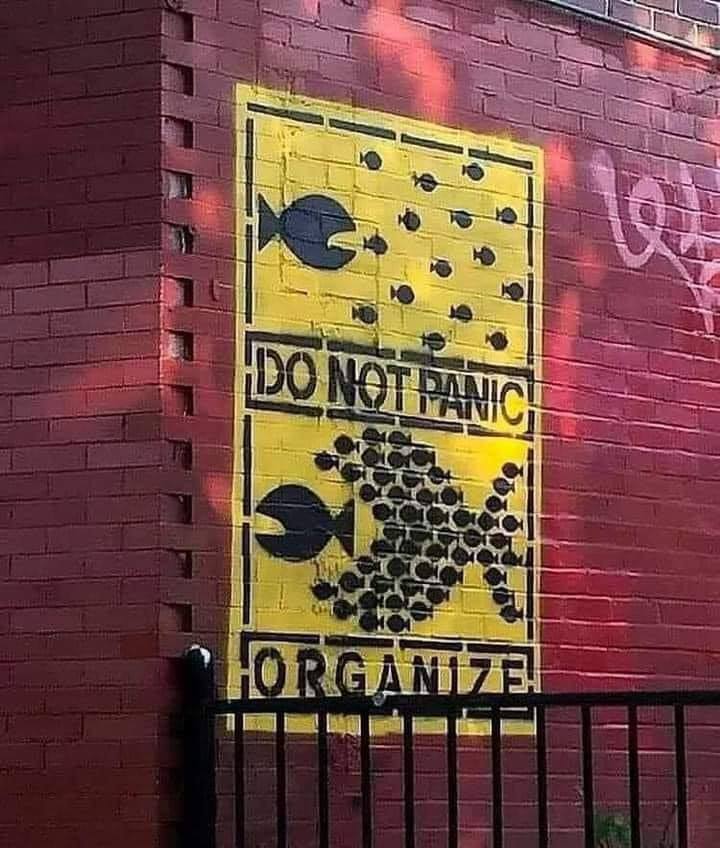
The question is not why change is difficult, it is why we keep organising society around incentives that actively discourage it. With this mess in mind in both tech and activism, if your politics is talking only to people who already agree with you, it’s probably a hobby, not a movement. The #OMN path starts with building bridges between different groups, needs, and cultures, as this is how collective power grows.

We live in an age of #stupidindividualism where everyone broadcasts and few connect, so build bridges, not bubbles. This matters because most people are up shit creek without a paddle, yet keep looking in the same places that got them there. Apathy and laissez-faire “common sense” have become normal. Decades of #neoliberalism taught us to think as isolated individuals rather than communities capable of acting together.

One barrier is that people still don’t see the need to move beyond the #feudalism that shapes much of the tools we need. As a result, huge amounts of energy go into defending existing structures and #blocking alternatives before they have a chance to prove themselves. That’s why the #OGB project approach is simple: build it permissionlessly and let it loose. People will see the value, or they won’t #KISS

The goal isn’t convincing a handful of gatekeepers, the goal is empowering a larger group of people to participate in activism, technology, build consensus, and push the social agenda they actually need of less permission, more practice, less management, more participation.

This is also why so much campaigning, #NGO and alt-tech events can be frustrating. The official conversations are dominated by career paths, institutional interests, branding exercises, and carefully managed narratives. Lots of noise, not always much signal – The useful stuff usually happens elsewhere, in corridors, over coffee. That’s where bridges get built, where ideas get tested and where trust grows. The social layer matters more than the stage.

The #OMN lesson is simple – Technology alone doesn’t solve social problems, we need
movements grown by connecting people, governance grown by participation,
commons grow by use. If we want a better world and #openweb, we need to spend less time protecting silos and more time building bridges. That’s where the signal still lives.

But when documenting moments and movements like this It’s important to focus on what actually matters not only the normal surface mess.

Watching this video reminded me how much activist history gets distorted by sectarianism. At places like #Greenham, divisions formed around the “colour” of the gates – different ideologies, identities, and political cultures. The trouble is that the loudest and most conflict-driven voices end up telling the history afterwards.

The people saying “look at me” get remembered, while the people saying “don’t look at me, I’m busy, look at the issue” are usually too busy doing the actual work to document it.

This leaves us with a skewed activist memory, where internal drama becomes history and the slow, collective labour that made things happen fades into the background.

It’s not just a problem of the past. We keep reproducing the same mess today.

The non-action bloc: resignation, cynicism, and the culture that keeps people powerless

#Oxfordboaters – Some of the people have to lie to themselves as they blindly believe in private property and rule of law but squat on private property and brack the law by not moving. They try and pretend this is not true, if they do this pretending to strongly they will make us all homeless.”

A lot of people are up shit creek without a paddle, yet keep looking in the same places that got them there. On this apathy and laissez-faire “common sense”, we have a real problem, decades of #stupidindividualism have left people expecting things to somehow fix themselves while collective capacity withers. The answer isn’t wishing people were different, it’s building structures, cultures, and tools that reflect challenging take this reality.

There’s plenty of room for creativity in that work. So how do we start to compost this mess of people ending up trapped in this contradiction. To recap, they profess a strong belief in private property and the rule of law, yet in practice they occupy private property and rely on not being moved on. To avoid facing this contradiction, they tell themselves stories that make the contradiction disappear.

The problem is that reality doesn’t go away just because we refuse to look at it. The more tightly people cling to these comforting narratives, the harder it becomes to deal with the actual situation. And if they cling too hard, they risk creating outcomes that harm everyone, including making all us #Oxfordboaters homeless.

Yes, these stories can hold things together for a while, but when events threaten to sweep them away, the contradictions are exposed. What looked like certainty is revealed as wishful thinking, and people are left paralysed by indecision, unable to act because the assumptions they depended on no longer fit the world in front of them.

We can’t do much about the hardened #fluffy crowd – so committed to comfort and respectability that no amount of evidence will shift them toward meaningful action. That is a real limit, and it’s worth being honest about it rather than wasting energy trying to convert the unconvertible.

But the hardened fluffy crowd is not the main problem. The more urgent challenge is the vast non-action bloc: the enormous number of people who are not hostile to change, not ideologically committed to the status quo, but who have simply stopped believing that collective action is possible, meaningful, or worth the cost. The culture of resignation that surrounds this bloc is one of the most significant political #blocks of our times.

This mess is almost entirely manufactured, so how is this resignation made, it’s not because people are stupid, but more that decades of #neoliberalism have done systematic work on how people understand themselves and each other. Isolation has been normalised. Cynicism has been marketed as sophistication. #stupidindividualism – the belief that you are fundamentally alone, that your choices are personal rather than political, that the market is more real than the community – has been embedded so deeply that it feels like common sense.

People are taught to see themselves as consumers, not citizens, as individuals navigating a system, not as communities capable of changing one. That teaching is not accidental as an atomised population is a manageable population. Resignation is not a natural response to difficult circumstances, it is a political outcome, produced and maintained by specific interests.

On coalitions? Some people argue we need to “build coalitions” with everyone – that the task is to be broad, inclusive, and endlessly accommodating. That pink haired instinct comes from a good place, but a coalition is not built by enabling anti-social behaviour, learned helplessness, or endless doom-scrolling. A coalition is not a waiting room where everyone gets to stay comfortable while somebody else does the work. A coalition needs people willing to act together – the only meaningful definition. Broadness is a means, not an end. A movement that is wide but paralysed is not a movement, it is a demographic.

These are two retreats that serve the same master – the real problem is not disagreement between people who want change, as disagreement is healthy and productive. The problem is the shared belief – held across otherwise very different political tendencies – that nothing can fundamentally change, or that someone else should be the one to change it. This belief takes two main forms, and both are dead ends.

  • #toxicIdealism retreats into fantasies of purity – waiting for the perfect conditions, the perfect movement, the perfect analysis before acting. It mistakes the map for the territory, the theory for the practice, the vision for the work. It can look like radicalism while functioning as paralysis.
  • Mindless cynicism retreats in the opposite direction – into excuses for inaction dressed as realism. Nothing works, nothing changes, everyone is corrupt, the system always wins. It can look like hard-headedness while functioning as surrender. Both #toxicIdealism and cynicism leave existing power entirely untouched. They are, in that sense, two faces of the same capitulation.

There is nothing in toxic idealism or mindless cynicism except fuel for the status quo, one retreats into fantasies of purity, the other into excuses for inaction, both leave existing power untouched. The actual task

The path is not hate of the people who have been shaped by these cultures, or contempt for the resigned, the cynical, or the burned-out as this is both morally wrong and politically stupid – it deepens the isolation it claims to criticise. The people inside the non-action bloc are not enemies. They are, in most cases, people who have been failed by every institution that was supposed to give them a reason to act.

The task is to challenge the culture that keeps people powerless., to offer, concretely and practically, experiences of collective action that work – that produce real results, relationships, and evidence that things can be different. Not rhetoric about possibility, but demonstrations of it. Free people from isolation, show them they are not alone, that their situation is shared, that shared situations have shared solutions. Free people from cynicism – not by arguing against it, but by making it empirically wrong. Rebuild collective action, not as an ideal but as a practice: small, visible, cumulative, and real.

The #enclosure we are pushing back against is not only economic or digital, it is the enclosure of imagination – the slow fencing-off of the belief that collective life is possible at all. Reclaiming the commons begins with reclaiming the conviction that there are a commons to reclaim. That is political work, and it starts with the person in front of you.

#OMN #fluffy #neoliberalism #stupidindividualism #toxicIdealism #enclosure #commons #activism #collectiveaction #openweb

#Nicenasty the hidden power of soft obstruction

“Working groups (#WG) have one job – get things done, they don’t need permission for every step – they need to report openly, consult when it affects others, and hand back decisions that are too big for them to own alone. That’s it, that’s the whole structure.”

How we built the neoliberal #Deathcult

For most people, the crisis feels recent. Housing costs. Energy bills. Food prices. Debt. Insecure work. Growing inequality. Endless wars. Ecological breakdown. The #mainstreaming story is that these are separate problems with separate causes. COVID. Ukraine. China. Immigration. Technology. Bad politicians. The reality is simpler, these crises grow from the same roots – the moment things changed, one graph tells the story.

From the end of World War II until roughly the early 1970s, productivity and wages rose together. When workers produced more value, they received a larger share of that value. This was not charity. It was the social settlement that emerged from the disasters of the Great Depression and World War II. Governments understood that if ordinary people could not afford the goods they produced, capitalism would repeatedly collapse into crisis. The answer was public investment, strong unions, social housing, public infrastructure, public healthcare, education, and rising wages.

This was what some people now call the “golden age” of capitalism. Workers bought homes. Families survived on a single income. Public infrastructure expanded. Living standards generally improved. Then the trend broke, as productivity continued rising, but wages stopped. For the last fifty years, workers have produced more and more while receiving proportionally less and less. The wealth didn’t disappear, it moved upward.

Saving capitalism from itself – The original US New Deal wasn’t created because elitists became generous, it emerged because the system faced a legitimacy crisis. Mass unemployment. Mass poverty. Growing labour movements. Strong socialist alternatives. Faced with these pressures, governments invested in public works, strengthened labour rights, regulated finance, and redistributed wealth. The lesson was simple, if people have money, they buy goods, if people buy goods, businesses survive, if businesses survive, the economy functions. This wasn’t radical, it was practical as the state acted to stabilise society.

The neoliberal turn – by the 1970s, a different ideology was waiting in the wings. The solution offered by thinkers such as Milton Friedman and institutions such as the Chicago School was to reverse the post-war settlement. Privatise public assets, break unions, cut taxes on wealth, deregulate finance and reduce social spending to treat everything as a market. This project became government policy under Reagan, Thatcher, and much of the Western political class. The promise was freedom, the result was enclosure. Public wealth became private wealth, collective institutions were weakened, corporate power expanded, the bargaining power of workers collapsed.

The result was clear, the graph above tells the story, productivity kept climbing, compensation stagnated. The gains increasingly flowed upward. For the workers debt replaced wages, the old social contract was based on rising incomes, the new one was based on borrowing. If wages no longer rise fast enough, people still need homes, education, healthcare, transport. The gap was filled with debt: Credit cards, Student loans, Mortgages, Personal loans. Instead of sharing productivity gains directly, people borrowed against their futures. This worked for a while, until it didn’t.

A resent example of this mess is 2008 – The financial crash – exposed the reality, when ordinary people face crisis, they are told to tighten their belts. When financial institutions face crisis, public money appears instantly. Millions lost homes, lost jobs. Meanwhile, banks received vast bailouts. The lesson was clear. The system still knew how to mobilise resources, it simply chose who to save.

This is why we use the harsh hashtag #Deathcult. Composting this mess is where the #OMN idea of the #deathcult becomes useful as neoliberalism is not simply a set of economic policies, it is a cultural common sense. It teaches a “common sense” path that markets solve everything and that public solutions are inefficient. That society does not exist, that individuals succeed or fail alone. That endless growth on a finite planet is normal. That every commons must become a commodity.

This invisible ideology is now so deeply embedded that many people cannot imagine alternatives. The system creates crises and then presents more market solutions as the answer. Climate collapse becomes carbon trading. Housing crisis becomes investment opportunity. Community becomes #dotcons platforms. Citizens become consumers. The cure is always more of the disease.

In this mess we need to remember what we have lost, the biggest loss wasn’t economic, it was social. The institutions that once balanced private power were weakened: Trade unions, Cooperatives, Mutual aid, Community media, Public ownership, Local democracy, Shared stewardship, The commons. These weren’t perfect, but they gave ordinary people collective power. Without them, people are pushed into isolated competition. What #OMN calls #stupidindividualism. Everyone struggling alone against systems too large to influence individually.

Building beyond the mess, is not about post-modern nostalgia, the post-war settlement was deeply flawed. But what is built can be rebuilt, this means on a progressive path creating commons rather than commodities, governance rather than management, participation rather than consumption and community media rather than corporate platforms to grow cooperation rather than extraction.

As social infrastructure, the #4opens provide one practical foundation for this work: open process, open data, open standards and open licences. Because the real challenge is not technological. It is rebuilding the social relationships that make alternatives possible.

To sum up the graph of productivity and wages is not simply an economic chart, it is a map showing where the wealth went. And once we know where it went, we can start asking a more useful question: #KISS how do we build something different?

A #fluffy view on why things are not changing

#OMN #OpenWeb #4opens #Deathcult #Neoliberalism #Commons #MutualAid #FoodSovereignty #CommunityMedia #OpenGovernance #NothingNew #DIY #KISS

The commons were never theory – It was always practice

Let’s be clear about something, the commons are not an academic concept waiting to be discovered by economists or policy wonks, not a diagram in a textbook, not something that needs a queen, a government, or a management consultant to bring into existence. The commons are what people have always done when they are left alone to organise their own survival with neighbours they trust.

Peasants managing grazing land across medieval Europe. Indigenous communities stewarding water, forest and fishery for generations. Canal boat communities building informal mutual aid along waterways. Squatters running collective houses. Hackers building free software together. #Indymedia collectives publishing grassroots news from the bottom up. The digital commons – open source, creative commons, the #fediverse, the #openweb – already existing right now, built by thousands of ordinary people, not by any institution.

This is worth saying clearly because the #mainstreaming story about the commons almost always starts in the wrong place – with Garrett Hardin’s 1968 “tragedy of the commons” paper, which blamed collective ownership for environmental destruction and was used for decades to justify privatisation. The paper was ideologically loaded, historically illiterate, and largely wrong.

On the other side of mainstreaming we have Elinor Ostrom who spent her privileged career documenting why, eventually winning a Nobel Prize for showing that communities routinely manage commons successfully under the right social conditions. Her work, it is full of peasants, fishers, farmers and irrigators, not governments or corporations, let’s try and balance pointing at the top by point to the source

The real tragedy is not the commons. It is what #neoliberalism does to the social fabric that makes commons possible. As I have been arguing for years at hamishcampbell.com, the #deathcult worship of the 1980s and 1990s didn’t just privatise assets – it broke the institutions and the relationships that made collective stewardship possible. Hyper-individualism doesn’t just make people selfish, it makes cooperation feel unnatural, even threatening. That is not an accident, it is a classic divide-and-control strategy.

The path back is not top-down – it never was – it is horizontal, rooted in trust, built through repeated small acts of mutual accountability. It is turning stress and conflict into commons culture rather than mutual destruction. It is rebuilding journalism as a commons rather than a product. It is composting “digital sovereignty” branding and just actually building working commons tech instead. The #4opens – open process, open data, open standards, open licences – are not abstract technical principles, they are social trust infrastructure, the modern grounding the commons grows from.

#stupidindividualism is what we need to compost

Thatcher said there is no such thing as society – the commons, everywhere it has ever worked, is the practical, lived refutation of that claim. Not a government programme, not a think tank report. Peasants. Boaters. Coders. Neighbours. People organising their own lives together, horizontally, with accountability to each other.

That is where we start, that is where we always started.

#OMN #commons #openweb #4opens #neoliberalism #deathcult #stupidindividualism #BuildingAlternatives

Thatcher, Reagan were the wrecking crew: How we keep pushing mess

This story is about the ideology that won. In the late 1970s and early 1980s, two politicians on either side of the Atlantic didn’t only win elections, they reshaped what people came to accept as “common sense.” Margaret Thatcher in Britain and Ronald Reagan in the United States did not invent capitalism’s worst tendencies, but they gave them state power, institutional infrastructure, and ideological legitimacy.

What they built was not simply a set of policies, it was a social programme we are still trapped inside more than forty years later. The push was simple and devastating citizens became “taxpayers,” public services became “handouts,” collective investment became “inefficiency,” and the commons became a problem to be solved through privatisation.

Decades of postwar social infrastructure – built on the understanding that some things are too important to be left to markets – were dismantled, defunded, and handed over to private interests -the very same interests funding the political projects carrying out the dismantling.

This is what #OMN means when we talk about enclosure. Not just land enclosure, but the enclosure of everyday life itself: Water, housing, transport, education, healthcare, communication and culture. Everything turned into a commodity.

Neither Thatcher nor Reagan created this mess, the project was carefully engineered. Reagan established a President’s Commission on Privatisation which drew up extensive plans to strip public assets and services. Thatcher pushed through mass privatisation of utilities, council housing, and national industries while selling the process as “popular capitalism.”

Behind them stood an entire ideological machine of the Heritage Foundation, the Adam Smith Institute, the Institute of Economic Affairs, the Reason Foundation, and countless university economics departments and corporate-funded policy groups.

Their role was to make radical upward redistribution sound like neutral common sense, and they succeeded. Even the language changed “tax burden,” “efficiency,” “choice,” “reform,” “flexibility.” Every word quietly carrying the ideology.

The method itself was brutally simple – cut taxes for the wealthy and corporations. Create public deficits. Use those deficits to declare public services “unaffordable.” Privatise the resulting wreckage. Transfer wealth upward. Starve public institutions until they fail, then point at the failure as proof they never worked.

The cruelty was not accidental, it was structural. Thatcher’s Chancellor openly described mass unemployment as “a price worth paying.” Reagan’s administration treated social devastation as collateral damage in the restoration of elitist power.

The results were not abstract, from 1948 to roughly 1979 in the United States, productivity and worker wages rose together. After Reagan, productivity continued climbing sharply while wages largely stagnated. Workers produced more wealth than ever before, but a growing share of that wealth flowed upward into capital accumulation rather than wages or public goods.

The mess this created was Labour’s share of national income steadily declined while housing costs rose, debt exploded, unions collapsed, and public infrastructure deteriorated. Debt became the mechanism keeping society functioning: mortgages, credit cards, car loans, student loans, payday lending. Daily survival increasingly depended on borrowing. Higher education shifted from a public good into a privatised commodity. Healthcare became financial extraction. Housing became speculation rather than shelter.

The language was “freedom.” But the freedom being expanded was the freedom of capital. None of this was racially neutral. Reagan’s “welfare queen” narrative deliberately racialised poverty to fracture working-class solidarity. The actual fraud case behind the story was tiny compared to the propaganda built around it, but the myth worked politically because it redirected anger downward rather than upward.

The so-called “War on Drugs” targeted Black communities while harsher sentencing laws entrenched mass incarceration. Meanwhile, the AIDS epidemic was ignored for years because many of the people dying were treated as disposable by political elites. Thatcher’s government supported sanctions-busting trade with apartheid South Africa while denouncing the ANC and treating Nelson Mandela as a terrorist.

These were not side issues, the neoliberalism story required enemies: welfare scroungers, criminals, radicals, immigrants, trade unionists, the “undeserving poor.” Every enclosure needs someone to blame for the damage enclosure causes.

In the rich west the programme attacked wages, unions, and public services. Abroad it was openly violent. Reagan’s administration funded and armed the Contras in Nicaragua despite international condemnation. US-backed regimes across Latin America carried out massacres, disappearances, and systematic repression while being framed as defenders of “freedom.” Thatcher supported Augusto Pinochet long after the scale of torture and repression was well known.

The noise was consistent and on going as liberation movements became “terrorists,” dictators aligned with Western capital became “allies,” and democracy mattered only when it protected existing power. The same logic still dominates global politics today.

What was lost was not only economic, the postwar social settlement – however flawed – rested on the idea that some things belonged to everyone and should be collectively protected:

  • healthcare,
  • housing,
  • education,
  • water,
  • transport,
  • welfare,
  • culture,
  • democratic infrastructure.

These systems were not gifts from benevolent elitists, they were won through the struggle by labour movements, cooperatives, mutual aid traditions, socialist organising, and community solidarity. Thatcher famously claimed:

“There is no such thing as society.”

This was not only rhetoric, it was a political programme. Destroy people’s belief in collective action and you destroy their ability to resist enclosure. This is where the #OMN critique of the “tragedy of the commons” matters. People are capable of managing commons collectively, history is full of successful examples, what neoliberalism destroys are the social conditions that make commons possible:

  • trust,
  • reciprocity,
  • accountability,
  • long-term stewardship,
  • community responsibility.

When competition replaces care, extraction replaces stewardship, hyper-individualism – what we call #stupidindividualism – erodes social fabric itself. The tragedy becomes real because the conditions needed to avoid it are systematically dismantled.

Understanding this matters not for nostalgia, but for navigation. The crises surrounding us now: housing collapse, ecological breakdown, inequality, democratic decay, loneliness, food insecurity, social fragmentation, mental health crises, are not random failures. They are predictable outcomes of forty years of #neoliberal wrecking. The mess this created is functioning largely as designed, prioritises elitist capital accumulation above any social wellbeing.

The liberal centre cannot solve this because it operates inside the same logic, technocratic management of decline is not transformation. Real alternatives require rebuilding #KISS commons-based infrastructure, not only as abstract ideals, but as practical trust infrastructure. This is the work of composting the current mess and growing alternatives from within the ruins.

Thatcher claimed there was no alternative, she was wrong. But building alternatives means being honest about what was destroyed, who destroyed it, how they destroyed it, and why the same logic still dominates today. This honesty is where rebuilding begins.

Women taking about oppressors

With this in mind, let’s recap on what Thatcher and Reagan built, its not just bad policy, not just inequality, its a full #deathcult – the self-destructive logic of #neoliberalism so committed to short-term greed and #stupidindividualism that it knowingly sacrifices the ecological and social foundations human life depends on. Forty years of hard indoctrination that doesn’t just fade away its – normal is walking around in a toxic story and calling it common sense.

The #nastyfew – platform owners, landlords, corporate lobbies, think tank networks – didn’t win through merit. They won the #classwar temporarily, by capturing institutions, rewriting rules, and flooding the #mainstreaming with their logic until it felt like gravity.

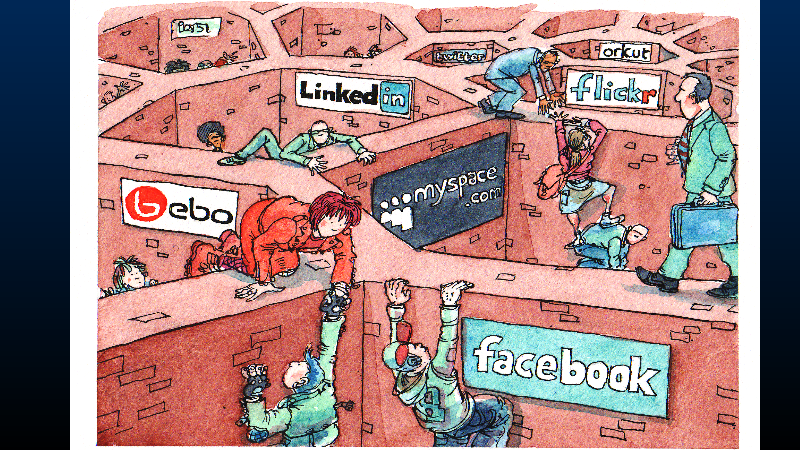
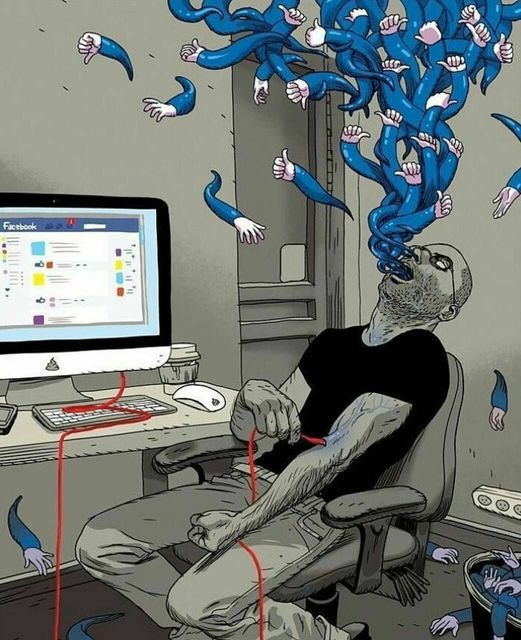
The #dotcons – Facebook, Google, X/Twitter and the rest – are the digital continuation of the same enclosure. Corporate platforms built on data extraction, presenting themselves as neutral public spaces while converting human attention and community into profit. The #closedweb is just privatisation with a friendlier interface.

And the #climatechaos bearing down on us is not a separate crisis. It is the #deathcult arriving at its logical destination.

Real alternatives are built from the bottom, not handed down from the top. The #openweb – internet infrastructure built on open standards, community control, and the #4opens (open code, open data, open standards, open process) – already exists as working infrastructure, built by thousands of ordinary people, not governments or corporations. Then we have the #fediverse, #activitypub, #FOSS, #indymedia – these are not utopian visions, already built, from the ground up, by people practising #DIY politics for real.

The #geekproblem is when this gets captured – when technical control replaces social trust, when complexity becomes a barrier rather than a tool, when #techchurn burns through community energy without building anything lasting. The antidote is #KISS – keeping it simple, human, and rooted in real relationships.

The #NGO path – professionalised, funder-friendly, managed dissent – is #mainstreaming with a radical badge on, it defuses rather than builds. The #fashernista tendency prioritising the look and language of activism over the unglamorous work of building lasting structure is #fluffy blocking in performance clothing.

What actually works is #grassroots organising grounded in trust, horizontal process, and the willingness to #compost failure breaking down what didn’t work into fuel for what comes next rather than hiding the mess or repeating it. As the #OMN path puts it: broken institutions need rebuilding as commons, not as managed services or branded campaigns.

The #deathcult is real, the mess is real, the #nothingnew reminder is useful – these cycles have happened before, and ignoring that history is how we walk straight into the same traps again. But so is the ground we already stand on, sart there.

#OMN #Neoliberalism #Thatcher #Reagan #OpenWeb #4opens #Commons #MutualAid #FoodSovereignty #ClimateChaos #Mainstreaming #Deathcult #Dotcons #BuildingAlternatives

The everyday con: How the #deathcult turns crisis into extraction

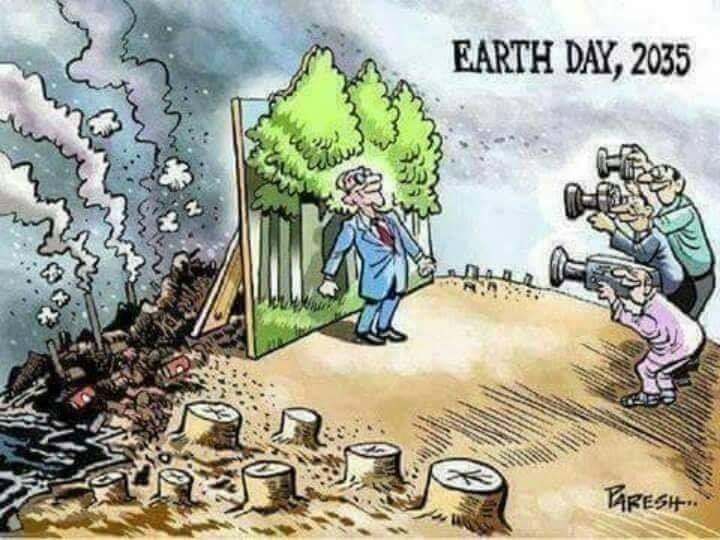
The story is simple once you stop looking at the green branding and start looking at social power. A powerless tenant farmer in the Cairngorms watches land his family has worked for generations sell for ten times what it was worth only a few years ago. Not because farming suddenly became more valuable, but because carbon became a speculative asset. A corporation somewhere needs a green badge, farm land becomes the badge, our agriculture disappearing becomes the cost. This is not a “mistake”, its normal, this is the “common sense” system working as designed. #ClimateChaos under capitalism becomes another market opportunity, another asset class, another enclosure of the commons.

The mechanism of the #Carboncon, a corporation that has power can carry on almost exactly as before climate change became an issue: same factories, same flights, same extraction, same emissions, same growth ideology. Then it buys a Scottish hillside, plants trees on it, and announces to the world that it is now “carbon neutral.” If it wants more PR sparkle, it calls itself “carbon negative.” Nothing fundamental changes. The emissions are still happening, extraction is still happening, the destruction is still happening.

What changes is the accounting story, a piece of land somewhere else is converted into a tradable abstraction that launders the corporation’s image while allowing business-as-usual to continue. This is the logic of #neoliberalism applied to ecology – if there is a crisis, turn the crisis into a market. Our glaring current example of this is BrewDog and its greenwashing cycle, #BrewDog becomes a perfect illustration of the mess, in 2020 the company bought a 9,300-acre Highland estate, partly funded through public grants, promising millions of trees and “carbon negative” operations.

Then reality hit a large number of trees died, peat disturbance has released stored carbon, regulators ruled the carbon-negative advertising misleading, the branding quietly disappeared, and the estate was later sold into the carbon-offset market. Public money in, #PR campaign launched, trees dead, farmer displaced, badge worn, land commodified and Carbon credits traded – Business continues as normal, round and round the #deathcult spins.

This should sound historically familiar: The Highland Clearances never really ended, the justification changed. Then it was sheep, now it is carbon. Communities are again being displaced by distant capital as land is consolidated into investment portfolios instead of living local economies. The mess is productive mixed-use landscapes are transformed into speculative ecological assets managed for investors, corporations, and global finance.

This is enclosure updated for the era of #climatechaos. Around half of Scottish estate sales in recent years have gone to investment funds, corporations, and large trusts rather than people intending to actually live on and work the land. At the same time local communities are priced out, young farmers are locked out, food production declines, rural life becomes hollowed out, and decision-making moves further away from the people directly affected.

The language changes, the extraction remains the same, the deeper problem is that people still expect the systems causing the crisis to somehow solve the crisis. But capitalism does not solve crises, it monetises them – when pollution becomes profitable, pollution markets appear, when climate collapses, carbon markets appear, when social breakdown accelerates, surveillance markets appear, when loneliness spreads, platform monopolies appear. The system feeds on crisis because crisis creates new opportunities for extraction #KISS.

This is why the #mainstreaming obsession with “green growth” is ideological theatre, infinite growth on a finite planet was always insane, adding green branding does not make it sane in any way. The carbon market does not reduce emissions, it redistributes responsibility while preserving existing power structures. The food grown by local farmers is real, the communities rooted in landscapes are real, the accumulated ecological knowledge is real. The carbon spreadsheet is an abstraction traded by financial actors who have little or no connection to the land itself.

This is where projects like #OMN matter, its path is about rebuilding the social infrastructure needed for collective action outside the control of #dotcons, PR agencies, NGOs, and corporate gatekeepers. Because right now, the stories people hear are shaped by institutions whose survival depends on preserving the existing system. The corporation has a marketing department, the local people usually does not, so the lies travel faster than the truth.

The #openweb matters because communities need their own media infrastructure to organise, communicate, document to resist enclosure in all its modern forms. Without this, even resistance becomes mediated through controlling paths designed to neutralise it. A society built on commodification will commodify nature, society built on extraction will extract from ecological collapse itself, society built on #stupidindividualism will struggle to defend commons and collective life in any meaningful way. This is why we need to become the change and challenge, not through current common sense purity politics, not through #fashionista performative consumerism, and definitely not through corporate-approved and funded activism.

But through rebuilding #OMN commons-based culture and infrastructure from the ground up, by compost not branding – our tools are shovels, not greenwashed investment portfolios. The future depends on whether we keep feeding the #deathcult or start growing alternatives.

#OMN #OpenWeb #ClimateChaos #CarbonCredits #Commons #FoodSovereignty #MutualAid #LandJustice #Enclosure #Deathcult #Dotcons #Mainstreaming #4Opens #NothingNew

The End of the “Peace Dividend” and the Return of History

#Identitypolitics, is what happens when liberalism turns inward and fragments – call it mad liberalism. #Culturewar is what happens when that same liberalism hardens and lashes out – bad liberalism. Both look like opposites, but they come from the same place.

The uncomfortable part is both were pushed onto the “left” as the way to fight #neoliberalism the very system that’s been tearing apart the social fabric for decades. Instead of building collective power, we pushed endless identity fragmentation, reactive outrage cycles and symbolic battles detached from material change the left is about.

Energy that could have gone into organising, building, and challenging power structures got redirected into managing discourse and fighting each other. That wasn’t an accident, it was the path of least resistance within a liberal framework that can’t actually confront the roots of the problem, because it’s part of the problem.

So while people were arguing over representation and language, the underlying mess – what we call the #deathcult – carried on concentrating wealth, hollowing out communities and locking in structural inequality. And now, that same system is producing a hard shift to the right, feed by anger without direction, backlash without solutions and reaction filling the vacuum left by the failure of the “left” to build alternatives.

So yes, the liberal centre made the mess, but the more important point is this we’re still stuck inside its framing, still reacting, still fighting on terrain that leads nowhere and still avoiding the work of building something that can actually replace what’s failing. Not to dismiss identity or culture – those matter – but to put them back in proportion, grounded in material reality and collective process. Because if we don’t do that, we stay locked in the loop of liberal fragmentation → right-wing reaction → deeper collapse, and this loop doesn’t end well.

The question isn’t only who to blame, it’s whether we can stop playing the same game long enough to build something else. Let’s look at this from a much wider view.

For a long time, the dominant mainstreaming story has been that today’s instability is blamed on the anger of the “left-behind” in the West, a neat, comfortable narrative. But this is shallow, as long before discontent surfaced in the US or UK, entire societies in Eastern Europe and the former Soviet Union went through something far more extreme.

The 1990s transition to #neoliberalism wasn’t just “reform” – it was a peace-time social collapse when life expectancy dropped, savings were wiped out and crime and addiction surged. This “history” matters now because it shows that what we’re living through isn’t new, it’s the long tail of our worshipping of the same #deathcult, that has been breaking societies for decades.

The illusion of stability from the early 1990s to around 2010, when the world looked unusually stable, even peaceful. Major wars between big powers disappeared, military spending dropped, trade and GDP surged – “Democracy” spread across the globe. This period was framed as success, some even called it the end of history. But this “peace” rested on smoke and mirrors.

#globalisation as control – economic interdependence was supposed to prevent war, the idea was simple if everyone is economically connected, conflict becomes irrational. What actually happened was production was off shored, labour was weakened in the West, global supply chains became fragile and unequal and wealth concentrated at the top. This wasn’t peace, it was #classwar.

The fig leaf of “democracy” was always market compliance, less about collective decision-making and more about maintaining economic growth. In practice governments served markets, institutions constrained popular power and politics became technocratic management. In #OMN terms, this is #mainstreaming – reducing real political choices into narrow, “acceptable” to the #nastyfew options.

The hidden cost was hollow societies, this system did produce growth. But hollowed everything out, communities weakened, industries disappeared, inequality exploded and politics lost meaning. People were told everything was fine, while their lived reality worsened.

So the anger we see today isn’t sudden, it’s delayed. The imperial layer is power without accountability at the global level, this system was held together by a dominant power structure. And here’s where the cracks deepen as rules applied selectively, international law was a tool, not a constraint, economic systems weaponised as needed. The result was a loss of legitimacy, as when rules are not applied equally, they lift the veil to stop functioning as rules at all.

We are now moving out of that world back to no longer having a single uncontested centre of power. Instead, we have competing blocs, regional tensions, fragile alliances and increasing militarisation. This is what’s called a multipolar world in #IR terms. Historically, these systems are unstable unless there are shared norms and limits, right now, those norms are weak or collapsing.

So we understand that the liberal #deathcult logic no longer works, globalisation is fragmenting, states are prioritising more self-sufficiency, supply chain control, strategic industries. The old idea of interdependence is now seen as a risk, not a safeguard.

Liberal ideas of democracy aren’t stabilising conflict, instead of reducing tension, elections amplify nationalism, reward confrontation leading to deepen division. The “#deathcult peace” is no longer holding, It’s a dangerous feedback loop, that without strong shared “rules”, the mess drifts toward proxy conflicts, regional wars, arms races and escalating mistrust. Even if full-scale war is avoided, instability becomes normal, and this instability feeds back into domestic politics – creating more fear, more reaction, more breakdown.

The deeper problem is #neoliberal exhaustion, we no longer treat the #deathcult as sacred and with #climatechaos and social break down our deaths are seeping closer. It’s now visible systemic exhaustion of the rule of the #nastyfew who built this era of #neoliberalism to prioritised finance over production, replaced politics with management, concentrated wealth and power and stripped away collective purpose.

This mess making didn’t resolve contradictions, it displaced them into culture wars, liberal identity conflicts and into abstraction. Now those social control is failing, we see the return of “history” where fundamental questions can’t be avoided anymore:

  • What is the purpose of the state?
  • Who benefits from the economy?
  • What do we protect and why?
  • How do we organise collectively?

This is uncomfortable, but necessary. As the previous era avoided these questions, this one forces them.

The #OMN perspective on this mess is compost, don’t collapse, that this moment is not just crisis – it’s raw material. The breakdown of the old system creates space, but we need to use the space, it’s why the #compost thinking matters – don’t deny the mess, don’t romanticise collapse, process it into something usable. Because if we don’t, the vacuum gets filled by reactionary politics, authoritarian control and deeper #mainstreaming mess.

The “end of history” wasn’t an achievement, it was a pause – built on unstable foundations. What we’re living through now is history restarting, messy, risky, uncertain. But also the first real chance in decades to build something that isn’t just a updated version of the same #deathcult logic. We might build a #lifecult if we can hold our nerve, and actually do the work.

So what comes next? We are moving from “stability” without meaning to instability with possibility. Yes, that shift is dangerous, but it also reopens agency, the question is no longer
“how do we maintain the system?” It becomes “what do we build instead?”

The #KISS choice is the #OMN path to grow new #openweb, grassroots, trust-based structures, or we default fall back into more centralised, extractive systems?

#OMN Grounding (the roots as a story)

#techchurn is the endless cycle of adopting new platforms, tools, and technologies – not because they solve any real problems, but because novelty is mistaken for progress. It burns community trust, institutional memory, and activist energy, while leaving the underlying #nastyfew power structures untouched.
https://hamishcampbell.com/?s=techchurn


The #OMN uses #stupidindividualism to describe the culturally manufactured habit of prioritising personal gain and self-interest over collective well-being – a behaviour normalised by forty years of #neoliberalism, where people work against their own community and ecological survival while believing they are exercising “freedom”.
https://hamishcampbell.com/?s=stupidindividualism


In the #OMN hashtag story, #spiky is the confrontational, direct, and uncompromising tendency within radical movements – the willingness to push back against power, name uncomfortable truths, and refuse to sand down political edges for mainstream comfort.
https://hamishcampbell.com/?s=spiky


#RSS is the unglamorous but democratic backbone of the #openweb – a simple, open standard that allows content to flow without the gatekeeping, algorithmic manipulation, and the data hoarding of the #dotcons.


#reboot is the necessary reset of the #openweb – stepping away from the dead ends of #techshit and #dotcons to rebuild human-centred, trust infrastructure using tools like #activitypub and the #fediverse, guided by the #4opens.
https://hamishcampbell.com/?s=reboot


#postmodernism is the cultural current that dissolved shared truth into competing narratives, undermines the foundations needed for collective action – leaving people fragmented, cynical, and unable to build solidarity.
https://hamishcampbell.com/?s=postmodern


In the #OMN hashtag story, #Oxford is a grounded example of real-world contradiction – where elitist power (#mainstreaming, #NGO, #deathcult) coexists with genuine grassroots community, making it a test bed for grassroots #openweb organising and the #4opens path.
https://hamishcampbell.com/?s=Oxford


In the #OMN hashtag story, #PGA (Peoples’ Global Action) represents horizontal, grassroots, anti-capitalist organising – a prefiguration of the #openweb, built on direct action and solidarity rather than #NGO bureaucracy or #mainstreaming compromise.
https://hamishcampbell.com/?s=PGA


In the #OMN path, #p2p means people-to-people before peer-to-peer – real human relationships and trust as the foundation that decentralised tech should serve, not replace.
https://hamishcampbell.com/?s=p2p


In the #OMN view, #opensource is not just a licence – it’s a political commitment to transparency, shared ownership, and community control over code, data, and process.
https://hamishcampbell.com/?s=opensource


The #openweb is internet infrastructure built on open standards, open-source code, and community control – where users share power – as opposed to the #dotcons, with the #closedweb which enclose and monetise the commons.
https://hamishcampbell.com/?s=openweb


#openprocess means decisions and governance happen visibly and participatorily – not behind closed doors, so people can see, challenge, and shape outcomes.
https://hamishcampbell.com/?s=openprocess


#opendata means data that is freely accessible and shareable – controlled by communities rather than locked inside corporate silos.
https://hamishcampbell.com/?s=opendata


In the #OMN path, #open means building on the #4opens – open code, data, standards, and process as a foundation for technology that serves people, not profit.
https://hamishcampbell.com/?s=open


#OMN (Open Media Network) is a grassroots project to build human-centred, trust-based digital infrastructure on the #openweb, grounded in the #4opens and focused on community control over technology.
https://hamishcampbell.com/?s=OMN


The #OGB (Open Governance Body) is a framework for transparent, inclusive decision-making – replacing hidden power structures with accountable, federated, messy collective governance.
https://hamishcampbell.com/?s=OGB


In the #OMN story, #nothingnew reminds us that cycles of co-option and failure have all happened before – and ignoring this history is how we repeat mistakes.
https://hamishcampbell.com/?s=nothingnew


In the #OMN story, #NGO refers to professionalised activism that defuses radical politics – replacing grassroots power with managed, funder-friendly “dissent”.
https://hamishcampbell.com/?s=NGO


In the #OMN path, #neoliberalism is the dominant ideology of markets over people – normalising greed and eroding solidarity into the logic of the #deathcult.
https://hamishcampbell.com/?s=neoliberalism


#makinghistory is the practice of communities reclaiming storytelling – building open, living archives rather than leaving history to those in power.
https://hamishcampbell.com/?s=makeinghistory


In #OMN usage, #mainstreaming is how radical ideas get absorbed and neutralised – keeping the language while stripping out real challenge.
https://hamishcampbell.com/?s=mainstreaming


In the #OMN path, #KISS (“Keep It Simple, Stupid”) is a political stance against the #geekproblem – rejecting unnecessary complexity as a form of control.
https://hamishcampbell.com/?s=KISS


#indymediaback is a call to rebuild grassroots, community-controlled media as an alternative to both #dotcons and hollow #NGO media structures.
https://hamishcampbell.com/?s=indymediaback


In the #OMN path, a hashtag is not just a label – it’s a node in a shared political vocabulary, building a map of meaning and direction.
https://hamishcampbell.com/?s=hashtag


#grassroots means bottom-up organising rooted in real communities – accountable to collective need, not institutions.
https://hamishcampbell.com/?s=grassroots


The #geekproblem is the tendency to replace human trust with technical control – embedding narrow values into systems that shape everyone’s lives.
https://hamishcampbell.com/?s=geekproblem


In #OMN, #FOSS is a political commitment to collective ownership of technology – not just a licensing model.
https://hamishcampbell.com/?s=FOSS


In #OMN language, #fluffy describes feel-good politics that avoid conflict – prioritising comfort over any real change.
https://hamishcampbell.com/?s=fluffy


#feudalism describes the emerging digital structure where platform owners extract value like lords from dependent users.
https://hamishcampbell.com/?s=feudalism


#fascism is what happens when the #deathcult drops its mask – authoritarian control to defend failing systems.
https://hamishcampbell.com/?s=fascism


On the #OMN path, the #fediverse is practical #openweb infrastructure – decentralised, federated, and not owned by corporations.
https://hamishcampbell.com/?s=fediverse


#encryptionist describes the tendency to prioritise technical security over social trust – a core expression of the #geekproblem.
https://hamishcampbell.com/?s=Encryptionist


#dotcons are corporate platforms built on data extraction and control, presenting themselves as neutral while enclosing the commons.
https://hamishcampbell.com/?s=dotcon


In the #OMN story, #DIY means reclaiming the ability to build and organise outside institutional control – grounding politics in practice.
https://hamishcampbell.com/?s=DIY


The #deathcult is the self-destructive logic of #neoliberalism – sacrificing social and ecological survival for short-term fear drivern greed.
https://hamishcampbell.com/?s=deathcult


In the #OMN story, #compost means breaking down failure and mess into fuel for new growth.
https://hamishcampbell.com/?s=compost


In #OMN, #closedweb is controlled, extractive digital infrastructure where users have no power.
https://hamishcampbell.com/?s=closed


#climatechaos describes the accelerating breakdown driven by the #deathcult, beyond manageable “climate change.”
https://hamishcampbell.com/?s=climate


#classwar is the ongoing conflict between the #nastyfew and the communities they exploit – often hidden by #mainstreaming narratives.
https://hamishcampbell.com/?s=classwar


#capitalism is the dominant system turning everything – relationships, nature, culture – into “profit”.
https://hamishcampbell.com/?s=capitalism


In #OMN, #block is the reflex to shut down challenge – preventing the messy work needed for real change.
https://hamishcampbell.com/?s=block


#blinded is being unable or unwilling to see beyond #mainstreaming and #dotcons logic.
https://hamishcampbell.com/?s=blinded


#fashernista describes performative activism that prioritises appearance over substance.
https://hamishcampbell.com/?s=fashionistas


#dotcons are the corporate platforms – Facebook, Twitter/X, Instagram, YouTube and their kin – whose business model is built on harvesting user data, manufacturing engagement, and converting human attention and community into profit, while presenting themselves as neutral public spaces.

https://hamishcampbell.com/?s=dotcon


In the #OMN hashtag story, #DIY means reclaiming the practical capacity to build, organise, and maintain tools and communities outside of corporate and state control – not as a lifestyle choice, but as a political act of grounding radical change in real skills, real trust, and real human relationships rather than outsourcing power to institutions that don’t serve you.

https://hamishcampbell.com/?s=DIY


The #deathcult is the #OMN metaphor for the self-destructive logic of forty years of #neoliberalism – an ideology so committed to short-term profit, individualism, and economic growth that it knowingly sacrifices the ecological and social foundations that human life depends on.

https://hamishcampbell.com/?s=deathcult


In the #OMN hashtag story, #compost means taking the failures, mistakes, and accumulated mess of past movements and tech projects – rather than discarding or ignoring them – and breaking them down into something that can feed new growth, treating dysfunction and #blocking dead ends as raw material for building better rather than as waste to be hidden.

https://hamishcampbell.com/?s=compost


In #OMN language, #closedweb refers to the controlled digital infrastructure – platforms like Facebook, Google, and Twitter – built on proprietary code, extractive business models, and centralised power, where people have no meaningful control over their data, their communities, or the rules that govern them.

https://hamishcampbell.com/?s=closed


The #deathcult of #neoliberalism has driven us past the point where “climate change” – with its implication of manageable, orderly shifts – remains any honest description of what we face now. What we actually have is #climatechaos: cascading, systemic breakdown of the ecosystems, weather patterns, and social structures that human civilisation depends on, accelerating faster than institutions built on forty years of market logic are capable of, or willing to, address.

https://hamishcampbell.com/?s=climate


#classwar is the ongoing and unacknowledged conflict between those who benefit from and actively reproduce the #deathcult of #neoliberalism – the #nastyfew, managing, and credentialed classes – and the communities, workers, and ecosystems they exploit. A conflict that #mainstreaming culture works to render invisible, reframing systemic dispossession as individual failure.

https://hamishcampbell.com/?s=classwar


#capitalism is the current common sense – the water we swim in – the economic system that systematically converts collective goods, human relationships, and the natural world into private profit, enforcing this logic through every institution and platform we touch, while presenting itself as the only possible reality.

https://hamishcampbell.com/?s=capitalism


In the #OMN hashtag story, #block refers to the reflexive, unconscious tendency of individuals and communities to shut down unfamiliar and challenging ideas, people, and processes – a defensive gesture rooted in #stupidindividualism and #postmodernism that prevents the trust-building and messy collective work needed for real #openweb organising.

https://hamishcampbell.com/?s=block


#blinded refers to being so captured by #mainstreaming tech orthodoxy and ideological “common sense” – particularly #neoliberalism and #dotcons culture – that you no longer see, or refuse to see, the harms those systems cause or any alternative paths that exist outside them.

https://hamishcampbell.com/?s=blinded


#fashernista describes a person in progressive or radical spaces who prioritises the appearance and aesthetic of activism – the right look, language, and social positioning – over the unglamorous, difficult work of actually building lasting structural change.

https://hamishcampbell.com/?s=fashionistas


If you want, the next step is to cluster these into a clean “chapter flow” (roots → mess → behaviours → solutions) so this stops being just a glossary and becomes a narrative tool.

These are the foundation tags – the ones everything else grows out of – the overall project: grassroots, trust-based, human-centred media infrastructure

#openweb – the political/technical terrain we’re trying to reclam

#4opens – the non-negotiable baseline (open code, data, standards, process)\openprocess – visible, participatory decision-making as default

#grassroots – bottom-up power, not institutional mediation

This cluster is about legitimacy, if it’s not grounded in these, it drifts into #NGO capture or #dotcons logic quickly. This is the “native soil” everything else either grows from or gets rejected by.

The Problem Space (what we’re composting), these tags describe the mess we’re in – the stuff we don’t ignore, but break down.

#deathcult (neoliberalism as destructive common sense)

#neoliberalism – 40 years of market logic shaping behaviour

#dotcons – corporate capture of digital space

#closedweb – controlled, extractive infrastructure

#mainstreaming – dilution and co-option of radical ideas

#NGO – managed dissent and professionalised politics

#classwar – underlying structural conflict

This is the compost heap, you don’t fix this directly, you don’t “win” against it head-on. You break it down, reuse what’s useful, and grow alternatives around and through it.

The #geekproblem Layer (tech distortions) is where things go wrong in implementation.

#geekproblem – replacing social trust with technical control

#techchurn – endless pointless rebuilding

#encryptionists – over-prioritising technical purity over social reality

#KISS – counterbalance: keep things simple and usable.

This cluster is why good ideas fail, not because the ideas are wrong, but because the tools and culture get shaped by people who don’t understand social process. This is where most #openweb projects die.

Cultural/Behavioural Patterns (how people act). The human layer – messy, unavoidable, and central.

#stupidindividualism – learned self-interest over collective good

#postmodernism – fragmentation of shared meaning

#fluffy – avoidance of conflict, feel-good paralysis

#spiky – necessary confrontation and edge

#block – reflex rejection of challenge

#blinded – inability to see outside dominant narratives

#fashernista – prioritising appearance over substance

This is the real battlefield, not tech, not policy – behaviour. If you don’t mediate this layer, everything collapses back into dysfunction, no matter how good your structure is.

The Alternative Infrastructure (what we build), are the actual tools and practices that make change possible.

#fediverse – decentralised network as a base layer

#activitypub – the protocol glue

#RSS – simple, open distribution backbone

#p2p – people-to-people first, tech second

#FOSS / #opensource – shared ownership of tools

#opendata – accessible, non-extractive information

These only work if rooted in the first cluster, otherwise they get captured and turned into another layer of the #closedweb.

Governance & Process (how we hold it together). Where most projects fail – or succeed.

#OGB – structured, open governance

#openprocess – again, because it’s that important

#DIY – practical ownership and responsibility

Without this, informal power takes over. You end up with hidden hierarchies, gatekeeping, and eventual burnout. With it, you get messy but functional collective control.

Practice & Direction (how we move).

#reboot – reset and rebuild from working patterns

#indymediaback – learning from past grassroots media

#makinghistory – documenting and owning our narratives

#nothingnew – grounding in historical cycles

This cluster stops you repeating mistakes, without it, every new wave thinks it’s inventing something new and walks straight into the same traps.

Grounding Example Layer

#Oxford – real-world test bed of contradictions

#PGA – historical example of horizontal organising

Without grounding, this all drifts into theory, these are example tags anchoring it in lived practice, where things break, and where they can actually work.

The Meta Layer (how to use this)

#compost – break down failure into growth

This is the key to the whole thing – Don’t try to “fix” the mess. Don’t try to “win” cleanly, you compost:

bad behaviour → learning

failed projects → patterns

conflict → structure

Final point (this matters) is the mistake people make is trying to tidy this into a neat theory, reduce it to messaging, turn it into a fixed ideology. That kills it, this clustering is not about control – it’s about navigation.

The mess stays messy, but now people can walk through it without getting lost.If you don’t cluster this stuff, it turns into a wall of noise. The mess is useful.

Shovels, Hashtags, and Revolutions: Roots of the #openweb

It’s obvious to everyone paying attention that the relentless push of #mainstreaming over the last forty years has not made society healthier or more stable. Quite the opposite, the result has been accelerating social disintegration and the rapid expansion of #climatechaos.

When the current trajectory continues, the consequences are catastrophic. Over the next fifty years we are looking at millions dead and billions displaced by climate breakdown, ecological collapse, and the political instability that follows. Flooded cities, failing agriculture, collapsing states, mass migration, these are no longer speculative futures. They are already visible on the horizon.

What makes this situation so disturbing is not ignorance. For the last decade, the consequences have been very clear. Climate science, ecological data, and lived experience have converged into a single message, that the system driving this crisis cannot continue. Yet those with the power to change course continue pushing the same policies, the same economic logic, and the same institutional inertia that produced the crisis in the first place.

This is not simply failure, it is knowing failure. And that raises an uncomfortable question of when does systemic negligence become a crime? For forty years the dominant ideology has been the worship of endless growth, deregulation, privatization, and extraction – what many people now recognize as the #DeathCult of #neoliberalism. On this path, ecosystems are treated as expendable, communities are hollowed out, and public institutions are dismantled in the name of “efficiency”.

The result is the hollowing-out of social structures and the destabilization of the planet itself. This isn’t an accident, the evidence has been overwhelming for decades. From early climate warnings in the 1980s to the now constant stream of scientific reports and disasters, we have known were this path leads. And yet the machine keeps running.

At some point we have to confront the idea that what we are witnessing is not just bad policy but something closer to systemic criminality. When leaders, corporations, and institutions knowingly pursue actions that will cause mass death and displacement, we enter the territory of #CrimeAgainstHumanity. The historical analogy that needs resurfacing is Nuremberg.

After the Second World War, the world established that individuals in positions of power could be held legally responsible for crimes that harmed humanity as a whole. The principle was simple: “just following the system” is not a defence. Today we face a different kind of global crime – slower, more bureaucratic, wrapped in economic language – but far larger in scale.

If millions die and billions are displaced because decision-makers continued destructive policies long after the dangers are clear, then if social democracy survives, future generations will have every reason to enforce people as accountable? This is not about vengeance, it’s about accountability and the possibility of changing course before the worst outcomes arrive.

The tragedy is that alongside this destructive path there have always been alternatives – social, technological, and cultural. Grassroots networks, commons-based governance, cooperative systems, and the original ideals of the #openweb all point toward more resilient and humane ways of organising society. But these paths have been buried under forty years of blinded #mainstreaming, where every institution, including our own #NGO people, force alignment with this narrow economic logic.

Digging out of this mess requires more than better technology or better policy papers, it requires collective action, memory, and courage. In other words: Shovels. Hashtags. And revolutions. Because the first step in changing the future is digging up the truth about how we got here.

#OMN #techshit #compost

The rise of #stupidindividualism as a common sense path

Part of the shitty mess we’re in comes from the failure of #DIY culture and the rise of #stupidindividualism as the common sense path. #stupidindividualism is completely unscalable in social terms. It fragments, isolates, and exhausts. That isn’t accidental, it’s a classic divide-and-control strategy of the #deathcult. And we need to consciously step away, and away, and far away from this.

An example, over the last 20 years, I’ve answered the same questions individually, over and over. But the point of #DIY culture was never one-to-one hand-holding. You don’t need to stress personal connections just to begin. The hashtags are links – they exist to let you start the process yourself.

You can do this by #KISS following the flow, not by demanding individual explanations. Click the #hashtag links. Read the background posts. Trace the project history. Use a search engine. Learn how the process works before pulling people into one-on-one clarification. This is basic #DIY practice, grounded in the #4opens.

You need a second example, looking back, remember how many of our activist friends ran workshops on how to use #dotcons social media as a campaign tool? How to organise activism through corporate platforms? While this was happening, our own independent media was being ripped apart internally, ossified by process, and then abandoned by the same #fashionista activists.

This mess is the devil child of #postmodernism and #neoliberalism, all surface, no grounding, all individual expression, no shared responsibility. We know the names and URLs of many of the people who did this. It’s the legacy we’re dealing with. Our projects like #indymediaback exists because of this history.

If you’re serious about changing society, you have to think your way past this common sense #blocking. That means rebuilding collective pathways, shared knowledge, and common processes, not endlessly repeating the same individual conversations. The tools are here. The links are here. The work starts when we stop pretending this is a personal problem and recognise it as a social one.

Capitalism grew from historical processes rooted in enclosure, extraction, and the exploitation of people and nature. Liberal politics stabilise rather than challenge this, while promoting forms of (stupid)individualism that fragment collective power, making it harder for people to organise together against entrenched control.

The individual, their freedom, and their capacity for reason are products of social relationships, not independent origins. Society is not built from isolated individuals; individuals grow from shared culture, history, and collective life. As society grows richer and more humane, individuals gain the conditions needed for deeper development – and real freedom emerges from this shared foundation.

We need to stop worshipping a #deathcult

A path to do this is to step away from the #mainstreming mess. In 2024, the Nobel Prize in Economics was awarded to Daron Acemoglu, Simon Johnson, and James Robinson. The prize recognised their work on how institutions shape prosperity, most famously through their book Why Nations Fail. The timing matters, it matters a lot.

This award lands at exactly the moment we should be asking why Institutional Economics – the respectable face of #mainstreaming – has spent the last fifteen years pushing us to keep kneeling at the altar of the #deathcult of #neoliberalism.

For more than a decade after the 2008 financial crisis – a crisis that should have finished neoliberal economics for good – our liberal institutions quietly stepped in to rescue the doctrine. Not by defending it openly, but by reframing its failures. This wasn’t accidental. It’s central to the mess we’re living in now.

The 2008 crash began with the collapse of Lehman Brothers and rapidly spread from finance into the real economy. It triggered the largest global contraction since World War II. Advanced economies saw GDP falls of over 10%. In the US alone, more than $16 trillion in household wealth vanished.

The shock was so extreme that Queen Elizabeth II famously asked economists at the London School of Economics why nobody had seen it coming, the profession replied that it was a “failure of the collective imagination”. That answer was revealing and evasive. Because imagination hadn’t been lacking before the crash. Throughout the 1990s and early 2000s, #neoliberalism dominated economics. Its core beliefs were simple, absolute, and aggressively enforced:

  • Markets are efficient
  • Deregulation increases productivity
  • Financial innovation reduces risk
  • Macroeconomic instability has been solved

These ideas were institutionalised across universities, central banks, and international organisations. Nobel Prizes were handed out to models built on perfectly rational actors and self-correcting markets. Central bankers talked confidently about a “Great Moderation”: stable inflation, steady growth, forever.

Economics became “scientific”, self-referential, and closed to challenge. This wasn’t wisdom, it was a pile of shit built on mathematical abstraction – a classic #geekproblem – detached from lived social reality. Financial fantasies were celebrated. Subprime mortgages were reframed as inclusion. Mortgage-backed securities were said to spread risk. Collateralised debt obligations were hailed as marvels of modern finance.

They were, in reality, weapons of mass financial destruction. The #deathcult was warming up. When the system collapsed, neoliberal economics should have been held to account. No theory in modern history had failed so completely, so quickly, with such devastating consequences. Instead, it reinvented itself.

The first move was redefinition. Under the Obama administration, the US abandoned laissez-faire dogma overnight. Banks were declared “systemically important”. Corporations were bailed out. Trillions were injected into markets through quantitative easing. Socialism for the rich was revealed as normal.

This should have been the moment it became obvious that #neoliberalism was never about principles. It was always about power. Markets, models, and theories were tools – not truths – used to maintain capital’s dominance over society. But what we got was the normal mess of denial, spin, and fragmentation.

Once stability returned, denial followed. Economists claimed victory. The crisis was blamed on interest rates, oil prices, China’s savings – anything except the theory itself. The line became: “The models failed to predict the crisis, but the solutions worked.” That sleight of hand kept neoliberalism alive.

Instead of lifting our heads and walking away, we fell for the smoke and mirrors. The priesthood fragmented neoliberalism into subfields, and our #fashionista classes filled the space. Game theory analysed distressed financial institutions without asking why they were distressed.
Behavioural economics blamed low-income borrowers’ “biases” while ignoring policies that made housing unaffordable. Feminist economics debated unpaid labour while leaving capital accumulation untouched.

Each critique was partial. Each acted as a distraction. None threatened the altar we were still collectively worshipping. The strongest shield, however, came from Institutional Economics – the respectable centre of #mainstreaming liberal thought.

Why, Why Nations Fail succeeds, it “common sense” argues that prosperity comes from “inclusive institutions” – markets, property rights, patents – supported by political institutions like democracy and the rule of law. “Extractive institutions”, we’re told, lead to stagnation.

This framework was easy to accept in the common-sense fog of the #fashionista class. It sounded critical while leaving capitalism intact. Weak, procedural democracy was sold as the mechanism that could tame markets.

What it ignored – completely – is that democracy inside highly unequal societies is easily captured by capital. Elections reproduce power relations far more often than they correct them. By declaring any market outcome produced through elections legitimate, the #nastyfew who this mess served grabbed and twisted “democratic” approval.

At a moment of global instability – Eurozone debt crises, austerity, mass unemployment – #mainstreaming economics offered a comforting story: the problem wasn’t capitalism, just “bad institutions”.

The reality on the ground, in Europe, austerity devastated entire societies. Greece lost over a quarter of its GDP. Youth unemployment passed 50%. Public assets were stripped. Debt increased. Today, a six-day work week is framed as “responsibility”.

In the United States, recovery was brutally unequal. Between 2009 and 2019, the top 1% captured 40% of all income growth. Asset prices exploded while wages stagnated. Private equity gutted industries. In the world of the #dotcons, gig work replaced stability. Neoliberalism didn’t retreat. It consolidated.

There was, however, a different path. China – worshipping a different cult – ignored neoliberal assumptions after 2008. Instead of monetary inflation, it pursued fiscal stimulus, infrastructure investment, R&D, and industrial policy. Growth remained high. Manufacturing expanded. Living standards improved. China became the world’s largest economy by purchasing power parity more than a decade ago.

Western institutions urged “liberalisation”, framed through #mainstreaming economics. Political reform was demanded – meaning access for Western capital. China refused. When China’s property bubble burst in 2021, contagion was contained. Capital was redirected into technology and manufacturing. Industrial dominance accelerated.

This success could not be acknowledged, so institutional economics reframed it as “extractive”, unsustainable, and destined to collapse. Yet the facts contradict the story. Inequality is far higher in the US. China’s overproduction lowers global prices and stabilises living standards. Without it, global inequality would already be politically explosive.

So why are we still stuck, #Neoliberalism survives not because it works, but because it controls the story of what is possible. It offers legitimacy without transformation, democracy without redistribution, reform without power shifts.

Worse, over the last forty years it has reshaped education, work, identity, and the value of human life itself. It trained people to see themselves as assets, competitors, and risks. It normalised insecurity and abstraction. That’s why we’re facing collapse now: a system that has exhausted its social, ecological, and moral foundations.

Yes, it’s a mess, you probably need a shovel #OMN