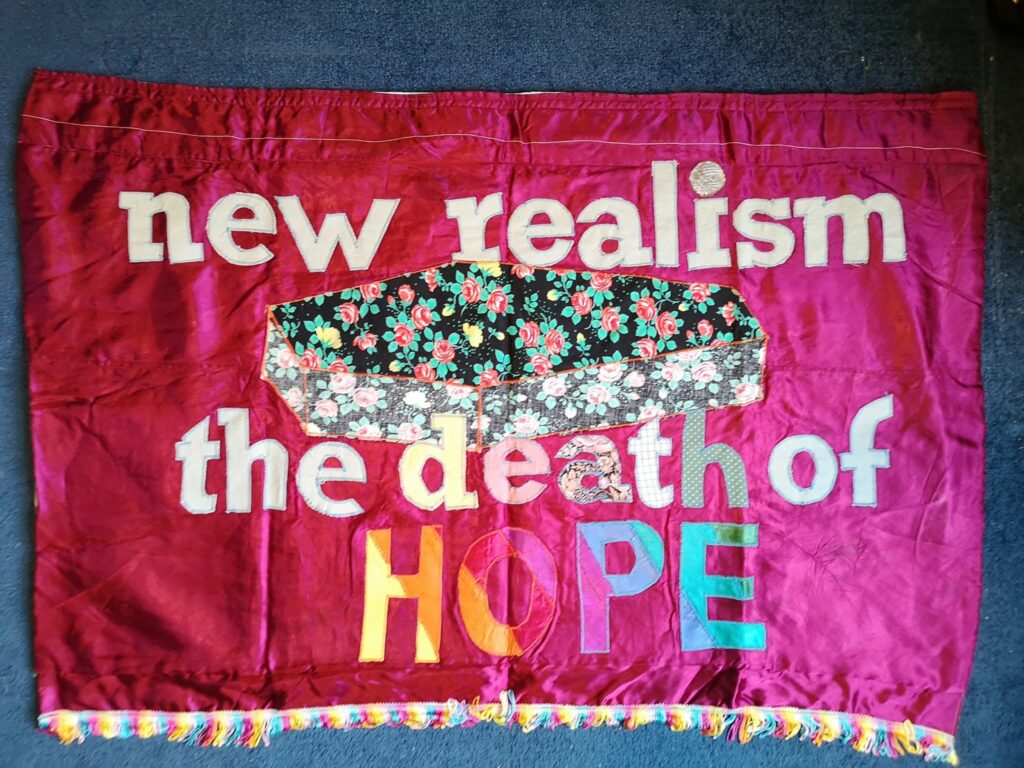
Rebuilding Shared Meaning in a Fragmented World

A lot of our current mess can be understood through the long transition from #modernism to #postmodernism. Not as an academic debate, but as a lived reality. Modernity was about progress. It believed that society could be understood, improved, and consciously shaped. Science, democracy, planning, industry, public institutions, trade unions, education, and infrastructure were all part of this path. The future was something people could build together.

Of course, this vision was never as simple or as benign as some people imagined. Modernity produced extraordinary advances in health, communication, and material abundance. It also produced colonialism, industrial warfare, bureaucracy, environmental destruction, and systems of control on a scale previously unimaginable. Yet despite its contradictions, modernity had confidence. It assumed that problems could be solved, that collective action mattered.

Then came the invisible #postmodern turn. The failing social democratic institutions lost legitimacy, narratives stopped convincing people. Governments increasingly rejected planning and handed decision-making to markets. Globalisation connected everything while making almost nothing feel controllable. Information mess exploded beyond individual’s capacity to understand any of it.

Instead of thoughtful maps, we had endless competing realities. Then, the #deathcult, the promise of #neoliberalism, that deregulated markets and individual freedom would create the best possible outcomes. In practice, much of what happened was the dismantling of collective institutions without replacing them with anything capable of holding society together. People gained consumer “choice” while losing all political agency. We became slaves focused on choosing between products while unable to shape the systems that govern our lives.

This is where contemporary politics becomes difficult to understand if we keep trying to use any grounded categories – mess increased the conflict between people trying to rebuild collective meaning and people retreating into fragments – Some fragments become consumer identities, some become nationalisms. In alt culture we lived through a decade of conspiracy theories while the #mainstreaming become lifestyle brands.

The common thread is that people are still looking for belonging in a world that increasingly feels impossible to influence. This is why so much contemporary politics is irrational, people are not responding to facts, they are responding to the crisis of meaning. A crisis of trust, a crisis of belonging.

Modernism reminds us that collective action matters, that process we build matter’s, DIY infrastructure matters and finally that society can be consciously shaped. Were #Postmodernism at its best reminds us that dogmatic system contains blind spots. That power hides itself behind claims of objectivity. That diversity of experience matters, thus blinded certainty to often leads to oppressive. With the ending of modernity:

  • We lost confidence in human planning but kept bureaucracy.
  • We lost collective power but kept #elitists concentrations of power.
  • We gained diversity of voices but lost shared language.
  • We gained infotainment but lost trust.

This mess leaves us trapped in blinded deadens of certainties of yesterday and the endless fragmentation of today. The challenge for projects like the #openweb is finding paths beyond this deadlock – not returning to centralised authority or surrender to endless relativism, but rebuilding shared processes that hold diversity without demanding conformity.

This is where projects like the #Fediverse, #OMN, and the #4opens matter. Their value is not primarily technical, their value is social. They are historical lived experiments in creating spaces where cooperation emerges without central control. Where differences coexist without immediate fragmentation and where communities develop shared infrastructure without surrendering autonomy.

The #KISS task is creating conditions where many narratives can coexist while still allowing collective action. That is harder than either modern certainty or postmodern scepticism. But it is the path through the era of #climatechaos, #dotcons platform monopolies, social fragmentation, and democratic decline.
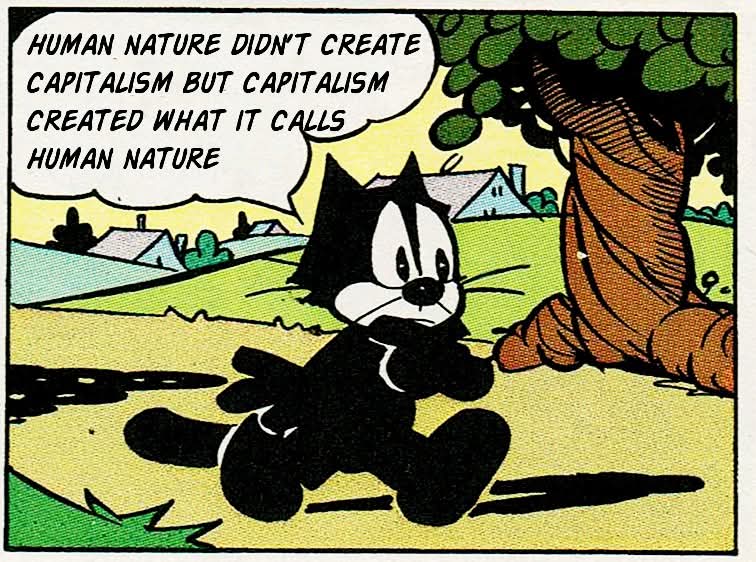
Power is built, not granted – Power comes from power – it is something people build, organise, and create together. In the best outcomes, power is shared and circulated. But it is rarely something simply handed down from above. A lot of modern political thinking still struggles with this. It imagines power as something that belongs to institutions, leaders, owners, or authorities – something granted through permission.

But historically, power has always been created through collective action. Private property is one example of a social agreement backed by power. The myth is that ownership is a natural thing that existed forever. The reality is that ownership systems are historical arrangements, enforced through social structures.

The old story is simple – Someone draws a line in the sand, they say “Everything on this side is mine.” The group accepts that boundary – or someone has enough force to make them accept it.

That model of power still shapes much of our world, but notice, this is not the foundation of the #Fediverse. The #Fediverse is built on a different assumption, it is based on an open flowing social web of connection rather than enclosure, participation rather than ownership, federation rather than domination and shared infrastructure rather than a single centre.

The lines in the sand are not permanent walls, they move, they adapt, they blow in the wind. That does not mean there is no power. It means power works differently. The challenge is that many people approach the #Fediverse using old assumptions from the #closedweb of who owns it? Who controls it? Who is the authority? Who gives permission? Those questions make sense in a platform economy, they make less sense in a living commons.

This is where some of the current liberal tradition has become confused, as liberalism at its best gave us important ideas of individual rights, freedom of thought, limits on arbitrary power and space for difference. But much of the current political culture has absorbed the logic of the #deathcult: neoliberalism, market absolutism, and a fragmented postmodern culture where everything becomes identity, performance, and competition.

The result is a strange contradiction of a culture that talks endlessly about freedom while creating systems that reduce collective freedom, that celebrates choice while making real alternatives harder to build, that protects individual expression while weakening the shared social foundations needed for that expression to matter. The question is not how we return to some imaginary past.

The question is then how do we build new forms of collective power that fit the world we actually live in? This is the unfinished work of the #openweb. We need constructive thinking beyond “common sense” because much of what is called common sense is simply the habit of old systems.

Technology shapes society, the design of our networks shapes how we relate – Closed systems create dependency – Open systems create possibility. But openness alone is not enough, we need the social practices around openness of trust, care, stewardship, accountability and collective imagination.

The future will not be given to us by institutions, it will be built by people creating alternatives and connecting them together. Power is not permission, power is participation.
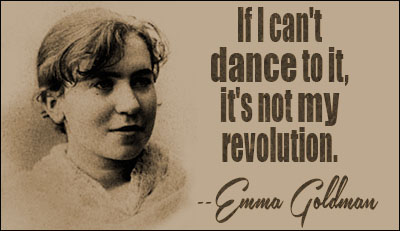
What can we learn, what can we do?

People need to understand that the tension between different approaches to activism highlights the need for creative synthesis in our current broad social and ecological crises.

  1. Fluffy vs. #Spiky is about a Diversity of Tactics. The idea that both working within the system (#fluffy) and challenging it directly (#spiky) are necessary to creating a robust and adaptive movement. On this native path, building “common ground” is crucial, but the left’s fragmentation under decades of #neoliberalism and #postmodernism has left it standing waist deep in a metaphorical swamp. Moving anywhere requires reclaiming a grounded, shared space – intellectually, socially, and ecologically.
  2. Revisiting #Modernism, to return to modernist thinking – despite its flaws -can offer clarity and purpose, emphasizing structure, progress, and shared goals. Balancing this with the experimental potential of socialism and anarchism, especially on a distributed scale (enabled by #federation and #P2P technologies), creates room for growth outside the mainstream.
  3. Liberal Social Democracy, yes, is a step back because while the goal may lie in more radical transformations. Maybe a return to liberal social democracy could serve as a stepping stone away from the creeping threat of fascism. This pragmatic approach might help to stabilize the ground for further progress.
  4. Deathcult vs. #Lifecult is a Cultural Meta-Narrative. The #deathcult metaphor encapsulates a culture driven by greed, materialism, and ecological destruction. The #lifecult offers a messy but hopeful alternative, grounded in values like ecology, social justice, and collective care. The process of “composting” – transforming negative aspects into fertile ground – is a powerful metaphor for this shift.
  5. The Role of Undercurrents True hope lies in the grassroots undercurrents of social movements that always challenge #mainstreaming culture to provide alternative narratives. These undercurrents, messy as they may be, are where transformative potential resides. A focus on “life-affirming values” helps to communicate with those who may be entrenched in rationality or blinded by the logic of the #deathcult.

Suggestions, focus on finding shared values between different activist approaches to grow solidarity while respecting diversity of tactics. Encourage scalable experimentation with alternative economic and social models, with federation and P2P tech. Storytelling using metaphors like #deathcult and #lifecult to reframe conversations and make complex issues relatable and actionable. Education and agitation to challenge apathy and #stupidindividualism by helping people reconnect with collective action and shared purpose. Thinking in an ecology of movements, can be helpful. . On this, recognize the importance of both reformist (#fluffy) and radical (#spiky) approaches as complementary rather than contradictory.

And most importantly, please try not to be a #blocking prat, thanks.

Talking to friendly people who have built their careers on and in #postmodernism

I have been at the coal face of affective direct action for a progressive change/challenge of the current mess for all my life, well this is a family history going back 3 generations. And this makes meany issues obvious as they keep happening, they circal, and if we are to be the change we need to be, we need to mediate some of these bad circles #KISS

This is one #blocking

Q. Dude will tie themselves into knots rationalising their desire to be selfish by citing everything between Aristoteles, John Dewey, and utilitarianism, in lengthy hyper-complex intellectual posturing that basically just boils down to: “But I wanna!”

A. This is true, with the #postmodern default we would end up with mess. What happens if we try not to do the postmodernist default? What would that looklike #nothingnew

Q. This has nothing to do with postmodernism and everything to do with dudes rationalising their own selfishness.

A. You are not wrong, but step back for a wider view to try and see and talk about the root of this mess. I would say this is an example of #blocking from the #postmodern path. Can we look at this from a #modernist view to take a different path? Good faith question.

Q. So, I did a PhD that focused on the application of Derrida’s ideas to interactivity. I’m not the guy you come at trying to blame postmodernism for all the world’s ills.

A. can understand that, trying to highlight the bad use of the #mainstreaming of #postmodernism and highlight this in the current social mess of the last 40 years. And yes, understand that #postmodernisam and #neoliberalism are dead ideologies. But they have both deeply shaped the last 40 years of #mainstreaming culture. The mess we work in today, thus it is useful to ask questions on good paths out of this mess.

Q. Yeah, that’s nonsense. Sorry, not sorry. It’s all capitalism all the way down. Philosophical movements such as postmodernism or modernism are just window-dressing on an amoral, anti-intellectual capitalist hellscape. Any philosophical movement, even the ones that power actually pays attention to such as utilitarianism, is just completely irrelevant. Deck chairs on the Titanic.

Q. OK we can leave this here… if ideas and thinking do not matter then mess it is. Mess can be good, and it can be bad, in the current social mess it’s VERY bad https://visionon.tv/w/gq6qCiUoC2J8RqhYHgpmzq how to deal with this is a good faith question.

Q. Also, I always have an extreme scepticism about those who blame postmodernism for society’s ills because a lot of the anti-postmodernists are bedfellows with reactionaries who think these cultural ideas have mainstreamed moral and sexual degeneracy, which is just code for homophobia, transphobia, and misogyny.

A. Can continue this if you like. Let’s put this one into the #mainstreaming miss use of #postmodernisam the is a lot of this, kinda of a natural outcome, it’s a mess. Am with Chomsky on this one https://visionon.tv/w/p/kaafmbuLWyASifGg7DZ9y3 What would a #modernist path out of the current mess look like? And yes, I understand there is a bad history. Let’s not re tread that path. What is a good path? An example is #XR “tell the truth” is a modernist path. Tell the “truths” it is not.

Q. No, let’s retread that path. You’re repurposing the argument of the religious right. They blame society’s decline on postmodernism having mainstreamed moral relativism. You don’t get to gloss over the fact that this is specifically an attack against gay rights, trans rights, and women’s rights. There is no causal link between the state of the world and postmodernism. It’s all about power and money. Blaming postmodernism sides you with the most hateful reactionaries around

A. Think this is easy to answer.
Nop,
Nop,

And worth talking about, there are overlaps between the economics of #neoliberalism and the use of #postmodern philosophy over the last 40 years. We have a HUGE social mess, and no social language or thinking to compost this mess. We need a way of thinking, #Modernism is a shovel, we have lots of mess to compost.

Q. You are not making any sense whatsoever. What matters is who is in power. If you want change, you need to change who is in power using whatever nonviolent, peaceful means available. Blaming postmodernism and “social mess” sounds to me like you’re just a reactionary who wants to walk back gay rights, reproductive rights, trans rights, women’s rights, and civil rights in general. It sounds like bigotry. Postmodernism and “moral relativism” is a favourite punching bag of the religious right and fascists. When you come at me with the same kind of rhetoric, I have to assume that you’re sympathetic to their ideas on society and culture.

A. Am obviously not talking about that. Defensiveness and personalizing this is not useful, apart from it illustrates what I am talking about. https://visionon.tv/w/sNo39CPaX7MswQ57tVy2TR mess and more mess. Is #modernism useful for taking a different path is what I am asking.

UPDATE: Sorry the video links are offline the was not any money or resources to keep the video project online after 20 years, it’s sad and dysfunctional, if anyone has a big donation we could put it back online https://opencollective.com/open-media-network

Post-modernism is a dead philosophy that still rules the #mainstreaming

A. #Postmodernism is a dead philosophy that still rules the #mainstreaming.

Q. Zombie ideology.

A. Then we are zombies…

Q. Speak for yourself 🤣 I’ve rejected postmodernism entirely. I’m interested in natural law now, processes that hold true outside human consciousness.

A. That’s just what a zombie would say. Postmodernism aharrhhh…

Q. No, you are 💯 wrong.

A. Ahrrra goes the #zombie… Did you read the link to see if it’s relevant? 🙂

Q. Yes. I feel you are being a full cup. Let the tea flow.

A. Postmodernism is a discourse characterized by rejection of grand narratives, epistemological certainty, the stability of meaning, and the emphasis on ideology as a mechanism of truth… (cue zombie groans…)

Have you considered that your embrace of “natural law” might just be another way of doing the same thing? Ahrrrer goes the zombie.

It’s a tricky bind we all face. Maybe the first step out of this mess is revisiting modernism. Modernism (though, fair warning, it’s a bad article).

Q. I’m rejecting industrial civilization. That means rejecting postmodernism and modernism. Adam Smith, Hegel, Marx, Bakunin, all of them. I’m going deeper, looking at the foundations they all built upon. I’ll keep Kropotkin and the naturalists, but I’m done with “isms.” I may agree with aspects of certain ideas but never fully, and never blindly. I’m interested in natural law because of its raw objectivity, this is in total opposition to postmodernism, but it shares some similarities with #modernism.

A. So… back to modernism then? Let’s reboot it 🙂

“Iisms” are just ways of thinking. You have one, or you are a zombie… ahrrrahhh.

To reject “isms” as controlling forces is itself a postmodern move – zombie trap! 😉

Q. I agree with some aspects of modernism, but not all. I’d argue that subscribing to any “ism” makes you a zombie because you’re outsourcing your thinking. We need critical thinkers and people who question.

A. That’s headfirst into the zombie trap. You might need a fresh perspective to climb out 😉

Hint: #nothingnew, though probably not in the way you think. Fresh thinking on old issues.

Q. Hamish Campbell, unless you’re starting a cult, not every viewpoint outside your own is zombie 🧟‍♀️.

A. You’re not thinking critically here – that statement is postmodernism in action, which, yes, makes it… zombie thinking! Read the articles, reflect, and build on the ideas instead of rejecting them outright. Don’t be a zombie 🙂

P.S. #nothingnew is a way out of this trap – it’s deliberately challenging. Brains are for thinking, not food. History isn’t baggage; it’s a toolkit. Use it, or lose it. We’ve lost too much already. Rethinking modernism might just be a way out of this mess.

Dogmatism is the unfortunate outcome of#mainstreaming postmodernism… who would’ve thought?

Q. They imply the opposite – it’s quite paradoxical 😋. Ironic is a better word than paradoxical.