The mess, the Commons, and the Paths Out of Mess

The #Deathcult is a historical metaphor

We spend a lot of time talking about crises as if they’re sudden events, they rarely are, crises are the outcome of decades of accumulated social, political, economic and technological choices. The challenge isn’t simply understanding why societies enter periods of instability, it’s understanding how they find their way back out again.

History suggests something important – entering crisis is often easier than leaving it – it’s a downhill path. For long periods, societies can appear stable. Institutions function, people get on with their lives, and conflict remains manageable, yet beneath the surface something changes.

  • Power concentrates.
  • Wealth accumulates upward.
  • Institutions begin serving themselves rather than the commons
  • Public trust erodes.

By the time these trends become obvious, society has already gathered momentum, think of it like a huge ball rolling down a steep valley, once it begins rolling, it becomes incredibly difficult to stop. This is where much of today’s #climatechaos, democratic decline and digital enclosure fit. They are symptoms of long-running structural shifts rather than isolated failures.

To understand this recurring mess, it’s useful to think about this is as a wealth pump. Healthy societies circulate resources, were unhealthy societies increasingly extract resources from ordinary people while concentrating wealth and decision-making power into ever smaller circles. Eventually this creates reinforcing problems – the growing insecurity for everyone else, competition between increasingly numerous elitists leads to weakening of public institutions, eventually the system becomes unstable. This describes much of the last forty years of #neoliberalism just as well as many earlier historical periods.

In #OMN language, this is one way of describing the growth of the #deathcult. Technology follows politics, so the same process appears online. The early #openweb distributed power, the #dotcons recentralised it. Open participation became algorithmic engagement, communities became audiences, citizens became products. This wasn’t a simple a technical change, it’s the same mess of concentration of power occurring throughout the wider society. Technology amplified existing political and economic trends, crisis created the possibility.

The encouraging part of history is that outcomes are not predetermined, although the path into crisis is narrow, the path out is surprisingly open. Once institutions begin failing, many futures become possible. Some societies descend into violence, some replace one ruling group with another while changing very little. A few manage genuine reform, the difference comes from organised social movements that are able not merely to seize attention, but to rebuild institutions capable of creating trust again. This matters as moments of instability are also moments when relatively small interventions can have disproportionately large effects.

This is where #OMN fits, the Open Media Network is not a project to seize power. It is a project to rebuild commons infrastructure. Instead of reinforcing extraction, it strengthens trust. Instead of creating new gatekeepers, it distributes responsibility. Instead of proprietary platforms, it builds open processes. Instead of replacing one monopoly with another, it supports federation and shared ownership.

This is why the matter, not as ideological slogans, they’re much more useful as practical safeguards against rebuilding the same systems that created today’s crisis. Trying to engineer perfect systems produces new failures, complex societies never become tidy, so the useful goal is not perfection. Rather to create institutions capable of learning, adapting and redistributing power before crises become catastrophic. This is why #OMN emphasises mediation over control, commons over ownership, participation over spectatorship to push trust over extraction.

Building the next commons matters – if we accept that we’re living through a period of structural instability, then waiting for institutions to solve it is unlikely to succeed, the work we need belongs to communities.

  • Building archives.
  • Building media.
  • Building governance.
  • Building trust.

We can play a part in this by building technologies that reinforce this path rather than undermine it as history suggests that societies emerge from crises when they reverse the flows of concentrated power to begin rebuilding the commons, that’s the path #OMN is on.
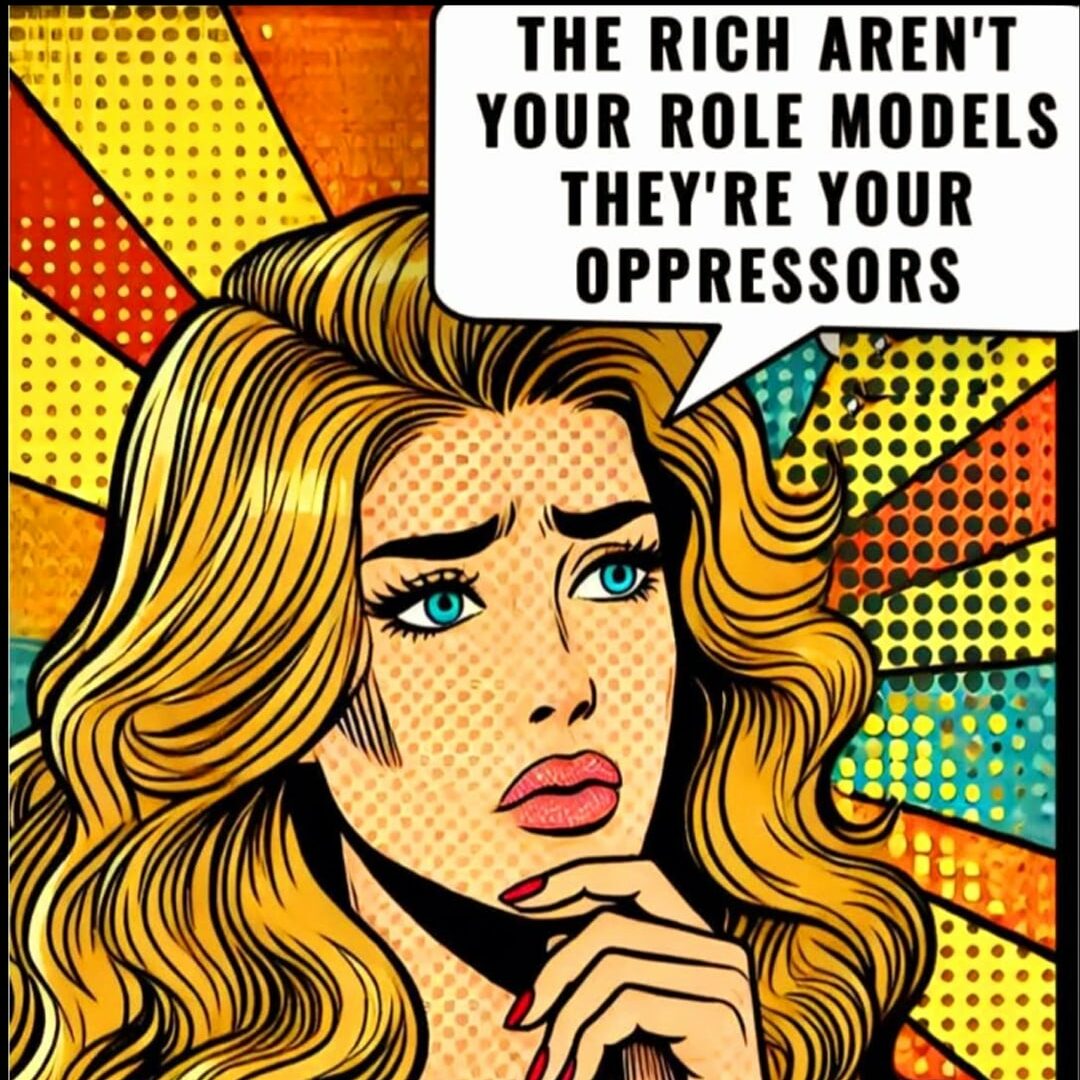
Women taking about oppressors

All startups are expressions of the #deathcult, every #VC is, in effect, a bishop preaching endless growth, extraction and enclosure. This isn’t innovation. It’s a business model accelerating social breakdown, deepening inequality, and feeding the #climatechaos that will displace billions and cost millions of lives over the coming century. If you’re serious about activism, stop feeding the machine. Put your energy into building the #openweb commons instead.

The whole value system behind startups and #VC is the problem, not the solution. The #KISS truth is simple: endless growth, extraction and enclosure cannot solve the crises they create. They are accelerating today’s breakdown and shaping tomorrow’s catastrophes. We don’t need more investment in the #deathcult. We need investment in the digital commons, the #openweb, and the .

#OMN #OpenWeb #Fediverse #Commons #DigitalCommons #Governance #MakingHistory #ClimateChaos #TechForGood #Oxfordboaters

This is a story of power, plain and simple

The state of the world, over the last few years, we’ve been watching a familiar story unfold, we’ve seen repeat itself in radical spaces, tech movements, and grassroots networks for decades. It starts in the grassroots with “progressive” #fashernistas (yes, them) pushing themselves into the front to speak for “us.” They talk the talk of decentralisation, care, community, and #FOSS ethics. They wear all the right hashtags: #opensocialmedia, #Fediverse, #commons, #techforgood. But when you look at how power is actually exercised behind the scenes, it’s something else entirely. This is a story of power, plain and simple. Not in the dramatic “revolutionary” sense. But in the subtle creep of careerism, institutional capture, and “safe” social capital games that flatten the real radical and uplifts the fake “palatable”.

Let’s take a few examples from the #activertypub world, first with the #SocialHub stagnation, this open space was originally created by the grassroots crew to shape the standards of the decentralised web. On the surface It was a working common, protocol-building and governance exploration space. So, what happened? The people now “leading” came from lifestyle #fashionista activism and wannabe #NGO circuits, who in the end were all trying to be embedded in the institutional funding environments, or visiting from the safe academic bubble. And thus they brought with them the dogmas of safe spaces, of “emotional consensus,” “hidden affinity group governance,” and “(ex)inclusive dialogue”… that JUST SO happened to exclude the radical and messy paths that are actually native to the #openweb flows, the bad mess they then made, ended up only pushing the dogma of the #geekprolem as it was the ONLY path they could imagine controlling in a way that would not threaten the thin connection to the institutions they were feeding from. This behaviour so often slips into forms of parasitism, that is not a good thing at all.

Then we have the current #Fediverse outreach infrastructure capture, where we’ve seen the same class of actors attach themselves to the most visible projects – like Mastodon, ActivityPub standards, and now “Fediverse governance.” They secure seats on boards. They host conferences with glossy branding and friendly logos. Not only that, but they use these controlled spaces to then push out “code of conduct” documents and “safe space” branding… while closing and excluding the real working infrastructure of discussion and direction that is should be native and needed.

Examples? #Mastodon’s GitHub, issue tracking, and moderation are all tightly controlled by a small clique around the project founder. Community voices are kinda tolerated at best, discarded at worst. The project is moving onto the #NGO path, no bad thing in its self, but with its years of pushing its own branding as THE Fediverse, it becomes a bad thing. In this, there is a very real debt of damage they need to pay back – as a part of a functioning gift economy – saying sorry and admitting mistakes would be a good limited first step.

Then we have the example of the #FediForum events, pushing into the space blindly, with zero historical context or any shared knowledge, to talk over, “represent” the #activertypub ecosystem. The problem is beyond this mess, they paywalled, which lead “naturally” to increasingly gate keeping with #NGO commercial interests being pushed to the front to represent “us”. When the radical and experienced grassroots voices obviously don’t get involved, as they simply refuse to step over the paywall. This is now an ongoing mess, that we do need to compost and not only with #fashionista outrage but with real working paths, we used to do this, but we can’t any more – why?

Over the last few years we have had proposals for genuine horizontal governance, that could have been used to shift this mess making and to actually shifts power outward – but these were labelled “too messy,” “too political,” or “not the right time.” This is not accidental, it is #liberalism functioning as control – with a smile. So… what can we do? Let’s be clear: This is a power issue, it’s not only about bad intentions. It’s about how power is used, and then abused, even in the so-called “horizontal” paths.

The first thing we have to do is recognise the smell of #NGO-style liberalism that so easily hides itself in good intentions, grants, DEI language, and “process.” But it then ends up:

  • Disempowering community autonomy
  • Replacing radical potential with “professionalism”
  • Marginalising away activists and messy real-world projects
  • Recreating the same vertical hierarchies, just with better “open” branding

Composting this is needed to break the cycle:

  1. Build and back native projects. The only way to push back against capture is to grow infrastructure from within our communities, like: #OMN (Open Media Network) #OGB (Open Governance Body). These must be trust-based, not credential-based. That means supporting those doing the work without demanding they translate it into pointless and most importantly powerless NGO-speak to be taken seriously.
  2. Use the as a filter, this simple social retelling of #FOSS is designed precisely to push out the 95% of #techshit and focus energy on projects with: Open source Open data Open standards Open governance. Apply these consistently, and the parasite class will struggle to keep and find a foothold.
  3. Push for messy, lived governance, stop waiting for perfect systems. We need to prototype imperfect, transparent, accountable governance now. It should be: Based on trust, not rules-lawyering Driven by use, not representation Grounded in solidarity, not status
  4. Refuse the “leader class”, just because someone has a title, a grant, or a #dotcons following, doesn’t mean they speak for us. Call out the unaccountable influence. Politely or not. Let’s not let careerists write our futures, please.

The Fediverse path could be the most important #openweb reboot of the commons of this decade. But it will only be that if we keep it rooted in social power, not polished #PR and #NGO mess. We don’t need new kings. We need more gardeners, to work together to compost the piles of #techshit and keep the space open and safe.

I think when our #fahernistas say to us “what have we done, please be nice to us, you’re not welcoming.” We need to reply: Am happy to be nice #KISS, just stop being a prat in this space please.

It’s really simple, please stop being (an often nasty) prat.