The expertise problem

Technical expertise matters, the problem begins when technical expertise is treated as the only legitimate way of understanding a social problem. This is the trap of technocracy: taking a useful tool for understanding parts of the world and turning it into a complete worldview. The expertise problem “We need more technical expertise in government.” But that is half the answer. The mistake is to jump from “politicians need technical expertise” to “technical experts should make decisions.” That replaces one form of stupidity with another.

A functioning society needs engineers, scientists, programmers and researchers. But it also needs historians, sociologists, artists, carers, journalists, workers, communities and ordinary users Technical knowledge is one tool in a toolbox, it is not the toolbox.

We have seen the consequences repeatedly. Politicians who barely understand how the internet works are expected to regulate it. At the same time, technology companies and technical communities assume that because they understand the machinery, they therefore understand the society surrounding it. Neither position is good enough – we need technical people involved in politics and governance, but we also need those technical people to understand that engineering is not governance.

The #geekproblem hashtag is particularly important part of the story for the #openweb. A lot of contemporary technology culture has inherited a blinded belief that social problems can be converted into technical problems: if something is messy, build a perfect system, when people disagree, write a protocol, when something is unsafe, add security. If information is difficult to manage, build an algorithm, when people behave badly, moderate them automatically. If a community is struggling, optimise the workflow. Sometimes these things are useful, but often the “technical solution” simply hides the social problem.

The problem isn’t that geeks are bad people. It is that technical culture can become too comfortable with abstraction. People become numbers, communities datasets, politics optimisation. Relationships become networks, trust becomes authentication and participation becomes a user interface. And suddenly, we have designed a technically elegant system that nobody actually wants to live inside.

This is the deeper danger of #technocracy, it is not simply about having too many computers, engineers or technical experts. It is about turning technical expertise into political authority. The idea has been around for a long time. During the crisis of the 1930s, technocratic movements argued that society could be managed by scientific and technical experts rather than through the messy processes of democratic politics. The appeal was understandable: when society is in crisis, efficiency, certainty and expertise can look much more attractive than disagreement, compromise and uncertainty.

But that is the problem – democracy is messy because society is messy. There is no technical system that can contain all the values, histories, relationships, conflicts and experiences of the people affected by a decision. The belief that a small group of people with enough information can simply calculate the correct answer is not an escape from politics, it is politics disguised as engineering.

We can see the same problem emerging in our own technology culture. Silicon Valley has presented itself as being above politics: just build the system, scale it and let the technology solve the problem. But these companies have accumulated enormous economic and political power precisely because their systems shape how people communicate, work, organise, consume information and understand the world. Technology is therefore not neutral infrastructure, who owns it matters – who controls it matters – who funds it matters – who writes the rules matters – who has the power to change those rules matters. And what happens when the system is wrong matters.

The danger becomes serious when technological power and political power start merging. A technology billionaire does not become democratically accountable simply because their company operates critical infrastructure. A powerful algorithm does not become legitimate because it is technically sophisticated. A government does not become more democratic because it uses AI. Technology can be used to amplifie power without making that power accountable.

Technologies of humility

This is where the idea of technologies of humility becomes useful: technical and policy systems need to take uncertainty, ambiguity, vulnerability and the limits of knowledge seriously. Four principles might be useful.

  1. Framing

How are we defining the problem? Are we actually addressing the problem, or simply addressing the part that is easiest to measure? This is hugely important in #OMN development, if we define the problem as “How do we distribute content efficiently?” we will build one kind of system. If we define it as “How do communities maintain trustworthy shared media and social memory?” we build something very different. The technical architecture follows the social framing.

  1. Vulnerability

Who gets hurt by the solution? A system can be efficient and still be destructive. Algorithms can optimise engagement while making people miserable. A moderation system can reduce abuse while silencing marginalised voices. A security system can protect one group while excluding another. We need to ask: who is missing from the path?

  1. Distribution

Who gets the benefits? Who gets the power, the money and who carries the risks? This is one of the most important questions in technology because “innovation” is rarely distributed equally. The #dotcons have become good at extracting value from social relationships while presenting the resulting technology as neutral infrastructure, it isn’t neutral. The ownership model matters, governance matters. The matters because it tries to move these questions into the open.

  1. Learning

What happens when we are wrong? This may be the most important principle of all, there is rarely one perfect answer to a complex social problem. We need systems that can learn, not simply systems that can scale. This is one of the reasons #OMN is interested in things like moderation, rollback, metadata, federation and open governance. A social system needs mechanisms for correction, needs to be possible to say “That didn’t work. Let’s change it.” without treating the previous decision as sacred.

We need to understand that open systems need more than code, you can have beautifully engineered open-source software running a terrible social system, a decentralised network full of authoritarian communities, transparent code supporting opaque power, and you can build technically open systems that are socially closed.

So the challenge isn’t simply – how do we make the technology open? It is, how do we make technology part of an open social process? That is a much harder question, and much more interesting and why #OMN is deliberately messy.

The #OMN approach isn’t to pretend that we can design the perfect social system in advance. It is to build enough open infrastructure for communities to experiment, disagree, adapt and learn. That means accepting that different communities will do things differently, while providing common building blocks that allow different paths to develop – different interfaces, different workflows, different communities and different forms of participation. It means designing for disagreement rather than pretending disagreement can be engineered away, a path from technical systems to social infrastructure.

Composting the current mess is where the critique of tech authoritarianism connects directly to the #geekproblem, it is the problem of expertise becoming authority without accountability. And the answer is not to remove technical people from decision-making. Quite the opposite. We need their knowledge. But we need it alongside other forms of knowledge and inside democratic, open and accountable processes.

Engineers can tell us what a system can do, but they cannot, by themselves, tell us what society should want. Programmers can design protocols, but they cannot decide what relationships a community should have. Data scientists can identify patterns, they cannot determine what those patterns mean to the people living through them. And AI can process enormous quantities of information, it still cannot replace human judgement, lived experience, disagreement and democratic legitimacy.

This is why + #OGB + #OMN + #MakingHistory belong together, attempts to build technical infrastructure that leaves room for social intelligence rather than replacing it. To repeat endlessly the path is not one perfect platform, one perfect algorithm or one perfect governance model, #KISS we need more tools, not one answer.

On this native path, mess is not necessarily a failure, it can be the space where learning, disagreement, adaptation and democracy actually happen. That is a much humbler – and potentially much more powerful – ambition.

#OMN #openweb #OGB #MakingHistory #FOSS #geekproblem #technocracy #technology #governance #commons #socialmedia #decentralisation

Trust and the trustless mess

One of the useful arguments in the debate around decentralisation, blockchain and the #openweb is also one of the simplest – We do not actually live in a trustless world, we live in a world built on different kinds of trust. This is why the Fediverse worked because it was with a good #UI.

The problem it had to overcome and still does is that much of #geekproblem pushing technology is obsessed with trying to eliminate trust rather than understanding how trust works. The idea of the “trustless” technology sounds attractive. If we cannot trust governments, corporations, banks, platforms, administrators or even other people, why not build digital systems where nobody needs to trust anybody?

This is a simple mindset, instead of trusting a person, trust the mathematics, instead of trusting an institution, trust the protocol. Instead of trusting a moderator, trust the code. Instead of trusting a community, trust the ledger. It sounds wonderfully clean, but there is a problem – you cannot eliminate trust, the social truth is you can only move it somewhere else.

A #blockchain can make it difficult to alter records after they have been entered, but it cannot magically make the information entered into the system true. Someone still has to enter the information, someone has to write the software, someone has to maintain the infrastructure, someone has to interpret the results and someone has to decide what happens when reality doesn’t fit the rules. That distinction, people, is important for thinking about the future of the #openweb as the path to trustless is usually just displaced trust.

Imagine buying a digital object through a “trustless” smart contract. The theory says that you don’t need to trust the seller. The contract automatically enforces the transaction. But do you trust the person who wrote the smart contract? That the code does what you think it does? Do you understand the code well enough to audit it? Do you trust the software running on your computer? Do you trust that the thing described by the contract is actually the thing you want? Suddenly, the system isn’t trustless in any way.

On this blinded pushed #geekproblem path, you are exchanging trust in people and community for trust in software, tech infrastructure and your own technical ability. A tiny number of people are grasping for power, in this it is a “grassroots” mirroring of the current #dotcons mess. Supposedly trustless transactions always fall back on reputation, previous experience, known counterparties or the assumption that somebody will behave fairly.

And this isn’t necessarily a failure, it is a recognition of how society actually works, trust is basic infrastructure. We think of trust as something soft and personal, a handshake, reputation, knowing somebody. Being part of a community, a history with an organisation. But trust is actually a form of core social infrastructure.

When you buy something from a local shop, you don’t individually audit every component of the business. You trust the shopkeeper, the reputation of the shop, the legal framework. You trust food standards, trust that if something goes badly wrong, there are mechanisms for dealing with it. None of this means that the shop is perfectly trustworthy, it means that layers of “soft” trust, accountability and social mechanisms make cooperation possible.

The same thing happens online, we trust websites, moderators, administrators, developers. We trust maintainers, communities. They all have reputations, the interesting question here isn’t – how do we eliminate trust? It is, how do we build better systems of trust? The #geekproblem problem of pretending that trust doesn’t exist, is a fantasy of the trustless system that makes things less democratic. If trust is made invisible inside code, people lose sight of where power shapes process and actually sits. So replacing a human decision with a technical decision doesn’t remove politics, it hardens and hides it by simply hiding politics inside infrastructure.

The #geekproblem isn’t about technical people being bad or that technical knowledge isn’t relevant. Quite the opposite, complex systems need technical knowledge. The current problem comes when technical expertise becomes a substitute for social and political accountability. The system says, “The code says so.” But somebody decided what the code should say, decided what the code should not say – that is governance.

This is where the become useful.

Open Data.
Open Source.
Open Standards.
Open Process.

The point of this simple clarification of #FOSS is to make the system trustworthy enough to participate in and transparent enough that people can understand how that trust is produced. Open source allows people to inspect and modify the software. Open standards allow different systems to communicate. Open data allows information to be examined and reused. Open process makes decision-making visible. They together make trust more accountable, a much healthier goal.

On this current broken path, some people assume that decentralisation means removing trusted intermediaries. But decentralisation does not mean removing relationships, it means distributing relationships and accountability. Instead of one corporation controlling everything, you have many independent communities. Instead of one giant moderation department, you have distributed moderation, one platform deciding the rules, instead communities establish their own rules while communicating through shared standards. Instead of one central archive, many organisations hold copies and contribute metadata flows.

That is not in any way trustless, it is distributed trust, and distributed trust is much closer to how healthy communities actually operate. Reputation matters, people have always used reputation to decide whom to trust. You recommend a builder because someone you know had good experience with them, choose a restaurant because friends recommend it. You work with someone because they have a history of doing good work, participate in a community because you know the people involved.

An example of this #geekproblem in tech the last 20 years of #blockchain projects, is that they have to recreate reputation systems, off chain, to grow trusted parties because people need them to function. This shouldn’t surprise us, reputation is accumulated social knowledge, a record of relationships, it is one of the ways communities remember.

And that common sense is something that technology should help communities develop rather than trying to replace with abstract technical mechanism. This is the danger of “code is law” a seductive idea, if the rules are encoded into software, nobody can arbitrarily change them. But real life doesn’t work like software, people make mistakes, circumstances change. Sometimes the rules themselves are wrong.

A genuinely sustainable social system needs the ability to interpret, moderate, appeal, correct and change, this requires people, relationships and basic governance. It requires trust, were a completely rigid system may be technically predictable while being socially disastrous. Trust needs accountability, this is particularly important for grassroots technology. When we build alternatives to the #dotcons, we shouldn’t simply recreate their power structures with different software. We need to ask:

  • Who can make decisions?
  • Who can see what is happening?
  • Who can challenge a decision?
  • Who can correct mistakes?
  • Who can leave?
  • Who can fork the system?
  • Who can moderate?
  • Who controls the infrastructure?
  • Who owns the data?

These are trust questions, a trustworthy system isn’t one where nobody has power, it is one where power is visible, distributed and accountable. Trust isn’t blind faith, yes, there is a danger in romanticising trust, trust doesn’t mean blindly believing people. Good trust is built through evidence.

  • You trust somebody because you have a relationship with them.
  • You trust an organisation because it has demonstrated competence.
  • You trust a process because you can see how it works.
  • You trust a community because people hold each other accountable.
  • You trust software because it is open, tested and maintained.
  • You trust a system because there are ways to challenge it when it fails.

So the opposite of “trustless” isn’t “blind trust”, it is earned, observable, and accountable. This gives us a useful direction for the current #openweb reboot. It points to the mess we need to compost, we don’t need to recreate the fantasy of an entirely trustless internet. The commercial internet already tried extreme centralised trust – for 20 years the #dotcons became trusted intermediaries for almost everything, owning the infrastructure, controlling the algorithms, identity, data, moderation. They controlled visibility, they still control the economic relationship with users. That isn’t trustless, it is concentrated trust and concentrated power.

Trust is the missing layer, there is a tendency in narrow #geekproblem paths to think in terms of infrastructure first. Servers, protocols, APIs, encryption, algorithms. But underneath all of these sits a social question – why should anyone trust this system? And the answer cannot simply be “Because the code works.” as a system can work perfectly and still be socially terrible. The important question is whether the technology helps people create relationships that are transparent, accountable, resilient and capable of self-correction. That is a much bigger challenge than creating a trustless protocol, but it is also much more useful.

To build on a different path, we need networks where communities can trust their own infrastructure. We are already doing this on the #Fediverse, building on #ActivityPub standard that allow communities to communicate. Moderation systems where decisions are kind of visible and accountable. What is lacking is building governance that people can participate in, this is where projects such as #OMN and #OGB become interesting. There goal isn’t to make human relationships unnecessary, it is to build technical infrastructure that supports better human relationships.

From trustless to trustworthy, means accepting that trust is unavoidable and then making trust visible and accountable. It means combining open standards with open governance, decentralisation with community and recognising that humans aren’t bugs in the system – humans are the system.

Technology should therefore not be designed around the fantasy that people are unreliable components that need to be eliminated. It should be designed around the reality that people cooperate through relationships, reputation, shared history, norms, institutions and accountability. The #KISS task of the #openweb is not to eliminate these things, it is to build better versions of them, real alternative to the #dotcons – not more dead-end trustless technology.

The #OMN path is distributed trust, supported by open technology and democratic governance. And perhaps a more radical idea – rather than trying to remove trust from society, we should get much better at building it, sharing it and making it accountable #KISS.

#Trust #Trustless #OpenWeb #OMN #OGB #FOSS #Commons #Fediverse #Decentralisation #Governance #Democracy #Technology #Community

The mess, the Commons, and the Paths Out of Mess

The #Deathcult is a historical metaphor

We spend a lot of time talking about crises as if they’re sudden events, they rarely are, crises are the outcome of decades of accumulated social, political, economic and technological choices. The challenge isn’t simply understanding why societies enter periods of instability, it’s understanding how they find their way back out again.

History suggests something important – entering crisis is often easier than leaving it – it’s a downhill path. For long periods, societies can appear stable. Institutions function, people get on with their lives, and conflict remains manageable, yet beneath the surface something changes.

  • Power concentrates.
  • Wealth accumulates upward.
  • Institutions begin serving themselves rather than the commons
  • Public trust erodes.

By the time these trends become obvious, society has already gathered momentum, think of it like a huge ball rolling down a steep valley, once it begins rolling, it becomes incredibly difficult to stop. This is where much of today’s #climatechaos, democratic decline and digital enclosure fit. They are symptoms of long-running structural shifts rather than isolated failures.

To understand this recurring mess, it’s useful to think about this is as a wealth pump. Healthy societies circulate resources, were unhealthy societies increasingly extract resources from ordinary people while concentrating wealth and decision-making power into ever smaller circles. Eventually this creates reinforcing problems – the growing insecurity for everyone else, competition between increasingly numerous elitists leads to weakening of public institutions, eventually the system becomes unstable. This describes much of the last forty years of #neoliberalism just as well as many earlier historical periods.

In #OMN language, this is one way of describing the growth of the #deathcult. Technology follows politics, so the same process appears online. The early #openweb distributed power, the #dotcons recentralised it. Open participation became algorithmic engagement, communities became audiences, citizens became products. This wasn’t a simple a technical change, it’s the same mess of concentration of power occurring throughout the wider society. Technology amplified existing political and economic trends, crisis created the possibility.

The encouraging part of history is that outcomes are not predetermined, although the path into crisis is narrow, the path out is surprisingly open. Once institutions begin failing, many futures become possible. Some societies descend into violence, some replace one ruling group with another while changing very little. A few manage genuine reform, the difference comes from organised social movements that are able not merely to seize attention, but to rebuild institutions capable of creating trust again. This matters as moments of instability are also moments when relatively small interventions can have disproportionately large effects.

This is where #OMN fits, the Open Media Network is not a project to seize power. It is a project to rebuild commons infrastructure. Instead of reinforcing extraction, it strengthens trust. Instead of creating new gatekeepers, it distributes responsibility. Instead of proprietary platforms, it builds open processes. Instead of replacing one monopoly with another, it supports federation and shared ownership.

This is why the matter, not as ideological slogans, they’re much more useful as practical safeguards against rebuilding the same systems that created today’s crisis. Trying to engineer perfect systems produces new failures, complex societies never become tidy, so the useful goal is not perfection. Rather to create institutions capable of learning, adapting and redistributing power before crises become catastrophic. This is why #OMN emphasises mediation over control, commons over ownership, participation over spectatorship to push trust over extraction.

Building the next commons matters – if we accept that we’re living through a period of structural instability, then waiting for institutions to solve it is unlikely to succeed, the work we need belongs to communities.

  • Building archives.
  • Building media.
  • Building governance.
  • Building trust.

We can play a part in this by building technologies that reinforce this path rather than undermine it as history suggests that societies emerge from crises when they reverse the flows of concentrated power to begin rebuilding the commons, that’s the path #OMN is on.

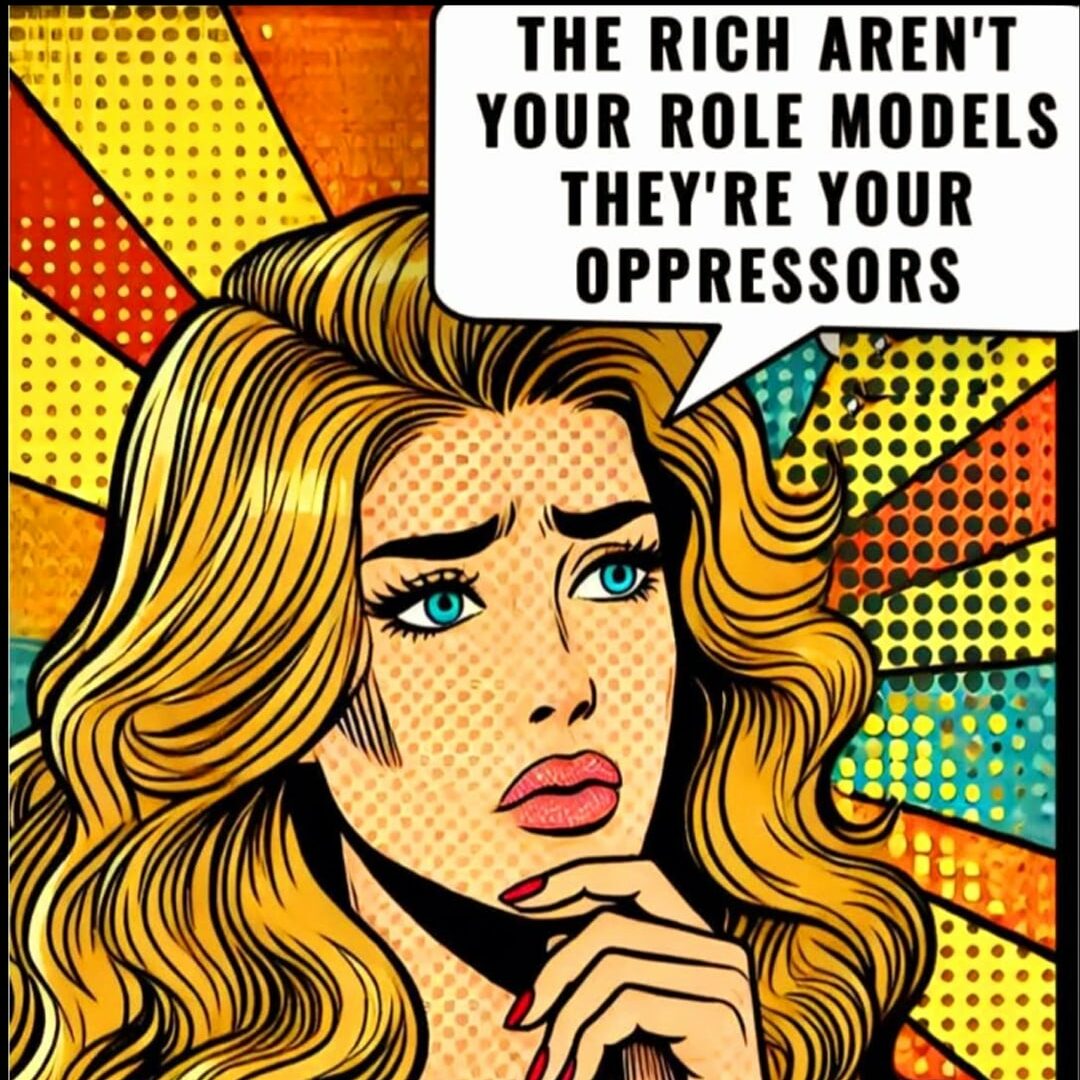
Women taking about oppressors

All startups are expressions of the #deathcult, every #VC is, in effect, a bishop preaching endless growth, extraction and enclosure. This isn’t innovation. It’s a business model accelerating social breakdown, deepening inequality, and feeding the #climatechaos that will displace billions and cost millions of lives over the coming century. If you’re serious about activism, stop feeding the machine. Put your energy into building the #openweb commons instead.

The whole value system behind startups and #VC is the problem, not the solution. The #KISS truth is simple: endless growth, extraction and enclosure cannot solve the crises they create. They are accelerating today’s breakdown and shaping tomorrow’s catastrophes. We don’t need more investment in the #deathcult. We need investment in the digital commons, the #openweb, and the .

#OMN #OpenWeb #Fediverse #Commons #DigitalCommons #Governance #MakingHistory #ClimateChaos #TechForGood #Oxfordboaters