The Forgotten Story of Social Technology: Why It Matters

All code is ideology solidified into action – thus most contemporary code is capitalism, this is hardly a surprise if you think about this for a moment. Yes you can try and act on any ideology on top of this code, but the outcome and assumptions are preprogrammed, with this in mind let’s look at a path outside this current mess.

In the original “native” grassroots growth digital wilderness of the #openweb, our use of technology paths were seen as something esoteric—a domain of hackers, activists, and tech-savvy individuals who speak in code and operate in the margins. But beneath this perception lies a fundamental truth: social technology is not just for the few; it’s for everyone. It’s about how we connect, share, and build communities. And this matters more now than ever.

In the early days there was the path of open connections, let’s dip into this story in the early 2000s with an example, the rise of #Indymedia, a global network of #openweb independent media centres that emerged as a response to corporate control over #traditionalmedia. Indymedia pioneered social technology, using the internet to democratize information and give voice to those silenced by traditional media. Indymedia wasn’t only about the content; it was more the active community of people. This new social reality was revolutionary because it allowed communities to create their own paths to share media in wider public spaces without relying on corporate platforms. It was a glimpse into what the internet could be— decentralized, user and community controlled space for collaboration and free expression.

For many social change activists and technologists, Indymedia was much more than a tool; it was a focus, a feedback loop of power. It provided a way to organize, mobilize, and communicate outside the #blocking and watchful eyes of governments and corporations. But the significance of Indymedia and similar projects extended beyond this activism ghetto. The technical and social path represented a different vision of what the internet could be, that prioritized #4opens, community control, and freedom over “common sense” profit and surveillance.

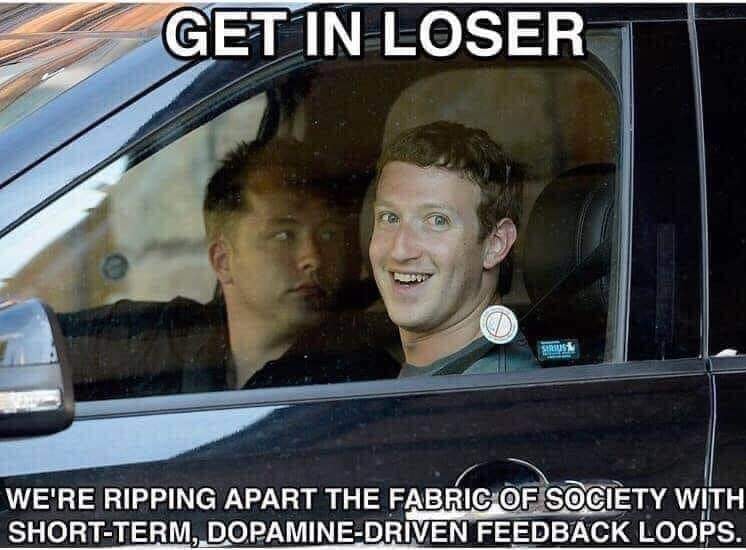
What came after the implosion of this path, was the rise of the #dotcons and betrayal of the openweb. As the internet grew, so did the corporate interest in controlling it. Enter the #dotcons the tech giants like Google, Facebook, and Amazon, which have come to dominate the online landscape. These corporations offered free services that were easy to use and quickly became ubiquitous. But there was a catch: these services were free because the users themselves were the product. The #dotcons built their empires by harvesting data, selling ads, and creating silos that encouraged mindless scrolling rather than meaningful interaction. The openweb, the vision of a decentralized, user-controlled internet, was quickly replaced by a walled garden of corporate platforms that prioritized profit and control over people and #DIY culture.

This shift had implications, it wasn’t only about losing control over shared digital commons, it was about losing control over our communities, our communications, and our society. The internet, once a positive space for creativity and intervention, become an evil tool of surveillance and manipulation. The promise of social technology as a force for social good was eroded by the platforms that had once seemed so empowering.

Let’s talk about our worship of the #deathcult the #mainstreaming system that consumes everything. The ideology that underpins the dotcons and the broader #neoliberal system they are part of. This deadened path of endless growth, profit at any cost, and the concentration of power in the hands of a #nastyfew. An ideology that consumes everything in its path – communities, environments, and even our own sense of self.

This is not only a problem for activists; it’s a problem for everyone. The #deathcult turns us into consumers rather than citizens, prioritizing #stupidindividualism over community and short-term profit over long-term sustainability. An ideology that leads us to the environmental crisis, the erosion of social trust, and the ending of democracies. For anarchists and activists, the deathcult is the enemy to be fought. But for the average person, it’s the water we swim in, the invisible system that shapes our lives in ways we don’t even notice. Understanding this is crucial if we are to reclaim the internet, our communities, and any liveable future.

Reclaiming these commons is a role for the #4opens, if the deathcult is the problem, then the 4opens is part of the solution. The #4opens—opendata, opencode, openprocess, and openstandards—are #KISS paths to build a better internet. These principles are not only for activists; they are for anyone who sees the need to empower community and the importance of basic democracy.

Open data means that information should be accessible to all, not hoarded by corporations. Open code means that software should be transparent and modifiable, not a black box controlled by a few. Open governance means that decisions about how platforms are run should be made by the community, not imposed from above. And open standards mean that different systems should be able to work together, rather than being locked into proprietary formats. These principles are the foundation of the #openweb that empowers people, grows creativity, and builds communities, the foundation of a good society.

The Open Media Network (#OMN) is a path to create a native digital network based on the #4opens. The OMN is not only a technical project; it’s a social one. It’s about spaces where people can connect, share, and build without being subject to the whims of corporate control. It’s a reboot of the original web, learning from projects like #indymedia. The #OMN is a response to the failures of our use of the #dotcons and the worshipping of the deathcult. A way to reclaim the internet as a tool of good, rather than an evil weapon of control. It’s a way to rebuild the commons, the shared resources and spaces that are core to the path of the healthy society.

For #spiky hardcore progressives and anarchists, the OMN is a direct path we need to take to create the world we might want to see, where power is decentralized, and communities have control over their destinies. But for the #fluffy, everyone else, the OMN is a way to take back what has been lost in the corporate takeover of the internet. It’s a way to reconnect the original promise of the internet as free expression, collaboration, and community.

Why this social technology matters, at its core, social technology is how we connect with each other. It’s the tools we use to build relationships, share information, and create communities. These things matter for everyone, not only activists or anarchists. In the current mess dominated by corporate platforms, the openweb native path of social technology offers a way to reclaim our agency away from this mess. It offers a way to build systems that work for us, rather than against us. The story of social technology, as told by Hamish Campbell on this site, is a story of hope and possibility. It’s a story of what the internet could have been, and what it still can be.

The journey won’t be easy, but it is a journey worth taking. In the end, the #openweb is about more than technology; it’s about the kind of society we want to build, and the kind of people we want to be #KISS

Control in Tech Culture

The 20th century was marked by significant technological and scientific advancements, alongside violent conflicts. As we move through the 21st century, the nature of these conflicts is shifting. The struggle is increasingly between humanity and nature, with dire consequences if we continue down our current path. Environmental degradation and climate change are no longer side effects, but central challenges that must be addressed. We need to find paths to move off the current paths, there are assumptions that are #blocking this needed move, one is in technology and its assumptions.

This #geekproblem has been inherited from past era’s in our computer architectures and the broader tech culture that has an ingrained concept of control. This control, hardcoded into systems and frameworks, poses an unspoken problem within many geek paths. Addressing this issue is crucial for understanding the broader implications and possibilities of grassroots #openweb tech activism as a path out of the current social and technical mess.

The Control paradigm in tech, from the foundations of computing, control has been a central theme. Systems are designed to operate under strict protocols, ensuring reliability, security, and efficiency. This paradigm, while effective in technological contexts, is inadvertently extend into social dynamics within tech communities. Control in tech is not just about managing systems; it also shapes interactions, hierarchies, and decision-making processes.

Unconscious participation in control structures, in tech communities, is unconsciously embedded in social groups that perpetuate this control paradigm. It’s essential to recognize that this isn’t a personal failing but a reflection of broader cultural trends. The challenge lies in identifying and addressing these unconscious patterns to foster more open, collaborative, and equitable environments.

The Keep It Simple, Stupid (#KISS) principle is a valuable tool for analysing generalist issues within our shared cultures. By simplifying complex problems, we can better understand the dynamics at play and develop more effective solutions. Applying the KISS principle to tech activism helps to demystify the control paradigm and its impact on our communities.

This blog is dedicated to exploring alternative paths that we can take to address these issues. By grassroots #openweb tech activism to mitigate the destructive patterns of control and build more sustainable and equitable paths. To promote decentralized technologies to empower people and communities, reducing reliance on centralized control structures.

#4opens emphasizes the importance of open-source software, to encourages collaboration, transparency, and shared ownership and community building. We need to fostering strong, inclusive communities that prioritize collective well-being over hierarchical control. We need to shift to environmental stewardship and ecological consciousness in our tech development and usage, recognizing the interconnectedness of human and environmental health in the tools we use.

This path requires a fundamental shift in how we approach technology and control. By embracing the #openweb and grassroots activism, we can create resilient, inclusive, and sustainable technological systems. This is not just a technical challenge but a cultural and ethical one.

#OMN #indymediaback #OGB #makeinghistory #visionontv #4opens

Solidarity in the era of #stupidindividualism

In the current #sociopolitical landscape, building comradeship and solidarity is needed more than ever. However, the structures of capital and cultural norms are #blocking this path, promoting division and individualism that makes us all more “stupid”. How can we foster a community where #KISS class consciousness thrives?

This solidarity and comradeship are meaningful resistance against #deathcult capitalist structures. A first step is bridging vertical and horizontal structures in a healthy ongoing fluffy/spiky debate. This helps move past the current fragility of class consciousness, to strengthen this path we need to examine how the “petit bourgeoisie” and cultural industries deflect and pre-empt discussions about class.

Exclusion and division pushes the tendency to condemn and abuse, to mediate this mess is to create a culture where disagreement occur without exclusion. Addressing class does not mean downgrading the importance of many other issues like race and gender, all struggles are interconnected.

To make this work, it is important to critique the “stupid” path of individualism, the focus on individual behaviour over structural critique undermines collective action. Let’s clearly look at the ideology of individualism propagated by the ruling class and its impact on solidarity. A structural critique is the path to challenge capitalist ideologies, to take this path we need to mediate the tendency to individualize and privatize issues. How do we shift the focus from individual behaviour to structural analysis in public discourse and activism?

Revitalizing class consciousness is a way to push back fear and insecurity spread by the #deathcult. It should be easy to see that capital has subdued organized labour and co-opt the discourse of the left. Thus, the need for a renewed focus on class consciousness and mediating the left path, out of being mired in moralizing individualism and devoid of class analysis, which serves capital’s interests rather than challenging it. To do this, we need to move past the pursuit of #fashionista “bourgeois” recognition and its limitations.

The #dotcons social media is enemy terrain, a trap set by communicative capitalism. Yes, we maybe can strategically use and abuse this mess to move people back to the #openweb which is the “native” path. Remember, the goal is not to simply be an “activist”, we need tools from our own community to grow and use like the #OMN, to aid in the growth and transformation of the working class and on the ground organizing. This is the difference between performative activism and genuine class struggle.

Please, let’s shift the balance of focus from individualism to collective action and solidarity. Let’s stop our prat ish behaver on this. https://opencollective.com/open-media-network
State Funding of #FOSS and Open Source: Is it a Good Idea or a Bad Idea?

The questioning over state funding of Free and Open Source Software (FOSS) and open-source initiatives revolves around invisible ideological debates about benefits and drawbacks. Let’s look at this from a few specific examples: #NLnet, #NGI, and the European Union (#EU), to understanding the implications and effectiveness of this funding path.

  • The #NLnet Foundation is a notable example of an organization that provides funding to open-source projects. Supported by private and public funds, including significant contributions from the #EU, NLnet focuses on promoting a free, open, and secure internet.
  • The #NGI initiative, funded by the #EU, aims to shape the development of the internet of tomorrow. By supporting a range of open-source projects, NGI tries to foster innovation, privacy, and security. It emphasizes human-concentric technology, ensuring that the future internet respects humanistic values and needs.
  • The #EU has been a significant proponent of FOSS, providing funding through programs such as Horizon 2020 and Horizon Europe. The EU’s supports digital sovereignty, reduce dependency on non-European technologies through promoting open standards.

The is some democratization as these state-funded FOSS projects ensure software is accessible to wider groups, thus reducing the digital divide. For instance, NGI-funded projects are supposed to focus on inclusivity and user empowerment. At best, this transparency brings public overview to these processes.

There are some economic benefits and cost savings in using and supporting FOSS instead of expensive proprietary software. Funding initiatives like NGI stimulate innovation by allowing developers to build upon existing open-source projects, fostering a collaborative environment. Though, there are unspoken issues of sustainability in a pure capitalist path, thus the question of balance in state funding.

Open-source software allows for independent security audits, reducing the risk of vulnerabilities. The EU’s investment in secure communication tools underlines this advantage. Reducing reliance on a few large proprietaries #dotcons software vendors enhances national security and control. The EU’s support for open-source projects aims to bolster humanistic digital sovereignty.

For example, #NLnet’s diverse (though #geekproblem) funding portfolio highlights this limited community-driven development. The collaboration between public institutions, the private sector, and community contributors helps #NGI projects bring together diverse stakeholders to work on common goals. #FOSS projects thrive on community contributions, leading to continuous improvement and support and thus in theory community needs, though due to the dogmatic #geekproblem this is currently failing.

Funding Continuity: Projects become dependent on government funding, which currently is not stable or continuous. For example, sudden policy shifts in the EU affect long-term project sustainability. Without a sustainable funding, FOSS projects struggle with long-term maintenance and support.

Most #FOSS projects are too idiosyncratic to meet quality #UX standards. Thus, the current #geekproblem dominated process means that state funding inadvertently support meany unusable and thus pointless, subpar projects. Effective diversity and oversight of these mechanisms are crucial to mitigate this failing path.

Government involvement leads to bureaucracy, slowing down and ossifying development cycles, currently we do not work though this path well, The balance between oversight, diversity and agility is critical. With the #EU path this is a huge problem leading to almost all the current funding bring poured down the drain.

For #mainstreaming capitalism the issue of “Market Distortion”, the idea of competition raises the issue of state funding distorting “market” dogmas to disadvantage private companies and startups that don’t receive government support. For instance, EU funding can overshadow smaller #dotcons, capitalist thinking sees this as a risk that government-backed projects might stifle innovation by shaping the market landscape.

Political and ideological biases influence which projects receive funding, this is currently pushing a #blocking of the needed “native” #openweb path. How to move past this to ensuring diversity and “impartiality” in funding decisions need real work. How can we shift this “common sense” focus that government priorities do not align with the wider needs of the #openweb community and end-users. Aligning funding priorities with community needs is needed to address this concern, how can we make this happen with funding like #NLnet and #NGI?

To sum up, #NLnet are doing some good work, but this is focused on feeding the #geekproblem and building #fashionista careers, evern then on balance they do a better job than most. Then the wider #NGI funding is going into the #dotcons and #NGO mess, thus being poured directly down the drain. Over all, it’s fantastic that the #EU is funding the #openweb even if it is doing it very badly by funding very little that is native or useful.

Conclusion, state funding for FOSS and open-source initiatives, in our examples #NLnet, #NGI, and the #EU, has potential for creating real change and challenge, but this path presents both opportunities and challenges. When implemented thoughtfully, it can foster “native” paths, innovation, reduce costs, and enhance community and security to challenge the current worshipping of the #deathcults by our widespread use of the #dotcons. The question is the will and understanding to balancing this path to ensures that state funding positively contributes to the #4opens FOSS ecosystem, driving forward a free, open digital future or just leads to the capitalistic criticism of waste and distortion? At best and at worst, we see some real change and a lot of poring funding down the drain to feed some #geekproblem and build the careers of a few #fashernistas

The is much to compost in the current mess, can we get funding for shovels please #OMN

Indymedia based on the #OMN framework

The original #Indymedia network was a vibrant platform for decentralized grassroots media. It gave voice to those ignored by corporate media and built a culture of open publishing and collaboration. But over time it succumbed to both internal and external pressures.

Why reboot #Indymedia now? And how can we spread the understanding of why we need to do this. But, before we can revive the project, we need to face those failures honestly – and learn from them.

Why did Indymedia decline?

  • Internal conflicts – tribalism, ego, and power politics fractured unity.
  • Divergent visions – competing goals and methods led to fragmentation.
  • External pressures – surveillance, repression, and legal harassment weakened the network.
  • Technological change – rapid shifts in digital media outpaced Indymedia’s adaptability.
  • Sustainability problems – financial and operational support was always fragile.
  • Centralization vs. decentralization – endless tension between autonomy and coherence sapped energy.

These dynamics weren’t unique to Indymedia. They mirror the wider decline of radical alt-media in the face of #dotcons and the #deathcult of neoliberal “common sense.” So what is #IndymediaBack? It’s a project about rekindling what worked while composting what didn’t. It is rooted in the principles that once made Indymedia a powerful force:

  • Trust-based publishing
  • Do-ocracy
  • Anti-authoritarianism

But this time, we pair those values with modern tools and lessons learned.

The role of #OMN framework is central to this reboot. It brings with it:

  • Openness and collaboration
  • Decentralization by design

Objectives of the reboot:

  • Re-establish open publishing flows – grassroots publishing, ensuring diverse voices are heard.
  • Strengthen decentralized structures – prevent power concentration while empowering local autonomy.
  • Implement modern standards – adopt protocols like #ActivityPub to improve functionality and widen news flows.
  • Avoid past mistakes – use clear governance and messy consensus to counter tribalism and power politics.
  • Promote sustainability – develop financial and operational models that keep the network alive long-term.

Strategies for Revival:

  • Adopt a #NothingNew policy – stick to the original workflows and ethos, but update them to meet today’s realities.
  • Build affinity groups – working groups to tackle specific issues and reach consensus on direction.
  • Emphasize the #4opens – open source, open data, open standards, open processes — to guarantee transparency and inclusivity.

Expected Outcomes:

  • A resilient and inclusive network of sites – decentralized and open, able to withstand pressures from within and without.
  • Diverse, vibrant media content – a rich tapestry of perspectives beyond the mainstream.
  • Sustainable operations – financial and organizational resilience to endure over time.
  • Community-driven governance – messy consensus and grassroots decision-making, not top-down control.

Conclusion, this is not just about restoring what was lost. It is about composting the failures and growing something new, a living network that can adapt to future challenges while staying true to its radical, open, grassroots beginnings.

Bad conversations in #FOSS and tech

A lot of our public discourse has reached the stage where it might be worth thinking about it as a mental health issue, and that after the “common sense” worshipping of the #deathcult for 40 years, this becomes escalating hard to mediate. This post is about a summing up of this thread https://www.reddit.com/r/foss/comments/1e5vhif/crisis_of_governance_in_foss_medieval_politics/ on Reddit where I posted the text of one of a blog posts on #FOSS and the need to move away from medieval governance.

The is very little if any constructive dialogue, instead we have #blocking, simply ignoring, participants selectively address certain points while neglecting others. This creates an incomplete dialogue and fails to engage with the actual scope of the argument. Example: If someone ignores the historical context and current challenges within FOSS governance structures, they miss why the proposed changes are necessary. Belittling involves dismissing or undermining arguments or concerns, which shuts down dialogue and discourage participation. Example: Dismissing the discussion of governance in FOSS as “unreadable” or “spammy” without engaging with the substance or argument. Nitpicking, focusing on minor details and errors rather than engaging with the main points, derails the conversation and prevent meaningful discussion. Example: focusing on correcting typos or minor factual errors without addressing the argument for the need for governance changes in FOSS projects. StrawMan, misrepresenting the argument to make it easier to attack, distorts the discussion and leads to unproductive debate. Example: Suggesting that advocating for more structured governance in FOSS is equivalent to demanding strict corporate-like control, which misrepresents the argument for more democratic and community-driven governance.

Reasons for these messy behaviours: Ideological differences, people have strong beliefs about what is “common sense” and react defensively to suggestions that change/challenge any of this existing, mostly blinded belief. This misunderstanding then feeds the growth of the lack of understanding of the historical context and the specifics of the proposed changes that then feedbacks misinformed critiques, end up building resistance to change. Yes, change is uncomfortable, and people resist it by dismissing or undermining new paths, ideas please? The style of communication can be off-putting and confusing for in and out groups, leading to reactions that focus on form rather than addressing any substance is a small problem.

Why this matters? There is a crisis of governance in #FOSS, Aristocratic hierarchies and monarchical leadership pushes the concentration of power among a few maintainers and leaders, this lowers community building and buy in. Medieval governance structures are medieval political systems, it’s obviously unfit for the modern world, let’s look at why we have this mess – with #neoliberal, individualism and its failures, #stupidindividualism breeds the focus on individualism, which undermines collaboration and community-driven efforts in FOSS. This fixation with market-driven development rather than community needs result on one hand in less innovative and user-friendly software, and on the other in #dotcons control and exploitation. Feeding the #techchurn and #geekproblem insular and exclusionary culture.

Addressing issues like this of ignoring, belittling, nitpicking, and straw man arguments that push back productive dialogue. What are the solutions to this current path, maybe, democratizing decision-making, the path of transparent and inclusive governance models like the #OGB to build community-concentric approaches, like #indymediaback and #makeinghistory. To make this work, let’s try shifting to focus on to community needs to balance the individuals ambition and market demands. Cultivate an inclusive culture that values diverse perspectives and considers different social, cultural, and economic paths.

Keeping communication barriers in place, leads to a lack of awareness

This is a core problem of #fashernista driven paths, pushing aside grassroots and #openweb movements, due to misalignment agendas. The #fashernists are driven by #mainstreaming agendas that end up co-opt grassroots projects, then pushing systematizing them in ways that dilute their “original native” paths, intent and value. This mess making leads to #techchurn and a continuous cycle of superficial innovation that does nothing to address real needed issues at all.

This resulting #blocking of communication leads to a lack of awareness in people involved in these movements, limited understanding of the history and principles underlying the #KISS grassroots and #openweb paths. With the #fediverse, decentralization is a core principle, though it often leads to difficulties in coordination and collective decision-making. This in hand with the “common sense” #mainstreaming people’s resistances to adopting new models of governance and cooperation like the #OGB pushes the current social mess and #techcurn mess we live in.

There are proposed solutions to this, build and support authentic projects, like the #OMN and #OGB etc. To grow collaborative governance and inclusive decision-making, start with small-scale pilot projects to demonstrate the effectiveness of collaborative governance to “test” decentralized development. Then use these projects (with federation) as models for larger initiatives, rinse and repeat, it’s a #KISS path, which leads to the cultivation of a community of resilience and nurtures infrastructure that is robust and adaptable, capable of withstanding the normal pressures and disruptions.

Part of this path is the need to challenge #mainstreaming narratives with alternative progressive media (#indymediaback) providing a counter-story, then pushing this feedback loop to highlight successes and innovations within the grassroots and #openweb movements.

Also using the #4opens as a key to encourage critical engagement with #geekproblem and #dotcons projects, questioning their alignment with grassroots values and thus pushing for accountability and transparency to really move people off these paths.

Let’s start embracing the composting of #techshit to turn the current stinking mess into fertile ground for new #openweb growth and innovation. Let’s pick up our shovels to build the change and challenge, that is so obviously needed, and please try not to be a prat, thanks.

“The work of the anarchist is above all a work of critique. The anarchist goes, sowing revolt against that which oppresses, obstructs, opposes itself to the free expansion of the individual being.”
— Emile Armand

The importance of words and ideology

We need to think of how words shape our thoughts, and how common understandings of these words are essential for any coherent and effective communication. Ideologies form the basis of all thinking, whether unspoken and #mainstreaming or articulated and minority. The challenge is to #KISS transition creative minority ideologies to the less working mainstreaming thinking.

There is a plan: Using Common Hashtags and Syndication

To achieve this transition, we need to use common hashtags and syndication through platforms like #activertypub and #OMN (Open Media Network, looking for funding). This strategy creates a real-world mainstreaming challenge that can remain resilient against co-optation by #fashionistas while still catering to their egos so they might embrace the needed change and challenge.

Actionable Steps

  • Establish a set of common hashtags that encapsulate core principles and ideas. Examples include #4opens, #openweb, #DIY, #techchurn, and #activertypub etc.
  • Encourage the use of these hashtags across social media and other communication platforms to create a unifying language and community.
  • Educate useing guides and resources to explain the importance and meaning of these hashtags to grow widespread understanding and adoption.
  • Encourage participation by inviteing grassroots and alternative media projects to join these syndication networks, ensuring a diverse range of voices and perspectives. Use tools like the #OMN to automate the syndication process, making it easier for participants to share and distribute content.
  • Grow collaboration and linking between different projects and communities to build a robust and supportive ecosystem.
  • Maintain open standards by ensuring that all participating projects adhere to the #4opens principles (open source, open data, open standards, open processes) to focus on transparency and inclusivity.
  • Monitor and adapt to regularly assess the network’s effectiveness and build feedback to make adjustments to improve reach and impact.

    Engaging the #Fashionistas
  • Initial outreach is about identifying key #influencers and early adopters within the alternative and grassroots tech communities.
  • Appeal to egos by recognizing the need for recognition and validation among #fashionistas, to sustain and create opportunities for them to showcase their contributions within the network. Highlight their success stories by sharing these stories and case studies that demonstrate the value and impact of participating in the network, encouraging more to join.

By leveraging common hashtags and syndication through #activertypub and #OMN, we create a resilient and impactful story that brings “native” ideologies into the #mainstreaming paths. This active path not only challenges the status quo but also changes its flow. Providing a sustainable path for grassroots and alternative projects to grow and thrive. The key to this is to maintain the #4opens and grow collaboration on the stories we tell #KISS

All language is metaphor, and the metaphors we choose shape how people think about problems and solutions. The “digital drugs” metaphor works because it makes the addictive design clear, but it can also push people into a moral panic frame (“users are addicts”), which risks oversimplifying.

A few metaphors you might find less #blocking of the #hashtag story:

  • Food & Nutrition
    #Dotcons = junk food (engineered to keep you consuming, empty calories).
    #Bsky = diet soda (feels lighter, but still unhealthy).
    #Fediverse = a community kitchen (messy, you have to cook and wash up, but nourishing and shared).
  • Urban Space
    #Dotcons = shopping malls (bright, controlled, profit-driven).
    #Bsky = curated boutique arcade (less harsh, but still enclosed).
    #Fediverse = the street commons (chaotic, noisy, sometimes rough, but free and collectively shaped).
  • Agriculture/Gardening

    #Dotcons = monoculture agribusiness (neat rows, efficient, but sterile and toxic).
    #Bsky = organic supermarket (nicer branding, but still transactional).
    #Fediverse/#OMN = messy permaculture garden (takes effort, community labour, but self-sustaining and alive).

These metaphors keep the critique, from individual pathology to collective space.

Progress is not easy

The internal struggles within the left progressives need #KISS paths that take into account the shadow of the #deathcult we all live in and the broader ideological battles against entrenched systems and the far right. The first step is the entrenched “Common Sense” that feeds division

Entrenched “Common Sense” Liberal Ideology: Many of our well-meaning liberals hold a belief in the current system’s capacity to reform itself, despite clear evidence of systemic failures. This “common sense” approach is #blocking the necessary radical changes. It supports a status quo that resists meaningful change and keeps us from the path we need to take.

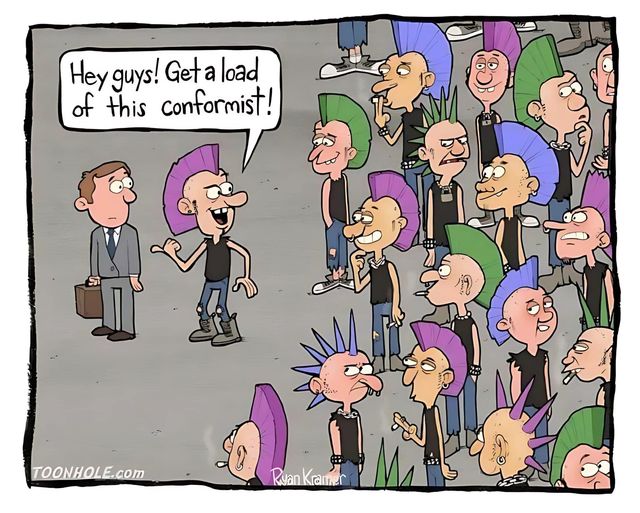
Internal Division on the Left, Fluffy vs Spiky: The “fluffy” left emphasizes kindness and inclusivity to attract people to social change, while the “spiky” left pushes for a much more confrontational stance against power structures. We need to balance this infighting, as both approaches are needed to balance change challenge, but the continuing excessive internal conflict over which method is superior weakens any movement.

Strategic Approaches:

  1. Promote a clear message that acknowledges the systemic failures and the need for substantial change. Focus on common goals and shared values.
  2. Balancing Fluffy and Spiky Tactics and Strategic Flexibility: Recognize that different situations require different approaches. Sometimes a softer, more inclusive approach is needed, while other times, direct confrontation is necessary. Open the space for different groups within the left to play to their strengths without undermining each other. Create paths where both fluffy and spiky tactics coexist and complement each other.
  3. Develop Shared Platforms and Communication Channels like the #OMN where diverse voices can communicate, collaborate, and coordinate actions without falling into divisive arguments. Clear Messaging: Use #KISS, consistent messaging that highlights the urgency of systemic change and the inadequacies of the current system.
  4. Highlight Success Stories of both fluffy and spiky tactics to show effectiveness and the importance of balance. Organize Joint Actions, events, protests, and campaigns that involve both inclusive and confrontational elements. Ensure these actions are coordinated, not just to build division.
  5. Shared Goals: Focus on actions that address common wider goals, such as #climatechange, economic inequality, and basic justice, to foster solidarity. Use the #OGB governance to create accountability
    and establish norms and traditions for trust within the movement to try and minimize recurring infighting.
  6. Conflict Resolution is hard, fostering divers paths helps to mediate this, avoid implement burocratic conflict resolution strategies is important.
  7. Use hashtags and #openweb native culture to organize, communicate, and amplify the movement’s messages. Hashtags like #KISS, #openweb, and #4opens help create a divers narrative.
  8. Education is key, run online and offline campaigns that explain the necessity of both fluffy and spiky tactics, aiming to outreach and mobilize the broad community.
  9. Space for your point here…
  10. Have fun, “If I can’t dance, I don’t want to be part of your revolution” is #KISS get to it.

In conclusion, walking a path that actually works for progressive ends is not easy on the left, effectiveness requires acknowledging the systemic failures many liberals overlook and balancing inclusive and confrontational tactics. By focusing on shared goals, promoting clear #KISS messaging, and leveraging #openweb technology, the left can push back on the status quo and the far right. This is a first step view of a bigger issue.

Please don’t be a prat about this, thanks.


Why we need this progressive path to work. The hardright know exactly what they are doing. These wars are not only lies, it’s bribes.

It’s a signal to power: there is loot on the table. impireal wars isn’t talking points, they are payouts. Oil, contracts, leverage, chaos converted into profit. That’s why it works. Not because people believe it, but because the right people benefit from it.

Once you stop assuming politics is about persuasion and start seeing it as deal-making between elitists, the behaviour makes sense. The spectacle is for the public. The offer is for insiders.

This is how the #deathcult operates: not through truth or lies, but through incentives. When extraction is the reward, outrage doesn’t stop it – it lubricates it.

If you want to resist this, stop arguing about whether the story is believable. Start asking who gets paid, who gets access, and who gets to loot. Basic grassroots journalism #OMN

Change and challenge group dynamics

There is a lot of mess to compost. #fashionistas are unconscious of the dynamics of “in and out groups” that split the workings of the social change movements. One of the core problems shaping the current #fediverse is not technical – it’s social power dynamics disguised as community safety and consensus. Exclusivity dynamics emerge whenever an in-group begins defining legitimacy. Over time, a small set of people implicitly decides which conversations are acceptable, viewpoints are “safe,” and which participants belong.

In group members push to feel they are accepted and seen as part of the core community, out-group members are then excluded and marginalized, This is rarely deliberate conspiracy. It grows organically through social reinforcement, shared assumptions, and unexamined norms. But the outcome is predictable: those closest to the in-group accumulate influence, shaping culture and discourse without explicit accountability. The result is a failure of real diversity.

Not diversity as branding or policy documents, but lived diversity, different approaches, different cultures, different forms of participation. Instead of a thriving common, the environment becomes sterile, only approved viewpoints circulate, disagreement becomes framed as threat and community growth stalls because new perspectives cannot root.

The #fediverse was meant to grow from pluralism, many nodes, many cultures, many experiments. But in practice, repeated reliance on social exclusion tools has produced echo chambers. When #blocking becomes the default conflict resolution mechanism rather than a last resort, several things happen to “native” diversity – the messy range of grassroots experimentation – gets filtered out. Conflict becomes polarized into “us vs them” narratives leading to cooperative bridges collapsing.

Be careful of #fashionistas hiding behind the burocracy of “Safe Space’s” mess making, they are the problem and have little to do with solutions or “safety”. Out-groups feel marginalized and disengage, what remains is not a healthy community but a narrowing cultural loop reinforcing its own assumptions. This is not safety, it is stagnation. And stagnation is fatal to an ecosystem built on federation.

The structural mistake is in confusing control with care. Many well-meaning actors believe they are protecting community health. Yet when protection turns into gatekeeping, it reproduces centralized power patterns inside supposedly decentralized spaces. This is the #NGO logic creeping into grassroots environments – speaking about “community” while exercising control over it, substituting bureaucratic process for lived trust and enforcing purity instead of cultivating resilience.

The result is a performative version of safety that reduces participation rather than expanding it. Mitigating the mess, we need to rebuild a more messy balance, not abandoning moderation or boundaries, those are necessary. The problem is imbalance, as healthy communities require active mediation between openness and protection. Federated systems do not eliminate power, they distribute it.

Without this, the #fediverse risks reproducing the same failures as centralized platforms, just at smaller scale. Maybe the simplest way to say it is if the only tool we reach for is exclusion, the community is already failing.

Maybe I need to say this clearer?

The blindness of fluffy and spiky liberals

Yes, it’s a mess. The last 40 years of social and environmental mismanagement have brought us the onrushing disaster of #climatechaos and social break down. This situation highlights a troubling reality about society. On one side, we have the powerful and fundamental evil hard right anti #mainstreaming entities responsible for the harm. On the other side, there’s a small movement of left anti manstreaming activists pushing for urgent and necessary change. Caught in the middle are the mainstream majority, the “common sense” liberals, who by default align with the #mainstreaming evil forces that side with the hard right to resist this push for needed change. This alignment is a #blocking obstacle to addressing the root causes of our environmental and social crisis.

What I’ve been doing through the #OMN (Open Media Network) the last 20 years is to support the left and targeting these middle-ground liberals, aiming to grow their perspective and support towards meaningful change. It’s notable that #XR (Extinction Rebellion) has also taken the fluffy side of this approach in recent years. Currently, liberals represent a #blocking force. Overcoming their resistance is essential to addressing the challenges posed by dogmatic power and achieving the transformative change our we and the wider ecological planet so desperately needs.

It’s a desperate time for people have to work past their prat’ish “common sense” to compost this mess.

The liberals criticising the #deathcult are worth listening to https://www.abc.net.au/news/2024-08-11/joseph-stiglitz-the-road-to-freedom-neoliberalism-fascism/104210670

Toxic Positivity

Toxic Positivity is a strong #blocking force in most #mainstreaming this is true in both the context of career and life choices, about following “common sense” established paths deemed acceptable or successful by social norms. Where an anti-corporate stance emerges from the frustration with rigid corporate structures and the hollow promises of career advancement, with the fantasy of sheer dedication and hard work. That traditional jobs prioritize profit over people, should lead to a desire to break free from these confines is the criticism. we talk about here.

The Myth of the Temporarily Embarrassed Billionaire

Yes, this myth is stronger in the USA as an ideology that everyone has the potential to achieve immense wealth if they work hard enough. It is pushed as the belief that economic success is a result of individual effort, ignoring systemic inequalities and the role of luck, and that only a tiny minority will make it to this exploiting class. This mindset leads to frustration and disillusionment when success remains elusive despite the years of hard work.

The Commodification of Purpose

In the era of the #deathcult, capitalist societies, purpose and meaning are commodified, equating personal success with material wealth and career achievements. This leads to the dismissal of non-profitable passions and pursuits as hobbies, undermining the truer source of fulfilment in building more #DIY focused alternatives to the current mess. The pressure to conform to profitable career paths stifles humanism, leading to a deep malaise of dissatisfaction and unfulfilled potential.

The Rejection of Toxic Positivity

In every part of life, toxic positivity is the relentless promotion of a positive outlook regardless of circumstances, a path that in the end is detrimental to personal and social health. It masks the social realities, preventing people from addressing any real issues and making the needed, meaningful changes. Simple fulfilment comes from creating one’s own social meaning and purpose, rather than blindly pursuing happiness or success defined by these “common sense” social norms.

The American Dream and Meritocracy

The belief in upward economic mobility is ingrained in American culture, with the dogma that hard work and intelligence guarantee success. This meritocratic path leads to the stigmatization of those who do not achieve financial success, attributing their lack of wealth to personal failings rather than more systemic issues. This creates a culture of blame and shame, over alternative paths, further entrenching people in deadened careers and lives.

The Realities of the Corporate Grind

The narrative of endless hard work leading to success is simply a lie. The corporate grind is monotonous and unfulfilling, in that people, sacrificing their dreams and passions for the promise of future rewards. Recognizing this, people can critically assess their career paths and seek fulfilment through means that align with their more humanistic aspirations.

Conclusion

The rejection of toxic positivity and the myth of the temporarily embarrassed billionaire is crucial for personal and social growth and meaning. By challenging these narratives, people can take paths that align with a more humanistic way, rather than conforming to #mainstreaming expectations. Embracing the philosophy of creating one’s own social meaning, leads to a more fulfilling and authentic life. Be human not a slave as the hippies say