“#Oxfordboaters – Some of the people have to lie to themselves as they blindly believe in private property and rule of law but squat on private property and brack the law by not moving. They try and pretend this is not true, if they do this pretending to strongly they will make us all homeless.”
People end up trapped in a contradiction. They profess a strong belief in private property and the rule of law, yet in practice they occupy private property and rely on not being moved on. To avoid facing this contradiction, they tell themselves stories that make it disappear.
The problem is that reality doesn’t go away just because we refuse to look at it. The more tightly people cling to these comforting narratives, the harder it becomes to deal with the actual situation. And if they cling too hard, they risk creating outcomes that harm everyone, including making all us #Oxfordboaters homeless.
These stories can hold things together for a while, but when events threaten to sweep them away, the contradictions are exposed. What looked like certainty is revealed as wishful thinking, and people are left paralysed by indecision, unable to act because the assumptions they depended on no longer fit the world in front of them.
We can’t do much about the hardened #fluffy crowd – so committed to comfort and respectability that no amount of evidence will shift them toward meaningful action. That is a real limit, and it’s worth being honest about it rather than wasting energy trying to convert the unconvertible.
But the hardened fluffy crowd is not the main problem. The more urgent challenge is the vast non-action bloc: the enormous number of people who are not hostile to change, not ideologically committed to the status quo, but who have simply stopped believing that collective action is possible, meaningful, or worth the cost. The culture of resignation that surrounds this bloc is one of the most significant political #blocks of our times, and it is almost entirely manufactured.
So how is resignation made, it’s not because people are stupid, but more that decades of #neoliberalism have done systematic work on how people understand themselves and each other. Isolation has been normalised. Cynicism has been marketed as sophistication. #stupidindividualism – the belief that you are fundamentally alone, that your choices are personal rather than political, that the market is more real than the community – has been embedded so deeply that it feels like common sense.
People are taught to see themselves as consumers, not citizens, as individuals navigating a system, not as communities capable of changing one. That teaching is not accidental as an atomised population is a manageable population. Resignation is not a natural response to difficult circumstances, it is a political outcome, produced and maintained by specific interests.
On coalitions? Some people argue we need to “build coalitions” with everyone – that the task is to be broad, inclusive, and endlessly accommodating. That pink haired instinct comes from a good place, but a coalition is not built by enabling anti-social behaviour, learned helplessness, or endless doom-scrolling. A coalition is not a waiting room where everyone gets to stay comfortable while somebody else does the work. A coalition needs people willing to act together – the only meaningful definition. Broadness is a means, not an end. A movement that is wide but paralysed is not a movement, it is a demographic.
These are two retreats that serve the same master – the real problem is not disagreement between people who want change, as disagreement is healthy and productive. The problem is the shared belief – held across otherwise very different political tendencies – that nothing can fundamentally change, or that someone else should be the one to change it. This belief takes two main forms, and both are dead ends.
#toxicIdealism retreats into fantasies of purity – waiting for the perfect conditions, the perfect movement, the perfect analysis before acting. It mistakes the map for the territory, the theory for the practice, the vision for the work. It can look like radicalism while functioning as paralysis.
Mindless cynicism retreats in the opposite direction – into excuses for inaction dressed as realism. Nothing works, nothing changes, everyone is corrupt, the system always wins. It can look like hard-headedness while functioning as surrender. Both #toxicIdealism and cynicism leave existing power entirely untouched. They are, in that sense, two faces of the same capitulation.
There is nothing in toxic idealism or mindless cynicism except fuel for the status quo, one retreats into fantasies of purity, the other into excuses for inaction, both leave existing power untouched. The actual task
The task is not to hate people who have been shaped by these cultures. Contempt for the resigned, the cynical, or the burned-out is both morally wrong and politically stupid – it deepens the isolation it claims to criticise. The people inside the non-action bloc are not enemies. They are, in most cases, people who have been failed by every institution that was supposed to give them a reason to act.
The task is to challenge the culture that keeps people powerless., to offer, concretely and practically, experiences of collective action that work – that produce real results, relationships, and evidence that things can be different. Not rhetoric about possibility, but demonstrations of it. Free people from isolation, show them they are not alone, that their situation is shared, that shared situations have shared solutions. Free people from cynicism – not by arguing against it, but by making it empirically wrong. Rebuild collective action, not as an ideal but as a practice: small, visible, cumulative, and real.
The #enclosure we are pushing back against is not only economic or digital, it is the enclosure of imagination – the slow fencing-off of the belief that collective life is possible at all. Reclaiming the commons begins with reclaiming the conviction that there are a commons to reclaim. That is political work, and it starts with the person in front of you.
DRAFT: Let’s look at this as an example of effective and ineffective activism. The mess we make and how we can compost it. Let’s start with an example outreach text that has not been sent out yet.
WHO WE ARE We are resident boaters living on a stretch of the River Thames near Donnington Bridge. For many years, people have made their homes here peacefully and continuously as part of a long-standing river community.
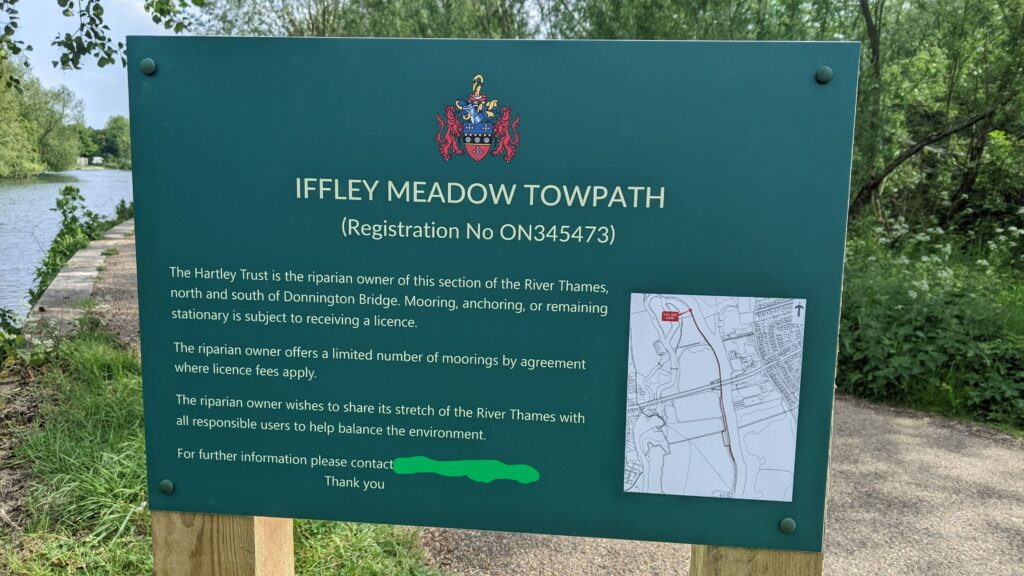
WHAT’S HAPPENING New signage already in place states that mooring, anchoring, or remaining stationary requires a licence in addition to the licence already paid to the river authority. Only a limited number of moorings may be available, and additional fees could apply for continuous occupation.
WHO IS AFFECTED Long-term residents, low-income households, people living with serious illness, and vulnerable members of the river community. For many people, the river is not a lifestyle choice – it is their home.
WHY PEOPLE ARE CONCERNED At a time of rising housing costs and increasing housing insecurity, these changes could reduce access to long-standing mooring spaces, push vulnerable residents out of the area, leave people without secure housing alternatives, reduce access to affordable river living, and undermine an established and historic river community.
WHAT WE ARE ASKING FOR Protection for long-term residents, no forced removal of vulnerable people, fair and transparent consultation with all boaters, and respect for existing river communities.
BOATS ARE HOMES!
WE SUPPORT environmental protection, safe navigation, responsible shared river use, and respectful cooperation between all river users.
WE DO NOT SUPPORT loss of homes, exclusion of vulnerable residents, reduction of social diversity on the river, or the enclosure of historic river commons.
The first thing that needs to be said is this pathis pretty simple #KISS
Affectiveness is trust = speed and power, every action flows from this, so the obvious immediate actions:
Working Groups – activate, not just name. Fill the gaps (Moorings WG is missing people). Each group needs tasks and a timelines. Media, Environment, Legal, Moorings are the four pillars.
Summer visibility campaign. Litter picks were a start – now make them scheduled, social, and photographed. Visible care builds public sympathy faster than arguments.
Public messaging. Posters and leaflets with LINKED to online messaging. Creative subversion of public space – keep it warm and community-facing, not aggressive.
Media outreach – urgent. Contact sympathetic journalists now, before a hostile narrative sets in. Reach Green Party contacts, housing groups, environmental organisations, river users. Positive stories first, defence second.
Offline organising – sensitive coordination stays face-to-face in trusted spaces, not in public chats. Trust meeting prep for small delegations. Agreed talking points only. Anticipate reframing and deflection. Stay calm, stay on message, make clear asks.
Holding the physical space – Committed, confident people physically and socially present on the land
We are walking the horizontal path when groups strengthen: Working Groups coordinate laterally – not waiting for a centre to direct them. Visible action builds public trust, community care as the face of the campaign. Messaging stays simple and consistent, across all groups and channels. Relationships are built offline, where real trust and real decisions live. Institutions are engaged strategically, not reactively
What we’ve had so far is #BLOCKING and more BLOCKING.
The initial process needed to be simple: a short, wide consensus stage to build enough trust and shared direction for people to move together. This happened, but, that process got bogged down by aggressive fluffy and spiky pushing in different directions. What should have taken a short time stretched into months of churn.
The fluffy path kept smoothing over conflict with endless distractions, “feelings”, and disconnected “positive” non activity. The spiky path pushed outcomes through hard positioning and confrontation without the collective grounding needed to make this effective. Both ended up feeding the same result – paralysis of any action at all.
Then, just as when were finally beginning to move toward the next step – actual coordinated action through working groups – the same blocking pattern repeated itself. The working groups, which were there to move us past endless whole-group debate, got dragged backwards into re-running the original consensus arguments on continues repeat. So instead of moving from consensus, to coordination, to action, we got trapped in a loop:
process,
argument,
process again.
The result has been mess of ossification and prevarication for the last three months. At best, people scattered into redundant, uncoordinated fluffy actions of litter picks, isolated messaging, disconnected outreach, and individual goodwill projects with no shared direction or any cumulative strategy.
At worst, individuals entrenched themselves into blocking positions that lacked any collective backing, making attempts at movement all to easy to isolate, dismiss, and weaponise against the needed broader outcomes, dissipate energy instead of concentrating it.
This is the hard truth about horizontal organising that people often avoid saying out loud: a horizontal movement without functioning working groups is not horizontal, it is just flat. And flat structures spread energy equally in all directions until nothing gains traction.
Working groups are there to solve this problem, they are the mechanism that turns shared trust into coordinated action. But instead of empowering them, thus our selves, we allowed the unresolved tensions of the first stage to spill endlessly into the second.
The deeper issue is that people are still acting from the poisoned culture we are supposedly fighting of individual performance over collective strategy, emotional positioning over grounded coordination, symbolic activity over practical outcomes. This “common sense” mess is leading us to the normal #stupidindividualism of identity and ego in conflict with trust and process.
This is why trust matters so much, trust is not fluffy morality, it is practical movement infrastructure. Trust creates speed, coordination, resilience, and collective power. Without it, every decision reopens old arguments, every action fragments, and every process becomes another site of blockage. While meanwhile, the mainstreaming benefits from all of this, they gain time, they shape public narratives uncontested, they observe our fragmentation, and they plan strategically while we churn internally.
The frustrating thing is that the movements already understands the problems, the issue is less lack of understanding. The blocking is active – the inability to stop reproducing the blocking dynamics long enough to move collectively in any direction.
This is the mess we need to compost. Until we create affinity groups to break this cycle, the next three months of this campaign risk looking exactly like the last three months – more shrinking than inflating big meetings full of hot air and scattering outcomes leading to more frustration, and little accumulated power.
The path is actually simple, though not easy – stop reopening the foundation process, empower the working groups, coordinate action, build trust through doing, and focus collective energy where it creates leverage instead of churn. Otherwise, we remain trapped in performative movement culture at best or compleat mess at worst – while the real decisions continue being made elsewhere.
“Being in #Oxford today, I popped into the #OxfordUnion to use a room. Glancing through the term card, it’s absolutely vile – and has been consistently so for the two years I’ve been back in the city. It’s a useful, if deeply dispiriting, exercise in reading the people and place. This is where parts of the next ruling class form their opinions and sharpen their instincts. Judging by what they’re platforming, we are not heading for a good time…”
One useful term about this mess on the #OMN path is “Sophist”. Historically, the Sophists were traveling teachers in Ancient Greece during the 5th and 4th centuries BC. They taught rhetoric, politics, philosophy, and persuasion to the sons of the ruling elite. In many ways, they were the media consultants, communication strategists, and public intellectuals of their time. Their ideas were, and still are, deeply useful to elitist power. Truth was treated not as something to strive for, but as something relative to perspective and circumstance. Protagoras summed this up with the phrase “Man is the measure of all things.”
From this flowed a power-based philosophy – if truth is flexible, then gaining and holding power is less about discovering what is true, and more about learning how to persuade people effectively. Sophists became famous for teaching students how to win arguments regardless of the facts, make “the weaker argument appear stronger,” and manipulate rhetoric and perception for advantage.
This is why philosophers like Socrates and Plato attacked them so fiercely. Classical philosophy, much like the modern scientific ideal, was supposed to be a search for truth, ethics, wisdom, and understanding. The Sophists instead treated philosophy as a competitive social tool for gaining status, influence, and power.
That conflict has never gone away, when we look at the last 40 years, it becomes obvious that we now live inside a revived Sophist culture. Under neoliberal #mainstreaming, politics, media, academia, branding, and online culture have steadily shifted away from questions of shared reality and toward competitive narrative management.
The central questions are no longer what is true? what is just? and what works for the commons? Instead, the “common sense” questions become what performs well? What wins attention? What controls the narrative? What protects the brand? What keeps the funding flowing? And finally, the #stupidindividualism of, what keeps the career safe?
This is the culture the #dotcons perfected, were algorithms reward emotional reaction over understanding, public relations replaces public reasoning, identity replaces grounded collective politics so that communication becomes performance instead of dialogue. Truth becomes aesthetic.
That is in part why so many people now experience a constant feeling of unreality, we are swimming in rhetorical systems optimized not for understanding, but for engagement, manipulation, and market positioning. The modern “post-truth” condition is not accidental, it is the logical outcome of self-interested #postmodern Sophist culture merged with #dotcons platform capitalism feedback loops.
What do we have to balance this, the #OMN path matters because it tries to push against this drift. The goal is not some fantasy of perfect objectivity, humans are always partial, messy, emotional, and socially situated. But there is still a huge difference between collectively searching for grounded truth together, and treating all communication as strategic manipulation. The first builds commons – the second destroys trust. This is why the #4opens matter:
Open process, Open data, Open standards, Open licences.
These are not only technical principles, they are social tools designed to reduce hidden manipulation and rebuild shared trust. Visible process matters because invisible power breeds Sophistry. Open discussion matters because branding culture hides contradictions behind managed messaging. Shared media matters because without public memory, every conversation resets into manipulation and spin.
The danger of endless rhetoric is that a society trapped in Sophist culture loses the ability to act collectively. Everything becomes performance, positioning, optics, career management, and endless dead-end symbolic conflict. Meanwhile the real flowing crises deepen, #climatechaos, enclosure, collapsing infrastructure, rising authoritarianism and the destruction of public life. People are trained to argue endlessly while losing the ability to build together.
This is one of the many reasons the #openweb matters, yes, native #openweb culture is imperfect, messy, and chaotic, but it is also rooted in a stronger relationship between communication and shared reality. People built infrastructure together, they argued, but they also created commons, this spirit still survives in fragments across the #Fediverse path.
We need to use these tools to compost the Sophist mess – not through purity politics or ideological certainty, because that simply creates another closed rhetorical system. The path is to reboot cultures where truth matters again, evidence matters, lived experience matters, dialogue matters, and collective accountability matters. This needs focus because the current system trains exactly the opposite habits.
The #OMN path tries to compost this mess instead of reproducing it – with less rhetorical theater and more grounded process, less manipulation, more trust, less “winning the argument,” more building shared understanding strong enough to support collective action. That is the underlying conflict beneath much of today’s social and political confusion – the struggle between communication as manipulation and communication as commons.
And right now, the commons desperately need rebuilding, and this matters for both the #openweb reboot and the #OxfordBoaters struggle. Both are fundamentally fights over who controls reality, narrative, legitimacy, and public memory. The landowners’ push in Oxford is a small-scale example of modern Sophistry in action. The issue is not simply “facts” about moorings, river access, safety, or management. The battle is over framing of who gets presented as “reasonable,” who gets framed as “problematic,” whose voices count, whose history becomes visible and who’s gets erased. This is how eliteist power works – not only through visible force, but through narrative management, institutional framing, bureaucratic process, selective legitimacy, and most importently control of communication channels.
The boaters to often fail to engage with this power because of the atomized #stupidindividualism that dominates our lives. Yet they are precisely the people with lived experience, practical knowledge, and deep historical connection to the river, metaphor and real.
Instead, the conflict becomes nastier than it needs to be because it shifts away from solving shared problems and toward managing perception. That is modern Sophistry in practice, the same thing happens across the wider internet. The early #openweb was messy, but it was rooted in participation, shared infrastructure, transparency, and collective building. People made websites, forums, federated systems, community media, and open tools together. There were arguments, conflicts, and failures, but there was also visible process and public memory.
The rise of the #dotcons replaced much of this with managed perception systems optimised for engagement, advertising, behavioural manipulation, and social control. Communication shifted from dialogue to performance, from publishing to branding, from communities to audiences, from commons to platforms and from participation to passive consumption. Again, this is Sophistry – communication not for understanding, but for influence and control.
This is why the #OMN path matters. The project is not simply about “better media” or “better activism.” It is about rebuilding the social conditions where grounded collective understanding becomes possible again. For the #openweb reboot this means rebuilding commons infrastructure, restoring public conversation, protecting shared memory, creating transparent governance to resist platform manipulation.
For the #OxfordBoaters struggle this means creating our own media stories to document lived reality, preserving collective memory, make hidden processes visible. This is why the #4opens are practical anti-Sophist tools – Open process counters hidden manipulation – Open data counters selective framing – Open standards counter enclosure – Open licences protect shared social knowledge from privatisation. Without these, power disappears into invisible structures while presenting itself as neutral management.
One of the deepest problems today is that many people now trust polished institutional narratives and #dotcons tools more than messy lived experience. Boaters should already understand this because they directly experience the gap between official language and material reality. The boat struggle and the #openweb struggle are connected because both are about defending commons against enclosure: river commons, communication commons, social commons and democratic commons. And both are being undermined by the same Sophist culture of managed perception, institutional branding, bureaucratic abstraction, and invisible power.
So the task is not simply to “win arguments.” That is the Sophistry trap. The native path we need is rebuild is gthe environments where truth emerge collectively, trust grows, so conflict can become productive instead of performative, and people can act together in the real world.
In short, the fight is not just against bad policies or bad platforms. It is between communication as manipulation and communication as commons. And if we do not consciously rebuild the commons side of that divide, both the rivers and the web will continue disappearing into managed enclosure #KISS
“To put some “commons” structure into this kindness… A path before we knee-jerk criticise members of the community we should make real offers to help repeatedly (x3) in a positive community way. Only then let the “negative” monster of judgment lose to clean up the mess. Focus on clean up first, the “common senses” desire to attack second. What do you think about growing our positive norms (common sense).”
This is the hard bit of any grassroots movement of turning stress, conflict, and exhaustion into actual commons culture instead of mutual destruction. The #openweb and the #oxfordboaters struggle are not separate things, they are the same social problem playing out in different spaces.
What kills communities is rarely only outside pressure. Most often, communities collapse because fear, exhaustion, and insecurity get turned inward. People stop seeing each other as comrades surviving a mess together and start judging each other as obstacles, annoyances, or moral failures.
That path always ends the same way, more, silence, resentment, burnout, fragmentation, and finally removal by outside power. If we don’t make the effort to really/affectively care the mainstream system does not need to crush fragmented communities, it just waits for them to exhaust themselves.
So it should be obverse to us that we need to consciously grow a different “common sense”, a simple common’s principles. An example that lead to this post – Before criticism, make real offers of help. Repeatedly. Publicly. Patiently. Say “Can we help?”, “Can we clean this together?”, “Can we support this person?”, “Can we solve the practical issue first?” Do this once, then again, then again. Only after repeated good-faith attempts fail do we move to much harder, but needed, conversations about responsibility and boundaries.
That flips the current social norm on its head as right now, many people instinctively jump first to blame, moral judgment, public criticism, personal conflict, and social positioning. Which only goes to make more mess with defensive reactions, gossip, claques, leading to more bad feelings and more mess to compost. The original problem becomes secondary to the social fallout, it is the same destructive pattern we see constantly on the #closedweb of people performing morality instead of building trust.
The irony is that many people involved genuinely care. The problem is the social structure they are acting inside. Without commons culture, care easily mutates into aggression under stress. And the stress is real, boat communities are under pressure:
housing pressure,
enforcement pressure,
media pressure,
financial pressure,
environmental pressure,
and constant uncertainty.
Under those conditions, fear spreads quickly, fear then sharpens into suspicion, suspicion turns personal. Then people who are already vulnerable get isolated and targeted. This is why community structure matters. And yes, people HATE talking about structure. Because structure sounds formal, controlling, bureaucratic, or “political”. But avoiding structure does not create freedom, it creates invisible power, unspoken hierarchies, emotional manipulation, and endless circular conflict.
#KISS applies here, keep it simple, by helping first, focus on solutions before judgment, clean up mess before assigning blame, defend community before performing outrage. That does not mean “anything goes”. Commons culture still needs boundaries. But boundaries work far better when they emerge from visible care and collective trust rather than instant punishment culture.
The really uncomfortable truth is in struggling movements, powerless people can sometimes become dangerous to the very people trying to help them. Not because they are evil, but because abandonment, stress, and insecurity distort behaviour. People lash out sideways when they have no power upwards. This is common across activist scenes, precarious housing struggles, and grassroots communities.
Meanwhile, institutions simply wait, then, when the land becomes valuable enough or politically convenient enough, they sweep everyone away. This is exactly why commons defence matters. If we are serious about defending moorings, boat culture, and free community space, then we need social solidarity strong enough to survive internal conflict without collapsing into backstabbing and fragmentation.
That means both “fluffy” and “spiky” people matter, the fluffy crew mediate, support, de-escalate, organise care and hold social trust together. The spiky crew hold boundaries, confront institutions, resist manipulation, refuse displacement to defend space when pressure grows. Without fluffy people, movements become cruel, without spiky people, movements get crushed. We need both, and despite all the mess, there are positive signs.
The growing “shiny summer” feeling among boaters matters. Community meals, litter picks, conversations, mutual support, visible presence on the river – these things are not trivial. They build legitimacy, morale, and collective identity.
That social light is important because a media dark shadow is coming, as pressure increases, traditional media narratives will frame boaters as irresponsible, antisocial, dirty, chaotic, or obstacles to “proper management”. We need to pre-counter that now through visible commons culture: care for the river, care for each other, visible participation, practical action, and stories rooted in lived history. Because this struggle is not new.
The canal system survived before because communities fought for it. The history matters. Books like Narrow Boat and struggles like Battle of Stourbridge remind us that preservation only happened because ordinary people organised collectively and refused to let living waterways be erased. This is the path again now, messy, human, imperfect, but still possible. If we can grow a new “common sense” rooted in mutual aid, patience, practical care, trust and collective defence, then free boating communities might still exist here in ten years.
Hard fight ahead, but people before us already showed that these waterways and our #openweb culture are worth defending.
#Horizontalism is a buzz word, but let’s look at it anyway as it’s the start and the end of this story, a form of social organization based on the #DIY non-hierarchical, democratic path where power is distributed among participants rather than concentrated in leaders. With a working focuses on “prefigurative politics,” to live and act in the present according to the values of the future society you want to create (e.g., equality, mutual aid, and self-management). Think of a honeycomb or network rather than a pyramid:
Assemblies & consensus, were decision-making happens through assemblies to create affinity groups that reach working practical consensus (rather than majority voting), aiming to ensure all voices are heard.
Affective politics is about building relationships based on dignity, trust, and mutual respect rather than mere efficiency.
Direct action & autonomy has a long history, movements, create their own spaces and services (like food and medical care). The “Fluffy” (Constructive) aspects.
Empowerment breaks down the “leader/follower” divide, encouraging everyone to be an active agent of change.
Adaptability, because it is decentralized, it can be resilient and difficult for authority to “headhunt” leaders to stop it. The “Spiky” (Messy/Challenging)
Let’s look at the problems and inefficiencies:
Decision-making by only consensus is very slow and time-consuming, thus the rapid shift to #4open affinity groups to balance this.
Hidden power dynamics is its real problem that sometimes the lack of structure leads to informal hierarchies, where those with more time or charisma dominate, despite the lack of official titles. We have to solve this by sharing responsibility.
Scalability – while great for small, local groups, scaling this path to large, nationwide, or international movements create coordination issues that we need working federated tech projects like the #OMN for.
Sustainability, maintaining the energy required for horizontal assembly, especially when faced with external opposition, can be difficult. But without this path of #Horizontalism as a necessary “corrective” to traditional vertical politics, we don’t and up in any participatory spaces at all.
So on a positive sense it’s an easy – but strongly anti-common sense path – to start the real composting we need. On a negative sense its mess and more mess to wade through, alongside the mainstreaming mess flooding in… it’s all mess might as well get used to this 😉
Freedoms are not given, they are taken. — Peter Kropotkin
This post comes from real life experience with #Oxfordboaters, but I am going to address it as a tech problem as it is the same mess we need to work on composting in our social tech projects.
People don’t actually hate structure, what they tend to resist is visible structure – the kind we need to make visible so we can see, question, and challenge. At the same time, they’re always perfectly comfortable inside invisible structures – because they feel natural, neutral and just “the way things are.” This is the blinded social mess we’ve inherited and now need to focus on composting for rebalancing.
Invisible structures are things like platform algorithms shaping what we see, informal hierarchies deciding whose voice carries and cultural norms that reward some behaviour and sideline others. Because these aren’t named or surfaced, they don’t feel like control, even when they are. That’s why the #dotcons path works so well, controlling power is everywhere, but hard to point at.
Visible structures, on the other hand – mythos, traditions, governance, open processes – feel uncomfortable. They can look rigid, political, or “too much”, but they’re also the only place where accountability can actually exist. If you can see the structure, you can change it.
This is the tension at the heart of the current #openweb mess we need to compost. When we avoid visible structure, we don’t get freedom – we just default back to hidden power of informal gatekeeping replacing explicit governance, were influence concentrates quietly, the same “common sense” patterns reappear, just harder to challenge.
So if we’re serious about #OMN, we need to flip this instinct by making structure visible, keeping it simple (#KISS), keeping it open (#4opens) and accept the discomfort that comes with that, because that discomfort is where real participation lives.
The work isn’t to eliminate structure – it’s to surface it, soften it, and make it accountable. That’s the composting process, taking the invisible, unspoken mess and turning it into something we can actually grow from.
If we don’t do this, we just keep rebuilding the same hidden systems we say we’re trying to escape.
“Working groups have one job: get things done. They don’t need permission for every step — they need to report openly, consult when it affects others, and hand back decisions that are too big for them to own alone. That’s it. That’s the whole structure.”
People who push vertical common sense over horizontal process are absolute prats and sadly all to normal. But they’re not just individual “prats”, there our prats – they’re the default outcome of how most people have been trained to think and act. Vertical thinking feels natural because it’s everywhere. Schools, workplaces, government, media, all teach the same pattern – someone decides, others follow, outcomes are judged quickly and conflict is suppressed or escalated.
So when people enter horizontal spaces – like a Fediverse project, a grassroots group, or something like #Oxfordboaters – they don’t suddenly become different people, they bring that invisible conditioning with them. That’s why you get the messy behaviour we need to compost – pushing for quick decisions instead of slow consensus, defaulting to authority (“someone should just decide this”), treating disagreement as a problem to shut down, not work through leading to valuing efficiency overtrust.
From a #OMN perspective, this isn’t an edge case, it’s the mainstreaming pressure coming into horizontal paths. And here’s the uncomfortable bit – if you don’t design for this, vertical logic will always win, not because it’s better, but because it’s simpler, faster, and culturally reinforced.
So what’s actually going on (under the hood) is that horizontal process is hard because it depends on things most common sense paths ignore – trust (which takes time), shared context (which is uneven), emotional labour (which is invisible) and conflict mediation (which is messy). Vertical “common sense” cuts through all that by skipping the hard parts, that’s why people tend to fall back to it, especially under stress.
The mistake we can make in grassroots paths – that calling people out as “the problem” doesn’t fix this, it just creates another loop of conflict. Because they are the system we’re trying to move beyond, if you push too hard against them, you often just reinforce the behaviour they double down on control, others retreat, trust collapses. It’s a normal problem pattern.
The useful shift (#OMN path) is instead of “these people are wrecking things” we try “this behaviour needs mediating structurally”. That leads to different responses, so ideas for ways to handle this mess making:
Slow the decision layer down as vertical actors thrive on speed, so you build in friction – no instant decisions on complex issues, require visible discussion before action, document context before outcomes. Not to block – but to force process.
Separate spaces (this is key). You need different environments for different modes: fast chat → messy, reactive, low trust – working groups → focused, semi-trusted – face-to-face (“whisper fire”) → high trust. Then don’t let chat dictate outcomes, because chat almost always amplifies vertical behaviour.
Make process visible and normal, as people push vertical solutions when they can’t see the process working. So write down how decisions happen, show where input goes, reflect outcomes back to the group. This reduces the urge to “just take control”.
Route conflict, don’t suppress it, vertical systems suppress or explode conflict – Horizontal systems need to hold it. That means acknowledging disagreement early, moving heated issues out of public chat to use smaller trust groups to work through tension.
Build trust anchors, without trust, horizontal systems collapse into power struggles. So you need consistent people doing consistent work, small wins that build confidence, repeated interaction over time. Trust isn’t declared – it accumulates.
The blunt truth is we won’t get rid of vertical behaviour, ever. What you can do is – stop it from dominating the system, that’s the real job. The #KISS path is people pushing vertical “common sense” aren’t unusual, they’re normal. If you don’t design process to handle that, horizontal projects will slowly turn vertical, so the goal isn’t to fight those people. It’s to build structures where their instincts don’t take over, and where trust, not control, becomes the thing that actually works.
We’re not dealing with abstract “community dynamics.” we’re dealing with live-aboard boaters under pressure, rowers, landowners, council, Environment Agency and scarcity of space (moorings). This in the end is about visibility vs invisibility on the river, so friction isn’t theoretical – it’s structural. Let’s look at the conflict patterns we’re seeing:
Back-channel poisoning (#whispers#splitting) “X group are the problem”, “They’ve already decided this”, “Don’t trust them”. This happens in WhatsApp groups, towpath chats and private cliques. The effect is fragmenting the boating community before anything even reaches #4opens process.
Representation fights (#whospeaks) “Who speaks for boaters?”, “Who gave them authority?” or “That meeting wasn’t legitimate” The effect: is paralysis + resentment + delegitimisation of any action at all.
Tone wars masking real issues (#signal vs #noise). Personal digs, passive-aggressive comments with people reacting to how things are said, not what is said. The effect is real issues (mooring policy, enforcement, access) gets buried under #stupidindividualism social mess.
Burnout + drop-off (#crewdrain). Some people doing everything while others sniping from the sidelines. The effect is core organisers get exhausted → vacuum → more mess.
So how do we compost this?
Pull whispers into the open (#openprocess#visibility). Instead of trying to stop gossip (you won’t) create simple habits like “If it matters, bring it to the shared space”, regular open threads / meetings where anything can be raised, even messy, even uncomfortable. Outcome is less shadow conflict, more visible disagreement.
Create a “good enough” shared space (#KISS#lowbarrier) Not a perfect system, just something consistent like a public website (open collective) and hashtag use like #oxfordboaters. Where updates happen, disagreements are visible and decisions are logged (lightly). Path is #KISS, if it didn’t happen here, it’s not part of collective decision-making.
Keep grounding in actual doing (#praxis#riverlife). Don’t let it become a talking shop, anchor everything in face to face fire towpath meetings, shared work days (clean-ups, maintenance) and direct engagement with river issues. The outcome is people relate through doing, not just arguing.
Add lightweight “composting moments” (#retrospective#learning). After anything messy (meeting, conflict, decision). Do a quick loop, what worked, what didn’t, what do we try next. Keep it short, no essays. Outcome is tension gets processed before it hardens into factions.
Set soft boundaries (protect the commons), (#boundaries#collectivecare). If someone consistently derails, attacks and refuses shared process. You don’t need a big drama, simply reduce engagement, keep process moving without them dominating. As the group will survive without needing perfect agreement. What this feels like when it’s working is not ONLY harmony, not in any way formal consensus.
It feels like people disagree openly, as some conversations are just messy, but things still move forward, decisions happen (even if imperfectly), no single person controls the narrative. And crucially conflict becomes part of the process, not a blocker to it, what failure looks like (so you can spot it early)- decisions drifting back into private channels, the same 2–3 people becoming permanent spokespeople or “we already talked about this” with no visible record, people disengaging instead of arguing.
The uncomfortable truth is It’s not about removing difficult personalities, conflicting interests or structural pressure from authorities. What we can do is stop those things from tearing the group apart.
In every activist space, grassroots project, every loose collective, you get people who bring mess in the wrong way – sniping, backbiting, constant undermining. Call it ego, trauma, status games, burnout… it doesn’t matter. What matters is, this friction is normal, it’s part of the #mess we can’t avoid. The mistake is thinking we can eliminate it. You can’t, but you can design for it. That’s where the #OMN path is useful: don’t try to “fix the people,” build processes that compost the behaviour instead of letting it rot the group.
In the big picture, what we need to actively compost is that anything that starts as a real idea – community, freedom, or independence – gets picked up, processed, and turned into something hollow. Not just by “the other side,” but by the entire modern media and tech machine. Good ideas go in, slogans come out, you’ve seen it: “freedom” becomes branding, “community” becomes marketing and recently “sovereignty” becomes a funding pitch.
This is the trap, when ideas get flattened into talking points, they stop doing anything real. They become easy to repeat, to weaponise and impossible to build with. And once that happens, it doesn’t matter who started the idea, it’s no longer useful. So the question isn’t only left vs right. It’s how do you keep ideas grounded so they can’t be hijacked and sold back to us?
One answer is structure, the #4opens approach is simple, a way to stop things being quietly twisted behind closed doors. If you can see how something works, it’s harder to fake, if you can take part, it’s harder to capture. The other answer is mess (the good kind), the #OMN hashtag approach doesn’t try to clean everything up into a single strait message. It keeps things local, contextual, rough around the edges. That “mess” is protection, because systems that are too neat, too polished, too uniform… are exactly the ones that get captured, repackaged, and pushed back at you.
In plain terms if an idea can be turned into a neat slogan, it can be taken over. If it stays tied to real people, real places, and real processes, it’s much harder to fake. This is the difference between something you can live with and something that gets sold to you. Call it compost if you like – You break things down, keep what’s real, and grow from that.
As this essay is about the internet, lets look at some of the players, an example – Tactical Tech is a Berlin-based nonprofit that’s been around since the early 2000s, working on tech, activism, media, and education. Their core thing is:
building digital literacy + critical thinking tools
producing toolkits, exhibitions, and guides (like The Glass Room, Data Detox Kit)
working with civil society orgs, journalists, activists, educators
focusing on how tech shapes power, politics, and society
They’re not grassroots infrastructure builders, they’re capacity builders and narrative shapers, working through partnership networks, funding, and “field building” – the classic #NGO patterns.
In #OMN view they sit squarely in what we call the #NGO / #mainstreaming layer of the #openweb story. In that they don’t live in the soil (infrastructure, protocols, messy grassroots tools). They build the interpretation layer (how people think about tech). They push this into narratives + toolkits that travel across institutions. That’s why they’ve lasted 20+ years – they’re adaptable mediators, not rooted projects.
So why dose it feels like “they create mess”? The friction comes from this pattern the balance of abstraction over grounding in that they translate messy realities into frameworks, exhibitions and “kits”. This flatten lived complexity into safer portable concepts – in to language production. They are part of the ecosystem that generates terms like digital literacy, resilience and sovereignty (adjacent space). These become floating signifies – useful for funding and policy, messy in practice.
They collaborate with foundations, governments and large NGOs. So their outputs are shaped to be fundable, presentable and non-threatening enough to circulate. That’s where the “compost” instinct kicks in – because this layer detaches language from practice.
But it’s not just negative, if were honest (and it’s worth being), groups like this do some real things. They’ve help millions engage “critically” with tech issues to make complex problems accessible (privacy, AI, influence systems). They might create bridges between activists, educators, and institutions. So they’re not empty, they’re just not where the roots are.
The real tension, the problem isn’t that they exist, it’s where they sit in the ecology. They are compost producers, but they mistake themselves for gardeners. Or more sharply
They circulate meaning rather than anchor it
They mediate change rather than enact it
They stabilize narratives that should sometimes stay unstable
So yes – they create “mess” …but it’s a different kind of mess than grassroots paths. Grassroots mess = fertile, emergent – #NGO mess = abstracted, packaged, drifting.
Projects like Tactical Tech can be a part of the same ecosystem we need – but they sit one layer up from where change actually happens. Their outputs duse need composting because they generalize lived practice into frameworks, turn struggle into language and then feed that language back into systems which tends to blunt its edges.
The task isn’t only to reject them, it’s to ground what they produce back into lived, messy, trust-based practice – the bit they can’t really do. Once you see this pattern, a lot of the confusion in the #openweb space makes sense.
Most confusion comes from people mixing these layers up, Here are more examples of this thinking and working:
Tactical Tech – Layer: Narrative / NGO Role: Translator of tech → society What they do (in practice) • Turn complex tech issues into stories, exhibitions, toolkits • Shape how civil society talks about tech • Build “awareness” rather than infrastructure
In #OMN terms they produce processable compost input, but often pre-packaged into neat bags. This problem pattern flattens messy reality into clean narratives to encourages passive understanding over active building. So what is there value? Good at onboarding people, opens doors into the conversation. But risk is people stop at understanding instead of doing.
Mozilla Foundation – Layer: Narrative + Funding + Soft Infrastructure Role: Bridge between grassroots + institutions What they do is fund projects to run advocacy campaigns (AI, privacy, etc.) that maintains a symbolic connection to the #openweb. In #OMN terms they gate keep legitimacy to define what is “acceptable open”. This is a problem pattern because of NGO gravity → safe, fundable ideas win, radical edges softened into “trustworthy AI” and “ethical tech”. So what is the value? Real money → keeps projects alive and visibility → amplifies issues. The risk is common sense #mainstreaming capture that shapes agenda toward what institutions tolerate. Makeing only more mess to compost.
Open Society Foundation – Layer: Power / Funding Role: Macro-level agenda shaping What they do is fund civil society globally to influence policy, rights frameworks, governance. In #OMN terms its a part of the liberal wing of the #deathcult. Problem being funding creates dependency, agenda alignment when movements adapt to grant logic. Value is it enables work that wouldn’t exist otherwise to support rights-based infrastructure. The risk is it turns movements into professionalised NGOs and risk-averse actors.
Sovereign Tech Agency – Layer: State / Infrastructure funding Role: Stabiliser of critical open tech What they do is fund maintenance of open-source infrastructure with a focus on “digital sovereignty” In #OMN terms they are trying to support the infrastructure layer by using state-language framing. Its a problem pattern as language like “sovereignty” pulls toward state/control logic and away from commons/trust logic. What is the value? It pays for the essential work to keeps #FOSS tools alive. But it risks reframes the #openweb as national infrastructure instead of shared commons.
NLnet Foundation – Layer: Infrastructure funding (closer to soil) Role: Rare “good compost feeder” What they do is fund small, weird, early-stage open projects with minimal interference. In #OMN terms one of the few funding bodies that, could in theory not over-shape outputs to respect messy innovation. But the are problem pattern of limited scaling and still within funding constraints, Value is they enables actual building and possibly supports non-mainstream ideas. The risk is the normal that they still are pulled into NGO gravity over time.
Electronic Frontier Foundation – Layer: Advocacy / Legal Role: Defensive shield What they do – Legal battles, policy advocacy and civil liberties protection. In #OMN terms they protects space for the #openweb to exist. But the are problem patterns, the focus on defence, not creation that only works inside existing legal frameworks. Value they are absolutely necessary to stops things getting worse. The risk is they doesn’t build alternatives = slowing decline, not transformation.
The pattern, is all these orgs sit above the soil. They translate, fund, shape, defend. But they rarely grow rooted communities of sustaining messy trust networks or live with the consequences. So why dose this create “mess”? it is because language drifts away from practice, Ideas come and go: “digital sovereignty”, “trustworthy AI” or “resilience”. These sound solid, but float free of lived reality, then incentives bend behaviour. Funding → reporting → metrics → simplification is when mess gets cleaned up too early or packaged instead of composted
Here the #geekproblem and #NGO problem merge, you get geeks wanting to tidy systems and #NGOs wanting to tidy narratives. The result is generally bad, over-simplified systems + over-simplified stories. The #OMN position is clear and grounded, we don’t reject these orgs, we place them correctly: Useful → yes, Central → no and ground truth → never.
The simple way to say this (#KISS) These organizations sometimes help explain, fund, and defend the world, but they do not remake it. If we mistake them for the source of change, we end up with only better words and worse reality. They have no real role in the next stage, a practical progression from “mapping the mess” → “building something that can survive it”.
To make anything work we need to stop confusing layers (cognitive clarity) – Before anything technical, the path we walk needs to never treat NGO / funding / advocacy layer as if it is THE system. This is the correction we need, in #OMN terms:
NGOs ≠ infrastructure
funding ≠ governance
narratives ≠ reality
protocols ≠ politics
If we can balance this, the outcome the people trying to “fix the web” by only better policy decks, better ethical frameworks, better terminology (like “digital sovereignty”) to start asking “What is actually being built, and by whom?”
How to do this? we need to build the soil layer first (not apps, not orgs) as this is where most projects fail. The soil layer is trust groups, working collectives, repeated interaction spaces and small-scale publishing + coordination. In #OMN framing #indymediaback style groups, #OGB governance spaces and local + affinity networks. If it doesn’t survive social breakdown, it isn’t infrastructure.
Define “failure as feature” systems, is one of the strongest #OMN ideas. Instead of perfect systems that must not break – We grow systems that fail into human repair. What that means in practice is moderation doesn’t escalate → it returns to people, governance doesn’t lock → it re-opens, conflicts don’t freeze → they surface into trust spaces. The path is breakage need to increase human contact, not reduce it, but this directly counters the platform logic (#dotcons), #NGO sanitisation logic and geek “perfect system” logic.
On this path we need to build mediation layers (not control layers). This is where #OGB thinking fits. Mediation layer ≠ governance authority, is translation between groups, conflict visibility, trust routing and decision recording (not decision ownership). We don’t centralise power – we route attention. This is the difference between bureaucracy (control) and federation (flow).
Define “trust as infrastructure” this is the “missing” technical core. Most systems assume identity, verification and thus control. #OMN flips this to assume partial trust, local trust, evolving trust and broken trust. So native systems must record trust signals (lightweight) to allow contradiction, allow decay and allow repair. Trust is not a certificate, it is a living social flow.
Explicitly resist “narrative capture”. This is where problem orgs like Tactical Tech / Mozilla / OSF become relevant. The patterns to avoid – messy reality emerges, #NGO translates it, funding aligns around translation and original practice disappears. #OMN counter-path is if it can be fully explained in a funding report, it is likely already dying. So we maintain ambiguity, partial documentation and lived process > polished narrative.
Build dual-stack reality (critical stage). This is essential, you always run:
Native stack (real community power)
trust networks
local groups
Fediverse-native tooling
#4opens processes
Interface stack ( individual survival layer)
NGO language when needed
funding language when needed
policy translation when needed
The path is never confuse the interface with the infrastructure. So what are composting failures about? Instead of discarding failed projects, rewriting history and blaming actors, we need to explicitly turn failure into reusable material, compost includes:
broken governance attempts
failed funding models
collapsed communities
conflict histories
Output:
patterns
lessons
reused structures
new trust layers
This is where the “mess is valuable” idea becomes operational.
Anti-capture safeguards – Every healthy #OMN system needs resistance to #NGO capture, funding capture, geek capture and ideological capture. Mechanisms:
lose roles
refuse most permanent authority
keep systems reversible
enforce transparency (#4opens)
limit scale before complexity dominates
The long game is federated commons, at scale, the goal is not a platforms, it is many overlapping, messy, partially connected commons. Not one #Fediverse or one governance model, not one truth layer. But overlapping trust regions, with shared protocols and local autonomy to weak global coupling.
The summary (#KISS version). If you compress all of this:
Stop confusing explanation with infrastructure
Build trust-first “soil systems”
Design failure that returns to people
Keep governance as mediation, not control
Treat trust as a living system
Resist narrative capture
Run dual-stack (native + interface)
Compost failure, don’t hide it
Prevent capture structurally, not morally
Scale as messy federated commons, not platforms
The shift is from “understanding the system” → to “acting in a small part of it without being captured” This means choosing a river, a locality, a topic, or a community and committing to working inside its mess without trying to abstract it into a universal model too early. #OMN path is if it doesn’t exist in a place, it doesn’t exist at all. This is where a lot of NGO / narrative layer work fails – it stays placeless.
Build “thin infrastructure”, the #OMN correction to both NGO thinking and geek thinking is that wrong instinct is to build full systems, design complete governance models, define everything upfront. #OMN instinct is to build the minimum structure that lets humans keep adjusting it together. Thin infrastructure = simple publishing tools, basic coordination spaces, visible decision trails and lightweight identity/trust signals. Nothing heavy, nothing “final”, because heavy systems attract control, thin systems attract use.
Make conflict visible, not resolved. This is where #NGO culture diverges hardest from native systems. NGO pattern is resolveing conflict, smooth disagreement and force consensus narrative. #OMN pattern is surface conflict so it can be worked with socially, why, because in real networks conflict is information, disagreement is structure and tension is direction. The compost is the rot in conflict, buried conflict always returns, festers, later as system failure.
Build “trust scaffolding”, not trust systems. This is subtle but crucial, you cannot design trust, you can only create conditions where trust can form and where it can fail safely. Trust scaffolding includes repeated interaction spaces, low-stakes collaboration, visible contribution histories and reversible decisions with clear exit paths. The path to trust is an emergent behaviour of stable mess, not a product of design. This directly opposes #mainstreaming ideas of identity systems, certification systems and #techbro reputation scoring systems.
We need to explicitly reject “clean governance” as this is where most of well-meaning systems collapse. The trap is people try to build clean voting systems, formal representation and universal rule sets. But in messy reality governance is not clean – it is negotiated, situated, and constantly patched. #OMN path, instead of clean governance, we grow layered responsibility, overlapping legitimacy with temporary authority and visible disagreement. Think of governance as weather, not architecture.
Anti-scale principles is very important as most systems fail because they assume more scale = more success The #OMN flips this with a path of scale should be resisted until coordination proves it is needed. Because scale introduces abstraction, funding dependency, narrative capture, bureaucratic drift. So instead we grow horizontally first, federate slowly and allow divergence to tolerate inconsistency.
Build “failure memory” as infrastructure, its one of the most underused ideas in this whole space. Most ecosystems forget failures, hide conflict history and rewrite past attempts. #OMN path is that failure is the most valuable dataset. So you build public failure logs, conflict histories and abandoned project archives with “why this didn’t work” notes. Not as shame, but as compost, because systems that cannot remember failure are forced to repeat it.
Soil layer (real life)
trust groups lived coordination actual practice
Infrastructure layer
tools protocols servers
Mediation layer
conflict handling coordination routing
Narrative layer
NGOs funding language public explanation
Power layer
states capital platforms
On this working group path no layer is allowed to pretend it is another layer, a core anti-confusion mechanism.
So what is the actual #OMN outcomes, when this all works, you don’t get a platform, a movement or a unified system. You get a living field of partially connected commons that can adapt without central control, yes it looks messy from outside – and that’s correct. Because coherence is not the goal, survivability and humain flourishing is. lets reduce the whole thing to operational clarity – Build small, stay local. Keep systems thin, let conflict stay visible, treat trust as emergent. Avoid clean narratives, resist scale, remember failure. Separate layers to never centralise experimentation into control.
That’s where theory finally has to become dirt-under-the-fingernails practice, where the abstraction has to survive contact with reality. Lets look at some example work flows, different angles of the same living loop.
What a real example #OMN#oxfordboaters river project looks like day-to-day. The river “communerty” is not in anyway an organisation. It’s a persistent coordination low affinity around a real place/problem/ecology (a river in this case). if we had a seed of the tech we need working, daily reality looks like this: Morning layer (signal gathering) when people notice things:
water quality change
planning notices
blocked access points
local council updates
photos from walks
stories from anglers / walkers / residents
This is not formal reporting, It’s messy input that lands in:
Fediverse posts
local group chats
simple shared logs
Mid layer (sensemaking) is when a few people (DIY, not fixed) do:
cluster reports (“this looks like sewage spike again”)
link patterns (“this happened upstream last month”)
No authority – just attention shaping (or focalising).
Action layer (light coordination) is made up of small, reversible actions:
someone emails council
someone visits site
someone talks to landowner
someone checks data source
someone posts explainer thread
Crucially no one needs permission to act, only visibility into what others are doing
Weekly rhythm (social compression) is a loose gathering (online or physical):
“what changed?”
“what patterns are forming?”
“what are we missing?”
“what broke this week?”
Light authority, rather focused on shared memory and process. The river project is not a formal group. It is a shared affinity flow. That’s why it works (when it works) – it stays situated, porous, and continuously re-formed.
Lets look at a second example, how #OGB decision flows actually operate, it is not voting or governance in the institutional sense. It is a routing system for trust, conflict, and attention.
Step 1 – Issue appears, something surfaces
conflict
proposal
blockage
uncertainty
It is posted publicly (default open).
Step 2 – Context attaches, people attach:
experience (“this happened before”)
local knowledge
technical input
historical memory
disagreement
Important – contradiction is allowed and expected
Step 3 – Clustering happens (not authority). Instead of leaders deciding clusters of alignment form naturally, disagreement clusters remain visible and minority views persist. Think weather systems, not committees
Step 4 – Decision emerges as a path, not a vote – a “decision” is a visible “common” path of action with acknowledged alternatives still open. So nothing is deleted, nothing is finalised, nothing is owned
Step 5 – Follow-through is voluntary, but visible. People act based on trust in community, reasoning based on proximity and capacity. And they report back into the same system. The native path is the #OGB doesn’t only decide things – it makes decision pressure visible.
What a Fediverse-native governance loop feels like is where it becomes felt reality rather than structure. It feels like slow public thinking, less meetings, less agendas. More like threads that evolve over days, posts that accumulate context and replies that become infrastructure
Persistent memory in the stream, nothing disappears old decisions are still linkable, conflict history is visible and prior attempts remain accessible. So governance is navigation through lived memory. Weak coordination, strong transparency as no one is forced to agree. But disagreement is visible, reasoning is public and action is observable. This produces accountability without authority to grow temporary gravity centres.
Certain threads or instances become coordination hubs, discussion anchors and action nodes. But they fade naturally – nothing, but memmery is permanent. It feels like thinking in public with other people who sometimes act on what emerges. Not bureaucracy, not formal consensus culture. More like shared situational awareness that occasionally crystallises into action.
OMN / #OGB model is: surface → act → observe → remember → re-surface, it is governance more as continuous ecological process, less a fixed control structure.
Think that is anufe for today, please ask in comments to help finish this.
What we are doing at #Oxfordboaters is simple, that’s the uncomfortable truth for people who see this as to complex. The core idea – people coming together around shared concerns, communicating openly, and acting collectively – is about as old as human society. There’s nothing technically complex about it, nothing conceptually obscure. Yet in practice, it feels almost impossible.
So where does this friction come from? It’s not the goal, it’s not even the surface the process, most of the time, it’s the people – and, more importantly, the tools and cultures we bring with us. The path we need is simplicity underneath – #Oxfordboaters is doing three things:
Sharing information about what’s happening
Building a shared understanding of that information
Acting together based on that understanding
That’s it, strip away the noise, and that’s the whole system. It’s classic #actavisam: publish, discuss, act. You don’t need layers of management theory or complex governance frameworks to make that work. You need #KISS trust, visibility, and participation.
But we rarely get to operate at this level of clarity, the difficulty creeps in as people bring baggage – Everyone arrives with habits shaped by the #mainstreaming worshipping of the #deathcult that leads to the imposing of unthinking expectation of hierarchy (“who’s in charge?”) and fear of speaking openly (“will this be used against me?”) leading to the desire for control (“we need to manage the message”) this “common sense” mess leads to focus on avoidance of conflict (“let’s keep it positive and not rock the boat”).
These aren’t individual personal failings, they’re social learned behaviours, that distort simple processes into complicated ones. This mess is amplified by a second “common sense” problem, that the tools we use shape behaviour, the #dotcons platforms we “use” default push us in particular mess making directions:
Chat tools fragment conversations into noise
Social media rewards reaction over reflection
Instead of supporting collective clarity, these default tools amplify confusion, they make it harder to see what’s actually going on, and thus easier for misunderstandings to spiral. One tool we have is process but is it a tool or weapon? Process can either help people work together, or it can be used to block this work. Some processes are designed to:
Encourage participation
Make decisions visible
Build shared ownership
Others – often unintentionally – end up:
Slowing everything down
Creating gatekeepers
Hiding power behind “procedure”
You can see this easily when something urgent comes up – healthy process helps people respond quickly and collectively, were a broken one turns into endless discussion, deferral, and inaction. Same situation, same people – different outcome depending on the process.
At #Oxfordboaters, the work itself is straightforward: There’s an issue affecting the river community – People gather information about it – That information is shared – A response is organised. But what makes it hard? People are different – Disagreements about tone (fluffy vs spiky), uncertainty about who should act and fragmented communication across platforms leading to #blocking of action.
None of these are about the actual goal, they’re all about how people relate to each other and the structures they’re working within. The illusion of complexity is one of the biggest traps – mistaking this friction for complexity. When something feels hard, we assume the solution is to add more structure, more meetings, more rules, more #dotcons tools. But this “common sense” push to often adds another layer of blockage, it treats the symptoms, not the cause.
The reality is harsher the system is simple, but we as a community are messy. So how can we work better in this mess? The answer isn’t to eliminate the mess – that’s impossible. It’s to design processes that work with it instead of work against it. That means accepting disagreement as normal, making conflict visible rather than suppressing it. Keeping structures lightweight and adaptable, in the end it’s about prioritising clarity over control. In #OMN terms, this is where the #4opens come in:
Open data → everyone can see what’s happening
Open process → decisions aren’t hidden
Open source → tools can be adapted
Open standards → systems interconnect
These don’t remove human complexity, but they can mediate it from becoming opaque and blocking. So what do we mean by blocking vs enabling. You can tell the health of a project by a simple test – Does the process help people act, or stop them from acting? If people feel empowered to contribute → the process is working. Hesitant, confused, or sidelined → the process is blocking.
At #Oxfordboaters, like many grassroots efforts, both dynamics exist at the same time. That’s normal. The work is to shift the balance toward enabling. So the hard truth is this the challenge isn’t building the perfect system, it’s growing the relationships that allow the #4opens path to function. That’s slower, messier, and far less comfortable than designing a neat process diagram, but it’s the only thing that actually works.
Keep it simple (#KISS) – when things get messy, the instinct is to add complexity. The better move is usually the opposite by striping things back to focus on what actually needs to happen. Make it easier for people to take part, because underneath all the noise, the work is still simple. People, talking to each other, deciding to act. Everything else is either helping that – or getting in the way.
From the towpath at dawn to moonlit moorings at dusk, Oxford’s boating community is not a curiosity, it’s part of the city’s living fabric. Generations of people have chosen to make their homes on the water, creating a culture rooted in community, care, and independence. This is a quieter Oxford, rarely captured in guidebooks but felt by anyone who walks the river or canal: a human-scale world of shared tea, passing conversations, and everyday presence. In a city shaped by wealth and exclusion, the river remains one of the few places where real social diversity still exists, where people live side by side not because of status, but because they’ve chosen a different way of life.
This matters because the boating community doesn’t just live on the river, it sustains it. Their daily presence keeps the towpath safer, more welcoming, and alive. They act as informal stewards, noticing changes in the water, caring for the banks, and maintaining a relationship with the environment that no institution can replicate. Remove this community, and you don’t just lose homes, you lose Oxford’s character, its openness, its lived connection to the river. The waterway becomes quieter, more managed, less human. What looks, from a distance, like a marginal issue is in central, a question of whether #Oxford remains a living city, or becomes more controlled, polished and diminished.
Exchange CRT for EA its the same story.
How can we protect that space?
We want to protect a shared space, keep the river livable, and organize ourselves to have a voice. None of that is technically complicated, the difficulty isn’t the goal, it’s the people, and the tools we use to try and work together. No matter what process we choose, it always comes back to the people who make it work, or the people make it stall. Some processes recognise this and work with human reality – trust, conflict, misunderstanding, ego, care. Other processes ignore it, and end up being used (consciously or not) as blocking. Let’s look at a few grounded examples of this.
We’ve already seen this clearly, in a face-to-face meeting (the “whispering fire”), trust rises fast. People read each other, soften, find common ground. You can go from 50% to 70–90% trust in a couple of hours. Move the same conversation to online chat, and trust collapses. Tone gets lost, small disagreements escalate, and people start pulling things apart. You drop to 20–30% trust, sometimes lower. Completely different outcomes, it’s not a failure of individuals, it’s a mismatch between tools and human communication.
The website vs the chat is another clear split. The website (or any structured space) holds higher trust, but lower participation. The chat holds high participation, but low trust – knowledge isn’t captured properly, decisions aren’t visible and new people can’t easily get up to speed. Result: constant rehashing, frustration, and burnout leading to momentum loss.
There’s a temptation to design the perfect structure with formal agendas, strict procedures and detailed governance. On paper, this looks like progress, in practice, it becomes a brake. As people use “hard” process to delay decisions (“we need another meeting”), avoid responsibility (“that’s not my role”) and assert control (“this isn’t the proper channel”). Instead of enabling action, the process becomes a gatekeeper, leading to the same basic issues resurface again and again. Not because people are stupid, because the basic social fabric isn’t being maintained.
Processes that work can see this cycle and design around it so as not to keep restarting from zero. So what actually works? The path isn’t finding a “perfect” process, it’s choosing #4opens processes that fit people as they are. That usually means prioritising face-to-face (or close equivalents) for trust building. Keeping structures simple (#KISS) so they don’t become tools of control. Capturing shared knowledge clearly (FAQ, summaries, decisions). Accepting mess as normal, but making sure it composts rather than festers. Balancing fluffy and spiky – you need both to move forward
And most importantly recognizing that process is never neutral, every structure we put in place will either help people collaborate or give them ways to block each other. Often both at the same time. So yes, what #Oxfordboaters is trying to do is on the surface easy, but what makes it hard is human complexity, mismatched tools and blinded pushing processes that don’t align with either. When we get those bits even slightly more right, everything else becomes possible.
If we don’t, even the simplest goals turn into a grind, that’s the real work.
People fight against or/and ignore the #KISS (Keep It Simple Stupid) approach to social movements because simplicity can expose power. Complexity gives cover, making control look like competence. When paths are simple and transparent, everyone can see who’s blocking, who’s hoarding, who’s acting in bad faith. Many “experts” and institutions are emotionally and professionally invested in keeping things complicated as simplicity threatens their authority and their identity.
As second step in change and challenge we need to face some uncomfortable roots: fear of death, fear of the “other.” Fear, as the man said, is the mind killer. Too few people trying to change the world bother to look at the psychological ground they’re standing on. Our social mess isn’t random, it grows from somewhere. If we don’t deal with the roots, we just keep trimming the leaves and wondering why the weeds grow back.
At the centre of this is trust, it is what makes social change possible. It’s the messy, ongoing tussle between horizontal and vertical forces, between collective process and imposed control. Take Oxford boaters as a lived example, this is observational, based on 40 years of doing this kind of work.
Face-to-face meetings? They start at maybe 50% trust and can rise to 70% without too much trouble. That’s because the people who show up are self-selecting – a mix of fluffy and spiky, but open enough to engage. You get debate, but also movement.
Then we go back online were trust drops fast – down to 20–30%, sometimes even into negative territory. That becomes the dominant tone as things splinter. Work that was built collaboratively offline gets pulled apart, the focus doesn’t hold.
On the open collective website, trust is actually high – but usage is low, again, self-selecting. So rollout stalls, no shared space, no shared understanding, no momentum.
So we call another face-to-face, the “whisper fire.” Trust shoots up – 90%, easy. People align, decisions get made, it feels like progress. But then everyone goes home, the next day? Momentum evaporates, as few people feel responsible for carrying things forward. And very quickly, we slide back into the low-trust dynamics of online chat.
Meanwhile, the group has grown, more people from offline outreach and leafleting. But the website is still stalled, so there’s nowhere to hold shared knowledge. We keep re-arguing basics, we don’t even have a solid FAQ. Trust drops again.
Next meeting: bigger pool, smaller turnout. Trust starts at near zero, the first half is rough – people filtering out, clashing, posturing. Slowly, some shared ground emerges and trust crawls up to maybe 50% but still, nothing concrete gets resolved. A few working groups are seeded. Environment sort of functions. Media splinters from the start, but manages a press release, but without any clear #4opens process. Beyond that, the next steps remain unanswered.
Back online? Trust gets ripped apart again. The whisper fire is supposed to be every week, but we have lost focus, but we try agen – half-heartedly at first. Poor turnout, then people drift in after a couple of hours. Trust rebuilds to around 70%. Real decisions get made, consensus emerges, it starts to feel like an actual working affinity group.
But the chat? Still toxic, low trust, constant tearing-down, fixation on side issues, and a push toward rushed bureaucratic structures that crumble under their own weight. The only thing that actually works is the consensus built in the whisper fire – because that’s what people really agree on, underneath the passive-aggressive noise. But after each cycle, trust in the online chat drops again, down below 30% on the surface. Maybe 40% underneath, if you’re generous.
And now we hit the next stage: formal process, bureaucracy, decisions that actually matter, where it gets real. And because online trust is still so low, everything becomes harder than it needs to be, friction everywhere, misunderstanding as default.
But – and this is the hopeful bit – offline trust is slowly growing. So maybe, just maybe, we can carry that through, if we don’t let the chat tear it apart first.
Who would have though this would sum up our needed path for the #Oxfordboaters and the #fedivers?
You would have to be an #asshole to unthinkingly disagree with what we are doing and pretty wise to thinkingly disagree with the path. Which one are you? So why are we in such a mess? Because people are acting from fear. Not always consciously, not always honestly – but fear is the driver.
Fear of losing control.
Fear of losing status.
Fear of uncertainty.
Fear of each other.
And when fear leads, people grasp for control. They close things down, centralise, gatekeep, and default to the safe, known paths of the #closedweb and institutional power. That’s how we get the current mess – top-down structures trying to manage what was meant to be lived, messy, and shared.
In #OMN terms, this isn’t a technical failure, it’s a cultural one. A failure to hold open processes in the face of discomfort. So how do we mediate this fear?
Not by pretending it isn’t there. And not by fighting it head-on – that just feeds it. We mediate fear by building trust through practice:
Keep things open (#4opens): transparency reduces fear of hidden agendas. When people can see what’s happening, they relax.
Lower the stakes: small, reversible steps instead of big, risky commitments. Let people edge in rather than jump.
Normalise mess: show that not everything has to be controlled to work. Messy, lived processes are not failure, they’re how real communities function.
Create shared doing: fear shrinks when people work together on tangible tasks. Composting, media, infrastructure – doing builds trust faster than talking.
Hold both fluffy and spiky: the fluffy path makes space for people to come in; the spiky path protects that space from being captured or hollowed out. You need both, visibly and honestly.
Refuse false clarity: the #dotcons sell certainty and simplicity. The #openweb is different, it’s about holding complexity without collapsing into control.
And maybe most importantly, stay present. Fear thrives in abstraction, it weakens in lived, grounded relationships. In the end, mediating fear isn’t about convincing people with arguments. It’s about creating environments where fear has less reason to exist.
This is the same dynamic you can see with Oxford boaters. The river culture is native, messy, negotiated, based on lived practice and mutual understanding. People want the freedom to move, to live lightly, and not be bound by rigid landlord rules. But when outside structures push in – formal control, ownership models, enforcement – they reshape that culture into something else. The tension isn’t really about rules or functions; it’s about which culture gets to define the space.
That’s the real work of #OMN: not only building tools, but growing the social soil where people feel able to act without retreating into control.