A plebiscite (or simple poll) reduces complex questions to binary or multiple-choice outcomes decided by raw headcount. This works reasonably well for large nation-states were aggregating millions of preferences is practically necessary. But in small community groups – like a WhatsApp boating community – it undermines democratic values rather than express them, for several reasons.
The participation fallacy – Whoever happens to be on their phone when the poll appears votes; everyone else is excluded by timing. In a WhatsApp group, this might mean a dozen people determine policy for two hundred. The result carries the appearance of collective legitimacy while actually reflecting a self-selected subset. True democratic representation requires deliberate, structured participation – not whoever checks notifications first.
Suppression of minority interests – This is perhaps the deepest problem. A poll asking “should we allow X at the mooring?” can produce a 60/40 result that completely ignores why the 40% disagree. In a functioning community democracy, minority positions deserve to be heard, reasoned with, and sometimes protected. A simple poll flattens all of that. The liveaboard who depends on a particular mooring has the same one vote as the weekend visitor who barely uses it.
The tyranny of the majority in microcosm – John Stuart Mill’s classic concern about majoritarian democracy – that it can become a form of collective tyranny over individuals – is almost more acute in small groups than in states. In a national election, your minority view is still represented through opposition parties, courts, constitutions. In a WhatsApp poll, you simply lose, with no appeal mechanism, no minority rights protection, and often no transparency about who voted or why.
Social pressure distorts the vote – In a small group, people know each other. Polls are rarely secret. Vocal members who post before the poll closes visibly shift the outcome. Quieter members – often those with the most legitimate concerns – may not vote at all to avoid conflict. The result reflects social dominance as much as genuine preference. A WhatsApp poll in a group like that might ask something like “should we organise a group clean-up on Saturday?” which seems harmless – but even this excludes people who work weekends, who have caring responsibilities, who are moored further out and can’t get there. A poll that produces “yes, 23 votes to 4” then generates social pressure to participate that bears down hardest on the most vulnerable members.
For contentious issues a WhatsApp poll is the worst possible instrument, as itt short-circuits exactly the conversation and negotiation that would surface the real interests at stake. What works better in community groups is face to face or federated trust based deliberative democracy rather than plebiscitary voting. Distinguishing between decisions that affect everyone equally and decisions that affect specific individuals far more than others – the latter should require consent, not just majority approval.
The irony is that small community groups like boating communities are ideal for genuine deliberative democracy – people know each other, stakes are concrete, conversations are possible. WhatsApp polls squander that by importing the bluntest majoritarian tool into a context that could support something richer.
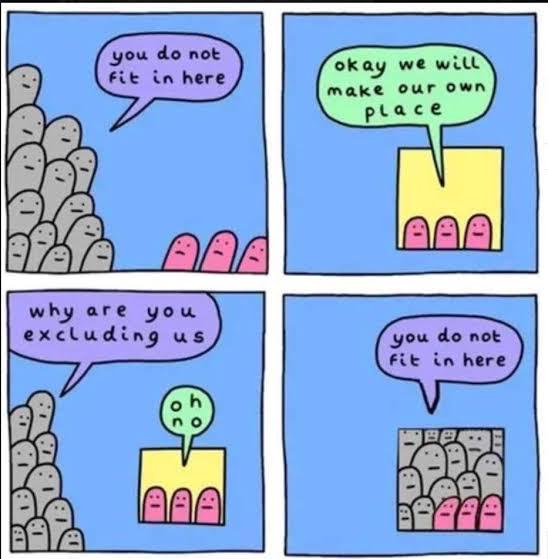
A second problem with #dotcons digital community decision-making is the hidden layer underneath the visible conversation: metadata is when organising becomes evidence in court cases.
People think privacy as the content of messages – what someone wrote, what someone posted, what opinion they expressed. But modern platforms collect something much broader: who joined a group, who attended an event, who reacted to a post, who communicated with whom, when people were active, who organised conversations, who supported a campaign, the patterns of relationships and activity.
This information will reveal the structure of a community even without reading the actual conversations. A WhatsApp group, Facebook group, or online community is a map of social relationships. That matters because grassroots organising often happens through relationships. The same online networks that allow communities to defend their rights, challenge poor decisions, or hold powerful actors accountable can also become visible records of who is involved.
The danger appears when, activism turns spiky and there is a conflict between less powerful groups and privileged actors. A campaign group, activist network, neighbourhood organisation, or community project might simply be trying to protect a shared space or challenge unfair treatment. But the digital traces created while organising can later be used against those people.
This does not require some dramatic conspiracy, it happens through ordinary legal processes. A court order can require a platform to provide information relevant to a legal case. Large platforms hold enormous amounts of stored data, and when authorities or private actors successfully obtain legal access, information that people assumed was just part of a conversation can become evidence.
The issue with this is imbalance, a large corporation, wealthy individual, or powerful institution have far more ability to navigate legal systems than a small grassroots group. They have lawyers, resources, and institutional support. Community activists have only their networks and their ability to organise.
This creates a contradiction, the “common sense” digital tools that allow ordinary people to coordinate can also create permanent records of that coordination. The answer is partial – there are #FOSS and #NGO tools that make this less of a problem – Healthy commons needs people to be able to organise, disagree, challenge power, and build alternatives without automatically creating a legal danger to everyone involved.
The question is not whether communities should be accountable, the question is: accountable to whom, and who has the power to use the information? Because in struggles between grassroots groups and privileged actors, metadata can become another form of power.
The lesson is simple – Build open movements, but do not naively confuse openness with exposure. Commons needs trust, but they don’t need to leave a #dotcons surveillance trail. Yes people will use bad tools anyway, but it’s good if some people use better tools to start stepping away from this digital and social mess.
Some first #KISS step tools
- Use the #openweb as core organising, do not use the #dotcons – an example here is open collective website not WhatsApp chat or Google Docs. Tools shape behaver and metadata gets people prosecuted.
- Use #signal for chat, it’s not a perfect tool, but it’s better than the rest, use a common platform.
- Use #torbrowser for web searches and browsing of any sensitive subject, if you want to use AI, Then don’t logged-in inside tor for any sensitive questions. All AI questions are stored as a part of your account and can be used agonist you – this is true even when you are not logged in.
- Do not rely on #AI for activist research or grassroots legal thinking – its hallucinations and training data will endanger you. The AI default is always wrong on this path without inside knowledge to prompt past the #mainstreaming output.
I’ve come to think that caring for people requires a degree of resistance to the culture around us. Not because people are bad, but because so much of the dominant culture is built around values that put profit, status, and competition ahead of human need. In that sense, care becomes a quiet act of rebellion.
#openweb #mutualaid #care #solidarity #deathcult #climatechaos #Oxfordboaters