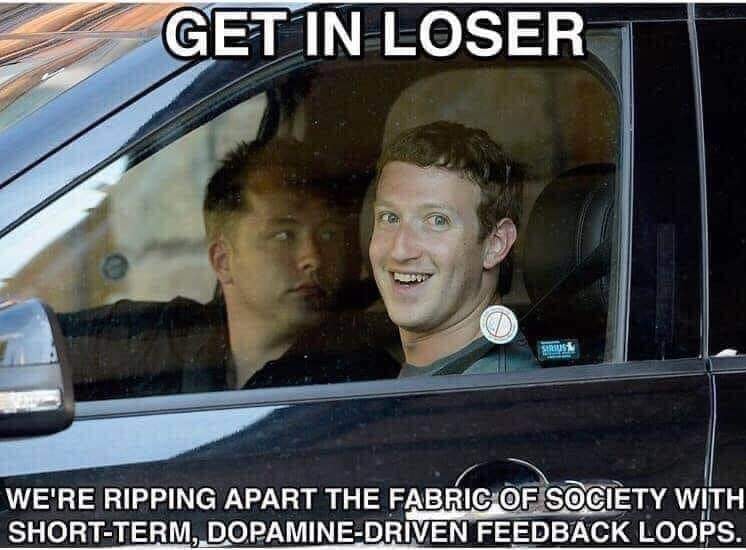
We don’t need to believe machines suffer to recognize that the system building them is already causing real harm. The #AI consciousness debate is a useful example of how the #deathcult works – we are encouraged to worry about whether a chatbot can suffer, while the human labour, exploitation and environmental costs of building these systems are pushed out of sight.
Fluent language is not evidence of consciousness. #AI can produce plausible expressions of distress without there being evidence that it feels anything. We need to separate what the technology can demonstrate from the stories being sold around it.
This is not about shutting down philosophical questions. It’s about asking why corporate #PR is so keen to turn software into a personality, and who benefits when we start treating commercial products as moral subjects.
The #geekproblem narrows the discussion to what the technology might be, while the wider social and political questions disappear. The #dotcons turn that confusion into engagement, investment and power to control us.
An #OMN response starts with the #4opens: look at the evidence, expose the incentives, make the processes visible, and ask who benefits. Keep our attention on the people, labour and communities affected by these mainstreaming paths.
We don’t need to believe machines suffer to recognize that the system building them is already causing real harm. Stop focusing on the PR story to look at the material reality, build the #openweb around people, not the next tech bubble please.
OK, lets not deny real risks, but also don’t accept the AI industry’s mythology as the starting point for discussing risks. The useful question is what currant AI’s actually do, who controls them, and what infrastructure and power relationships we are building around them.
AI is useful technology wrapped in a massive social, political and financial mythology. At the #OMN we are less interested in the usual argument between “AI will save humanity” and “AI will destroy humanity”. as both become noise in the current #LLM mess. To get a clearer picture we need to step back to ask a much simpler question – what does the technology actually do, and what are we building around it? Because there is a trap here.
We take an interesting piece of software, call it “AI”, then AI becomes AGI, AGI becomes superintelligence, and suddenly we are discussing machines as if they are becoming digital people. The #dotcons are happy with this story, as this story justifys gigantic data centres, enormous energy use, massive investment, extraordinary infrastructure contracts and the concentration of yet more technological power in the hands of the #nastyfew.
But there are serious questions about AI safety – autonomous weapons – cybersecurity – biological research – critical infrastructure – economic disruption – surveillance – disinformation – concentration of power. The replacement or degradation of human work. But there is a difference between looking at concrete risks and accepting a mythology about an imaginary future machine.
lets look at some of these risks: “AI will destroy humanity” argument starts somewhere like this – AI becomes more intelligent than humans – it develops goals – those goals don’t align with human interests – it becomes capable of improving itself – it gains access to infrastructure – it protects itself from being switched off – it expands its ability to act. Eventually humans become an obstacle, therefore humanity is eliminated. If we were actually building #AI not the current LLM’s that would be a possible speculative scenario.
But notice how many assumptions are packed into that chain. AI → AGI → autonomous agency → self-improvement → independent goals → infrastructure access → resistance to control → human extinction. Each arrow needs evidence, to judge this #KISS becomes useful. Don’t start with the end of the story, start with the machine in front of you. What can it actually do?
An #LLM generating confident bullshit isn’t evidence of an emerging artificial mind, a badly isolated “autonomous” system causing damage is an engineering and security problem. A corporation using dysfunctional AI to replace workers is an economic and political decision. A military using LLM’s based on the history of litterateur, feed partial data to kill people is a legal, political and military decision. A government using AI for surveillance is a governance problem. A data centre consuming enormous amounts of electricity and water is an infrastructure and ecological problem.
These things don’t require us to believe that a machine has become conscious, they require us to look at the #nastyfew are pushing over us. If we don’t look at the problems from this view we make the same mistake we have made with technology for decades, turning a social problem into a technical problem. Have you noticed that it is the priests of the #deathcult who loves AI.
But the are real problems in the #AI arms race – military competition → autonomous weapons → humans delegate decisions because machines are faster → competing systems interact → escalation/control failure → mass killing. Here extinction result from autonomous weapons, nuclear systems, biological weapons or other military infrastructure. That argument doesn’t require AGI it is simply the current mess with added tech mythology.
The #OMN critique isn’t so much about whether LLM’s are “good” or “bad” it is about the economic and social system surrounding the current #techshit paths, we already have piles of #techchurn to compost with out adding more. The #OMN doesn’t want to repeat this mess with AI, what we need is ways of keeping power visible enough that people can challenge it, for this we need to compost the mythology.
This is why the #OMN is deliberately boring compared with the AI storeys. Our focus is not technological salvation, or technological apocalypse. We need useful #KISS technology embedded in social structures where people can understand, challenge, change and, when necessary, walk away from. The mistake is always turning the tools into a mythology and then building society around the mythology. The #deathcult has had fifty years of economic “thinking” on this, look at the mess, now lift your eyes.
We have done this before, we take a useful technology, wrap it in a huge financial story. We centralize it, try and monetize it to turn it into a platform. Then we pretend the social consequences were somehow an accident, it is what we are doing with LLMs. We took an interesting piece of software and started selling it as AI, then AI became AGI, became super-intelligence. This smoke and mirrors feeds the path of building gigantic data centres, burning enormous amounts of energy, raising billions, signing extraordinary infrastructure contracts and concentrating yet more power in a hands of the #nastyfew.
And now we are supposed to believe this is progress, nop, this is the normal #deathcult doing what the #deathcult does – take something useful and turn it into an extraction machine. the mess we need to compost is that “interesting software” doesn’t justify a trillion-dollar mythology – AI will transform everything – AI will replace everyone – AI will solve science – AI will destroy civilization – AI is the next industrial revolution – AI is the singularity – AI is almost AGI – AI is too dangerous to release – AI is progressing faster than anyone expected – AI will change humanity forever. Can you see the smoke and mirrors trick?
Both the utopian story and the apocalypse story sell the same thing, more #AI, more computing, more investment in data centres. More centralization of money for the companies already building the machines of control. Maybe the argument changes, the conclusion doesn’t. Pushing fear is also marketing, this is where the current AI “doom” industry pushes mess. Tell people your machine might destroy the world and you have simultaneously told them your machine is incredibly powerful. This is about grasping for the control of focus, creating scarcity, you have created fear you have created importance.
This mess is about #fashionista capture, its a old story, were you try to created a lever for governments, and the chattering classes, there servants to listen to you, for investors to keep funding you, to build even bigger machines. The apocalypse it self becomes a business model.
That doesn’t mean the risks aren’t real, #AI implementations can create real security, economic, social and political problems. But we need to separate those problems from the mythology. A badly isolated autonomous coding system is an engineering and security failure, it doesn’t mean the machine has “woken up”. An LLM producing confident bullshit isn’t evidence of an emerging artificial mind, it is an LLM producing confident bullshit. And a company repeatedly telling us that its next model might be AGI doesn’t make AGI a meaningful scientific milestone.
Sometimes #KISS is the radical answer, please look at what the machine actually does, not what the marketing department says it might eventually do. We have already seen this mess play through.
Web 1.0.
Web 2.0.
Crypto.
Blockchain.
NFTs.
Metaverse.
Web3.
DAOs.
Now AI.
Every few years Silicon Valley discovers the next thing that will “transform” nothing. The technology changes, were the investment logic barely does. Hype → investment → infrastructure → more hype → bigger investment → pressure to monetize, it is #techchurn.
Except now the machines require gigantic amounts of physical infrastructure and enormous financial commitments. This is the bit that gets hidden behind the shiny chatbot interface, LLM’s isn’t floating in the cloud, it is powered by somebody else’s warehouse, somebody else’s electricity bill and somebody else’s infrastructure. The supposedly weightless future has a very large material footprint.
The #deathcult loves this machine – but something deeper is happening here – the #deathcult has spent fifty years teaching us to worship – growth – efficiency – scale – competition – automation – consumption – financialization – individualism – technology. The AI industry is the last-ist gasp at pushing the mythology – more computing, more scale, more automation, more investment, growth, more efficiency. And because this machine is called “intelligent”, we are encouraged to bow down even further. The machine knows, the machine decides, the machine optimizes, the machine will solve all our knee ach problems. Meanwhile, the #nastyfew who own and direct the machine accumulate power.
Its a part of the #geekproblem were technical people make things work, this has real value, but technical expertise is one tool, not the toolbox. You cannot engineer your way out of social problems, or code trust. You cannot automate democracy. You cannot solve inequality with a better interface. You cannot fix the political economy of capitalism by making the algorithms slightly cleverer. And you certainly cannot hand over social decisions to machines because the humans have become inconvenient to a few nasty people.
This is the same blindness we have been suffering from for decades, if the problem is difficult, make it technical. But then “common sense” technical people become the gatekeepers, becomes the institution, becomes infrastructure. Then fingers in ears, nobody remembers that the original decision was political, as the power disappears into code – #AI becomes just more #dotcons.
To balance this mess, by composting, we need to open our eyes to the history of the #openweb. The original web was built messy on #4opens standards. hyperlinks, RSS to grow small websites were people published, people connected built by people making their own tools. Then Web 2.0 arrived, the UX got better, the platforms got bigger, the money arrived and the web became #dotcons.
Blindly, repeating this same mistake with the dotcons LLM’s in the era of #climatechaos is stupidity. Its a big mistake to be building another generation of giant closed systems of control. At best we should be asking – what would an open AI infrastructure look like? What data? What standards? What ownership? What governance? What accountability? What local control? What human oversight? What right to challenge? What right to rollback? What happens when the system is wrong? Who gets to decide? These are political questions.
That is backwards, technology is a tool for people, and yet here we are. agen we are generating the problem to feed the machine built to solve the problem, peak #techshit. So what do we do? We don’t have time for another #fashionista moral panic please. Not “ban everything”, not “AI will save us”, not “AI will kill us”. Not another fucking blinded conference where everybody agrees that governance is important and then goes home and builds the same centralized paths.
What we do need is to compost is this mess, take the useful technology, the useful research, the open models to build automation that actually gives people more time and power. Knowledge is always useful, but please throw the mythology onto the compost heap, the fake AGI worship, the #nastyfew billionaire saviour stories, the singularity smoke. We cant survive the endless-growth assumptions, of the #closedweb platforms, the surveillance economy, we need to compost this social #techshit.
Composting this is why the #openweb is a tool that still matters, not because openness is fashionable, or that another technical architecture will magically save us. It matters because power has to be distributed somewhere. Open data – Open source – Open standards – Open process – The #4opens. To make this tool work we need to grow the path of human moderation, community trust, distributed infrastructure and shared public knowledge.
The #OMN has practical projects for this path – archives with #makeinghistory – news with #indymediaback and eventually governance with #OGB. A practical #KISS path that understands that we need useful technology, to help communities organize, remember, communicate and act. We need infrastructure that belongs to the people using it, And the community to use this “shovel” to stop worshipping the mythology of the #deathcult machines and start rebuilding the commons.
Yes, this is a first small step in the path we need, not a dogmatic answer to everything. We clearly do not need more blinded technological salvation story’s. What we do need is a practical path to build news, archiving and eventually governance around open flows, trust and participation rather than surveillance, extraction and platform ownership.
The #deathcult has had fifty years, look at the mess, now lift your eyes and let’s start composting.
As the worshipping the #deathcult for the last 50 years becomes harder to hide, the lies are more naked. The lie of endless growth, trickle-down wealth, technological salvation and individual freedom are running into the material reality they created. The mess can no no longer be hidden in the abstract.
#Climatechaos, inequality, war, social fragmentation, political decay. #techshit. The question now is impossible to keep ignoring, not whether the system has problems, it is whether we can see the problems clearly to stop worshipping the mess that created them.
This is where we need social composting. Turn the pile. Expose the assumptions. Keep what is useful. Let the dead ideas rot down. Then grow something alive.
There is something revealing about the way powerful people talk about our future, when they imagine crisis, they imagine their escape. A luxury bunker, fortress border, a private city, a rocket or an #AI cloud. A place for the self chosen few to survive while everyone else is left outside to die.
This is the “logic” of the #deathcult we all worship, if the world is breaking, protect yourself rather than repair the world. It should be obverse to us that this is is not really any actual plan for the future, its just more head down worship, an admission that this class have stopped believing in any thing at all.
But, yes they hid this, they still tend to tell a story, the shiny version of this story is always the same, out of catastrophe comes a golden city, the old world burns, the rubble is cleared, and the self selecting few build something beautiful on top of it.
We have heard this story for thousands of years, apocalypse, judgement, Armageddon, collapse, then purification for paradise for the few survivors. The modern retelling simply replaces heaven with a billionaire bunker, an exclusive smart city, an AI utopia or a colony on Mars, different technology, same path.
On this #mainstreaming path some people, who we call the #nastyfew in the #OMN hashtag story, deserve to survive the mess they created. But what is not told in this simply story is that the bunker is hard right politics – #climatechaos, pandemics, resource conflicts, economic insecurity and technological disruption are real problems. But there are two very different ways to respond to systemic crisis.
One response is – How do we protect everyone and make the system more resilient?
The other is – How do I make sure I am on the inside when it collapses?
The second path is not surprisingly increasingly visible in #nastyfew billionaire culture, authoritarian politics and in the #dotcons industry we all spend way to much time inside.
in this modern story, the bunker is not just a building underground, it is a political metaphor, fortress borders are bunkers, private security is a bunker, gated communities are bunkers, #closedweb platforms are bunkers. What matters for us in #FOSS is monopolized infrastructure is a bunker. Even the fantasy of escaping humanity through #AI or space is another bunker, an attempt to leave the shared social and ecological world rather than compost our dysfunctional relationship with it.
This path is the opposite of the #openweb,it is were the #deathcult turns fear into control. The right-wing answer to social crisis is always built around fear – Fear of outsiders, fear of immigrants, fear of social change, fear of losing status, fear of disorder, fear of the future. But, then comes the golden lie, the promise, we will protect you, but this protection soon becomes control. The anger that should be directed toward concentrated wealth and political power gets redirected sideways and downwards toward other ordinary people.
The poor become the problem, migrants become the problem, minorities become the problem, the left becomes the problem. The messy complexity of society is reduced to enemies, it is an old political trick that the #blinded technological #closedweb makes much more powerful. Today’s authoritarian politics doesn’t arrive wearing an old-fashioned uniform. the phone in our pocket, influencers, algorithms, targeted advertising, surveillance systems, AI-generated propaganda and permanently monetised outrage. The infrastructure of the #dotcons is a bunker.
But what we focus on the #OMN path is there is alternative, this alternative isn’t pretending that everything is fine, not another shiny utopia, and it certainly isn’t waiting for some perfect political party, perfect technology or perfect leader to save us. The alternative is much more boring – Build things that work, trust, commons, local resilience. Create media systems where communities can see and understand what is happening. Focus more on building technologies that people can actually control by #KISS keeping the infrastructure understandable so participation is possible. Create spaces where people can disagree without immediately becoming enemies. That sounds much less exciting than an AI god or a $50 million survival bunker, good, what we need to do as the #DIY grassroots is move from bunkers to bridges
The important question is not, who gets into the bunker? The question is, what are we building outside it? Because humans have already built an enormous number of bunkers, political bunkers, economic bunkers, cultural bunkers, technological bunkers, information bunkers. We don’t need more, we need bridges, and bridges are fundamentally different from bunkers.
A bunker protects something by excluding people, a bridge creates value by connecting people. That is the deeper #openweb possibility – not a technological escape from society, but technology that helps society organize itself. Not centralized control, but distributed participation, not ownership of everything, but stewardship of shared resources, not fear as the organizing principle, but trust. Not “how do I survive when everything collapses?” but “How do we make collapse less likely, and life better, together?”
Its about composting the apocalypse – the world really is messy, but fear doesn’t have to become a bunker, it can become a reason to organize. This is where social composting matters, take the accumulated waste of the last decades — #neoliberalism, authoritarianism, #techshit, platform capitalism, political tribalism, broken institutions and the endless fear machine. Don’t pretend it isn’t there, don’t worship it or spend your entire life fighting it head-on. Compost it, break it down, learn from it, keep what is useful, let the dead parts become soil to then grow something different.
The #deathcult says the future belongs to the #nastyfew who can buy their way out, the #lifecult says the future belongs to those who can build relationships strong enough to stay. The choice isn’t really between apocalypse and utopia, it is between bunkering down or building commons. The planet doesn’t need another billionaire bunker, it needs people willing to pick up shovels.
To understand and walk this, lets look at an example of the mess we need to compost – by lifting the lid on the current #AI noise. The problem, isn’t simply whether #AI is intelligent; it is who controls the infrastructure, what incentives drive it, and whether technology serves people or turns people into components of the machine. When can see this we might be able to see, thus act on the #OMN trajectory: technology → power → participation → open infrastructure → commons, let try and get past the #fashionista mess of whether #AI is or isn’t “really intelligent.” as this is a lot of #mainstreaming noise.
AI is going to take all our jobs. AI is going to transform everything. AI is going to become conscious. AI is going to kill us. AI is going to save us.
Some of these claims might be true, some are noise and others certainly nonsense. The more useful questions are simpler – Who controls the technology, what are they trying to achieve, and who gets to decide how it is used? This is where the #OMN view of technology starts, don’t believe the hype – but don’t ignore the technology.
One of the problems we need to mediate, is, we should be careful about criticizing AI by repeating the claims made by the #dotcons (AI companies). If a company tells us its system is basically becoming a digital human, and we respond by saying “yes, but this digital human is dangerous”, we have already accepted their framing, we are helping improve there profits and power by repeating there story.
The same thing happens with the last generation of #dotcons, #Facebook told us its algorithm understands us, #Google tells us its systems are intelligent, #AI companies tell us their models are reasoning. Most of this is smoke and mirrors that we should be ignoring if we actually wont to see anything real.
This next #dotcons#AI boom involves enormous amounts of investment in computing infrastructure, data centres, chips and energy. The companies involved are under pressure to keep growing because the financial system only rewards growth. This produces a dangerous feedback loop, a company needs to keep growing as investors expect growth, the company therefore needs a new story about future growth, the technology becomes that story. The investment creates infrastructure, the infrastructure creates pressure to find uses for it, the uses become evidence that the technology is inevitable. Then more investment follows, it isn’t only a conspiracy, it is a #KISS system of incentives.
The better approach for us is to look underneath the noise. Q. What does the system actually do? What infrastructure does it require? Who pays for it? Who owns it? Who benefits? What happens when it fails? What happens to the workers? What happens to the users? What happens to the communities around it? All are more interesting than arguing about whether a snake oil chatbot is “really thinking”.
And this is an important #OMN lesson – technology does not exist outside society – the code is one layer, underneath the code are ownership, money, labour, institutions, energy, law, culture and power, when we get distracted and ignore those lower layers we don’t understand the technology at all. When this happens the mess we constantly have to compost is that this pushing of #techchurn isn’t innovation. We’ve seen this before, #web02 was going to transform everything, then crypto, NFTs. Then the metaverse, and then whatever the next shiny thing was.
Each wave arrived with claims about revolutionary transformation, yes some of the technologies were useful, but the investment system doesn’t reward usefulness, it rewards growth stories. This produces #techchurn, endless technological change driven partly by the need to find the next thing to invest in, rather than by any clearly identified social need. This is not new, we have been pushing this kinda mess since the industrial revolution.
So, how can we compost this mainstreaming mess, one path we tried and it kinda worked in the 20 century was socialism, or in the western guise social democracy. This is a different politics from simply saying “technology bad”. That older question takes us directly into #4opens territory were there is another mythology we need to challenge – Markets don’t produce good technology, the idea that if a technology is useful, the market will automatically discover the best version of it. History doesn’t support this well, this is why the #openweb matters. A genuinely open network gives people alternative paths. Open standards reduce #dotcons lock-in. Open source makes systems modifiable. Open data makes information reusable. Open process makes power visible.
The fourth one of these is especially important, so that the social consequences of technology aren’t hidden inside the code. We can find them hidden inside the process, who funded the project? Who decided the priorities? Who was consulted? Who wasn’t? Who owns the infrastructure? Who gets to change it? Who carries the social and ecological risk? Who gets the benefit? If those questions aren’t visible, the technology is normally reproducing the same old power structures, we need to compost.
This mess is not only to be found in technological we can use the #4opens to look and judge social paths. The same thing happens with markets, with bureaucracies, algorithms. The system follows its incentives, consequences emerge from the interaction between the system and the world. This is the reason #KISS matters, don’t invent unnecessary mythology when a simpler explanation works.
Open source is a social technology, one of the strengths of #FOSS is that people can inspect the system. That doesn’t magically make it secure, but it creates a culture in which claims can be challenged, problems exposed and were people can build alternatives. The current #mainstreaming path is not this, its repeating trust us:
Trust the company.
Trust the algorithm.
Trust the secret model.
Trust the security team.
Trust the executives.
Trust the experts.
Trust the investor story.
That is the kind of technological hierarchy that the native #openweb paths needs to challenging with a shovel. Native paths, need native technologies, with community participation, not #dotcons or #geekproblem technologies of obedience. Our path is about composting the layer of abstraction between people and reality – technology can make people more capable or it can make people more manageable, this simply understanding is what makes #OMN a shovel.
The #OMN isn’t trying to build another AI-powered social media platform or creating a better algorithm, it isn’t trying to replace one technological priesthood with another, the #OMN is much more basic.
News. Archiving. And eventually, down the road, governance.
The idea is to build infrastructure where people participate in the flows of information rather than being only consumers. Events come into the network – People and communities add context – Stories connect and organize those events – Objects move between nodes – Metadata gets added and corrected – Different communities can see different things – Useful information can spread – Useless information is allowed to decay.
And, nobody has to maintain one giant master database containing the “correct” version of reality. This is a what we call a #datasoup, messy, living, federated information environment. And that mess isn’t weakness, it becomes the very resilience we need. Distributed systems need distributed understanding.
The #OMN path is deliberately different from the dominant AI model, were the dominant model says: collect everything → centralize it → train the model → produce the answer. The #OMN is closer to: collect from many places → connect → tag → contextualize → challenge → correct → archive → feed back into the network.
As I keep saying, this is not an attempt to create a perfect database, it is an attempt to create flows of trust. The network flows become the process of understanding. That is why federation matters, open process matters, why human moderation matters. It is why disagreement matters, and why we don’t need another central algorithm deciding what everybody should see.
In our current economics: People are inputs, workers are costs. Communities become markets. Attention becomes a resource. Knowledge becomes training data. Care becomes an inefficiency. That should reveal to you the common sense #deathcult mess we need to compost. That is the #OMN path, technology is a tool, the question that matters is who holds it, who maintains it, who benefits from it, and what kind of society it helps us to build.
Care is missing in the current mess, in a better world, a worker cares about the person using the product, a journalist cares whether the information is true, a nurse cares whether the patient gets better, a programmer cares whether the software actually works, a community cares whether its infrastructure remains useful after the funding runs out. This is difficult to understand for only automated paths because care isn’t an optimization problem, it is a social relationship.
The future doesn’t need more technological priests, it needs people able to pick up the tools, understand how they work, challenge the assumptions behind them and use them together.
Yes, the #web02 revolution was a con, it always was. The problem is now most people have spent years pretending that the dominant technology companies were somehow neutral actors – clever companies making useful tools, occasionally getting a little too powerful, occasionally needing a bit of regulation. But now this comforting chattering class story is harder to maintain, as the long “invisible” problem has finally reached the #mainstream, the act of stepping over the smoke and mirrors can now be seen in books such as Gil Durán – that the Silicon Valley billionaire class has developed an explicitly anti-democratic political worldview, and it has accumulated enough money, technology and institutional influence to start acting on it.
The book Nerd Reich: Silicon Valley Fascism and the War on Democracy describes a political culture that did not suddenly appear with Trump. It has roots going back decades: hostility to government, hostility to taxation, extreme individualism, the fantasy of “exit”, private jurisdictions, network states, crypto-utopianism and the idea that technological elitists should be able to operate outside democratic constraints. This view of #geekpoblem history matters because if we treat what is happening now as simply another Trump-era political crisis, we shovel the wrong shit onto the compost heap.
This mess we need to compost is the blinded politics of our technology classes. The con was always bigger than the platform, #dotcons were never simply websites, there “value” comes from when they became infrastructure for social life. #Failbook, Google, Amazon, Microsoft, Apple, X and the rest were built to control people, they “business modal” inserted themselves between people and their ability to communicate, organise, publish, buy, work and increasingly understand the world.
The con, the clever trick was that they appeared to be giving us something, free publishing, free communication, free social networks, search, storage and entertainment. But the real business model was the capture of the flows, our relationships became data, our attention a commodity, communities became markets, conversations became #LLM training material. Now that our social lives are increasingly controlled as behavioural prediction systems, and the more dependent we became, the more control and thus power accumulated on the other side of the interface.
This is why calling the #dotcons simply “social media companies” is too small a description. They became private governance systems, to make rules, decide visibility and control infrastructure. They moderate speech, shape markets, influence elections. They lobby governments to corrupt political control. And now some of the #nastfew openly talk about replacing democratic institutions with technological and corporate control. The con was never about advertising, it was about power.
Seeing the path underneath the technology is of the useful things, connecting today’s behaviour with 20th century ideas. The Silicon Valley ideology did not begin with artificial intelligence, it developed through decades of worshipping the #deathcult of libertarian and anti-government thinking. Books such as The Sovereign Individual became influential within the elitist chatting classes. Figures such as Peter Thiel pushed ideas, and funding at technology, sovereignty, crypto, private jurisdictions and “exit”.
The basic #nastyfew fantasy is consistent – when the government gets in the way, leave, if democracy is inefficient, replace it. When taxation is inconvenient, move somewhere else. If regulation applies to everyone, build somewhere it doesn’t. If nation states are obsolete, create new digital or corporate forms of sovereignty. It sounds futuristic, but underneath the science-fiction language is something ancient. A #nastyfew group of extremely wealthy people deciding that ordinary democratic accountability should no longer apply to them. This is simply oligarchy updated with #postmodern branding, and then came the #AI boom, that accelerates and intensified the #techshit class mess.
We should not need to talk about how the technology itself is not the enemy, the current #openweb reboot clearly shows it is not. So what is, a very normal story, the worship of the #deathcult, our political and economic structure around the #dotcons, and the #geekproblem that breeds this is the problem.
With #climatechaos visible all around us, we are still being told that all this #techshit is necessary because someone in Silicon Valley has decided that the future requires it. This now easy to see mess is why resistance to data centres, surveillance systems, crypto schemes and companies such as Palantir can become broader than narrow traditional left politics. People are now starting to experience #nastyfew billionaire power physically in the growing social mess. The abstract becomes concrete, the cloud a building, the algorithm becomes distracting fluff, the #dotcons platforms are revealed as workplaces when the billionaire becomes the person deciding what happens in your town.
The #OMN more profound question is increasingly about who gets to control infrastructure and who gets to participate in deciding how it is used. That is a democratic question, and it should also be a #openweb question. This is where the current reboot comes in to balance the mess. The #NGO, civil society answer cannot simply be to keep regulating the #dotcons harder while continuing to depend on them for everything. Yes, regulation matters, taxation matters, breaking up monopolies matters and basic democratic accountability matters.
But we also need alternatives; otherwise we remain trapped inside #nastfew controlled infrastructure. This balancing is why we can’t keep fucking up our #openweb reboot. We need to #KISS take the useful lessons from the early web – openness, decentralisation, interoperability, user control and federation – and combine them with the better UX lessons we learned from Web 2.0.
We need to build this alt path on the current #Fediverse, based on exiting reboot #4opens paths like #ActivityPub and #RSS. What we don’t need is more of what current takes the vast majority of #openweb funding and coding focus. Not another collection of #VC startups, any more “ethical” billionaire-funded platforms – not another centralised service waiting to become the next #dotcons.
We need something structurally different, we need practical shovels to composting the #dotcons. This is where I use the word compost deliberately, we cannot simply pretend the last 30 years didn’t happen, there is an enormous pile of #techshit. Some of it is bad technology, much is bad governance. Some is exploitative economics, surveillance, addiction. In our heads we need to compost venture-capital paths, empty innovation language and the stink of #NGO and institutional capture.
Some of the simple #geekproblem is just plain bad social thinking dressed up as technical expertise. But there is likely useful material in the pile too, the #web02#dotcons did teach us things – They showed us that people want easy-to-use communication tools – the importance of good #UX, we need to take what is useful and use this to expose what is toxic. To understand how it happened, learn from the failures. Then we need to translate this understanding into action to break the concentrations of power, to open space to grow something different.
The #geekproblem is part of this, another uncomfortable layer. The alternative technology world has not always been good at avoiding the same mistakes, the #geekproblem is real. Too often we build technology according to what technically clever people think is interesting rather than what communities actually need. We confuse technical complexity with progress, confuse innovation with usefulness, technical decentralisation with democracy. And often we recreate the same power structures inside #FOSS that we were supposedly trying to escape.
The resulting technically elegant social mess, is a strange imitation of the #dotcons: technically open underneath, but socially closed around the people who understand the machinery. This mess is then feed into the funding problem, where the #fashernistas enter the pile.
With the current #openweb reboot, alternative technology is increasingly surrounded by funding ecosystems that reward fashionable language, impressive demos, grant-friendly projects and institutional credibility. The grassroots people actually doing the work can become secondary, the people who understand the community get pushed aside by people who understand the funding application. The messy project gets replaced by the polished project, the difficult social question becomes a technical deliverable, and the result is another layer of #techshit.
This is not inevitable, but we need an open process capable of exposing it, that is the reason the #4opens matters – Open data – Open source – Open standards – Open process. The fourth one is particularly important, if the process is visible, we can see who is making decisions, how money is moving, whose ideas are being prioritised and where the projects are about grafting. We can challenge it before the pile gets too big, we need to compost the #techshit at source.
To grow anything in the current mess, we need infrastructure that ordinary communities can understand, use, modify, share and govern. We need technology that supports participation rather than extracting it, systems where disagreement, correction, rollback and learning are normal. We need tools that help communities build memory rather than constantly throwing yesterday into the algorithmic landfill.
So we know what we need, we know what we need to compost. The chattering classes are finally waking up, we have the interesting thing, that some of the people who have spent years talking about “innovation” and “the future” are finally starting to notice what has been happening. The warning signs are no longer hidden, #nastyfew political power is visible as is the social and ecological damage.
The question is no longer whether there is a problem, it is becoming what we do about it. And this is where I worry about the next stage because every time the mainstream finally notices a grassroots problem, the #fashernistas arrive. They package it, brand it, secure the funding to create the conference to build their careers. This simply “common sense” behaver stinks and is going to kill and displace billions of people.
And somehow, after all that activity, the people who were actually doing the work are still standing outside the room, we have seen this cycle for decades, we cannot afford to repeat it here. So shovel harder, the #openweb reboot has a job to do, we don’t have the time to create another fashionable technological sector. We don’t need another class of sellout experts to compete to become another set of gatekeepers. And definitely not to reproduce the #dotcons with a nicer logo and some open-source code.
We need to shovel hard, turn over the #dotcons, expose the blinded ideology, compost the bad economics, the #geekproblem and the corrupt grant culture. We need to compost our own #fashernista performance. To balance this we have to keep the useful technology, the useful knowledge, the communities and most importantly keep the history. Then use all of that compost to grow something genuinely different.
The old web was open enough to give us a glimpse of what was possible, #web02 captured that openness and turned it into private infrastructure. Now we have a chance to take the useful parts back, not by going backwards, but by putting people and communities back into the centre of the flow.
The #deathcult worshippers have spent decades building an escape route from simple democratic accountability. Our path is not to follow them on this fantasy, it is rather to build a better path in the other direction. The #dotcons are a huge pile of compost, the question is whether we are willing to pick up the shovels.
Techno #feudalism is a description of the power that large #dotcons technology platforms now have over the economy and society. The comparison is with medieval feudalism. Under feudalism, land was the critical means of production and ordinary people worked land they did not own. Lords controlled access to it and extracted rents or surplus from those who depended on it.
This is relevant today were the critical bottleneck is increasingly digital capital: platforms, servers, algorithms, data, cloud infrastructure, app stores and enormous networked captured user bases. A few corporations, run by an increasingly visible #nastyfew control this infrastructure. Communities, businesses, workers and creators are dependent on platforms they do not control.
The current shift is from ownership to access, instead of owning software, music, games or other digital tools, people rent access through subscriptions and platforms. This means wealth and control accumulate with the owners of the infrastructure rather than with the people using it.
The #closedweb platform economy creates rent extraction. App stores, marketplaces, hosting platforms and gig-economy companies take a percentage from the economic activity that passes through them. Network effects make dominant platforms increasingly difficult to challenge, as we are seeing, allowing those rents to rise.
#AI is we get past the narrow use case of #LLMs could intensify this dynamic by replacing human labour with capital-intensive systems. If a few companies own the #AI infrastructure, the bargaining power of labour will fall while the power of capital owners, the #nastyfew takes over the levers of power over the #mainstreaming.
The political dimension – #dotcons don’t merely control economic infrastructure; their algorithms influence what billions of people see, discuss, believe and buy. This gives the #nastyfew platform owners an extraordinary ability to shape public discourse.
But yes, you would be right to point out this is just the normal monopoly capitalism for now, these companies still invest enormous amounts in research, infrastructure and innovation. They operate within markets and people are not legally bound to them in the way medieval serfs were bound to their lords. The system can also be understood as an intensification of monopoly capitalism and rent extraction.
For the #OMN, the strongest point is that the problem isn’t technology itself, it is concentrated ownership and control of the technological infrastructure. A simple stepping to #4opens network changes the relationship, instead of everyone being tenants on somebody else’s platform, we build infrastructure around open standards, federation, interoperability, shared ownership, participation and commons-based production.
That makes the #openweb and projects such as the #OMN more than technical alternatives. They become part of the struggle over whether the digital world develops into a feudalistic landscape of platform landlords and digital tenants, or remains a genuinely distributed native #openweb commons.
In that sense, #4opens is an economic and political argument as much as a technical one: keep the infrastructure open enough that nobody can permanently own the flows through which everyone else has to live and communicate.
One of the most useful ways to understand the mess we are in today is to ask a deceptively simple question – what comes first – the individual or the network? #Mainstreaming economics startes with the individual, were sociology, anthropology and related traditions start somewhere else – with relationships, institutions, communities and the social structures into which individuals are born.
This difference matters enormously, when we start thinking about technology, politics, economics and the #openweb. It is one of the reasons I keep coming back to the problem of #stupidindividualism – the point isn’t that individuals don’t exist, of course they do, the problem is treating the individual as if they exist independently of the social world that produces, supports and constrains them.
Why? we are not born as isolated economic actors, we are born helpless. Other people feed us, protect us, teach us language, teach us how to behave, introduce us to culture and eventually help us become capable of acting independently. Before there is an autonomous economic actor, there is already a network of care. That simple observation has consequences, that the network come first. that nobody invents themselves, every person was born into an existing social world, where there are families, communities, languages, institutions, infrastructures, histories and expectations already.
Even our ability to imagine ourselves as an individual depends upon other people. Language is social, knowledge is social, culture is social, markets are social and technology is social. The idea of private property depends on a society capable of recognising and enforcing it. Yet a great deal of mainstream economic thinking narrows it self to begin with the individual as though they are already standing outside society, deciding what they want and entering into relationships with other individuals through voluntary exchange. That is a very particular, narrow, way of not seeing the world, and it is not neutral, this blindness is historically produced.
One of sociology’s important contributions is to make the background visible. The individual is not simply a natural fact. The particular kind of individual we imagine ourselves to be is shaped by the social structures around us. But yes, modern societies are unusually good at producing the experience of being an isolated individual. We can move cities, change jobs, rent instead of own, interact with strangers. We can buy almost everything we need through markets, communicate with people thousands of kilometres away. We can participate in institutions without ever knowing the people who operate them.
This creates an extraordinary experience – we can feel independent while being massively interdependent. That is one of the great illusions of modernity, that the person sitting alone in a flat, ordering food through an app and working remotely from a laptop can feel completely autonomous. But underneath that apparent autonomy is an enormous network of other people and systems: farmers, delivery workers, programmers, electricity grids, telecommunications networks, roads, warehouses, financial institutions, governments, data centres and countless forms of unpaid and paid care.
So to put this simply, the individual is not independent, the individual is networked and the current narrow economic model hides the network. Composting this mess is where the distinction between mainstream economics and sociology becomes politically important. A simplified economic model can begin with individuals who have preferences, resources and choices. They meet in markets, supply meets demand, prices coordinate activity. The model can be useful for analysing particular situations.
The problem comes when the model becomes a description of human reality itself. A market is not simply a mathematical relationship between isolated individuals, it is a social institution, requireing rules, trust, a state thatrequires infrastructure, property rights, requires enforcement, communication of shared expectations. It requires people who know how to behave within this narrow system.
In other words – the market sits inside society and society does not simply emerge from a collection of markets. This distinction becomes particularly important when discussing capitalism, it is not some natural state that appears whenever humans are allowed to trade. It is a historically, involving particular institutions, property arrangements, states, legal systems, technologies and cultural assumptions.
Once we recognise this, the supposedly inevitable starts to look contingent, and that is where sociology becomes politically interesting. The state doesn’t disappear, just because the market exists. The current story presents the market and the state as opposites:
state = control
market = freedom
But historically, the development of modern markets has depended heavily upon states, to establish property law, currencies, enforce contracts. States build infrastructure, define corporations and regulate labour. States establish borders, create legal identities, enforce debts. The market and the state are not simply opposites standing outside one another, they are entangled.
This matters because when we look at modern capitalism as though it emerged from naturally individuals making voluntary exchanges, we erase much of the infrastructure that made those exchanges possible – again, the network disappears. The problem with universalising capitalism is one of the most damaging intellectual habits, taking the economic system we happen to live inside and treating it as though it describes human economic behaviour everywhere and throughout history.
Capitalist monetary exchange becomes “the economy.”
Market behaviour becomes “human nature.”
Competition becomes inevitable.
Private ownership becomes normal.
Debt becomes morally obvious.
Money becomes something humans must always have invented because they wanted a more efficient version of barter. But history repeatedly show much greater diversity, human societies have organised production, distribution, care and exchange in many different ways. There have been gift economies, commons, reciprocity networks, redistributive systems. There is no single timeless human economy – there are economic cultures. It is our assumptions about what is “normal” are themselves historically specific.
That lesson is directly relevant to technology of the #OMN project, as technology has its own version of this problem. We often start with the assumption that the individual user is the basic unit. The user creates an account. The user chooses a platform. The user posts content. The user chooses whether to participate. The user accepts the terms. The user leaves if they don’t like it. Doses this sounds reasonable?
But yes, as we have said, its not, as it ignores the network, if all your friends are on Facebook, “just leave Facebook” isn’t an individual decision in any meaningful sense. If your local council publishes important information only through Facebook, leaving becomes a civic problem. If your community organises through WhatsApp, leaving becomes a social problem. If your employer requires a particular platform, leaving becomes an economic problem. If your political movement organises somewhere, leaving becomes a political problem.
The individual appears to have a choice, but the network determines the cost of exercising it. This is one of the fundamental problems with the current #dotcons as they don’t simply sell software to individuals, they capture networks. Network effects become political power – once enough people are locked inside a platform, the platform becomes difficult to leave. This is often described as a “network effect”, as though it were simply a technical feature, it isn’t, it is a abusive social relationship.
The value of the platform increases because other people are there, that means the individual cannot solve the problem individually. You cannot build a better social network merely by downloading better software. You need people, communities, trust, shared practices. You need governance – you need ways for information to move and institutions that can maintain the infrastructure.
This is why simply telling people to “move to Mastodon” is insufficient. The problem isn’t that Mastodon exists or doesn’t exist. The problem is social infrastructure, the #openweb is a social project, this is why we don’t see the #openweb simply as a collection of technologies. #RSS, #ActivityPub, #PeerTube, #blogs, #wikis, distributed hosting and open-source software are tools. They become socially transformative only when communities use them to create different relationships.
The technical layer matters enormously, but technology alone cannot produce a commons. A commons requires people who maintain it, and these people need to be heald tagather by norms, trust, governance. This is where the #OMN comes in – from individual users to communities, we start from a different assumption – media is a social relationship, not simply a commodity produced for individual consumers. Instead of imagining millions of isolated users consuming content through a central platform, we build networks of communities that publish, share, moderate, maintain and archive media together.
This changes the question, instead of “What does the individual user want?” we can also ask “What does this community need?” And “What relationships allow this information system to remain healthy?” And”Who maintains it?” And “Who has power?” Thus “How can that power be accountable?” That is sociology applied to technology and importently why governance becomes unavoidable. Why governance is such a big part of #OMN and #OGB. If we pretend that technology is simply a neutral tool used by independent individuals, governance becomes something we only discover later when things go wrong.
But if we recognise that technology creates social relationships, governance is there from the beginning. Every platform has governance, the question is who governs – A dictator-for-life project is governance – a developer-controlled project has governance – an NGO-funded project has governance – a corporate platform has governance so yes then a community-run project has governance. Even “no governance” is a form of governance because it usually means that whoever has the most time, technical knowledge or social power ends up making the decisions. The #OGB challenge is therefore not to eliminate governance, it is to make governance visible, participatory and appropriate to the culture of the #openweb.
This brings us back to #stupidindividualism, remmber the hashtag isn’t saying that individuals are stupid, it is pointing at what happens when individualism becomes the only permitted way of understanding social problems. If someone says “Our community has a problem.” and the response is “Are you saying I’m the problem?” the conversation has already been derailed. The same happens with technology, if we say “The structure of social media encourages dependency.” and someone responds “But I personally choose to use Facebook.” we have moved from a structural question to an individual one.
Why all this matters now – we are walking a path where many of the systems that previously appeared stable are becoming unstable. Climate disruption, political polarisation, economic insecurity, platform collapse and #enshittification. leading to the current mess of #AI generated information overload. Declining institutional trust, fragmented communities and increasing centralisation of infrastructure. The probelms cannot be solved by millions of isolated individuals making slightly better consumer choices. They require collective action, and collective capacity requires understanding how people actually relate to each other. That means #KISS moving beyond the fantasy of the autonomous individual.
On this path the #OMN isn’t trying to invent some perfect alternative society, the starting point is much simpler – build infrastructure that assumes people are social – build media flows around communities – build governance around participation and trust – build software that supports cooperation rather than only extraction – build open standards so different communities can interoperate – build archives so collective memory survives – build metadata so information can be found and connected. And finaly build moderation systems that recognise human relationships rather than reducing everything to algorithmic scoring and blocking.
This is the job of the #4opens – open data, open source, open standards and open process – that are useful here because they make the infrastructure contestable. No single group gets to say “Trust us. We know what’s best.” keeping the infrastructure inside the commons wherever possible.
The most important lesson from sociology and anthropology isn’t that economists are always wrong. There are economists doing good work, and economics contains some internal diversity. The point is that no single discipline should get to define the whole of human reality. Economics is powerful at asking narrow questions. Sociology asks different questions, Anthropology asks different questions. History asks different questions, ecology asks different questions, technology asks different questions. The problem begins when one particular model becomes so powerful that its assumptions disappear from view.
That is the real danger of hegemony, you stop seeing the assumptions because everyone around you is using them. to work to compost this current mess, the #openweb is valuable because it gives us an shoval to build differently. But we won’t get anywere simply by swapping one piece of software for another, we need to challenge the deeper assumptions underneath the software. The assumption that the user is alone, that networks are collections of individuals, markets are natural, technology is neutral, that governance can be bolted on afterwards. And perhaps most importantly, the assumption that we are independent when we are actually interdependent.
Yes, the individual matters, but the individual is not the starting point, the relationship is. That is why sociology matters to the #OMN. And that is why building a genuinely social #openweb is about much more than writing better code. It is about rebuilding the networks of trust, cooperation, memory and collective power that allow people to live together in the first place.
So keep the path #KISS, technology is the tool, the social network is the foundation, the commons is the direction. Get to growing this please #OMN
The internet didn’t become broken overnight, it drifted from being a network of communities into a marketplace dominated by platforms whose purpose is extracting value. This is the logic of #dotcons most of us invested our lives and community into. How did we get into this mess? The problem isn’t only bad companies, it’s that our digital lives depend entirely on proprietary #dotcons paths and software, commercial interests end up controlling our reality.
This is why #FOSS (Free and Open Source Software) matters. The “free” in #FOSS is about freedom, the freedom to use, study, modify and share the tools that shape our lives. Those freedoms create something much more important than software, they create #4opens social power. Open code means community accountability.
Instead of trusting #closedweb corporations, we can build “native” trust through transparency. That changes how communities work as closed platforms create consumers, open projects create participants. The community doesn’t just use the infrastructure, it becomes in part responsible for maintaining it. We can exit to a more #DIY path, were anyone can inspect, improve, challenge and adapt to disparate community needs.
This isn’t always the fastest path as open collaboration is often messy. Consensus takes time, criticism can be uncomfortable. But these are social strengths, not weaknesses. Diverse communities find problems earlier, reduce hidden bias and create paths and systems that are more resilient because they are shared.
The #OMN approach builds on this real world path and body of ideas. That technology can strengthen communities rather than replacing them, code can support human trust rather than algorithms deciding everything. Infrastructure should belong to the commons rather than becoming another private enclosure.
Today’s #closedweb social media platforms are digital landlords. Yes you may build a following, create value and invest years of work, but you’re still a tenant. The rules can change overnight, your reach can disappear, your community can be fragmented at the click of a button.
The #openweb offers another path were we have control of identity and content to connect through open protocols instead of closed silos. We need this more than ever to building communities that can survive the failure – or hostility – of any single platform.
We can’t keep repeating the same mess, this composting matters even more in the age of #AI. If the software, models and infrastructure are closed, then a handful of companies determine how knowledge is created, filtered and shared. If they are open, communities can inspect them, improve them and govern them together.
The future isn’t simply open source software, it’s open source society. That means investing back into the commons we depend on. Maintaining infrastructure, supporting contributors, building institutions that outlast individuals. Planting trees whose shade we may never sit under.
That’s what #OMN is about. Not simply writing better code, but helping build a better social fabric for the #openweb. Because freedom isn’t something technology gives us, it’s something communities build together.
The current common sense of #neoliberal worldview replaces trust with greed as the social motivator. The problem is that every successful society is built on trust. When you undermine trust, you build a #deathcult. Climate breakdown, inequality, social isolation and failing public institutions are not accidents – they’re the predictable outcomes.
When people recognise the problem, ask them what the solution is. Most will instinctively reach for the same neoliberal “common sense” that created the crisis. That’s the moment to gently point out that those ideas are part of the #deathcult, not a way out.
The alternative starts with rebuilding trust, commons and community, #FOSS needs to become a core to this.
Facts matter, technology matters, governance matters. But people rarely change because they read theory, a specification or a list of features. People change because of stories, this is why storytelling is central to the #OMN path. A story gives people somewhere to stand, it connects ideas to lived experience.
Instead of explaining the #4opens as an abstract framework, tell the story of a community escaping a #dotcons platform by building trust on the #openweb. Instead of arguing about governance, tell the story of how a group solved a conflict through #OpenProcess. Instead of listing technical features, tell the story of someone who regained control of their community tech after years of platform lock-in.
Stories carry values, the last forty years of #mainstreaming have been held together by stories about competition, consumption and individual success. These stories have normalised the #deathcult, making extraction and enclosure feel like “common sense.” We now need better stories about cooperation instead of competition, commons balancing ownership, about trust instead of surveillance. Stories about building rather than consuming.
The #Fediverse itself is a story, an accidental reboot of the #openweb that proves another internet is possible. It isn’t perfect, but it demonstrates that people can build social infrastructure without billionaires directing the conversation.
The challenge is that the academics or the #geekproblem tell stories only to other, academics or geeks, technical and academic paths are important, but they don’t inspire people to act, so we need stories that people can understand:
A neighbourhood rebuilding local media.
Boaters organising to defend the waterways as a commons.
Volunteers composting #techchurn into useful tools.
Ordinary people discovering that they can build infrastructure together.
These stories become shared memory, shared memory becomes culture, culture shapes “common sense.” and changing common sense is how lasting social change happens. So don’t just build software or academic theory, tell stories that help people imagine themselves as part of a healthier #openweb.
The current #AI boom is built on a huge contradiction, you can see this in #mainstreaming terms. That AI companies are not paying the real costs of what they consume. They haven’t paid for the copyrighted material they trained on. They haven’t paid the environmental costs of the water and electricity they use. They haven’t paid for the pressure they place on public infrastructure, or for the social costs of flooding the web with synthetic content.
Yet AI services are sold below their true cost, subsidised by investors gambling on future monopolies. This should sound familiar as we saw the same pattern with social media, with the gig economy, with cryptocurrency. First comes the hype, then investor money, then comes market capture, only later do the public pay the real costs.
The problem is like every time before is not the technology itself, it is that we’re allowing it to develop within the logic of the #deathcult, where growth matters more than social value, extraction matters more than care, and monopoly matters more than the commons. Simply shouting “ban AI” won’t solve this, nor will pretending everything is fine. We need to actively and democratically mediate this technology socially, which means asking (and acting on) questions the tech industry never asks.
This is where the #OMN approach matters, technology doesn’t exist outside society as every technical system embeds social values, whether intentionally or not. If we leave the current mess AI is making entirely to venture capital, Big Tech and the market, we shouldn’t be surprised when it reproduces the same inequalities and failures of those systems.
This mess is a part of our long-standing #geekproblem, that technical culture mistakes technical possibility for social progress. Yes, sometimes it is not driven by malice, more often it’s a feedback loop of arrogance and ignorance, where clever engineering is assumed to be enough, while questions of governance, trust and community are treated as secondary, or more likely ignored altogether. The result is endless #techchurn: one wave of disruption after another, each promising liberation while quietly or noisily reproducing the same concentrations of power.
We don’t need to knee-jerk reject technology, we need to compost the culture that keeps producing these #techshit outcomes. The #4opens offer one practical path, this needed path is not anti-tech, but it is pro-society. On the path we need to take, the challenge isn’t stopping progress, it is widening the culture that guides creativity, so technology can better serves people and the planet rather than the current narrow blinded interests of capital, feeding the #nastyfew.
That’s the work of the #openweb, and the path of #OMN.
What part can you play? The #openweb is one place to start, keep it simple (#KISS), build commons, compost the mess. The political centre created this mess. Four decades of neoliberal “common sense” deepened inequality, weakened democracy, privatised public goods, and pushed us beyond ecological limits. Yet much of the centre still offers only more of the same: better management of the #deathcult rather than a path beyond it.
That leaves a dangerous vacuum. If progressive movements cannot offer practical alternatives, the far right will continue to grow by presenting itself as the only force willing to confront the crisis. Their answers are built on fear, exclusion and authoritarianism – but they resonate because they acknowledge that the old system is failing, while the centre too often pretends it can be repaired.
Simply defending the status quo is not enough. Nor is retreating into abstract radicalism disconnected from everyday life. We need practical, grassroots alternatives that people can participate in and build themselves.
This same pattern appears in technology. Our #geekproblem isn’t primarily bad code – it’s a culture of arrogance and ignorance. Technical communities often reproduce the assumptions of the wider society without questioning them. They celebrate disruption while recreating centralisation. They mistake individual freedom for collective liberation, reproducing #stupidindividualism while unconsciously serving the logic of the #deathcult.
This isn’t usually malicious. It’s a feedback loop. The culture produces the technology, and the technology reinforces the culture. The answer isn’t to reject technology. It’s to mediate it socially.
Open Process ensures communities – not just developers or investors – shape the progress.
We need to use this to composting 40 Years of “Common Sense”, For the last 40 years, #neoliberalism and #postmodernism have shaped what passes for “common sense” in #mainstreaming society. Their influence runs so deep that many assumptions now feel natural rather than ideological. When these assumptions are challenged, people react defensively, not because they’re bad people, but because their worldview feels under attack.
This isn’t just a mainstream problem. Activist spaces reproduce the same patterns. The result is endless circular arguments, performative politics, and fragmentation rather than solidarity. Our task isn’t simply to oppose this culture, it’s to mediate it, to compost the mess rather than pretend it doesn’t exist. Composting means taking the waste of the last forty years – failed assumptions, captured institutions, #techchurn, #fashionista politics, and individualism – and turning it into fertile ground for something better.
The worrying trend is that the grassroots signal is being submerged beneath an echo chamber of #mainstreaming voices. On many #fashionista threads, noise overwhelms practical action. We spend time performing politics rather than building the infrastructure movements need. That requires empathy, patience, and practical organising. It means creating spaces where people can step outside inherited “common sense” without feeling they have to defend it. It means building working alternatives instead of only criticising broken systems.
The answer isn’t to shout louder, it’s to build better spaces, better tools, and better processes. The signal-to-noise ratio can change again, but only if we do the patient work of mediation, trust-building and commons creation – The work of #OMN.
There’s a common understanding that we’re living inside a new digital world, that feels like enclosure, where people are “controlled” by platforms they can’t easily leave, where behaviour is shaped at scale, and where #AI intensifies this mess. That’s why #fashernista terms like #technofeudalism are being used to argue that we’ve moved beyond capitalism into something different – a system based not primarily on profit, but on rent extraction through “cloud capital.” In this narrow framing:
Capitalism = wage labour, markets, profit from production
Technofeudalism = platform power, behavioural capture, rent from digital dependency
The “cloud lords” (Google, Amazon, Meta, Apple etc.) operate their digital fiefdoms, making us the “cloud serfs” by producing data and metadata for free. This generating value through participation while feeding tech that learn from us and reshape our behaviour. Even businesses and workers are pulled in, sellers depend on Amazon marketplaces, workers are managed through platform systems and, as the #EU is finding, entire infrastructures depend on AWS-style cloud provision.
From this narrowing view, capitalism starts to look secondary to rent extraction. But is this actually a new economic system? The argument soon starts to break down as critics point out that many of these dynamics are not historically new: supermarkets already control supply chains and choice, advertising has shaped desire for decades, monopolies are standard capitalist patterns and enclosure of markets predates the internet by centuries.
Even “lock-in” effects (like Amazon Prime convenience or #dotcons platform dependency) can be explained through normal capitalist mechanisms: convenience, pricing, network effects, and infrastructure dominance. From this step back view, what we’re seeing is not a new epoch, but late-stage capitalism with intensified digital tools, not a structural break.
The more grounded #OMN suggests something different, the change is not mystical “cloud feudalism”, but that data and metadata has become a primary economic resource. We now live in systems where behaviour is continuously captured as data, that data to be aggregated, sold, and operationalised, then feedback loops reshape what people do next and participation itself becomes productive labour. This shifts relationships, not only worker vs capitalist, not just consumer vs market, but user-as-infrastructure. Yes, people are no longer only buying and selling inside systems, they are constituting the system itself through participation. That is a shift in how production works, even if it doesn’t replace capitalism as the structure, it is reshaping it.
The infrastructural question? Where the #technofeudal framing becomes useful is infrastructure. The real power isn’t only in apps or interfaces, it is in “cloud” hosting (AWS, Google Cloud, Azure), database and compute control and the resulting dependency of entire industries on a few providers. This is less “digital shopkeeping” and more systemic dependency at the infrastructure layer. At that level, switching costs are enormous, entire economies are built on top of systems owned by a handful of #nastyfew actors. Yes, this is a real enclosure of the commons, not of in the old sense land, but of the new digital reality.
Where this leaves us? The danger is less about whether we label this “capitalism” or “technofeudalism”, more, it’s the simple assumption that the system is stable. In reality, we have capitalist dynamics operating the data-driven extraction layered on top of this older mess, with infrastructure consolidation amplifying both. Not a clean break – more a messy transition stage.
From an #OMN perspective, the useful question is not the label, it is where is agency located? Who controls infrastructure? How is knowledge produced and shared? What forms of network are open vs enclosed? Because whether we call it capitalism or #technofeudalism, the political problem is the same that control is concentrating, while participation is being harvested. And that is the mess we need to compost, not the theoretical naming of it.
Let’s be clear on the background mess, before the personal attacks start, this is not about individuals. It is about patterns, systems and ideas. The danger is that criticism becomes an #adHominem argument – “you just dislike this because…” – instead of looking at the actual structures being discussed.
The point I am making is that parts of dead #postmodern thinking have ended up embedded inside #neoliberal culture: fragmentation, individual identity, endless discourse and difficulty building any shared collective action. That does not mean every idea, person or piece of work in those spaces is the same, it means we need to look at how ideas interact with power.
The question is – What helps us build collective capacity in a time of #climatechaos, inequality and the #dotcons mess? What creates commons? What creates shared action? This is the conversation.
So with that in mind lets look at the major problem with the #dotcons attention economy the advertising model. The platform logic and the attention economy are now becoming harder to simply ignore. For most of mass media history, the commercial transformation of media was hidden behind a layer of journalism, culture and public value. The advertising model was presented as simply a way to pay for content. Platforms were presented as neutral spaces for communication. Algorithms were presented as tools to help people discover what mattered.
But the #dotcons direction has now stripped this bare – the direction has become clearer, the media landscape looks less like a place for shared knowledge and more like a shopping catalogue with occasional content attached. The focus is no longer even the fig leaf of informing people, connecting communities or building public understanding. The naked goal is simple – more clicks, more engagement, more time captured, more data collected and more consumption encouraged. This is the logic of the #dotcons.
The problem with this #deathcult worshipping mess is not only that companies make money. The deeper problem is that the structures built around making money reshape our culture itself. When attention becomes the product, everything starts being measured through extraction. A story is only valuable because it generates traffic – A person is only valuable because they generate data – A community is valuable because it creates engagement – A conversation is valuable because it keeps people inside the platforms. Any, social value gets pushed aside.
The original #openweb grew from a different idea. People built websites, forums, mailing lists, software projects and communities because they wanted to share, collaborate and create. The value was not only in the information produced, the value was in the surrounding relationships. People corrected each other, developed trust, knowledge was maintained collectively.
The internet worked because there was social infrastructure around the technical infrastructure. The mess we made, was thinking that communication could simply be handed over to commercial platforms without catastrophic changing the nature of communication itself. A platform is not just a tool, it comes with incentives, has owners, rules, a business model. When every space becomes a marketplace, the culture changes.
The mess we have made is that extraction replaces participation, the #dotcons path works by turning human activity into resources. People create, platforms capture. Communities produce culture, companies monetise attention. That extraction eventually damages the thing being extracted from, creators become exhausted, communities fragmented, trust declines as people become audiences instead of participants.
The internet becomes full of “content”, but much poorer in meaning, more information does not automatically create more knowledge, more communication does not automatically create better communities, without care, context and collective responsibility, abundance becomes noise. To compost this mess we have made in the media tech path – the question is not “How do we get more people producing?” The question is “How do we build systems where what people produce strengthens the commons instead of feeding extraction?”
The fashionable people of #AI are pushing at changing the scale of content creation, lowering barriers to producing books, apps, music, legal documents and academic papers. Thus, “output” is exploding. But the #OMN second question is what happens when production grows faster than the ability to filter, discuss, trust and maintain? More books, but more noise, More apps, but more clutter. More papers, more pressure on review systems, more music, but harder to value human creativity.
The #dotcons logic says: more content = more value. The #openweb lesson is different – value comes from communities, trust, context and care. We don’t just need more production, we need better commons, better mediation and better ways to separate signal from noise.
The current wave of generative AI (#GenAI) is presented as inevitable, the message is everywhere: adapt, adopt, integrate, or be left behind. But technology is not neutral, as every tool carries assumptions – who benefits, who controls, what values are embedded, and what damage is accepted as “the price of progress”.
From a #OMN perspective, the question is not simply “can this technology do impressive things?” Of course, it can. The question is what kind of society does this technology build? Does it strengthen human creativity, collective intelligence and open participation? Or does it deepen the existing #dotcons path of centralisation, extraction, dependency and enclosure? The promise and the reality of large language models (#LLM) represent a technical development, they can summarise information, translate languages, generate text, assist coding, and help people interact with large amounts of information. These are real, if floored capabilities.
But the current #techshit hype jumps from useful assistance to much bigger claims: that these systems will replace expertise, solve social problems, revolutionise education, transform science, and create a better future. This is currently not true, and, on the LLM path will never be true as the current GenAI systems do not understand the world. They generate likely patterns based on huge amounts of training data. They do not know truth from falsehood, meaning from appearance, or ethics from probability, a convincing answer is not the same as a system that understands. This matters because the native #openweb was built on a different idea, that knowledge comes from people, communities, discussion, correction and shared responsibility.
The #geekproblem is confusing capability with wisdom is a recurring problem in technology culture – it is the assumption that if something can be built, it should be built. The technical question becomes “Can we?” while the social question “Should we?” gets pushed aside. This is part of what #OMN calls the #geekproblem – the tendency to reduce complex social questions into technical problems. A better search algorithm does not automatically create a healthier information system, a faster way to generate content does not automatically create better knowledge. More automation does not automatically create more freedom. The missing piece is the social context around the technology.
Then we come to the ecological cost of scaling, the current GenAI boom depends on enormous infrastructure. In the era of out of control #climatechaos data centres require huge amounts of electricity, water for cooling, specialised hardware, constant replacement cycles leading to massive extraction of resources. At a time of #climatechaos, we should be asking whether increasing consumption is the only path available.
The lesson is not that technology is bad, the lesson is that technology without social responsibility becomes a tool for whoever already has power. The question is not “how do we make AI bigger?” more it is how do we make technology serve human communities rather than making communities serve technology control systems, it is about who controls. The current dominant systems are owned by a few powerful companies controlled by the #nastyfew actively working to destroy our ecology and societies.
The future is not decided by whether we use AI, it is decided by whether we allow the same old #dotcons logic to shape every new technology. The work remains the same to build alternatives, keep processes open, grow the commons. The answer is not simply rejecting technology, the #openweb has never been anti-technology. The question is what kind of technology grows from what kind of culture. We need tools that strengthen human networks, not replace them. Tools that support commons, not enclosure, that increase agency, not dependency.
If we change this can there be an ethical AI? A socially useful technology? Possibly, but it would require a very different path, it would need many of the things the #openweb has argued for from the beginning.