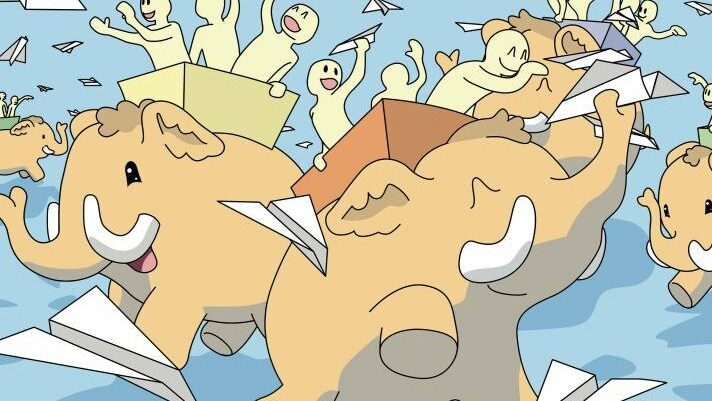
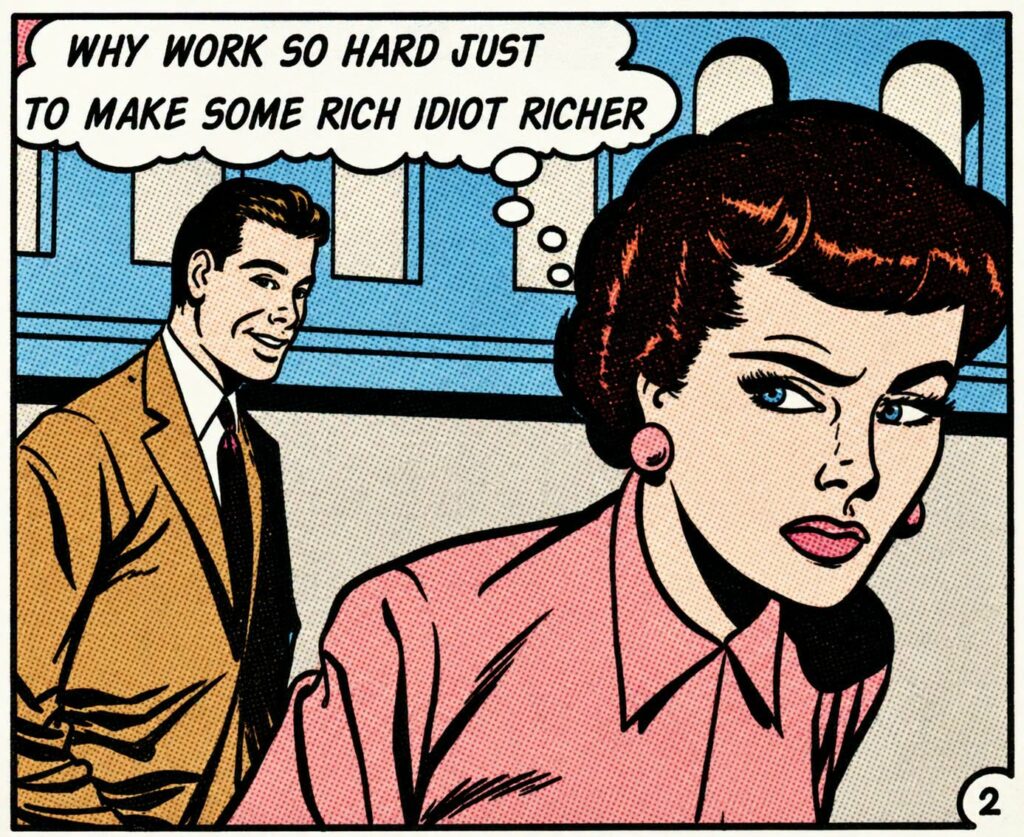
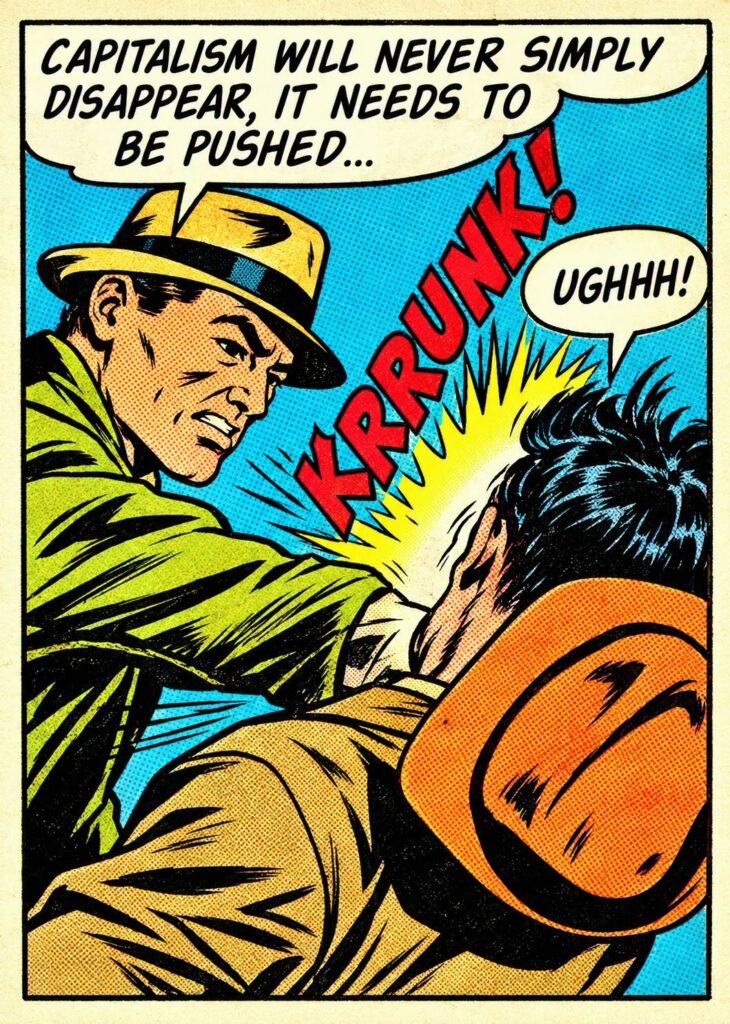
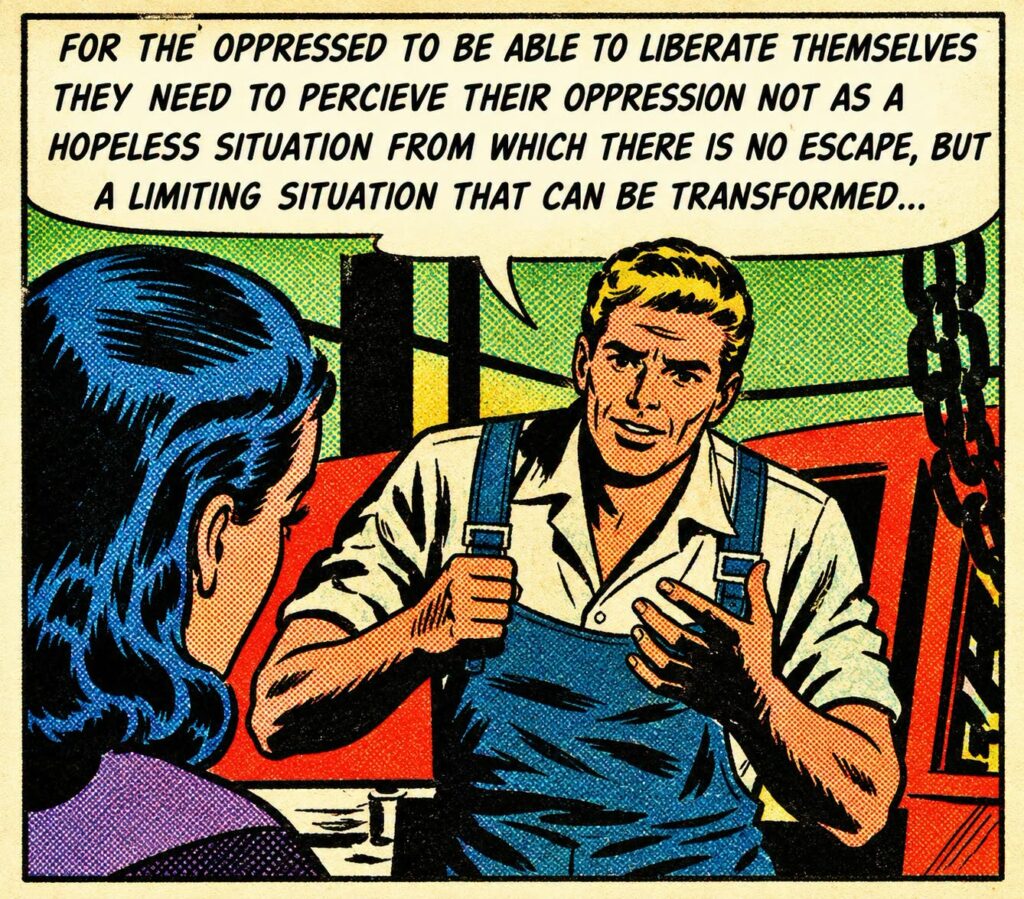
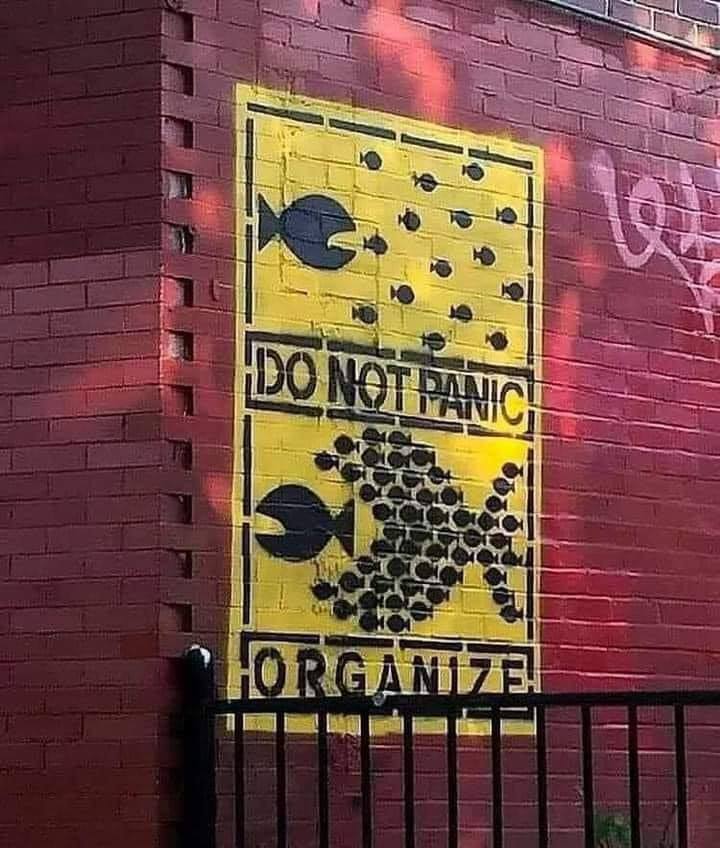
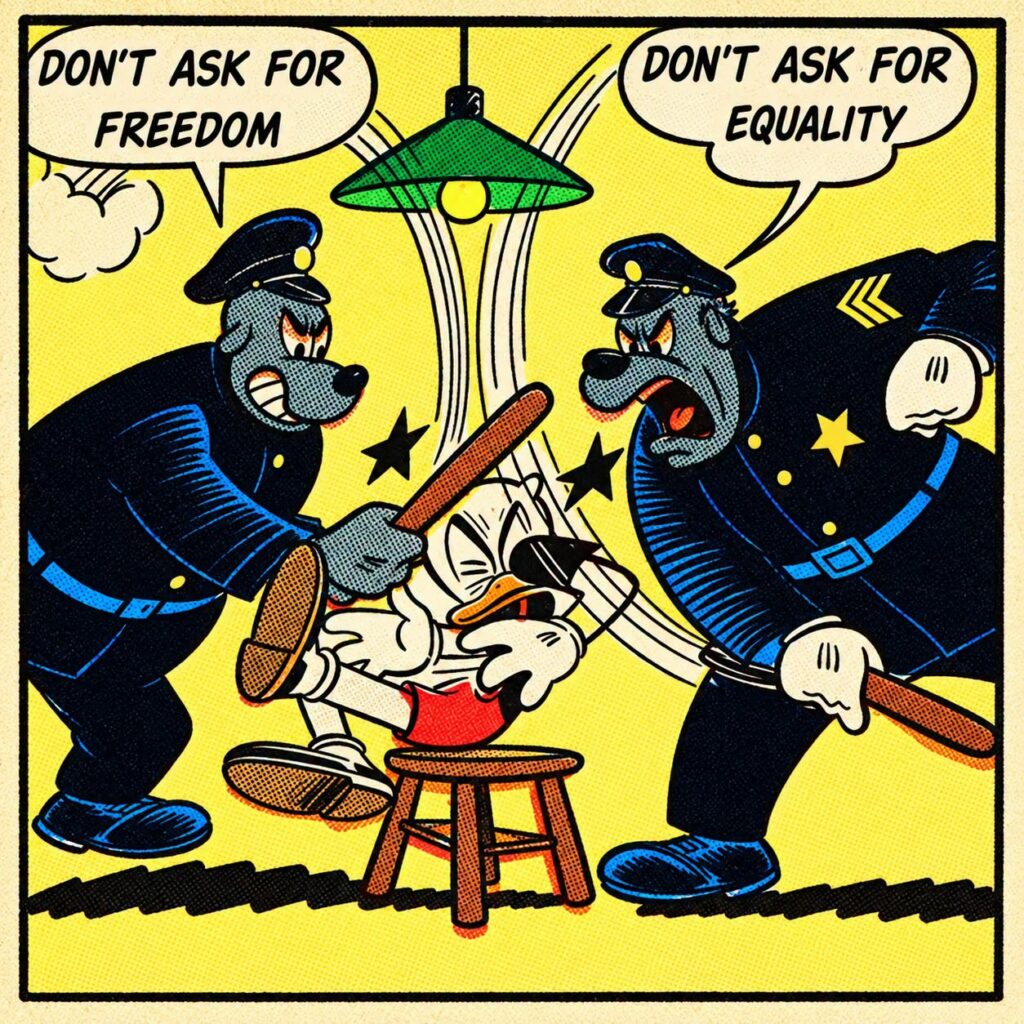
At the root of the mess we face is the worship of the #deathcult, the idea that competition, individualism, control and endless growth are simply human nature, they are not, they are systems we keep reproducing, even when it is making society unlivable.
We now have seed funding for the #OpenMediaNetwork projects. That gives us a chance to move beyond endlessly talking about the problems and start building practical tools for a different path. Were next? The #4opens gives us a basic test for the technology. The #OGB points towards grassroots governance. Together, these are part of a DIY toolkit for moving power away from the #dotcons, the #geekproblem and the #NGO mainstreaming that keep reproducing the same mess in supposedly alternative paths.
But funding is only a beginning, the real challenge is social – how do we compost the recurring cycles of paranoia, status games, dogmatic individualism of people pushing themselves towards the top? How do we build trust, shared responsibility and structures for people to work together without recreating the hierarchies we claim to be opposing?
To compost this mess, we need to look at the current arguments about the left and right paths. Yes, people understandably want to escape institutions they no longer trust, some retreat into private life, nature and their own projects, others double down on leadership and control. But walking away from society doesn’t make the wider problems disappear, replacing one set of bosses with another isn’t an alternative.
We need to think horizontally, by growing trust, keeping processes open, sharing power and making space for people to participate without demanding that they surrender their independence. So what can you do? Follow the hashtags, read the ideas, ask questions, find a part of the project you can contribute to – you don’t need to understand everything before taking this first step.
And yes, bring a shovel, social composting is messy work, we have plenty of accumulated shit to turn into something useful. A simple first test for #stupidindividualism, can you find your way into a shared project without demanding that it revolve around you? Can you help build something that benefits people beyond yourself?
If not, that’s not a reason to give up, it’s a place to start digging. The #openweb won’t rebuild itself, we need people, practical tools and grassroots structures that make cooperation possible. A little seed funding gives us a chance, the next step is building the crew to do the work to grow the commons.
At #OMN, we’re working to compost the #techdebt problem using federation and the #4opens. The idea is simple, build apps around shared data flows, not locked-in codebases. Keep the data useful across projects, while the code becomes a golden ladle in a #witchescauldron, a tool for shaping and serving the commons, not a container that owns it.
New codebase? Let the data flows move across. Less tech debt, less churn, more reuse. Build on what we have, rather than endlessly starting again.
The problem is that five years of funding have helped create a poor diversity of codebases and approaches. We need to mediate this blinded #geekproblem and grow more working grassroots paths that people can spread out across, rather than keep funneling everyone into the same few #openweb codebases.
Yes, there’s a lot of #techshit to compost. And yes, we need people with shovels to do the work of clearing the ground, reusing what’s useful, and planting seedlings along more native #openweb paths.
Less tech churn, more shared flows. Less lock-in, more commons.
Our choice for the last 20 years has been between the #deathcult and #fascism, how the hell did we get into this mess? And how do we find a way out? To build a path we need shovels, not saviours. We need to dig through the shit, compost failures and regrow paths to grassroots collective power. To work on this we need to stop waiting for someone else to fix things and start rebuilding the ground beneath our feet.
Politics is the human condition, you’d have to be mad as a hatter, or a liberal, to imagine we can somehow escape it. We live in messy times, and they’re getting dirtier. Politics isn’t going away. The question is whether we organize collectively to shape it, or leave the field to the #nastyfew people already digging our collective grave.
To be clear, what I’m putting forward doesn’t solve any single problem. What it does is take a practical step towards solving many problems, by changing how we work together. What we don’t need is market-based “green” solutions, elitist control and left-wing hero worship that all feed into the same trap – the #deathcult of #neoliberalism. That common sense keeps us looking upwards for leadership, waiting for markets to save us or hoping the next hero will finally get things right, meanwhile, our uncommon sense collective ability to act decays.
To use this shovel we need is to move beyond fear and control towards trust, open processes and grassroots power. And yes, this isn’t the normal #blinded path about finding another perfect ideology to worship, it’s messy, about growing the practical tools and relationships to allow us to act together, learn from failure and make change possible.
I should not HAVE to keep saying this, but this is what the #4opens process is about – moving beyond #stupidindividualism, beyond copying the #dotcons, and towards a path we can actually walk together. Open data, open source, open standards and open processes are practical starting points for shared responsibility. They test us, to build in public, hold power to account and create commons that belong to participation rather than private ownership.
The last 50 years of common sense monetization of everything is the #deathcult. So is the endless me, me, me that fragments our ability to act collectively. We won’t compost this mess by repeating the same individualistic habits with a few new slogans, we have to change the practices that keep reproducing it.
At #OMN, we’re turning to decades of grassroots experience of practical tools for collective action. #OGB, #indymediaback, #MakingHistory and #OMN are projects people have been working on for years. They’ve been stuck at the development stage for far too long. The challenge now is to get them moving, connect the people and skills involved, and turn activist traditions into working infrastructure for grassroots media, shared knowledge and collective organization.
This isn’t a magic solution, it’s a way to start growing many solutions from the ground up, rather than waiting for the market, the state or another self-appointed hero to deliver them. please get off your knees, pick up a shovel, the ground is covered in mess, but that’s exactly why we need to start composting. We have plenty of shit to work with, and plenty of seeds worth saving.
In the Open Media Network (#OMN), the commons represents both the foundation and the destination of the native #openweb. Rather than relying on #closedweb corporate #dotcons or top-down state power, re-framing the commons as a practical, lived alternative – what you might call a “quiet” form of collective ownership and mutual aid grown into daily social infrastructure.
The OMN makes a distinction between native and non-native technology paths. A native path starts from the commons: open, federated, participatory, interoperable, and community-controlled. Conversely, non-native paths import corporate assumptions – turning participation in a network into a commercial product, creating paywalled event cultures, or establishing centralized platform hierarchies. The OMN always asks whether technical infrastructure is being built to maintain a commons or to turn participation into an industry.
The OMN sees technology as a way to secure the commons, but it should never become a substitute for the commons itself. The OMN cautions against the #geekproblem and #encryptionist mindsets trying to replace human trust and accountability with hard code or cryptography. True commons require human relationships, transparent governance, shared memory, and mutual aid – technology is merely the piping that supports these social processes.
Rather than engaging in endless ideological debate or waiting for top-down system shifts, the OMN views growing the commons as a quiet, everyday practice. This happens through minimal viable structures – such as working groups, shared resource bases (like the #NGO#OpenCollective), federated media flows, and shared archives. By applying the #4opens (Open Data, Open Source, Open Standards, Open Process), communities keep their resources public and accountable without relying on private profit or blinded #stupidindividualist survivalism.
To grow a healthy digital commons, the OMN works on social composting: breaking down the “dead material” and toxic habits of both #FOSS and corporate tech. By taking the lessons and failures of past projects and turning them into organic material, communities build the collective capacity and trust needed to sustain shared networks long-term.
We need to incurage people to better balance personal coping with collective power to challenge the #DeathCult as we are living through a time when the world is becoming harder to live in, yet the dominant message is that we must learn to cope better as individuals. #Climatechaos accelerates, inequality deepens, and the #nastyfew accumulate wealth and power while communities struggle to meet basic needs. Democracy is hollowed out, public services are weakened, and the institutions that should protect us increasingly serve the interests of those who already hold power.
The answer our #fashionistas sell us is to often more self-help, become more resilient, set better boundaries, meditate, journal, practise mindfulness and learn to manage our anxiety. Some of these things can help, and people need space to rest and recover. But something is deeply wrong when the response to a collective crisis is an endless demand for individual self-improvement. If we are all busy fixing ourselves, we have less time and energy to challenge the systems making our lives harder.
This is #stupidindividualism, the assumption that social problems can be solved through private choices, personal discipline and consumer spending, rather than collective action and shared responsibility. It is one of the ways we worship the #deathcult – learning to experience structural failure as personal inadequacy. When work becomes unbearable, we are told to improve our resilience. When communities fall apart, we must develop better coping strategies. When insecurity becomes normal, we must manage our anxiety. The system remains unquestioned, while the individual becomes the problem to be solved.
Even care becomes another market, we are sold products, subscriptions and services to help us endure conditions we have little power to change alone. We are encouraged to become healthier and more resilient while the social and ecological foundations of our lives continue to deteriorate. Self-care matters. But there is a difference between caring for ourselves so we can live, and being encouraged to care for ourselves so we can tolerate the intolerable indefinitely. Self-care without community becomes sedation.
The same problem runs through the economy – this individualizing logic is not confined to self-help. It runs through the mainstream story about how the economy works. We are told that markets are natural, competition is inevitable, profitability is the ultimate measure of success, and alternatives must prove themselves within the very system they seek to change. Even the economic left remains trapped in arguments about how to improve capitalism’s imperfections, rather than questioning the assumptions that organize it.
The liberal fantasy of perfect competition hides the struggle taking place inside the economy. Real firms fight for markets, push down costs and seek advantages over workers, suppliers and rivals. This is not an unfortunate deviation from a harmonious market, it is central to how capitalism operates. Profit, and exploitation, is not simply a side effect, it is an organizing principle.
Businesses invest where they expect returns. Capital moves towards greater profitability, shaping employment, production, trade and investment. Communities lose industries and economic security because production has moved elsewhere. Environmental destruction can remain profitable when its costs are pushed onto workers, communities and future generations. What is profitable and what is socially useful are not the same thing.
An economy can grow while people lose security, solidarity and control over their futures. Environmental protection is supported when it makes money, and decent wages are defended when they improve productivity. But what happens when doing the right thing becomes less profitable? When justice depends on profitability, justice remains conditional.
This is the wider #deathcult, a path that treats accumulation as success even when the social and ecological consequences are destructive. Our head down worship of this mess teaches us to accept the economy as an impersonal machine, beyond our collective control, rather than as a set of human relationships and institutions that people have built, and can change.
The myth of the isolated individual. The economic story and the self-help story share a deeper assumption, that people are fundamentally isolated individuals, responsible for maximizing their own interests. But people are not calculating machines operating outside society. Our behaviour is shaped by relationships, emotions, culture, class, gender, nationality, history and the influence of others. What we want, what we believe is possible and how we act are all shaped by the communities and institutions in which we live.
When we build institutions around the assumption that everyone is an isolated competitor, we reward competition and weaken cooperation. We then point to the resulting behaviour as proof that competition is simply human nature. The system produces the behaviour it expects, then uses that behaviour to justify itself.
The same pattern appears in our personal lives. We are encouraged to compete for work, status and security, then blamed when we become exhausted, anxious or isolated. We are told to become better individuals rather than asking why our lives have been organized in ways that make collective well-being so difficult. This is not an argument against personal responsibility, it is a rejection of the idea that personal responsibility can substitute for shared responsibility. We cannot solve collective problems by treating every person as a separate problem to be fixed.
From private survival to collective care – the alternative is not to shame people who are tired, overwhelmed or unable to do more. Demanding that everyone become a full-time activist would reproduce the same pressure to perform and succeed that helped create the problem. People need rest, they need friendships, personal space and the freedom to step away from constant crisis. But personal peace is not the same as collective freedom.
We need to rebuild the social structures that make care possible: mutual aid, local groups, shared spaces, grassroots media, community resources and relationships where people participate without turning everything into a transaction. This means making participation possible at a human scale. Share skills and resources. Build trust, create spaces where people can disagree, work through conflict and take practical action together. Let people contribute what they can, rather than expecting everyone to do everything.
Care is not simply something we consume, it is part of how we organize our lives together. Real freedom means more than managing our own private existence, it also means having a collective say in the conditions we live in. The path we need now is from collective care to the commons, this is where the #OMN – Open Media Network – fits into a wider political project.
If the existing system organizes life around profitability and private accumulation, we need to build spaces where social usefulness, collective participation and shared responsibility can become organizing principles in their own right. We need grassroots media and archives that serve communities rather than advertisers. We need cooperatives and worker-owned organizations where people have a meaningful stake in decisions. We need shared infrastructure that communities govern, rather than relying on corporate #dotcons platforms and institutional #NGO gatekeepers.
We need to move past the people currently #blocking. The #OMN is not another platform promising to solve society through technology, it is a practical attempt to help communities share news, preserve collective memory, connect local struggles and build trusted flows of information. It is about moving power towards the people who create and use media, rather than leaving it concentrated in the hands of corporate platforms or a small groups of technical elitists.
The challenge is to better connect the technical, economic and social dimensions of the commons. To grow a different common sense. Were we have ways of understanding society that connect theory to lived experience, expose the power relationships hidden behind supposedly neutral systems, and help us test alternatives in practice. We need to stop treating the market as a neutral measure of human value, just as we need to stop treating individual resilience as the answer to collective breakdown.
The personal and the political meet in our everyday lives, in whether we have time to rest, whether we can afford to live, whether our communities have places to gather, whether our work is meaningful, whether we can trust one another, and whether we have any real power over the decisions shaping our futures. These are not separate problems, they are connected expressions of how society is organized.
So to sum up, the task is to move from private coping towards collective agency. Less pressure to optimism ourselves, more power to change the conditions we live in. Less isolation, more mutual aid. Less consumption disguised as healing, more care organized through community. Less dependence on profitability as the measure of value, more collective power to decide what matters.
We are not simply broken individuals who need to become better at surviving a broken society, we are people who need the collective space, trust and tools to build a better one. That is the work of the #OMN, the #openweb and the grassroots commons paths, connecting personal well-being with community well-being, critical understanding with practical participation, and #4opens technology with pushing collective power.
Over the last five years, the #Fediverse has been pushed down the path of copying corporate #dotcons: chasing raw user growth, building paywalled conference cultures, reproducing professional #NGO gatekeeping, and concentrating power around branded projects and scale. To balance this mess the Open Media Network (#OMN) path offers both the conceptual shovel and the practical social infrastructure to help dig the Fediverse out of this #mainstreaming trap.
The answer is not to discard the last five years or retreat into nostalgia, it is to compost our failures, break down what has gone wrong, recover the useful nutrients, and use them to grow more durable grassroots commons infrastructure. That means shifting focus away from scaling platforms and towards connecting much wider divers networks.
From platform scale to network scale – what we need to work on composting is that #mainstreaming assumes success means a recognizable brand, a convenient platform and millions of users. But grassroots power does not have to follow this corporate path – the #OMN path is to strengthen the horizontal connections between the thousands of autonomous, community-run servers that already exist across the #Fediverse.
By developing and sharing new #AP codebases, we help these communities work together more effectively, sharing news, preserving our own histories and building collective resources without surrendering local control or self-reliance. If you need a slogan, start here – Moving from Social Media to Social Infrastructure. This describes a practical progression for grassroots power:
Open media flows → shared archives → trusted flows → community organization → federated governance. We begin by working with people to publish and share their own media, to build the archives that preserve collective memory, the trusted flows that connect communities, and the organizational capacity to turn shared knowledge into active lived collective action.
The push for #mainstreaming encouraged authority to concentrate into small professional layers, institutional foundations and technical gatekeepers. Where we need more native grassroots forms of governance, that operates between autonomous communities rather than above them. The Open Web Governance Body (#OGB) is a path for this. Through mechanisms such as permissionless participation, sortition, recallable delegates and distributed decision-making, we begin building governance that connects communities without turning into another centralized institution.
The challenge is to make cooperation possible without making communities dependent, and to make collective decisions without handing control to a new professional class. In technical terms re-centring people-to-people – on this path at the heart of the #OMN is a direct challenge to the #geekproblem: the habit of trying to solve human and political problems with another technical protocol, encryption layer or app.
Technology matters, but it cannot replace human trust, shared responsibility or mutual aid. The #4opens – Open Data, Open Source, Open Standards and Open Process – provide a practical framework for keeping these social foundations visible and accountable. This means building technology around people and their relationships, rather than expecting people to adapt themselves to technical systems. It means recognizing that decentralization is not just about where servers sit, but about how people share power, make decisions and maintain their common resources.
The #Fediverse does not need to race to become the next corporate platform, what it needs is to recover its grassroots purpose and focus to balance growth to building on what already exists, to restart this by compost the failures of #mainstreaming, strengthen the connections between autonomous communities, build shared media and archival infrastructure, and develop federated governance that keeps power distributed.
Less branded platform growth, more network building, less blinded technical noise and more human trust. Less centralized control, more native grassroots power, that is the #OMN path towards a more durable #openweb Commons.
The tension between alternative cultures and the #mainstream is now rooted in 40 years of #neoliberalism – market logic replacing solidarity, grassroots movements being absorbed into #NGO process, and radical alternatives being forced to conform before they’re taken seriously.
This is how the system reproduces itself – block the bridges, co-opt what survives, and call the result “common sense”. Where we need bridges that connect without forcing conformity, collaboration without co-option, and grassroots alternatives that keep their radical purpose while sharing what works – less absorption, gatekeeping and more bridges.
We have more than enough code, what we need is technology that helps people build power together. If you work in free software, #FOSS, decentralized networks or the #Fediverse, you probably already understand some of the problems with corporate #dotcons platforms. You may be building alternatives because you want technology to be more open, more democratic and less controlled by a handful of corporations.
That is a good place to start, but there is a recurring problem in grassroots technology – we keep trying to solve social and political problems by building more technology. A new protocol, another platform, a different database or a cleverer technical architecture is offered as the answer. Yet the same old problems keep returning, concentrated power, passive users, gate keeping, status games and communities that struggle to organize themselves.
This repeated outcome is what we call the #geekproblem, the habit of treating human problems as if they were primarily technical ones. The way past this is not a blinded luddite reaction to abandon technology, it is to connect our technical skills to the social realities they are supposed to serve, that is where the #4opens as social technological path comes in.
Open source, #FOSS is by it self necessary, but it is not enough. Open-source code matters, open protocols matter, without them, communities have little chance of building infrastructure they can inspect, adapt and maintain themselves. But open code does not automatically produce an open community. A project can publish its source code while keeping its data inaccessible. It can implement an open protocol while making participation difficult. It can claim to be decentralized while leaving all the meaningful decisions in the hands of a few developers or administrators.
Think about a project that runs on an open-source codebase. Can its users access and move their data? Can other projects connect to it using shared standards? Can the community understand how decisions are made, challenge them and take part in shaping the project’s direction? If the answer is no, then the project may be open in a narrow technical sense while remaining closed in practice.
This is why we use the #4opens as a practical framework:
Open Data: The data can be accessed, reused and shared under clear, appropriate terms.
Open Source: The code can be inspected, modified and redistributed.
Open Standards: Interfaces and formats make it possible for different systems to communicate and interoperate.
Open Process: The decisions, governance and working practices are visible enough for people to participate and hold power accountable.
These four openings work together, none is a substitute for the others. The path we hope to take from this is rebalance people-to-people before the normal peer-to-peer were decentralization is presented as a technical property. Build a peer-to-peer network, distribute the data, remove the central server and the problem is solved. But a network can be technically decentralized and socially dysfunctional when peers still fight, exclude people, hoard influence and reproduce the same hierarchies found on corporate platforms.
This is also where we encounter the #encryptionist tendency, the belief that cryptography and protocol design can replace the need for human trust and collective responsibility. Encryption is essential where privacy and security require it. It protects people from surveillance and helps keep private communication private. But it cannot decide how a community should resolve a disagreement, distribute responsibility or hold an administrator accountable. Nor can it establish that every person using a system is acting in good faith.
#P2P needs to mean people-to-people before peer-to-peer. The point of decentralized technology should be to strengthen relationships between people and communities, not to pretend those relationships can be engineered away. For developers, this changes the questions we ask. Instead of only asking how to eliminate a central server, we also ask how communities can share infrastructure, moderate their spaces, move between services and maintain control over their collective work.
The technical architecture matters, so does the social architecture. We need to stop rebuilding the same problems Grassroots technology has a familiar cycle. A project emerges with a strong vision, builds useful tools and attracts a community. Over time, technical complexity grows, a small group accumulates influence, participation narrows and the original purpose becomes harder to recognize.
Eventually, people leave or start building something new. The next project promises to solve the previous project’s problems, but often carries the same habits into a fresh codebase. We call this #techchurn, the problem is not that developers experiment or that software needs replacing. It is that we repeatedly invest energy in new technical systems without doing the harder work of changing the social patterns around them.
We reproduce #stupidindividualism: everyone wants autonomy, but few people want the shared responsibilities that make autonomy possible. We fall into blocking and exclusion instead of building workable ways to handle conflict. We mistake technical authority for community legitimacy. And when governance is left informal, power does not disappear. It becomes harder to see.
Someone still decides what gets merged, which features matter, who receives access, which conflicts count and whose complaints are ignored. If these decisions cannot be understood or challenged, an ostensibly open project can become a small technical fiefdom. Open Process means treating governance as part of the infrastructure, not an awkward extra to discuss after the code is written.
That does not mean every code review needs a committee or every decision requires a vote. It means being clear about who decides what, how decisions can be challenged and how responsibility can be shared or handed over. Good technical work should make those relationships more accountable, not hide them behind complexity.
Build infrastructure for the commons – the #4opens are not another badge to put on a project website. They are a way to ask whether our technology helps communities build and maintain shared resources. A commons is more than something that is free to download. It involves people who use, contribute to and take responsibility for a shared resource, with practices that help keep it useful and prevent it from being captured by a narrow interest.
This matters for grassroots media, community archives, local networks and the wider #Fediverse. These projects need more than software that runs. They need ways to preserve collective memory, share information across communities, moderate public spaces and maintain infrastructure beyond the lifetime or interests of any single developer.
For the Open Media Network (#OMN), this means thinking about media as shared objects moving through trusted community flows, rather than treating every platform as a separate walled garden. It means connecting projects through open standards and bridges, while leaving communities room to make their own decisions. The goal is not to build one giant system that controls everyone. It is to help local projects work together without surrendering their autonomy.
That is a different technical challenge, that asks us to build for interoperability, repair, reuse and community control rather than endless engagement, growth and platform replacement. To find this path we need to look for the gaps, perhaps the code is open but the data is trapped, perhaps the protocol is open but the project has no workable way for its community to influence development. Perhaps the governance looks good on paper but all the practical knowledge sits with one exhausted administrator.
These are not reasons to dismiss a project, they are places to start improving it. You can help document systems so others can maintain them. You can make data easier to move. You can build bridges between existing projects instead of another isolated platform. You can help communities share moderation and maintenance. You can make governance visible without turning every small task into a bureaucratic exercise.
Above all, you can work with the people who will actually use and maintain the tools to move from technical skill to collective power. The wider problem is political. Corporate platforms concentrate power because their business models reward extraction, dependency and control. Replacing their code without challenging those relationships will not get us very far.
We need to stop treating every failure as an invitation to start another platform. We need to connect our technical work to existing grassroots communities, shared resources and the practical struggle to build alternatives. The #4opens offer a simple starting point. They help us ask not only whether technology works, but who it works for, who controls it and whether people can collectively change it.
For technologists, this is an invitation to bring your skills into a bigger conversation. You do not have to become a political theorist, abandon your craft or agree on every detail. You do need to recognize that technical decisions shape social power, whether or not we choose to discuss that openly. The challenge is not simply to write more open code, it is to build open, usable and accountable infrastructure that people can make their own.
Build tools people can understand, share what they need to maintain them. Connect projects rather than trapping them. Make decisions visible. Help communities develop the confidence and capacity to govern their own infrastructure. That is how we move beyond the #geekproblem and begin to compost #techchurn into something more useful.
Open the code. Open the data. Open the standards. Open the process. Put people first. That is the #4opens. That is a practical starting point for rebuilding the #openweb as a grassroots Commons.
Online and offline, we are living through an interconnected crisis of ecological breakdown, economic inequality, political disillusionment and social fragmentation that are not separate problems. They feed into each other, creating #mainstreaming paths that are increasingly unable to meet basic social and environmental needs.
The usual response to this now visible mess is to ask the same institutions that created these problems to keep managing the consequences. the chattering classes that run our governments promise new policies, corporations promise new technologies, and professional campaigners promise another round of reform. There people are inside the worship of the #deathcult, and their efforts are constrained by the paths they walk, endless growth, profit extraction, bureaucracy, electoral cycles and the concentration of #nastyfew power.
So this now visible mess, is not only a problem of individual greed or corruption, it is structural. That the #mainstreaming paths keep reproducing the problems because of the unthinking relationships remain unchanged. From common sense, and the #OMN perspective, this is where we need to change the conversation, to not keep relying on better management of #deathcult paths – we need to build the practical foundations of something different.
The old idea of #commons (a polite way of saying #communism) offers a grassroots path away from this spreading political frustration towards practical collective paths. This new path is based on older anarchist ideas, that are critical of the two dominant ways of organizing: the market and the state. Were we are told to buy what we need through commercial markets or campaign for governments to provide it. Yes, maybe both have their place, but neither gives communities any real much control over the resources and paths they need to grow.
So what is the idea of commons? let look at this, commons exists when people share responsibility for resources, establish collective “rules” and manage those resources for mutual benefit. This can mean land, housing, food, energy, knowledge, software, media or the infrastructure that connects communities. The point is that a Commons is not simply something owned collectively, it is something people actively maintain and govern together.
Examples, at a grassroots level, a community garden, a housing cooperative, a repair café, an open-source project and a grassroots media network can all be part of this path. They look different, but each creates space for people to become participants rather than remaining consumers, clients or spectators.
From a practical #DIY path we need to move past the #blocking of thinking of a utopian blueprint waiting for the right political moment. Commons already exist, our work is to strengthen them, learn from their successes and failures, and connect them, in the #OMN work using technology to widen political and economic alternatives.
It is about moving from spectators to participants, the most damaging consequences of our current blinded political culture is the loss of agency. People are repeatedly told that the important decisions are made elsewhere: by governments, corporations, financial markets, technical experts or professional #NGO organizations.
This path has lead to years of broken promises, so it is little surprise many withdraw. Some become cynical about politics; others retreat into, conspiracy, private life or the exhausting routines of survival in late stage capitalism. We can see this only as apathy, when it is a reasonable response to having little meaningful influence or power.
People need practical ways to take part in shaping their lives. Communing offers this through experience, people come together around a shared need, make decisions, distribute responsibilities, deal with disagreements and see the results of their work. They develop the skills and relationships that make further collective action possible.
This is political activity, even when nobody calls it politics – a community that takes control of its housing, food supply, energy or media infrastructure is not merely providing a service. It is changing who has power, who makes decisions and who benefits from the resources being created. The political shift is from asking those above us to solve everything towards building the collective capacity to solve more of it ourselves.
So yes our path is to build the new, but understand the struggle, that meeting real needs to make the old arrangements less necessary. This is a valuable corrective to a political culture that is trapped in permanent resistance, to do more than protest against enclosure, extraction and corporate power, we need to create shared resources that people can actually use.
But we should not mistake this for the idea that politics can be avoided. The existing system does not simply disappear because we build something better. Land, housing, infrastructure and productive resources are already controlled by power if #nastyfew interests and our own common sense. Communities face legal barriers, financial pressures, unequal access to time and skills, and the constant risk that successful initiatives will be absorbed, commercialized or captured by institutions.
Building the Commons is therefore both constructive and political. We create alternatives while challenging the conditions that prevent them from flourishing. The path is not to fight every battle on the opponent’s ground, more to develop enough practical capacity, shared resources and collective confidence that we have more choices about where and how to struggle.
The Commons needs protection against capture – shared ownership does not guarantee a fair or democratic path. A blinded commons might reproduce the same inequalities it set out to overcome. A closed group can accumulate informal power, technical experts become gatekeepers, and participation reduced to approving decisions made elsewhere.
This is where governance projects like the #OGB matter, communities need transparent processes, meaningful participation, accountability, accessible conflict resolution and ways to challenge people who accumulate too much control. Responsibilities shared, decisions remain open to scrutiny, and resources be protected from being quietly transferred back into private ownership.
The same principle applies to funding, yes, grants and investment help build useful infrastructure, but they can also redirect projects towards the priorities of founders. We need ways to bring resources into community control without allowing outside money to take control of the community.
The aim is to make the Commons durable without turning it into another institution that exists primarily to sustain itself. To help with this we need to move from isolated projects to a grassroots networks. A single local project can meet a local need, a connected network of projects begin to become change and change communities.
This is the idea of an wider Commons: many #4opens independent initiatives, rooted in their own places and circumstances, sharing knowledge and resources while retaining local autonomy. We do not need every community to follow the same path. Different places have different needs, histories, cultures and resources, diversity is a strength. Some experiments will fail; others will work well enough to be adapted elsewhere. What matters is that people can learn from one another instead of repeatedly starting from scratch.
Open-source #FOSS software is part of the answer, but it is not enough. We need grassroots digital infrastructure that is open in practice: open data, open source, open standards and open processes -the #4opens – combined with trust, human moderation and community responsibility.
Technical federation, like #activitypub allows this to grow without centralization were communities share tools, infrastructure, experience and political influence without handing their decisions to a distant headquarters. This is a space where grassroots organization becomes a bigger political path. Connected together, we can become the material foundations of a different social order. The process is gradual, uneven and full of conflict. But it creates something that symbolic politics alone cannot: an expanding body of people with practical experience of doing things differently.
The #OMN projects are a direct connection to grassroots media and the #openweb. Communities need to communicate, preserve their histories, share knowledge and coordinate action. Yet much of our digital public life is controlled by the #dotcons: commercial platforms that turn participation into a resource to extract, measure and sell. With our unthinking #fashionistas even supposedly alternative spaces become dependent on centralized platforms, opaque moderation and technical gate-keeping.
The #OMN is not another social media platform. It is a path towards shared grassroots infrastructure for news, archiving and, further down the road, governance. The aim is to help communities create and manage their own media resources, while connecting their work through open networks rather than surrendering control to the normal centralized platforms.
Media is part of the political infrastructure of the Commons. If communities cannot tell their own stories, preserve their own histories or communicate beyond corporate channels, their capacity to organize is weakened. A grassroots #openweb can help make local knowledge visible, allow successful experiments to be copied and give independent initiatives ways to connect. It can help turn scattered projects into a living network without requiring them to become one large organization.
From the local to the political – the commons is not a replacement for every form of politics. We still need struggles over public policy, land, housing, workers’ rights, ecological protection and the distribution of wealth. We need to challenge the power that keeps resources enclosed and decisions out of public hands. But these struggles become stronger when they are connected to practical alternatives.
A housing campaign can do more than oppose unaffordable rents if it also helps build community-owned housing. A food campaign can do more than expose an unjust supply chain if it develops cooperative ways to grow and distribute food. A media campaign can do more than criticize corporate #dotcons and #traditionalmedia platforms if it helps build shared, community-controlled infrastructure like the #fedivers.
This is how the commons becomes part of a bigger political path, not by asking everyone to agree on one path, but by connecting the practical work people are already doing around shared needs. The work provides a meeting point between people who might disagree about theory but can cooperate around tech, housing, energy, care, media or the future of their neighbourhood. Shared practice builds relationships, and those relationships support wider political action.
Over time, these connected efforts move resources out of extractive circuits and into forms of ownership and governance that serve the people who sustain them. This is a material shift in power, not just a change in language. The work starts where we are, there is no single blueprint, central plan or perfect organization that will deliver this transformation. The commons grows through people trying things, sharing what they learn and building on one another ‘s work.
That means starting with real needs, keeping projects accessible, making decisions accountable and sharing the tools and knowledge that others can reuse. It means accepting that communities are messy, that conflict is unavoidable and that trust has to be built through practice rather than demanded as a slogan.
It also means resisting the #geekproblem, the idea that the right technical system can solve social problems. Technology supports relationships and participation, not replaces them. The same applies to political organizations, structure matters, but it needs to remain accountable to the people doing the work.
We need to move beyond the choice between endlessly criticizing the existing system and retreating into disconnected #blocking. We build practical Commons while connecting them into a wider movement to challenging the mess that keeps people powerless.
The current #mainstreaming encourages us to see ourselves as isolated individuals competing for security and influence. The commons begins somewhere else, with the recognition that much of what makes life possible is already shared, and that we can organize more of it around mutual care and collective responsibility.
This is a political choice, to shifts power from extraction towards participation, from passive consumption towards communing, and from centralized control towards connected grassroots autonomy.
For #OMN, the task is to help build the media and digital infrastructure that makes this possible, on this path we do not have to wait for permission. We do have to do the work, learn from our mistakes, protect what we build and connect with others doing the same.
Build locally, share openly, govern together, connect without centralizing is how we begin to grow a different future from the ground up.
We don’t need to believe machines suffer to recognize that the system building them is already causing real harm. The #AI consciousness debate is a useful example of how the #deathcult works – we are encouraged to worry about whether a chatbot can suffer, while the human labour, exploitation and environmental costs of building these systems are pushed out of sight.
Fluent language is not evidence of consciousness. #AI can produce plausible expressions of distress without there being evidence that it feels anything. We need to separate what the technology can demonstrate from the stories being sold around it.
This is not about shutting down philosophical questions. It’s about asking why corporate #PR is so keen to turn software into a personality, and who benefits when we start treating commercial products as moral subjects.
The #geekproblem narrows the discussion to what the technology might be, while the wider social and political questions disappear. The #dotcons turn that confusion into engagement, investment and power to control us.
An #OMN response starts with the #4opens: look at the evidence, expose the incentives, make the processes visible, and ask who benefits. Keep our attention on the people, labour and communities affected by these mainstreaming paths.
We don’t need to believe machines suffer to recognize that the system building them is already causing real harm. Stop focusing on the PR story to look at the material reality, build the #openweb around people, not the next tech bubble please.
This #blocking conversation on the #oxfordboaters chat is a intolerant conflict between trying to manage the immediate problem and building the collective process needed to stop the same problems recurring. Lets look through a needed #KISS lens at the cludge between reactive (stupid)individualism and the harder work of building community structures.
The immediate conflict is a symptom, not the underlying problem
The conversation is filled with suspicion and frustration about people, conduct, and the proposed response to HT. There is a concern, and a #blocking that the group is accommodating behaviour that should be challenged. This is a two sided mess we need to compost as these conflicts become more damaging because the group lacks the processes and structures needed to deal with any collective working path.
Politeness and niceness become tools of control
The articles smiling-faced vileness and WhatsApp plebiscites reveal the wider mess we need to compost. That enforced niceness discourage the needed confrontation, that composting is about. Our focus on informal #dotcons chat platforms encourage reactive opinions and shallow consensus rather than sustaining any working collective decision-making. People trying to challenge dysfunctional paths are framed as the problem because they make the people blocking and obscuring uncomfortable.
In this self creating mess, the pressure to remain agreeable prevents a working group empowered culture from developing the capacity to act effectively. This is not an argument against kindness, it is an argument against using politeness as a weapon of control to substitute for accountability, political clarity and collective action we need.
The current flipping of #WhatsApp groups is this same problem because it shapes the process. This is a part of the blinded objection to setting up the #opencollective page, its unthinking #blocking, not merely technological. The group had an opportunity to move away from the limitations of the #dotcons but instead blindly reproduced the same failed patterns and paths that are shaping the current mess.
The underlying argument here is simple that the tools we use shape what we can collectively do. When the group stays locked into a reactive chat environment, where decisions emerge through fragmented discussion and informal fear based influence, it becomes harder to maintain any shared direction, to challenge obstruction or organize sustained work we need. The medium is helping to reproduce the dysfunction we already suffer from.
The group needs basic, half step, working activism infrastructure, like moving to Signal chat from WhatsApp, not just more noise, and blind reaction inside the #dotcons. Then we have #OpenCollective role in cutting through and composting this crap, to establish a clearer organizational and resource base. then the simple process of Working Groups give people defined areas of responsibility and #KISS accountability, with out this the is ZERO trust that we can deal with conflict without repeatedly returning to the same informal blocking arguments and paths.
The purpose for this change is not bureaucracy for its own sake, it is to make collective action possible without relying entirely on personal relationships, goodwill or whoever happens to be most active in the chat.
Working groups are not a magic solution
Yes, working groups often disappear, and the same people end up doing all the work. That is a genuine challenge to any horizontal path. Composting is not just adding more material to the pile, it requires active work to turn the material into something useful. A working group without responsibility, follow-through and a shared direction is just another layer of organizational clutter. What it dose give us, and what we need, is transparency and focus, it can be used as a path to organically work round the nasty-ness of smiling passive blocking.
We need to focus, on taking responsibility for growing the path out of our group’s own dysfunction. The difficulty is not an external force that the group can do nothing about, the group is reproducing its own problems through its current practices. Instead of treating every dispute as a fresh crisis caused by particular people, the group needs to examine the conditions that allow the same patterns to recur. That means moving past blame to structure, from reaction to process, and from informal influence to shared responsibility.
The immediate HT response is distracting from the work
The disagreement is not necessarily about whether NBTA proposed response is factually or tactically sound. It is about whether solving the immediate problem is being allowed to substitute for fixing the conditions that keep producing these problems. The group needs an active pause, to examine the wider issues and decide whether it is willing to pursue a more functional collective path.
What is not working or sustainable is the current messy flow of immediate conflict, suspicion, frustration, disagreement. We need to compost the mess of enforced niceness, reactive chat, informal power and avoidance of any difficult questions. Its been a year and we still have no reliable shared process, clear responsibilities or sustained collective organization. OpenCollective, working groups, #KISS structures and accountable processes. So the question that matters is can we do the difficult work of changing our practices, or just continue reacting to each new crisis?
Lets look at these flows – first, #stupidindividualism is strong, treating each incident as a problem of individual behaviour rather than examining the social structures that reproduce it. Even when people recognize that something is wrong, they remain trapped in personal reactions, competing opinions and informal status games. The answer to this kinda mess is not to build an elaborate governance system, it is to establish the minimum viable structure that allows our group of disparate boaters to make decisions, share responsibility, resolve disagreements and get things done. Simple does not mean structure-less.
We need to focus on social composting of the existing conflict, frustration and failed attempts are the raw material for building something better. But they do not transform themselves, the current people (or a smaller subset of them) has to do the work of turning experience into shared learning, practical process and renewed collective capacity. The important distinction is that a working group, an OpenCollective account or a new chat platform is not, by itself, an alternative. These are tools, the alternative is the commons practice that makes them useful. There is still to wide a gap between identifying the problem and making the solution work in practice.
Peoples objection exposes this – how do working groups avoid becoming inactive, and how do they stop the same few people carrying all the work? The next step needs to have solid moorings, what is each working group’s purpose? Who has committed to take responsibility for this work? The #4opens is core here, how are decisions made and communicated? What happens when commitments are not met? How does the group review progress and change direction? Yes, without answers to these questions, calls for structure risk becoming another round of mess created discussion. With them, #KISS becomes a practical path rather than just a principle to stand on.
The Oxford boaters’ problem is not simply a difficult dispute with #HT, it is that the group is trying to act collectively through bad, reactive and conflict-avoidant practices that repeatedly undermine our ability to act. Rather than building the simple, accountable structures needed to turn shared frustration into collective power we need to keep our moorings. That is the central #OMN point – stop trying to fix each new mess in isolation, and start building the community process that compost our mess into something useful.
This mess is driven by climate breakdown, growing inequality, technological disruption, war, political instability and the weakening of democratic institutions, these are no longer separate problems, they reinforce each other. At the same time, we are seeing a feedback loop of political movements built around fear, scapegoating, hierarchy and fantasies of escape. This creates a basic question we need to focus on – how do we build the means to live through these crises together, rather than retreating into individual survival, authoritarianism or delusions of technological escape?
One of the strongest #blocks running through the current crisis is, what could call, exit culture. You can see this in the wealthy #nastyfew who push the mess attempt to buy their way out through the nasty fantasy of private security, property and technology. Some feed political movements that imagine an escape into an ethnically or culturally purified nation, the hard right. Some religious movements look towards another imagined world. Some technology #geekproblem culture imagines that humanity can escape its material limits through AI, automation, space or digital transcendence.
The world is broken, so find a way out, a dangerous stupid social response to the systemic social and ecological crisis. But any one with any sense can see there is no #stupidindividualism exit from #climatechaos. There is no technological #dotcons platform that allows us to escape social relationships. And there is no bunker large enough to protect a society from the consequences of destroying the living systems it depends upon. What is needed is we need to actively be composting this mainstreaming mess, the alternative is not to escape, it is to focus on becoming more capable of being here.
Then on the left the is a matching fantasy, we romanticism collapse, but it is not automatically progressive. It is easy to look at broken institutions and think that their collapse must create an opportunity for something better. But collapse has no political direction of its own, maybe it can produce mutual aid, solidarity and new forms of democratic organization. More likely we get authoritarianism, scapegoating, violence and stronger hierarchies.
The outcome depends partly on what people and communities are ready to do when crisis washes over them. If communities have networks (like the #OMN), relationships, communication systems, practical skills and ways of making decisions together (like the #OGB), crisis can become an opportunity to build something new. If they don’t, people are much more likely to fall back on fear and whoever appears to offer simple answers.
So preparation matters, but preparation is hopeless, if people do not pick up the tools or when it means becoming an individual survivalist. We need to balance this commons sense urge, with working collectives to create social relationships and grow ways of looking after each other. It is now 20 years past time to move for survivalism to #KISS mutual aid, we need focus on how do we make sure people can look after each other when things become difficult?
That means better late than never to building relationships before the crisis, knowing who is around us, knowing how to communicate, where resources are, how to organize. Knowing how to disagree without destroying the group, how to make decisions, share responsibility. This is grassroots working democratic resilience from the bottom up.
We need grassroots repossess to authoritarian pushing insecurity – find someone to blame – the nation against the foreigner – the majority against the minority – the “real people” against outsiders – the pure against the contaminated. The hard right are pushing belonging through this kinda blaming exclusion.
We need to work to balance this mess, we need another form of belonging, that means building coalitions capable of holding difference without turning every disagreement into another power struggle. We need to compost the false choice between local organizing and large-scale networks, we need the strong local relationships to provide the social foundation of our change and challenge.
But we also need #KISS technology as tools, #4opens flow networks to allow those communities to exchange knowledge, resources and experience without surrendering their autonomy. This is one of the reasons the #Fediverse and #ActivityPub are interesting. Federation gives us a technical path where independent communities can remain independent while still communicating with each other.
This principle can extend beyond the current #openweb reboot of the fedivers, copying #dotcons social media. We need to build projects like the #OMN based on local relationships + open networks = distributed resilience. This is a much more interesting path than simply building another or replenishing the normal centralized platforms we currently live inside. This move need to be based on technology that supports social process rather than replace it with blinded control.
We don’t need a perfect future, a lot of political narrow thinking is trapped between two fantasies. One says, the existing institutions will eventually fix themselves. The other says, the whole thing has to collapse before we can build something new. It is dangerous to accept either of these paths blindly. What we do need is to grow, trust networks, practical democratic experiments, its fine that none of these are perfect. They need to work better than the current mess, to connect people and communities, so they can step from fear to cooperation.
The current hard right is good at turning insecurity into fear, they feed from fear of migration, cultural change, technological change. Fear of economic collapse, losing status and fear of the future. But the knee jerk reactions cant be to simply tell people not to be afraid as people have real reasons to feel insecure. The better balancing is to build something that gives people something better to fall back on than fear. That means replacing fear → scapegoating → authoritarianism with crisis → cooperation → solidarity. Not in a utopian sense, but as practical path.
On the native openweb path this is the question and the bigger reason for building the #OMN. As we don’t know exactly what the next twenty or forty years will look like, we do know that the existing system is becoming increasingly unstable. We know that #climatechaos is accelerating, that #dotcons technology is concentrating power. We know that authoritarian politics is growing. And we know that simply defending the existing structures is not enough.
So rather than waiting for the next crisis to tell us what to do, we start building now. Practical grassroots paths, not as an escape route, another #closedweb platform as smoke and mirrors for another hierarchy waiting to take control. A network of people and communities that can communicate, remember, cooperate, organize and govern themselves. That is the native #openweb path to compost this mess, that is the practical meaning of the old slogan “another world is possible”.
We don’t have to wait for another world, we can start building the means for it here.
The last five years have changed the #Fediverse. What started, grassroots, commons-based native path has become much more visible. More people have arrived, more organizations have become interested. There are more conferences, more funding conversations, more institutional involvement and more attempts to make the Fediverse part of the wider technology landscape.
Some of this is useful, but it also creates a question that is harder to avoid – what do we actually want to carry forward from the last five years? Perhaps the answer is not to defend everything that has happened, or to reject it all. Perhaps we need to compost it, were omposting means taking what has grown, including the dead material, separating out what is useful and allowing something new to grow from it.
Lets look at an example – the paywall is not just about the ticket – this becomes visible in arguments about conference tickets and paywalls. At one level, the argument is simple, events cost money, venues cost money, travel costs money, some people organizing events need to be paid. But that isn’t really the interesting part, the question that matters is what a paywall means inside a commons-based culture. For someone who comes from the #openweb, free software, grassroots media and other commons traditions, putting a price on entry feel wrong, not just a financial barrier.
It becomes an ideological barrier as the message shift from “This is something we are building together.” towards “This is something you consume if you can afford to enter.” That distinction becomes a block, particularly when some of the people being asked to pay helped build the culture, infrastructure and ideas that made the network possible in the first place. The question therefore isn’t whether events should cost money, it is, are we paying the costs of maintaining a commons, or are we turning participation in the commons into a product? Those are not the same thing.
Let look at this shift from commons culture to event culture – over the last five years, the #Fediverse has developed an increasingly visible event culture. Conferences, workshops, panels and gatherings can be valuable, they create relationships, spread knowledge and bring people together. But there is a danger when the pay to enter events are pushed to the centre of the network. The commons starts to decay, funding resources and focus then starts to orbit around conferences rather than communities. This grows when access is controled by money, professional status, travel and institutional connections.
This doesn’t happen because somebody decides to push us into a #closedweb path, rather it is a common sense mainstreaming organic mess that happens gradually when a grassroots network becomes successful. Success brings institution thinking (#NGO), these institutions bring funding, funding feeds and creates professional roles. Professional roles push a feedback loop creating more top down organizations, these create events with paywalls.
This money creates barriers that eventually a culture that begans with people simply building things together can start looking surprisingly similar to the systems it originally wanted to move beyond. This is not necessarily corruption (though it often is when you lift the lid), it is institutional #NGO drift. Working to recognizing this mess making is part of keeping the commons alive were we need to fund and support the what can we build together? While still actively questioning who gets recognized, funded and invited? As those questions produce very different cultures. The first is about participation and making things, the second is about access to an emerging institutional path.
This is one of the tensions the Fediverse now has to work through, were the answer to this question is not simple, yes, we need to not to romanticize volunteer culture either, as volunteerism has its own exclusions, it to can depend on people having spare time, money and privilege. The point is to find ways of funding the commons without turning the commons into an industry. The last 5 years we have spent enough time trying to prove that the #Fediverse deserves to exist.
The more interesting question for the next 5 years is – What did we actually learn? What worked? What failed? Which projects created durable infrastructure? Which relationships survived? Which forms of organizing created useful results? Which created endless meetings? Which assumptions turned out to be wrong? Which things should we stop doing? And we need to do this without a paywall, to make this composting useful. So, to repeat, don’t throw away the good stuff, composting isn’t destruction, as there is a lot worth keeping.
The last five years have demonstrated the practical value of open standards, federation, independent communities, people running their own infrastructure, interoperability, grassroots paths, mutual aid, trust built through practice and the ability to leave one system without losing the network. These are not just historical curiosities, they are the useful material from which the next seeds can grow. But we have made mistakes over the last 5 years by thinking that moving forward means abandoning the culture that created the #Fediverse in the first place. And yes the is balance, equally, the mistake would be to freeze that culture in place. We maybe need to keep the principles while changing the practice, a way of looking at this is native and non-native paths
This is where the distinction between native and non-native paths becomes useful, a native path starts from the assumptions of the commons open, federated, participatory, interoperable and community-controlled. A non-native path can still use ActivityPub or Fediverse technology while importing assumptions from another world, closed access, professional gate-keeping, centralized authority, ownership, status and consumption. The technology alone doesn’t decide which path we take, #ActivityPub can carry both, as an open protocol does not nesserserly push an open culture.
This is one of the important lessons of the last five years, we need to pay attention to the social structures growing around the plumbing. What should the next five years look like? Perhaps we should balance pushing the #dotcons copying #Fediverse of five years ago. We need different streams to grow the useful material and build the next layers.
Not more copy’s of social-media platforms, not more common sense conference ecosystems, not another self selected central organization deciding what the network is. Instead open media → shared archives → trusted flows → local communities → federated governance to shape a native path much closer to the original promise of the #openweb.
Yes, the original path is good, the federated network should make it easier for communities to communicate, remember, cooperate and organize without having to surrender their autonomy. This means a renewed and a clear focus on moving from social media to social infrastructure is a useful path. As the biggest danger is that we keep reproducing the assumptions of the corporate social #closedweb while using open protocols. We don’t need to feed open infrastructure carrying closed social practices, were the technology is federated, but it feeds culture that is still centralizing.
Some of the current mess we need to compost – the protocol is open – the events tend to be pay-walled. The software is free – but the organizations are controlled by a small professional layer. The network is decentralized – the power isn’t. This is the contradiction mess we need to work on composting.
And yes, before you start kee jerk #blocking the answer isn’t purity, it is wide experimentation, meany native paths to build things, trying different organizational models that make the processes visible, we can learn from failure to keep what works. But please lets let what doesn’t work become composts. The commons needs metabolism, things grow, things fail, people leave, new people arrive. Yes, ideas become useful and then become obsolete, organizations shaped by these ideas appear and disappear. Practices get tested, some survive, some need to be broken down and returned to the soil.
That is what social composting means, not being afraid of the failures and contradictions of the last five years. They are part of the material we have to work with, the question is whether we can turn that experience into something more useful. The aim isn’t to reject institutions, funding or professional work. It is to #KISS keep asking who is this infrastructure for? Who can participate? Who controls it? What remains open? And the biggest question – does this strengthen the commons, or does it slowly turn the commons into another market?
For the #OMN, this is an important distinction as we don’t need another project that simply adds another social timeline to the #Fediverse. We need to explore what happens when federated technology is used for media, archives, trust and eventually governance. That means building from the things that have already proved useful while questioning the assumptions that came with the current #mainstreaming of the Fediverse, don’t overcomplicate what already works, build on it.
It’s interesting to see that the #mainstreaming is moving onto subjects that many of us native to the #openweb have been talking about for the last 20 years. The problem is that when our ideas finally become fashionable, they arrive with a rush of #fashionista baggage – followed by the #geekproblem reaction of trying to solve things with another layer of #techshit.
So maybe now is the time to get the shovels out, the #OMN is one of those shovels. We need to compost the onrushing mess rather than let it become another 20-year cycle of #techcurn, fashion and reinvention.
Take the useful ideas, break down the bad habits, keep the #openweb roots. Build something that the next generation doesn’t have to spend another twenty years digging its way out of.
The #Fediverse exists because the corporate #dotcons are not enough, we don’t wont more of our social lives as products, our relationships into #closeddata, and our communities into audiences to be managed. We wont a different way to communicate, organize and build power together.
But the #Fediverse is not simply a kinder version of corporate social media, its has a promise based on the history of the #openweb: people and communities building their own spaces, connecting through open standards, and sharing power without handing control to a central platform.
The problem we need to compost is that there are few working, humane alternatives to the current #deathcult. So for meany people simply stepping away isn’t an option – We need practical alternatives that work in the real world, rooted in grassroots experience and capable of growing beyond isolated projects for these people to step to.
We already have a first step, that is the point of federation, with #ActivityPub, independent communities can connect and share without having to surrender their autonomy. We can scale horizontally, linking working social projects together rather than building another “common sense” centralized empire.
The #OMN takes this to the next step by bringing in grassroots practices we know work to this open technology, human trust and shared responsibility. #MakingHistory, #IndymediaBack, the #OGB and the #4opens are stepping stones towards a more sustainable world, not products to consume, but tools for #KISS collective action.
This is why the current push for #mainstreaming is more problem than solution. If we bring the habits of the #dotcons into the #Fediverse, we are pushing the turning of build something different into another version of the same old “common sense” mess – we become users demanding personal comfort, rather than participants building communities.
And this is where #BLOCKING becomes political. Blocking has a place, especially when people need protection from harassment and abuse. But if it becomes our default answer to every disagreement, it turns despair into the appearance of action. We retreat into smaller and smaller spaces while the structures of power who are ripping the world apart remain untouched.
We cannot build solidarity by pretending differences don’t exist, we build it by developing and growing ways to work through those differences, set boundaries, share responsibility and act together. That is how grassroots movements for the last 100 years have always built real capacity.
“Another world is possible” cannot just be a slogan, we have to make it possible, through practical projects, open infrastructure and communities that learn how to govern themselves. The #Fediverse exists to give us a path to do that. Whether we use it to build a different world, or simply recreate the one we already have, is up to us.
Keep it #KISS, less platform worship, less knee-jerk rejection, more collective work. We won’t block our way into another world, we have to build and grow it.
“Another world is possible” – but our friendly enemies keep pushing #mainstreaming dressed up in radical language. The result? We’re accepting “common sense” of the system instead of challenging it. Solidarity gets fragmented into identity and partisan battles, while class power escapes scrutiny. We end up pointing fingers at each other while the #deathcult carries on.
We need to defend the right to care, but turn that care into collective power. Real solidarity means looking beyond the latest distraction, naming structural power and building alternatives together. Don’t just make the existing world look kinder.