#Deathcult: a metaphor for forty years of #neoliberalism

The hashtag #deathcult is a charged but precise characterisation of #neoliberalism – the political and economic ideology that has dominated the last four decades, fetishising free markets, deregulation, privatisation, and minimal government intervention while relentlessly prioritising short-term profit over collective and ecological well-being.

The term was coined by Hamish Campbell (hamishcampbell.com) out of long experience in protest movements, crystallising at the founding of Extinction Rebellion (XR) – the global environmental movement known for nonviolent direct action and civil disobedience in response to the climate and biodiversity crisis.

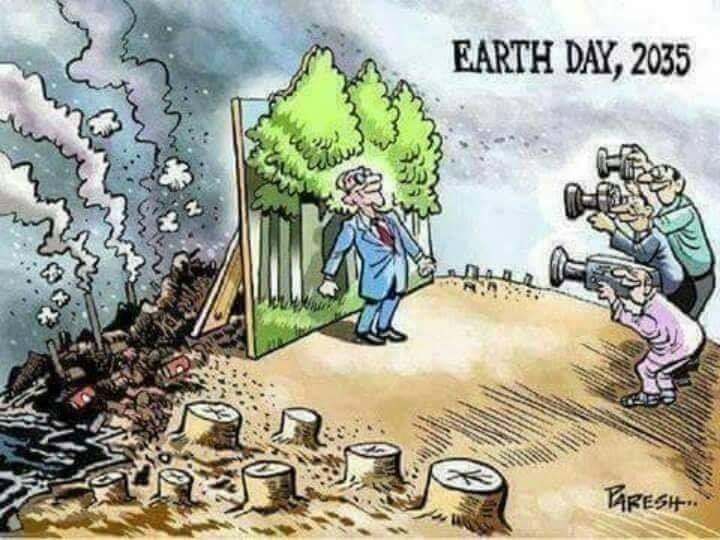
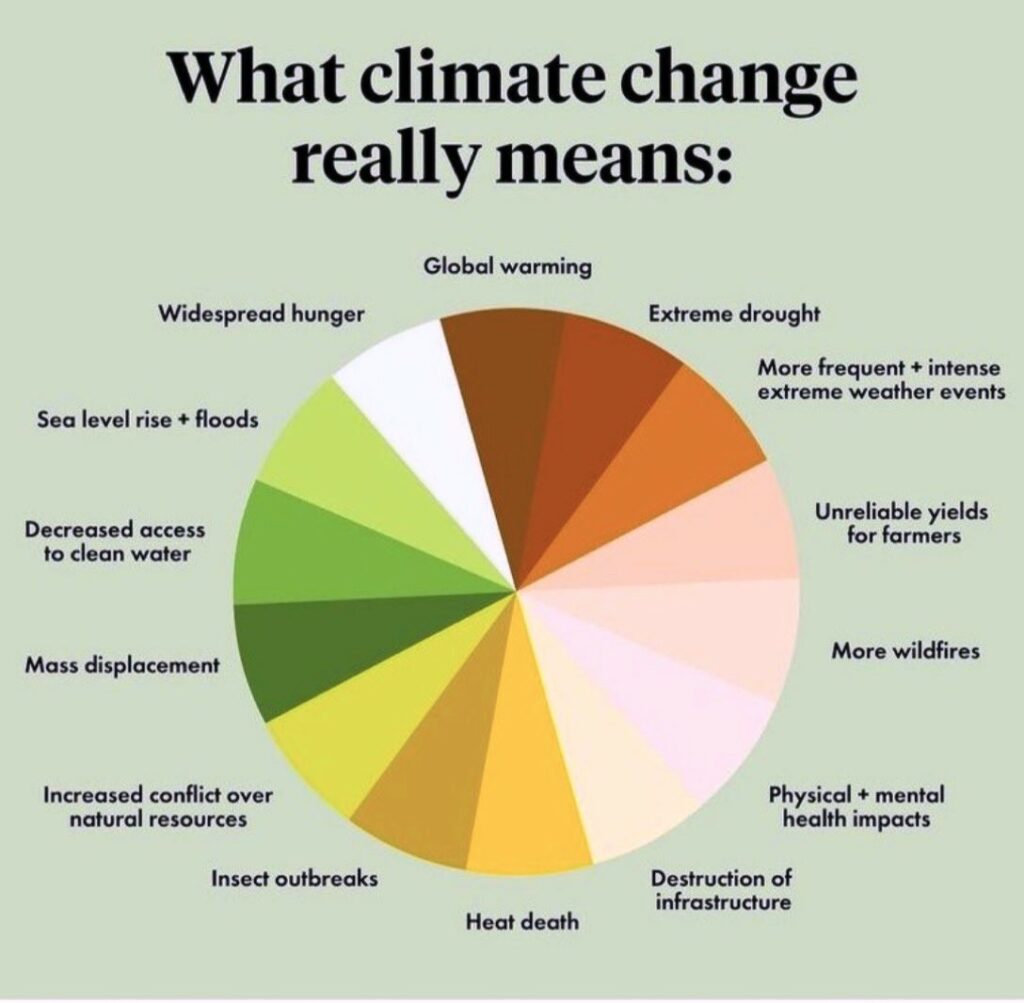
#XR gave the idea a public face, but the underlying diagnosis is older. What the hashtag names is a system that knowingly drives ecosystems toward collapse, accelerates mass extinction, and courts food and water shortages, displacement, and conflict – all while calling this “economic growth.” That is not negligence. That is a cult logic: sacrifice the living world on the altar of quarterly returns. Neoliberalism’s defenders argue it delivers prosperity and individual freedom. Its record tells a different story: widening inequality, gutted public services, eroded workers’ rights, and a culture of greed that subordinates the common good to narrow private gain. The #deathcult hashtag story names what that trajectory actually leads to, not as hyperbole, but as a straightforward description of the destination.

The hashtag is for those who recognise that an ideology placing profit above the survival of communities and ecosystems isn’t just mistaken, it’s dangerous.

See also: The West’s climate catastrophe is native to the mess we are in

It’s a part of the https://hamishcampbell.com/?s=hashtag+story

Why European Social Democracy for some people is a path to a just and sustainable future

For decades, European social democracy has stood as a counterweight to the relentless logic of capitalism, proving that societies can thrive when they prioritize people and planet over profit. Yet in recent years, these ideals have been swept away by the rise of #neoliberalism and the slow creep of corporate capture. For some people it’s worth revisited the core principles, not as relics of a bygone era, but as seeds for the future? Let’s look at potential benefits of this approach, and why reclaiming its best elements might be help in rebuilding our world in the face of #climatechaos and growing inequality.

Reduced income inequality by challenging the hoarders of wealth, Social democracy actively fights against the extreme wealth inequality that fuels the #deathcult path of capitalism. By implementing progressive taxation on the ultra-rich and corporations, wealth redistribution to fund public services and social programs, outs limits on wealth accumulation to prevent runaway hoarding. This old #mainstreaming path treats wealth not as a private treasure, but as a collective resource. It challenges the idea that billionaires should exist at all while millions live in poverty, and asserts that the role of the state is to level the playing field, not deepen the divides.

Improved standard of living, a life of dignity for all, not only trying to mitigate suffering, this works to actively uplift people’s quality of life through: Universal healthcare that prioritizes public well-being over profit. Free or affordable education as a path to empowerment. Robust public services like transport, libraries, and childcare. By ensuring everyone has access to the essentials for a good life, social democracy shows that collective care leads to individual flourishing. It breaks the narrative that people must “earn” the right to exist and replaces it with the belief that dignity is a human right.

Stronger safety nets with protection from capitalist precarity, where markets rule, people are left vulnerable to constant boom-and-bust cycles. Social democracy disrupts this instability by creating social safety nets that catch people when they fall. Unemployment benefits to prevent destitution during job loss, Disability and sickness support for those unable to work, Public pensions to ensure people can retire in dignity. These policies directly challenge the capitalist threat that without endless labour, people deserve to suffer. Instead, they affirm the belief that societies are strongest when no one is left behind.

Greater economic security with power to the workers, social democracy strengthens workers’ rights and provides economic stability: Job protections & fair dismissal laws, living wage policies tied to actual living costs, Support for unions & collective bargaining. This redistribution of power away from corporate greed towards the workers who actually produce value is a radical shift from the top-down hierarchies of capitalism. It proves that economies don’t need to run on exploitation, they can be collaborative systems where workers share in the prosperity they create.

Increased political representation by reclaiming democracy, deepened democracy where people have a real say in how their societies function through, proportional representation to ensure every vote counts, publicly funded elections to reduce corporate influence, citizen assemblies and referenda for direct democracy. This expands democracy beyond just voting every few years, empowering people to shape the decisions that shape and impact their lives. It challenges the idea that politics is the domain of #nastyfew elitists and replaces it with the radical belief that people can and should govern themselves.

Environmental protection by defending the future from #climatechaos. Social democracy recognizes that the health of the planet is inseparable from the well-being of people. That’s why this path champions investment in renewable energy & public green infrastructure, strict environmental regulations & corporate accountability, sustainable development policies that balance human and ecological needs. Rather than treating nature as a resource to be exploited, this path sees the environment as a common inheritance that must be preserved for future generations. It directly challenges the short-termism of capitalism, which sacrifices the future for the sake of immediate profits.

Investment in public goods for the collective good, instead of pouring public money into private profit machines, social democracy reinvests in the public commons through infrastructure development for sustainable transport and energy, public research & innovation for collective progress, cultural and community spaces to foster connection and creativity. This long-term public investment shows that societies thrive when they share resources, not when they sell them off to the highest bidder. It dismantles the myth that privatization is more “efficient”, and proves that public ownership can build lasting prosperity.

What this means for radical media and the #openweb, The principles of solidarity, collective ownership, and democratic control, overlap the values that grassroots projects like the #OMN and #indymediaback embody. But instead of waiting for governments to catch up, we can start building these systems and paths now. Decentralized media platforms to break corporate control of information, open-source technologies governed by communities, not corporations, digital commons where people can share, learn, and organize freely.

The #4opens already provide the blueprint for a more democratic and sustainable digital ecosystem. It’s an easy path that by combining the best aspects of the older #mainstreaming social democracy with the “new” power of decentralized tech, we can bypass broken #deathcult institutions and start creating the future from the ground up. The old story of social democracy showed us a path, now it’s time to take it further http://hamishcampbell.com

#SocialDemocracy #WorkersRights #PublicGood #ClimateJustice #OpenWeb #ReclaimTheFuture


What is wrong with worshipping a #deathcult

#Neoliberalism is an economic and political ideology that advocates for free market capitalism and limited government intervention in the economy. Some criticism:

* Income inequality: neoliberal policies lead to greater income inequality, as the wealthy are able to capture a larger share of the economic gains and the less well-off are left behind.

* Financial instability: Neoliberal policies lead to financial instability, as seen in the 2008 global financial crisis. The deregulation of financial markets and the increased reliance on debt-fueled growth creates financial bubbles and subsequent crashes.

* Environmental degradation: The emphasis on economic growth leads to environmental degradation, as companies and countries prioritize short-term profits over sustainability and the health of the planet.

* Loss of public goods and services: Neoliberal policies lead to cuts in government spending on public goods and services, such as education, healthcare, and social safety nets. This has a negative impact on the most basic social needs and goods in society.

* Reduced political and economic power for labour movements: Neoliberal policies result in a reduction of the bargaining power of labour, leading to declining wages and job security for workers.

Some Hashtags

The #nothingnew hashtag is a simple #KISS project of rejecting the “common sense” #neoliberalism and #postmodernism of the last 40 years to reboot social change/challenge from the original modernist path to then moving to build #somethingnew

The #geekproblem hashtag is a complex view of the other hashtags. In this, we need to take the “problem” out of “geek”. The need for CONTROL is a problem of balance in modernism. Mix in #deathcult worshipping and the power of technology over the last 40 years, and you understand the “problem”. This is not #KISS

The #deathcult hashtag is a #KISS direct metaphor for #neoliberalism which has been the “common sense” of the last 40 years of #mainstreaming

For an example of this, look at the use of “markets” at cop27 we are truly in a nasty mess due to our years of blind worship.

ideas to work with

#stupidindividualism a full ideology with the last 40 years of #neoliberalism and a part of the liberal 20th century consensus. So it’s a strong #BLOCK

Some ideas:

* Every day, naming of the current “common sense” as worshipping the #deathcult is both true and useful in making #mainstreming uncomfortable.

* The pushing of simple #KISS ideas like #openweb vs #closedweb and #4opens as a POWERFUL way to JUDGE and compost #techcrap to mediate the #techchurn

* Group use of hashtags is the organizing tool.

Where is evil in our world

For the last 40 years, we have had #neoliberalism pushed into every part of our living human and natural world. This was designed to disintegrate the social democratic 20th century consensus and replace it with a 19th century market fundamentalism. This has successfully and obviously pushed selfish over selfless. Over the last 20 years, this fundamentalism pushes social democratic norms out of the internet and #openweb and replace these values with powerful tools for social control based on market logic of “want to be” powerful individuals and capital agenda.

What are contemporary sins?

You rarely get anywhere by simply renaming things. All you do is lose the historical thried and then recreate the same mess. #Stupidindividualism is often the motivation for this, and it’s a big sin in the liberals and “post politics” crew.

A metaphor that individualism makes us stupid and that to live outside a balance of individualistic vs community is stupid. Yes, it’s an aspect of liberalism and capitalism and at an extreme with #neoliberalism.

#deathcult worshippers is another metaphor for (invisible) neoliberalism.

All the metaphors (used as #hashtags) are aspects of liberalism and very critical of neoliberalism.  The idea is to make #mainstreaming thinking dirty.

The hashtags work if a community/affinity group of people use them without falling into the sin of #stupidindividualism of course 😉

If you miss my point, please go back and reread, don’t drop back into sin 😉

If you are interested in technology and society

Open/closed, a look at the issues in tech

The idea of total control manifested in the master/slave relationship of computers and programmers is a core of geek culture.

  • Open is about attempting to share power in society.
  • Closed is about attempting to block social power.

The #geekproblem at root in our society is about liberalism excepting the division of the state and the citizen, it’s about the liberal ideal of individualism “the is no such thing as society only individuals and there family” though in the case of the #geekproblem it’s just the individual and not so much the family. Our current #geekproblem is a child of Thatcher and Reagan and the #neoliberalism they embedded into our social minds.

It’s interesting to see that the #dotcons (the right) have overcome this #geekproblem and enslaved code, programmers and the network to the control of the capital (and the state) and it’s sad that the left are children in this game.

A way out of this mess is to clearly reject the “closed” ideas in tech and instead re-embrace “open”. Thus unblocking the social flow, what we do with this flow (dangerous stuff) is up to us. We can recognise the danger yes, but to balance that we MUST recognise the disaster we are in now.

“Closed” feeds and re-enforce disaster and in NO WAY helps society to move from this mess #XR

We need flow, not blocking.

It’s simple.

Technology and Social Change Working with the Facebook Generation

This generation is a complete mess, no surprise after 20 years of submission to the #deathcult:

  • #Neoliberalism hollowing out economies, replacing solidarity with consumerism.
  • #Postmodernism fragmenting identity politics into a battlefield of individualism over collective action.
  • #Dotcons centralizing control, turning the internet into a corporate surveillance machine.

Stepping away from the mess, the real question is: How do we break free?

Our #fashernistas still dodge this conversation, stuck in cycles of performative activism, corporate co-option, and distraction. Instead of chasing the next trendy tech or ideological bandwagon, we need to refocus a #KISS path:

  • #OMN (Open Media Network) – Building grassroots, independent media outside corporate control.
  • #4opens – Prioritizing transparency, collaboration, and openness in our tools and governance.
  • Reclaiming #DIY activism – Moving beyond digital spectacle to real-world action and organizing.

The path isn’t more #geekproblem tech fixes or empty branding exercises, it’s a radical grassroots step to collective agency. Time to move.