A native path out of the mess people make on the #openweb

The Open Governance Body (#OGB) describes a permissionless process/structure that is open and allows the group that forms using the tools to decide who is a part of the group or not. This process can divide into a web of connecting instances of governance as a natural human process of group formation. The #OGB emphasizes that there is no exclusion and always diversity, making it a natural fit for the #fediverse.

The #OGB also shows that if people are stupid and focused on individualism, each governance instance will have one member and no power. To gain power, people have to work together, which is built into the code. The #OGB emphasizes that hoarding power is limited, and it flows through the community, energizing and solidifying the community and building horizontal power to challenge/change vertical power.

The #OGB focus is on the importance of keeping things simple (#KISS) and that some people will try to push for existing power structures before democracy. However, as the process is permissionless, it is not possible to stop them from doing this. The #OGB emphasizes the need to do better, and that being native to the #fediverse is a big help in this regard.

The #OGB emphasizes the importance of recognizing where power comes from in the context of the #fediverse. The fediverse operates differently from corporations, governments, courts, and police, and it is important to think and build with this difference rather than trying to drag the fediverse back to the #mainstreaming path.

The #OGB builds from the #fediverse works because it is different, and it is easy to forget this important thing when #mainstreaming agendas grab and hold. The #OGB suggests that the missing question in almost all conversations is “who are we empowering,” and emphasizes the need to do better in alt-tech.

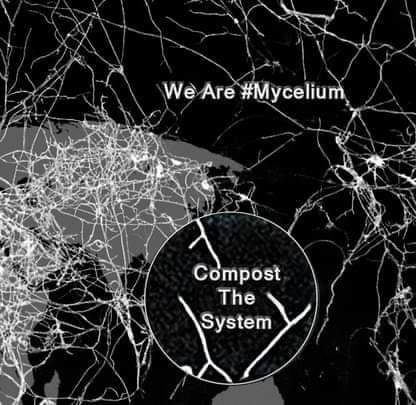
The #OGB notes that there are problems in alt-tech and suggests that starting with the #4opens would remove 90% of the mess, revealing the real potential for good outcomes. The #OGB highlights that doing better in alt-tech would involve using shovels to make compost and planting seeds of the world we want to see.

The #OGB describes the process scaffolding for the governance body as a default effect, where the decisions on how things work will be up to the members of the body. The power of the governance body is only the power of default, and the #OGB is about removing all hard default choices and building in a small number of KISS tools, then letting the body members work out themselves how to use them.

The #OGB uses the example of #Couchsurfing, where the website redesign removed the #DIY tools active Couchsurfers had used to self-organize, leading to disappointment among members. The #OGB argues that letting members make their own process, open vs. closed, is necessary to overcome the #geekproblem and have hope for alt-tech.

The #OGB builds governance with the way, rules, norms, and actions are structured, sustained, regulated, and held accountable. this is to mediate that the #Fediverse currently has a “herding cats” governance, denoting a futile attempt to control or organize a class of entities that are inherently uncontrollable.

The #OGB codebase is not just a tool for the #Fediverse, but it can be used to democratically run any structures that have stakeholders.

The #OGB provides an example of how the codebase can be used to run a local street market, with each stallholder as a stakeholder, people who shop at the market as users, and the local council, events company, and shop owner’s association as affiliate groups. The #OGB approach and codebase will scale sideways, with street markets governed city-wide, and each of the markets becoming a stakeholder, users as users, and city-wide orgs and groups as affiliate groups.

The #OGB shaping of the “body” comes from a long history/experience of horizontal activism, where “those who do the work have more say.” noisebridge.net/wiki/Do-ocracy

The #OGB pushes that the bulk of the voice comes from those who run the #Fediverse, the people who run/support the instances. The people who build the tools also get a say, as do support orgs and events, and the users who will be spread widely get a say, but their power is diluted by the much larger numbers involved.

This working practice comes from 30 years of building from The Tyranny of Structureless tick box list https://unite.openworlds.info/Open-Media-Network/openwebgovernancebody/wiki/03.-The-Tyranny-of-Stucturelessness That code being quite “anti-human” is an interesting challenge, and it’s important to figure out how to get the humane “mess” in a coding process that is based on being “exact” and in control #OGB

The #OGB project is grounded in lived experience, and it’s a way out of this mess. We cannot keep using traditional institutions. We have to stop the #techcurn if we are going to use #openweb tech for social/ecological change/challenge, and we need to think about this now.

The #OGB project is about developing better ways of having “trust” based conversations and “trust” based “governance” in the #openweb. The project is built from hundreds of years of on the ground organizing that has shaped every “freedom” we enjoy and is done in a #KISS approach. The #OGB is a #fedivers native way of working, NOT a #mainstreaming way, and it comes from directly working, setting up, and solving recurring problems at hundreds of direct action protest camps.

The #OGB focus on what we know works, as at the moment, almost nothing works for social good. The #OGB project is what is needed, a voluntary cooperative and collaborative alliance that is native to the #fediverse.

The thinking is that we need to put a stop to the #techchurn as we have piles of #techshit already to compost, that #nothingnew is a hashtag for this.

It’s not the goal of the #OGB project to create an organization that tells everyone what protocols and standards to use in the #fediverse. The #OGB project is about developing better ways of having good “trust” based conversations and “trust” based “governance” in the #openweb

To sum up, the current working models of “governance” in open-source projects are monarchy, aristocracy and oligarchy. This is the rock star developer, the coders and the funders. It should be obverse to anyone that 99.99% of people are missing from this feudalistic ideal of “governance”.

Democracy is the basic foundation of our shared modernity.

WHY DO WE PUT UP WITH THIS MESS IN TECH?

Let’s take a different path, please #OGB

Q. that is an optimistic projection

A. I have no illusion that the normal shitty behaver of fucking people over and being a prat will happen, but the codebase is designed to mediate this crap behaver for better outcomes 🙂

#OGB “permissionless” is an important word that needs some thought. The body is made up of three different, balanced groups: stakeholders, users, and affiliate stakeholders. Anybody can become a stakeholder by setting up and running an active instance, and users are self-explanatory. That affiliate stakeholders are a little more complex and are treated differently, and it’s up to the body itself to decide if they play an active and useful role.

That nothing in this is top-down, elitist, discriminatory, or undemocratic, and it’s #KISS and looks safe to the “normal world” while being native to the #fediverse and its roots. All the coding is #4opens, based on #activertypub.

With #OGB, it’s important not to get lost in the #processgeeks and their dogmatic love of #formalconsensus, as that’s a dead end and has been for the 30 years of activism and coding tech. It’s important to keep the #OGB both #KISS and human, understandable. The #OGB is native “governance” and federates in the same way as the projects it “governs”. That this approach is counterintuitive to mainstream ideas and “common sense,” but that’s not necessarily a bad thing.

This approach has worked to some extent, as seen in the “#Fediverse” as a living example, working to scale small to bigger. There will be lots of “smoke,” and help is needed to keep the project clear of this mess. We have to overcome our #stupidindividualism to have a hope of a better world.

#OGB To remind you that the need for “governance” came out of a practical problem where the #activitypub community is made up of “cats” who were doing seminars outreach to powerful #EU Eurocrats on why they should be interested in #activertypub. #OGB is designed to be messy and not tidy, and it’s a “governance” of a disorganization, not a traditional power structure. “governance” can cooperate with more formal models of governance like traditional cooperatives.

Why would you be the right person to build the #OMN

The social change/challenge project of an organic intellectual is an act of love and a gift economy, each toot and each hashtag is a gift. The #OMN hashtag story is designed to make people who often unconsciously worship the #deathcult (an obvious metaphor for #neoliberalism) and have internalized the last 40 years of the dead philosophy of #postmodernism uncomfortable.

The idea is that from these small openings, people can try to step outside this mess and challenge the status quo. To build the #OMN, we are looking for the tiny minority who can still think outside this mess and are willing to challenge the #mainstreaming narrative. The project is a call to action for those who want to create a more equitable and just society.

#boatingeurope at anchor for a few days on the Medway. Metaphorically, am  taking the piss outa #stupidindividualism. The reality picture would have 4–5 boats rafted up with a disparate crew having a barbi.

My indymedia story

#Indymedia was a decentralized, grassroots media network that emerged in the late 1990s and early 2000s. It was founded on the principles of open publishing, direct democracy, and anti-authoritarianism. The project eventually experienced a split in the UK, with one side, the #fashernista, building an aggregating site and the other #geekproblem building a centralized silo. The split was supposedly over technical disagreements, but was driven by doctrinal and tribal disputes. The decision-making process, like much activism at the time grew to rely on #formalconsensus, become ossified and unfixable, so no decisions could be made to mediate this.

outline of the #reboot project

The split was ultimately driven by a focus on control on both sides. The two sides were more interested in their own tribal agendas than in working together to build a diverse and #4opens #OMN. The silo eventually built an aggregating site, with RSS feeds, but in a very controlling way. The stress was always on control as “security” and this ultimately led to the decline of the #Indymedia project. The #dotcons took over the space, and the project became irrelevant.

I was working on the project, the person working in the middle, saying “don’t be a prat” as each side tore and tore and tore I continued in the grassroots, saying that the culture is the key and that the value is in open media network, not control. The split in Indymedia was a shit show, but we can learn from it in the reboot of the project.

The plan now is to reboot the project before the split happened, around 2008 with a focus on the #fashernitas path of the two splinter groups. This path emphasizes openmedia and decentralized structures, rather than control and centralization. However, with the reboot there is still a very real risk that some members of the community will push for a control/#encryptionist path, which could lead to another split in focus. The challenge is to find a way to walk this path without succumbing to the same tribalism and power politics that led to the decline of the original project.

The use of hashtags and semantic web technologies did not exist at the time. Tags and metadata were not core to the start original Indymedia project, but they were later being added as a way to help organize and categorize content, the idea of building a structure with #RSS feeds was being discussed and enacted.

At the time, Interestingly, the silo path recognized that their approach was wrong and came back to aggregation, with moderated control of RSS flows. This is reflected in the #OMN’s choice of “trusted flow” and “moderated flow.” We are building both sides of the split of the original project and yes, criticizing the fashernista path a little, which only had trust, which would not likely work in today’s world. It’s important we do not make this decision for people. We let them decide and build both. The key is to avoid building pointless messes and to resist the #mainstreaming urge to make a mess. We are not #mainstreaming, and we must not be prats about this.

Looking at what happened to the web after this time, the last ten years of tech history, the grassroots silo path went on to build #Diaspora, while the grassroots #fashernista path went on to build the #Fediverse. However, despite these developments, there was still no news based open media network being built yet. This led to the creation of the #OMN project and the current #indymediaback reboot path.

Unfortunately, in today’s world of liberation “cats” due to the last 20 years of worship of the #deathcult, nobody sees any value in the “open” part of the #OMN. Everyone is still fixated on the silo path of control, we have to work against this #mainstreaming blindness. Over the last 20 years, the #mainstreaming as a whole took the silo/encryptionst path of the Indymedia split. Contemporary social media took #fahernista side of the #open path, the #dotcons, took the ideas and sold us back a facsimile of this that they could control, such as #Facebook and other algorithms based #dotcons

To make the reboot work , we have to tiptoe around the legacy of #Indymedia, focus on rebooting the project in its 2008 state, where the social process were still working. The silos’ path still controls the old domains, they took as a part of the ripping apart. We are building something that looks like the fashernista path they fought against, so we need to build two projects in one: control and trust. We need to get the domains back in use, which would be a huge boost to the #reboot project. At the same time, we need to build trust with everyone else, as this is the power of open. It’s complicated, but everyone wants it back. However, the history is challenging, and the two sides are still fighting: Fediverse vs. silos as we see this old mess today.

The social change/challenge project of an organic intellectual

The social change/challenge project of an organic intellectual is an act of love, a gift economy, each toot, each hashtag is a gift. The #OMN hashtag story is designed to make people who (often unconsciously) worship the #deathcult (an obvious metaphor for #neoliberalism) and have internalized the last 40 years of (the dead philosophy) #postmodernism uncomfortable. From these small openings, they can try to step outside this mess.

To build the #OMN we are looking for the tiny minority who can still think outside this mess, is this you?

A balancing of spiky/fluffy to see and act outside the current #mainstreaming mess.

Looking at the paths out of the current mess

We need an effective way of communicating that all value on the #fedivers is cultural, the tech itself is a product of this #openweb culture. The #activertypub speck is an accident of this culture not being swamped become the #mainstreaming was not interested at the time

We have an increasing number of funders pouring money down the drain in #fedivers tech, when the source of the value #openweb culture that created this new “commons” is swamped by the #mainstreaming agenda.

This #fediforum thing is going to be a hardcore invisible clash of cultures, all the #fashernista who stood back from the #ActivertyPub push for the last 5 years are now flooding in, as are refugees from the encryptions mess. The language might be  #fedvers  BUT most of the people will not be. Let’s try and create focus, small steps.

#Mozfest Is on if you want to see posers, #fashernista and general #NGO pointless. I did sign up but when the time came to log in I could not be bothered. I do use the browser, though.

We do need to express contempt for what a lot of the assumptions and agenda (often unspoken) our #NGO and #fashernista crew push. Yes, it’s crap and pointless, so please say this, in most cases the “emperor’s” are not wearing any clothes. Express yourself, it’s needed.

The is going to be an increasing mix of #mainstreming people moving back to the #openweb we need much better tools and process to deal with the mess they bring with them as well as our own mess we have here. The is going to be a lot of prat’ish behaviour from both inside our #openweb movement and outside from the #dotcons we need a way to mediate this… as it’s obviously damage dressed up in #NGO clothing.

The problem with this negative circle is that it is self reinforcing, the prats, don’t like being pointed at as prats, and in reaction they dig deeper into prat’ish behaver. This damage is not helpful, we need fresh thinking, what do we do when “our” people act as prats. Ideas please?

The is a solution to this, the #OGB which mediates prat’ish behaver by democracy https://unite.openworlds.info/Open-Media-Network/openwebgovernancebody​


Why do people keep doing pointless self harm – news aggregation

There are hundreds (over the last 20 years likely thousands) of news, aggregation sites. It’s a common #dotcons model to enclose the “commons” people see free content and think I can capture that. The problem is news content looks like it’s free, but that’s because it’s “free” to spread, but it’s VERY expensive in human (and thus money) to produce the content. This side is never addressed in these failed tech projects.

We currently have #traditionalmedia all round the world pushing to be paid for aggregation and even search of their “product”. At #OMN and #indymediaback, we get round these issues as we add “value” by the #DIY labour of the meany people involved in the shared “commons” space. We are producing rather than “stealing” in the #mainstreaming view.

It’s normal that the top-down news aggregators are seen as parasites, and the bootem up aggregators as adding value. For a few years of #indymedia growth, #traditionalmedia was using #indymedia as a “news” source, this shaped the #mainstreaming agenda, adding value to both paths.

When the #openweb we were building was ripped apart by internal and external pressers and agenders, the #DIY value was captured by the #dotcons such as #Facebook and later #Twitter (when it left it’s open’ish path).

The first step away from the current mess is to recreate the “commons” to bring the value back from the #dotcons capture, this should be more possible now as we are building from the #Fediverse where this has already happened. What we do with this recreated “commons” is up to meany different groups/people, but let’s hold the #4opens and #PGA strongly in place to stop “common sense” enclosing attempts, which are constant pointless damage we need to work around.

To sum up, a key part of the #OMN is to recreate the data “commons” then it’s up to meany other groups to find useful things to do with this free to use non-commercial value. And yes lots of people will see the stupid path of enclosing this to capture the value for themselves, this is damage.

In capitalism, any non-owned value is seen as an opportunity to capture, enclosed and profit from. This is why we have copyleft licences in code, which is visibly failing and why we extend this to the #4opens to fail less 😉

This all comes down to the question of what we value. And for meany people, this is a blindness.

Thinking through composting the #techshit


The #openweb has many benefits, though it will not always be the right tool for all situations, there is a lot of mature tech available for privacy and control. The desire to mix these technologies comes from #mainstreaming liberalisms desire for social media to be private, rather than inherently public.

The decentralized #openweb and encrypted chat are obviously separate and should coexist without reproducing the mistakes of centralized #dotcons social media. Focusing on the #4opens and leaving hard privacy for individuals and groups in peer-to-peer encrypted chat is the “native” path.

Thinking through composting the #techshit. In our era of dead ideologies like post-modernism and neoliberalism, we need to build “bounded” projects that have clear boundaries, such as #4opens and #PGA, to keep us focused and resist #mainstreaming liberalism and right-wing ideologies. This helps us create a shared space of practice and direction for politics and technology. While “branding” can be powerful, caution is needed to not creating a sense of dogmatic tribalism in these movements #OMN

Good horizontalists understand theory comes from practice, and the basis of this is #DIY – working practice to build theory. Starting from theory lead’s to a dizzy mess that results in more #techshit to compost or academic wank. Instead. Building from grassroots DIY practices, such as #OMN, #Indymediaback, and #OGB, and then using theory from these practices.

We need to emphasize the importance of focus on the #openweb. Engage with this flow to practice activism and to avoid pushing mess.

Talking about tech – Enclosing the “commons” is a bad history for native societies

White Lies About Security and Privacy in the Fediverse

We’re told small white lies about security and privacy to boot up #Mastodon. But the truth is, this #openweb tech is about dancing elephants throwing paper planes as a security/privacy model.

Yes, this is simply not the right tool for the “common sense” privacy and control needs the #geekproblem have. In reality, there’s already a wealth of mature, privacy-focused tech out there built specifically for that path.

Enclosing the “commons” is a dark chapter in history for native societies, and we risk repeating this mistake if we misunderstand the political roots of decentralized social media.

Let’s pause and check the unspoken/unthinking political aspect of this. Much of the desire to retrofit heavy privacy into the #Fediverse comes from #mainstreaming liberalism, which frames everything through fear and control. But the Fediverse wasn’t born from that path, it emerged from a trust-based, anarchistic culture.

At its core, social media is:

Social (one-to-many)
Media (sharing news and events)

It’s an inherently public activity.

On the other hand, encrypted chat (one-on-one or in small groups) is an inherently private activity.

The #dotcons messily mix these two spheres together, but only because their centralized architecture makes it possible (and profitable). Of course, this is a black lie, since these platforms don’t actually respect the privacy they promise. Their entire business model depends on violating it.

In the decentralized #openweb, public and private spaces have generally been separate and tidy, and that’s a good thing. But lately, some online discussions feel like an attempt to deliberately blur these lines, reproducing the #mainstreaming model under the guise of “common sense”, to take the same failed path we’ve been trapped in for 20 years.

We don’t need to reproduce the mess. We can have the best of both worlds:

Public, federated social media built around the #4opens
Private, encrypted communication for individuals and groups in P2P chat

Let’s keep our focus on the true nature of social media and build tools that respect both public and private spheres, without falling back into the traps of the #deathcult.

What is the value of “bounded” projects

We need to build “bounded” projects because we live in the era of the #deathcult based on the dead ideologies of post-modernism and #neoliberalism. Both deny the possibility of the world we want to build. So “common sense” is not our friend.

The “boundaries” of #4opens and #PGA keep focus vs this “common sense”. We are lost without this.

The #OMN are building tools for the “other” that’s us. “Them” are hostile, especially if they don’t understand “they” are. This is #mainstreaming liberals, and right wing crew.

#PGA is about, horizontal giving us a shared space of practice, understanding and working for “politics” and the #4opens gives us the same for tech

They together create a boundary for us to focus, Without this we have a tendency to fight and create mess. So it’s a soft/pours “us” and “them” to provide focuses and direction. In a bad sense, it is the badges of the tribe. In a better sense, it’s the banners we fly at our gatherings, but this starts to sound a bit nationalist. So let’s not do this 😉

The subject of “branding”, flags, banners is a real balance, they have power… And we need power in horizontal movements.

This podcast is a interesting look at this https://media.blubrry.com/novarafm_radio_for_a/audiofiles.novara.io/acfm/2023/230212_ACFM_Trip_32_Myth_2.mp3 as background thinking.

What is the #openweb

While the commercial web is dominated by large corporations, the #dotcons are what most people are familiar with, there is another side to the internet – the #openweb. In this article, we will explore what the #openweb is and why it matters.

The #openweb refers to the part of the internet that is not owned by corporations. Unlike the commercial web, where large tech companies like #Google, #Facebook, and #Amazon dominate the landscape, the #openweb is a decentralized space where people can create, share, and access content without restrictions.

The openweb is built on #4opens standards and protocols, which means that everyone can develop software or services that work seamlessly with existing tools and platforms. One of the primary benefits of the openweb is that it fosters humane creativity. Because we can all contribute to the open web, it encourages a diverse, liberal, range of voices and perspectives. Openweb technologies like blogs, wikis, and federated social networks have enabled people to connect and collaborate, leading to the emergence of new norms and social movements.

Another important aspect of the openweb is its commitment to transparency, it is a critical tool for promoting #freespeech and #democracy. Because it is not owned by any single entity or government, the openweb is a place where people can express themselves without fear of censorship or repression.

In recent years, the openweb has come under threat from the rise of the dominating #dotcons of the commercial web and the growing power of big tech companies. The commercial web is dominated by a few large corporations that control vast amounts of user data and use it to extract profit. This has led to concerns about, social control, and the concentration of power in the hands of a few tech giants and their agenders.

Despite these challenges, there are many organizations and individuals working to preserve the #openweb. From #grassroots groups such as #OMN to #NGO’s like the World Wide Web Consortium (W3C) an international community that develops open standards for the web, while #mainstreaming organizations like the Electronic Frontier Foundation (EFF) and the Google funded #Mozilla Foundation are dedicated to promoting a liberal #mainstreaming open and accessible internet.

In conclusion, the openweb is a critical part of the internet that promotes, creativity and free society. It is a space where anyone can contribute and participate without restrictions, and it has played a vital role in social movements and democracy. While the openweb faces many challenges in the face of the commercial web and big tech, it is essential to work together to ensure that the internet remains an open and accessible space.

For the last 30 years the has been a strong alt-globalization movement

The opposition to neoliberalism (the #deathcult) is a global movement that advocates for the protection of humane culture, environmental survivability, and democratic institutions in the face of economic globalization. The anti #mainstreaming of this movement argue that the neoliberal position of free trade and removing public sector regulation has not benefited society and global survival.

One of the key events that sparked this movement was the proposed Multilateral Agreement on Investment (MAI) by the Organization for Economic Co-operation and Development (OECD) in the 1990s. This treaty aimed to liberalize cross-border investment and trade restrictions, but it faced significant opposition from civil society representatives, who argued that mandatory standards were needed to ensure that globalization did not put people or the environment at risk.

Critics of neoliberalism argue that the interests of investors are prioritized over those of people, and that this leads to the exploitation of workers and natural resources. Noam Chomsky, a prominent scholar and activist, argued that the term “globalization” has been appropriated by the powerful to refer to a specific form of international economic integration, one that prioritizes investor rights over human rights.

Opposition to neoliberalism is not opposition to globalization itself, but rather to the specific form of globalization that prioritizes the interests of private power systems over the rights of people. The movement for an alternative form of globalization seeks to promote international integration that attends to the rights of people, promotes democratic institutions, and preserves the natural environment.

The carnival was a reminder that resistance is possible

The Carnival Against Capital was a global day of protest that took place on Friday, June 18th, 1999. It was a response to the 25th G8 Summit, which was being held in Cologne, Germany at the time. The carnival was organized as an international day of action to protest against the capitalist system and the role of the G8 in maintaining it. The event was also known as #J18, and it was inspired by previous protests such as the Stop the City protests in the 1980s, Peoples’ Global Action (#PGA), and the Global Street Party (#RTS)

The main rallying cry for the Carnival Against Capital was “Our Resistance is as Transnational as Capital.” This was a call to action for people around the world to come together and resist the global capitalist system. The event was organized by a loose coalition of groups and organizations who shared a common goal of fighting against capitalism and its impact on people’s lives.

In London, a spoof newspaper was produced to promote the event, alongside other publicity. On the day itself, the carnival started with a Critical Mass bike ride, which saw cyclists taking to the streets to highlight the problems of car culture and promote alternative forms of transport. This was followed by an action by the Campaign Against Arms Trade, which aimed to draw attention to the role of the arms trade in perpetuating war and conflict.

Later in the day, a large march converged on the London International Financial Futures Exchange for a street party. The exchange was chosen as a symbolic target because it represented the heart of the global financial system. The street party was a festive and creative event, featuring music, dancing, and street theatre. It was also an opportunity for people to express their anger and frustration at the system that was causing them harm.

The Carnival Against Capital was not just limited to London. There were protests in over 40 cities around the world, including Barcelona, Montevideo, Port Harcourt, and San Francisco. Using then new technology, the protests were reported on the internet by independent media activists from London and Sydney, in a step towards the #Indymedia network. This was a significant development in the history of protest movements, as it allowed activists to bypass the mainstream media and communicate directly with each other and the wider public.

The legacy of the Carnival Against Capital lives on today. It was a powerful moment in the history of the anti-globalization movement and showed that ordinary people could come together to challenge the #mainstreaming globalist thinking. The event inspired many people to become involved in activism and to work towards a fairer and more just world. The carnival was a reminder that resistance is possible, and that another world is not only desirable but also achievable.